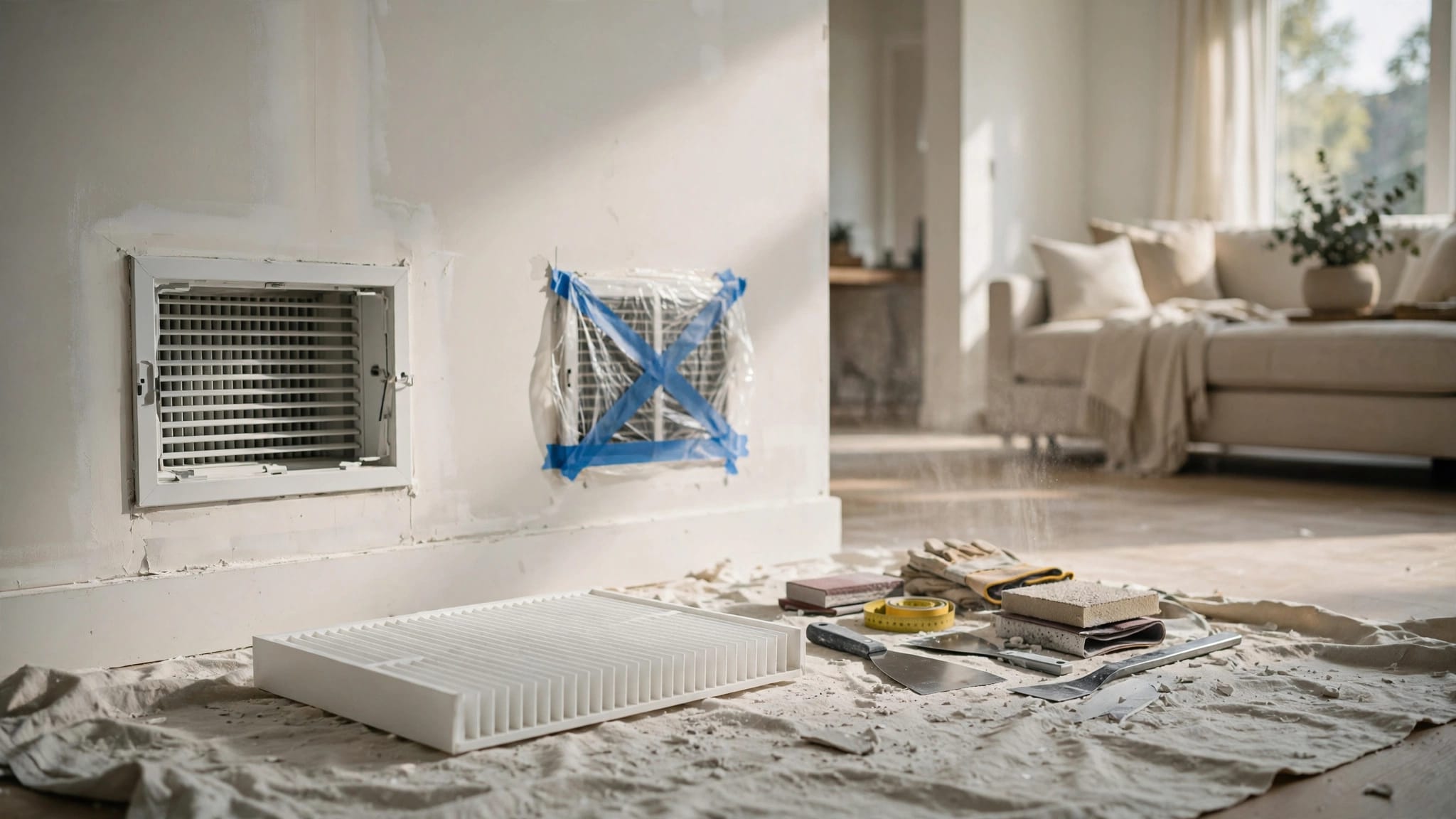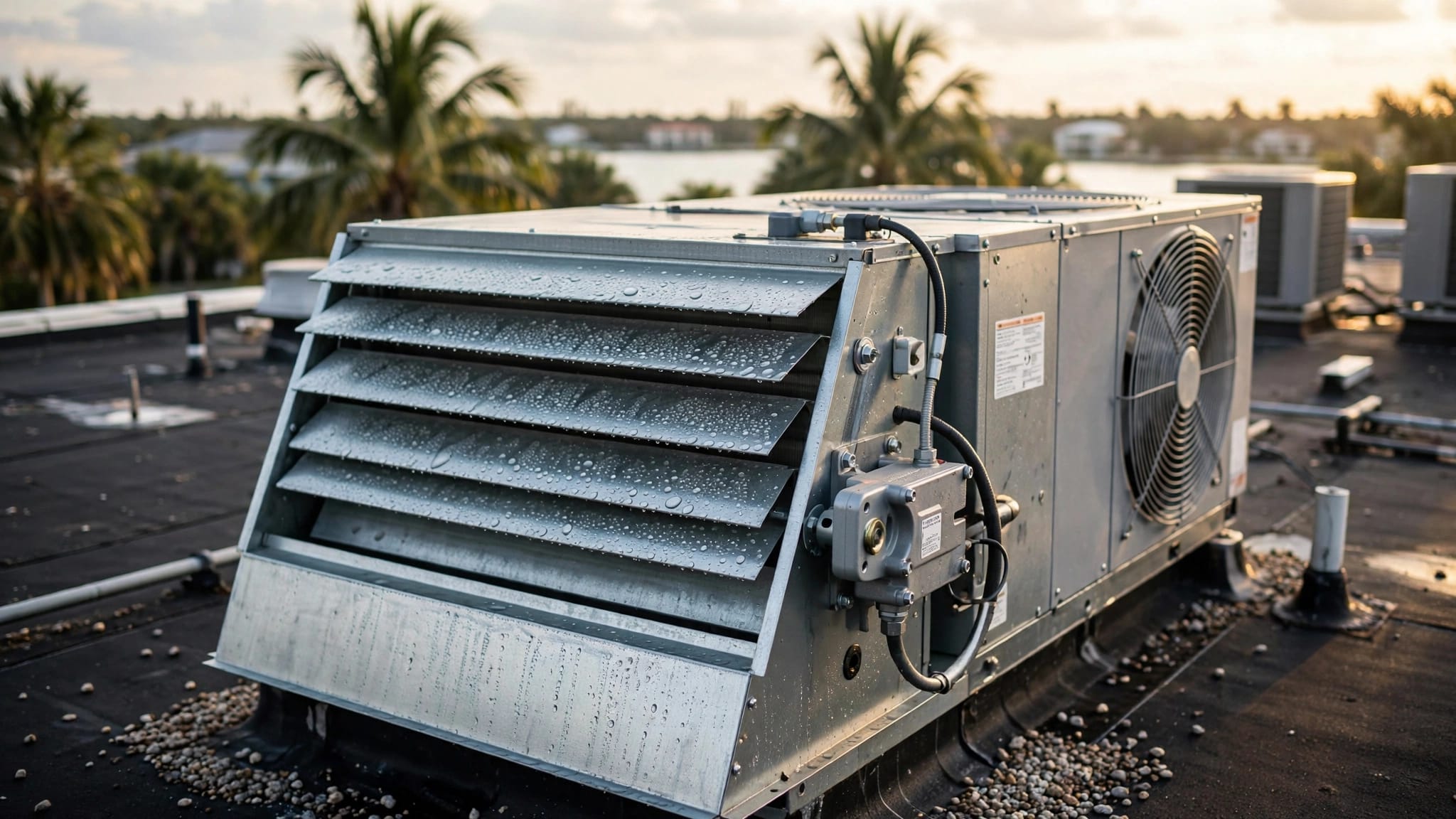
A kitchen range hood can pull hundreds of cubic feet of air out of your home each minute. In Florida, whether it needs a dedicated makeup-air system depends on the hood's exhaust capacity, the home's appliances, the code edition, and local requirements.
The Florida Mechanical Code sets a general threshold, but single-family homes have a specific exception. Knowing the difference helps you plan ventilation without adding equipment your home may not need.
Florida's makeup-air rule depends on hood capacity
As of October 2026, Florida's statewide code is the Florida Building Code, 8th Edition (2023), effective December 31, 2023. The Florida Mechanical Code's makeup-air provisions appear in Section 505.2. Local jurisdiction and permit requirements still matter.

The general rule above 400 CFM
In general, a kitchen exhaust hood capable of removing more than 400 cubic feet per minute (CFM) requires makeup air at approximately the same rate. Makeup air is replacement air brought into the home as the hood exhausts indoor air.
The code provision also calls for a way to close the makeup-air opening and automatic controls that operate with the exhaust hood. The exact installation depends on the home and the approved system design.
The single-family exception can reach 800 CFM
For a single-family dwelling, the code provides an exception. Makeup air isn't required for a hood rated at 400 CFM or less. A hood rated above 400 CFM, up to and including 800 CFM, can also qualify if there are no gravity-vent appliances in the conditioned living space.
That condition matters. A furnace or water heater that relies on natural draft can be affected by a strongly operating exhaust hood. For single-family homes, the 400-CFM number alone doesn't settle the question.
Local code and home details can change the answer
A statewide code sets a baseline, but local jurisdictions may adopt amendments or apply permit requirements that affect a project. The applicable edition can also depend on the permit and project circumstances. A qualified local contractor or building official can determine which provisions apply to your home.
Check appliances and the home type
The single-family exception isn't a blanket allowance for every house. The location and venting type of appliances matter, and the code has separate provisions for common kitchen exhaust systems in multistory structures.
For that reason, a hood's capacity should be considered alongside the home's layout and fuel-burning equipment. A contractor can assess the setup and identify whether an exhaust system could depressurize the home or interfere with proper appliance venting.
Don't assume every hood needs the same fix
The CFM rating is important, but the route and design of the exhaust system matter too. A long or restrictive duct can affect actual airflow, while the hood's listed capacity helps determine how the code applies.
Likewise, a window or an existing HVAC return isn't automatically an approved makeup-air system. The replacement-air path needs to work with the hood and meet the applicable code requirements.
Plan makeup air with cooling and humidity in mind
In Southwest Florida, outdoor air brings heat and moisture along with it. If a makeup-air system pulls humid air directly indoors without appropriate design, it can add to the cooling system's workload and make humidity control harder.
The goal is balanced airflow, not simply adding an opening. A well-planned system accounts for the hood's exhaust rate, the route and volume of replacement air, and how that air affects the home's air conditioning. Because ducts and returns influence how air moves through the house, ductwork repair and replacement in Cape Coral may be relevant when assessing the full system.
Range hoods also help remove cooking particles and odors. Replacement air supports that exhaust, but it isn't the same as a dedicated fresh-air ventilation system. If your home feels humid or airflow changes when the hood runs, an HVAC assessment can help distinguish a makeup-air concern from a duct or cooling issue.
Key takeaways for Florida homeowners
- The 2023 Florida Mechanical Code generally requires makeup air for exhaust hoods capable of more than 400 CFM.
- A single-family home may qualify for an exception up to 800 CFM if it has no gravity-vent appliances in conditioned living space.
- Local requirements, the applicable code edition, and the home's appliances can change how the rule applies.
- In Florida, makeup-air design should account for humidity and the home's cooling system.
Frequently asked questions
Does every range hood over 400 CFM need makeup air?
No. The general rule applies above 400 CFM, but the single-family exception can extend through 800 CFM when there are no gravity-vent appliances in the conditioned living space. Homes that don't meet that condition need an assessment under the applicable code and local requirements.
Can I open a window instead of installing a makeup-air system?
Don't assume an open window meets the code requirement. A window may not provide a predictable or controlled amount of air, and it may not satisfy the requirements for an automatic system operating with the hood. A local contractor or building official can assess the required approach.
Get the airflow question answered
A range hood's CFM rating is only one part of the decision. The code edition, home type, vented appliances, local requirements, and Florida humidity all affect the right solution.
If you're concerned about pressure, humidity, or HVAC airflow when your hood runs, Contact Us to schedule a service call with our team.