Cape Coral's warm, wet climate can make indoor air feel sticky even when your air conditioner is running. The right Cape Coral home humidity level is usually between 45% and 55% relative humidity , with an upper limit of 60%.
A thermostat shows temperature, but it doesn't tell you how much moisture is in the air. You need a hygrometer to measure that moisture accurately. Once you know your indoor reading, you can decide whether your HVAC system, ventilation, drainage, or another part of the home needs attention.
Key Takeaways
- Keep indoor relative humidity around 45% to 55% in a Cape Coral home.
- Use a hygrometer because the thermostat measures temperature, not moisture.
- Humidity above 60% can support mold growth, musty odors, and dust mites.
- Clean filters, clear condensate drainage, and check airflow during humid weather.
- Call an HVAC or moisture professional when high readings persist or visible moisture appears.
The Best Humidity Range for Cape Coral Homes
A relative humidity reading of 45% to 55% offers a practical target for most homes in Cape Coral. The broader comfortable range is about 30% to 60%, but Florida homes often need closer attention to the upper end because outdoor air contains so much moisture.
The important threshold is 60%. Indoor humidity that stays above this level can create conditions for mold and mildew, especially around air handlers, closets, bathrooms, exterior walls, and areas with limited airflow. Higher humidity can also make your home feel warmer than the thermostat setting suggests.
| Hygrometer reading | What it usually means |
|---|---|
| Below 30% | Air may feel dry and uncomfortable |
| 30% to 45% | Comfortable for many households |
| 45% to 55% | Practical target for Cape Coral homes |
| 56% to 60% | Watch the trend and check for causes |
| Above 60% | Moisture control needs attention |
Humidity readings can change throughout the day. A home may show a reasonable level in the afternoon, then climb overnight when the air conditioner runs less often. Check the reading at different times, especially after rain, during a warm night, or after several days of high outdoor humidity.
A comfortable thermostat setting doesn't prove that your indoor humidity is under control.
Humidity also affects how your home feels. At 78 degrees, air at 55% humidity can feel comfortable to many people. At the same temperature with humidity near 70%, the room may feel damp and warmer. Lowering the thermostat might improve comfort, but it doesn't address the moisture source by itself.
Why Cape Coral Weather Makes Humidity Difficult
Cape Coral sits in a hot, humid region where moisture enters homes through outdoor air, open doors, leaks, and everyday activities. Showers, cooking, laundry, and indoor plants all add water vapor. During long rainy periods, the surrounding soil and outdoor air can keep moisture levels high for days.
Your air conditioner removes some humidity as it cools the air. Warm indoor air passes over the cold evaporator coil, and moisture condenses on that coil before draining away. However, the system must run long enough for this process to work well.
An oversized air conditioner can cool a room quickly and shut off before it removes enough moisture. Short cycling creates a common problem: the thermostat reaches its temperature setting, but the home's relative humidity stays high. A system with low refrigerant, a dirty coil, poor airflow, or a clogged drain can also struggle with moisture removal.
Thermostat settings and humidity control are connected, but they aren't the same function. Setting the thermostat lower may make the unit run longer, yet it can increase energy use without solving a leak, drainage problem, or oversized-system issue. Some thermostats include humidity displays or dehumidification controls, but a separate hygrometer still gives you a useful reading in the actual living space.
Cape Coral homes also vary in construction and exposure. A shaded house may behave differently from one with strong afternoon sun. Homes near canals, pools, or irrigated landscaping may face extra moisture around doors, windows, and exterior walls. These details help explain why one home remains comfortable at 55% while another develops damp areas at the same reading.
How to Measure Indoor Humidity Correctly
A hygrometer, also called a relative humidity monitor, is the simplest tool for checking your home's moisture level. Small digital models are available for bedrooms, living rooms, and other occupied spaces. Some smart thermostats include humidity sensors, but sensor placement and calibration still matter.
Place the hygrometer in a central living area, away from direct sunlight, supply vents, ceiling fans, humidifiers, kitchens, and bathrooms. A reading beside an air vent may not reflect the rest of the home. For a more useful picture, place a second monitor in a bedroom or another room that feels damp.
Avoid judging humidity by comfort alone. Sticky air, condensation, peeling paint, a musty odor, or dark marks around vents can point to a moisture issue, but these signs don't provide a reliable percentage. A hygrometer gives you a number you can track.
Record readings for several days. Note the time, thermostat setting, weather, and whether the air conditioner is running. Look for patterns such as:
- Humidity rising above 60% overnight
- Readings staying high after the system runs
- One room showing much higher humidity than the rest of the home
- Moisture increasing after showers or heavy rain
- Large changes when the HVAC fan is set to "On"
The fan setting matters because continuous fan operation can move moisture off a cold evaporator coil and back into the home after the compressor stops. The exact effect depends on the HVAC system, ductwork, and controls. If humidity rises when the fan runs continuously, try the "Auto" setting and compare readings.
Check the hygrometer against another trusted device if the reading seems unusual. No household monitor is perfect, so focus on consistent trends instead of reacting to a single number. If several monitors show high humidity, the problem deserves a closer inspection.
What to Do When Indoor Humidity Is Too High
Start with the HVAC system because cooling and dehumidification depend on proper maintenance. Replace a dirty filter with the correct size and rating for your system. A clogged filter restricts airflow, reduces cooling performance, and can affect how the evaporator coil removes moisture.
Next, inspect supply and return vents. Keep registers open and clear of furniture, rugs, and curtains. Make sure return air can move freely through the home. Closed interior doors can create pressure differences that reduce circulation, so leave doors open when practical or ask an HVAC technician to check the return-air design.
Look at the condensate drain near the indoor air handler. A blocked drain can cause water to back up, trigger a safety switch, or create conditions for mold. Don't remove electrical panels or pour chemicals into a drain you can't identify. If you see standing water, a full drain pan, or water around the air handler, arrange service promptly.
Ventilation requires care in a humid climate. Use the bathroom exhaust fan during a shower and for a short period afterward. Run the kitchen exhaust fan when cooking, especially when boiling water. However, opening windows during a damp afternoon can bring more moisture inside. Keep windows and doors closed while the air conditioner is removing indoor humidity.
Outdoor drainage can also affect indoor moisture. Check that gutters and downspouts move rainwater away from the foundation. Look for standing water near exterior walls, saturated soil, irrigation overspray, and gaps around windows or doors. A plumbing leak, roof leak, or poorly sealed duct can add moisture that the air conditioner can't manage.
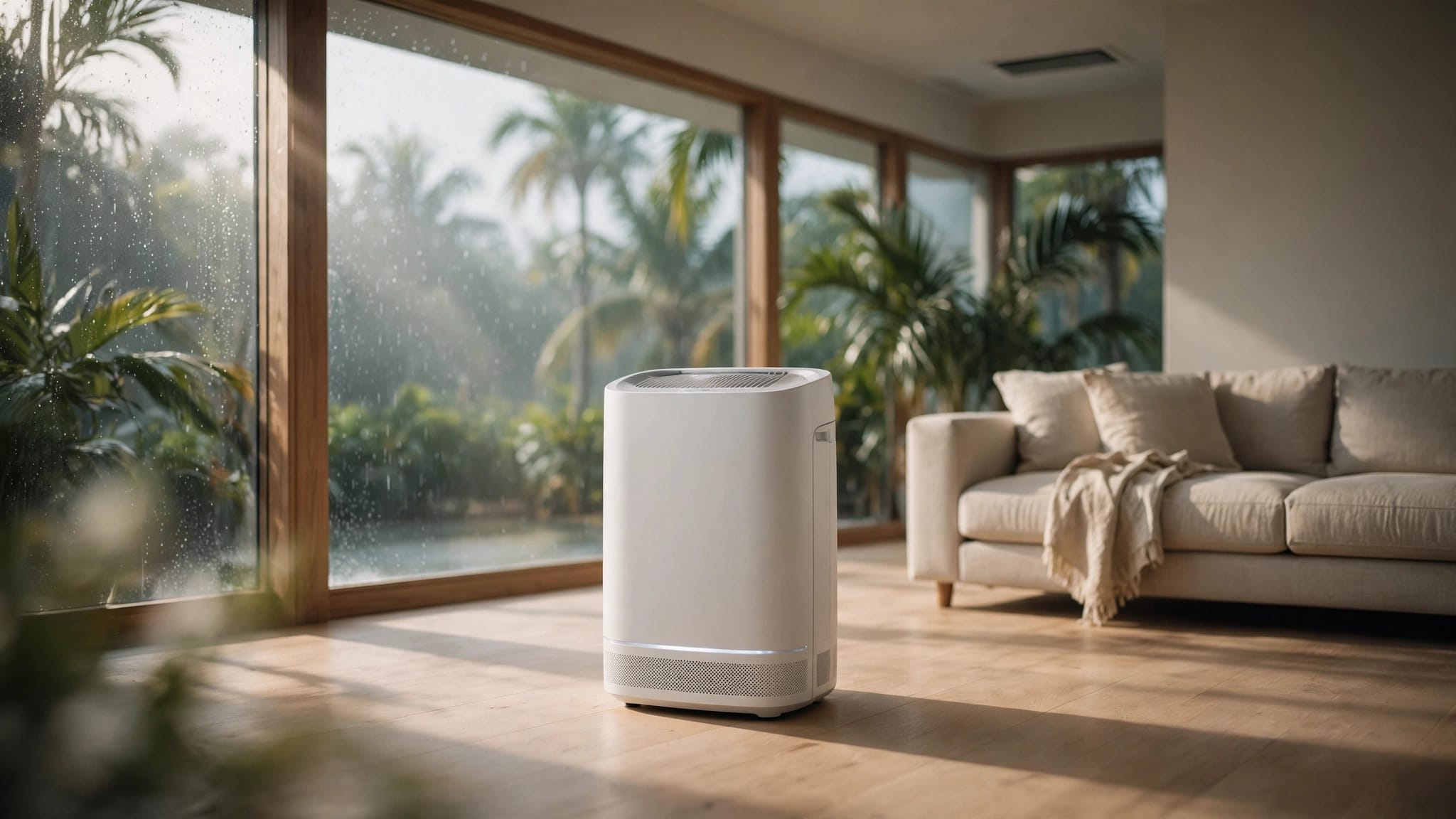
If the HVAC system cools the home but humidity remains high, a properly sized dehumidifier may help. A portable unit can address a single room, while a whole-home dehumidifier connects to the home's air distribution system. The right option depends on the home's layout, load, duct design, and the source of the moisture.
Keep indoor doors open enough for air circulation, but don't use fans to cover up a room that has a drainage or leak problem. Fans move air. They don't remove water from building materials.
When to Call an HVAC or Moisture Professional
Contact an HVAC professional when your hygrometer stays above 60% despite normal cooling, or when the system runs for long periods without lowering humidity. A technician can check refrigerant charge, coil condition, blower operation, duct leakage, condensate drainage, thermostat controls, and system sizing.
Short cycling deserves attention as well. If the air conditioner turns on and off repeatedly, the home may cool quickly without receiving enough dehumidification. A professional can determine whether the cause is an oversized unit, restricted airflow, thermostat location, or another equipment problem.
High humidity in only one room may point to an airflow or duct issue. A disconnected, leaking, or poorly insulated duct can affect comfort and create condensation in hot areas. Sealing the ductwork or correcting the return-air path may work better than lowering the thermostat.
Call a moisture or indoor air quality professional when you notice recurring musty odors, visible mold, water stains, bubbling paint, damp drywall, or condensation that keeps returning. Mold growth can have a source outside the HVAC system, and cleaning the visible area won't solve a continuing leak.
A trained professional can help separate HVAC humidity problems from roof, plumbing, drainage, or building-envelope problems. For persistent comfort issues or urgent equipment concerns, Contact Us to schedule a service call.
Conclusion
A Cape Coral home should generally maintain indoor relative humidity between 45% and 55% , while keeping readings below 60% whenever possible. Use a hygrometer to track the actual moisture level because a thermostat only measures temperature.
When humidity rises, check the filter, airflow, condensate drain, exhaust fans, windows, and outdoor drainage. If the readings remain high, an HVAC or moisture professional can find the cause before damp air leads to odors, mold, or building damage.