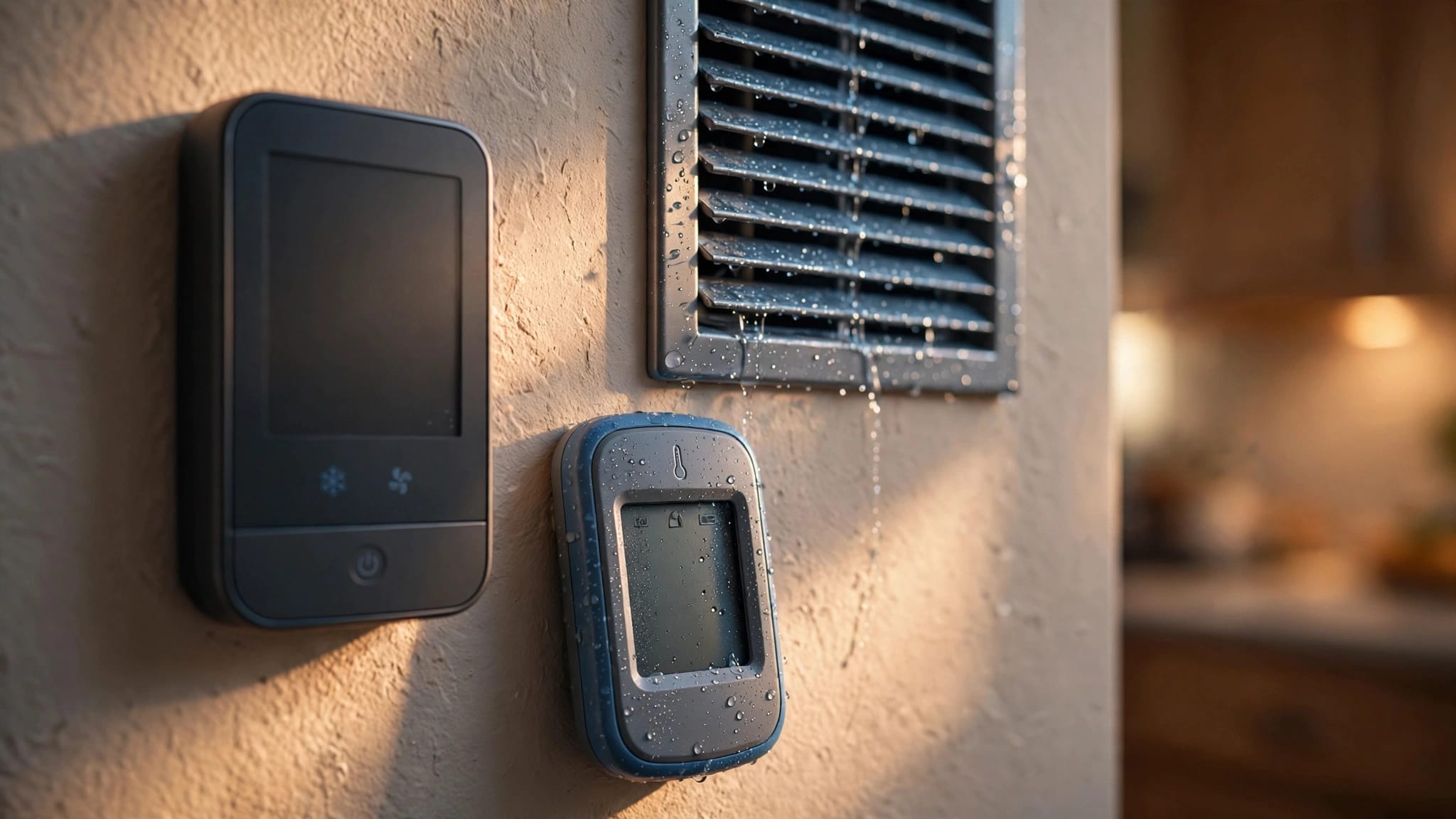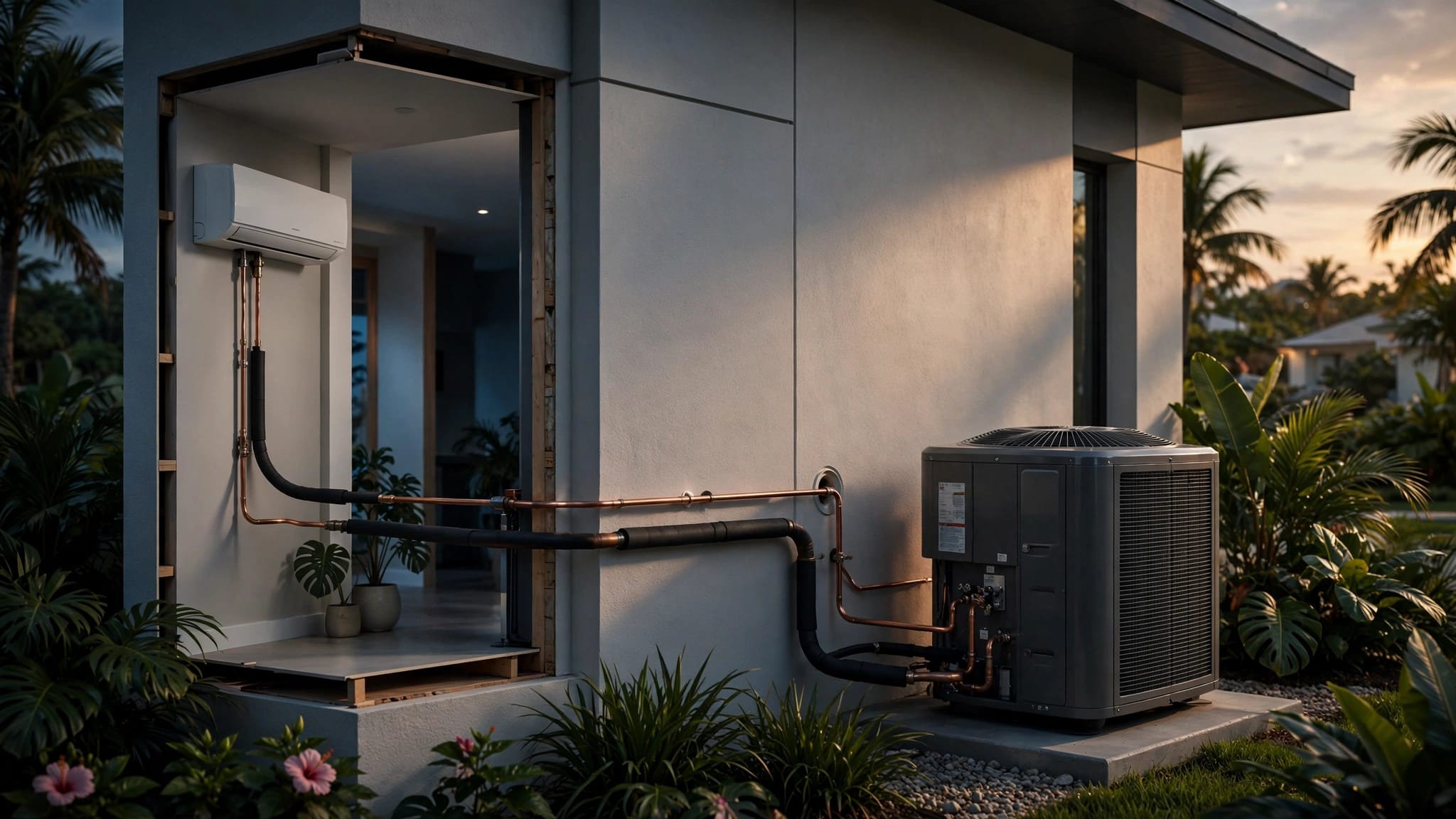
A burning smell from your AC can stop you in your tracks. In Cape Coral, where cooling runs hard most of the year, that odor can mean anything from dust on hot parts to a serious electrical problem.
Some smells fade fast and turn out to be harmless. Others mean you need to shut the system down right away. Knowing the difference can protect your home, your comfort, and your safety.
Why a burning smell from your AC deserves attention
A light dusty odor can show up when an AC starts after sitting unused. That happens when dust burns off warm parts. If the smell fades in a minute or two, the problem may be minor.
A strong burning smell is different. If it smells like hot plastic, melting wire, or smoke, turn the system off. That smell often points to heat where there should not be heat.
If the odor is sharp, electrical, or comes with smoke, shut the AC off and call for service.
A burning smell can also mean a part is straining. When that happens, the system may keep running for a while, but damage builds fast. For a unit that already sounds off or cools poorly, Air Conditioning Repair Cape Coral is the right next step.
Common reasons an AC smells like burning
Several problems can create this smell, and some are more serious than others.
Dust on internal components is one of the most common causes. Dust gathers on blower parts, coils, and other hot surfaces. When the AC runs, that dust can warm up and smell burnt.
A clogged air filter can do more than block dust. It can restrict airflow and make parts overheat. When air can't move well, the blower motor works harder, which raises the heat inside the system.
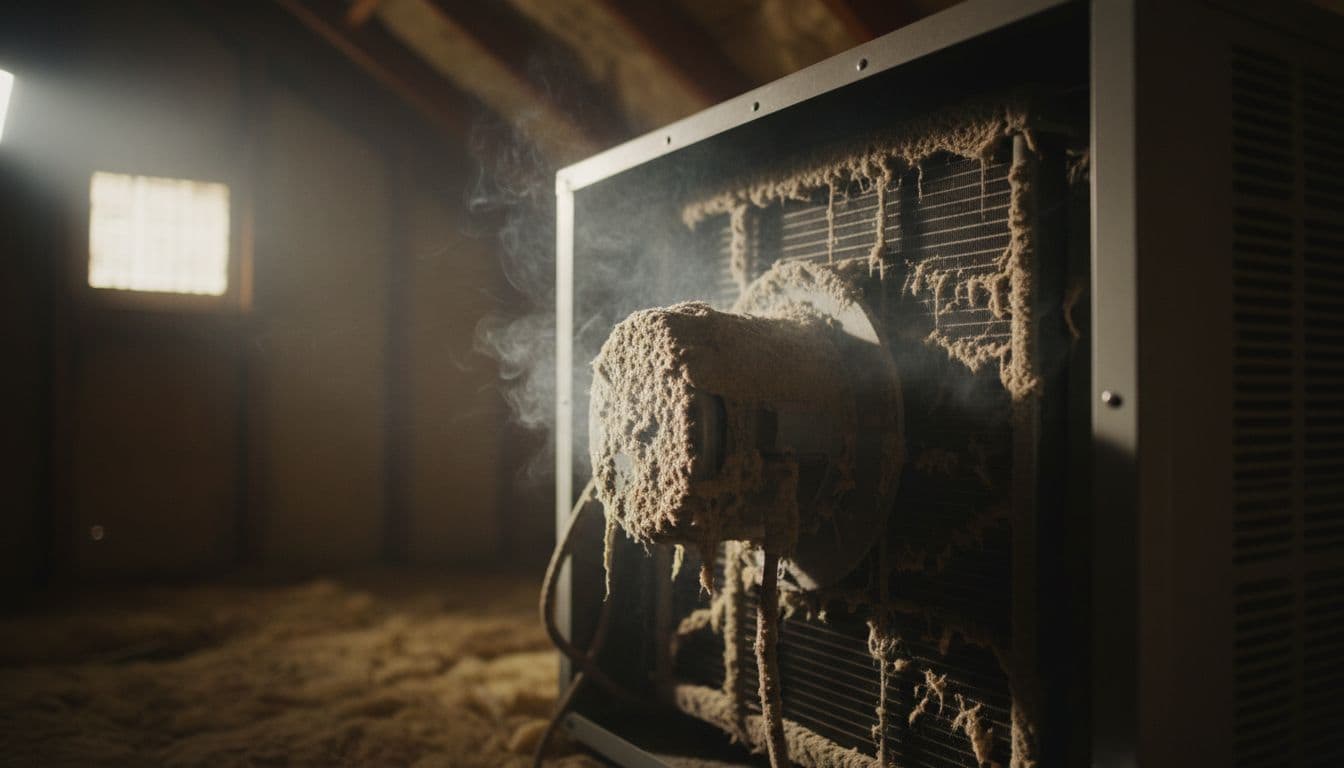
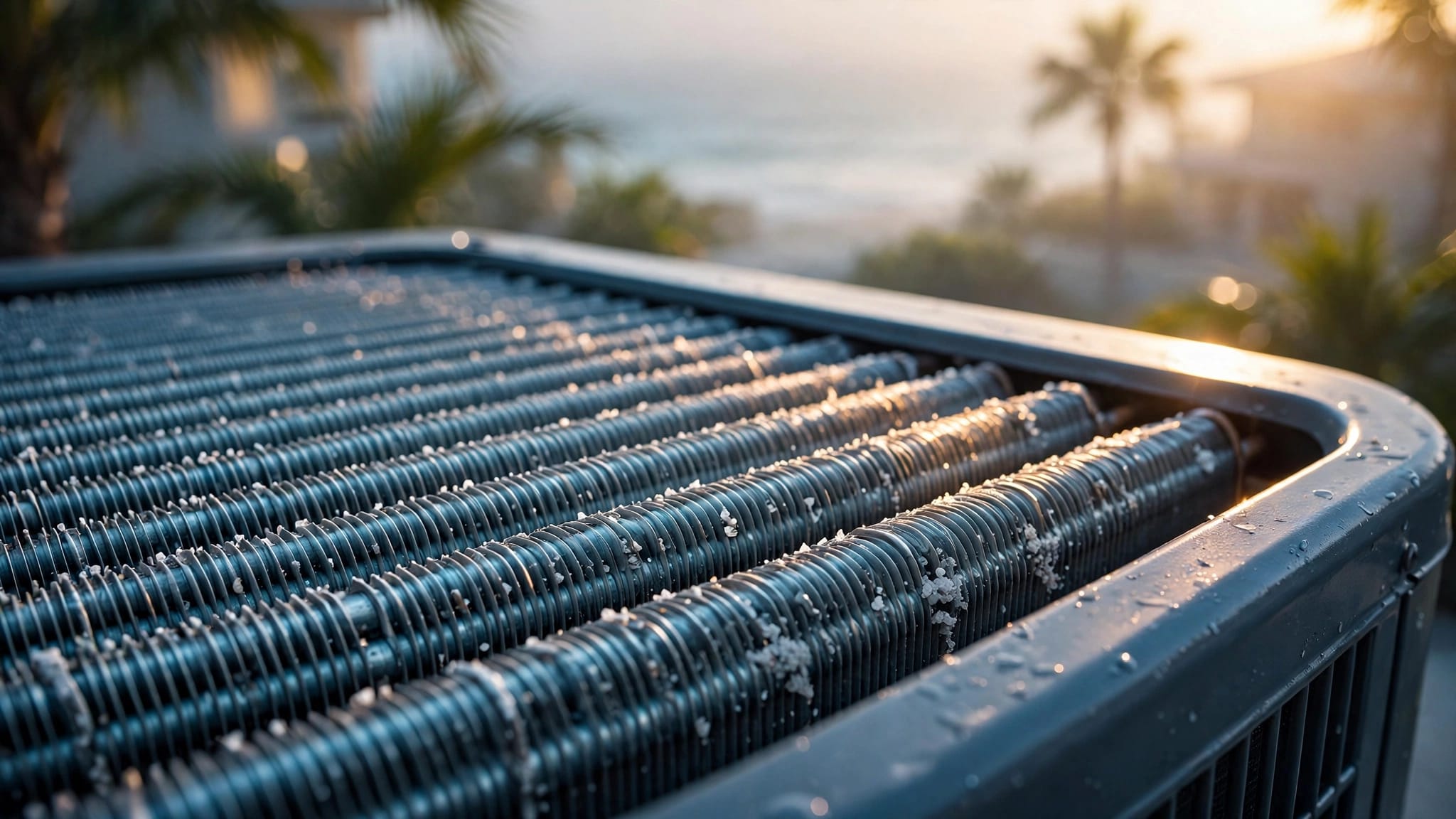
Caption: Dust and debris on hot parts can create a burnt smell fast.
Older systems can also develop belt or bearing problems. A worn belt may slip and smell hot. Bad bearings can create friction, which warms the motor and sends out a burning odor.
Electrical issues are another concern. Loose wiring, a failing capacitor, or a stuck contactor can make parts overheat. These problems can start small, then get worse without warning.
Debris near the outdoor unit can cause trouble too. Leaves, mulch, plastic, and small branches can get pulled close to the fan or sit against hot parts. In a coastal area, that risk goes up because wind and storms push more debris around.
Safe steps you can try before calling for help
Start with the simple checks that don't involve opening electrical parts.
First, turn the system off if the smell is strong or keeps returning. That's the safest move. Then let the unit cool for a few minutes before you look around.
Next, check the air filter. If it's dirty, replace it. A clogged filter is easy to miss, but it can cause heat buildup and poor airflow. A clean filter can also help the system run more smoothly.
Then look at the vents inside the house. Make sure furniture, rugs, and curtains aren't blocking supply or return airflow. Good airflow helps keep the blower motor from running hot.
After that, check the outdoor condenser. Clear away leaves, trash, and anything resting against the cabinet. Give the unit space so air can move around it.
Do not open the electrical panel or try to test wires, capacitors, or contactors yourself. Those parts can hold a charge even after the system is off. If the smell comes back after these basic checks, schedule service.
For homeowners who want help staying ahead of problems, HVAC maintenance agreements can make regular tune-ups easier to manage.

Why Cape Coral homes see this problem more often
Cape Coral AC systems work hard. They don't get long breaks, and that constant use adds wear. Humidity also makes things worse because damp air holds dust and grime on components.
Coastal conditions add another layer. Salt air can wear on electrical parts and metal pieces over time. Heavy rain, wind, and yard debris can also leave outdoor units dirty or blocked.
That is why preventive care matters here. A system that gets cleaned and checked on schedule is less likely to overheat or smell burnt. If you want a better picture of warning signs, common AC problems in Cape Coral homes is a useful read.
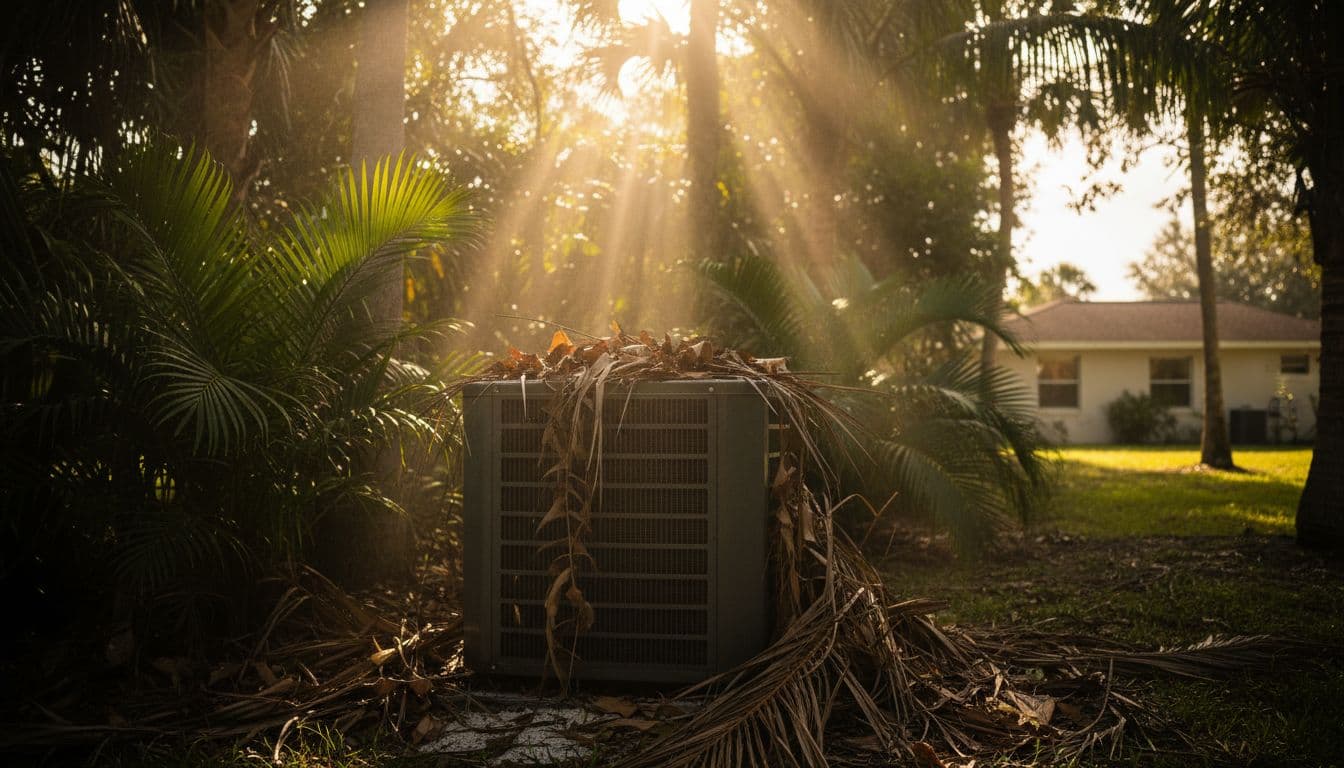
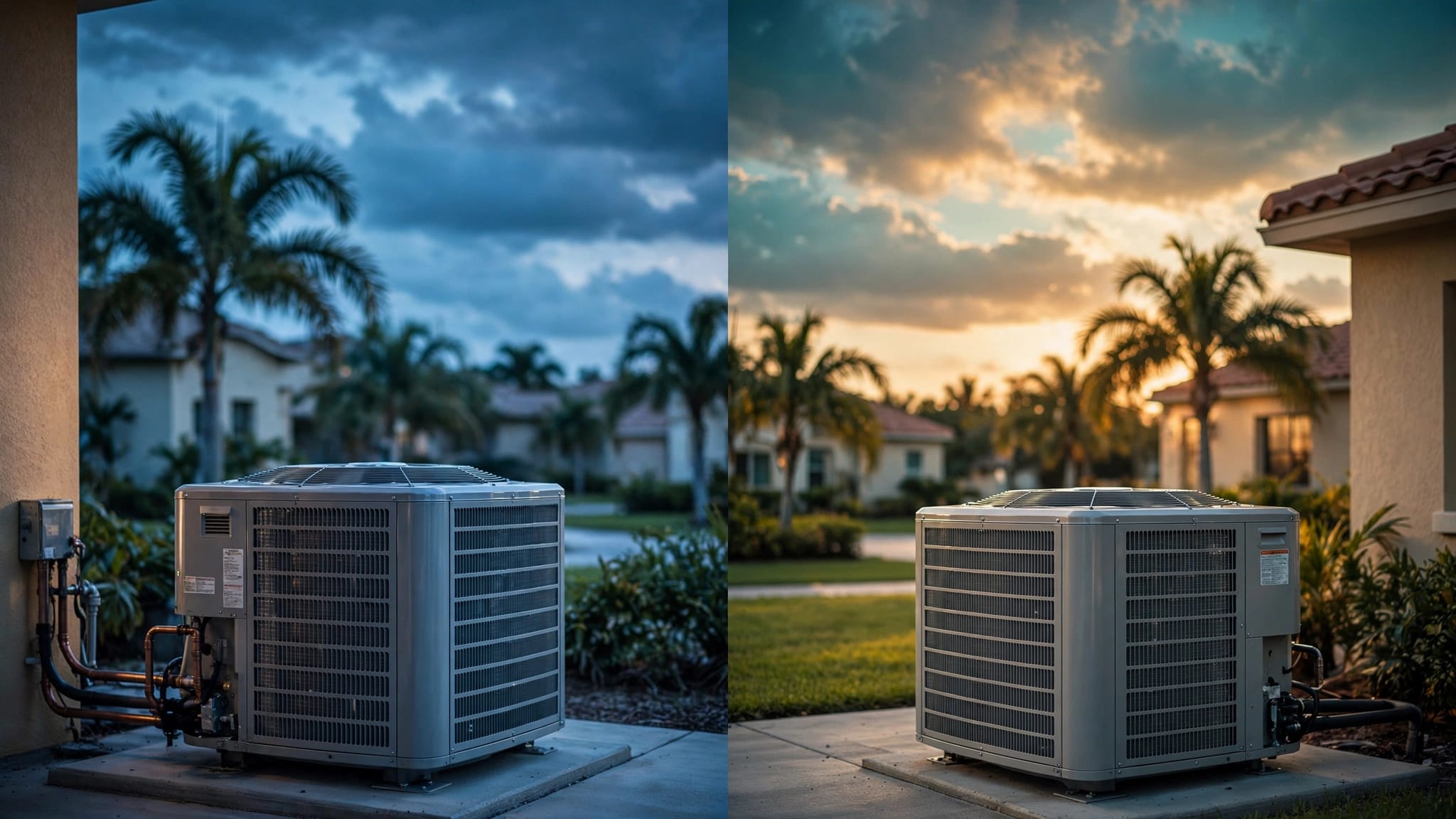
Caption: Outdoor debris and salt air can strain AC systems in Southwest Florida.
When to schedule AC repair right away
Some warning signs need immediate action. Shut the system down and call for help if you notice smoke, sparks, a breaker that keeps tripping, or a smell that gets stronger with each run cycle.
You should also call a professional if the smell is joined by grinding, squealing, or a fan that won't start. Those signs can point to motor trouble, belt failure, or a seized part. The longer the system runs that way, the more damage it can do.
If the odor is light but keeps coming back after a filter change and a quick inspection, don't wait. A small electrical issue can turn into a larger repair fast. For urgent help, Contact Us to schedule service, and if the system fails after hours, 24/7 emergency AC services can help.
Conclusion
When your AC smells like burning, the cause may be simple dust, or it may be a warning sign. The safest approach is to shut the system off if the smell is sharp, electrical, or persistent.
In Cape Coral's heat and humidity, small issues can grow fast. Regular filter changes, clean outdoor space, and yearly maintenance can stop many of these smells before they start.