If you've typed "house humid AC on" into your phone on a sticky Cape Coral afternoon, you're not alone. This is one of the most common comfort complaints in Southwest Florida.
Your AC can hit the set temperature and still leave the house feeling damp. That happens because cooling the air and removing moisture are related, but they are not the same job . In Cape Coral's hot, coastal climate, that difference matters every day.
Cooling the air is not the same as drying it
Air conditioners do two things at once. They lower indoor temperature, and they pull moisture from the air as water condenses on the indoor coil.
That sounds simple, but the system needs enough run time and the right airflow to do both well. If it cools fast and shuts off early, the house may reach 74 degrees while still feeling sticky. In other words, the thermometer looks fine, but your comfort doesn't.
Cape Coral makes this harder. Outdoor air already carries a heavy moisture load, especially during summer and the rainy season. Every time a door opens, humid air tries to move inside. If your home has small leaks, weak insulation, or duct gaps, the AC may be fighting a losing battle.
A healthy indoor humidity range is usually 45% to 55% . Above that, many homes start to feel clammy, even when the temperature looks normal.
So if the air feels cool but muggy, your AC may be cooling without dehumidifying enough.
Common reasons your AC cools but the house still feels humid
One of the biggest causes is an oversized system. A unit that's too large cools the house too quickly, then shuts off. That short cycling leaves less time for moisture removal. If you suspect that, this guide on the right AC size for humid Cape Coral homes explains why sizing matters so much here.
Another common issue is the thermostat fan setting. If the fan is set to ON instead of AUTO , the blower runs even when the compressor is off. That can move moisture back into the air from a wet coil, especially right after a cooling cycle.
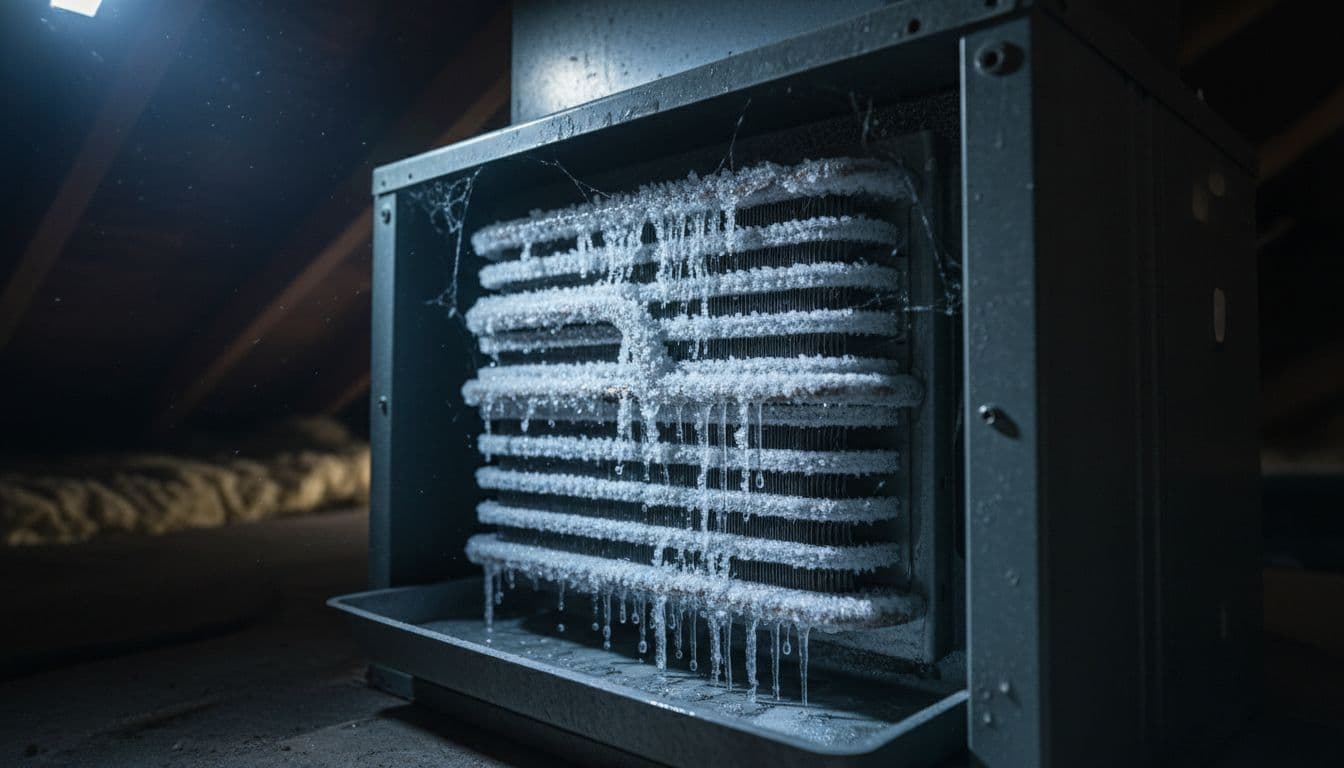
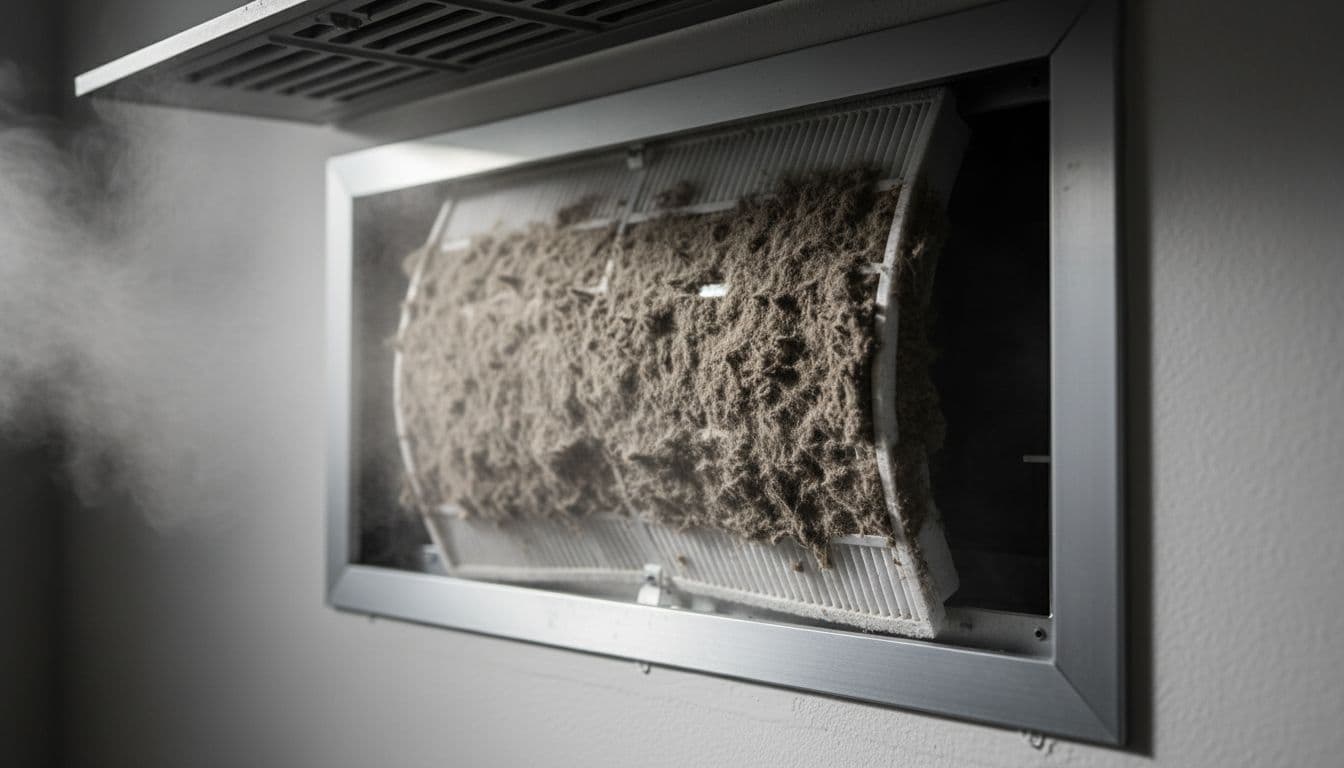
Dirty filters also play a part. When airflow drops, the coil can't work the way it should. The result can be weak dehumidifying, longer run times, and sometimes ice on the coil.
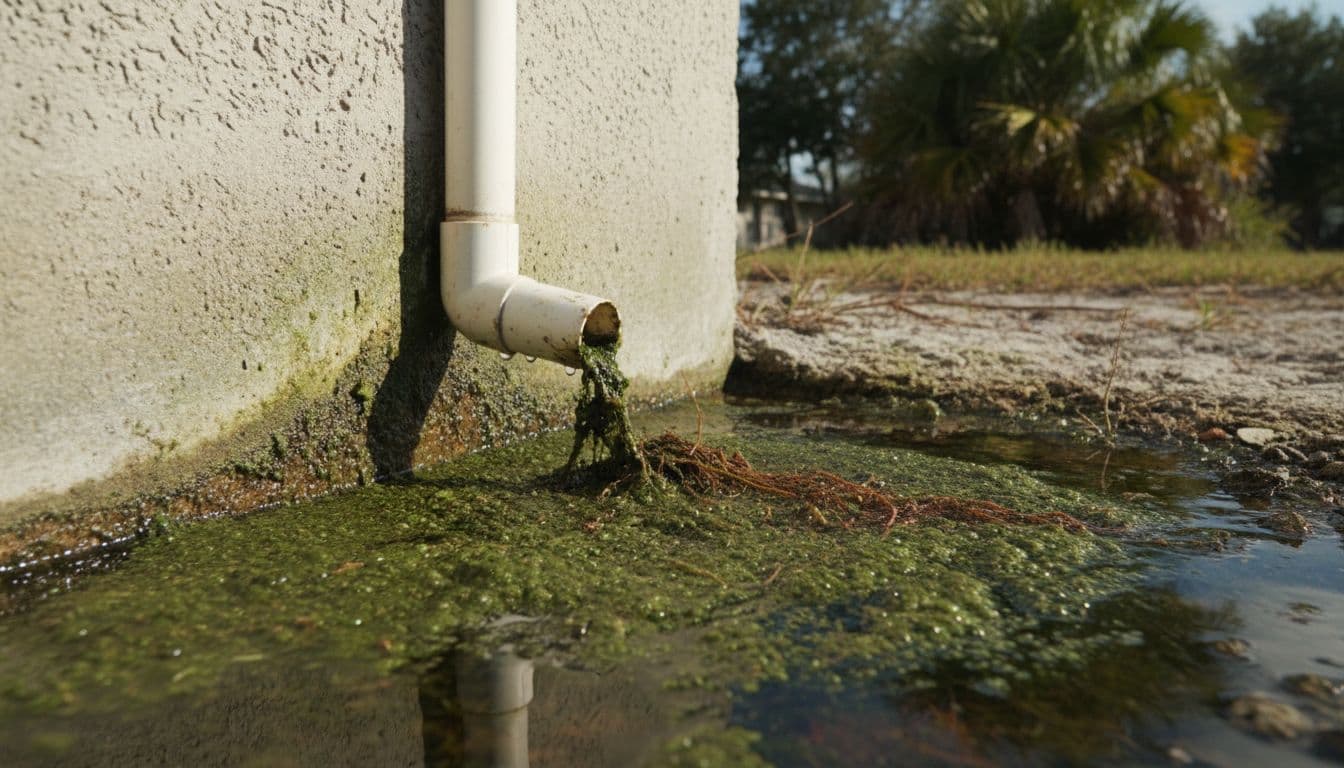
A clogged condensate drain can cause trouble too. Your AC removes water from the air, and that water has to drain away. If the line backs up with algae or debris, moisture can stay where it shouldn't. You may notice water near the indoor unit, a damp smell, or the system shutting down.
Evaporator coil problems matter as well. A dirty coil struggles to transfer heat and moisture. A frozen coil points to airflow or refrigerant trouble. Either way, humidity control suffers.
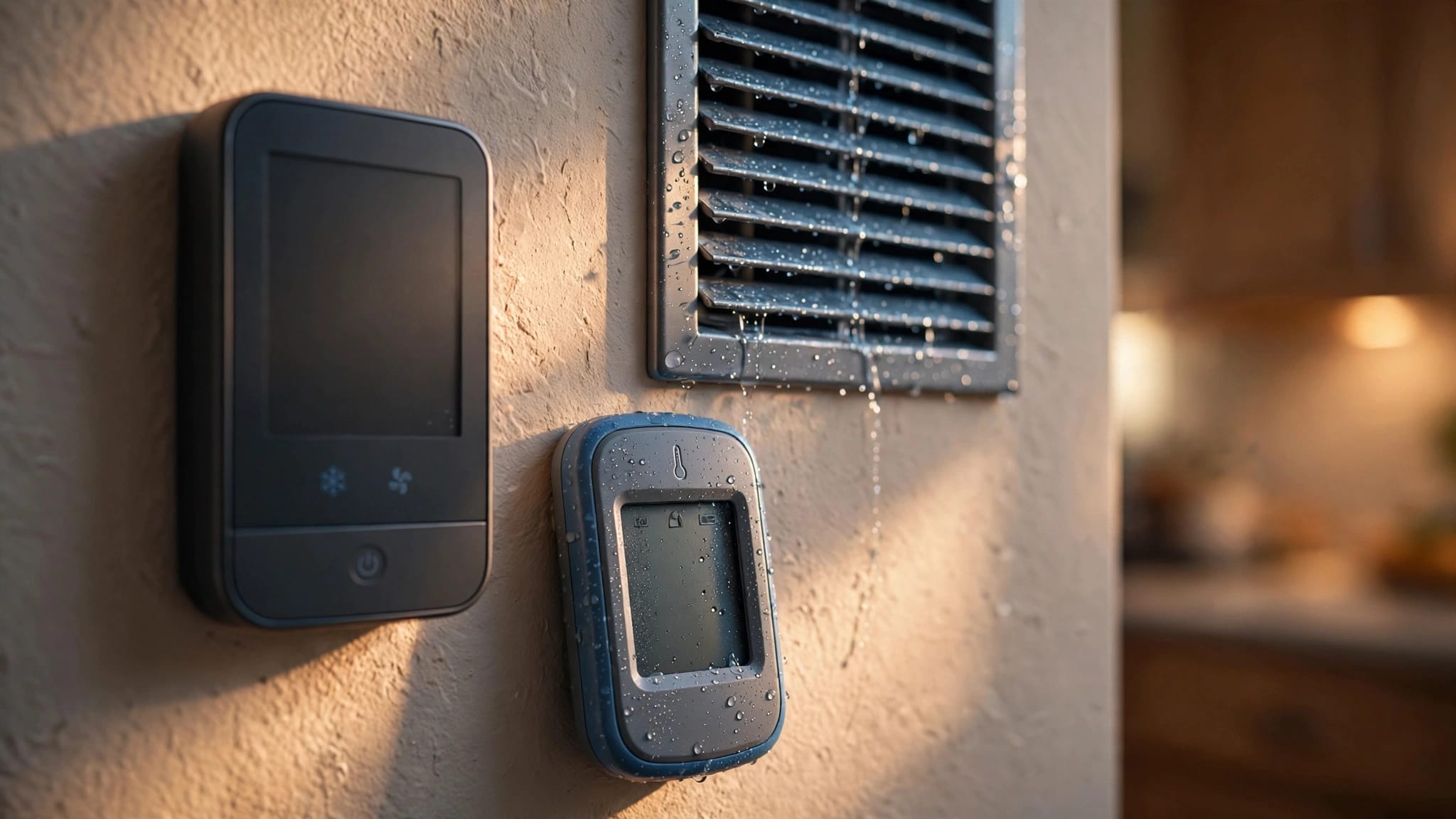
Thermostat placement can make things worse. If it's near a supply vent, in direct sun, or close to the kitchen, it may get a false reading and shut the system off too soon.
Moisture may be getting in faster than the AC can remove it
Sometimes the AC isn't the only problem. Your home may be pulling in humid outside air faster than the system can dry it.
Leaky ducts are a prime example. If return ducts pull air from a hot attic, garage, or crawlspace, that extra moisture ends up inside your living space. Supply leaks waste cooled air before it reaches the rooms that need it. If airflow feels uneven, it may help to fix leaky HVAC ducts.
Poor attic insulation and air sealing can do the same thing. In Cape Coral, a hot attic can press humid air into the house through recessed lights, attic hatches, plumbing gaps, and wall openings. If your home has a crawlspace, the same issue can happen there.
Doors and windows matter too. Worn weatherstripping, loose sliders, and small frame gaps let moisture sneak in all day. Add long showers, cooking steam, or frequent trips in and out, and indoor humidity can climb fast.
That means your AC may be working fine mechanically, but the house itself is feeding the humidity problem.
Quick checks you can do today
Start with a few simple steps before you assume the system needs a major repair.
- Set the thermostat fan to AUTO . This alone can improve comfort if the fan has been running nonstop.
- Check the air filter. If it looks gray, dusty, or packed, replace it.
- Look around the indoor unit for water, rust, or a full drain pan. Those signs can point to a blocked condensate line.
- Close windows fully and check exterior doors for loose seals, especially sliders that get heavy use.
- Use a simple indoor hygrometer. If humidity stays above 55% for days, you have a real moisture issue.
- Pay attention to run time. If the AC starts and stops every few minutes, short cycling is likely.
Also notice where the thermostat sits. A bad location can throw off the whole system.
These checks won't fix every problem, but they can tell you whether the issue is basic upkeep, house leakage, or equipment trouble.
When it's time to bring in a pro
Some humidity problems need service, not guesswork.
Call for help if you notice:
- Musty odors coming from vents
- Ice on the indoor coil or refrigerant line
- Water around the air handler or repeated drain clogs
- Short cycling that doesn't stop after a filter change
- Indoor humidity staying above 55% even with regular AC use
Those signs often point to coil issues, drain problems, refrigerant trouble, duct leakage, or a system that isn't sized right. For that kind of diagnosis, it's smart to schedule professional AC repair services in Cape Coral. If you need same-day help, you can Contact Us.
For prevention, check the filter monthly, keep the fan on AUTO, and don't ignore small water leaks. Regular tune-ups also help. Back Bay's maintenance agreements include drain cleaning, coil checks, thermostat checks, and duct inspection, all of which matter in Cape Coral's damp climate.
A dry home should feel cooler
When your house feels humid with the AC on, the issue is usually one of three things: poor moisture removal, humid air leaking in, or both. In Cape Coral, small problems show up fast because the outdoor air is already heavy with moisture.
Keep indoor humidity around 45% to 55% , watch for short cycling and water buildup, and don't let the fan run on ON all day. A house that feels dry enough almost always feels more comfortable too.