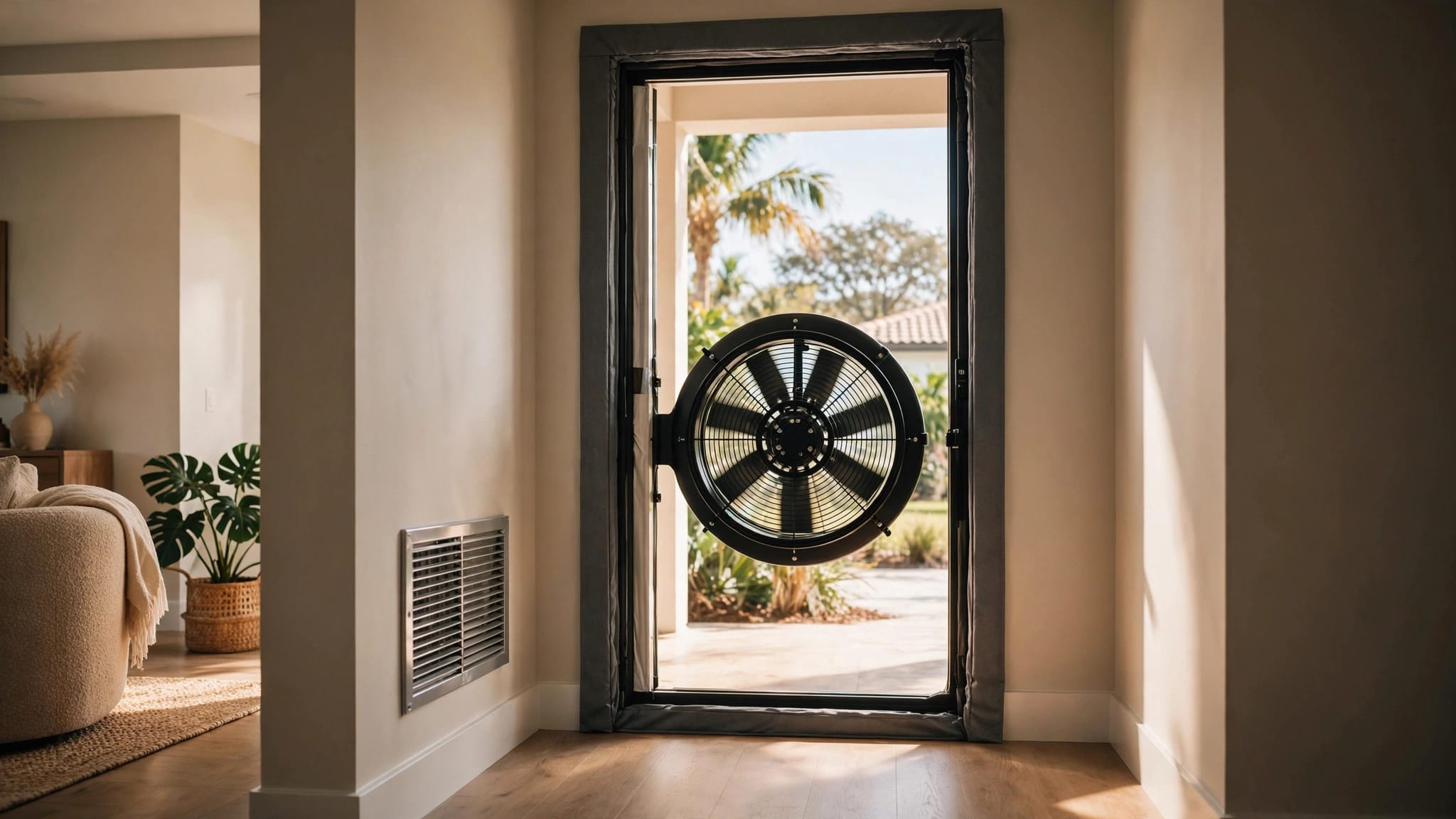
Florida humidity can make a house feel sticky even when the AC is running. That's why so many homeowners start comparing portable vs whole-home dehumidifiers once they notice musty closets, damp bathrooms, or windows that keep fogging up.
The right choice depends on more than price. You also need to think about how much of the house feels damp, how often moisture problems show up after storms, and whether you want a quick fix or a system that works with the rest of your HVAC equipment.
Why Florida Homes Feel Damp Even With AC
Air conditioning removes some moisture, but Florida asks a lot from any cooling system. Long stretches of heat, high outdoor humidity, and sudden rain can keep indoor moisture levels higher than they should be.
That matters because excess humidity does more than make you uncomfortable. It can leave a room smelling stale, encourage mildew on walls and fabrics, and make it harder for your home to feel clean after you've spent time and money cooling it.
In coastal and Southwest Florida homes, the problem can get worse during storm season. Doors open and close more often, the air is wetter, and crawl spaces, garages, and closets can hold damp air longer than you expect.
If your home feels heavy in the morning or sticky again by afternoon, the issue may be humidity control, not temperature control. That is where the dehumidifier choice starts to matter.
Portable vs Whole-Home Dehumidifiers: What Changes
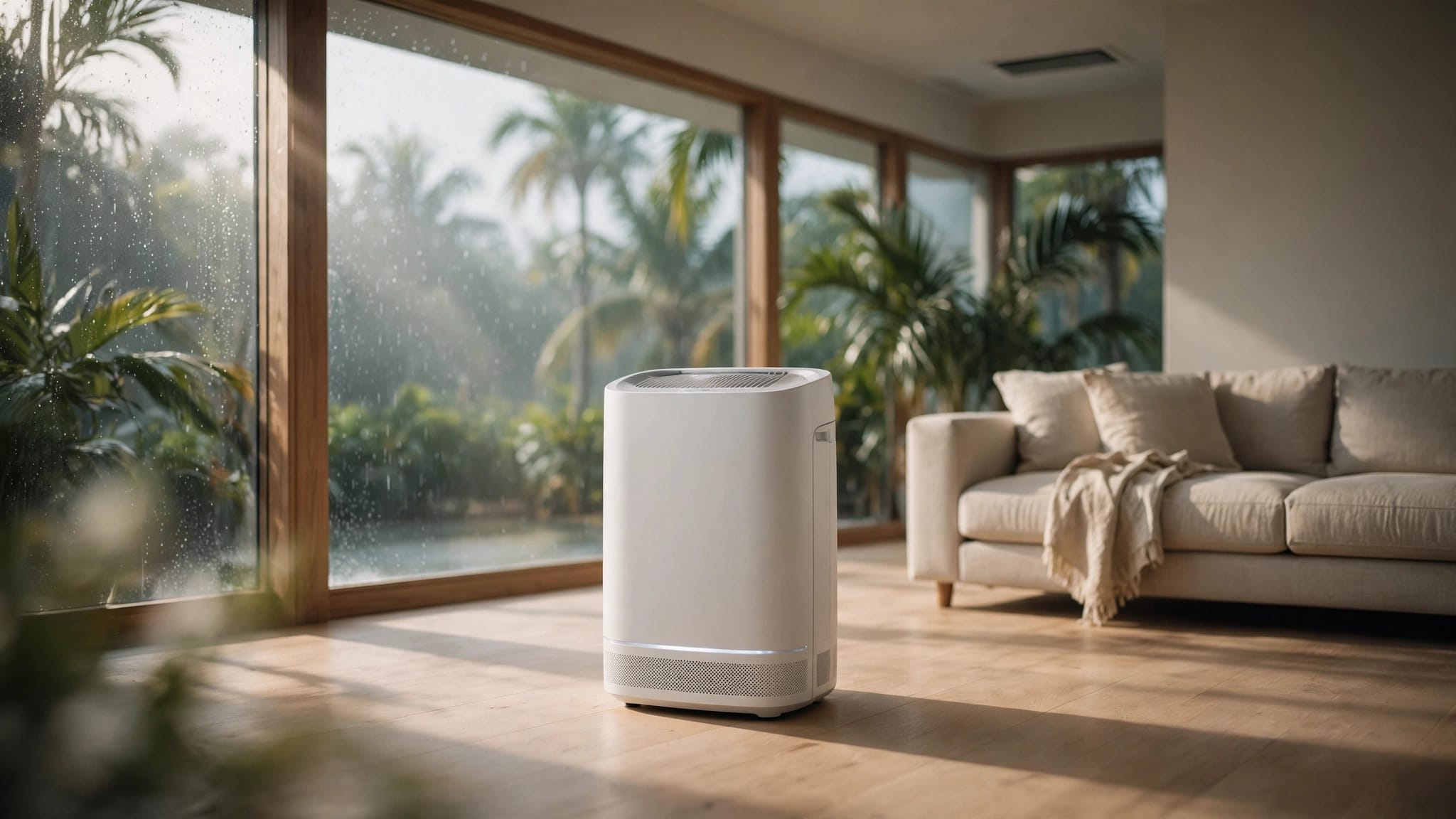
Portable units and whole-home systems both pull moisture from the air, but they do it in very different ways. A portable unit treats one room or a small area. A whole-home system handles moisture across the entire house, usually through the HVAC system or as a dedicated installed unit.
Here's the simplest way to compare them.
| Feature | Portable Dehumidifier | Whole-Home Dehumidifier |
|---|---|---|
| Coverage | One room or a small zone | Entire house or most of it |
| Installation | Plug it in and drain the bucket | Professional installation |
| Noise | Usually noticeable in the room | Much quieter indoors |
| Maintenance | Empty bucket or manage hose, clean filters | Less daily work, still needs upkeep |
| Best for | One damp room, short-term use | Ongoing humidity problems in multiple rooms |
| Upfront cost | Lower | Higher |
| Long-term comfort | Limited to the room it serves | More consistent throughout the home |
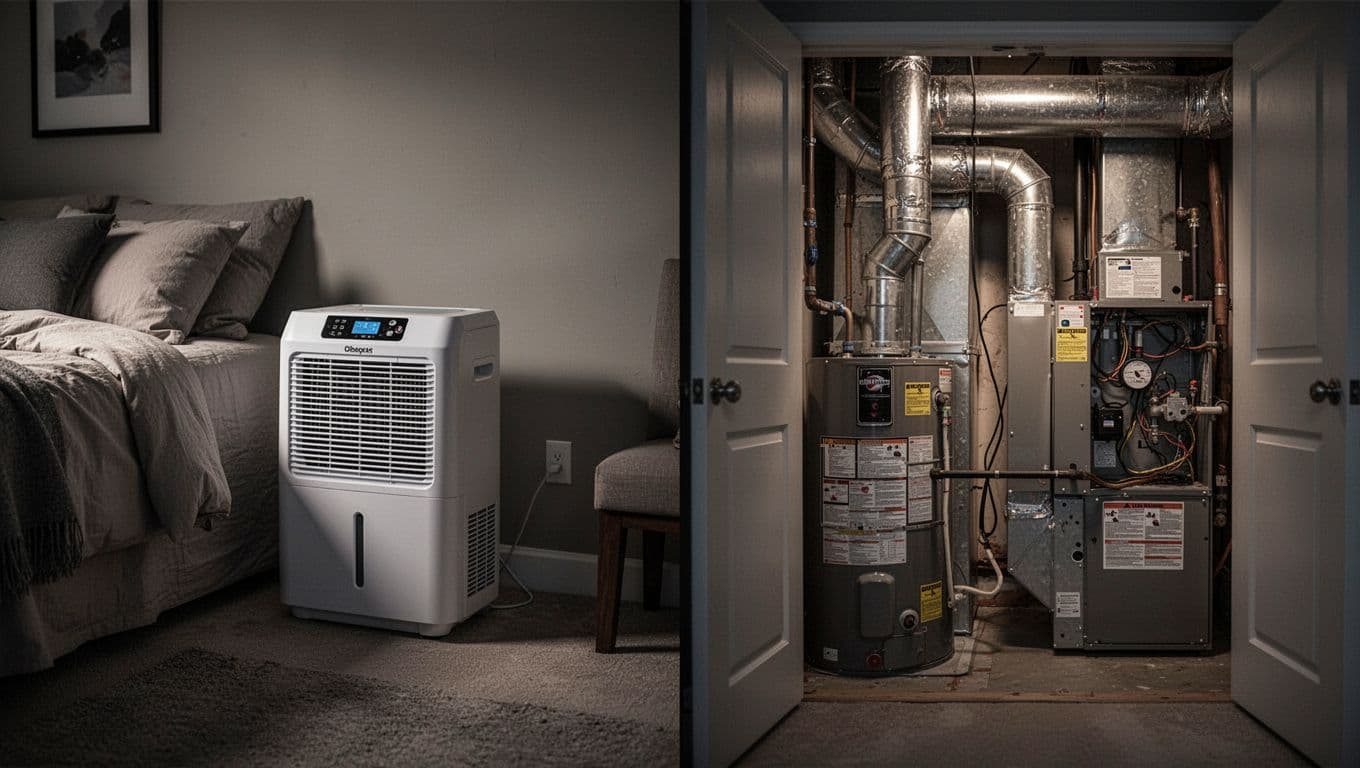
The table makes one thing clear. A portable unit can solve a local problem, while a whole-home system handles the bigger picture. If humidity shows up in several rooms, the whole-house option usually makes more sense.
When moisture is only a bedroom problem, portability helps. When the whole house feels damp, the solution needs to reach farther than one outlet.
When a Portable Dehumidifier Makes Sense
A portable unit can be a smart choice when the problem is isolated. Maybe the guest room stays muggy because the door stays shut. Maybe the laundry room gets damp after every load. Maybe a closet near an exterior wall smells musty after a rainy week.
In those cases, a portable dehumidifier gives you control without a major installation. You can move it where you need it, run it only when the room feels off, and avoid paying for capacity you won't use.
Portable units also make sense if you're renting, if you need a temporary fix, or if you want to test whether humidity is really the source of the problem. Sometimes a single bedroom unit is enough to stop that clammy feeling at night.
A portable model works best when:
- One room holds moisture more than the rest of the house
- You need a short-term solution after water intrusion or a roof leak
- You want lower upfront cost
- You don't want to modify the HVAC system
Even then, daily upkeep matters. The bucket needs emptying unless the unit drains continuously, and filters still need cleaning. If you ignore that maintenance, the unit loses effectiveness fast.
When a Whole-Home Dehumidifier Is the Better Investment
A whole-home dehumidifier makes more sense when humidity is a household problem, not a room-by-room nuisance. That's common in Florida homes with large square footage, closed floor plans, or spaces that hold moisture long after the AC cycle ends.
This option is also a better fit if you care about more even comfort. One room won't feel crisp while another still feels sticky. Instead, the home feels more balanced, which matters when you're trying to keep bedding, furniture, and closets from developing that damp smell.
Whole-home systems often work well when:
- Multiple rooms feel humid at the same time
- You notice recurring mildew or condensation
- Your AC runs often but the house still feels damp
- You want a quieter, more permanent solution
- You're already planning HVAC work or duct improvements
Whole-home dehumidification also fits homeowners who want a better indoor air quality strategy. Lower humidity helps slow mold growth and reduces the conditions that let musty odors linger. That does not replace filtration or ventilation, but it does support both.
If the home has recurring moisture issues, pairing a dehumidifier with routine HVAC maintenance services helps the system keep moving air the way it should. Dirty coils, clogged drains, and weak airflow can all make humidity harder to control.
Cost, Energy Use, and Daily Maintenance
Price is usually the first thing people compare, but the total cost tells a better story. A portable unit costs less up front, yet it may run more often, need replacement sooner, and only solve one area at a time. A whole-home system costs more to install, but it serves the full house and usually asks less of you day to day.
Energy use matters too. A small portable unit may seem cheaper to run, especially if you only use it in one space. Still, if you end up running two or three units around the house, the savings fade. A properly sized whole-home setup can be more efficient for broad humidity control because it is built to manage the job as part of the home's overall system.
Maintenance is another difference. Portable units need attention from the homeowner. Whole-home systems need less frequent daily work, but they still need inspections, drain checks, and clean coils or filters. That is one reason regular HVAC care matters in Florida homes, especially after a stormy season.
For a homeowner comparing both options, the real question is this: do you want to babysit a few rooms, or do you want the whole house handled at once?
Florida-Specific Factors That Should Shape the Decision
Humidity in Florida is not a seasonal annoyance. It hangs around long enough to shape how your home smells, feels, and ages. Because of that, the best dehumidifier choice should account for more than comfort alone.
Storm season is a big factor. After heavy rain, power blips, or days with doors opening constantly, moisture can build up fast. If your home already has a damp basement, a garage that traps humidity, or bedrooms near exterior walls, a portable unit may only chase the problem around.
Whole-home systems are often the better match for homeowners who want consistent moisture control through the year, not just during the hottest months. They also help protect materials that hate humidity, like wood trim, cabinets, fabrics, and stored belongings.
If you're deciding for a newly built home, a remodeled house, or a property with ductwork concerns, professional advice matters. A quick inspection can show whether the issue comes from airflow, insulation, or poor ventilation rather than from the dehumidifier itself. If you want help weighing the options, Contact Us for a service call and a direct recommendation.
Choosing the Right Fit for a Florida Home
A portable dehumidifier works best when the moisture problem stays in one place. It is practical, flexible, and easy to try without a big commitment.
A whole-home dehumidifier is the stronger choice when humidity affects the entire house, when mildew keeps coming back, or when you want steady comfort without running multiple portable units. For many Florida homeowners, that difference matters more than the initial price.
The real goal is simple: keep your home dry enough to feel comfortable, protect it from mildew and musty odors, and make your cooling system work the way it should. In Florida, humidity is part of the house conversation whether you want it there or not.
Conclusion
Florida homes need more than cool air. They need moisture control that matches the way the house is built and the way the weather behaves.
A portable unit can solve a problem in one room, but a whole-home system brings steadier results when humidity spreads across the house. The best choice is the one that fits your space, your routine, and how often you fight damp air after storms or on muggy afternoons.