When your Florida home sits empty for weeks, the thermostat becomes more than a comfort control. It becomes part of your house watch, your humidity plan, and your peace of mind.
That matters more in Florida than in many other places. Heat builds fast, humidity lingers, and a small problem can grow while you are out of state. The choice between a smart thermostat vs. programmable thermostat comes down to how much you want to monitor, how often you travel, and how much risk you want to remove before you lock the door.
Why snowbirds need a different thermostat plan
A year-round resident usually wants comfort on demand. A snowbird wants a house that stays stable, even when no one is there to hear the AC kick on.
That changes the job of the thermostat. It is not just about saving a few dollars on cooling. It is about keeping indoor conditions steady enough to help protect flooring, furniture, drywall, and air quality.
Florida cooling loads also work the system hard. Long run times are normal, especially in late spring and summer. When the AC cycles often, a thermostat with useful data or alerts can help you spot odd behavior sooner.
Humidity is the bigger issue. Warm, damp air can creep into a closed house and create trouble before you notice it. That is why many second-home owners pair their thermostat choice with regular service, such as HVAC maintenance agreements, so small issues do not wait until the next visit.
Smart thermostat vs. programmable thermostat in plain terms
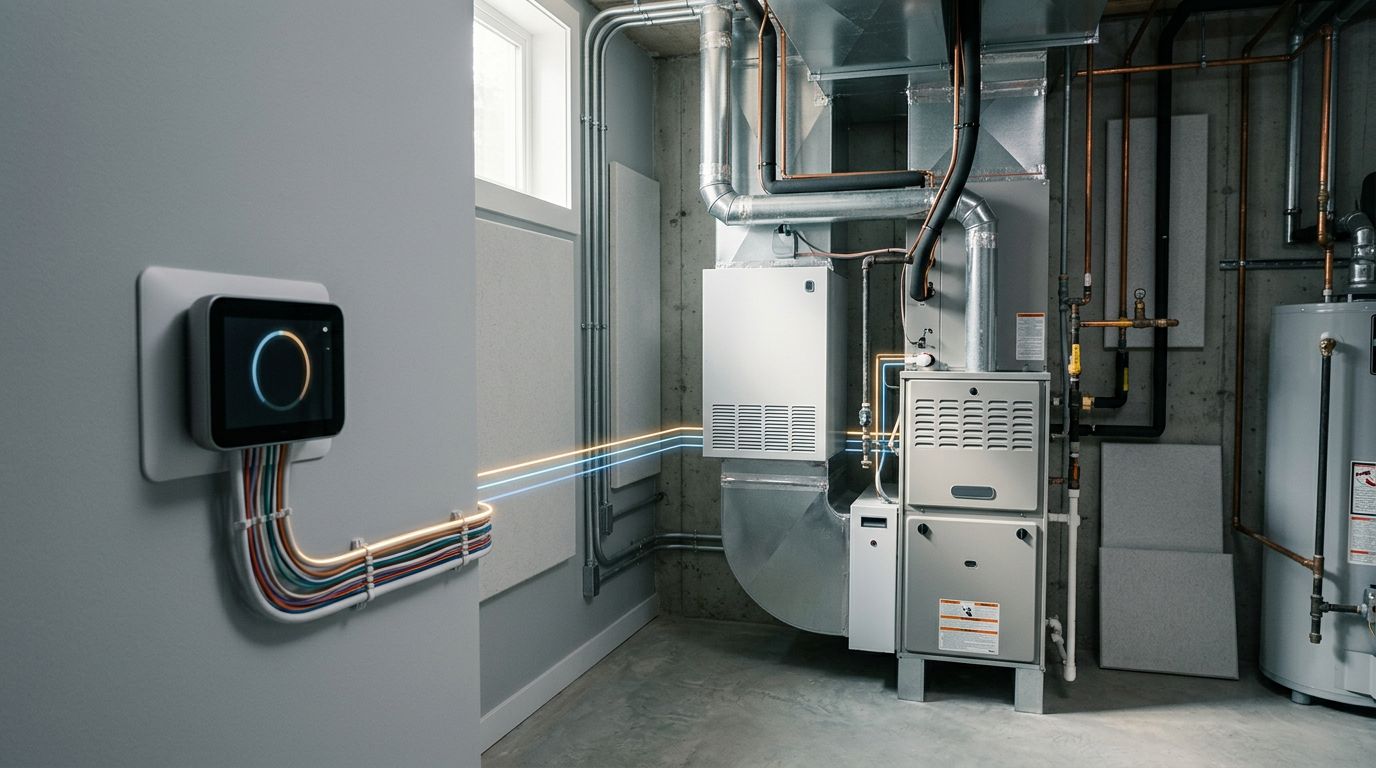
The difference sounds simple, but the practical impact is bigger for part-time residents. A programmable thermostat follows the schedule you set. A smart thermostat can do that too, but it also adds app control, alerts, and in many cases more visibility into what the system is doing.
Here is a quick side-by-side look.
| Factor | Smart thermostat | Programmable thermostat | Snowbird takeaway |
|---|---|---|---|
| Remote control | Yes, through an app | No | Helpful when you are out of state |
| Scheduling | Flexible and easy to change | Works on preset schedules | Good if your travel dates stay steady |
| Alerts | Often yes | Usually no | Useful for temperature swings or system issues |
| Internet dependence | Yes | No | Important during storms or outages |
| Cost | Higher upfront | Lower upfront | Budget matters if the home stays simple |
| Learning curve | Moderate | Low | Simpler is better for some owners |
A smart thermostat gives you more information. A programmable thermostat gives you fewer moving parts. That single tradeoff matters a lot when the house is vacant for long stretches.
A thermostat cannot fix a broken AC, but it can help you notice trouble before a small issue becomes a hot, sticky mess.
Florida humidity changes the decision
In a dry climate, a thermostat choice may be mostly about energy use. In Florida, humidity changes the conversation.
If the indoor temperature drifts too high, moisture can build up. That can lead to musty odors, sticky surfaces, and mold risk in closed spaces. A smart thermostat helps here because it lets you check conditions from anywhere. Some models also give you alerts if the home temperature jumps or the system stops behaving as expected.
A programmable thermostat can still work well if you keep a steady schedule and the system is sized right. The key is consistency. Big temperature setbacks may save a little energy, but they can also let humidity climb when no one is home.
Before you head north, it also helps to get the AC checked. A clogged drain line, dirty coil, or weak capacitor can turn into a bigger problem during a long absence. If you want a sense of what that service includes, what to expect during an AC tune-up is a good place to start.
For snowbirds, the best thermostat is the one that supports a stable indoor environment without much guesswork.
Managing your second home from afar
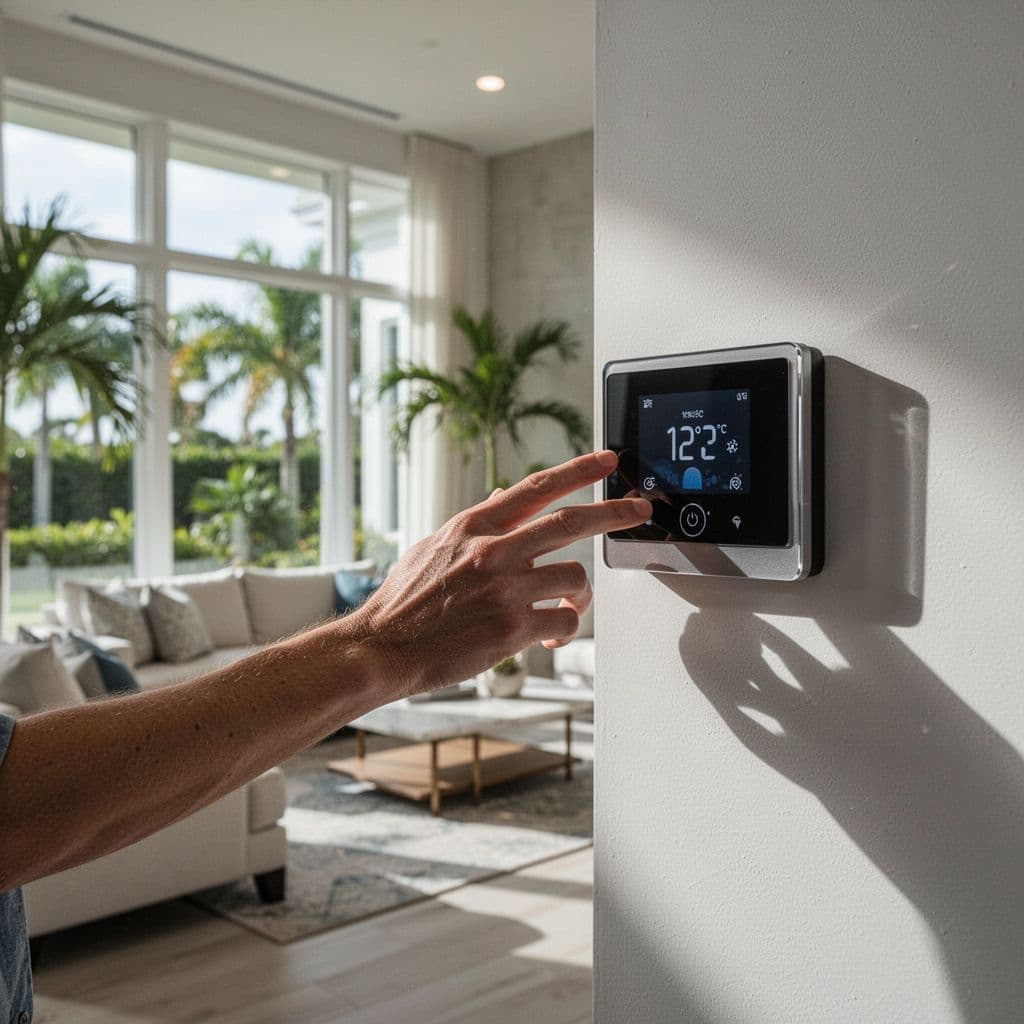
A smart thermostat earns its keep when you want eyes on the house without driving there. You can check the setpoint before a storm, raise the temperature after guests leave, or confirm the AC is still responding after a power blip.
That matters during Florida weather season. Power can drop. Internet can go down. A smart thermostat is helpful, but it depends on a working connection to send alerts and accept remote changes. If the Wi-Fi is down, you lose some of that advantage until service returns.
A programmable thermostat keeps working through an internet outage because it does not need the cloud at all. That makes it dependable in a different way. The downside is simple: you will not know what is happening unless someone is there to look.
For owners who leave for months, the best setup often includes more than the thermostat itself. A trusted neighbor, a property manager, or a service plan can make a big difference. A maintenance visit can catch drain clogs, dirty filters, and calibration problems before they turn into a flooded closet or a warm house.
If you prefer a hands-off setup, ask yourself one question. Do you want your thermostat to be a silent background tool, or do you want it to be an active part of your home monitoring?
When a programmable thermostat is the better buy
A programmable thermostat still makes sense for a lot of Florida homeowners. It costs less, it is easy to use, and it does not ask for an app login or stable internet.
That can be a smart fit if your travel pattern is simple. Maybe you leave in April, return in November, and use the same schedule every year. In that case, a basic program may be all you need. You set it once, confirm it before you leave, and let it do its job.
It also works well if you do not want another device to manage. Some owners prefer a thermostat that will never send notifications, never require software updates, and never ask for account access. For them, less tech feels safer.
Still, there is a tradeoff. If your plans change often, if you rent the home part of the season, or if you want quick insight after a storm, the programmable option feels limited. It is reliable, but it is not watchful.
A practical recommendation for snowbirds
If your budget is tight and your travel schedule is steady, a programmable thermostat is a solid choice. It is simple, affordable, and dependable for a home that follows the same pattern year after year.
If you are away for long stretches, want remote checks, or worry about humidity and outages, a smart thermostat usually fits better. It gives you more visibility when the house is empty, which is valuable in Florida.
If you are in the middle, choose based on comfort with tech. A smart thermostat works best for owners who will use the app. A programmable thermostat works best for owners who want one setup and no fuss.
If you are unsure which option matches your AC system and your time away, Contact Us for help sorting out the right fit.
Conclusion
For Florida snowbirds, the best thermostat is the one that helps protect an empty home, not just cool an occupied one. That usually means thinking about humidity , outage risk, and how often you want to check in from far away.
A smart thermostat gives you more control and more information. A programmable thermostat gives you lower cost and less complexity. The right answer depends on how long you leave, how much tech you want to manage, and how much peace of mind you want while you are away.
If the house sits empty for months, the thermostat that keeps you informed is often the safer bet.