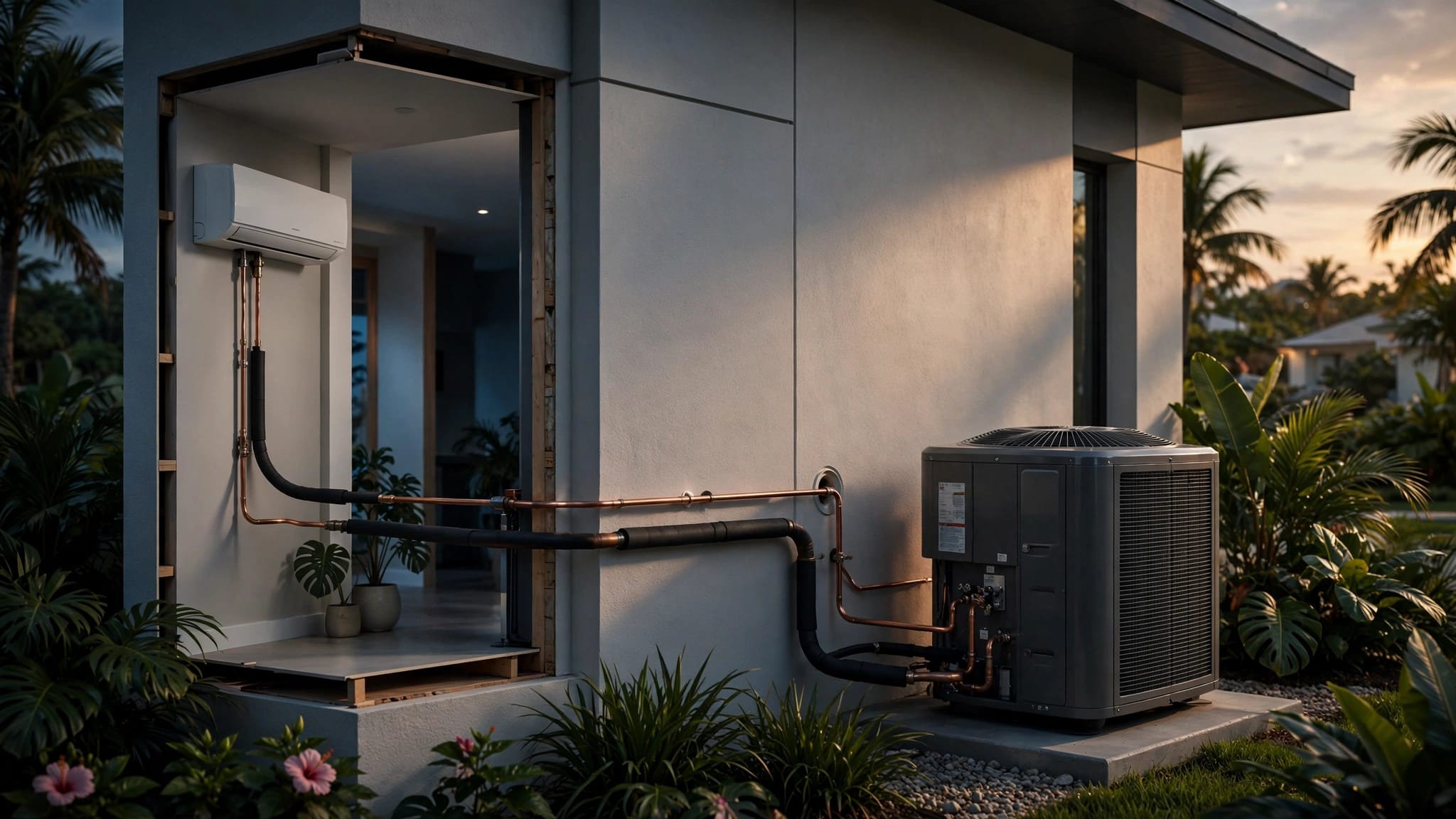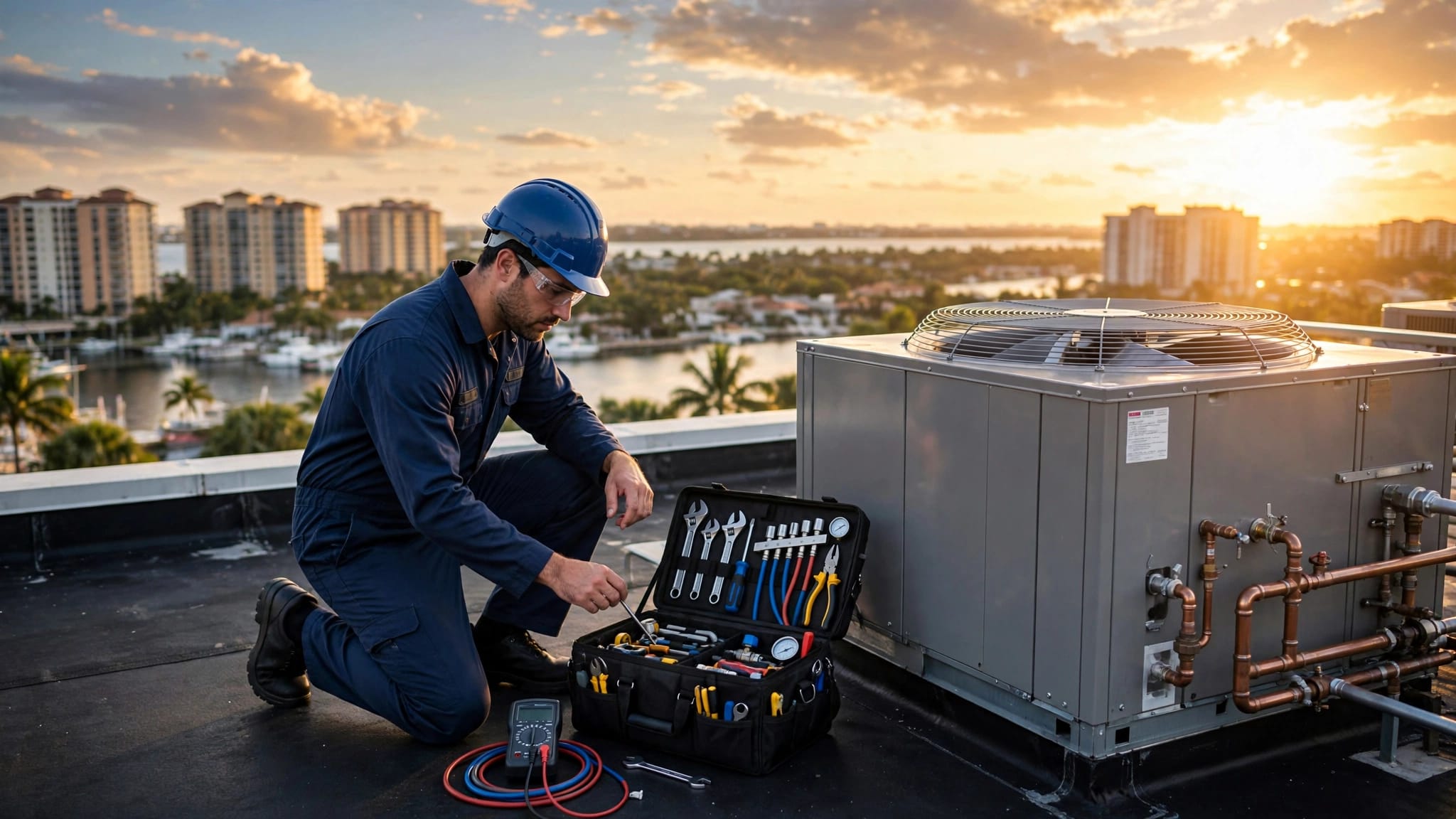
A heat pump that blows warm air in cooling mode may need more than a thermostat adjustment. For homeowners searching reversing valve replacement Cape Coral , the expected 2026 cost is about $400 to $1,750 , with many standard residential repairs landing between $600 and $1,000.
The reversing valve is a specialized component inside a heat pump. Replacing it usually requires refrigerant recovery, brazing, leak testing, evacuation, and system recharge. Those steps make this repair more involved than changing a capacitor or contactor. Here is what affects the price and how to decide whether repair makes financial sense.
Key Takeaways
- A reversing valve replacement in Cape Coral commonly costs $400 to $1,750 in 2026.
- Many straightforward residential heat pump repairs fall near $600 to $1,000 .
- Refrigerant recovery, recharge, difficult access, and an older system can raise the total.
- Warm air does not automatically mean the reversing valve has failed. A technician must test the system first.
- Compare the repair quote with your heat pump's age, condition, warranty status, and replacement cost.
Reversing Valve Replacement Cape Coral: What the Part Does
A reversing valve changes the direction of refrigerant flow inside a heat pump. That function lets one system provide air conditioning during hot weather and heat during cooler weather.
In cooling mode, the valve directs refrigerant through the indoor coil so the system removes heat from your home. In heating mode, it reverses that flow. The indoor coil then releases heat into the house.
The valve is usually a four-way component connected to the refrigerant lines. A small solenoid coil controls the valve's position. When the coil, valve body, or internal slide develops a problem, the heat pump may remain stuck in one operating mode.
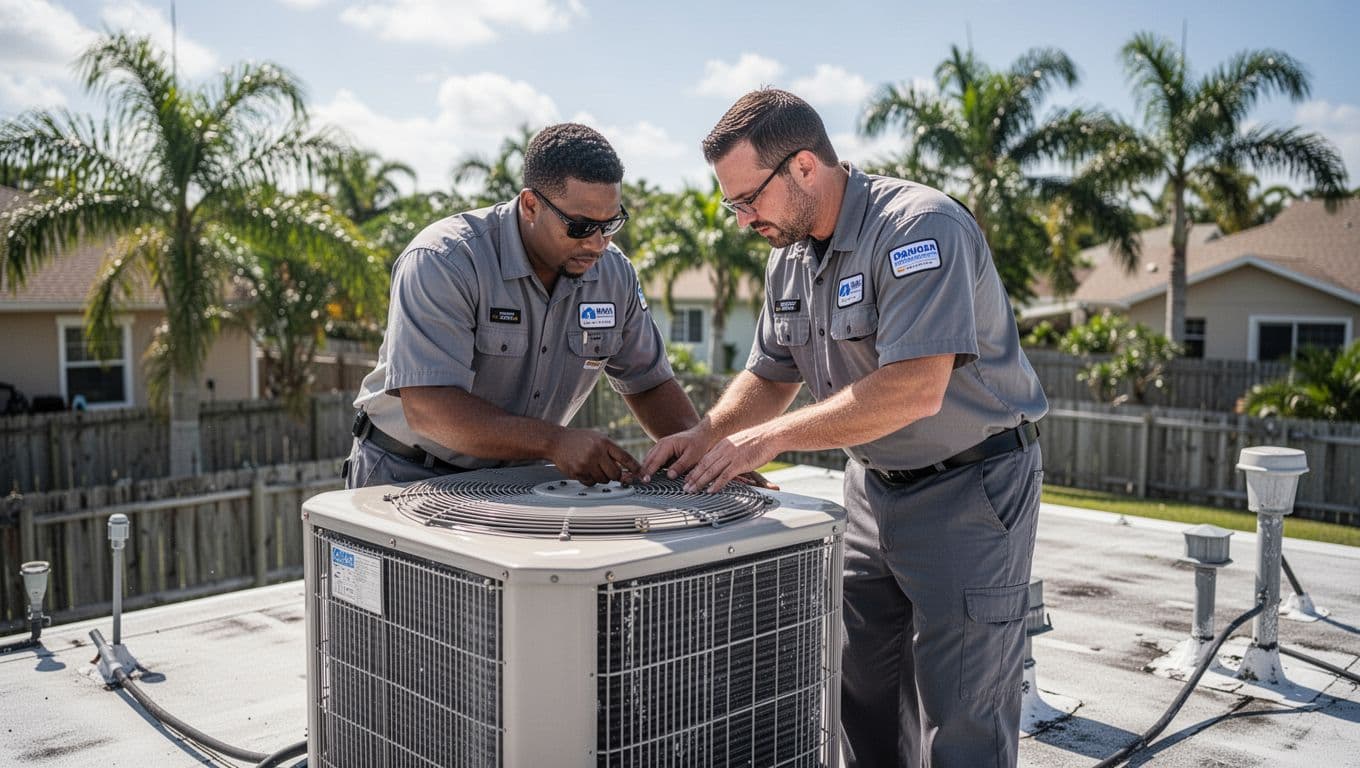
Common signs include:
- Warm air from the vents when cooling is selected
- Cool air when the thermostat calls for heat
- A heat pump that switches modes inconsistently
- Hissing or unusual refrigerant noise near the outdoor unit
- Frost or ice on the wrong coil or refrigerant line
- A system that runs but never reaches the thermostat setting
However, these symptoms can also come from low refrigerant, a failed solenoid coil, thermostat wiring, a control board, or airflow problems. A reversing valve can also be stuck because of debris or pressure imbalance rather than a failed valve body.
That is why a professional diagnosis matters. Replacing the valve before confirming the fault can add hundreds of dollars to the repair.
2026 Cost Range for a Cape Coral Heat Pump Repair
National repair references place heat pump reversing valve replacement near $400 to $1,500. Trane lists a narrower typical range of about $400 to $700, while other estimates include higher labor and refrigerant costs.
Cape Coral homeowners should generally budget $400 to $1,750 for the complete job. The lower end may apply when the valve is easy to access and the system needs little additional work. Older equipment, difficult line access, and refrigerant handling can push the price toward the upper end.
| Repair situation | Typical 2026 cost |
|---|---|
| Solenoid or control diagnosis without valve replacement | $100 to $400 |
| Straightforward reversing valve replacement | $400 to $700 |
| Common residential heat pump repair | $600 to $1,000 |
| Older system with refrigerant recovery and recharge | $1,200 to $1,750 |
| Major repair with additional failed components | More than $1,750 |
These are planning ranges, not fixed prices. A service company may charge a diagnostic fee before presenting a repair quote. Cape Coral diagnostic calls commonly range from $75 to $200, although some companies advertise a lower service-call price.
Local pricing for other HVAC repairs provides useful context. Back Bay Heating & Cooling reports standard Cape Coral AC repairs often cost $150 to $600. A related TXV replacement, which is a different refrigerant component, commonly ranges from $250 to $850. A reversing valve usually costs more because the technician must open the sealed refrigerant circuit and complete additional testing.
A quote that includes refrigerant recovery, nitrogen brazing, vacuum testing, recharge, and startup checks is not comparable to a quote for labor alone.
What Makes the Price Go Up or Down?
The replacement part is only one part of the bill. Labor, refrigerant, access, and testing often determine the final cost.
Labor and system access
A reversing valve sits in the outdoor heat pump assembly, where the technician must work around refrigerant tubing and electrical components. A compact installation with clear access takes less time than a crowded or corroded system.
The technician may need to remove panels, protect nearby wiring, cut out the old valve, and braze the new valve into place. Labor rates also vary by company, appointment time, and emergency status.
After-hours service can add to the total. For example, one Cape Coral provider advertises a $99 service call and a $100 after-hours surcharge. Other companies include emergency pricing in a broader flat-rate quote.
Refrigerant recovery and recharge
The technician cannot safely remove a sealed reversing valve while refrigerant remains in the lines. The refrigerant must be recovered with approved equipment before the old valve is removed.
After installation, the system needs a pressure and leak test. The technician then evacuates moisture and air with a vacuum pump before restoring the refrigerant charge. If the system has lost refrigerant or requires a full recharge, material costs increase.
The refrigerant type also matters. Older systems may use R-22, which has been phased out for new production in the United States. Finding compatible refrigerant for an older R-22 heat pump can make replacement less attractive than replacing the entire system.
The condition and age of the heat pump
A valve replacement may be reasonable on a newer heat pump with a sound compressor, clean coils, and a strong service history. An older system with several failing parts deserves a broader cost comparison.
Ask the technician whether the repair quote includes:
- The correct valve for your model
- Solenoid coil testing or replacement
- Refrigerant recovery and recharge
- Brazing materials and nitrogen purge
- Leak testing and system evacuation
- Labor, startup testing, and warranty coverage
A low quote may exclude one or more of these items. Request an itemized estimate before approving the work.
How Technicians Confirm a Bad Reversing Valve
A technician should not diagnose the valve from vent temperature alone. First, they check the thermostat, operating mode, wiring, outdoor unit, indoor airflow, refrigerant pressures, and temperature readings.
The solenoid coil is tested for proper electrical resistance and voltage. If the coil receives the correct signal but the valve does not shift, the valve body may be stuck or damaged. A technician may also listen for the valve to move when the system changes modes.
Pressure readings can reveal a restriction or refrigerant problem, but they must be interpreted alongside line temperatures and system conditions. Low refrigerant can imitate a valve problem. So can a dirty coil or a failed defrost control.
If the valve body has failed, replacement requires opening the refrigerant circuit. The technician recovers the charge, cuts out the old component, installs the new valve, and brazes the connections. Afterward, the system needs a leak test, vacuum, refrigerant charge, and performance check in both heating and cooling modes.
For homeowners who need air conditioning repair Cape Coral, this diagnostic process helps prevent a costly parts swap based on a symptom alone.
Repair or Replace the Heat Pump?
The right choice depends on more than the reversing valve price. Compare the repair with the system's age, efficiency, warranty, and other repair needs.
Repair often makes sense when the unit is relatively new, the compressor is healthy, replacement parts remain available, and the repair includes a solid warranty. It may also be practical when the system has received regular maintenance and has no history of refrigerant leaks.
Replacement deserves consideration when the heat pump is older, uses R-22, needs a compressor or coil, or has recurring refrigerant problems. A reversing valve repair can restore operation, but it will not correct poor insulation, failing ductwork, or an aging blower motor.
Ask for two numbers:
- The complete repair price, including refrigerant work and warranty.
- The installed price of a properly sized replacement system.
You can then compare the immediate repair with the longer-term cost of ownership. A very low repair price may not be a bargain if another major component fails soon after.
The technician should also verify that any replacement system is sized for the home. Oversized equipment can cycle too often, while undersized equipment may struggle during Cape Coral's hottest weather.
Questions to Ask Before Approving the Work
A clear conversation can prevent surprises on the invoice. Before the repair begins, ask:
- Did you confirm the valve body failed, or could the solenoid be the problem?
- Does the estimate include refrigerant recovery and recharge?
- Which refrigerant does my system use?
- Will you pressure-test the new connections?
- Does the price include evacuation and final performance testing?
- What warranty covers the part and labor?
- Is emergency or weekend pricing included?
- How old is my system, and what other repairs may be approaching?
Choose a licensed HVAC company with technicians who understand heat pumps and refrigerant procedures. EPA certification is required for technicians who handle regulated refrigerants. A written quote should identify the repair scope instead of listing only "replace valve."
Because a reversing valve affects both heating and cooling, the final test should cover both modes. The system should switch correctly, maintain stable pressures, and deliver the expected temperature change at the vents.
Reducing the Chance of Another Expensive Repair
Annual maintenance cannot prevent every valve failure, but it can catch related problems early. A maintenance visit should include electrical testing, refrigerant checks, coil inspection, airflow review, thermostat operation, and outdoor-unit cleaning.
Keep the outdoor unit clear of palm fronds, mulch, leaves, and stored items. Restricted airflow can increase operating pressure and strain the system. Replace indoor filters on the schedule recommended for your home, especially if you have pets, renovation dust, or allergies.
Watch for changes in performance. A heat pump that takes longer to cool, develops ice, or makes a new switching noise should receive attention before a minor problem affects the compressor.
Back Bay Heating & Cooling offers Contact Us options for scheduling a service call, including help with heating and cooling problems in Cape Coral. A prompt diagnosis can clarify whether you need a valve replacement, a smaller control repair, or a full system evaluation.
Conclusion
The 2026 reversing valve replacement Cape Coral cost range is roughly $400 to $1,750. Many standard repairs fall between $600 and $1,000, while refrigerant recovery, difficult access, older equipment, and additional failures increase the price.
Warm air from a heat pump does not prove that the valve has failed. Have the system tested before approving the repair, then compare the itemized quote with the unit's age and overall condition. A careful diagnosis is the best way to avoid paying for the wrong part and to decide whether repair or replacement fits your home.