A failed air conditioner can close a dining room, disrupt a storefront, or send office staff home during a Florida heat wave. A clear commercial AC maintenance Cape Coral plan helps you find small problems before they become emergency repairs.
Cape Coral businesses also deal with high humidity, heavy cooling loads, salt air, airborne debris, and strong summer storms. Use this checklist with your HVAC contractor to protect indoor comfort, control moisture, reduce wasted energy, and keep your business operating.
Key Takeaways
- Schedule professional preventive maintenance before peak cooling season, not after the first breakdown.
- Check filters, coils, drains, electrical components, refrigerant, controls, and airflow.
- Inspect rooftop units and outdoor equipment after hurricanes, tropical storms, and heavy wind.
- Keep service records, repair recommendations, and equipment details in one place.
- Call for qualified service when safety controls, refrigerant, electrical parts, or rooftop equipment need attention.
When to Schedule Commercial AC Maintenance in Cape Coral
Most commercial properties should receive professional air conditioning maintenance at least twice a year. Schedule one visit before the heavy cooling season, then arrange another inspection before winter or before the system faces months of high demand.
Cape Coral businesses often run cooling equipment for long hours. Restaurants, retail stores, medical offices, warehouses, and other facilities may need more frequent service because of occupancy, kitchen heat, open doors, dust, or sensitive indoor humidity requirements.
The best time for the primary cooling inspection is late winter or early spring. That timing gives your contractor an opportunity to correct worn parts before outdoor temperatures and cooling demand rise. Waiting until July can leave you competing for emergency appointments when many systems are already under stress.
| Service timing | Main focus |
|---|---|
| Before peak cooling season | Full system inspection, cleaning, testing, and repair planning |
| During heavy-use months | Filter checks, drain monitoring, temperature review, and complaint tracking |
| After severe weather | Electrical, duct, cabinet, condenser, and rooftop inspection |
| Before lower-use months | Heating changeover, controls, belts, and general equipment condition |
A maintenance agreement can help property managers coordinate visits across multiple buildings. It also creates a regular record of service, which makes it easier to track recurring failures and plan replacement costs.
A system that cools the building can still have a humidity problem. Temperature readings alone don't prove that indoor conditions are healthy or comfortable.
commercial AC maintenance Cape Coral Checklist for the Equipment
A professional technician should inspect the complete system, not only the thermostat or outdoor condenser. Commercial equipment may include rooftop units, split systems, packaged units, air handlers, exhaust fans, and building automation controls.
Use the following list during each scheduled visit:
- Inspect filters and filter racks. Dirty filters restrict airflow and make the blower work harder. A poor fit can allow dust to bypass the filter and collect on the coil.
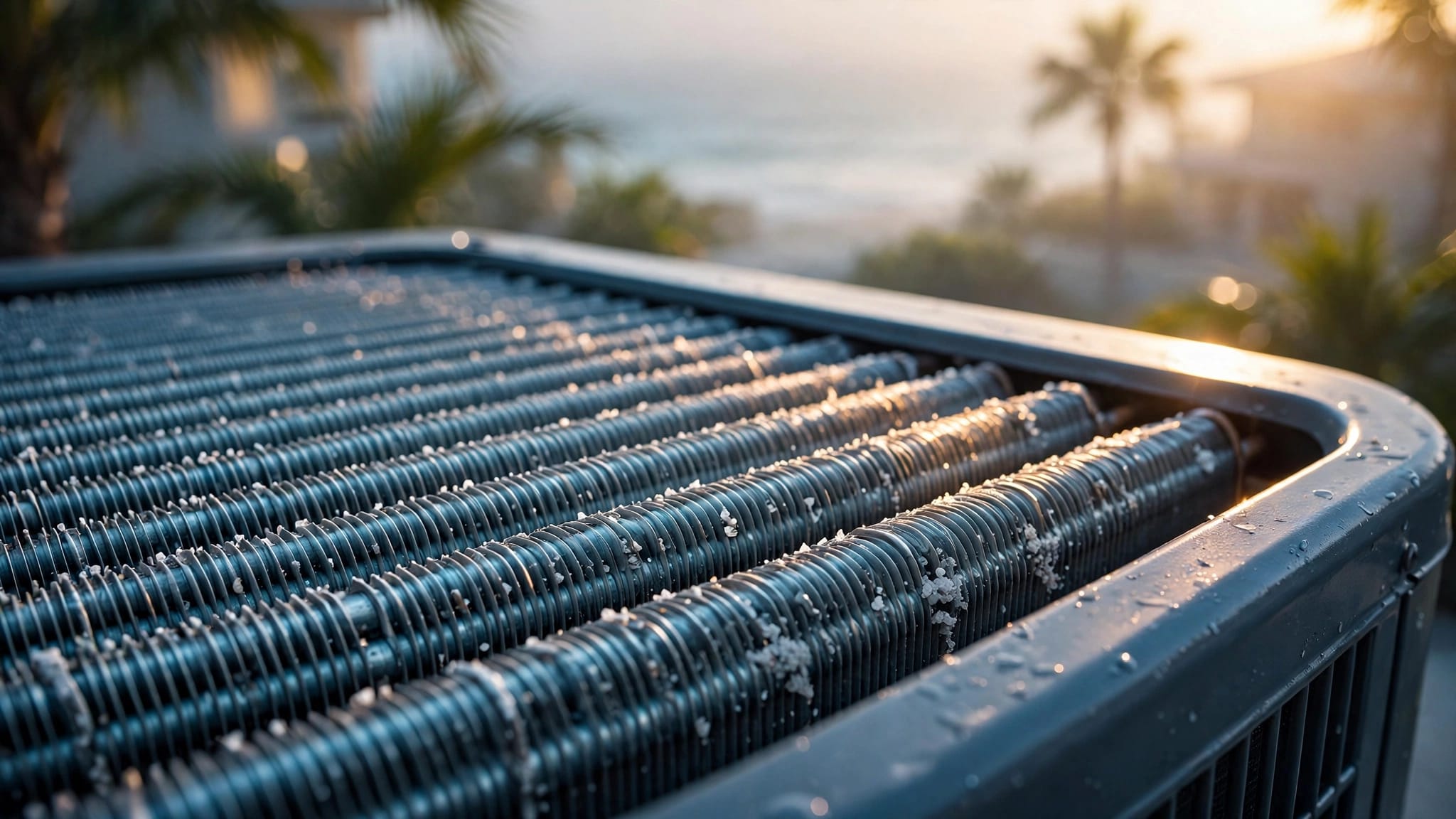
- Clean evaporator and condenser coils. Dirt acts as insulation. Clean coils transfer heat more effectively, which can improve cooling performance and reduce compressor strain.
- Check blower wheels, belts, and pulleys. Loose belts, worn bearings, or damaged blower components can reduce airflow and create noise. A belt that fails can stop cooling in the entire zone.
- Test refrigerant pressures and operating temperatures. Low refrigerant may indicate a leak, while abnormal readings can point to airflow or metering problems. Technicians should locate and repair leaks instead of treating refrigerant as a routine refill.
- Inspect electrical connections and components. Loose terminals, damaged wiring, capacitors, contactors, and disconnects can create heat and cause equipment failure. The technician should test voltage and amperage against the equipment requirements.
- Verify thermostat and control operation. Each zone should respond to its settings. Faulty sensors or incorrect schedules can cause rooms to overcool, remain warm, or run after business hours.
- Examine drain pans and condensate lines. Cooling equipment removes moisture from indoor air. A clogged drain can cause water damage, ceiling stains, foul odors, or a safety switch shutdown.
- Check cabinet panels, insulation, and access doors. Gaps allow conditioned air to escape and unconditioned air to enter. Damaged insulation can also cause condensation around ductwork or equipment.
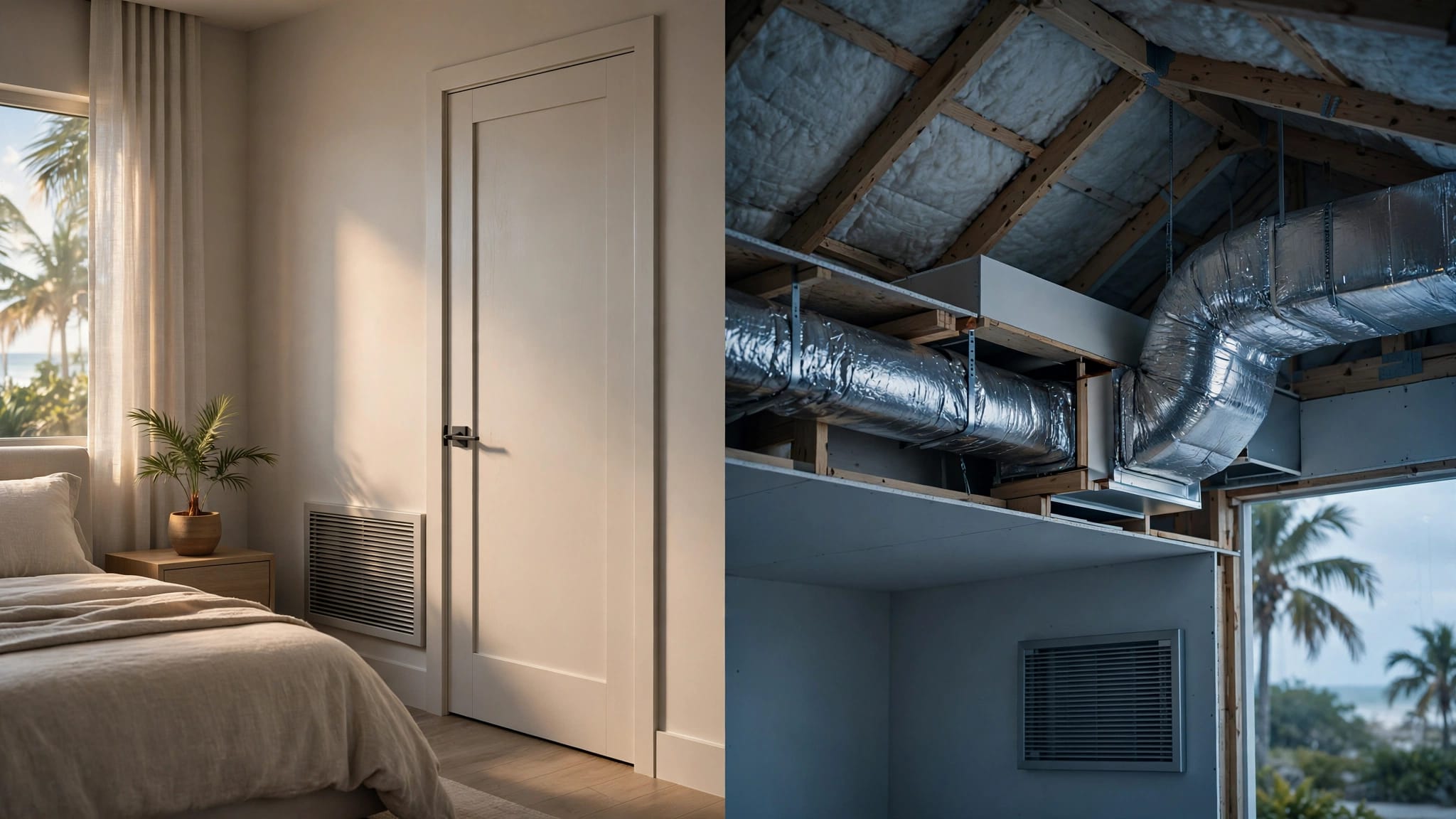
- Inspect supply and return airflow. Blocked grilles, closed dampers, damaged ducts, and poorly balanced zones can create hot spots even when the equipment runs.
- Test safety controls. High- and low-pressure switches, freeze protection, smoke interfaces, and condensate safety devices should operate as designed.
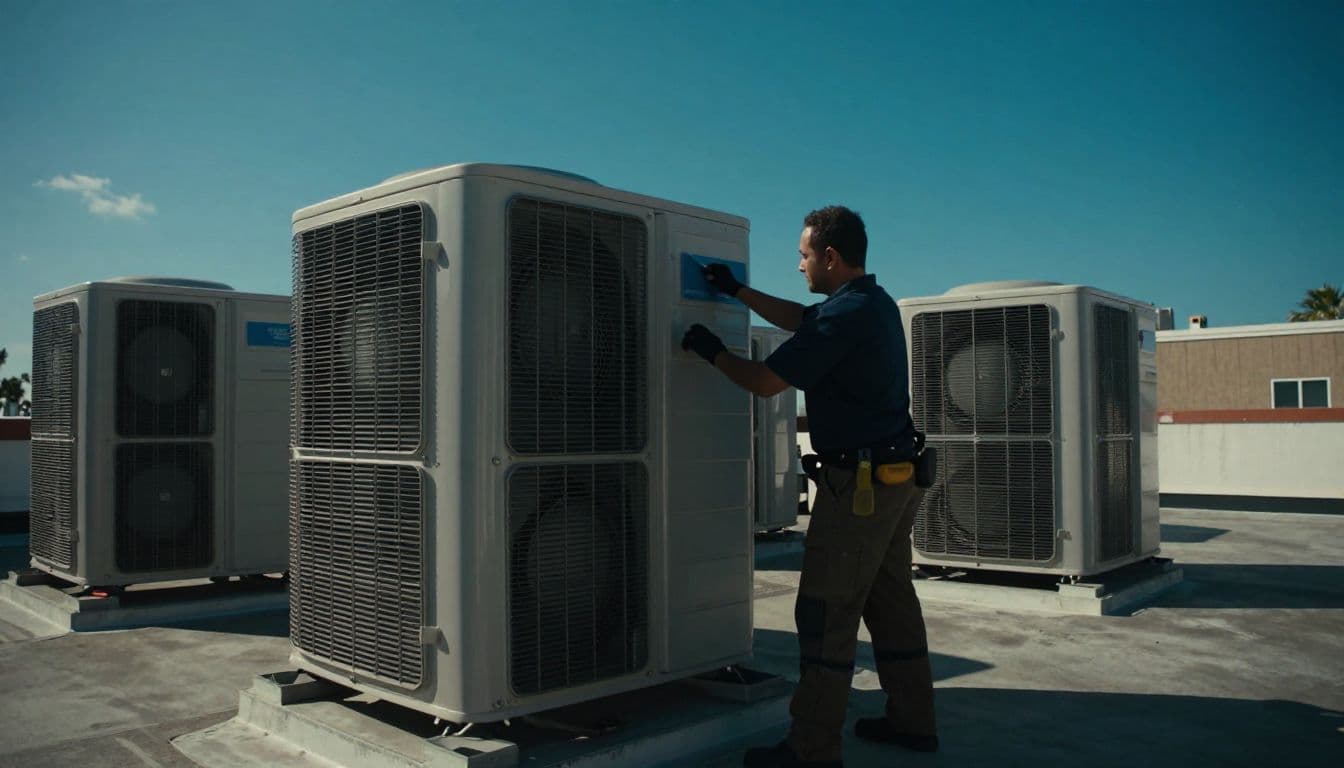
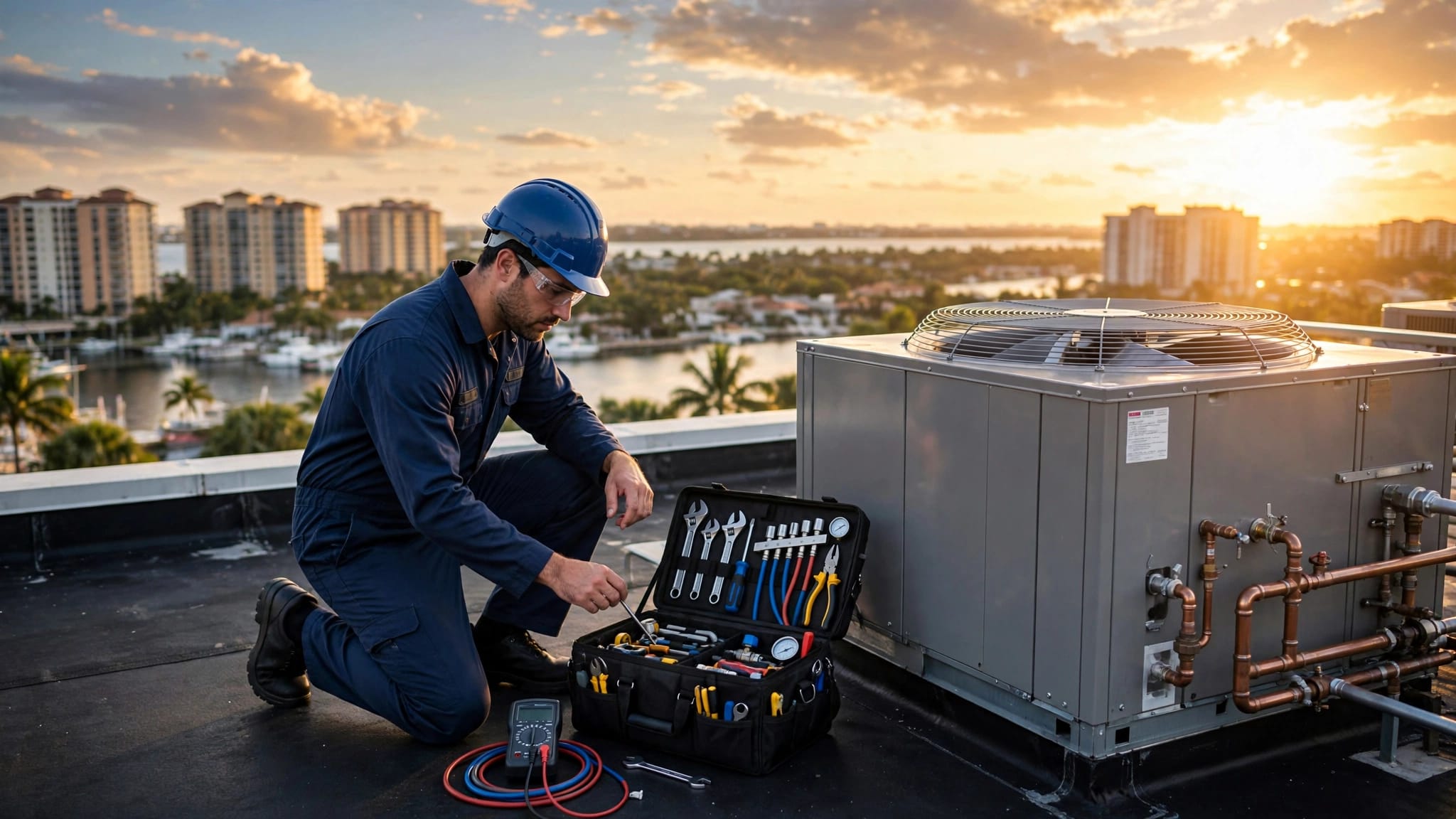
Rooftop equipment needs extra attention because weather exposure affects the cabinet, electrical parts, coil fins, and curb seal. Salt in the coastal air can speed corrosion, while wind can move panels, debris, or branches into the unit.
Filters, Humidity, and Indoor Air Quality
Air filters affect more than dust levels. When filters load with debris, airflow drops. The system may run longer, use more electricity, and struggle to remove enough moisture from the air.
Filter replacement intervals depend on the building and filter type. A busy retail space, workshop, or medical office may load filters faster than a lightly occupied office. Facility staff should check filters between professional visits and replace them when they are dirty, damaged, wet, or incorrectly installed.
- Confirm that the filter size matches the rack and equipment specifications.
- Check that air moves through the filter in the correct direction.
- Inspect filter racks for gaps that allow unfiltered air around the media.
- Review pressure readings when the system design includes filter monitoring.
- Look for mold-like growth, standing water, or unusual odors near air handlers.
- Confirm that condensate drains flow freely during cooling operation.
- Check indoor relative humidity when occupants report clammy air or musty smells.
- Inspect duct insulation for sweating, damage, or loose sections.
Humidity control depends on adequate runtime, proper airflow, correct refrigerant charge, clean coils, and a working drain system. Oversized equipment can cool a room quickly without running long enough to remove moisture. If employees or customers feel damp even when the thermostat shows the right temperature, ask the contractor to investigate system capacity and operation.
Indoor air quality concerns may also involve ductwork, filters, moisture intrusion, and building conditions outside the air conditioner. Back Bay Heating & Cooling provides commercial HVAC and indoor air quality services for businesses that need help evaluating these concerns.
Storm Inspection and Emergency Readiness
Severe weather can damage an air conditioning system even when the building appears intact. Wind-driven rain can reach electrical compartments, while debris can bend condenser fins or block outdoor airflow. Flooding can damage low-mounted equipment, disconnects, controls, and motors.
Schedule an inspection after a tropical storm, hurricane, or period of intense wind. Turn off equipment that shows visible damage, burning odors, repeated breaker trips, exposed wiring, or water around electrical components. Don't remove panels or climb onto a roof unless you have the right training and authorization.
Your post-storm checklist should include:
- Look for loose panels, damaged roof curbs, missing fasteners, or shifted equipment.
- Check outdoor coils for leaves, branches, plastic, and wind-borne debris.
- Inspect disconnects, conduits, wiring, and control boxes for water intrusion.
- Check condensate lines and drain pans for blockage after heavy rain.
- Look for standing water near indoor or outdoor equipment.
- Listen for new vibration, scraping, rattling, or electrical humming.
- Confirm that each zone reaches its normal temperature without extended cycling.
- Document damage with photographs before cleanup or repair.
A written emergency plan should identify who can authorize HVAC service, where shutoffs are located, and which areas need priority cooling. Businesses with servers, medication, food, or temperature-sensitive materials may need a backup plan for extended outages.
For urgent problems, use the company's Contact Us page to request service and discuss 24/7 emergency response.
How to Track Maintenance and Control Downtime
Good records help you make better decisions about repairs and replacement. Keep the model and serial number for each unit, its location, filter size, service history, warranty information, and known comfort complaints. Labeling equipment by building and zone can save time when several systems share a roof or mechanical room.
Ask for a written service report after every visit. It should identify measured conditions, completed work, recommended repairs, and parts that may need replacement. A vague note such as "system checked" doesn't help a facility manager compare performance over time.
Watch for patterns, including:
- Rising energy use without a change in operating hours
- Repeat capacitor, contactor, or drain problems
- Uneven temperatures in the same rooms
- Increasing humidity complaints
- Longer cooling cycles
- Frequent breaker trips
- Unusual odors or water stains
- Repairs that approach the cost of a dependable replacement
Commercial AC maintenance in Cape Coral should also account for the building's schedule. A contractor can often perform inspections before opening, after closing, or during a planned low-occupancy period. That reduces disruption and gives technicians safer access to equipment.
Choose a contractor with experience servicing commercial equipment, rooftop units, controls, and the brands installed at your property. EPA-certified technicians should handle refrigerant work, and electrical repairs should follow applicable safety requirements. Transparent recommendations matter because a business needs to know which repairs require immediate attention and which can wait for planned budgeting.
Conclusion
A dependable air conditioner starts with a written maintenance routine. Check filters and drains between visits, schedule professional service before peak cooling season, and arrange a storm inspection after severe weather.
For Cape Coral businesses, commercial AC maintenance Cape Coral planning protects more than the equipment. It supports stable indoor temperatures, better humidity control, lower operating waste, and fewer interruptions when customers and employees need a comfortable building. Don't wait for a hot afternoon to reveal a problem that a scheduled inspection could have found earlier.