A technician uses superheat and subcooling readings to assess how refrigerant is moving through an air conditioner. These measurements can help reveal whether the system is absorbing and releasing heat as expected, but neither reading diagnoses a problem on its own .
The right interpretation depends on the equipment, its operating conditions, and the manufacturer's charging method. Understanding what the numbers describe can help you make sense of an AC service visit and why a technician checks more than refrigerant pressure.
What superheat and subcooling measure
Refrigerant changes between liquid and vapor as it moves through an air conditioner. Superheat and subcooling describe the refrigerant's temperature relative to its saturation temperature, the point at which it changes state at a given pressure.
Superheat tracks vapor leaving the indoor coil
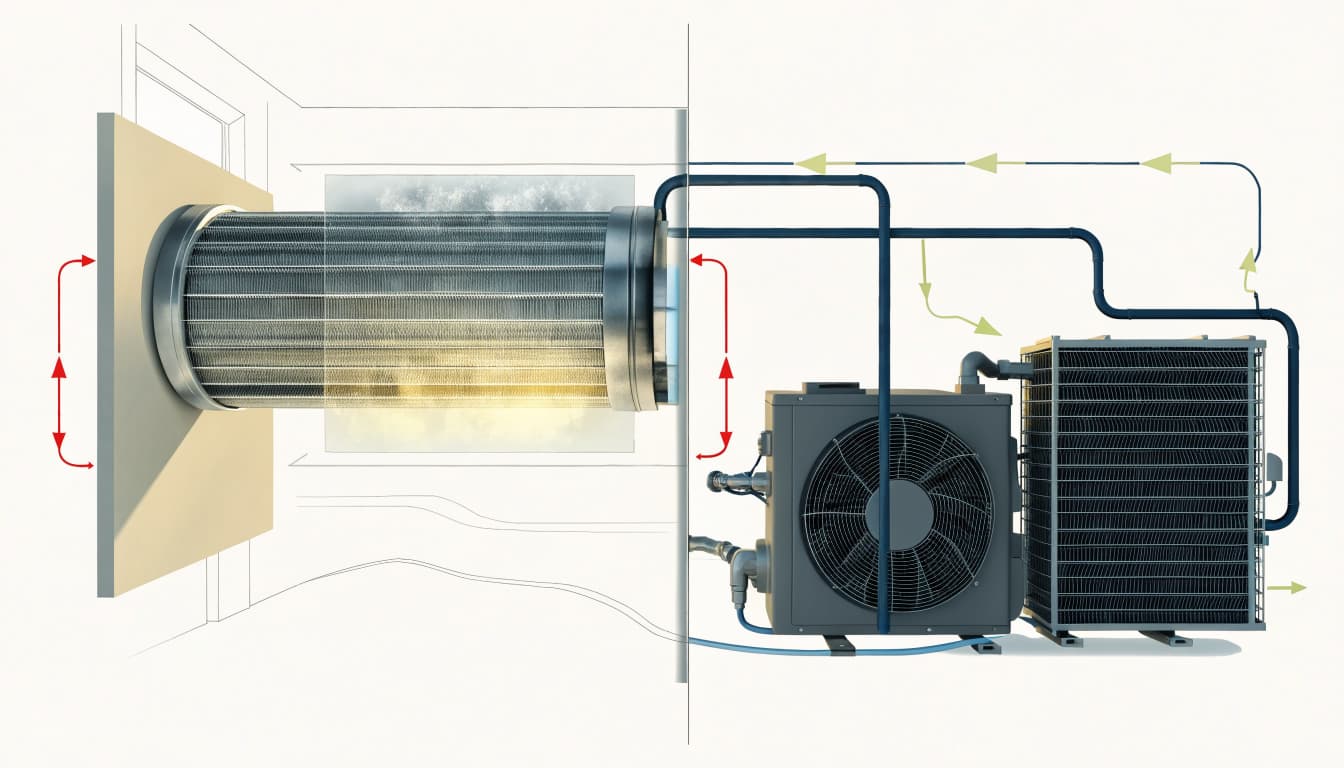
Inside the evaporator coil, refrigerant absorbs heat from indoor air and boils into vapor. Superheat is the number of degrees the vapor's temperature rises above its saturation temperature after boiling.
A technician determines it using the refrigerant pressure and the temperature of the suction line. The pressure helps establish the refrigerant's saturation temperature; comparing that temperature with the measured line temperature gives the superheat reading. The measurement helps assess how the evaporator is feeding refrigerant and whether vapor is returning toward the compressor.
Subcooling tracks liquid leaving the outdoor coil
In the condenser, refrigerant releases heat and changes back into a liquid. Subcooling is how far the liquid's temperature falls below its saturation temperature after condensation.
The technician uses pressure and temperature measurements on the liquid side of the system. Subcooling helps show whether liquid refrigerant is reaching the metering device under the conditions the equipment requires.
How technicians measure the readings
The readings are useful only when the measurements reflect stable operation and the specified test conditions. A technician considers the system's pressure and temperature together, rather than treating either as a stand-alone answer.
Pressure and temperature work as a pair
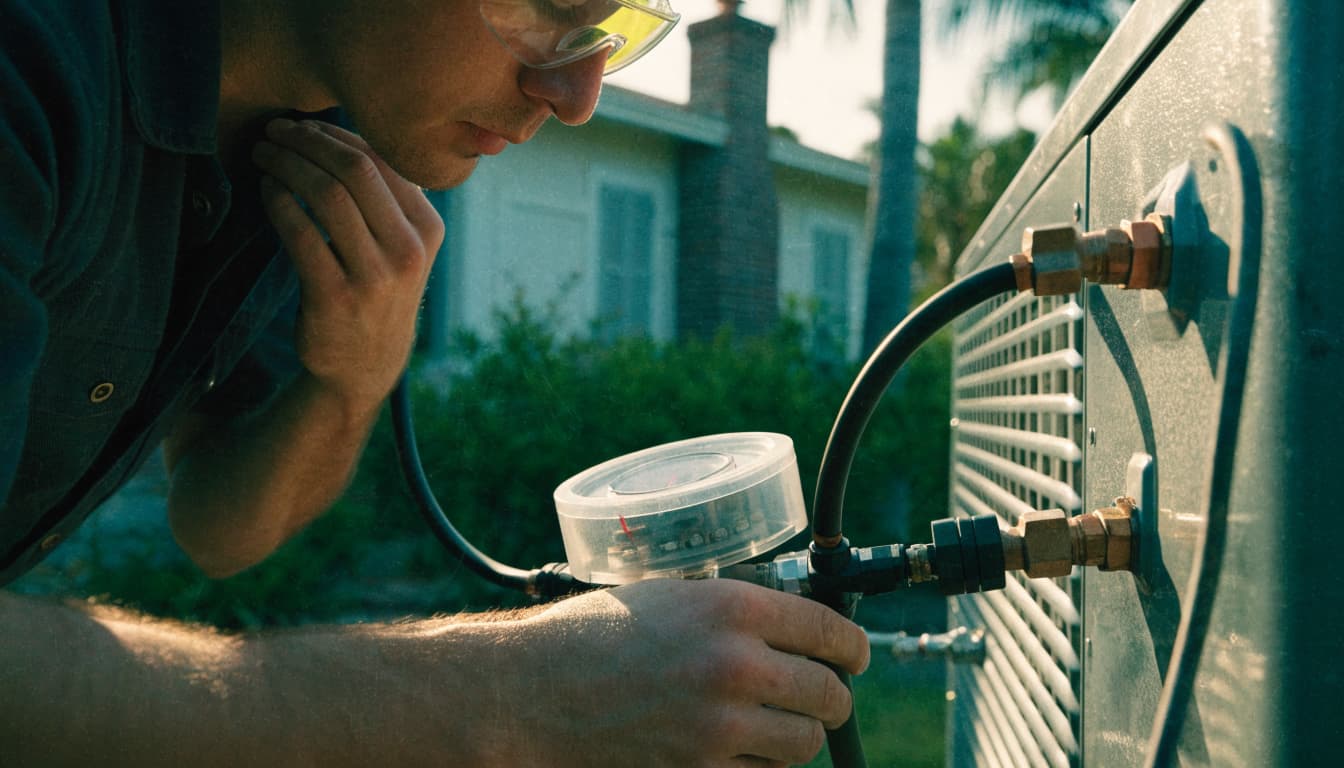
A digital manifold or pressure gauges provide refrigerant pressure. A temperature probe attached to the appropriate refrigerant line provides line temperature. The technician then uses the correct pressure-temperature data for the refrigerant in that system.
Probe placement matters. A loose probe, poor contact, or a line exposed to direct sun can affect the temperature reading. Technicians may insulate the probe from surrounding air and allow the system to run until readings stabilize.
The setup must match the manufacturer's procedure
Before interpreting charge, a technician considers the equipment's refrigerant type, indoor and outdoor conditions, airflow, and installation details. The system may need to run under a specified mode and load for readings to settle.
A commissioning procedure also accounts for the refrigerant charge recorded at installation and any line-set adjustment required by the equipment instructions. A new AC refrigerant commissioning checklist describes why stabilization and manufacturer charging methods matter.
Why technicians interpret both readings together
Superheat and subcooling provide information about different parts of the same refrigeration cycle. Looking at both can help a technician narrow down what needs further testing.
Each reading points to a different section
Superheat relates to refrigerant leaving the evaporator and traveling toward the compressor. Subcooling relates to liquid refrigerant leaving the condenser and moving toward the metering device.
When both readings fit the equipment's required method and operating conditions, they support the broader conclusion that the refrigerant circuit is operating as expected. If one or both are outside the specified range, the technician investigates the cause instead of assuming the charge is wrong.
The pattern is more useful than a single number
A low or high reading can have several possible explanations. For example, an unusual superheat reading may relate to refrigerant feed, airflow, or operating load. Subcooling can also be affected by charge, heat rejection, or a restriction.
The readings become more meaningful alongside pressure, temperatures, airflow, coil condition, and the equipment's service data. That combined view helps avoid replacing a part or adding refrigerant based on a misleading snapshot.
What unusual readings may suggest
A reading outside the manufacturer's expected range is a clue to investigate , not a diagnosis. Technicians use it to decide which other checks can distinguish between possible causes.
Refrigerant and metering issues are among the possibilities
An underfed evaporator, restriction, or charge problem can affect superheat and subcooling in different ways. A metering device that isn't regulating refrigerant as intended can also change the readings.
However, low refrigerant doesn't mean an AC has consumed its charge through normal operation. If the system is low, a leak may be present, but it takes proper testing to determine what happened. Refrigerant pressures and operating temperatures can help identify a concern, while leak testing can locate a loss. A leak should be repaired before recharging, rather than treated with a routine top-off.
Airflow problems can confuse the picture
A dirty filter, blocked return, dirty coil, failing blower, or damaged duct can affect system operation and refrigerant readings. Restricted airflow may also contribute to weak cooling, poor humidity removal, or coil icing.
Those symptoms overlap with refrigerant problems. A technician may inspect airflow and the air distribution system before making a charge adjustment. Pressure and temperature readings are most useful when the equipment can move air as designed.
Why system type changes the interpretation
The same reading doesn't carry the same meaning on every air conditioner. Metering method, equipment design, and the manufacturer's charging procedure all shape how a technician evaluates it.
Fixed-orifice and TXV systems use different methods
A fixed-orifice system does not actively adjust refrigerant flow in the same way as a thermostatic expansion valve, or TXV. Manufacturers may specify a charging approach that uses superheat for one design and subcooling for another.
A TXV regulates refrigerant flow to manage the evaporator's operation, so a technician may rely more heavily on the manufacturer's subcooling procedure when evaluating charge. These are common approaches, not universal rules. The equipment documentation determines the correct method and target.
Heat pumps and variable-speed units add operating modes
A heat pump's refrigerant circuit changes function between heating and cooling. The mode of operation affects where measurements are taken and how they should be read. A technician must use the procedure for the active mode.
Variable-speed systems can also change compressor and fan output as demand changes. That means readings may shift as the system adjusts. Inverter equipment may require a specific service mode or test procedure, so a generic target may not apply.
Operating conditions can shift the readings
Even a correctly installed system can show different readings as indoor load, outdoor weather, and airflow change. That's why technicians record conditions and avoid judging performance from an isolated measurement.
Heat, humidity, and indoor load matter
On a hot, humid Cape Coral afternoon, the system may be working under a different load than it would during mild weather. Outdoor temperature affects heat rejection at the condenser, while indoor temperature and humidity affect the heat entering the evaporator.
A system that has just started may not have stabilized. Recent cycling, changing thermostat demand, or a sudden change in indoor load can also affect measurements. The technician lets the system operate under the manufacturer's stated conditions before drawing conclusions.
Airflow and installation details affect system behavior
Closed vents, blocked returns, a loaded filter, or a dirty coil can change airflow through the equipment. Duct leaks and inadequate insulation may also make some rooms uncomfortable even when the refrigeration circuit readings look reasonable.
Line-set length and elevation matter as well. Equipment instructions may require a charge adjustment for a particular installation. That's one reason pressure alone cannot prove that a system has the correct charge.
What to expect during an AC evaluation
A careful diagnosis checks the system as a whole. Superheat and subcooling are part of that process, alongside the equipment data, airflow, and symptoms you've noticed at home.
The technician checks conditions before adjusting charge
A service evaluation may include confirming the refrigerant type, inspecting coils and filters, reviewing airflow, and measuring operating pressures and temperatures. The technician then compares the findings with the manufacturer's specifications and charging method.
If the readings point toward a refrigerant problem, more testing may be needed to identify the cause. Adding refrigerant without finding and addressing a leak can leave the underlying problem in place.
Refrigerant work belongs to qualified professionals
Refrigerant service requires proper tools, training, and safe handling. Homeowners shouldn't connect gauges, open service panels, or adjust charge themselves. Refrigerant must be recovered and handled according to applicable requirements.
If you're noticing weak cooling, ice on refrigerant lines, or recurring comfort problems, common signs of an air conditioner refrigerant problem can help you understand why a professional evaluation may be needed. For service in our area, Contact Us to schedule a visit.
Key Takeaways
- Superheat measures vapor temperature above saturation after the evaporator; subcooling measures liquid temperature below saturation after the condenser.
- Each reading describes a different part of the refrigeration cycle.
- Technicians interpret both readings with pressure, temperature, airflow, operating conditions, and equipment specifications.
- An unusual result can point to several possible causes. It does not prove a system is undercharged or overcharged.
- Manufacturer instructions determine the correct charging method for the equipment.
Frequently Asked Questions
Can one superheat or subcooling reading prove the AC has a refrigerant leak?
No. A reading may indicate that further testing is needed, but it cannot establish the cause by itself. Airflow, metering, operating conditions, and other equipment issues can affect readings. A technician uses additional checks to diagnose a suspected leak.
Do all air conditioners have the same target readings?
No. Targets and charging procedures vary with system design, refrigerant, metering device, and manufacturer instructions. A number that applies to one unit may not apply to another.
Can I use these readings to recharge my AC myself?
No. Measuring and adjusting refrigerant involves specialized equipment and safe handling practices. A qualified HVAC technician should diagnose the system and follow its manufacturer's charging procedure.
Accurate Readings Need the Full Picture
Superheat and subcooling help a technician understand how refrigerant is moving through an AC system. Their value comes from interpreting them together, under stable conditions, and against the equipment's specifications.
When cooling problems arise, those readings are one part of a complete diagnosis. The right repair depends on the cause, not on a single number.