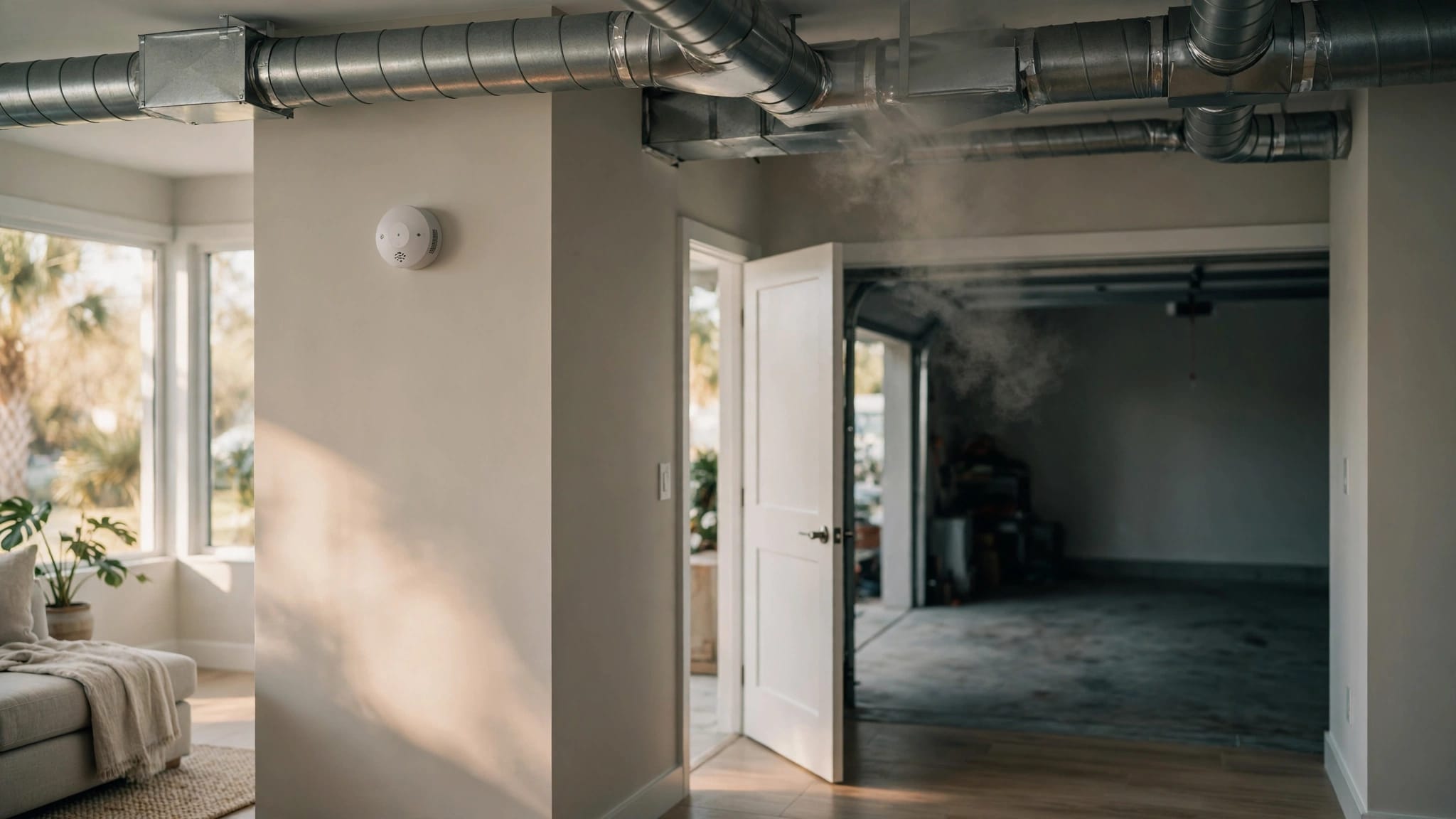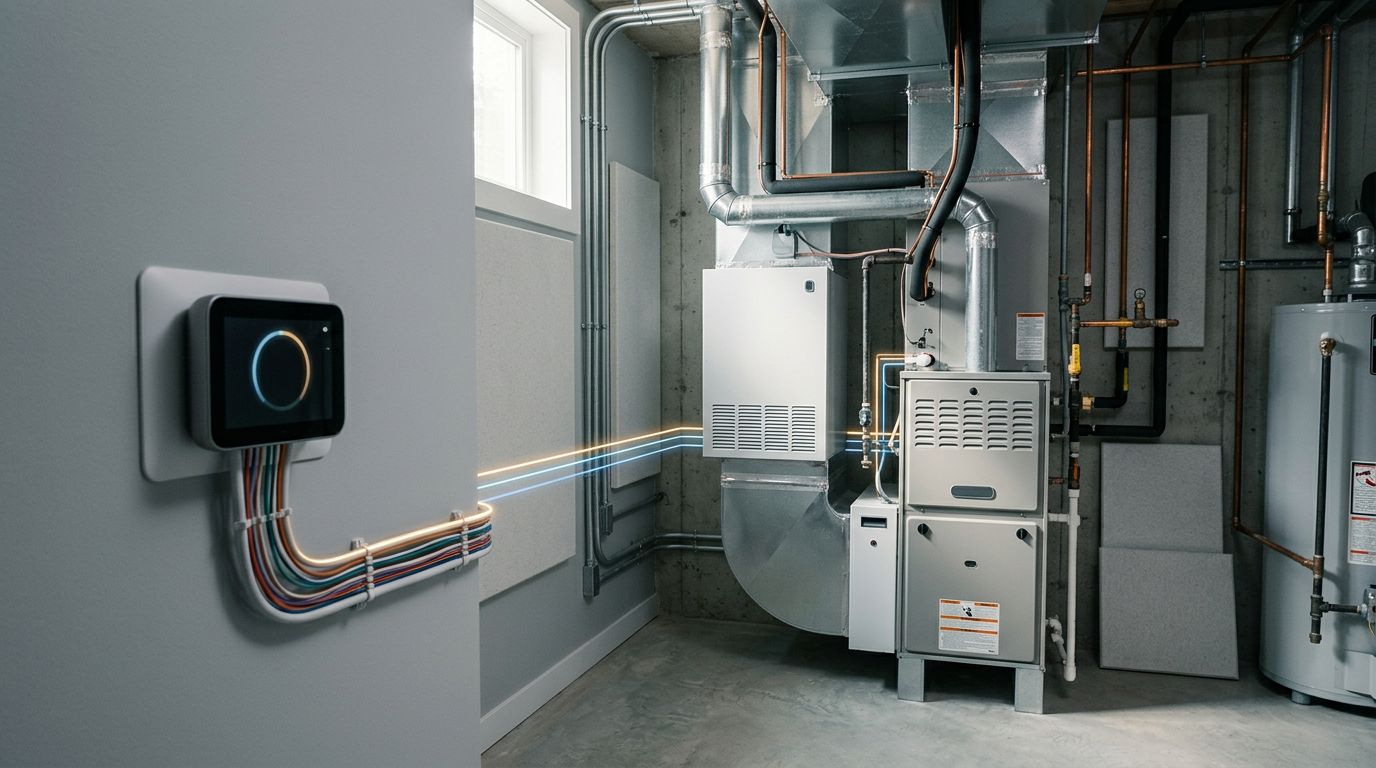
A standard HVAC filter can catch dust and other particles, but it won't reliably remove VOCs from your home's air. For gas removal, the filter needs a gas-phase medium such as activated carbon, and even then, performance depends on the chemical and the amount of sorbent.
That distinction matters in Florida, where air conditioning recirculates indoor air while heat and humidity complicate fresh-air exchange. Here's what homeowners should know about HVAC filters and VOCs, and what can help reduce exposure.
Key Takeaways
- MERV ratings measure particle filtration , not VOC removal.
- Activated carbon can capture some gases, but performance varies by compound and filter design.
- Source control and suitable ventilation are important alongside air cleaning.
- Florida humidity can affect both ventilation choices and sorbent performance.
Can HVAC filters remove VOCs?
Sometimes, but only if the filter includes media designed to capture gases. A regular pleated filter and a carbon-equipped filter do different jobs.
Particle filters and MERV ratings
MERV describes how well a filter captures airborne particles. A higher rating may trap more particles, but it doesn't show whether a filter can remove gases such as VOCs.
That means a high-MERV filter isn't automatically a VOC filter. It can also restrict airflow if the HVAC system isn't designed for it. For particle filtration, choose a filter that fits the equipment and its airflow needs. See our guide to choosing the right HVAC filter.
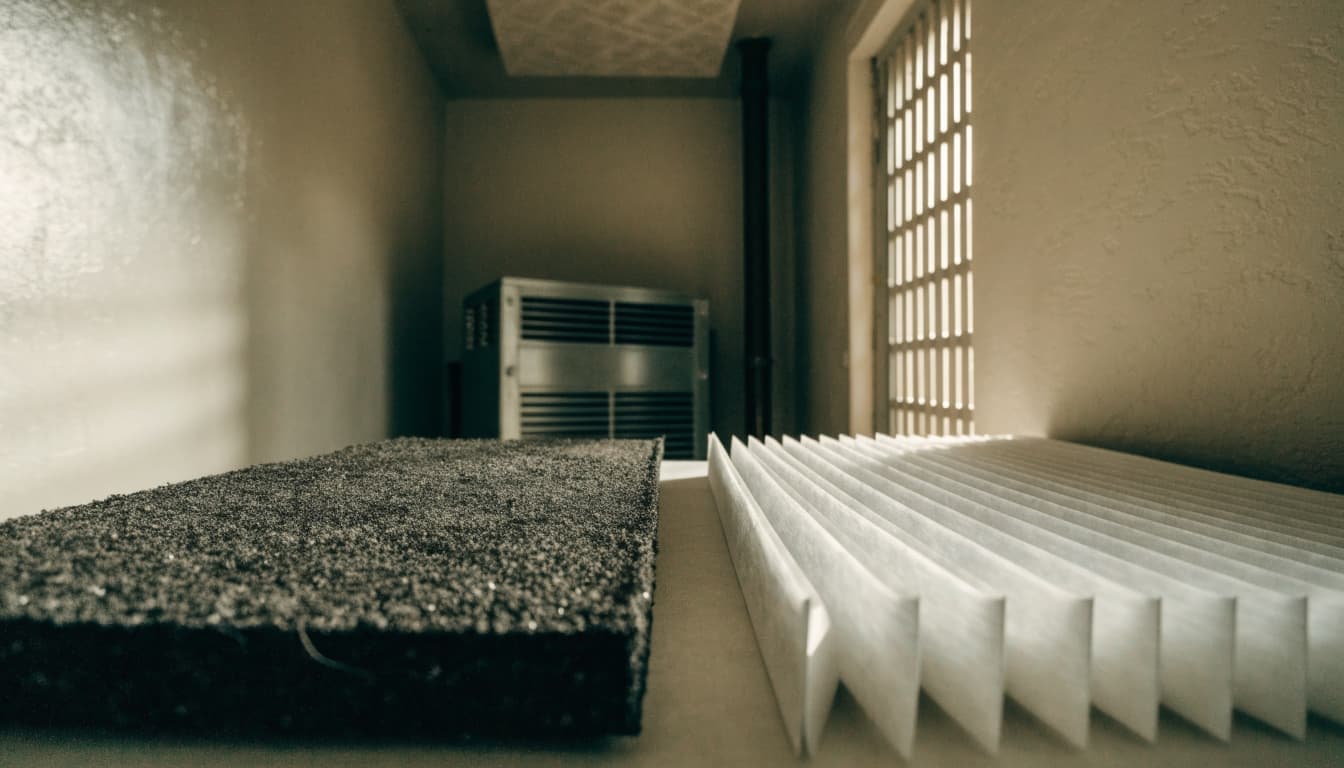
Gas-phase filters and activated carbon
Activated carbon captures some gases through adsorption, which binds compounds to the material's surface. A filter needs enough suitable sorbent and enough contact with the air to work. A thin carbon layer may have limited capacity compared with a larger quantity of media.
The EPA's guide to air cleaners in the home distinguishes particle ratings from gas removal. Particle CADR doesn't measure VOC removal, and gas-cleaning performance lacks a comparable standardized rating system.
What carbon filters can and can't do
A carbon filter may help with certain odors and chemical vapors, but it isn't a universal VOC solution. The specific compound, filter construction, and operating conditions all matter.
Performance varies by chemical
VOCs can come from paint, flooring, adhesives, cleaning products, fragrances, and new furnishings. Activated carbon can adsorb some organic compounds, but it performs less effectively for certain gases, including formaldehyde. A carbon label alone doesn't tell you how well a filter handles the pollutant in your home.
The EPA's technical summary notes that sorbents have different affinities for different gases. It also describes adsorption as generally more effective at lower temperatures and humidity, a relevant limitation in Florida.
Sorbent capacity is finite
Carbon media fills as it collects gases. Once its capacity is used, its ability to adsorb more pollutants falls. Replacement timing depends on the product, pollutant load, and use, so a universal service life can't be assumed.
A whole-home air cleaner may use deeper media than a standard one-inch filter. Learn about whole-home air purification systems, including how particle filtration differs from gas-phase filtration.
Reducing VOCs at home in Florida
Filtration works best as one part of an indoor-air plan. Reducing the pollutant source is often more effective than trying to capture vapors after they spread.
Start with the source, then ventilate thoughtfully
When practical, choose lower-emission products, follow label directions, and limit exposure to strong fumes during painting or renovation. Store solvents and chemicals securely, away from living areas. Avoid masking persistent chemical odors with air fresheners, which can add more fragrance compounds.
Ventilation can dilute indoor pollutants, but outdoor air isn't always dry or clean. In Florida, open windows may lower indoor pollutant levels while bringing in humid air. Use kitchen and bathroom exhaust fans where appropriate, and consider controlled ventilation when natural airflow isn't suitable. See our guidance on improving ventilation in Florida homes.
Keep humidity and airflow in the picture
The Florida Building Commission's humidity-control report describes indoor relative humidity at or below 60% as generally reasonable for Florida. A filter doesn't control moisture, and an HVAC system's settings need to match the equipment and home.
Keep return grilles clear and use a filter that fits properly. A gap around the filter can let air bypass the media, while an overly restrictive filter can reduce airflow. The right setup balances particle capture, system performance, and humidity control.

When testing or service makes sense
A lingering chemical odor, recent renovation, or concern about a specific product may call for a focused assessment. Different concerns need different tests, and a single air sample won't measure every pollutant or identify its source.
An assessment can consider the odor's location and timing, recent household activities, ventilation, humidity, and HVAC operation. Our indoor air quality testing for Florida homes can help connect a concern to the conditions in the home. If you need help with an ongoing air-quality or HVAC issue, Contact Us to schedule service.
FAQ
Will a higher-MERV filter remove VOCs?
No. MERV measures particle capture. VOC removal requires gas-phase media, such as activated carbon, and effectiveness depends on the pollutant and filter design.
Does a UV light remove VOCs?
UV systems target biological growth on damp HVAC surfaces. They don't remove VOCs from the air and don't replace particle filtration.
Should I open windows to clear VOCs?
Fresh air can dilute indoor pollutants, but Florida's outdoor air can add heat and humidity. Use ventilation with moisture control in mind, especially during humid weather.
Choose filtration for the pollutant
HVAC filters can remove some VOCs when they contain suitable gas-phase media, but an ordinary pleated filter won't do that job simply because it has a high MERV rating. Source control, appropriate ventilation, and system-compatible filtration are a more practical combination than relying on one filter to solve every indoor-air concern.