Your rooftop AC can bring in too much humid outdoor air even while the thermostat calls for cooling. HVAC economizer problems can add heat and moisture, forcing commercial equipment to work harder.
In Cape Coral, outdoor-air control matters because cooling and dehumidification share the same equipment. However, rising bills and clammy rooms are symptoms, not proof that the economizer has failed.
Start with how the system should work, then separate mechanical faults, control errors, and air leaks.
How a Commercial HVAC Economizer Works
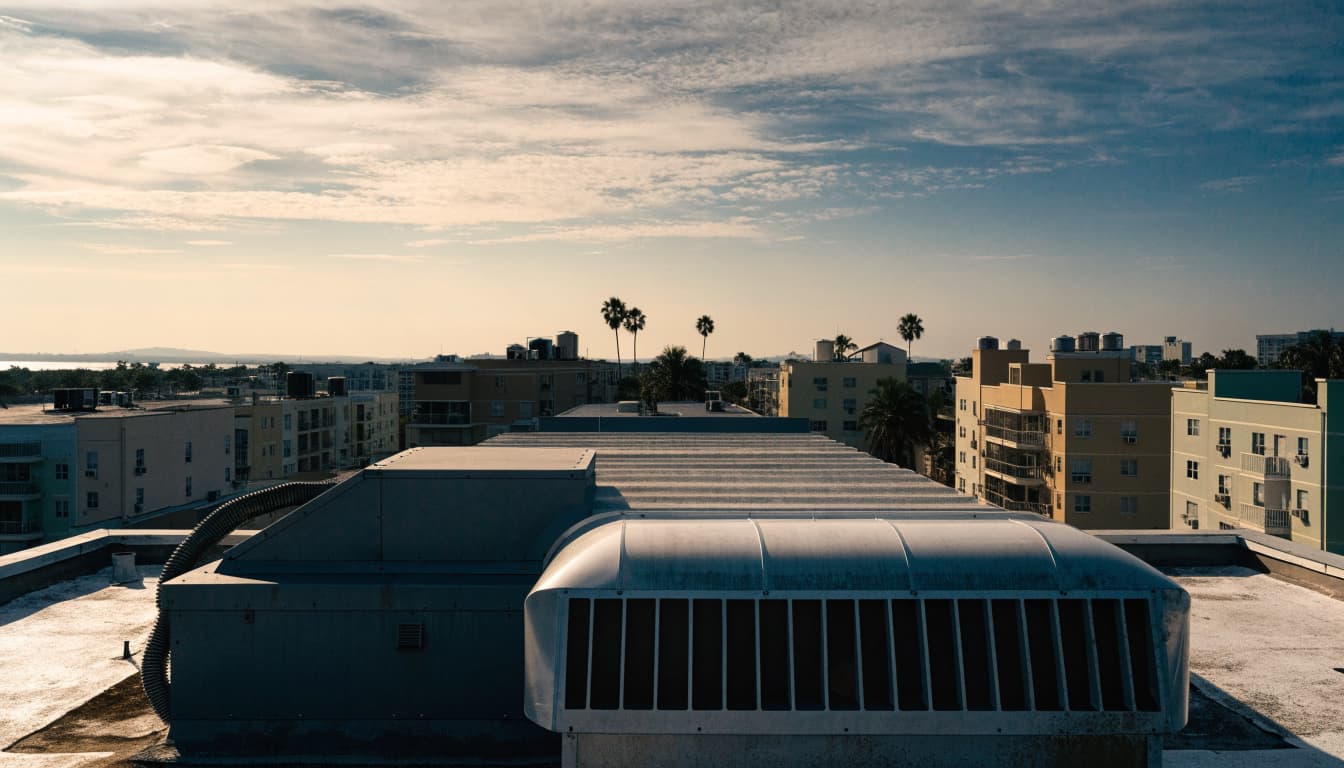
An economizer uses outdoor air to help cool a building when outdoor conditions are suitable. Commercial rooftop and packaged units may include one, although most conventional residential central AC systems don't.
Cooling with outdoor air
The economizer includes dampers, an actuator that moves them, sensors, and controls. When conditions permit, it opens the outdoor-air damper and adjusts return-air flow to help meet the cooling demand.
Depending on the equipment and control sequence, outdoor air may handle the cooling load alone or work alongside the compressor. Therefore, compressor operation during economizing doesn't automatically indicate trouble.
The controls should stop economizer cooling when outdoor conditions exceed the system's limits. Mechanical cooling then handles the load while the unit maintains its required ventilation.
Minimum ventilation is a separate function
An outdoor-air damper may remain partly open during occupied hours even when economizer cooling is unavailable. That opening provides planned ventilation.
However, damper position alone doesn't establish how much air enters the building. Fan speed, duct pressure, and intake resistance also affect airflow.
A partly open damper isn't necessarily broken. A technician must compare its operation with the intended ventilation rate and control sequence before diagnosing a fault.
Why Cape Coral Humidity Changes the Cooling Load
Outdoor temperature tells only part of the story. Air also carries moisture, and an air conditioner must remove that moisture at its evaporator coil.
Sensible cooling lowers air temperature. Latent cooling removes water vapor. Excess outdoor air can increase both loads, particularly during Southwest Florida's hot, humid weather.
Some economizers use temperature-based limits. Others use enthalpy, a measure that accounts for temperature and moisture, or compare outdoor and return-air conditions. The appropriate strategy depends on the equipment and design.
Cooler outdoor air isn't always suitable for economizer cooling if it carries substantial moisture. However, humid Florida weather doesn't make every economizer useless. Proper controls can restrict operation to suitable conditions.
A building may reach its thermostat setting yet still feel damp. That complaint deserves investigation, but it can also result from restricted airflow, refrigerant trouble, short cycling, or uncontrolled infiltration. Lowering the thermostat doesn't identify which problem is responsible.
Damper Faults That Cause HVAC Economizer Problems
Dampers need to move freely and reach their intended positions. Cape Coral rooftop exposure adds wear: coastal salt can accelerate corrosion, while wind and debris can affect panels and intake components.
Stuck dampers and failed linkages
A damper stuck too far open can admit unnecessary hot, humid air while the compressor runs. Bent blades, corrosion, debris, a failed actuator, or disconnected linkage may prevent normal movement.
A damper stuck closed creates a different problem. It can eliminate outdoor-air cooling when conditions favor it and interfere with required ventilation.
Neither diagnosis follows from a high electric bill alone. A technician should command the damper through its operating range and observe whether the blades actually move.
An actuator turning without moving the damper indicates a mechanical connection problem. Conversely, blades that bind despite a working actuator point toward the damper assembly.
Miscalibrated minimum positions
A functioning damper can still admit too much air if its minimum position is wrong. Changes to fan speed, controls, occupancy, or equipment can also make an old setting inappropriate.
The repair requires airflow assessment, not an arbitrary reduction in the opening. Closing ventilation to reduce cooling demand can create indoor-air-quality problems.
After adjustment, the technician should measure outdoor airflow and document the occupied minimum setting. Correct calibration balances required ventilation with the equipment's ability to cool and dehumidify.
Faulty Sensors and Controls Can Admit the Wrong Air
An economizer depends on accurate measurements and a compatible operating sequence. Even freely moving dampers can waste energy when the controller receives bad information.
Sensors that misread conditions
A faulty outdoor temperature or humidity sensor can make unsuitable air appear acceptable. A return-air sensor error can also distort comparisons between indoor and outdoor conditions.
Location matters as well. A sensor exposed to direct sun, nearby discharge air, or an unrepresentative airflow path may report misleading conditions without failing electrically.
Technicians compare sensor readings with independent measurements at appropriate locations. They also evaluate wiring, connections, and controller fault information.
Replacing a sensor solely because the building feels muggy skips that evidence. The diagnosis should establish whether its reading is wrong and whether that error affects damper operation.
Schedules and conflicting commands
Incorrect occupied schedules can keep ventilation operating long after a business closes. Meanwhile, building automation settings may conflict with the rooftop unit's local controls.
Some systems also change ventilation in response to occupancy-related signals, such as carbon dioxide readings. Incorrect settings can affect how much outdoor air enters.
Controls should coordinate ventilation, economizer cooling, compressor operation, and any humidity-control functions. A review should include overrides and actual operating hours.
However, overnight fan operation may be intentional. The technician needs the intended sequence before treating any after-hours operation as a fault.
Outdoor-Air Infiltration Can Mimic an Economizer Failure
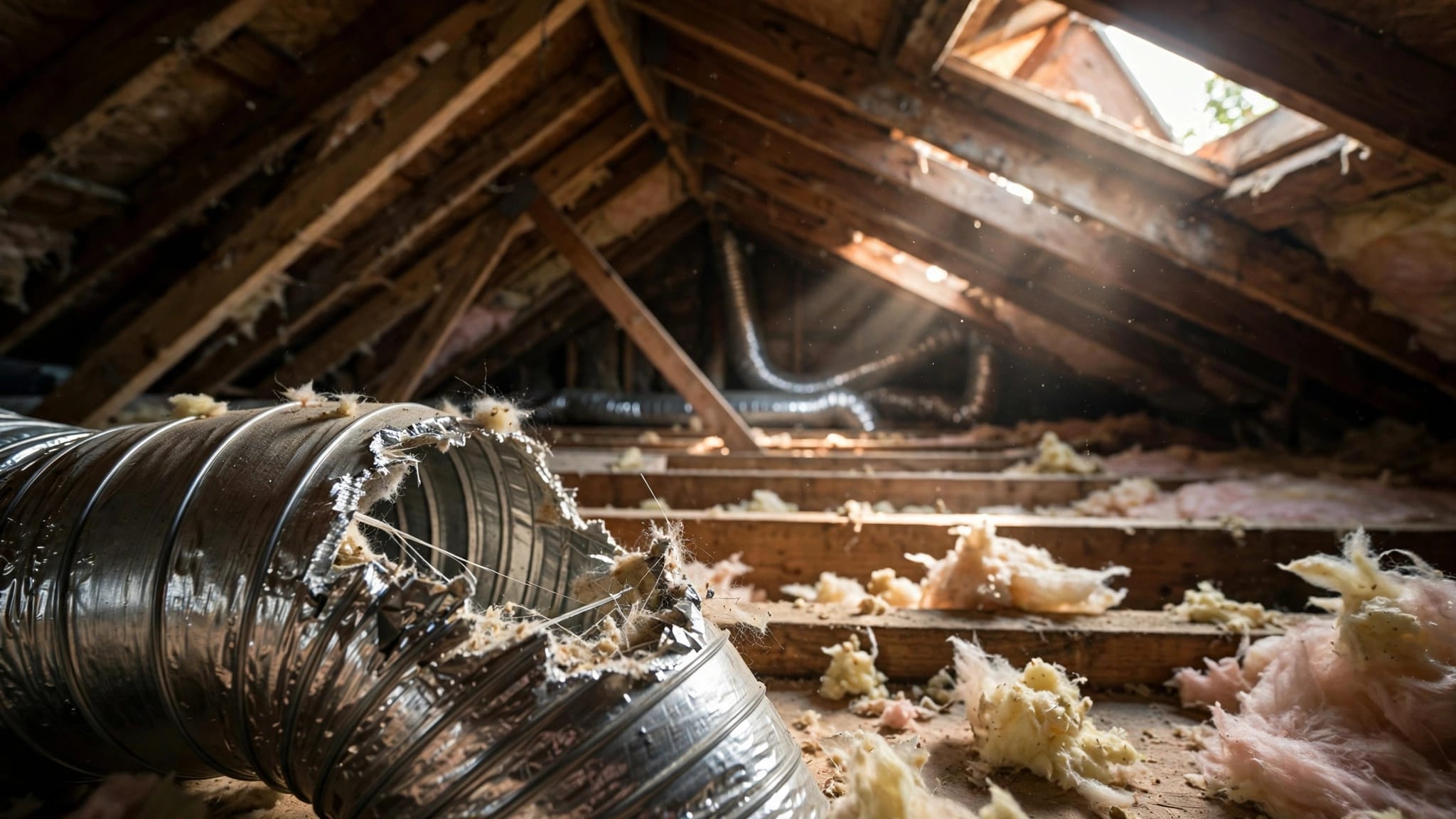
Outdoor air can enter through paths the economizer doesn't control. Damaged cabinet seals, poorly fitted access panels, roof-curb leaks, and duct leaks can increase the cooling load.
Return-side duct leaks are especially important because they can draw hot, humid air into the system. Supply leaks waste conditioned air and may contribute to building pressure imbalances.
Exhaust fans also affect pressure. If kitchen, restroom, or other exhaust removes more air than the building replaces, outdoor air can enter through doors and other gaps.
These conditions can produce long cooling cycles and persistent humidity even when the economizer operates correctly. Similarly, repairing a damper won't solve a leaking return duct.
The inspection should trace where outdoor air enters and determine whether that path is planned ventilation or uncontrolled leakage. It should also evaluate exhaust operation and building pressure.
A damper that closes correctly doesn't rule out outdoor-air leakage through the cabinet, ductwork, or building envelope.
Symptoms Point Toward Testing, Not a Diagnosis
Rising bills deserve attention, but electricity prices, billing-period length, weather, and operating hours can also change costs. Compare energy use in kilowatt-hours alongside those conditions.
These complaints help guide an inspection without identifying the failed component.
| Symptom | Possible economizer issue | Other possible cause |
|---|---|---|
| Long cooling cycles | Excess outdoor-air intake | Dirty coils or refrigerant trouble |
| Damp rooms at the set temperature | Unsuitable economizer operation | Short cycling or infiltration |
| Increased energy use after hours | Incorrect ventilation schedule | Thermostat or fan scheduling |
| Weak or uneven airflow | Damper or control fault | Restricted filter or duct problem |
The useful next step is a measured assessment of the entire system.
A clean filter doesn't rule out airflow trouble. Static-pressure testing can reveal restrictions, while refrigerant and coil measurements help distinguish cooling faults from ventilation problems.
For recurring bill increases, our commercial HVAC energy audit covers equipment, operating hours, economizers, exhaust fans, and controls. That broader review helps avoid blaming one component for several interacting problems.
What a Professional Economizer Inspection Should Establish
An inspection should connect the complaint to a measurable failure and identify the repair that fits it. Simply observing an open damper isn't enough.
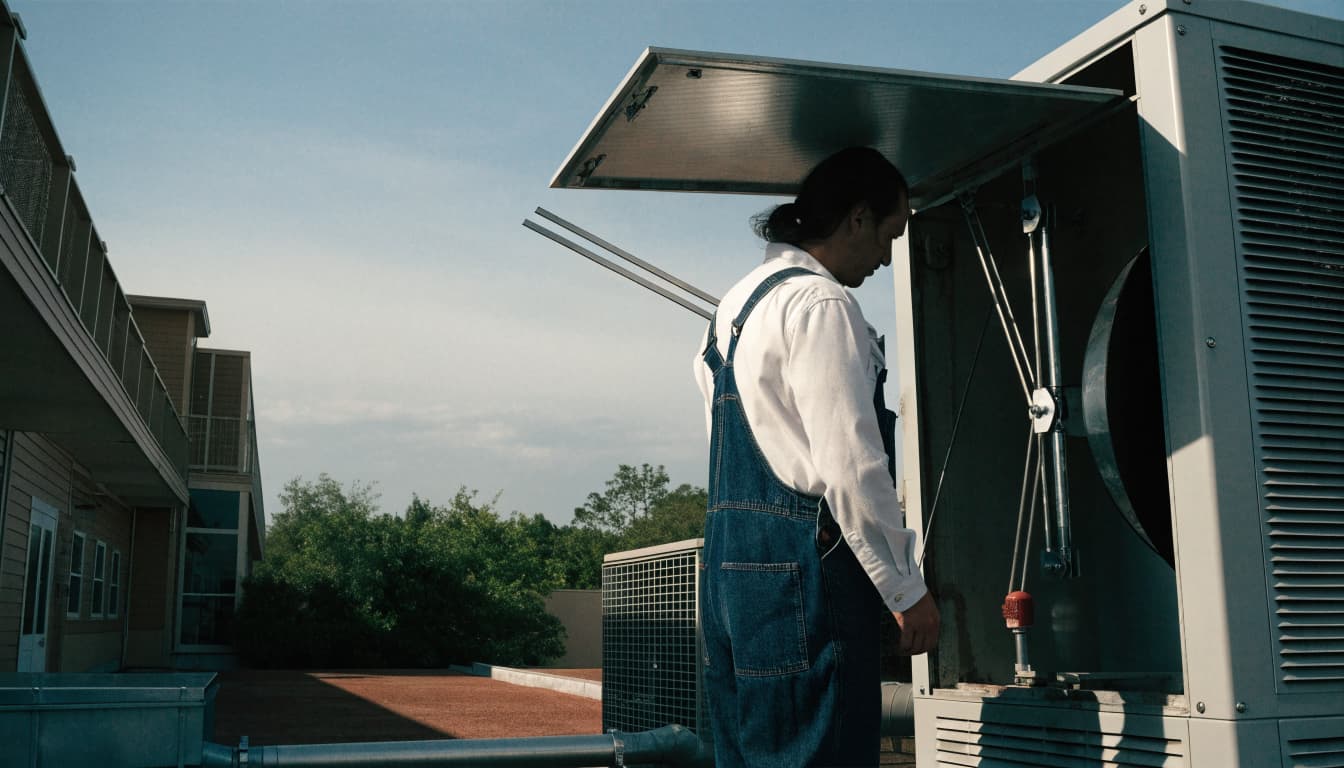
A qualified technician should evaluate the damper assembly, actuator, linkage, sensors, wiring, and controller. The inspection should also include cabinet seals, accessible ductwork, filters, coils, drains, and blower performance.
Functional testing establishes whether commands produce the intended response. That means observing damper travel, comparing sensor readings with measured conditions, and measuring ventilation airflow under representative operation.
For a confirmed fault, the service findings should identify the failed part or incorrect setting. They should also record what changed and how the technician tested operation afterward.
Repairs may involve replacing an actuator or sensor, correcting linkage, recalibrating airflow, or fixing a control sequence. Those jobs have different labor and equipment requirements. Our commercial HVAC repair cost guide distinguishes broad component estimates from individual repair pricing.
No fixed savings percentage applies to every economizer repair. Any energy-use comparison should account for weather and operating hours after the confirmed fault is corrected.
Safe Maintenance That Helps Prevent Repeat Problems
Owners and occupants can gather useful information without opening equipment. Record when rooms feel damp, whether cooling runs after closing, and whether symptoms follow storms or schedule changes.
Keep accessible supply registers and return grilles clear. Replace safely accessible filters according to the equipment's maintenance schedule and use the specified filter type.
Our commercial AC maintenance checklist includes rooftop weather exposure, electrical components, and cabinet conditions alongside routine system care.
Leave these tasks to qualified HVAC professionals:
- Accessing rooftop equipment or removing service panels requires appropriate safety precautions.
- Damper adjustment, actuator testing, electrical work, and control changes require equipment-specific knowledge.
- Refrigerant work, frozen coils, recurring breaker trips, and damaged wiring need professional diagnosis.
Never force a damper open or closed to change comfort. Don't bypass ventilation controls or safety switches.
If you smell burning or hear loud mechanical noise, turn the system off using its normal control if safe. Repeated breaker trips also require service rather than repeated resets.
Restore Proper Air Control Before Chasing Lower Bills
Economizer repairs work best when testing identifies the actual fault. Proper damper travel, accurate sensors, and controlled outdoor airflow protect both cooling performance and required ventilation.
High bills and damp rooms deserve a broader inspection because duct leaks, airflow restrictions, and refrigeration problems can create similar symptoms. Measured diagnosis keeps the repair focused.
For 24/7 service or to schedule a service call with our team, Contact Us.