Your AC can produce cold air while your home struggles to hold a comfortable temperature. A blower door test measures air leakage through the building envelope , helping identify openings that add to your cooling workload.
It doesn't directly measure AC efficiency or duct leakage. For Southwest Florida homeowners, its value is connecting hidden air leaks with comfort problems without assuming every high electric bill has the same cause.
Start by understanding what the test measures, then match the findings with the right HVAC checks.
What a blower door test measures
The building envelope separates your conditioned living space from outdoors and unconditioned areas. It includes exterior walls, windows, doors, and the relevant floors and ceilings.
A blower door test evaluates how much air moves through leaks in that boundary under controlled pressure conditions.
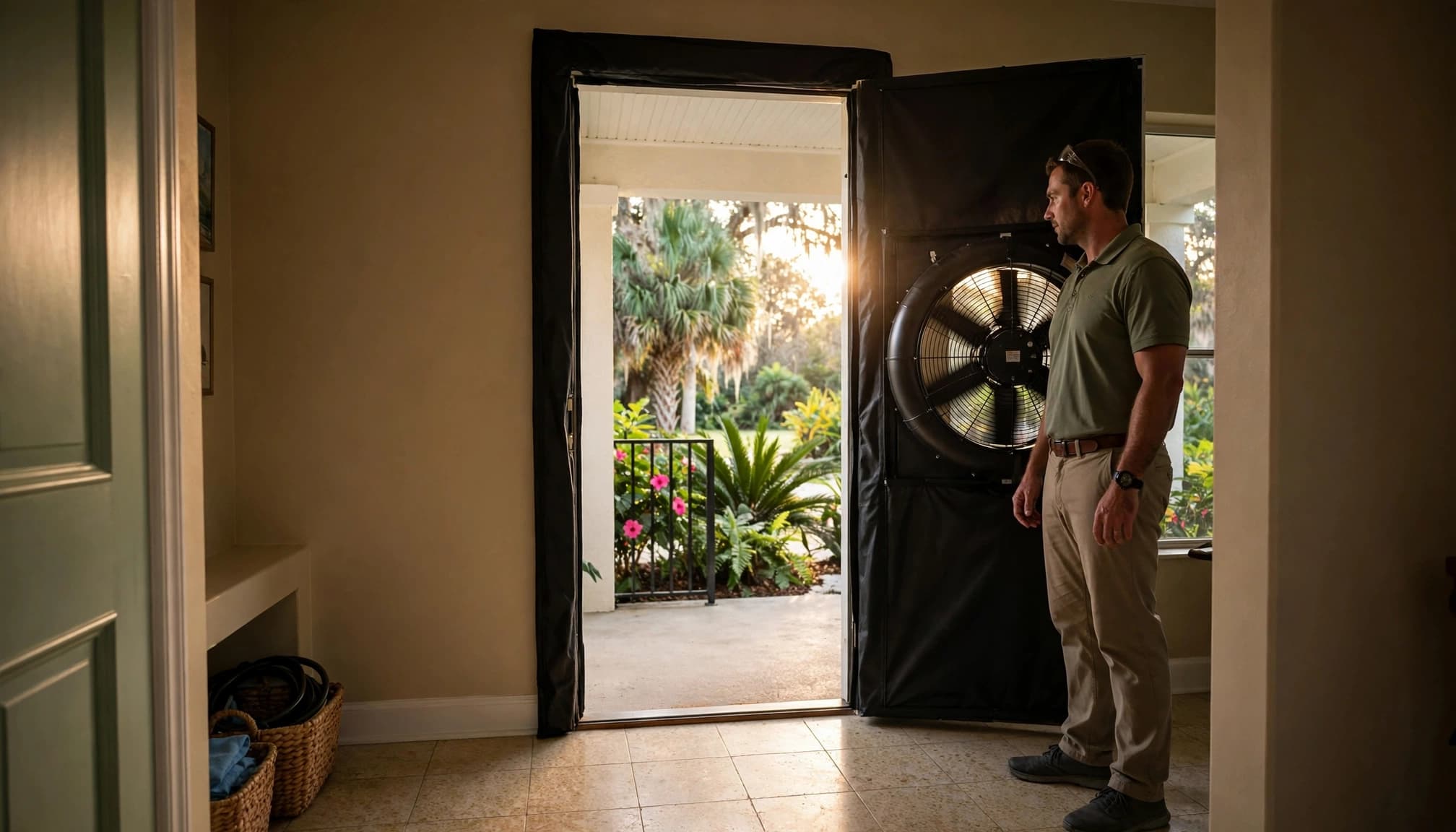
How the fan exposes hidden leakage
A testing professional installs a temporary panel and calibrated fan in an exterior doorway. The fan changes indoor pressure relative to outdoors while instruments measure pressure and airflow.
For a common depressurization test, the fan pulls air out of the house. Replacement air enters through openings in the envelope. The airflow needed to maintain the specified pressure indicates the home's overall leakage.
These controlled conditions make small openings easier to detect than they are during an ordinary walk-through.
How the technician locates openings
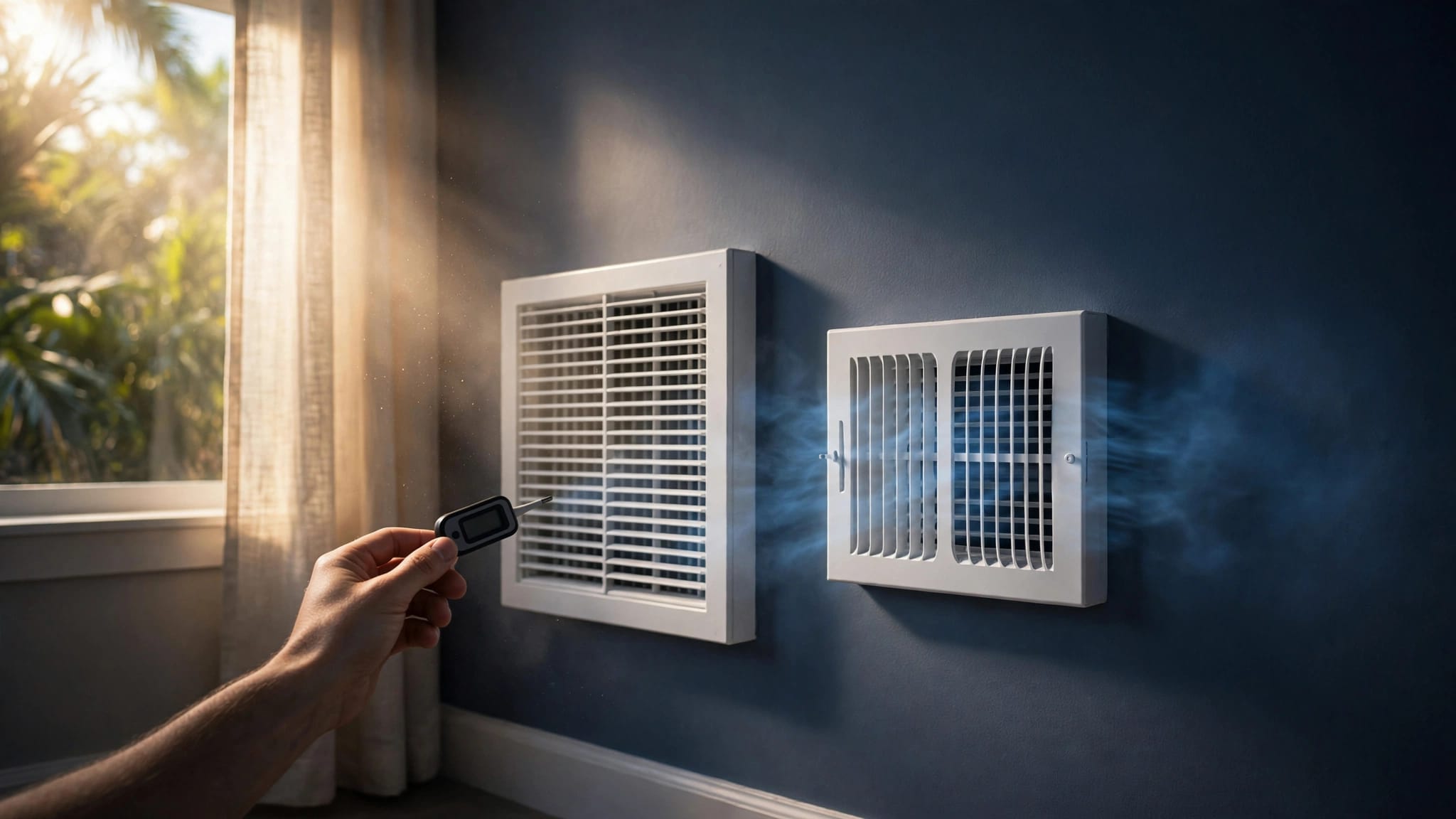
During testing, the technician may use a smoke pencil or infrared camera to investigate suspected leaks. Infrared findings depend on suitable temperature differences and need careful interpretation.
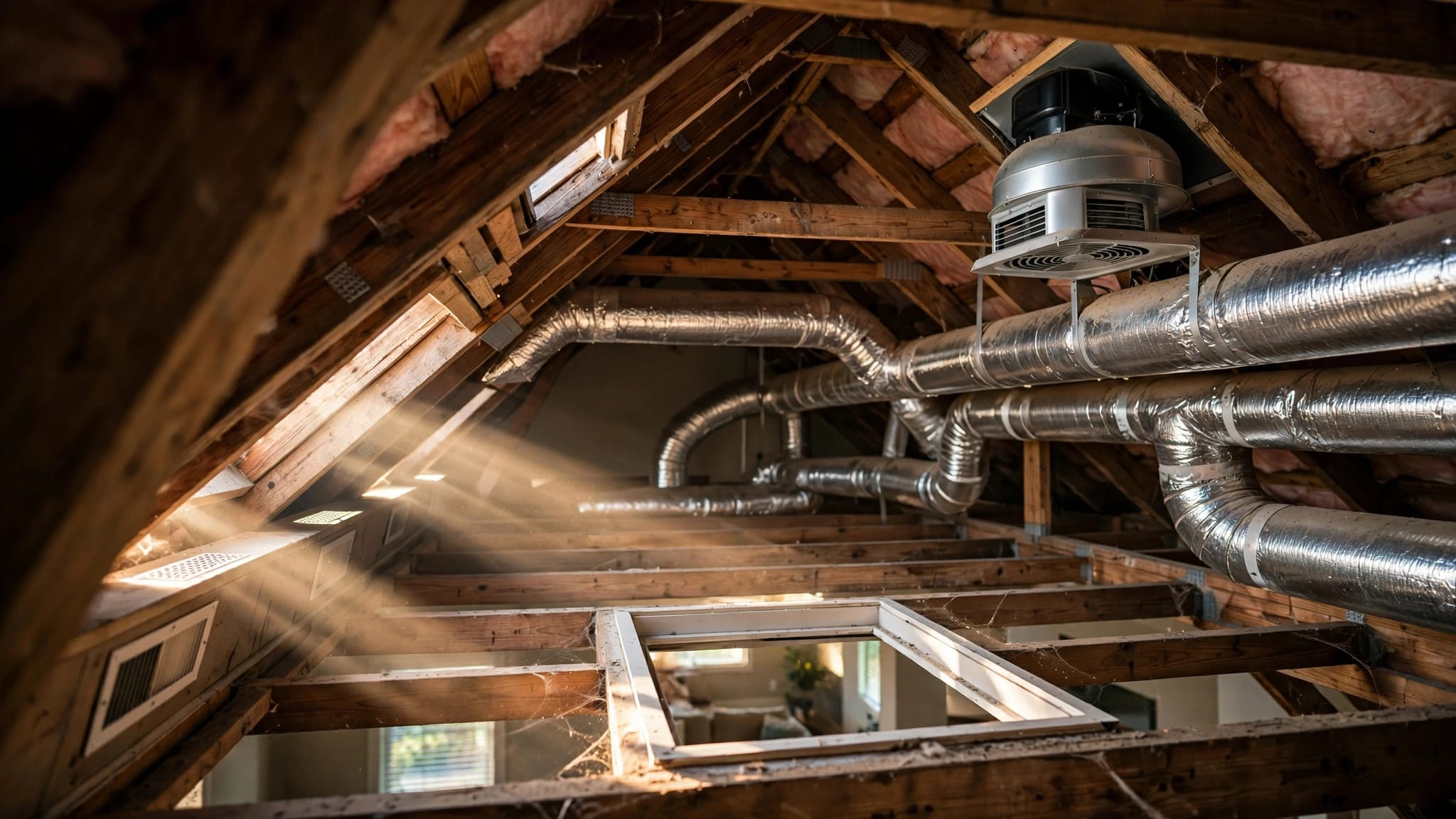
Common inspection points include attic hatches, plumbing penetrations, window frames, and gaps around ceiling fixtures. However, the fan reading alone doesn't identify each opening.
Ask for locations and photographs alongside the overall result. A leakage number becomes more useful when it supports a repair plan.
Why air leaks increase your cooling load
Air leakage can increase the work your AC must perform. In Cape Coral, that extra load includes both heat and moisture entering the home.
The test reveals pathways for unwanted air movement. It doesn't measure how much conditioned air escapes during everyday operation.
Incoming air brings heat
When warm outdoor or attic air enters your living space, the air conditioner must cool it. Meanwhile, conditioned air can leave through other openings, depending on wind and pressure differences.
The direction and amount of leakage change throughout the day. Exhaust fans and HVAC operation can also affect household pressure.
Air sealing addresses those openings. Insulation tackles heat moving through building materials, so the two improvements have different jobs. Understanding attic insulation and cooling performance helps you avoid treating insulation as a substitute for sealing leaks.
Incoming air adds moisture
Southwest Florida's humid air can enter through envelope leaks. Your AC then has additional moisture to remove as air passes across the evaporator coil.
That added load can contribute to a clammy feeling even when the thermostat shows a reasonable temperature. However, humidity can also stem from short cycling, equipment sizing, airflow problems, or water intrusion.
A leakage finding supports further investigation. It doesn't prove that outdoor air infiltration is the only reason your home feels damp.
How to read the results without assuming savings
A report may show airflow in cubic feet per minute, or CFM, at the specified test pressure. It may also express leakage as air changes per hour under test conditions.
CFM describes airflow volume. Air changes per hour relates that airflow to the home's interior volume, which helps put the result in context.
Test conditions differ from normal living conditions. Wind, indoor and outdoor temperatures, exhaust equipment, and HVAC operation affect actual air movement. Therefore, a test result doesn't translate directly into a percentage of your electric bill.
A reduction in measured leakage doesn't equal the same percentage reduction in AC electricity use.
Ask the evaluator to explain the comparison standard and how the home's size, construction, and ventilation affect the assessment. Avoid judging a house by a single number without that context.
For an energy-savings estimate, the evaluator needs more information, including climate, thermostat habits, equipment performance, and the proposed repairs. Even then, an estimate remains an estimate.
The strongest report distinguishes measured leakage, identified openings, and projected benefits. Those are related findings, but they aren't interchangeable.
Envelope leaks and duct leaks need different repairs
Envelope leaks occur at the boundary around conditioned space. Duct leaks occur in the passages that carry air between the HVAC equipment and rooms.
Both can undermine comfort, but a standard blower door test doesn't directly measure duct leakage.
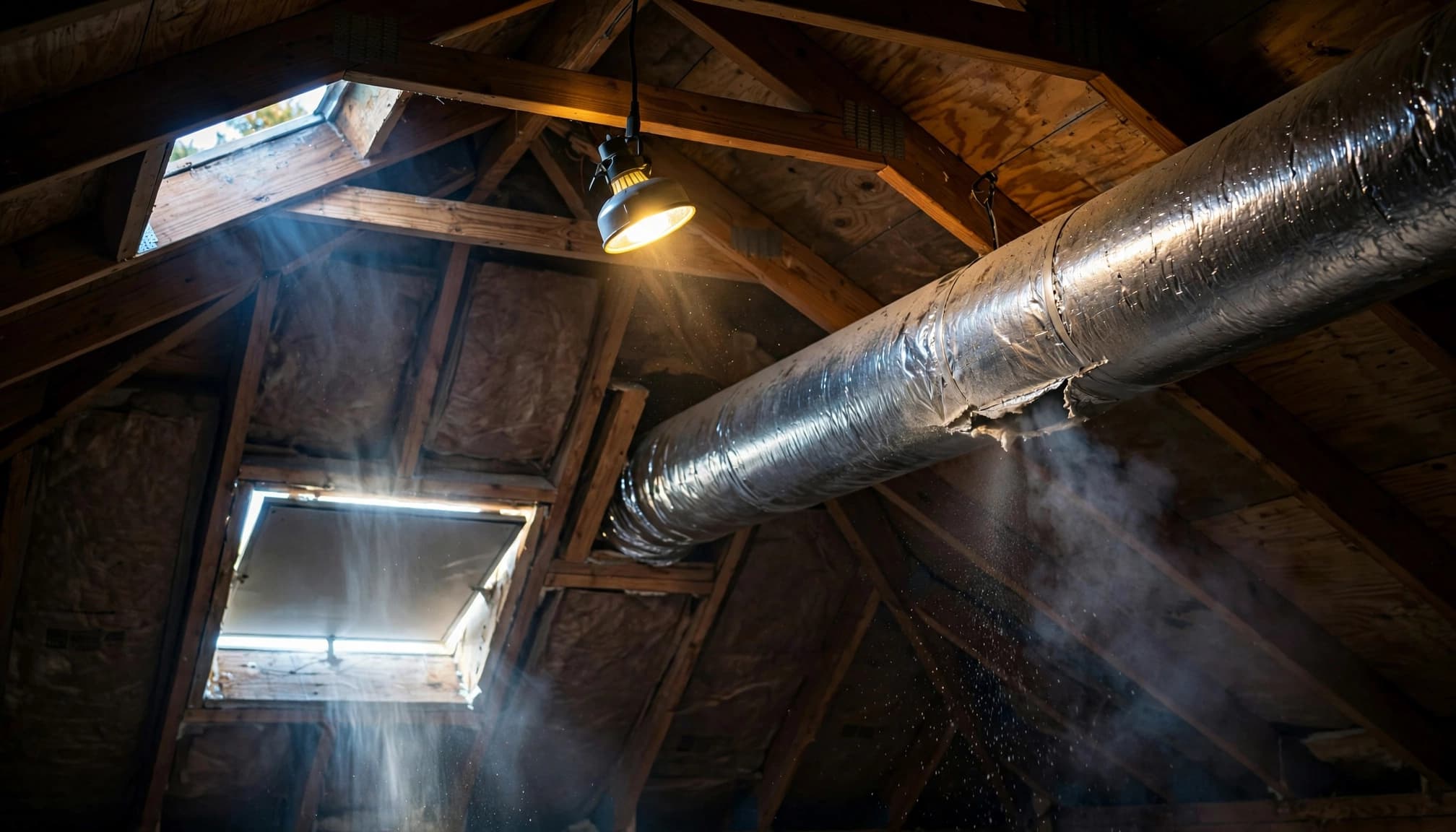
Supply leaks lose delivered cooling
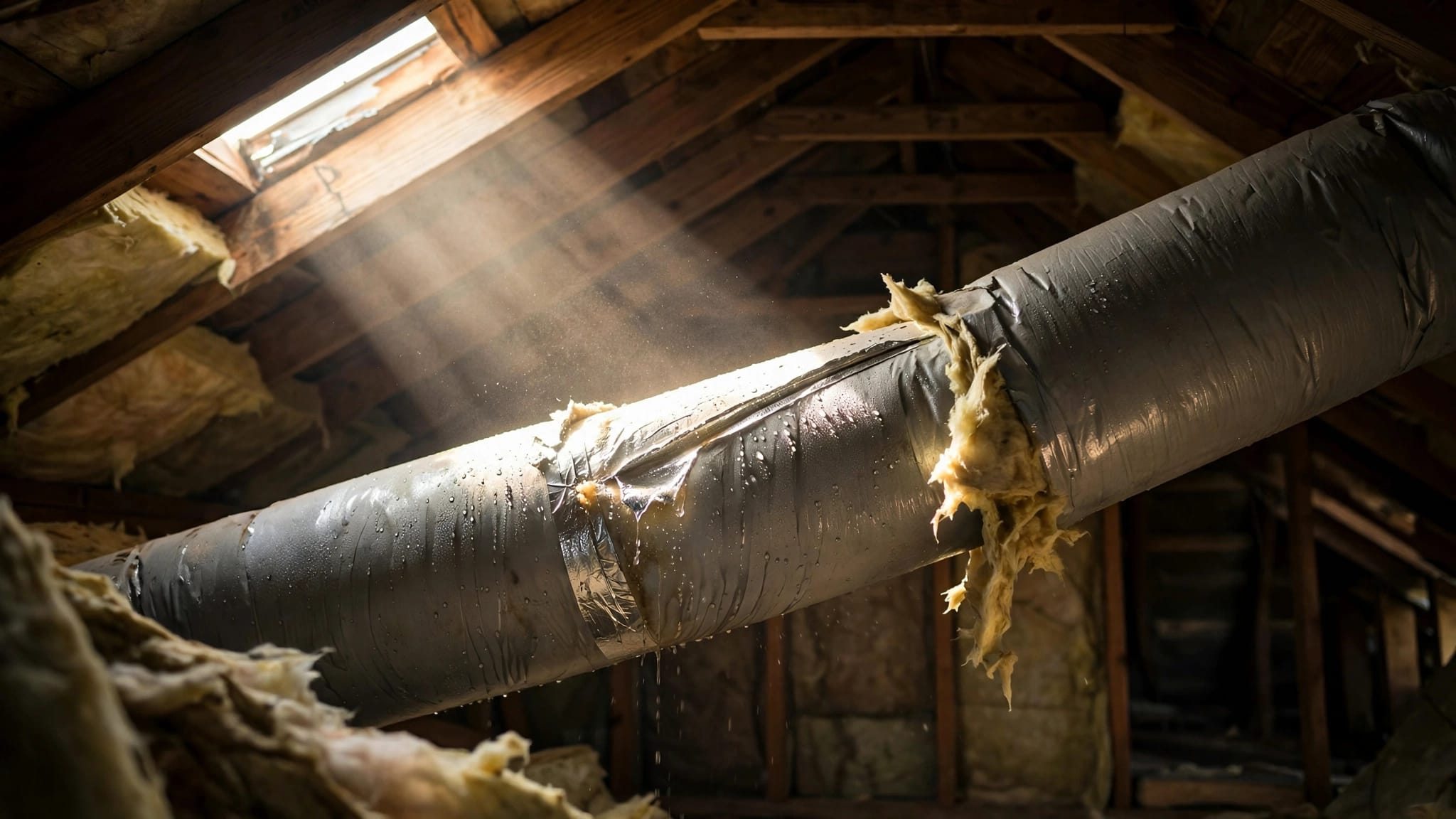
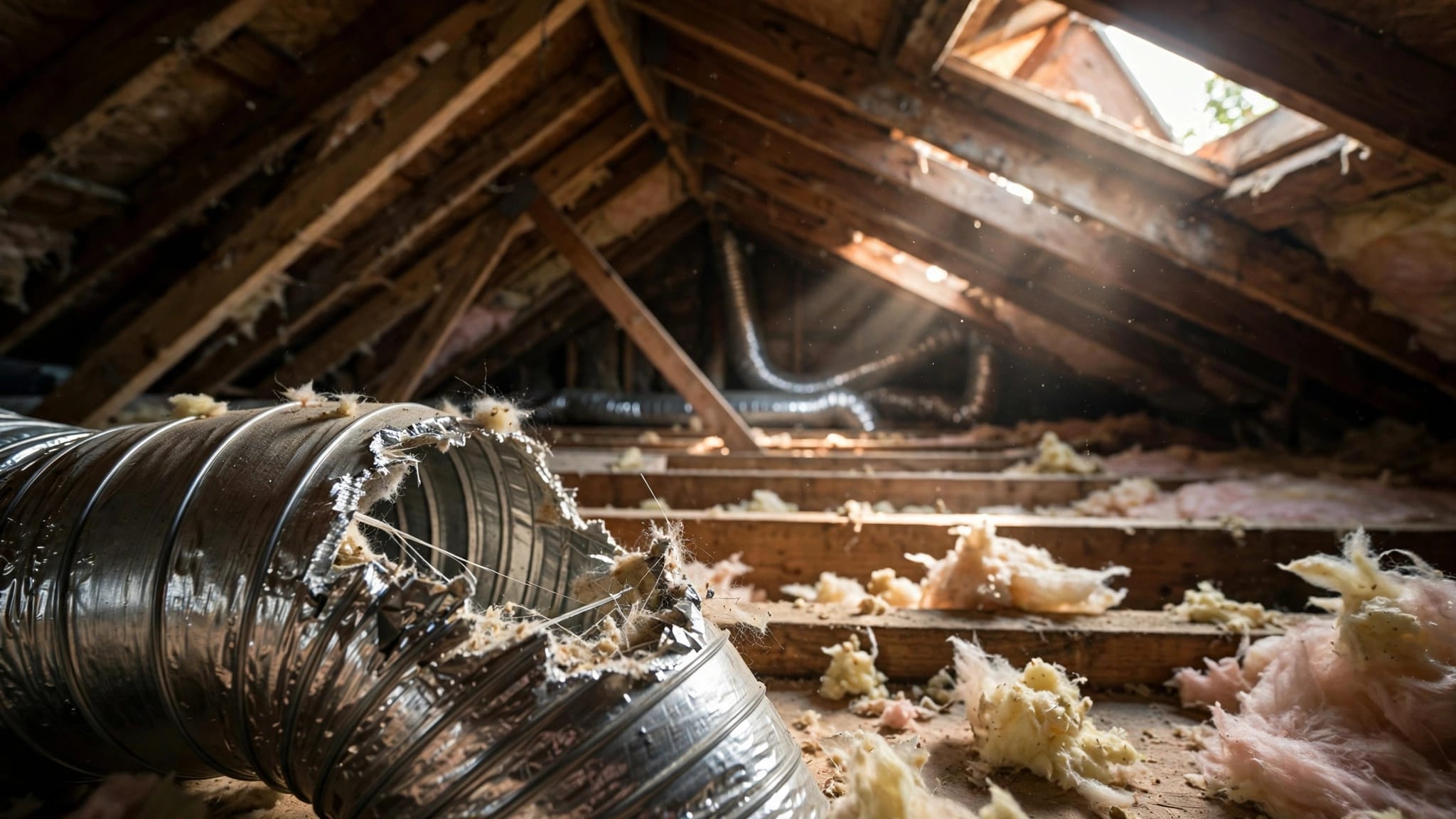
A leaking supply duct in an unconditioned attic can release cooled air before it reaches a room. Damaged duct insulation can also allow heat into the air passing through an otherwise sealed duct.
Neither problem is equivalent to a gap around an attic hatch. The hatch needs envelope sealing; the duct may need connection repairs, sealing, or insulation work.
However, weak vent airflow doesn't prove leakage. Crushed flex duct, restrictive bends, or inadequate duct sizing can produce similar symptoms.
Return leaks pull in unwanted air
A return-side leak can draw hot, humid, dusty attic air into the system. The air conditioner must then handle that unwanted air along with air returning from the rooms.
Duct pathways can interact with whole-house testing, so the test setup matters. Separating duct leakage from envelope leakage requires dedicated procedures.
If one bedroom stays warm while others cool normally, investigate causes of uneven room temperatures before approving broad sealing work. Room-specific problems may require airflow measurements or repairs to an individual branch.
Other tests that explain AC performance
A home can have envelope leakage and HVAC problems at the same time. Complementary tests help establish which repairs will address the symptoms you notice.
Duct leakage and airflow testing
A dedicated duct leakage test uses specialized equipment and a documented setup to evaluate leakage in the duct system. Depending on the procedure, testing can distinguish total duct leakage from leakage outside conditioned space.
Meanwhile, register airflow measurements show how much air reaches individual rooms. A technician may use a capture hood, also called a balometer, and record airflow in CFM.
Neither result alone explains every comfort complaint. A disconnected branch needs repair, while an intact but restrictive duct may need a different correction.
Equipment and pressure checks
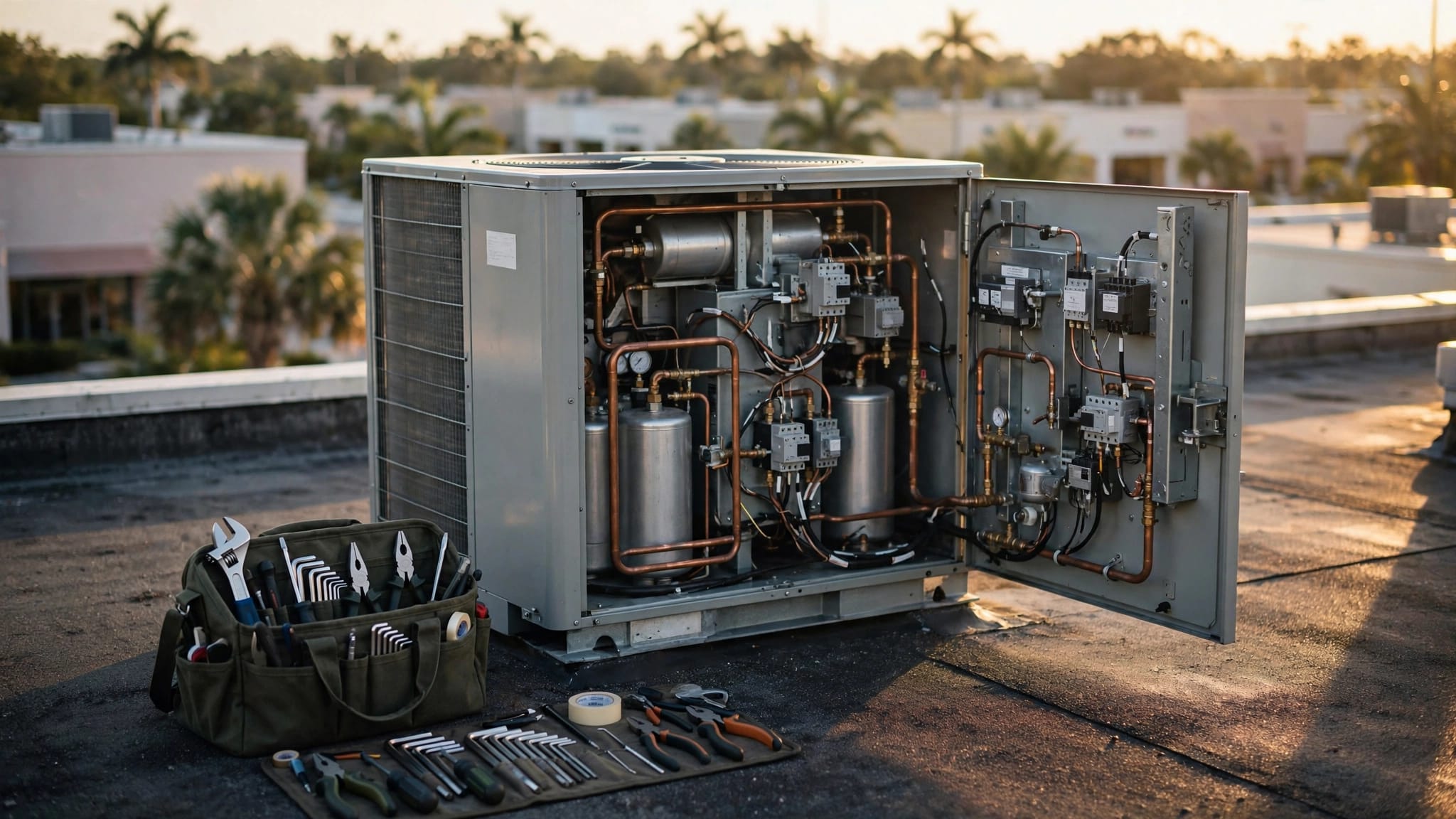
AC static pressure testing helps assess resistance to airflow through the HVAC system. Technicians compare readings with the equipment manufacturer's limits and investigate the filter, coil, supply, and return paths.
A dirty blower wheel, blocked coil, or crushed duct can reduce airflow without being an envelope leak. Refrigerant and temperature measurements add information about cooling performance.
Likewise, SEER2 describes a matched system's rated seasonal efficiency under standardized conditions. A blower door result doesn't measure that rating or confirm that installed equipment operates properly.
What to ask before scheduling a test
Ask whether the appointment includes only a leakage measurement or also leak-location work, photographs, and repair recommendations. Confirm whether duct testing or HVAC diagnostics require a separate visit.
Testing prices vary with scope, home size, access, and additional services. Request a written quote rather than assuming an advertised assessment includes every diagnostic step.
Before the visit, share your comfort concerns, recent renovations, water damage, and previous duct repairs. Note whether symptoms change when bedroom doors close or exhaust fans run.
Follow the testing provider's preparation instructions. Exterior doors, interior doors, ventilation equipment, and HVAC operation may need particular settings for the selected procedure.
Also, tell the evaluator about fireplaces or fuel-burning appliances. Pressure testing requires appropriate combustion-safety precautions.
Keep attic access and equipment areas clear, but don't remove HVAC panels or change blower settings yourself. The technician should document the test setup and restore normal operation afterward.
Turn the findings into a targeted repair plan
The next step should follow the evidence. A high leakage result doesn't automatically justify new ductwork, more insulation, or an AC replacement.
Use a practical sequence:
- Address identified envelope openings. Door weatherstripping, attic-hatch sealing, and suitable repairs around penetrations may reduce unwanted air movement. Materials and methods must suit the location, especially near heat-producing fixtures.
- Correct documented HVAC defects. Repair disconnected or damaged ducts before sealing them. Use appropriate duct-sealing materials, such as mastic or approved tape, and address restrictions that sealing won't fix.
- Verify the improvements. Repeat relevant leakage or airflow measurements, then track room temperatures and humidity during comparable weather.
Before substantial air sealing, evaluate ventilation needs. A tighter home still needs controlled fresh air, and any fuel-burning equipment needs appropriate safety checks.
If replacement is planned, complete major envelope improvements before final equipment sizing whenever possible. An ACCA Manual J load calculation can account for the updated home. Reusing the old unit's capacity without reassessment may lead to oversizing and poor humidity control.
Also, duct design during AC replacement deserves attention. New equipment won't correct a restrictive return or poorly sized supply branch.
Compare utility use cautiously afterward. Weather, billing periods, thermostat settings, and occupancy can change even when repairs work as intended.
Conclusion: Identify the leak before choosing the fix
A blower door test reveals envelope air leakage that can add heat and moisture to your home. Its strongest contribution is a targeted repair plan , supported by separate duct and equipment checks when needed.
Your AC may be producing cooling correctly while openings in the house increase its workload. Matching repairs to measured problems gives you a sounder basis for improving comfort than guessing at savings.
For recurring cooling, airflow, or humidity problems, Contact Us to schedule a service call with Back Bay Heating & Cooling. Our team provides 24/7 HVAC service in Southwest Florida.