If you typed attic insulation Cape Coral into Google, you may be trying to solve an air-conditioning problem. Your system runs for hours, certain rooms stay warm, or indoor humidity never feels comfortable.
In Cape Coral, the attic sits between your living space and intense Florida heat. When insulation is thin, damaged, or poorly installed, that heat increases the workload on your AC. Improving the attic can help your system cool more evenly, control moisture, and avoid unnecessary wear.
Why Cape Coral Attics Put Extra Pressure on Your AC
Cape Coral homes face long cooling seasons, strong sun, and humid air. Even when the outdoor temperature drops in the evening, the roof and attic materials may continue releasing stored heat. That heat moves through the attic floor and into the rooms below.
Your AC must remove that extra heat before it can maintain the thermostat setting. As the attic gets hotter, the system may run longer cycles. A longer runtime isn't always a problem, but constant operation can point to excessive heat gain, air leakage, poor ductwork, or an AC system that doesn't match the home's load.
The effect often appears in rooms directly below the attic. Bedrooms may feel warmer at night, hallways may have uneven temperatures, and the thermostat may shut off while one side of the house remains uncomfortable.
Cape Coral homes also depend on effective humidity control. Your air conditioner removes moisture while it runs. If heat from the attic forces the system to run in short, uneven cycles or creates large temperature differences, indoor comfort can suffer even when the thermostat shows the correct number.

A sealed, well-insulated attic doesn't make the attic cold. Instead, it slows heat transfer into the conditioned part of the home. That difference matters because the AC has less heat to remove during every cycle.
How Attic Insulation Cape Coral Homes Need Affects AC Performance
The right attic insulation reduces the amount of heat that reaches your ceilings. This lowers the cooling load, which is the total amount of heat your AC must remove to maintain indoor comfort.
Less heat reaches the living space
When insulation covers the attic floor evenly, it creates resistance against heat flow. Gaps around ceiling fixtures, attic hatches, wiring penetrations, and plumbing openings can still allow hot air to move into the house. For that reason, insulation and air sealing need to work together.
Adding insulation over an attic with major air leaks may improve the situation, but it won't correct every problem. Hot attic air can still enter through openings, and conditioned air can escape through the same paths. A professional inspection should look beneath the insulation, not only at its visible depth.
The change in AC performance can show up as:
- Shorter or less frequent cooling cycles during moderate weather.
- More consistent temperatures between rooms.
- Less heat radiating through ceilings in the afternoon.
- Reduced strain on the blower, compressor, and electrical components.
Your utility bill may also change, but savings depend on the home's size, current insulation level, thermostat setting, duct condition, windows, and AC efficiency. Insulation is one part of the cooling load, not a guaranteed percentage reduction.
Humidity control can improve
Cape Coral's outdoor air contains substantial moisture for much of the year. When your AC runs properly, the evaporator coil removes some of that moisture before the air returns to the home.
An overheated attic can make the system work longer without delivering even comfort. Meanwhile, air leaks around the attic hatch or recessed lights can bring humid outside air into the home. Sealing those leaks helps your AC control the indoor environment more effectively.
Better insulation helps the AC by reducing heat gain. It doesn't replace proper sizing, refrigerant service, clean filters, or duct repairs.
A home with improved attic insulation may also need a new AC load calculation before replacement. If the old system was selected for a hotter, less efficient building envelope, installing another unit of the same size could lead to oversizing. An oversized AC can cool the air quickly but struggle to run long enough for good humidity removal.
For more detail on the factors that affect equipment selection, see this guide to attic insulation and cooling load.
Attic Problems That Keep Cape Coral Rooms Hot
Insulation can look adequate from the attic entrance while failing in important areas. Installers may have missed narrow sections near roof edges, soffits, duct penetrations, or access platforms. Wind, pests, remodeling work, and moisture can also move or damage insulation over time.
Compressed insulation performs less effectively than its rated condition. Wet insulation can lose performance and may point to a roof leak, plumbing issue, or condensation problem. Mold growth, musty odors, and staining deserve attention before adding new material.
The attic floor should also have continuous coverage. Exposed drywall or visible gaps create direct paths for heat. Around recessed lights, exhaust fans, plumbing vents, and electrical boxes, air sealing is often as important as adding insulation.
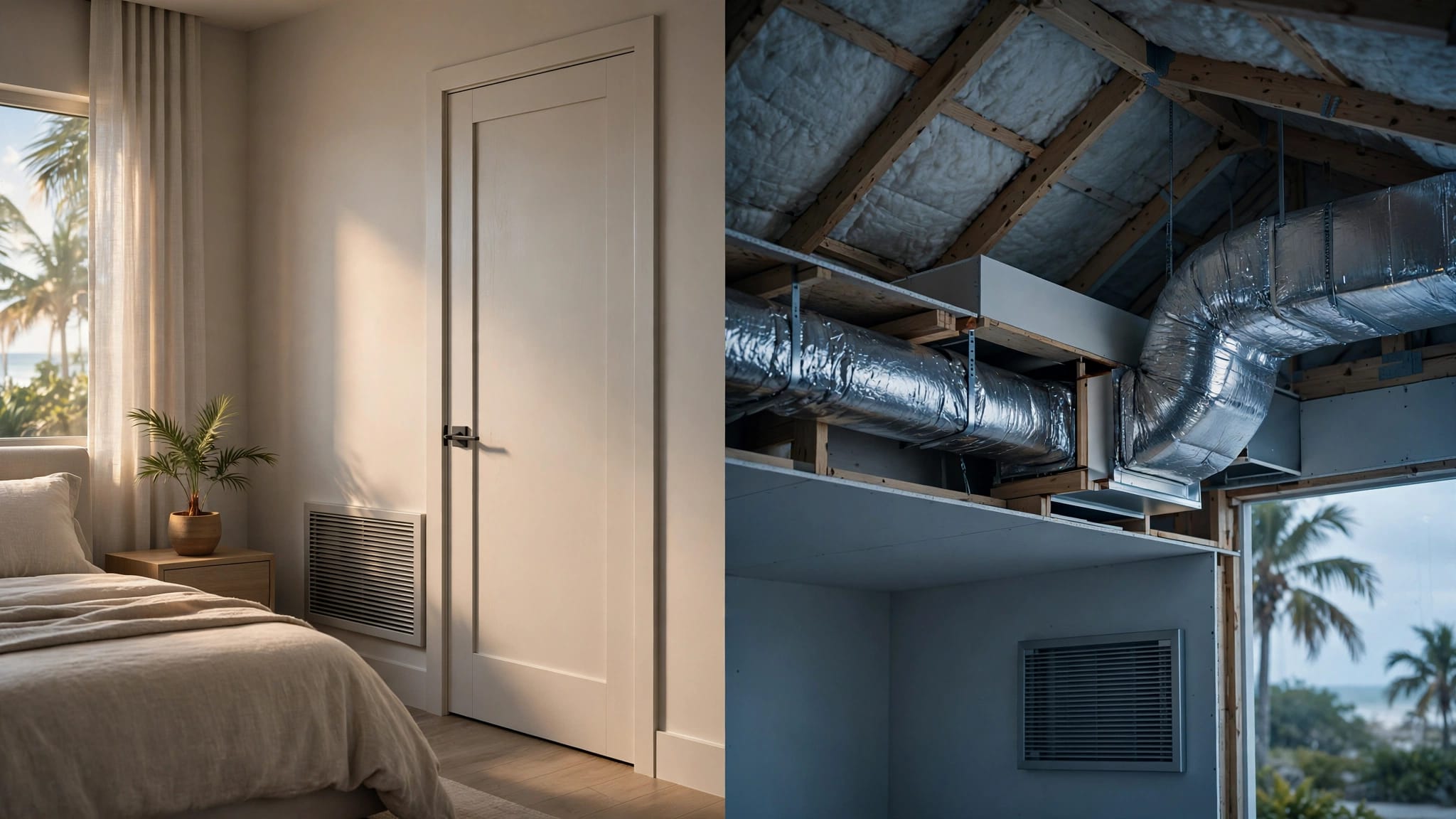
Ductwork is another major part of the picture. Many Cape Coral homes have supply and return ducts running through the attic, where temperatures are much higher than indoors. If a duct has a loose connection, damaged insulation, or a crushed section, cooled air can lose energy before reaching the room.
A bedroom that stays hot may have more than one cause. The issue could involve attic heat, a leaking duct, a blocked register, west-facing windows, or poor return airflow. This is why replacing insulation without checking the entire system may leave part of the comfort problem unresolved.

If one room is consistently warmer than the others, review these hot-room causes in Cape Coral homes before choosing a repair.
Choosing Insulation and Air-Sealing Improvements
The best solution depends on what is already in the attic and how the home is built. Common options include blown fiberglass, blown cellulose, fiberglass batts, and spray foam. Each material has different installation requirements and may fit different attic conditions.
Blown fiberglass can provide even coverage across an attic floor when installed at the correct depth. Cellulose can also cover irregular spaces, but moisture sources must be corrected first. Batts can work well in accessible areas, yet gaps and compression reduce their effectiveness.
Spray foam can seal air leaks and insulate along selected surfaces. However, it requires careful installation around wiring, vents, recessed lighting, and other attic components. A contractor should explain whether the goal is to insulate the attic floor, seal the ceiling plane, or change the attic's thermal boundary.
Air sealing often targets:
- The attic access panel and its surrounding frame.
- Recessed light fixtures that are rated for contact with insulation.
- Plumbing and electrical penetrations.
- Duct boots, return plenums, and air-handler connections.
- Gaps near top plates and ceiling transitions.
A radiant barrier may reduce some radiant heat reaching the attic floor, but it doesn't replace insulation or air sealing. Attic ventilation also needs careful evaluation. More airflow isn't automatically the answer, especially when vents are blocked, poorly placed, or combined with unsealed ceiling leaks.
Once the work is complete, the attic should be checked for consistent coverage, safe clearances, moisture problems, and access to equipment that may need future service. The goal is a complete improvement, not a thick layer of material hiding an unresolved leak.
What to Check Before and After Insulation Work
Start with the symptoms inside the home. Note which rooms run hot, when the problem appears, whether the AC runs continuously, and whether the indoor air feels damp. These details help connect the attic condition to system performance.
A qualified HVAC evaluation should include airflow, filter condition, supply and return temperatures, duct connections, refrigerant performance, and thermostat operation. If the ducts run through the attic, inspect their insulation and seals as well. You can also review signs of leaking ductwork in Cape Coral when checking for room-by-room cooling losses.
After insulation or air-sealing work, give the home time to settle into normal use. Track indoor temperatures and humidity during similar weather. A simple comparison over several hot afternoons can reveal whether the warmest rooms improve.
If you're replacing the AC, complete the insulation and air-sealing work before final equipment sizing whenever possible. The home's heat load may change after the attic improves. A proper calculation should account for the home's square footage, windows, ceiling height, insulation, ductwork, orientation, and occupancy.
Back Bay Heating & Cooling provides residential HVAC service in Cape Coral and surrounding Southwest Florida communities. If attic heat is affecting comfort or your AC needs a full evaluation, you can Contact Us to schedule service.
Conclusion
Attic insulation affects AC performance by changing how much heat enters your living space. Thin or damaged insulation can increase runtime, worsen room-to-room temperature differences, and make humidity harder to control.
The strongest results come from treating the attic and HVAC system as connected parts of the same home. Inspect insulation, seal air leaks, check attic ductwork, and size replacement equipment after the building envelope is improved. In Cape Coral, a cooler ceiling plane can give your AC less heat to fight every afternoon.