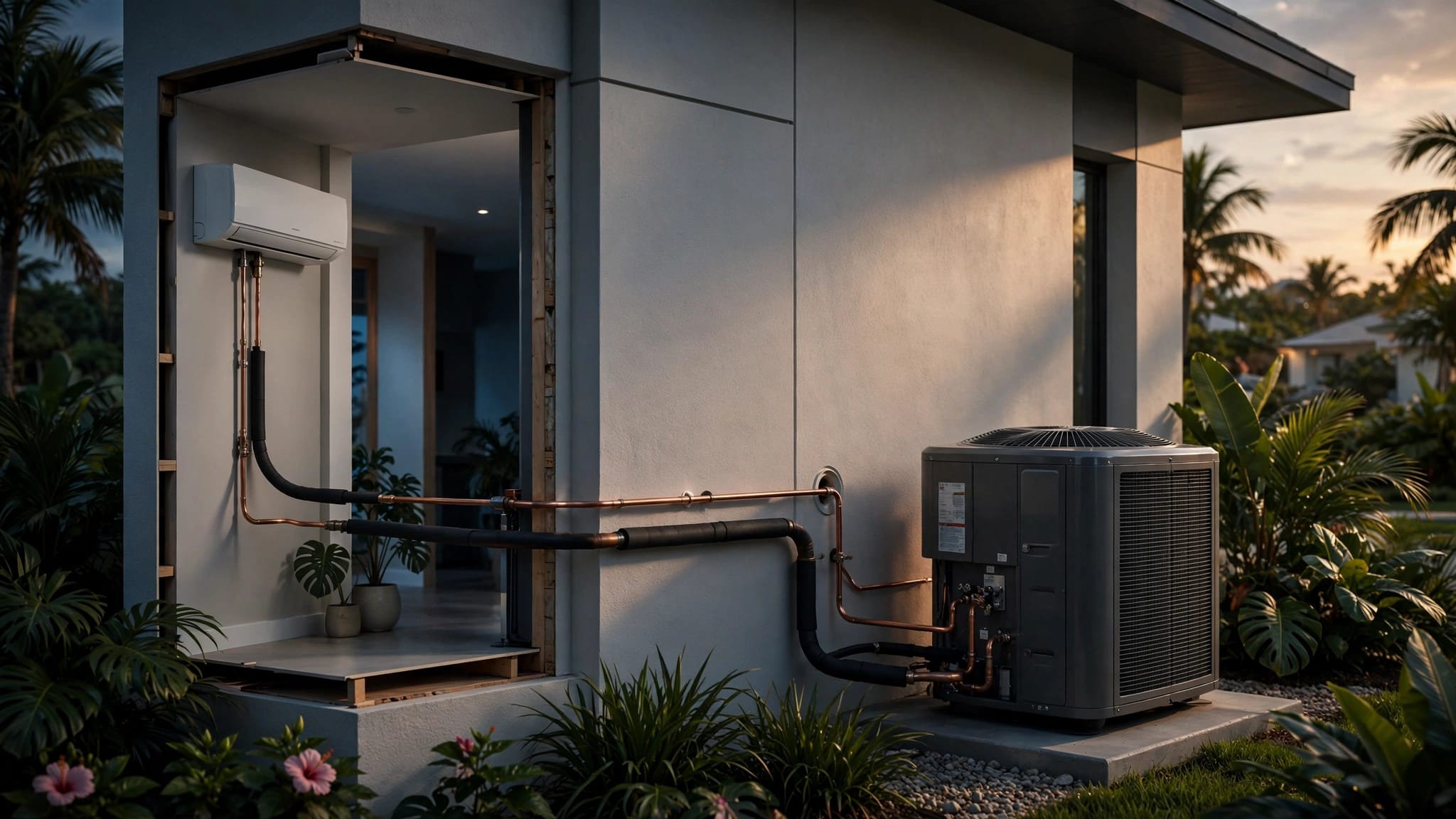
Choosing the wrong AC size in Cape Coral can leave you uncomfortable even when the system never seems to stop running. A unit that is too small strains to keep up, while one that is too large cools the air too fast and may leave the house sticky.
That matters more here than in milder places. Cape Coral heat comes with heavy humidity, bright sun, and a long cooling season, so the right AC unit size in Cape Coral depends on more than square footage. A proper load calculation is the safest place to start.
Why square footage alone misses the mark
Square footage gives you a rough starting point, but it does not tell the full story. Two homes with the same floor plan can need very different cooling capacity if one has shaded windows, better insulation, and tighter ducts.
A 1,800-square-foot home with good attic insulation may be easier to cool than a smaller home with west-facing glass and a hot attic. Ceiling height matters too. So does the way air moves through the house.
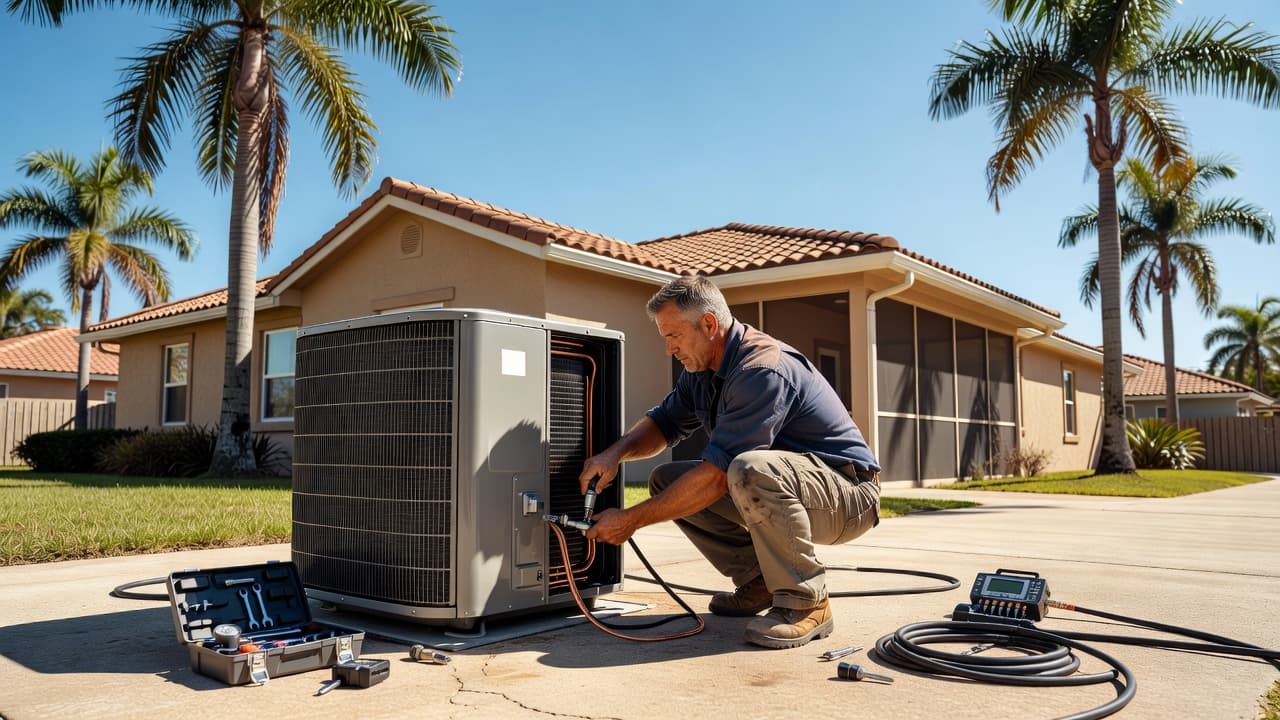
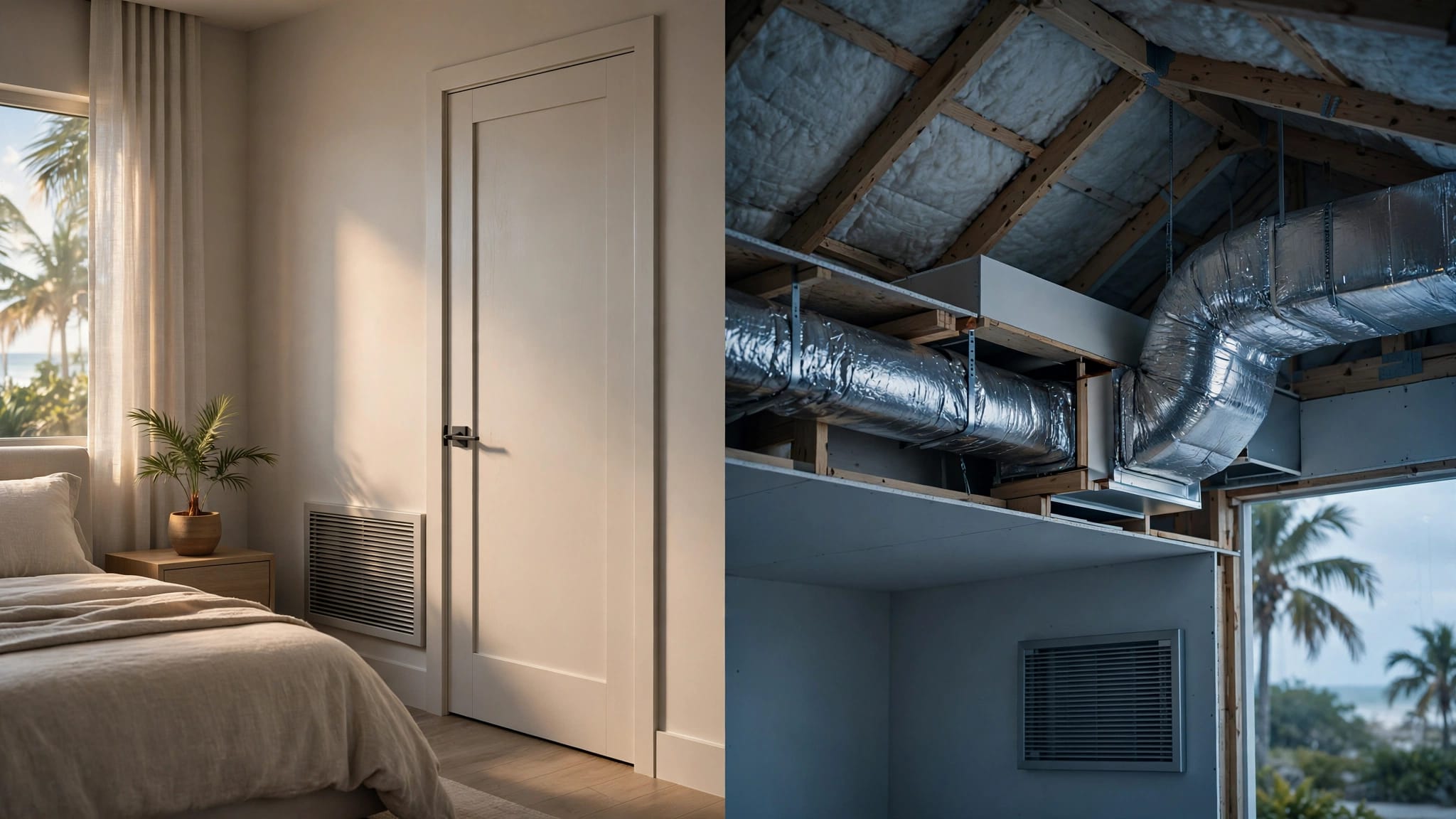
Windows, doors, and ductwork can change the load more than many people expect. A home with leaky ducts or a large open living area may need a different system than a similar-sized house with small rooms and good air flow. That is why AC sizing in Cape Coral homes should never come from a floor-plan guess alone.
How AC tonnage works in plain English
Tonnage is a cooling capacity measurement, not the weight of the unit. One ton equals 12,000 BTUs of cooling per hour. A 3-ton system removes about 36,000 BTUs of heat each hour.
That number helps you compare systems, but it still does not replace a proper load calculation. The chart below gives only rough starting points for Cape Coral homes.
| Home size | Rough starting AC tonnage | Why the range can change |
|---|---|---|
| Up to 1,000 sq ft | 1.5 to 2 tons | Sun exposure, insulation, and window count |
| 1,000 to 1,500 sq ft | 2 to 2.5 tons | Ceiling height and duct condition |
| 1,500 to 2,000 sq ft | 2.5 to 3.5 tons | Layout, attic heat, and occupancy |
| 2,000 to 2,500 sq ft | 3.5 to 4 tons | Glass area, shade, and air leakage |
| Over 2,500 sq ft | 4 tons and up | Home design, additions, and airflow |
Use those ranges as a starting map, not a final answer. A compact home with poor insulation may need more cooling than a larger home with shade and tight ductwork. In Cape Coral, the details often matter more than the square footage.
Cape Coral conditions that change the answer
Cape Coral homes face a tough cooling load. The sun beats on roofs and walls for much of the day, and summer humidity makes the air feel heavier. As a result, a system that seems fine on paper can struggle in real life.
The biggest factors are easy to spot once you know what to look for:
- Sun exposure : Homes with strong west or south exposure often gain more heat in the afternoon.
- Windows : Large windows, older glass, and poor seals can raise the cooling load fast.
- Insulation : Thin attic insulation lets heat pour into the living space.
- Ductwork : Leaky or poorly sized ducts can waste cooling before it reaches the rooms.
- Ceiling height : Tall ceilings increase the amount of air that needs to be cooled.
- Layout : Open plans can move heat differently than homes with smaller rooms.
- Household use : More people, more cooking, and more electronics all add heat.
- Additions : Sunrooms, enclosed lanais, and garage conversions can change the load a lot.
A home that feels comfortable in mild weather can feel very different in August. That is why a local homeowner should think about the house as a whole system, not just the size on the listing sheet.
If you're replacing an old unit, professional air conditioning installation should start with the home itself, not the model number on the box.
Why bigger and smaller systems both cause trouble
Many people assume a larger AC will fix every comfort issue. In reality, an oversized system can create new ones. It may cool the air fast, then shut off before it pulls out enough moisture.
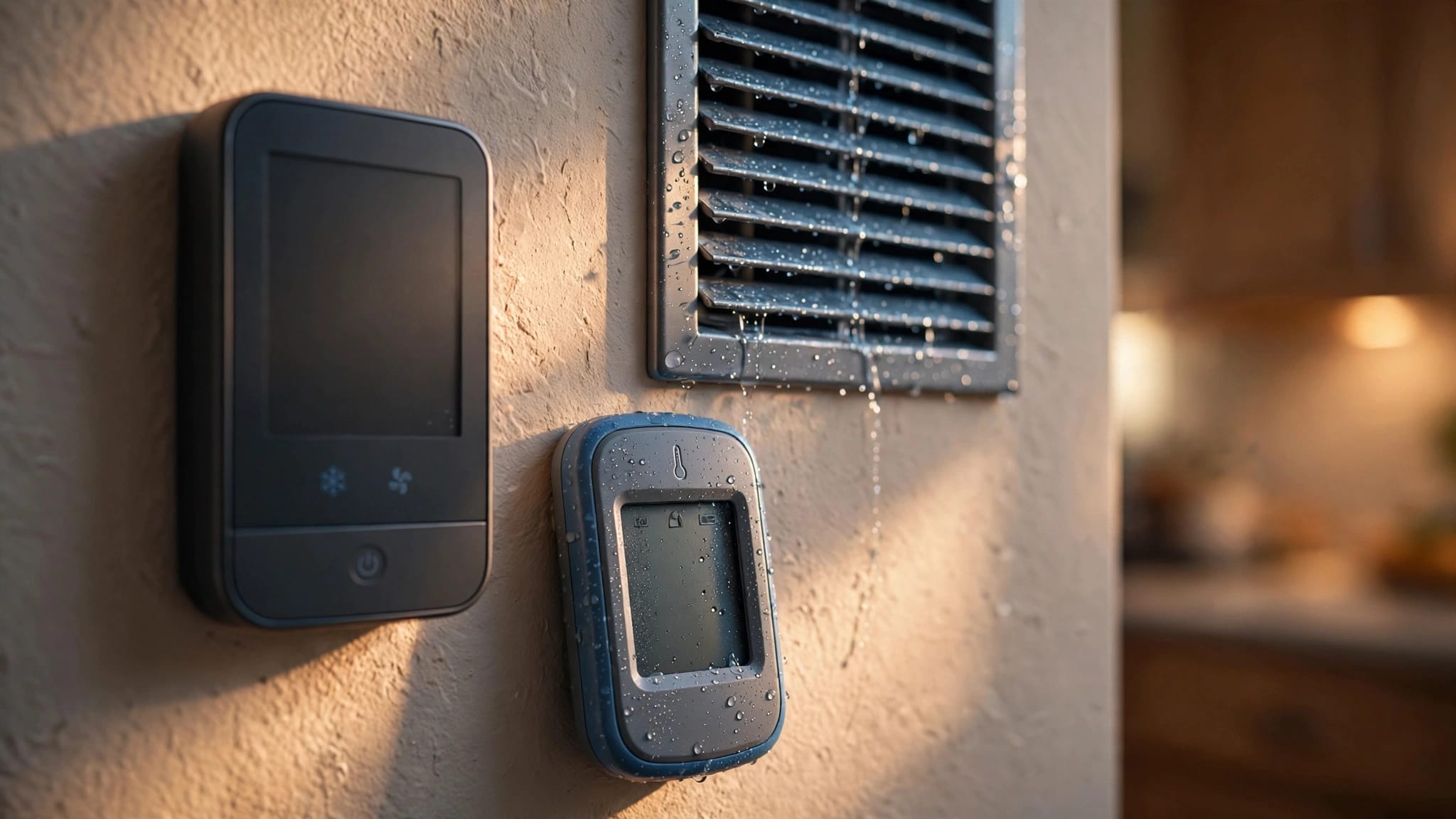
A too-large AC can leave a house cool but clammy, especially during humid Cape Coral afternoons.
That short runtime is called short cycling. It can lead to uneven temperatures, more wear on parts, and higher electric bills. Rooms may feel fine for a moment, then warm back up again.
An undersized system brings a different set of problems. It may run almost nonstop on hot days, yet still fail to keep up. The house can stay warm, the humidity can rise, and the equipment can work harder than it should.
Neither extreme is a good deal. The goal is steady cooling, good humidity control, and a system that runs long enough to do its job without wasting energy.
What a proper load calculation should check
A real sizing decision starts with a load calculation, often called a Manual J calculation. This process looks at how much heat your home gains and how much cooling it needs. It is the best way to narrow down the right AC unit size before you buy.
A good load calculation should look at the home's actual measurements, insulation levels, window type, orientation, duct layout, ceiling height, and air leakage. It should also account for how many people live there and how the home is used each day.
That matters when you compare replacement bids, because the lowest quote is not always the best one. Understanding air conditioning installation estimates helps you see whether a contractor included the same level of detail in each proposal.
Before you sign, ask for three things: a Manual J load calculation, a duct check, and a clear explanation for the recommended tonnage. If the size comes from a rule of thumb alone, that is not enough for Cape Coral conditions.
A proper install also has to match the home's airflow needs. That includes the ducts, the return air, and the way the system will handle humidity. When those parts line up, the right-sized unit feels stronger than a bigger one that was chosen blindly.
The smartest way to choose the right system
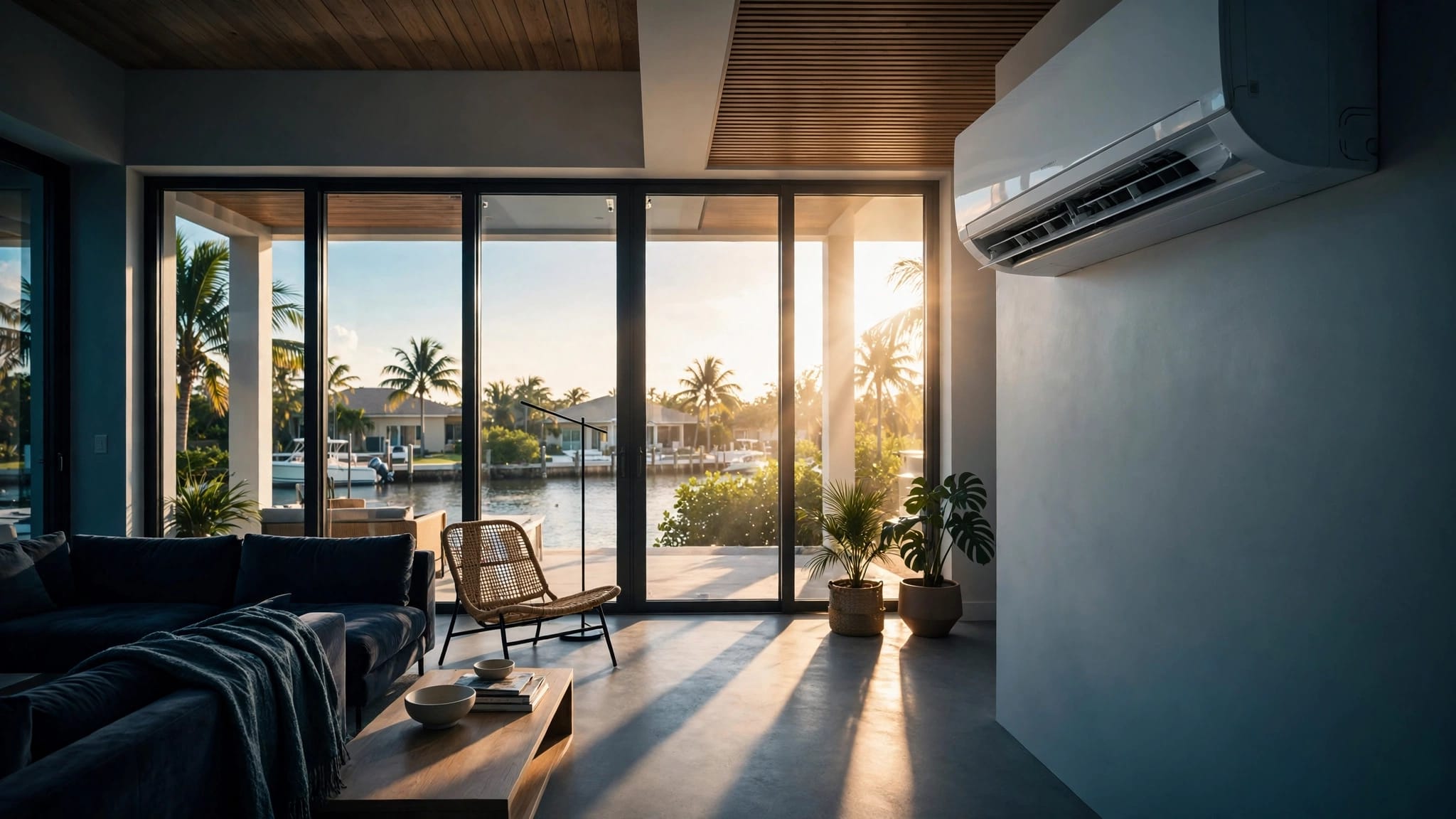
The right AC size should fit the home, the weather, and the way your family lives. That is why square footage is only the first clue. Cape Coral heat and humidity can push a home far beyond what a simple chart suggests.
If you are replacing a system, the safest path is a load-based recommendation, not a quick guess. That helps you avoid short cycling, uneven rooms, and wasted energy. It also gives you a better shot at steady comfort through the hottest months.
If you need a new system or a replacement, Contact Us to schedule a service call and get a sizing recommendation based on your home.