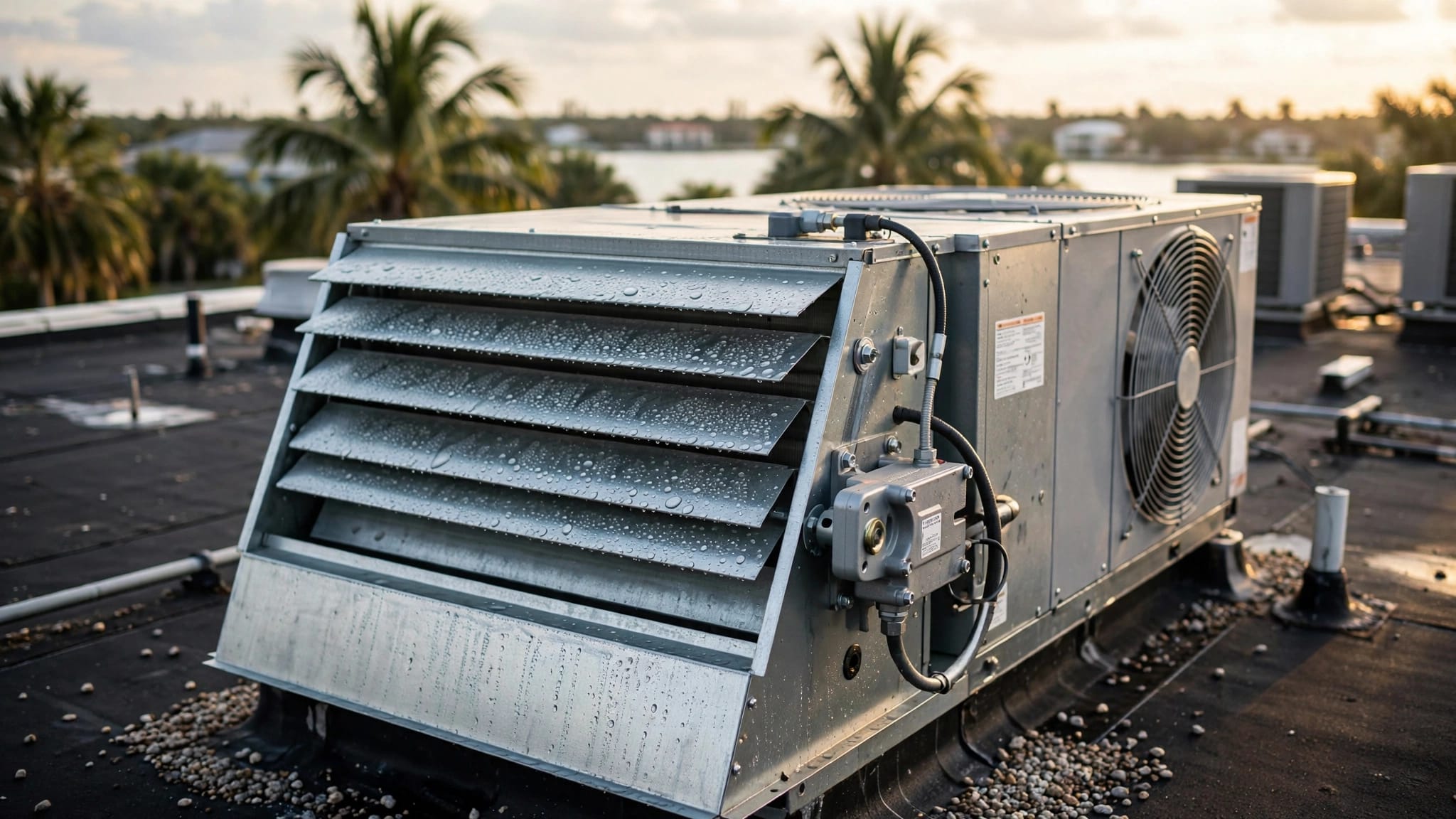
Florida homes need fresh air, but bringing outdoor air inside can also bring heat and humidity. The ERV vs HRV Florida decision matters because the wrong ventilation system can increase your air conditioner's workload and leave rooms feeling damp.
For most Southwest Florida homes, an energy recovery ventilator (ERV) is the better starting point. However, an HRV can fit certain homes and indoor conditions. The right choice depends on humidity levels, air sealing, occupancy, ductwork, and how your HVAC system already controls moisture.
Key Takeaways
- An ERV transfers heat and some moisture between outgoing and incoming air.
- An HRV transfers heat but does not recover moisture.
- Florida's hot, humid climate usually favors an ERV.
- Neither system replaces air conditioning or whole-home dehumidification.
- Proper sizing, duct design, and balancing matter as much as the equipment choice.
How ERV and HRV Systems Work
Both systems provide mechanical ventilation. They bring outdoor air into the home while exhausting stale indoor air. A heat exchanger inside the unit allows the two air streams to exchange energy without mixing directly.
An HRV , or heat recovery ventilator, transfers sensible heat. In simple terms, it moves temperature between the outgoing and incoming air streams. It does not transfer meaningful amounts of water vapor.
An ERV , or energy recovery ventilator, transfers sensible heat and latent energy. Latent energy relates to moisture. As a result, an ERV can reduce the amount of humid outdoor air that reaches your home.
| Feature | ERV | HRV |
|---|---|---|
| Exchanges heat | Yes | Yes |
| Transfers moisture | Yes, partially | No |
| Reduces outdoor humidity load | Better suited | Limited |
| Typical climate fit | Hot or mixed humid climates | Cold or dry climates |
| Works with central HVAC | Yes | Yes |
| Replaces air conditioning | No | No |
During a Florida summer, the ERV's moisture transfer is the main difference. Outdoor air enters hot and damp, while indoor air is usually cooler and drier. The ERV uses the outgoing indoor air to reduce some of the heat and moisture carried by the incoming air.
The process reduces the ventilation load on the air conditioner. Still, an ERV doesn't remove all outdoor moisture. Your cooling system, a dedicated dehumidifier, or both must handle the remaining humidity.
ERV vs HRV Florida: Why the Climate Usually Favors an ERV
Florida has long cooling seasons, high outdoor humidity, and frequent rain. In Cape Coral and other Southwest Florida communities, outdoor air can remain moisture-heavy even when temperatures feel manageable. Every uncontrolled air leak, open door, bathroom exhaust fan, and ventilation cycle can add to the indoor moisture load.
That climate makes an ERV the more practical option for many homes. By recovering part of the moisture difference between indoor and outdoor air, the system helps limit the humidity that reaches the living space.
An ERV can be especially useful in a newer, tightly sealed home. Modern construction may reduce natural air leakage, which improves efficiency but also increases the need for planned ventilation. Without a dedicated source of fresh air, odors and indoor pollutants can build up.
Older homes can also benefit from an ERV, but the assessment should include duct leaks and uncontrolled infiltration. If outdoor air enters through gaps around doors, windows, plumbing penetrations, or duct connections, the ventilation unit won't solve the entire problem.
In Florida, ventilation and humidity control must be planned together. Fresh air alone doesn't guarantee comfortable air.
A properly selected ERV may help your air conditioner maintain comfort with less ventilation-related work. It can also reduce the sudden humidity increase that occurs when a home receives continuous outdoor air without moisture recovery.
However, the unit must be sized for the home and operated at the correct airflow. An oversized ventilator may move more air than necessary. Poorly balanced ducts can cause pressure problems, uneven ventilation, or unwanted outdoor air entering through gaps elsewhere in the building envelope.
For homeowners comparing ERV vs HRV Florida options, the basic climate answer is clear: an ERV usually matches Florida's moisture conditions better. The equipment still needs to fit the home's actual design.
When an HRV May Make Sense in Florida
An HRV is less common in hot, humid Florida, but it isn't automatically wrong. The deciding issue is whether the home needs moisture recovery or moisture removal.
A home with persistent high indoor humidity may not be a good candidate for an ERV without further evaluation. Depending on indoor and outdoor conditions, an ERV can transfer some moisture back toward the incoming air stream. In a Florida summer, that usually helps reduce the moisture load, but the full system design still matters.
An HRV might make sense when:
- The home has a specific ventilation design that calls for heat-only recovery.
- Indoor humidity already runs high and the designer wants to avoid moisture transfer.
- The property uses a separate whole-home dehumidifier.
- The system serves a specialized space with different air-quality requirements.
- A professional load and ventilation assessment supports the choice.
An HRV does not dry incoming outdoor air. If humid air enters through the system, the air conditioner or dehumidifier must remove that moisture afterward. That can increase operating demand during Florida's wet season.
For this reason, an HRV should rarely be selected from a product brochure alone. A contractor needs to review indoor relative humidity, air exchange requirements, duct layout, equipment capacity, and the home's air-tightness.
If your home feels clammy while the AC runs, begin with the existing system. A dirty evaporator coil, restricted airflow, refrigerant problem, oversized AC, or drain issue can reduce moisture removal. Back Bay's guide to managing indoor humidity with AC covers several conditions that can cause this problem.
What to Consider Before Choosing a Ventilator
The best answer to the ERV vs HRV Florida question starts with the home, not the label on the equipment. Several practical details affect performance.
Indoor humidity
Measure indoor relative humidity instead of relying only on how the air feels. A common comfort target is around 45% to 55% relative humidity, although the right range can vary by home and occupant needs.
High readings may point to inadequate cooling, infiltration, duct leakage, or a need for dedicated dehumidification. A ventilator can support the HVAC system, but it cannot correct every moisture problem.
Home size and occupancy
Ventilation needs depend on more than square footage. A three-bedroom home with two occupants has a different use pattern than a smaller property with frequent guests, pets, or multiple residents.
Cooking, showering, indoor laundry, and occupancy all affect indoor air quality. The system should provide enough fresh air without running at an unnecessarily high rate.
Air sealing and ductwork
An ERV or HRV works best when the duct system is designed for balanced airflow. Supply and exhaust ducts need appropriate locations, insulation, filtration, and access for cleaning.
The contractor should also check whether the return side of the HVAC system pulls air from garages, attics, crawl spaces, or other problem areas. Ventilation equipment cannot compensate for contaminated or poorly routed ductwork.
HVAC compatibility
The ventilator should work with the home's air handler, thermostat, controls, and filtration setup. Some systems run continuously at a low speed, while others use timers, occupancy controls, or boost settings after showers and cooking.
Control settings matter in a humid climate. Running ventilation too aggressively can add more moisture than the AC can remove. A qualified technician can balance the airflow and set operating schedules for the household.
Maintenance access
Filters and core components need regular attention. Ask where the filter is located, how often it should be changed, and whether the heat-exchange core can be removed for cleaning.
A neglected ventilator can collect dust, reduce airflow, and spread unpleasant odors. The installation should leave enough working space for service.
If you notice musty smells, visible growth, or repeated moisture around the air handler, arrange professional mold testing services before choosing new ventilation equipment. Mold concerns can involve humidity, ductwork, insulation, and HVAC components at the same time.
Installation Matters More Than the Acronym
A high-quality ERV can perform poorly when the installer skips airflow balancing. The same is true for an HRV. Installation should account for fresh-air intake location, exhaust placement, condensate management, duct insulation, filtration, and service clearance.
The intake should stay away from exhaust outlets, standing water, vehicle exhaust, and other contamination sources. Exhaust points should remove stale air from appropriate areas, such as bathrooms, laundry rooms, or central return zones, based on the design.
Florida installations also need careful attention to condensation. Cool surfaces exposed to warm, humid air can collect water. Proper insulation and drainage help protect the equipment and surrounding materials.
Your contractor should explain how the controls work and what signs indicate a problem. These may include unusual noise, persistent odors, weak airflow, excess condensation, or a home that remains humid despite normal AC operation.
Back Bay Heating & Cooling serves Cape Coral and surrounding areas in Lee, Collier, Charlotte, and Hendry counties. Its EPA-certified technicians can evaluate ventilation, air conditioning, ductwork, and humidity concerns as part of a broader indoor-comfort assessment. To discuss your home's setup or schedule service, Contact Us.
ERV or HRV: The Practical Florida Decision
For most Florida homeowners, an ERV is the stronger choice because it addresses both temperature and moisture during ventilation. That makes it a better match for homes in Cape Coral, Fort Myers, Naples, and other humid parts of the state.
An HRV can still work when the home's design includes separate dehumidification or when a professional assessment identifies a reason to avoid moisture transfer. It simply requires a more careful system plan in Florida.
Before purchasing, check indoor humidity, inspect the existing HVAC system, review ductwork, and ask for a ventilation calculation. The right equipment should improve fresh-air exchange without making your home harder to cool.
Conclusion
The answer to ERV vs HRV Florida is usually an ERV for a humid residential climate. Its ability to exchange some moisture gives the air conditioner less ventilation-related humidity to remove.
Still, equipment selection is only one part of the result. Correct sizing, balanced ducts, proper controls, and a healthy HVAC system determine whether the home feels fresh or damp. When Florida air comes through the walls and ventilation system every day, moisture control needs to be part of the plan.