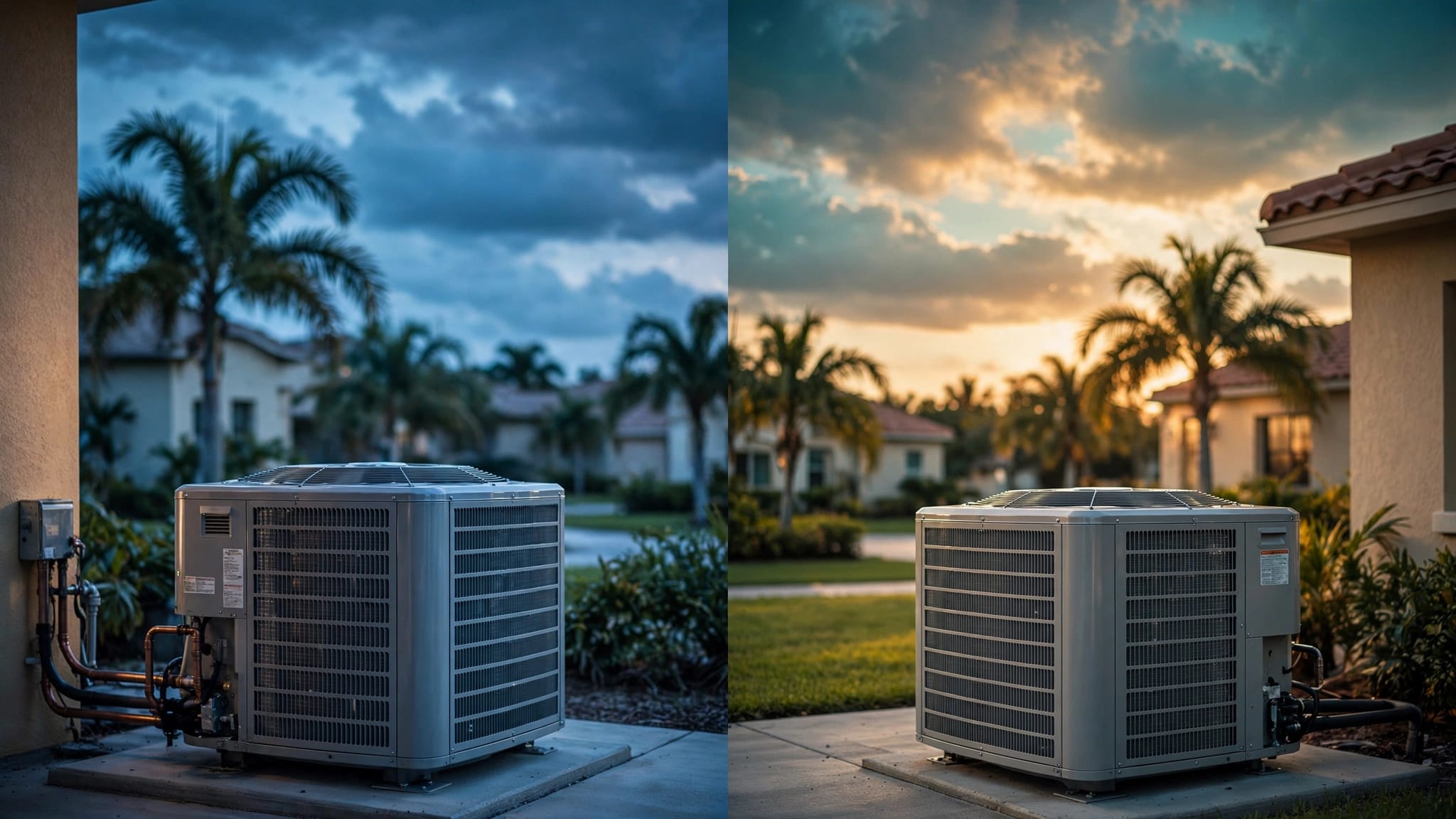
A cracked or sinking pad can leave your outdoor AC unit tilted, noisy, or vulnerable to stormwater. In Cape Coral, the AC condenser pad replacement cost is usually far lower than replacing the condenser itself, but the final price depends on the pad material, soil condition, access, and extra electrical or HVAC work.
For 2026, homeowners can typically plan for $150 to $900 for pad replacement , including labor. Simple pad swaps may fall near the lower end, while concrete work, drainage repairs, or difficult access can push the price higher. If the outdoor condenser also needs replacement, the project may cost $1,200 to $4,200 . The first step is separating pad damage from equipment damage.
What Does AC Condenser Pad Replacement Cost in Cape Coral?
A replacement pad may look like a small home repair, but contractors often need to support a heavy outdoor unit, correct the base, and check the connected electrical and refrigerant lines. Small jobs also may include a service-call minimum.
The table below shows typical 2026 planning ranges for Cape Coral homeowners.
| Work involved | Typical 2026 range | What usually affects the price |
|---|---|---|
| Pad product only | $79 to $225 | Size, material, delivery, and brand |
| Simple pad-only service | $150 to $300 | Easy access and a stable base |
| Concrete pad with removal or base work | $600 to $900 | Demolition, leveling, drainage, and site conditions |
| Outdoor condenser replacement | $1,200 to $4,200 | Unit size, efficiency, refrigerant, and labor |
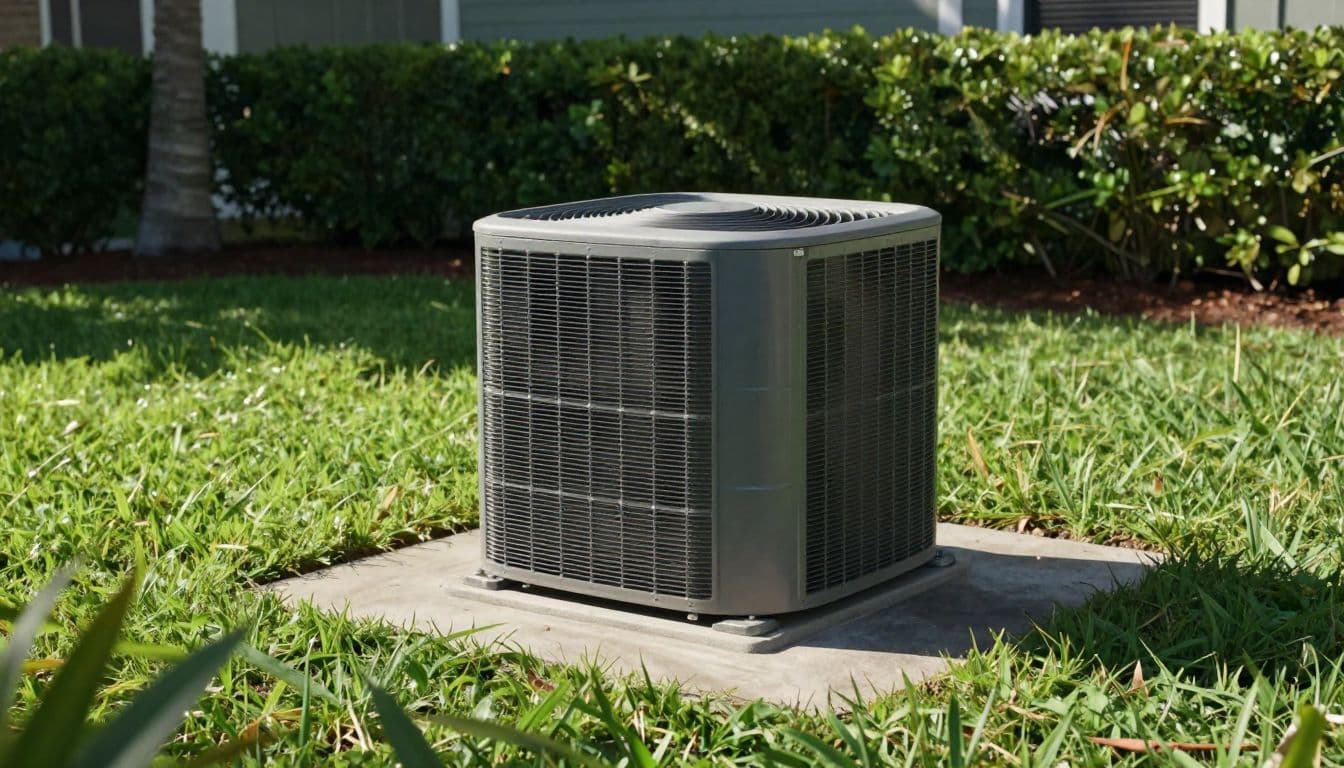
A precast pad itself may cost less than $100 for a standard size. Common listed examples include 32-by-32-inch pads around $89, 36-by-36-inch pads around $99, and 42-by-42-inch pads around $119. Larger pads can cost about $225 before delivery.
Those product prices don't include labor, lifting equipment, disposal, or ground preparation. Small contractor jobs may also have a minimum charge, which explains why an installed replacement costs more than the pad sitting on a supplier's shelf.
Pad Replacement Is Different From Condenser Replacement
The pad supports the unit, but it doesn't contain the compressor, coil, fan motor, or refrigerant. If the pad is cracked while the condenser still operates correctly, replacing the support may solve the problem.
However, a damaged condenser can change the estimate. A replacement unit involves recovering refrigerant, disconnecting electrical components, reconnecting the system, testing operation, and checking airflow. If your estimate includes a new system, review the options for air conditioning installation in Cape Coral before approving pad work alone.
Knowing the AC condenser pad replacement cost helps you avoid comparing a small concrete repair with a complete outdoor-unit replacement.
What Raises the Price of a New AC Pad?
Several conditions can change a quote even when the replacement pad looks similar to the original.
Pad material, size, and strength
Plastic or composite pads are often lighter and easier to place. Precast concrete pads are heavier, but they can provide a solid base when the ground is stable. The correct choice depends on the condenser's footprint, weight, manufacturer requirements, and available clearance.
A pad must support the entire unit without rocking. Choosing the cheapest product can create problems if the pad is too small, too thin, or poorly suited to the soil.
Drainage and settling
Cape Coral receives heavy rain, and water can collect around an outdoor unit when the pad sits in a low area. Runoff may wash soil away from one side, while soft or disturbed fill can settle beneath the pad.
A new pad won't correct a weak base by itself. The technician may need to remove loose material, add compacted fill, adjust the surrounding grade, or improve drainage. These steps often account for more of the bill than the pad product.
A new pad placed on settling soil can tilt again, even when the replacement pad is level on installation day.
Access and unit movement
The outdoor condenser may sit beside a narrow wall, behind a gate, or in a tight side yard. Limited access makes it harder to support and move the unit safely. A crew may need extra time or specialized lifting equipment.
The unit also must remain clear of walls, plants, fences, and other obstructions. If the pad has shifted toward a structure, restoring the correct position may require more work than a simple replacement.
Hurricane-season readiness
A stable pad is one part of storm preparation. The condenser may also need suitable anchoring, tie-downs, or other protection based on the equipment, installation, and current local requirements.
Ask whether the quote includes an anchoring inspection. A heavy pad doesn't automatically secure the cabinet during hurricane-force winds. The technician should also check the electrical disconnect, refrigerant lines, and cabinet for storm-related damage.
How Professionals Replace a Condenser Pad
A pad replacement is usually a focused service job, but the outdoor unit still requires careful handling.
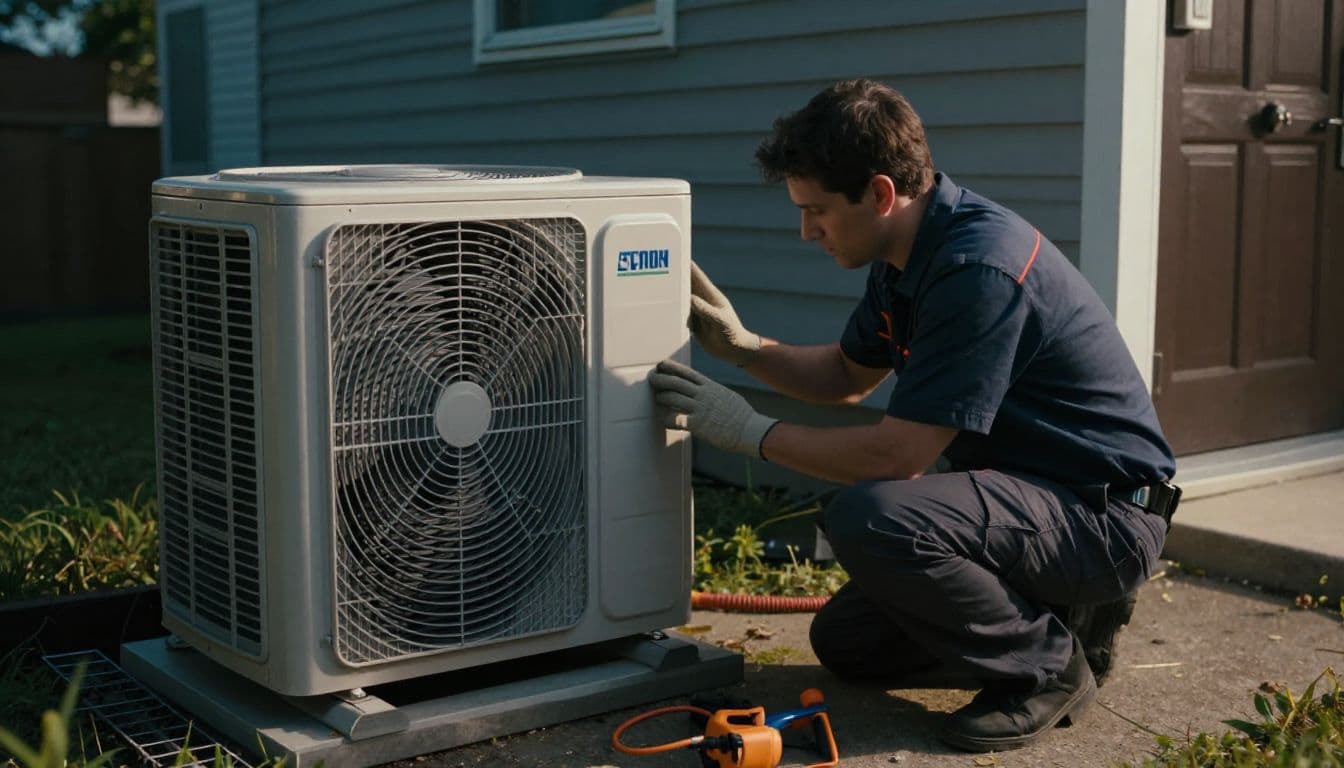
- The technician shuts off power and inspects the condenser, pad, refrigerant lines, electrical connections, and surrounding ground.
- The unit is supported and lifted enough to remove the damaged pad. The technician should never pull on copper refrigerant lines or use them to hold the unit.
- The old pad is removed, and the base is checked for erosion, soft soil, roots, standing water, or uneven settlement. The crew corrects the base when needed.
- The new pad is positioned, leveled, and checked for proper clearance. The condenser is set back in place, then the technician verifies stability and system operation.
In many straightforward jobs, the refrigerant circuit doesn't need to be opened. If the existing lines have enough slack, the unit can be lifted without disconnecting them. However, tight lines, damaged fittings, or major excavation may require additional HVAC work.
Most simple replacements can fit into a normal service visit. Concrete poured on site may require a longer schedule because the base needs time to cure before the unit returns.
Can a Damaged Pad Affect the AC System?
Yes, although the pad doesn't directly control cooling performance. A tilted or unstable base can create mechanical and electrical problems over time.
When the condenser rocks, vibration can increase. That movement may place stress on copper lines, fittings, electrical connections, and the cabinet. A severe tilt also can affect the way the compressor sits and operates.
Drainage creates another concern. A low or broken pad may allow water, mud, leaves, and debris to collect around the cabinet. Standing moisture can contribute to corrosion, while blocked clearances can reduce airflow through the outdoor coil.
Schedule an inspection if you notice:
- A condenser that rocks when touched
- Loud vibration after the fan starts
- A visible gap beneath one side of the pad
- Exposed refrigerant lines or strained connections
- Erosion, standing water, or washout near the unit
- A unit that shifted after strong wind or heavy rain
The AC may continue running with a damaged pad, but continued operation doesn't mean the installation is safe or stable.
How to Keep Your Cape Coral Pad Replacement Affordable
Start with clear information. Take photos of the damaged pad, surrounding ground, access path, and condenser position. Include the unit's model and serial numbers if you have them. These details help a contractor prepare for the visit.
Ask for an itemized quote that separates the pad, labor, disposal, leveling, drainage work, lifting, anchoring, and any HVAC repairs. Also ask whether the price includes testing the system after the unit is repositioned.
Compare quotes based on the same pad size and material. A low price may exclude base preparation or storm anchoring, while a higher quote may include those services. The right comparison is the total scope, not only the product price.
If your condenser is older or already needs major repairs, compare the pad cost with the condition of the entire system. Replacing a pad makes sense when the equipment has useful service life left. A new pad may be unnecessary if a full condenser or system replacement is already near.
For a local evaluation or 24/7 service scheduling, Contact Us.
Conclusion
The AC condenser pad replacement cost in Cape Coral usually falls between $150 and $900 installed , depending on the pad, access, drainage, and condition of the base. Product-only prices can be much lower, while concrete work and soil correction raise the total.
A stable, level pad protects the outdoor unit from movement, runoff, and unnecessary vibration. Before hurricane season, have the pad, anchoring, electrical connections, and refrigerant lines checked together so a small support problem doesn't become a larger AC repair.
FAQ
How much does AC condenser pad replacement cost in Cape Coral?
A typical 2026 range is $150 to $900 installed . Simple pad-only work may cost about $150 to $300, while concrete replacement, removal, leveling, drainage correction, or difficult access can bring the total closer to $600 to $900.
How long does AC condenser pad replacement take?
A straightforward replacement often fits into a normal service visit and may take roughly one to three hours. Extra time may be needed for erosion repair, difficult access, unit movement, electrical issues, or a concrete pad that needs curing.
Does the outdoor unit have to be moved?
The condenser usually must be lifted or moved temporarily so the damaged pad can come out. The technician may not need to disconnect refrigerant lines when they have enough slack. Tight or damaged lines can require additional work.
Can a damaged pad affect the AC system?
Yes. A sinking or broken pad can increase vibration, strain refrigerant and electrical connections, allow water to collect around the unit, and reduce proper clearance. The condenser may keep running, but visible tilting or rocking deserves a professional inspection.