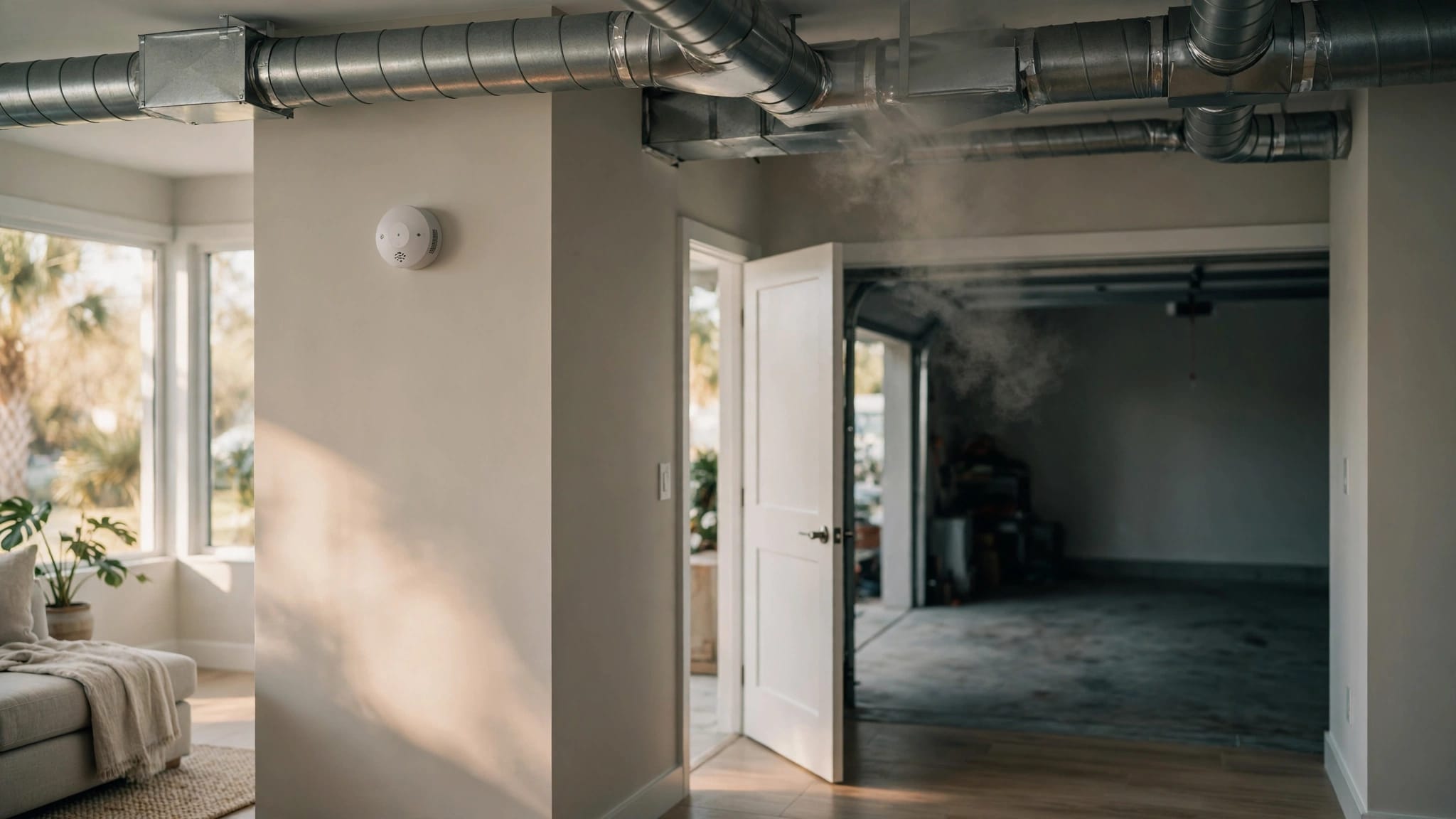
Clean a ductless mini-split filter only if the manufacturer identifies it as washable, and use its approved cleaning method. Handle the mesh gently, avoid harsh chemicals and heat, and reinstall it only when it's fully dry .
Mini-split filter cleaning can help protect airflow, but the wrong treatment can tear the screen or warp its frame. Start by identifying the filter, because washable mesh and disposable filter media need different care.
Key Takeaways
- Wash only filters designated as washable; replace disposable filters according to the manufacturer's instructions.
- Shut down the equipment and isolate power before opening the homeowner-accessible filter panel.
- Support the frame, avoid pressure on the mesh, and keep cleaning water away from the indoor unit.
- Let washable filters dry completely without added heat, and replace any filter that no longer fits properly.
Identify Your Filter Before Cleaning
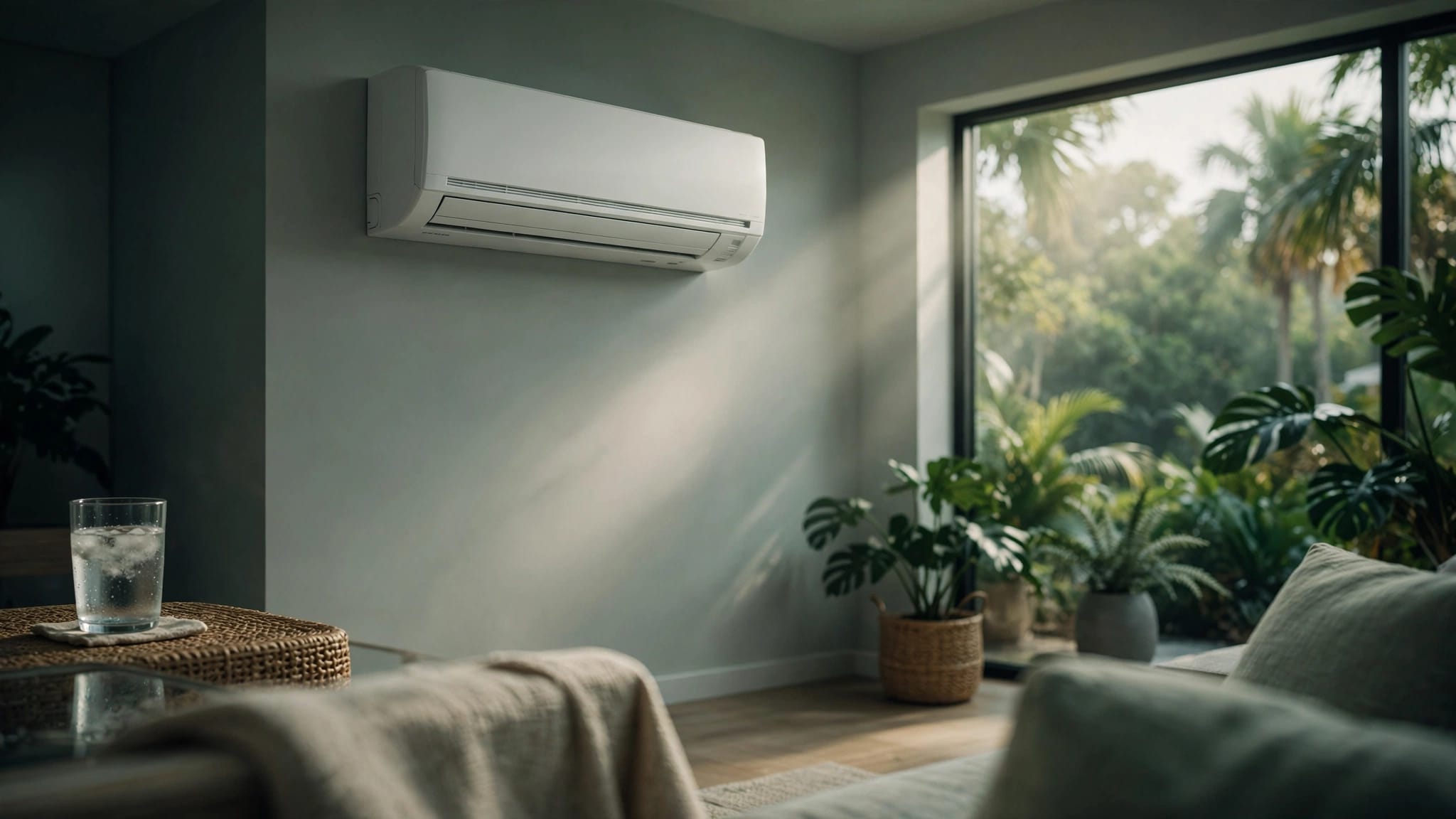
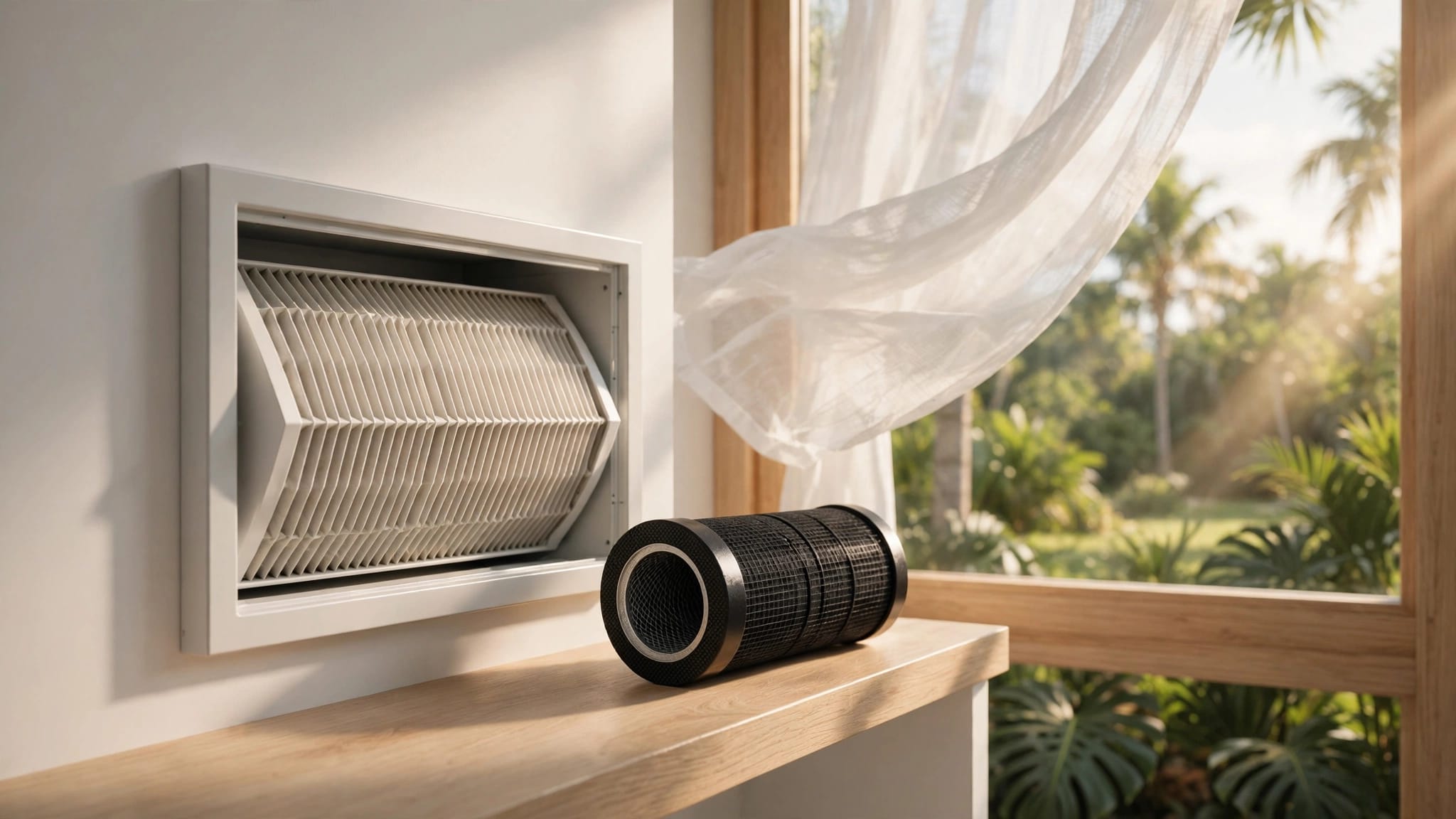
Many wall-mounted mini-splits have reusable mesh filters behind the front intake panel. However, some also contain smaller air-cleaning inserts with different maintenance requirements.
The filter's construction and manufacturer instructions determine its care. Don't assume every removable piece can go into water.
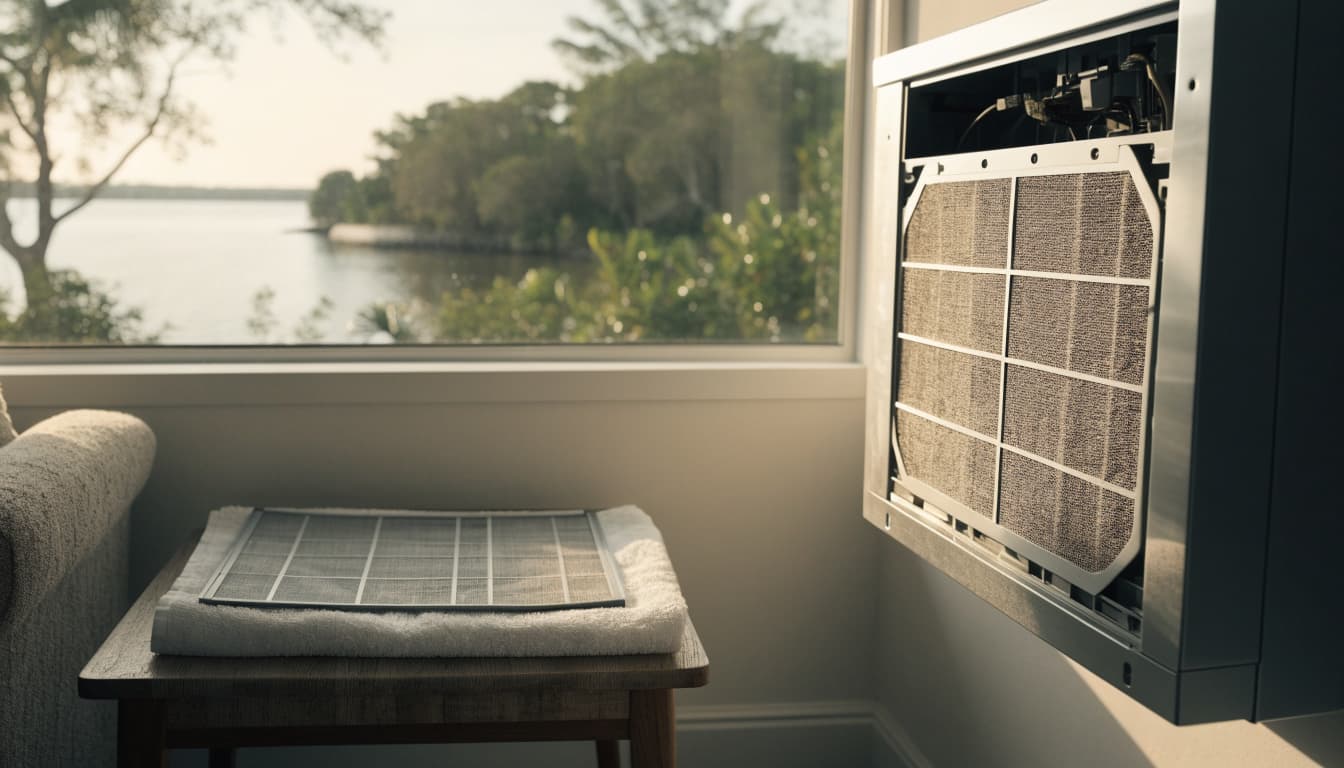
Washable mesh filters
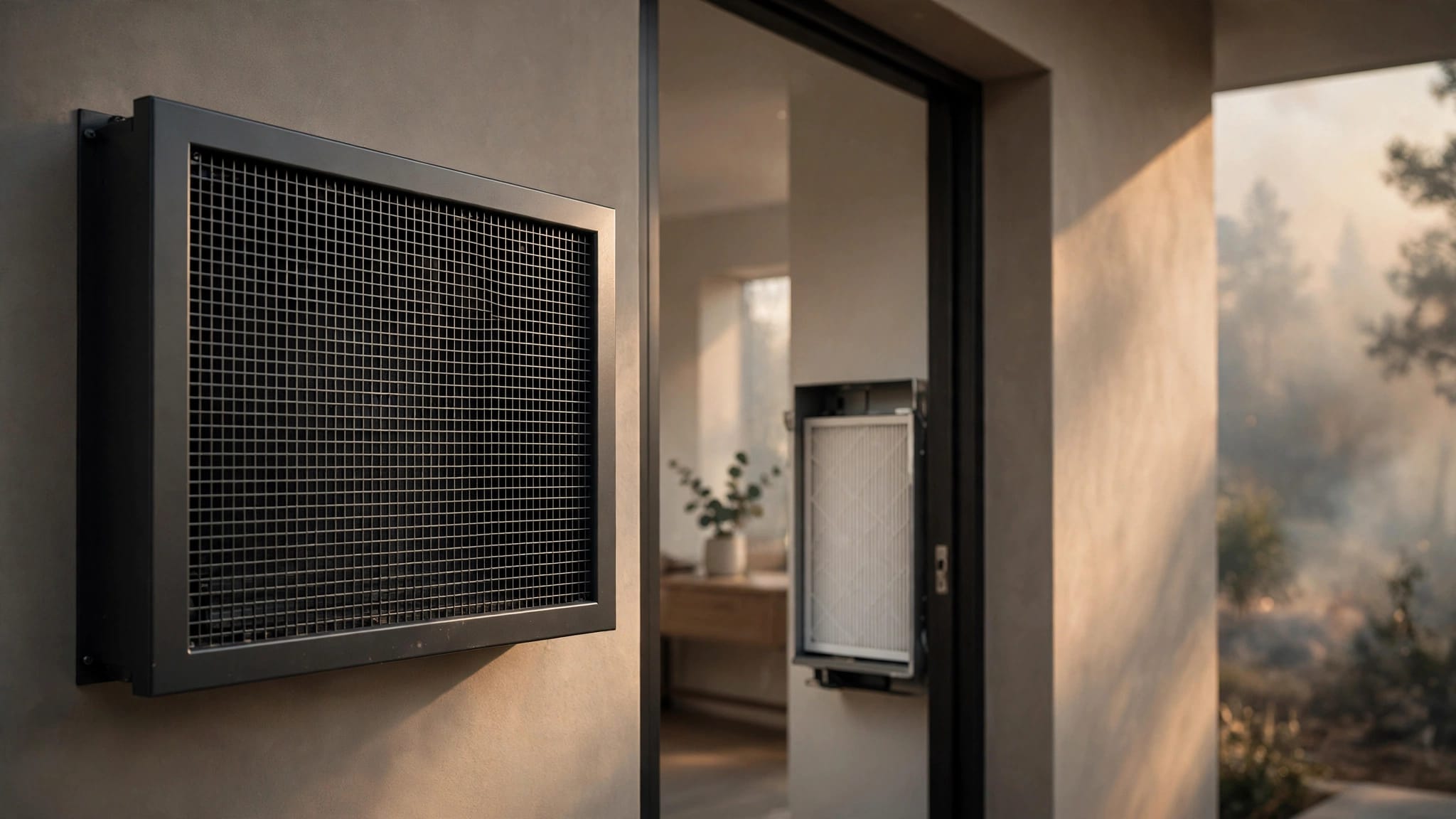
A washable filter typically has a lightweight frame supporting a fine screen. It catches larger airborne debris before that material reaches the equipment inside the indoor unit.
Although the frame may feel sturdy, the mesh can stretch, separate, or tear under pressure. Treat both parts gently throughout cleaning.
Use the manufacturer's instructions for your model rather than transferring directions from another mini-split. Access panels, filter shapes, and approved cleaning methods vary. Even two units in the same home may need different care.
Filters that need replacement
Disposable media and some specialty air-cleaning inserts need replacement instead of washing. Water can damage their structure or affect the material that captures pollutants.
A dirty filter isn't automatically washable because it has a plastic frame. Likewise, a small insert attached to a larger washable screen may have its own replacement schedule.
Replace a filter with torn mesh, a cracked frame, or permanent distortion. Cleaning won't repair those defects or restore a secure fit.
Prepare the Unit for Safe Filter Care
Turn the mini-split off with its controls, then isolate electrical power using the appropriate disconnect or breaker, following the manufacturer's safety instructions. A remote control's off setting doesn't disconnect electrical power.
Wait until moving parts stop. Keep your hands away from the blower, wiring, and electrical compartments, even after power is off.
Arrange a clean surface where the filter can rest without bending. Also, protect the floor and nearby furniture from falling dust. Filter care shouldn't require opening electrical covers, loosening refrigerant connections, or dismantling the indoor unit.
Use only the homeowner-accessible panel described in the equipment instructions. If access requires unsafe reaching, or the panel won't open normally, leave the work to a technician.
Before removing anything, note how the filters sit inside the unit. A quick photo can preserve their orientation without relying on memory. However, don't force a stuck filter to get a better view.
Keep children and pets away while the panel is open.
Clean the Filter Without Damaging the Mesh
The goal is to remove accumulated debris while preserving the filter's shape. Forceful cleaning can create gaps that let dust bypass the screen.
Support the frame during removal
Handle the designated tabs or frame instead of pulling on the mesh. Support the filter as it comes free, especially if it's wide or flexible.
Resistance is a reason to stop. A filter may still be engaged with a retaining point, and pulling harder can break the frame or its guides.
Keep the filter away from sharp edges while handling it. Don't fold it, twist it, or knock it against a sink to dislodge dirt. Those shortcuts can damage the frame even when the screen still looks intact.
Use only the approved cleaning method
Follow the manufacturer's cleaning directions for that filter. If the instructions allow washing, rinse the removed filter gently without subjecting the mesh to strong pressure.
Keep cleaning water away from the wall-mounted unit. Water belongs only on components approved for washing, not inside the cabinet or near electrical parts.
Don't scrub the mesh aggressively or pick at lodged debris with sharp objects. Also, avoid bleach, strong solvents, and chemical coil cleaners. A product intended for another HVAC component isn't automatically suitable for a filter.
If contamination won't release with the approved method, don't escalate to stronger chemicals. Replacement or professional attention is safer than damaging the material.
A washable filter doesn't make the indoor unit washable. Never spray water into the cabinet as part of routine filter care.
Let the Filter Dry Completely Without Added Heat
A washed filter needs to be completely dry before it returns to service. Surface dryness alone isn't enough if water remains around the frame or trapped along its edges.
Let it air-dry in a clean, shaded location with ordinary air circulation. Keep it supported so it doesn't sag or bend while drying.
Avoid hair dryers, ovens, heaters, and other high-heat shortcuts. Direct sun can also heat lightweight plastic enough to distort it. A warped frame may leave gaps or fail to sit securely.
Don't wring the mesh or press it hard to force water out. Protecting its shape matters throughout drying, not only during washing.
There's no single drying time that fits every filter or room. Humidity, construction, and remaining moisture affect the process, so use complete dryness as the requirement.
A dry filter must also be intact and correctly seated before operation. Don't run the mini-split without its required filters while waiting, and don't force the panel closed over a poor fit.
Why Filter Care Has Limits
Dust buildup increases airflow resistance. As a result, a loaded filter can contribute to weak airflow and reduced heating or cooling performance.
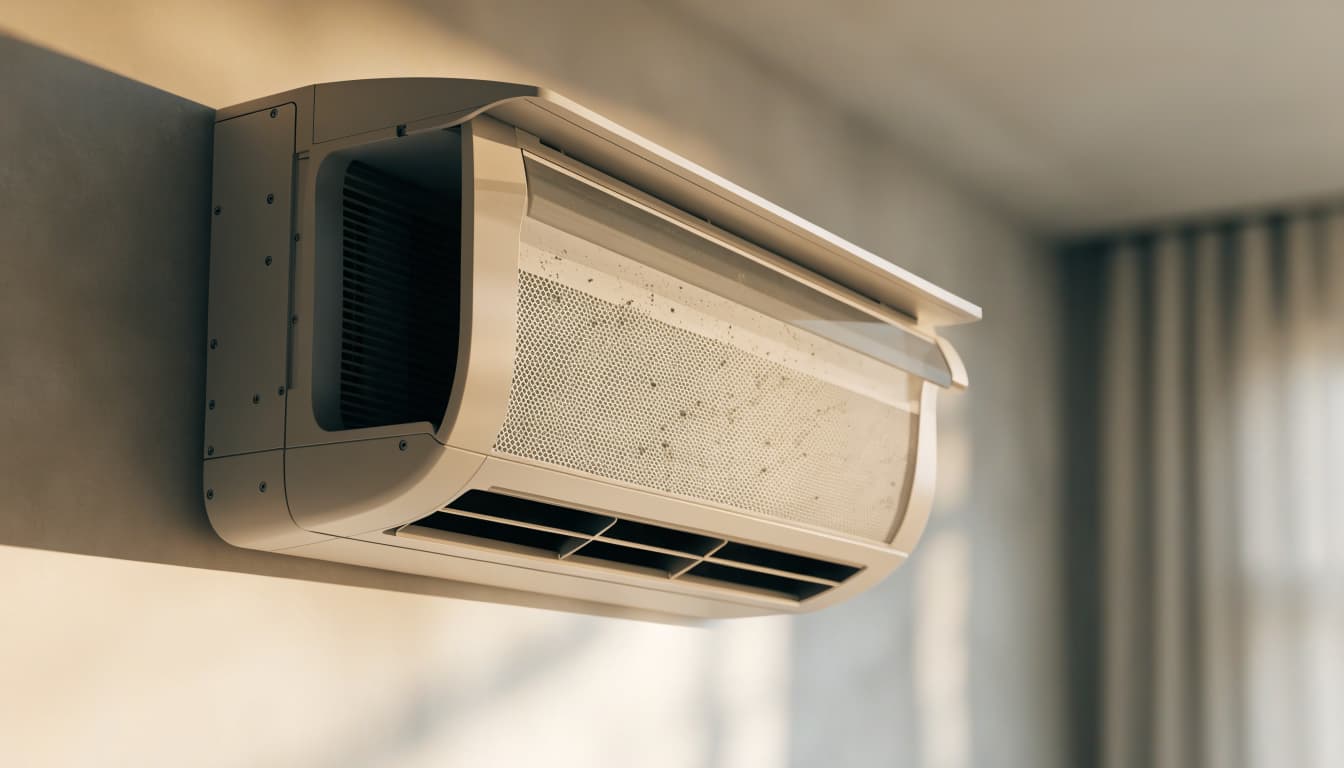
However, cleaning the filter doesn't remove dirt already lodged on the indoor coil or blower. It also doesn't clear a blocked condensate drain, repair a refrigerant leak, or correct an electrical fault.
Persistent musty odors deserve attention beyond the filter. Washing a screen won't resolve a moisture source or suspected growth elsewhere inside the system.
Similarly, weak airflow that continues with a clean, dry, correctly fitted filter needs diagnosis. Don't keep removing parts in search of the problem.
Our guide to safe AC maintenance tasks separates basic homeowner care from work involving electrical testing, refrigerant, and restricted compartments.
Pay attention to changes after cleaning, but don't promise yourself a particular temperature improvement or energy saving. Filter care supports operation; it doesn't establish why the system was struggling.
What Professional Maintenance May Cover
Routine filter care is one part of maintaining a ductless system. Professional service addresses components that homeowners shouldn't reach or disassemble.
When filter cleaning is part of a tune-up
A technician may clean a washable filter or replace disposable media as appropriate. However, filter service alone doesn't describe the full scope of a maintenance visit.
Professional maintenance can include airflow evaluation, electrical inspection, condensate drainage checks, and assessment of coils and system operation. Our explanation of what happens during an AC tune-up covers that broader work.
Maintenance agreements can differ in their filter provisions. Our guide to what an AC maintenance plan includes explains common inspection and service items, including the distinction between filter inspection and replacement.
When to schedule a service call
Stop homeowner cleaning if you find ice, water leaking from the cabinet, damaged internal parts, or suspected mold-like growth. These conditions need more than a clean filter.
Also, arrange service if the unit still has weak airflow, unusual noise, or poor cooling after proper filter care. Don't repeatedly reset a tripping breaker or continue operating equipment with an electrical concern.
Contact Us to schedule a service call. We also offer 24/7 service for urgent heating and cooling problems.
Frequently Asked Questions
How often should you clean a mini-split filter?
Follow the manufacturer's schedule for the specific filter, with earlier attention when dust accumulates. Pets, renovation debris, and frequent operation can increase buildup.
Inspection and cleaning aren't interchangeable. Looking at a filter regularly helps you notice changes, but it doesn't mean every filter needs washing each time. Disposable central HVAC filter replacement schedules don't automatically apply to washable mini-split screens.
Can you wash every filter inside a mini-split?
No. A unit can contain a washable main screen and specialty inserts that require replacement or different care.
Treat each component according to its instructions, and don't soak the entire filter assembly without knowing which parts allow water cleaning. If a disposable insert is dirty, washing it doesn't turn it into a reusable filter. Use the specified replacement instead.
Does every indoor head need filter maintenance?
Each indoor unit has its own filtration, so cleaning one head doesn't maintain the others. A bedroom unit and a frequently used living-room unit may accumulate dust at different rates.
Keep track of each unit separately. If one filter becomes heavily dirty unusually quickly, inspect its fit and household dust sources. Persistent buildup or poor performance can justify professional diagnosis.
Keep the Mesh Intact and the Filter Dry
Safe mini-split filter cleaning starts with knowing which components allow washing. Gentle handling protects the mesh, while air-drying without added heat protects the frame.
Make complete dryness and a proper fit the conditions for returning the filter to service. If airflow, odors, or leaks remain afterward, leave further troubleshooting to a technician rather than treating the filter as the whole problem.