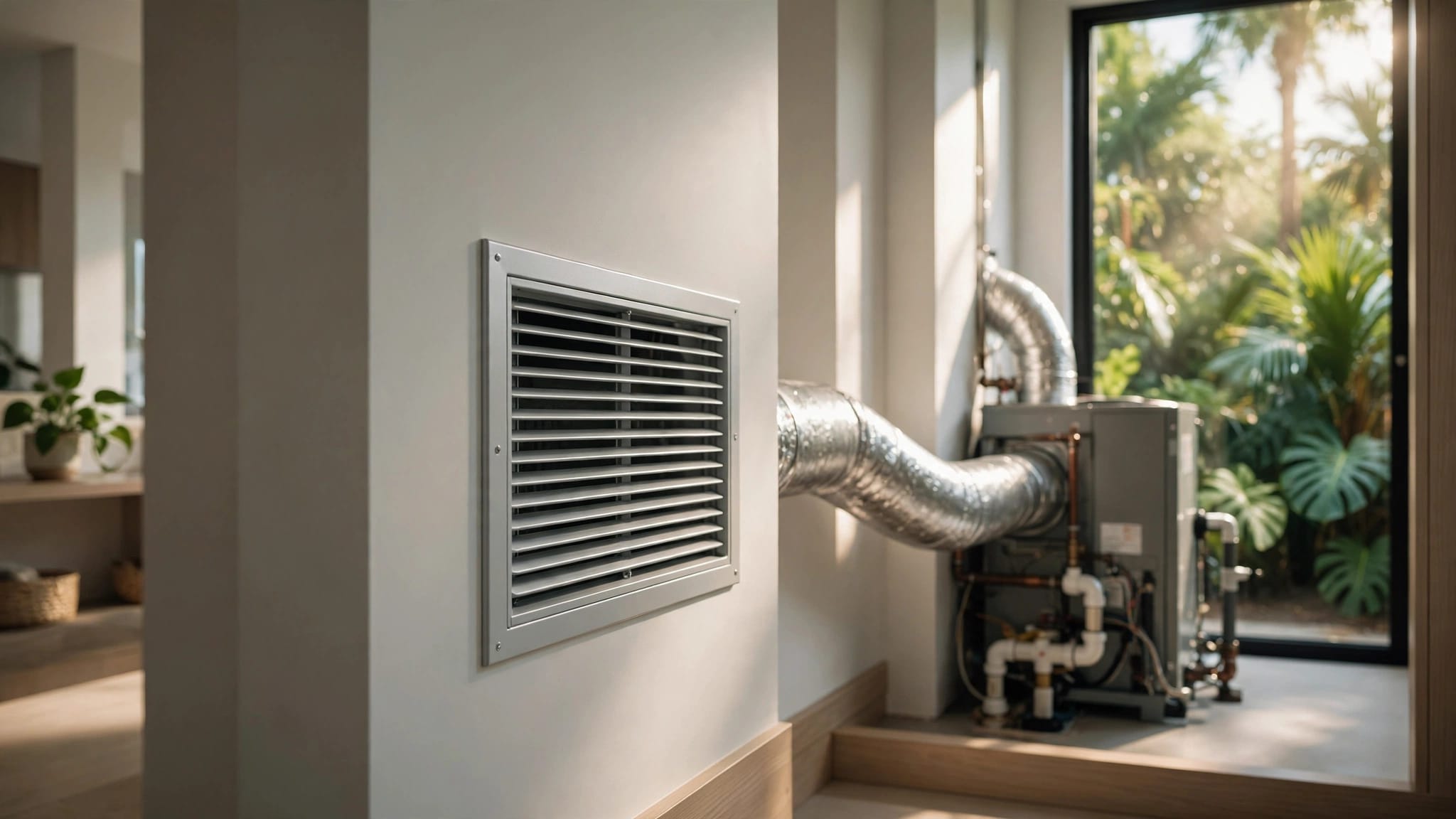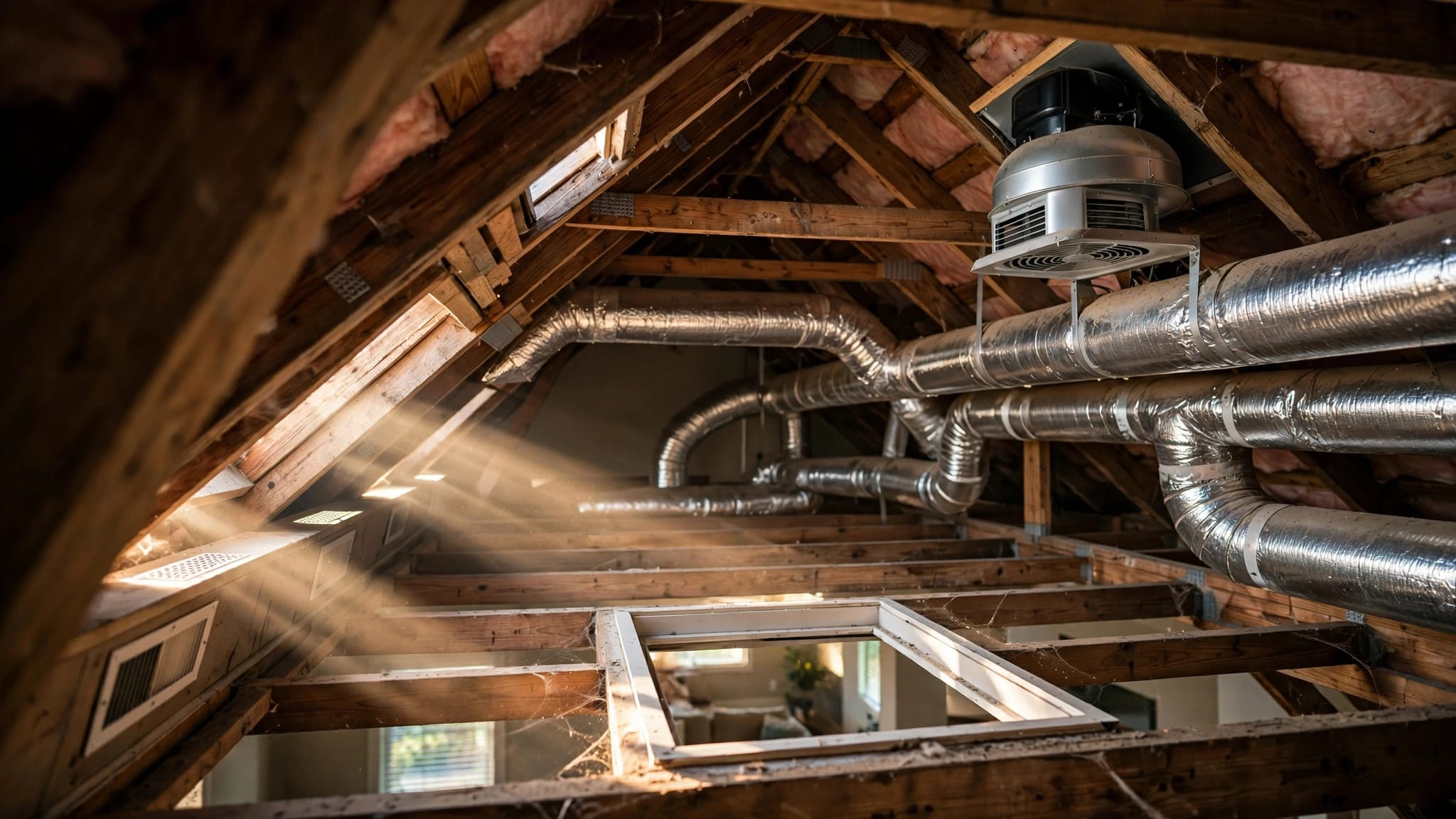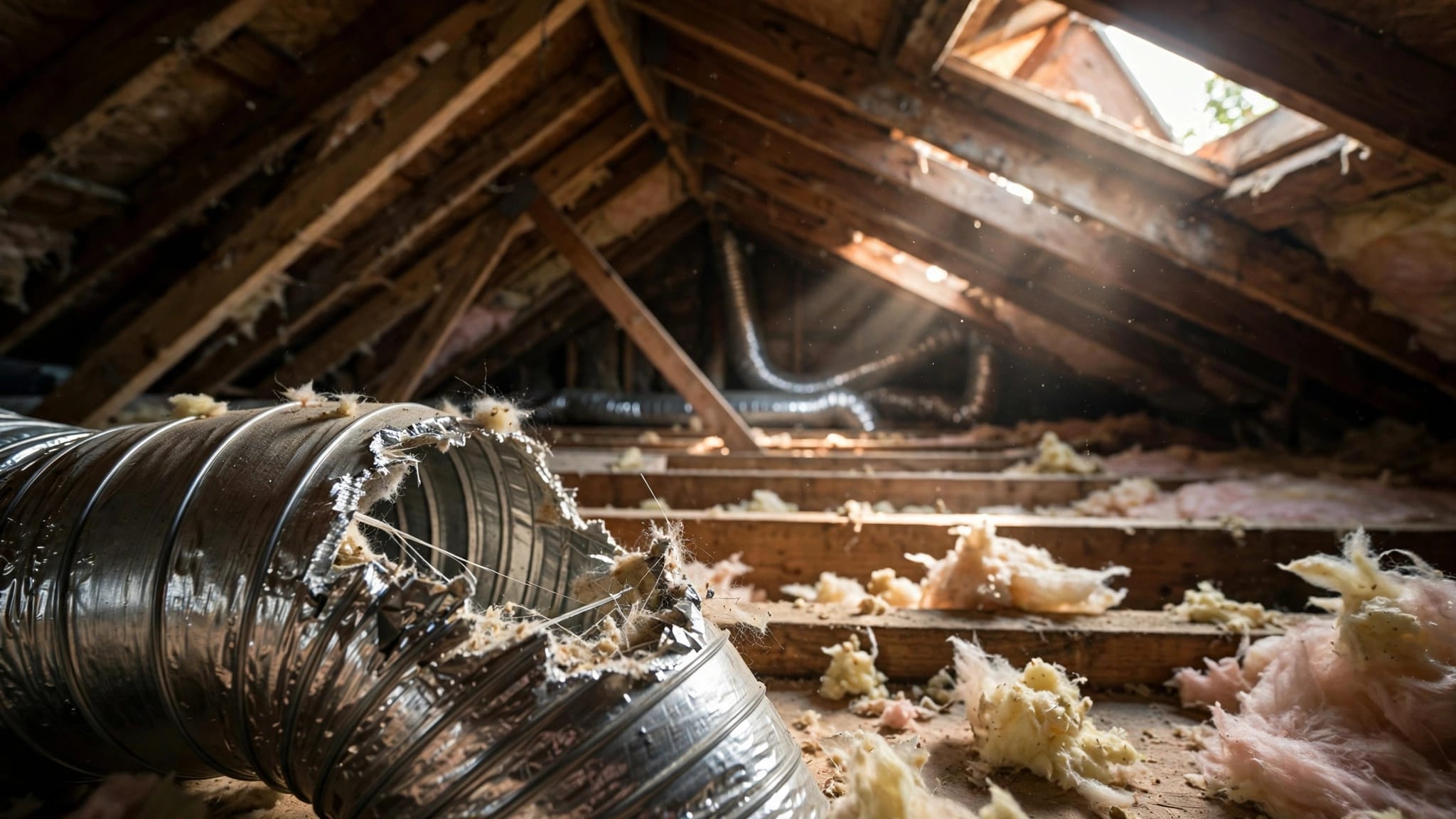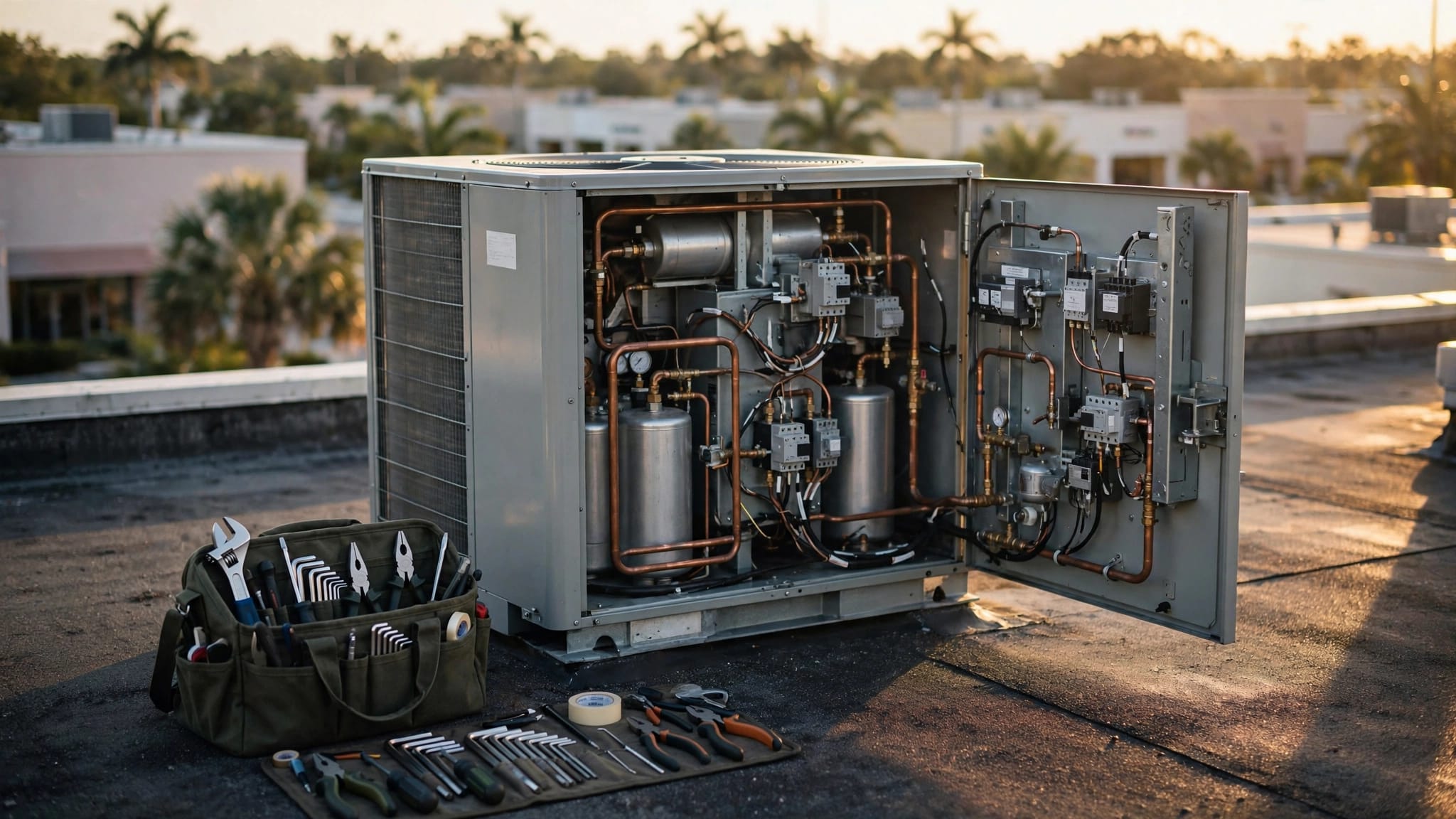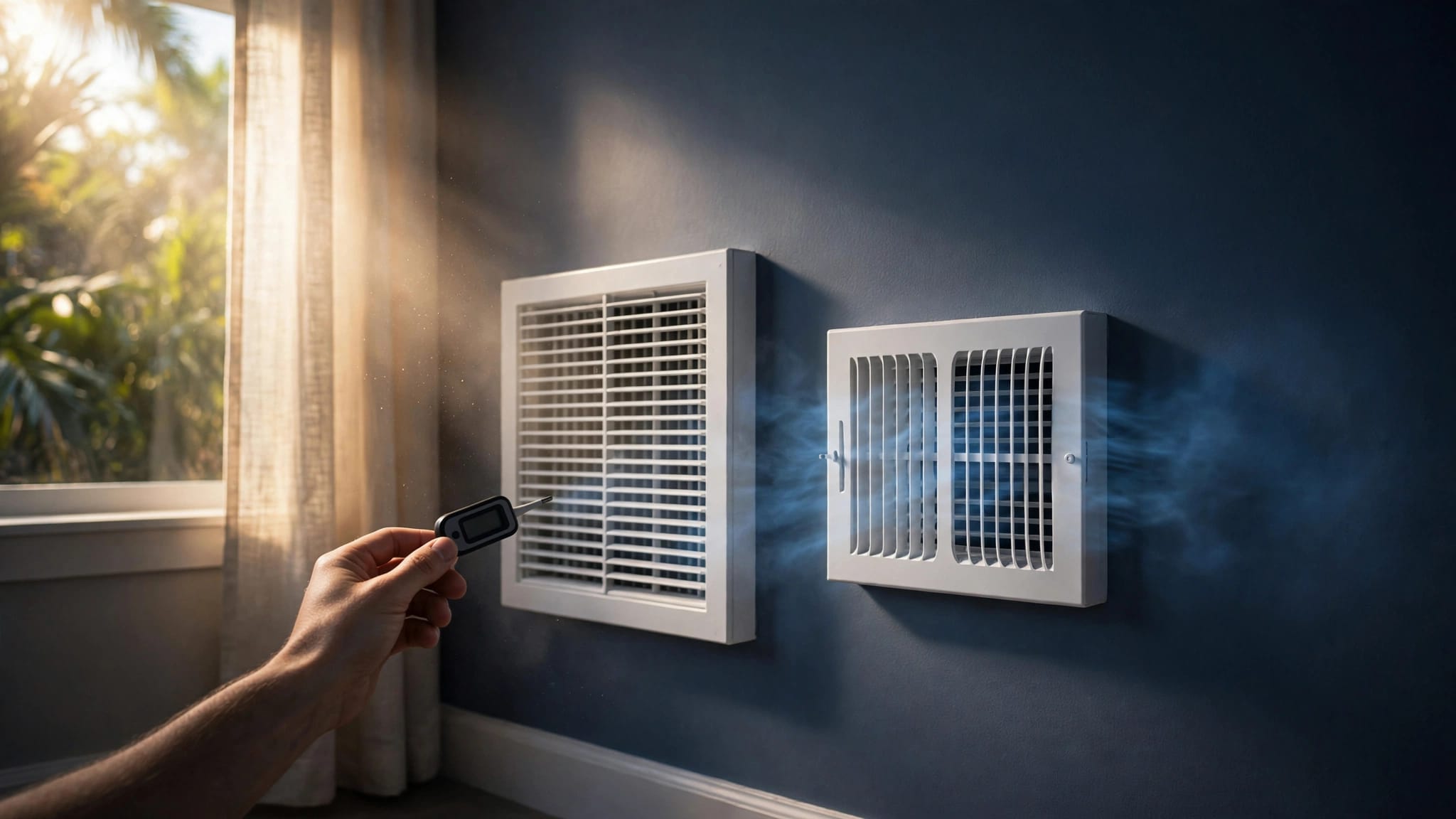
A ceiling stain near an AC vent can start with moisture in the attic, even when your roof is sound. In Southwest Florida, sweating HVAC ducts can develop when humid air reaches surfaces cold enough for condensation.
The right fix depends on where the moisture starts . Insulation damage, leaking connections, and humidity-control problems all deserve attention before you replace equipment.
Start by separating duct condensation from other water sources, then check the conditions that let it keep returning.
Key Takeaways
- Humid air can condense on duct surfaces when they fall below the air's dew point.
- Missing insulation, torn outer jackets, and leaking connections are possible causes that need inspection.
- Water near a duct doesn't automatically mean condensation; roof leaks and condensate drainage problems can look similar.
- Repeated dripping, ceiling stains, weak airflow, or persistent musty odors warrant professional attention.
The Moisture Behind Sweating HVAC Ducts
Florida's humidity gives attic ductwork a difficult job. The ducts carry cooled air through an unconditioned space that often contains warm, moisture-heavy air.
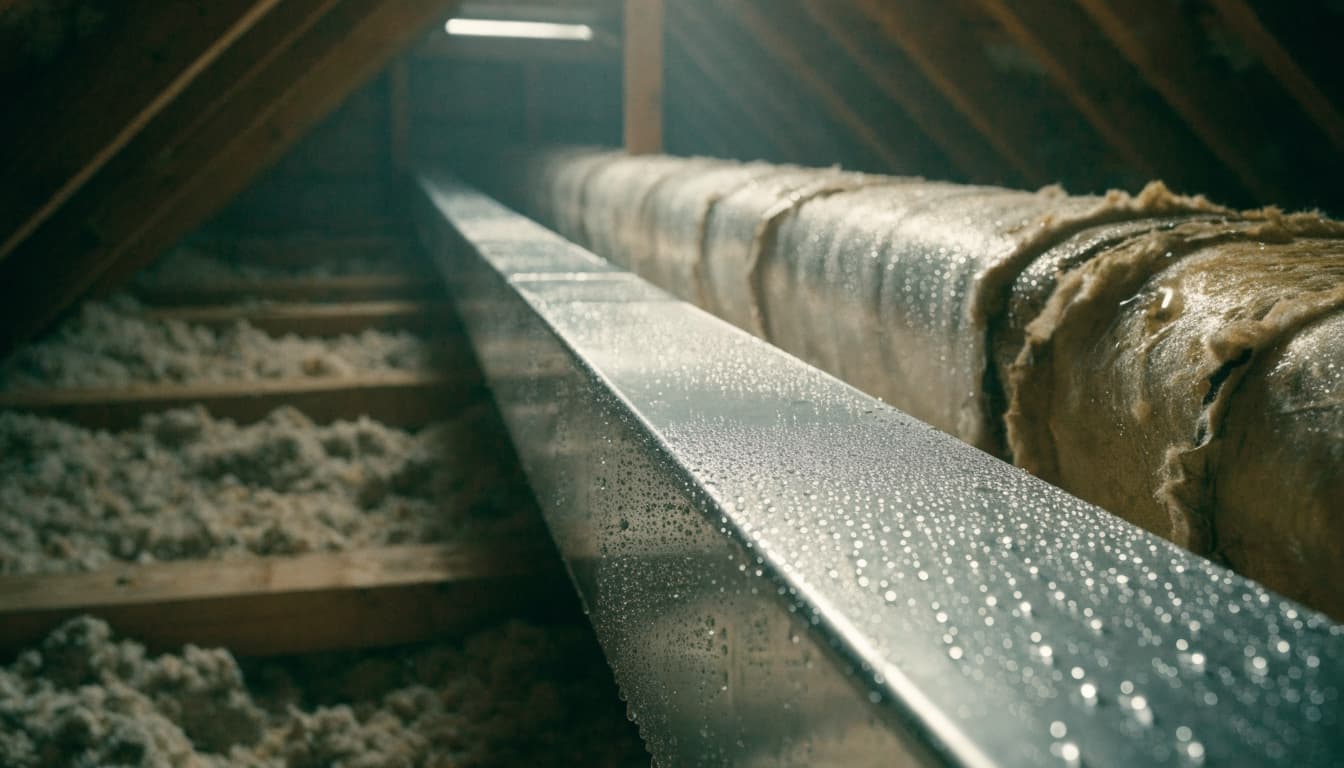
Condensation begins at the dew point
The dew point is the temperature at which airborne moisture starts condensing. When a duct's exterior falls below the surrounding air's dew point, droplets can form on that surface.
That water comes from the surrounding air. It doesn't necessarily indicate that water is leaking from inside the duct.
Exposed metal collars, supply plenums, and register boots deserve attention because insulation gaps can leave these surfaces cold. A supply plenum is the distribution box that connects the air handler to supply ducts.
A hot attic can still contain cold surfaces
Attic heat doesn't prevent condensation. Cold supply air can keep poorly insulated metal below the dew point, even while everything nearby feels hot.
Proper insulation limits heat transfer and helps keep the outside surface warmer. Meanwhile, an intact exterior vapor barrier limits humid air's access to colder layers underneath.
Sweating HVAC ducts can therefore involve more than visible droplets. Moisture may collect beneath damaged wrapping, where a homeowner can't easily see it.
Insulation Damage and Air Leaks Need Different Repairs
A damp duct doesn't identify its own cause. A technician needs to examine the insulation, outer jacket, connections, and nearby materials before recommending work.
Thin, compressed, or wet insulation
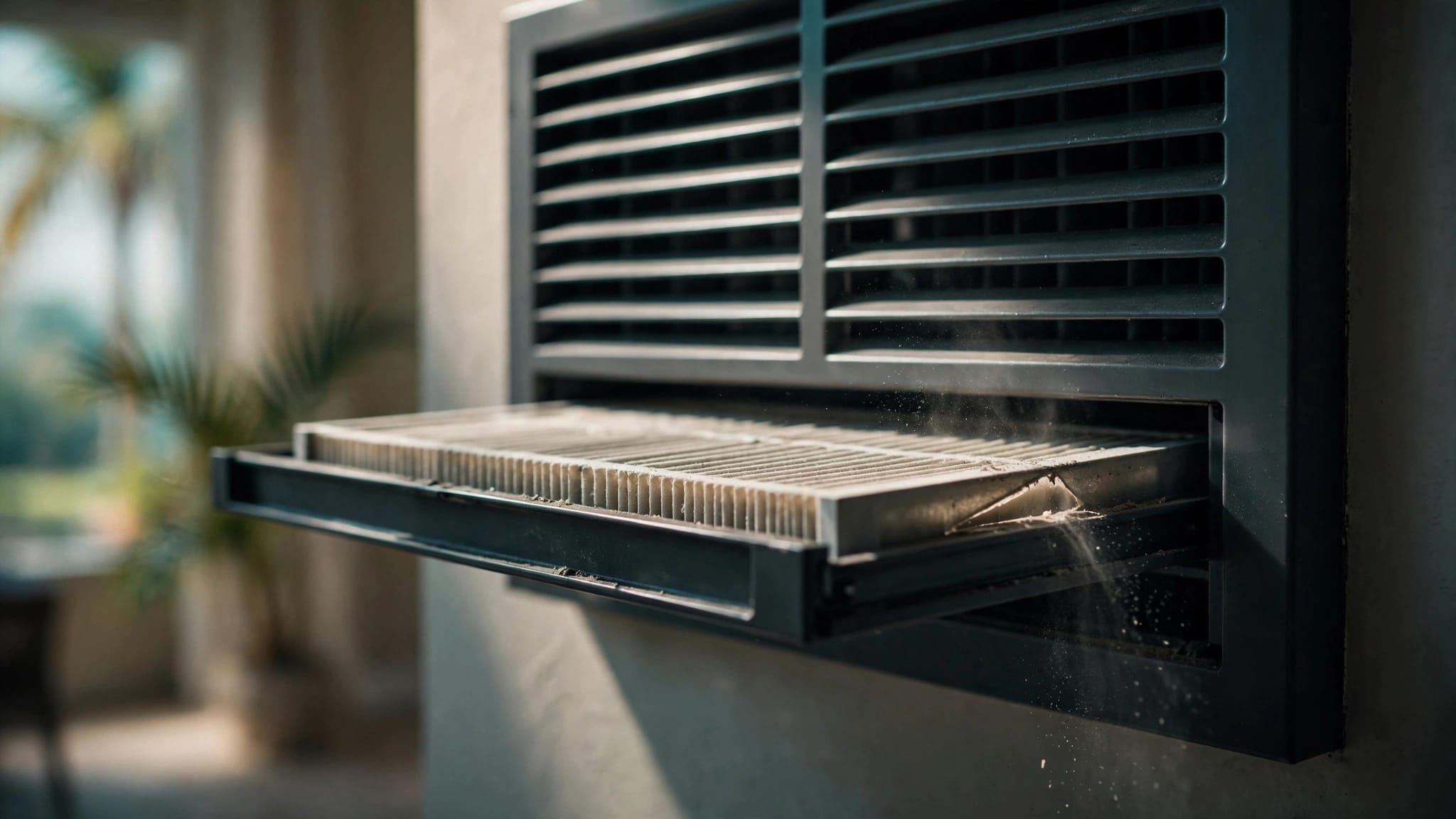
Missing insulation leaves cold duct surfaces exposed. Compressed material provides less protection than properly installed insulation, while torn jackets allow moisture into the assembly.
Look for flattened sections, separated seams, exposed metal, or wrapping that has slipped away from a connection. Wet insulation also deserves investigation because condensation and roof leaks can both soak it.
Simply covering a damp section with another layer may hide the problem. The repair should address the water source, insulation condition, and exterior vapor barrier together.
Leaking joints and register connections
Supply leaks release cooled air into the attic. Depending on the location, that escaping air can chill nearby surfaces and contribute to condensation.
Return-side leaks create a different problem: they can draw hot, humid attic air into the system. That increases the moisture the AC must remove.
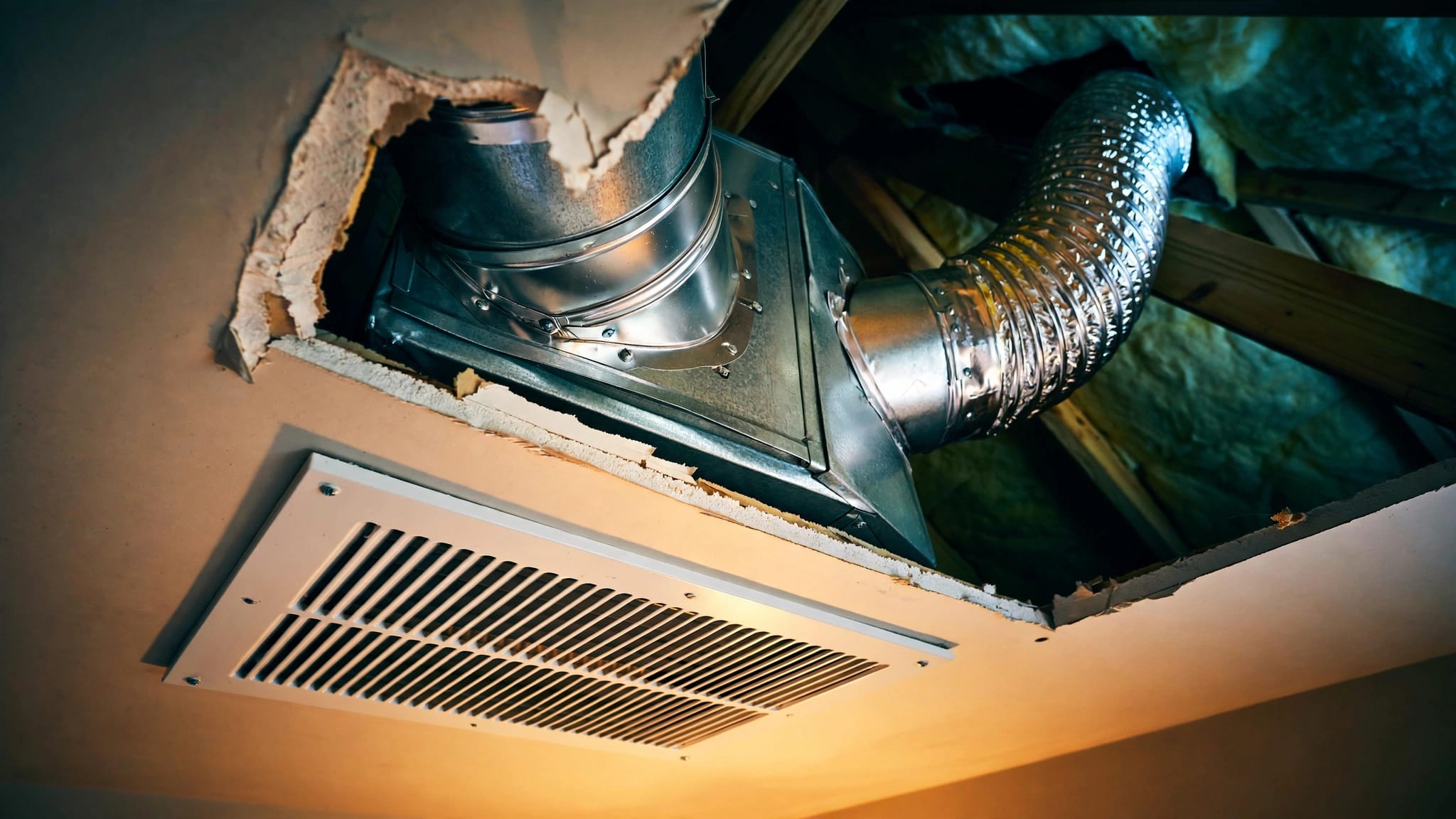
At ceiling registers, gaps around the boot can also allow humid attic air to reach cold metal. These connections need inspection, not just a new grille.
Back Bay Heating & Cooling provides ductwork repair and replacement across Southwest Florida. An inspection can help distinguish a repairable connection from a damaged duct section.
Indoor Humidity and Airflow Can Add to the Problem
Attic conditions matter, but indoor symptoms provide useful clues. A home that feels clammy despite reaching its thermostat setting may need a broader HVAC assessment.
Cooling the house doesn't always dry it enough
An air conditioner removes moisture as air passes across its cold evaporator coil. However, short cooling cycles may satisfy the thermostat before the system removes enough moisture.
Oversized equipment is one possible explanation, but thermostat location, controls, and other operating problems also need consideration. Brief cycles alone don't prove the AC needs replacement.
Open exterior doors, bathroom moisture, and leaking return ducts can add to the moisture load. High indoor humidity is especially relevant when condensation also appears on room-side register covers.
Restricted airflow deserves testing
A dirty filter, blocked return, crushed flex duct, or dirty coil can interfere with airflow. Severe restrictions can contribute to coil freezing and poor system performance.
Compare rooms as well as vents. One damp register may suggest a local issue, while widespread sweating and weak airflow call for a whole-system inspection.
Airflow and static pressure measurements help identify restrictions that aren't obvious by sight. Back Bay's guidance on indoor air quality testing also emphasizes checking cooling, drainage, and return-air conditions before drawing conclusions.
Duct Sweating, Roof Leak, or Drain Problem?
A stain's location is a clue, but water can travel along framing and duct jackets before dripping. Don't assume the duct caused the stain simply because it sits above it.
These patterns can help narrow the investigation.
| Possible source | Useful clues | What needs checking |
|---|---|---|
| Duct condensation | Droplets on cold surfaces during cooling, sometimes without rain | Insulation, jackets, connections, humidity, and airflow |
| Roof leak | Wet roof decking or staining that follows rainfall | Roofing, flashing, penetrations, and the water's path |
| Condensate drainage problem | Water near the air handler, pan, or drain piping | Drain blockage, damaged pan, and leaking connections |
The takeaway is simple: trace the water to its origin before approving a repair. Rainy weather can raise humidity and expose a roof leak, so timing alone isn't proof.
Also, water in an overflowing AC drain pan is different from exterior duct condensation. The evaporator coil normally produces condensate, which should drain through the system's piping.
Moisture on a duct jacket can come from above, beneath the insulation, or a nearby drain. Its location doesn't establish its source.
Safe Troubleshooting Before a Service Call
You can gather useful information without climbing through a hot attic or opening HVAC equipment.
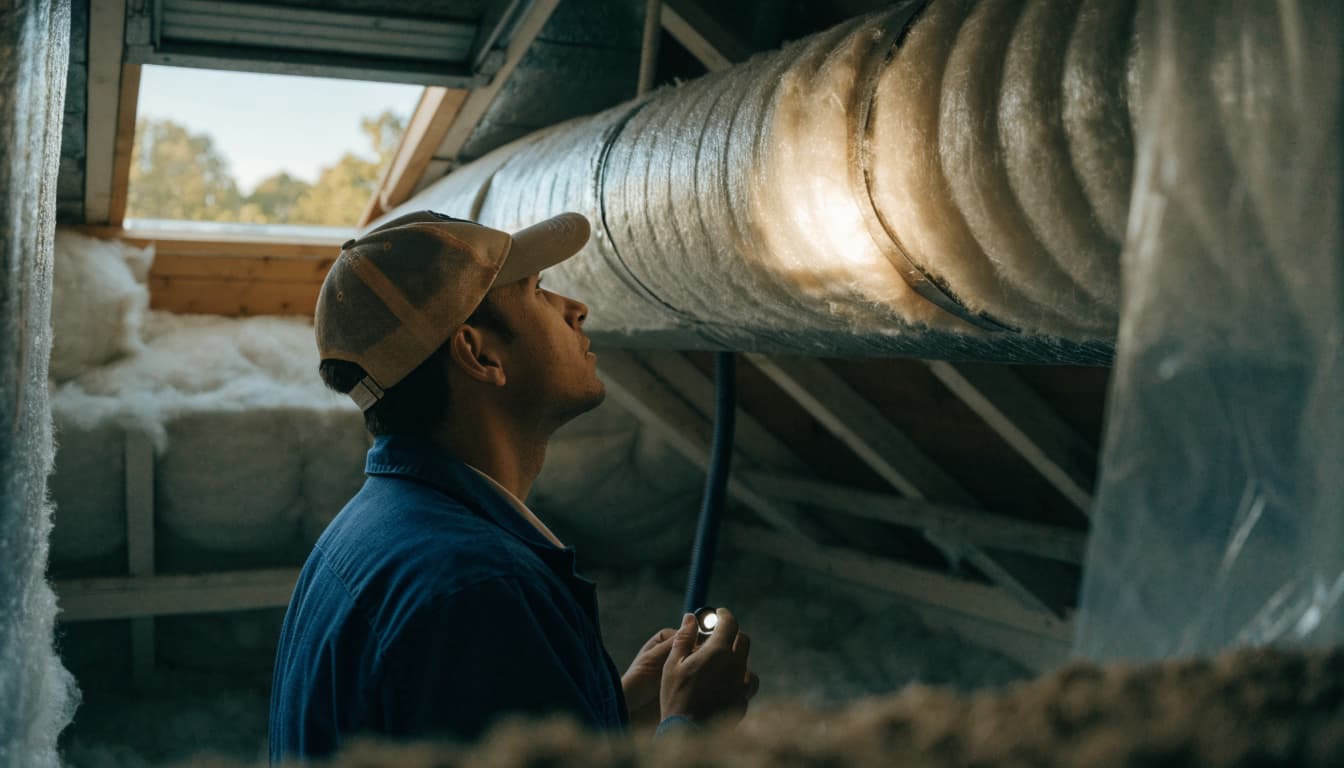
- Record the pattern. Photograph droplets and stains, then note whether they appear during cooling, after rain, or both.
- Check the air filter. Replace a dirty filter with the size and type recommended for your system.
- Keep supply registers open and returns clear of furniture, curtains, and stored items.
- Compare affected rooms. Note weak airflow, uneven cooling, musty odors, or repeated short cycles.
- Use a household hygrometer to track indoor humidity. Record readings alongside thermostat settings rather than relying on how cool the house feels.
If the attic opening provides a safe view, look for obvious torn jackets or wet wrapping. Don't step onto drywall, move electrical wiring, or squeeze through unsupported areas to inspect a duct.
Photographs can help a technician, but they won't reveal every leak or airflow restriction. Avoid peeling insulation back or puncturing the jacket to investigate.
If water is dripping onto electrical components, keep away and request urgent service. A sagging or bulging ceiling also needs prompt attention because it may contain accumulated water.
Prevent Recurring Condensation at Its Source
Lasting prevention depends on the diagnosis. Wiping a register or repainting a ceiling won't correct the condition that made it wet.
Restore sealed, insulated ductwork
Duct joints should have suitable seals, such as approved mastic or tape selected for the assembly. Ordinary cloth-backed household duct tape isn't a dependable long-term repair.
Insulation should cover exposed cold surfaces without gaps or compression. Its outer jacket also needs sealed seams so humid air can't reach colder material beneath it.
Damaged flex duct may need section replacement rather than another layer of wrapping. Proper supports matter too, because sagging or flattened runs can restrict airflow.
Maintain airflow and moisture removal
Routine service should address filters, coils, blower operation, accessible ducts, and condensate drainage. Back Bay's HVAC maintenance agreements include accessible duct leak checks and condensate drain cleaning.
For conventional systems, the thermostat's AUTO fan setting can reduce off-cycle evaporation of coil moisture back into the home. Follow the manufacturer's guidance if your equipment uses dedicated humidity controls.
If humidity remains high after repairable problems are corrected, ask whether dedicated dehumidification fits your home. Don't assume lowering the thermostat or adding attic ventilation will solve the underlying issue.
When Professional Help Is Worth Scheduling
Recurring droplets deserve inspection, especially when they accompany stained drywall, rust, deteriorated wrapping, or weak airflow. Multiple wet registers and uneven room temperatures also justify checking the entire air-distribution system.
A useful service visit examines accessible ducts, plenums, boots, the return path, and equipment operation. Depending on the symptoms, the technician may also measure airflow and static pressure or investigate drainage.
Condensation doesn't prove mold is present. However, materials that stay damp can support growth and may develop damage over time.
Persistent musty odors, visible suspected growth, or repeatedly wet insulation warrant a moisture assessment. Back Bay offers mold assessment services that consider affected areas, ventilation, humidity, and HVAC conditions. Testing isn't automatically necessary for every damp vent.
Ask for a written explanation of the moisture source and proposed repair. Some homes need sealing or insulation work; others need airflow corrections or damaged sections replaced. A duct inspection doesn't automatically justify replacing the AC or every duct.
Back Bay Heating & Cooling serves Cape Coral and Charlotte, Collier, Hendry, and Lee counties. For recurring moisture or urgent cooling trouble, Contact Us to schedule a service call or request 24/7 service.
Keep the Ducts Dry by Finding the Cause
Sweating HVAC ducts need a source-based repair. Humidity, cold surfaces, insulation defects, and system operation all belong in the investigation.
The most useful next step is to identify where the water begins . Correcting that condition helps protect nearby materials and prevents the same ceiling stain from returning.