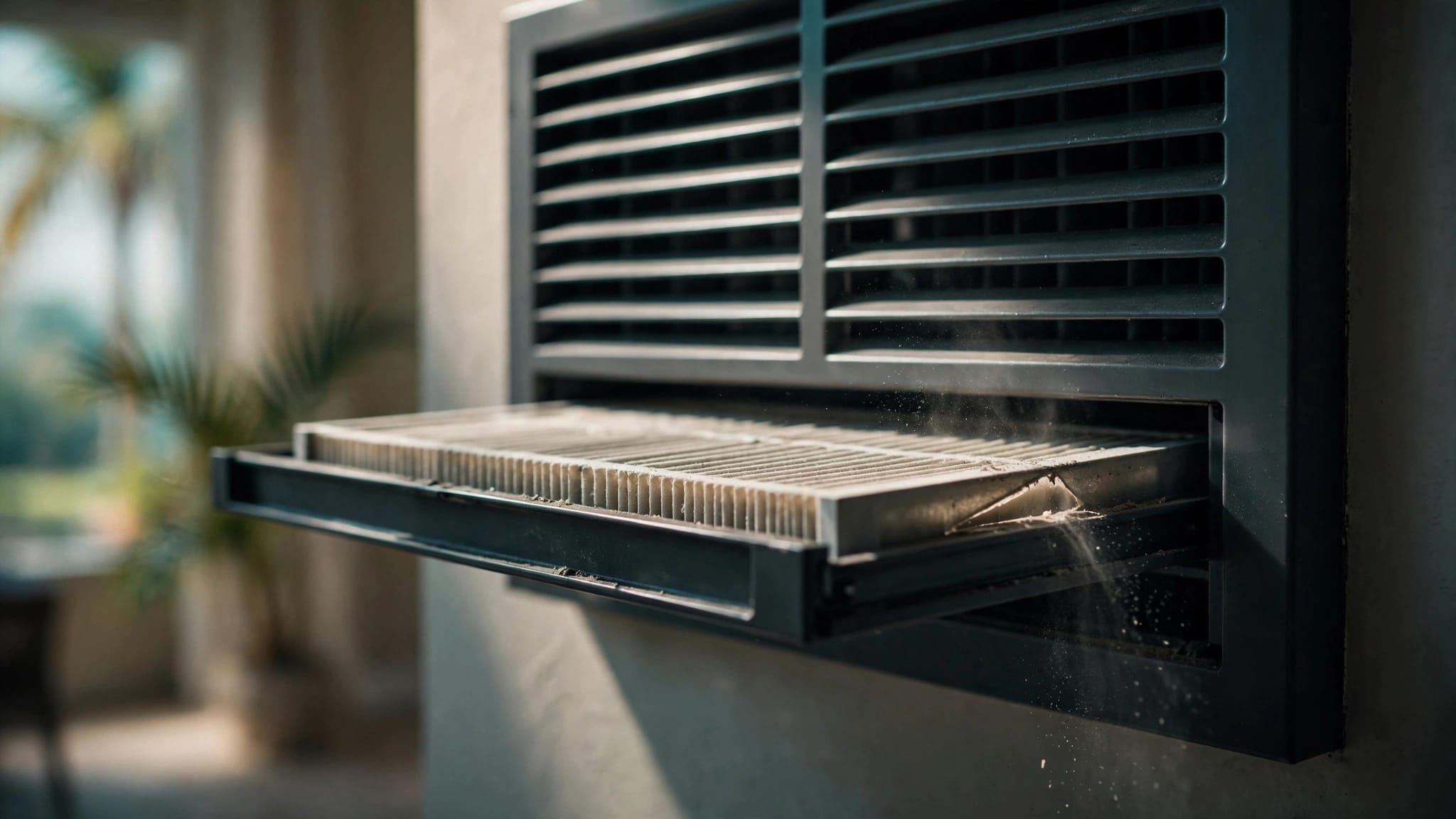
Your kitchen can send fine particles into the air even when the house looks spotless. Reducing PM2.5 in homes starts with finding likely sources, then matching ventilation and filtration to the conditions.
For Southwest Florida homeowners, that means considering outdoor smoke without overlooking everyday cooking and HVAC airflow. Particle control also needs a different approach than humidity control. Start by understanding what your monitor reports and what it leaves unanswered.
Key Takeaways
- A PM2.5 reading is a particle measurement, not a complete grade for your home's air.
- Cooking, candles, outdoor smoke, and traffic pollution are possible sources worth investigating.
- During smoky outdoor conditions, limit smoke entry and use appropriately sized particle filtration.
- HVAC filter fit, airflow, and duct leaks matter alongside the filter rating.
- Dehumidifiers manage moisture; they don't replace particle filtration.
What PM2.5 Monitors Measure in Your Home
A particle monitor provides information about material suspended in the air during the measurement period. That information can help you investigate a concern, but it doesn't establish a cause on its own.
Understand the number and its units
Many monitors display estimated particle concentration in micrograms per cubic meter, written as µg/m³. This describes the estimated amount of particle material within a volume of air.
Check which measurement your device displays. Some products show a concentration, while others emphasize a color, score, or air-quality category. Those displays aren't interchangeable.
A PM2.5 reading also doesn't identify the individual particles. The number alone can't tell you whether the material came from cooking, outdoor smoke, traffic, or another source. Read the manufacturer's instructions before comparing devices or interpreting their categories.
Recognize what the reading leaves out
Particle testing doesn't measure every indoor pollutant. Chemical vapors, carbon dioxide, carbon monoxide, and moisture concerns require different measurements or inspections.
Likewise, a particle reading can't diagnose mold or identify a hidden water leak. A musty odor near an air handler calls for a moisture investigation, even if the particle display looks reassuring.
Match the investigation to the complaint. Smoke exposure, recurring odors, visible moisture, and stuffy rooms can involve different problems that happen at the same time.
How to Interpret Indoor Particle Readings

Look for patterns rather than treating one reading as a pass-or-fail result. Indoor conditions change throughout the day, so the timing of a measurement matters.
Record what happened before a rise. Useful details include cooking, candle use, cleaning, construction work, open windows, and whether the air conditioner or purifier was operating.
Then watch what happens after the activity stops. A recurring rise during frying suggests a useful place to investigate. However, it doesn't prove that every elevated reading has the same source.
Keep the monitor in a consistent location and follow its placement instructions. A device directly beside a cooking pan measures different conditions than one across the living room. Comparing readings becomes harder when you move it between those locations.
Outdoor information adds context, too. Check the EPA's AirNow information when smoke is a concern, but don't compare an outdoor AQI number directly with an indoor concentration. AQI is an index, while µg/m³ is a concentration measurement.
A particle reading taken just after frying food can describe that cooking event without describing conditions throughout the entire day.
Investigate Indoor Sources and Outdoor Entry Paths
Finding likely sources helps you reduce PM2.5 in homes without buying equipment that misses the underlying problem.
Start with cooking and other indoor activities
Cooking belongs near the top of the investigation list, especially frying or cooking that produces visible smoke. It can raise indoor particles even when the HVAC system isn't running.
Use a kitchen hood that exhausts outdoors when available. Turn it on during cooking, and use the back burners when practical. Keep its filters and exhaust path maintained according to the manufacturer's instructions.
A recirculating hood treats some material passing through it, but it doesn't exhaust air outside. Therefore, check the hood type before assuming it provides ventilation.
Also review candles, smoking, incense, renovation debris, and cleaning activities. Avoid masking smoke or odors with fragrances, which can introduce another air-quality concern.
Check how outdoor particles reach the house
If a wildfire or prescribed burn is nearby, outdoor smoke belongs on the investigation list. Nearby traffic is another possible contributor, particularly when windows or doors face a busy road.
Particles can enter through open doors, windows, building gaps, and outdoor-air intakes. Keep door openings brief during smoke events, and check worn weatherstripping.
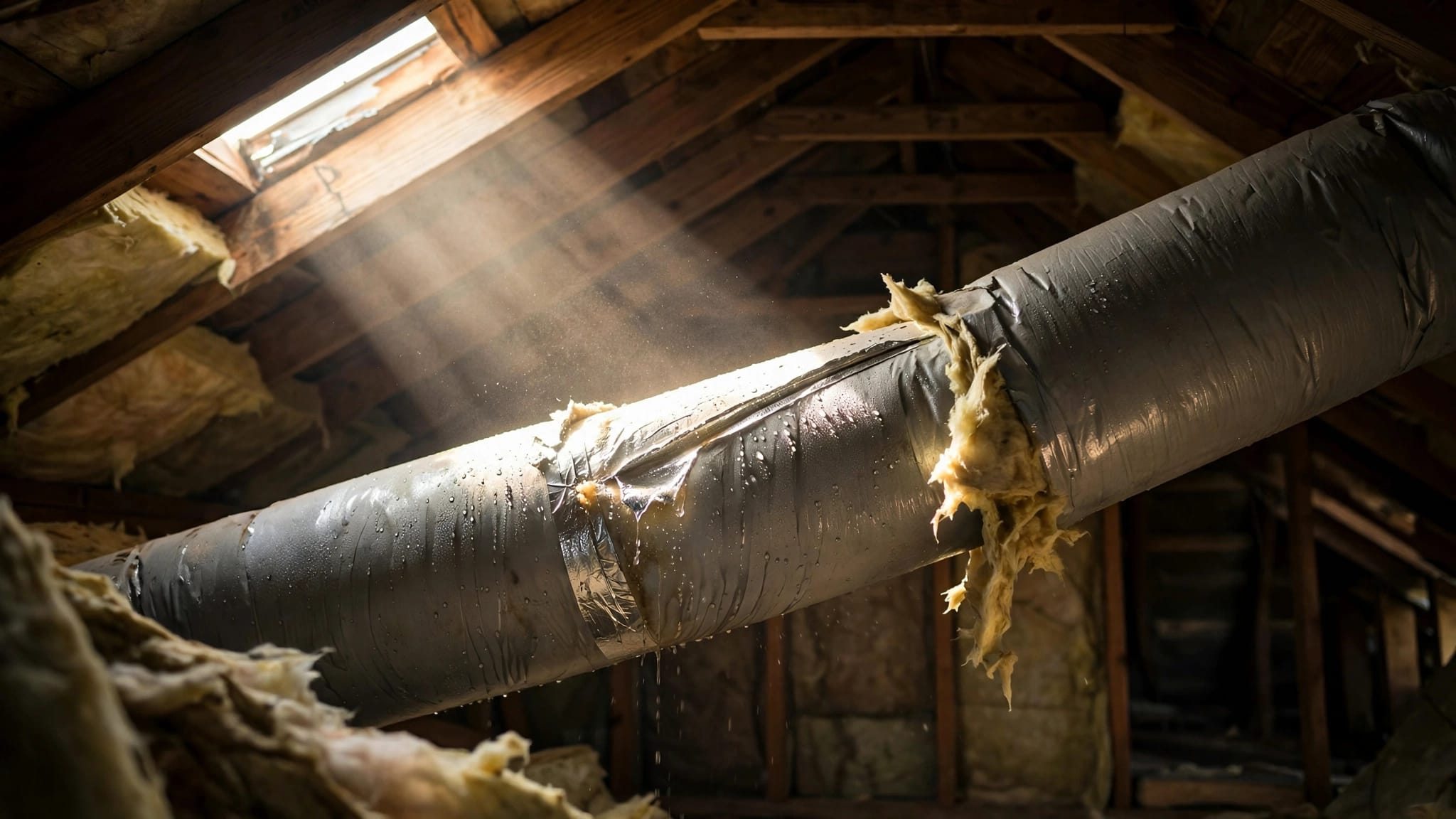
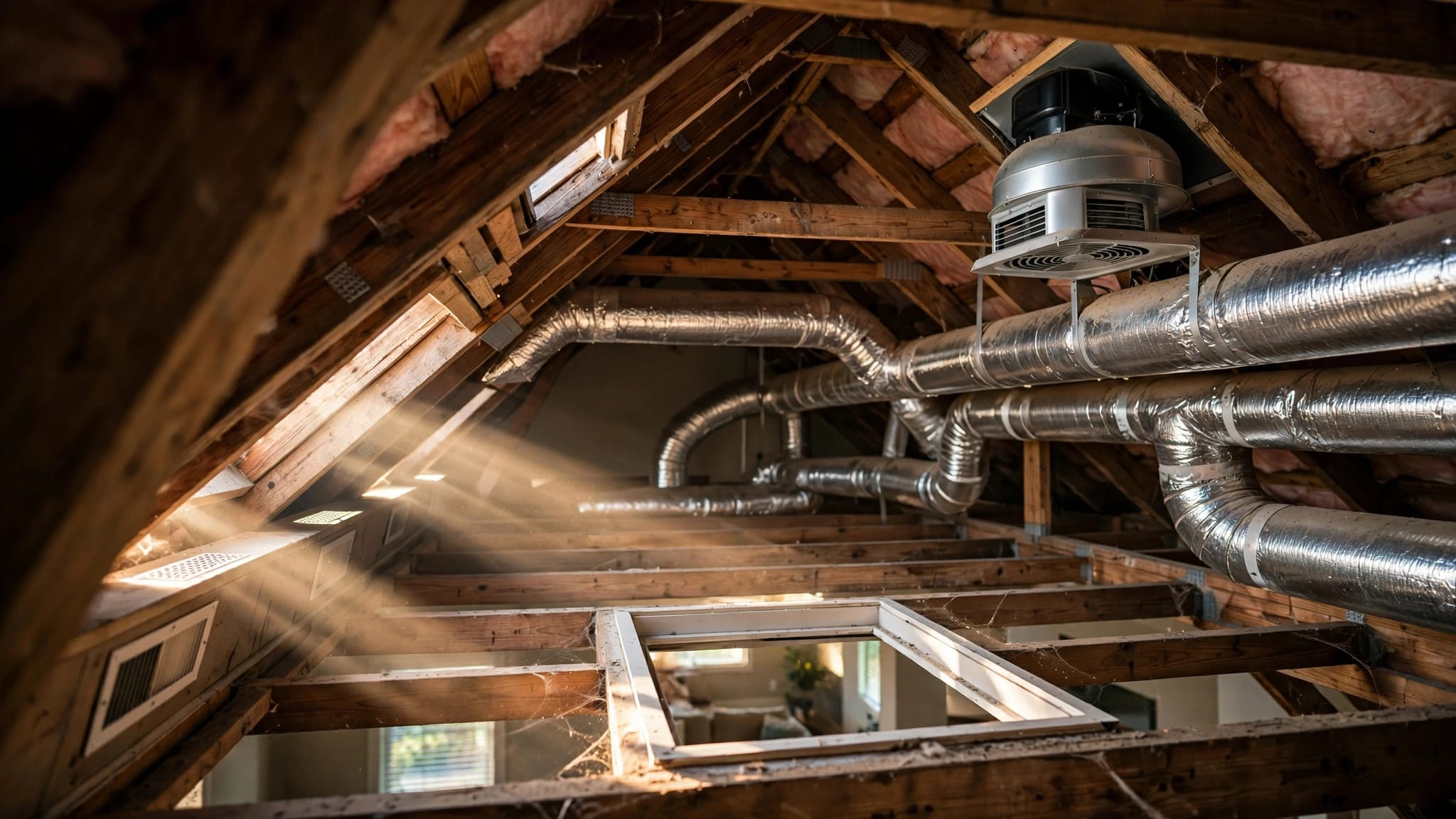
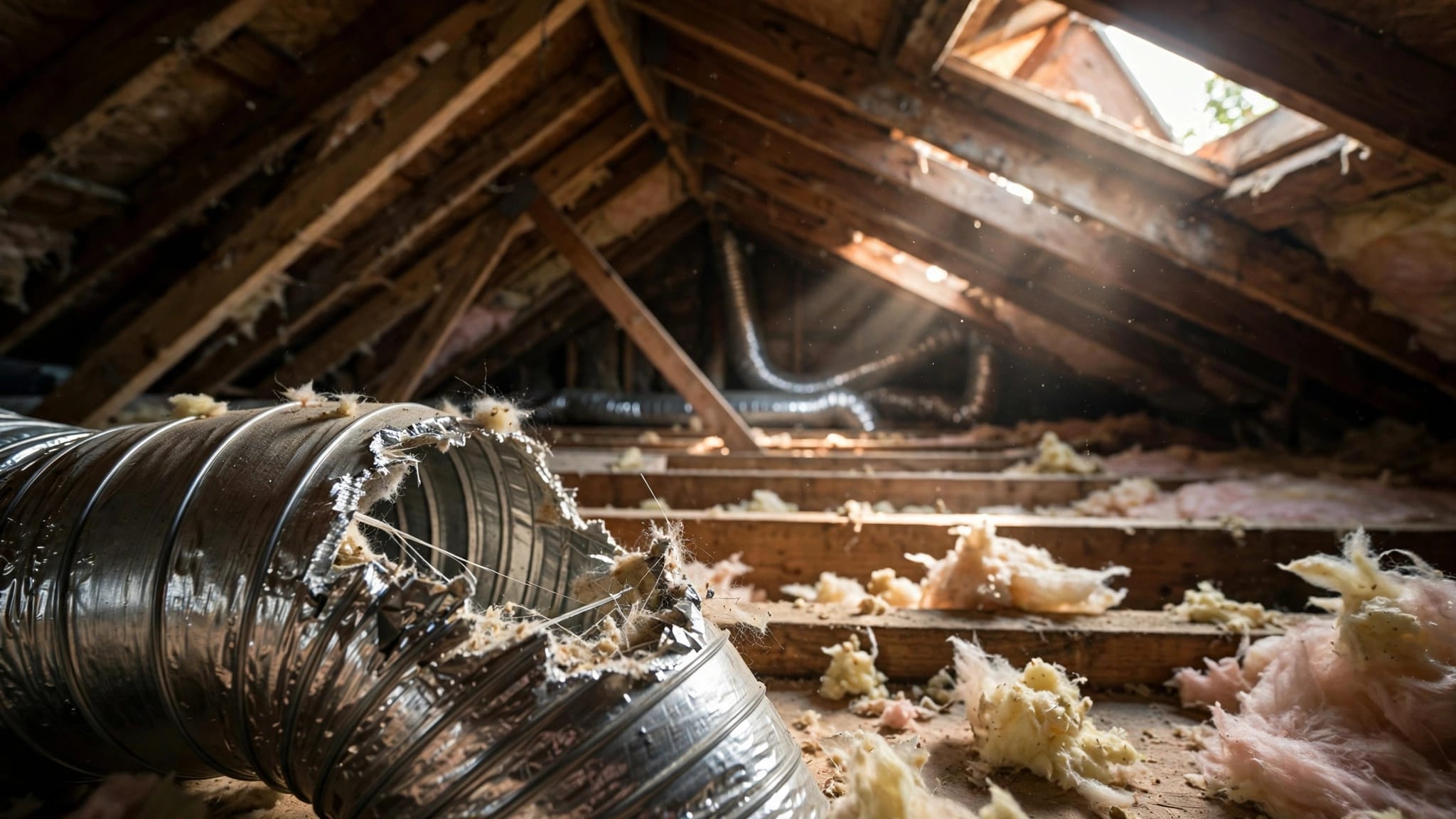
HVAC pathways deserve attention as well. Return-side leaks can pull dusty air from an attic, garage, or utility space into the system. A technician should inspect those pathways rather than assuming the filter catches everything entering the house.
Choose Ventilation Carefully During Outdoor Smoke
Opening windows can help remove pollutants when outdoor air is cleaner. During smoky conditions, however, the same action can bring more particles indoors.
Check outdoor conditions before airing out the house. If smoke is affecting your area, keep windows and exterior doors closed as much as practical while maintaining safe indoor temperatures.
A standard central air conditioner mainly recirculates indoor air. It doesn't automatically supply fresh air. Homes with dedicated ventilation equipment or outdoor-air intakes need a different assessment, so ask how those controls should operate during smoke events.
Exhaust fans also affect the balance. They remove indoor air, and replacement air enters somewhere else. Avoid unnecessary prolonged exhaust operation during outdoor smoke, but continue necessary ventilation for cooking, moisture, and appliance safety.
Reducing indoor particle-producing activities becomes especially helpful when opening windows isn't a good option. Skip candles, avoid smoky cooking, and operate a properly sized particle air cleaner.
Once outdoor conditions improve, reassess ventilation. Keeping a home closed indefinitely doesn't address every air-quality concern, including pollutants that particle filters don't capture.
Use Filtration That Fits the Room and HVAC System
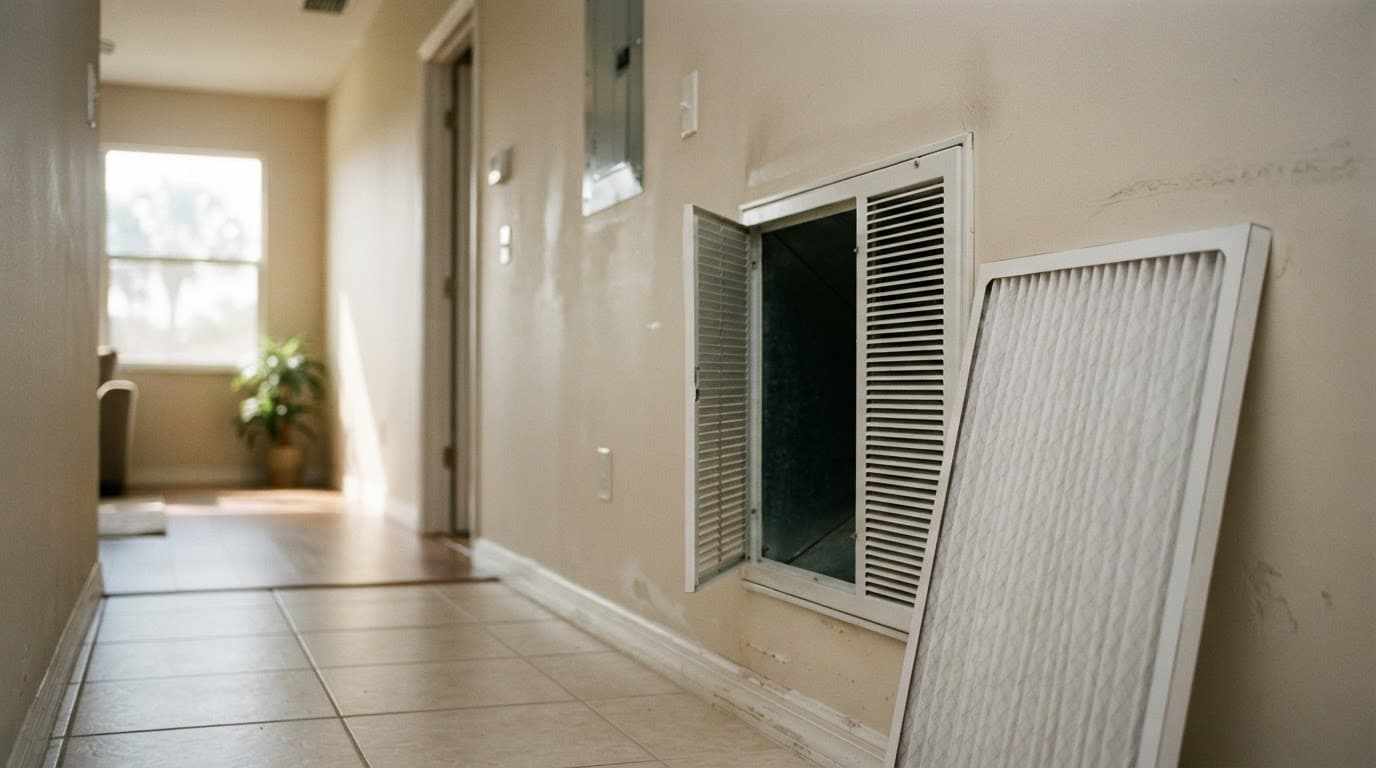
Filtration needs both effective particle capture and enough airflow. A high-efficiency label alone doesn't tell you how well the equipment fits your home.
Size a portable HEPA cleaner for its actual space
Choose a portable HEPA air cleaner using the manufacturer's room-coverage guidance and clean air delivery rate, or CADR. Look for particle or smoke-performance information rather than relying on vague purification claims.
Check which fan speed supports the advertised coverage. If you plan to operate the unit at a quieter setting, select equipment with enough capacity for that use.
Room layout matters, too. A unit in the living room doesn't automatically cover a closed bedroom. Taller ceilings and connected spaces also affect sizing.
Keep the intake and outlet unobstructed. Run the unit during the periods when particle control is needed, and replace its filter as directed.
Confirm HVAC filter compatibility before upgrading
A media air cleaner uses a deeper filter cabinet than a standard one-inch filter. Depending on the equipment, it can offer higher-efficiency particle filtration.
However, a restrictive filter can reduce airflow when the system wasn't designed for it. Ask a technician to evaluate the filter cabinet, blower capability, and static pressure before changing filter type.
The filter must also fit securely. Gaps allow air to bypass the media.
Whole-home HEPA equipment may require dedicated ductwork or other system changes. Don't assume a portable HEPA filter and a central-system filter are interchangeable.
Keep Ductwork, Filter Fit, and Airflow in the Plan
A filtration upgrade can't correct a leaking return duct or a damaged filter rack. Those conditions need repair alongside any equipment decision.
Arrange an inspection if you notice recurring dust around returns, weak airflow, uneven cooling, or unexplained particle increases during HVAC operation. These clues don't prove a cause, but they help focus the assessment.
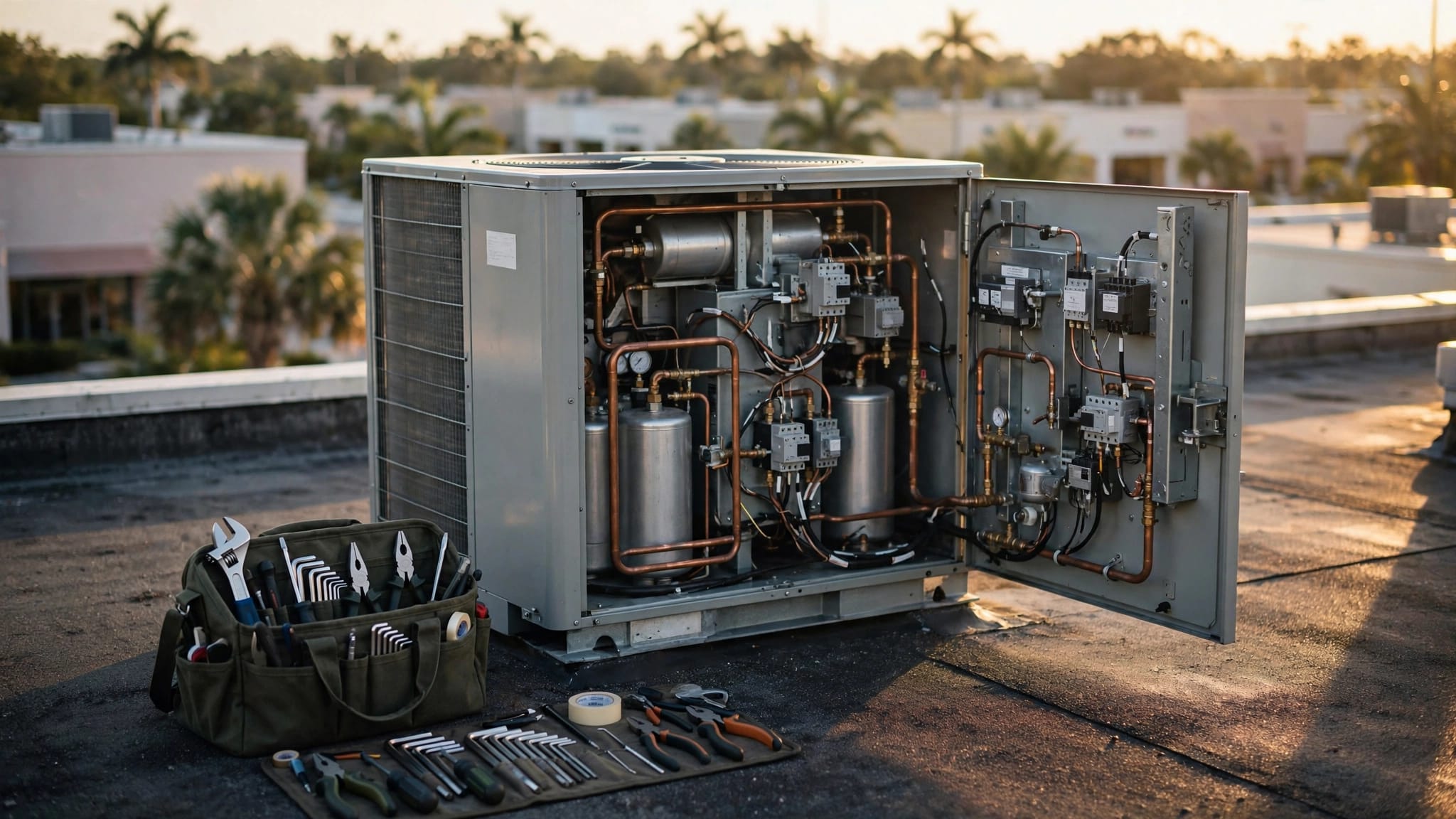
A technician can check accessible ducts, the return path, filter fit, blower, and evaporator coil. Back Bay Heating & Cooling provides ductwork repair and replacement when damaged or leaking ducts need attention.
Check filters monthly. The company's Cape Coral filter replacement guide recommends replacing standard one-inch pleated filters every 30 to 60 days, with timing adjusted for the equipment and household conditions.
Keep returns clear of furniture and accumulated dust. Also consider scheduled HVAC maintenance, which includes checks of accessible ductwork and filters where applicable. Maintenance supports system performance without guaranteeing a particular particle reading.
Separate Particle Reduction From Other Air Improvements
Dehumidifiers remove moisture. They don't replace particle filters, even when drier air makes the house feel more comfortable.
Likewise, UV equipment aimed at damp HVAC surfaces doesn't remove airborne dust by itself. A particle filter doesn't correct a plumbing leak, and a portable HEPA cleaner doesn't provide outdoor-air exchange.
These distinctions matter when choosing equipment. A home can need moisture repair, improved ventilation, and particle filtration for separate reasons.
For persistent musty odors or visible moisture, investigate the water source. For recurring particle increases, review activities, outdoor conditions, filtration, and entry paths. Buying one general-purpose air-quality product shouldn't replace that investigation.
Frequently Asked Questions
Does a higher PM2.5 reading prove outdoor smoke entered?
No. Cooking and other indoor activities can also affect the reading. Compare its timing with household activities and outdoor conditions, then inspect possible entry paths. A particle monitor doesn't identify the source by itself.
Will a new AC filter solve the problem?
It may be part of the solution, but filter fit, efficiency, airflow, runtime, and ongoing sources all matter. A fresh filter won't repair a return leak or stop smoke entering through an open window.
Should I buy a purifier before scheduling HVAC service?
A properly sized portable HEPA cleaner can support particle control. However, recurring dust, weak airflow, or concerns near the air handler also justify an inspection. Filtration and repair address different parts of the problem.
Make Particle Control Part of Your Home's Care
A useful response to PM2.5 in homes combines source control , sensible ventilation, and filtration that fits the equipment. Monitor patterns can guide that work, but they don't replace an inspection when problems keep returning.
For filter compatibility, duct leaks, or airflow concerns, Contact Us to schedule a service call with Back Bay Heating & Cooling. The team serves Charlotte, Collier, Hendry, and Lee counties and offers 24/7 emergency HVAC service.