Indoor CO2 levels can reveal whether a Florida home is replacing stale indoor air with enough outdoor air. A high reading often points to limited ventilation, crowded rooms, or poor air mixing, but it isn't a diagnosis of mold or a direct measure of overall air quality.
Florida homeowners also have to manage heat and moisture. Opening windows may lower CO2 while raising indoor humidity, so the right response balances fresh-air exchange with air conditioning, exhaust fans, and dehumidification. Start by understanding what your monitor can tell you.
What Indoor CO2 Levels Tell You About Ventilation
People release carbon dioxide as they breathe. When several people occupy a room with limited outdoor-air exchange, CO2 can build up. That makes the reading useful for spotting ventilation patterns inside bedrooms, offices, living rooms, and other occupied spaces.
CO2 is a ventilation clue, not a diagnosis
The U.S. Environmental Protection Agency describes indoor CO2 as a way to gather information about ventilation. A higher reading often means exhaled air is accumulating faster than fresh air enters the space.
However, CO2 doesn't identify every indoor-air problem. A monitor won't tell you whether a room contains mold, dust mites, cleaning chemicals, pet dander, or carbon monoxide. It also can't confirm that every room in the home has good airflow.
Room size, ceiling height, occupancy, door position, supply vents, return-air pathways, and outdoor conditions can all affect the result. Therefore, use the reading as one piece of information during an indoor-air evaluation.
One reading cannot describe the whole house
A sensor beside an open window may show a very different number from one in a closed bedroom. Likewise, a reading can rise when family members gather for dinner and fall after the room empties.
A high CO2 reading points to an air-exchange question, while a humidity reading points to a moisture-control question.
Look for repeated patterns. If the same bedroom shows elevated readings every night, the room may need better air circulation or a planned ventilation solution. That pattern still doesn't prove that the home has mold or another specific contaminant.
How to Read Indoor CO2 Levels in Different Rooms
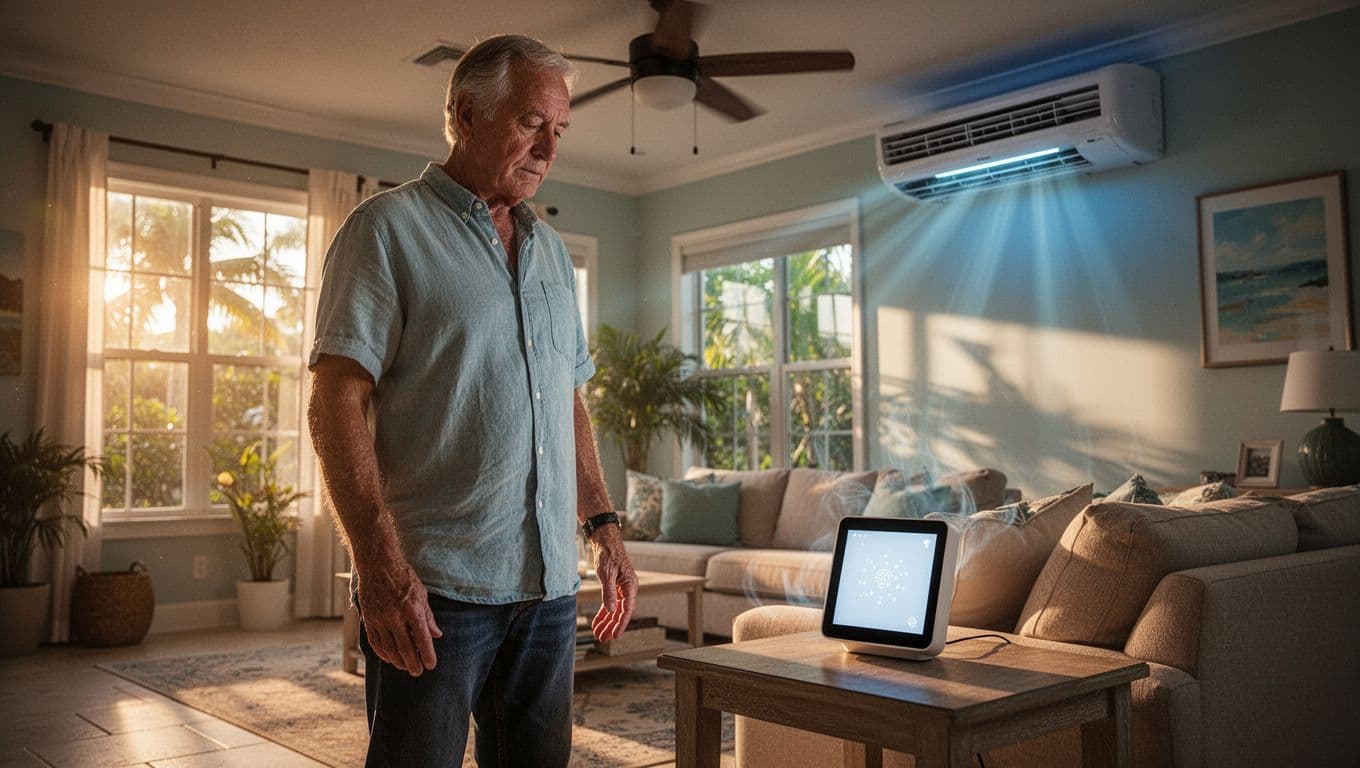
A consumer CO2 monitor works best when you use it to compare similar situations. Record readings during normal occupancy, after the room has been closed for several hours, and after ventilation equipment operates.
Watch patterns instead of isolated spikes
A short increase during a family gathering is expected. A sustained increase during ordinary use deserves closer attention, especially if the room feels stuffy or occupants report headaches, drowsiness, or difficulty concentrating.
Many homeowners use a reading around 1,000 parts per million as a prompt to review ventilation. Readings near or above 2,000 ppm during regular occupancy show stronger buildup in some homes. These figures are investigation points, not universal medical or legal limits . They don't predict how every person will feel.
Sensor placement also matters. Put the monitor in an occupied area at about seated head height. Keep it away from supply vents, windows, exterior doors, humidifiers, gas appliances, and direct sunlight. An NDIR sensor is a practical option because it measures CO2 with infrared technology, but every device has limits.
Room use changes the meaning
A home office with one person may produce a gradual rise during a workday. A closed bedroom can show a larger overnight increase because the door stays shut and the occupants remain inside for hours.
Compare rooms based on their actual use. A higher reading in a small, occupied bedroom may need a different solution from a high reading in a large family room. Check whether the door blocks return airflow, whether the supply register delivers air, and whether the central system runs during the period you are monitoring.
CO2 readings can also help a professional identify whether the home needs more whole-house ventilation, improved air mixing, or a better return-air design.
CO2 and Carbon Monoxide Are Different Hazards
The similar names cause confusion, but carbon dioxide and carbon monoxide behave differently. Carbon dioxide is produced by normal breathing and combustion. Carbon monoxide is a poisonous combustion gas that can enter a home from malfunctioning fuel-burning equipment or outdoor sources.
CO2 monitors cannot replace CO alarms
A CO2 monitor doesn't detect carbon monoxide. Florida homes should have working carbon monoxide alarms according to local safety guidance, especially when they contain fuel-burning appliances, fireplaces, attached garages, or generators used during storm-related power outages.
Potential carbon monoxide sources include gas water heaters, furnaces, fireplaces, generators, grills, vehicles, and gas ranges. Even homes that rely on electric heating and cooling can face CO risks from an attached garage or a portable generator placed too close to doors or windows.
Treat a carbon monoxide alarm as an emergency
If a carbon monoxide alarm sounds, leave the home immediately and call 911 or the local fire department from outside. Don't try to locate the source first, and don't rely on a CO2 reading to decide whether the space is safe.
A high CO2 reading usually calls for a ventilation review. A CO alarm requires immediate action because carbon monoxide can become dangerous without a strong odor or visible warning.
Why Florida Humidity Changes Ventilation Decisions
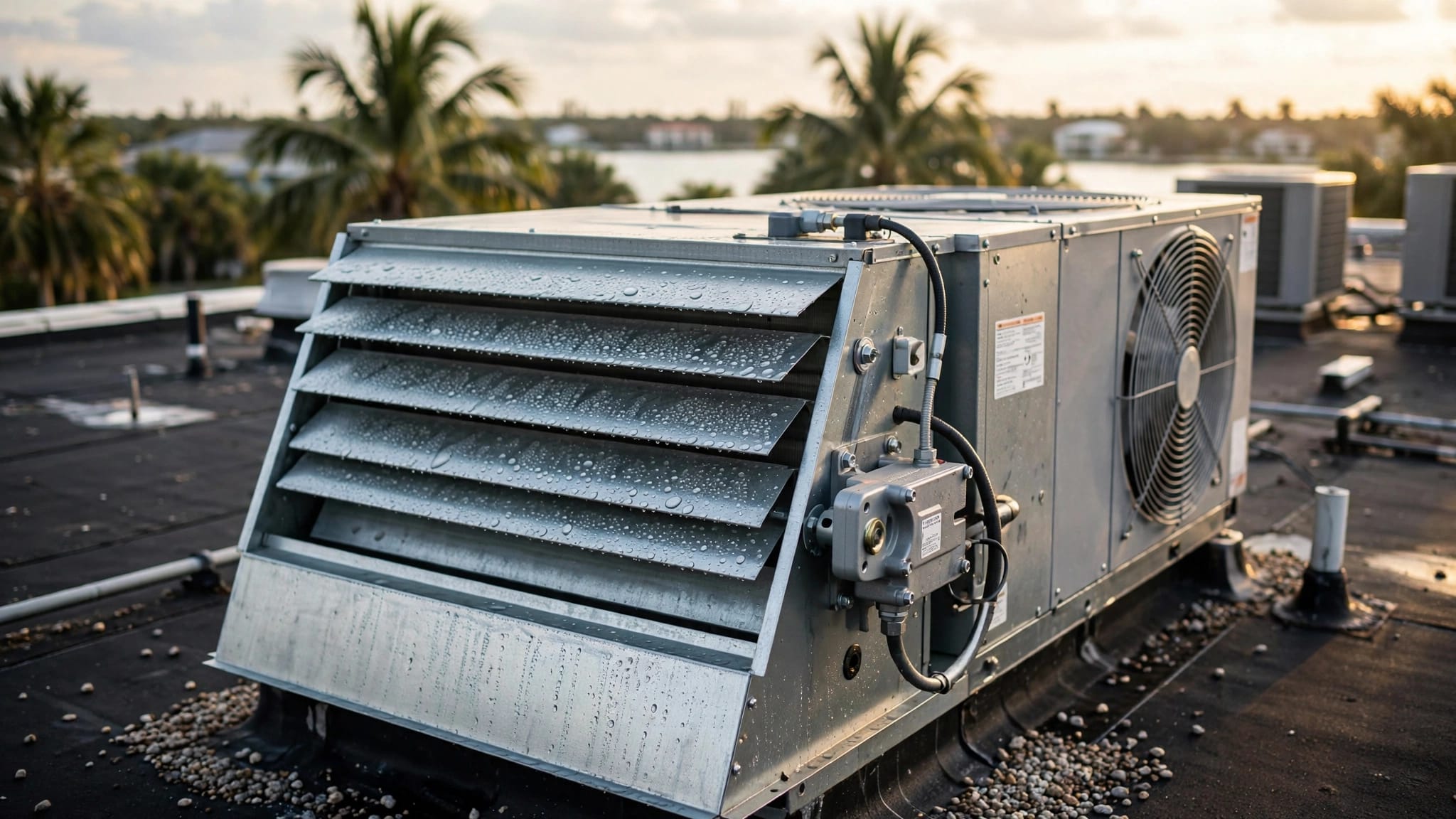
Fresh outdoor air isn't automatically dry air. During Florida's hot, humid months, opening windows can reduce CO2 while bringing moisture indoors. That moisture can increase condensation, make rooms feel clammy, and support mold growth if the air conditioner can't remove enough water.
Fresh air can add moisture
The Florida Department of Health recommends keeping indoor relative humidity below 60%. Below 50% is better for limiting mold growth and dust mites when the home can maintain that level comfortably.
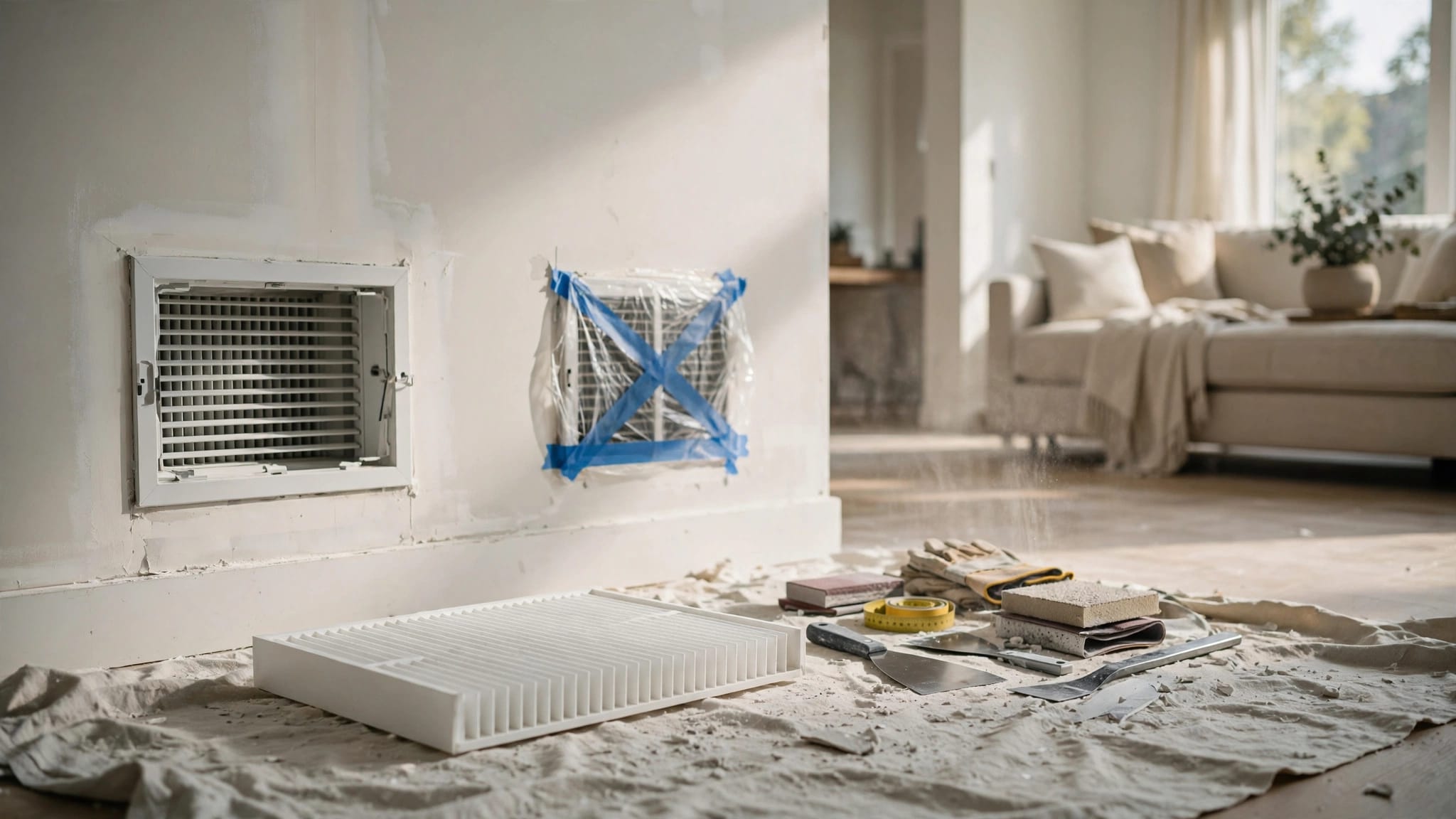
Use bathroom exhaust fans during showers and keep them running long enough to remove moisture. Vent kitchen and laundry exhaust outdoors when possible. A recirculating range hood may remove some particles and odors, but it doesn't move humid air outside.
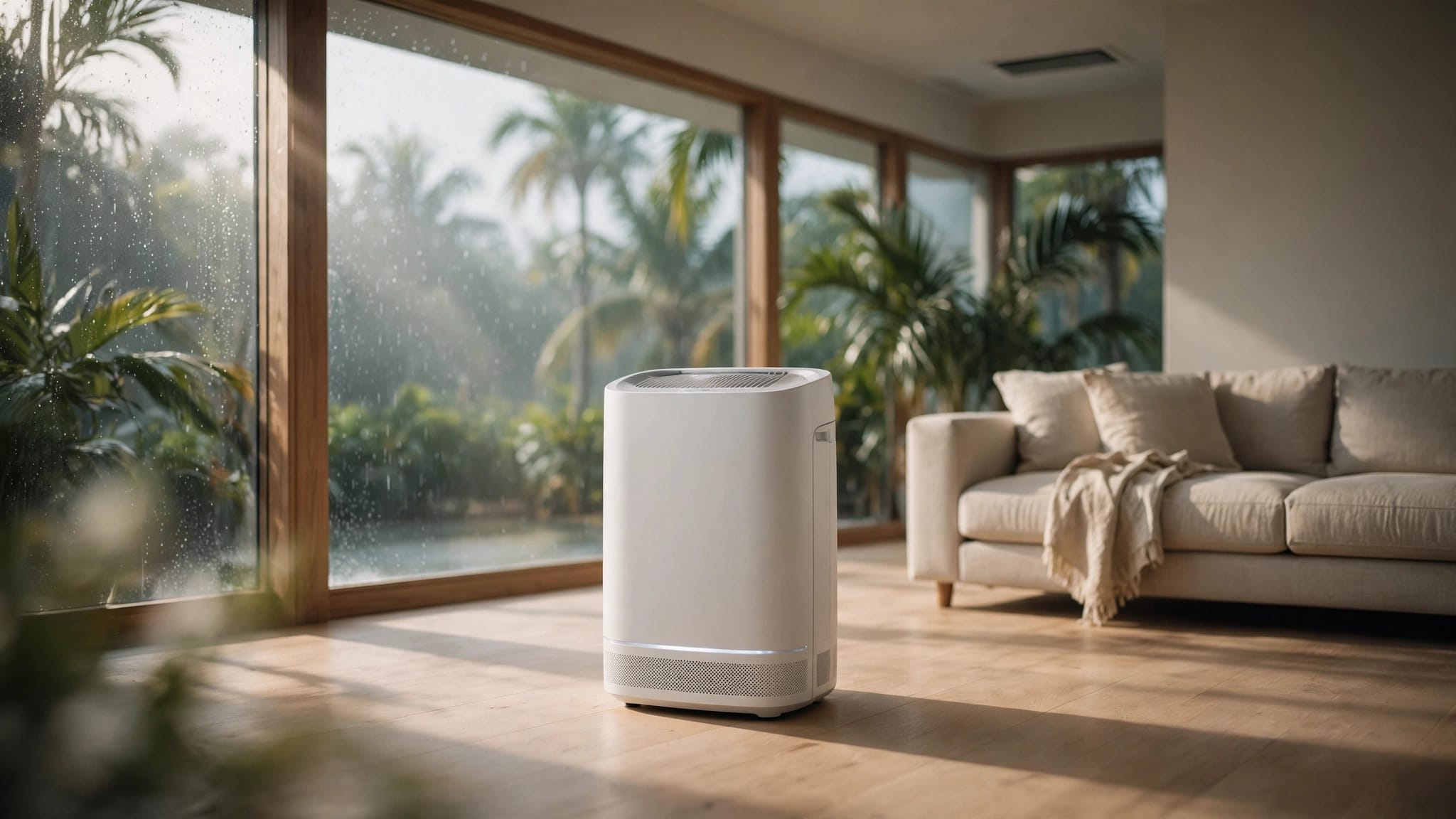
Air conditioning removes heat and some moisture, but a standard central AC system mainly recirculates indoor air. It doesn't automatically provide the outdoor-air exchange that lowers CO2. A separate dehumidifier may help, although Florida DOH advises having the central AC system checked when it can't maintain humidity below 60%.
A high CO2 reading doesn't prove mold
Mold grows because of moisture, leaks, condensation, standing water, or high humidity. CO2 can be elevated in a dry room with poor ventilation, while a well-ventilated room can still have mold behind a wall or near a wet air handler.
Inspect around the air handler, evaporator coil, drain pan, drain line, windows, plumbing fixtures, and exterior walls. Dry wet materials within 24 hours when possible. Persistent musty odors, visible growth, or recurring water problems need a moisture investigation.
Florida DOH doesn't recommend routine mold sampling as the first response. Finding and correcting the moisture source matters more than chasing a single air-sample result.
Practical Ways to Improve Air Exchange Without Inviting Humidity
Florida homes need fresh air, but the method matters. The goal is controlled ventilation that works with the cooling and dehumidification system.
Start with exhaust fans and airflow paths
Run bathroom fans while bathing and use kitchen exhaust during cooking. Keep dryer vents clear and directed outdoors. These steps remove moisture and pollutants near their source before they spread through the home.
Replace HVAC filters on the schedule recommended for your system, and keep supply registers and return grilles clear. A clean filter supports airflow, but it won't lower CO2 by itself.
Closed bedroom doors can also limit circulation. If a room has a supply vent but no effective return path, air may not move back to the air handler when the door is closed. A transfer grille, door undercut, or properly designed return system may improve the balance.
Leaking or poorly designed ducts can waste conditioned air and create pressure problems. A technician can inspect for gaps, damaged insulation, loose connections, and return-side leaks through ductwork repair and replacement.
Consider balanced mechanical ventilation
Tighter homes may need mechanical ventilation instead of relying on random air leakage. ASHRAE Standard 62.2 bases residential ventilation rates on factors such as conditioned floor area and bedroom count. A commonly cited formula is Q = 0.03 x A + 7.5 x (N + 1), where A is the home's conditioned square footage and N is the number of bedrooms.
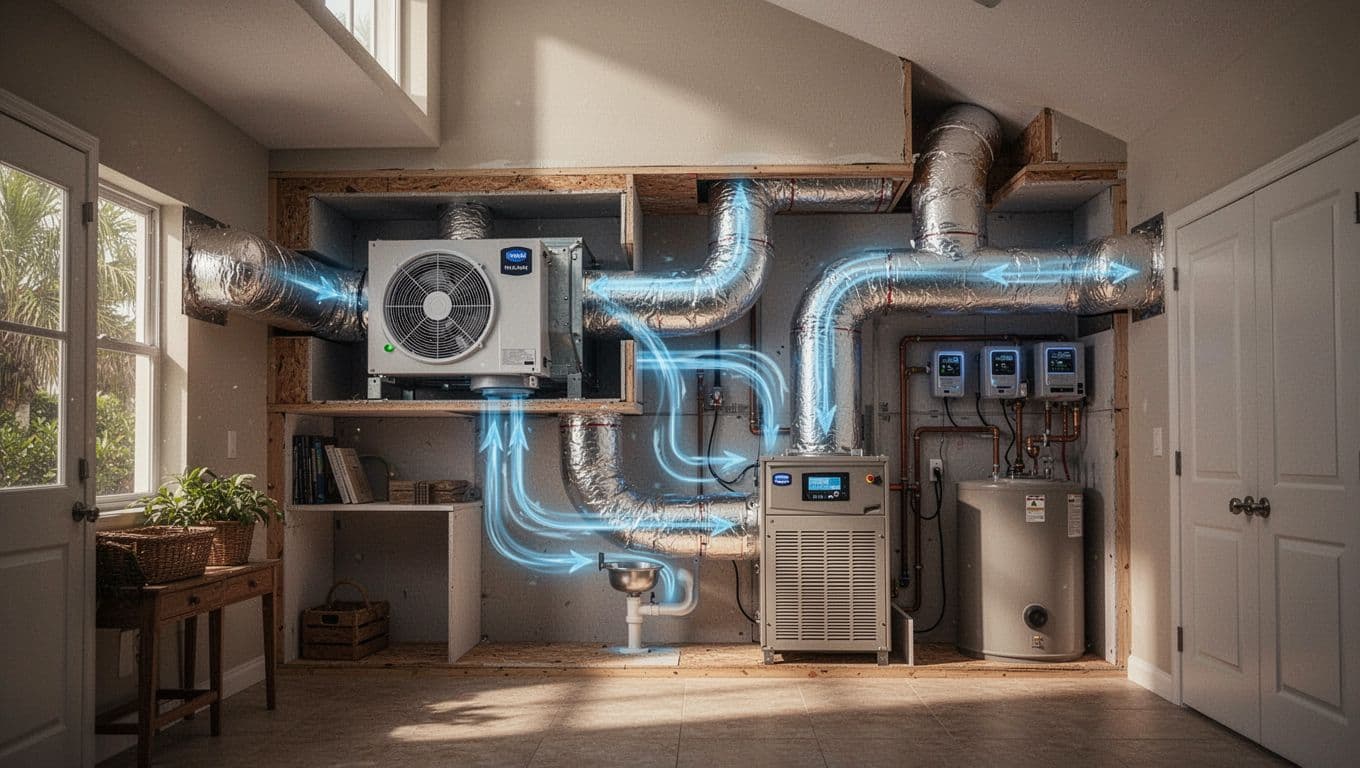
A professional should size, install, and balance the system rather than selecting equipment from the CO2 number alone. An energy recovery ventilator, or ERV, can exchange indoor and outdoor air while transferring some heat and moisture. That moisture transfer often makes an ERV a better fit for humid Florida conditions than an HRV, although the home's design determines the right choice.
Learn more about ERV versus HRV ventilation systems before planning a whole-house ventilation upgrade.
When Persistent Readings Need Professional Attention
First, confirm that the monitor is placed correctly and has fresh batteries or a current calibration. Take readings in more than one room, note occupancy, and record indoor humidity at the same time.
If indoor CO2 levels stay elevated during normal occupancy, an HVAC professional can check airflow, return paths, duct leakage, filter restrictions, equipment operation, and whole-house ventilation. The evaluation should also include humidity control and the air handler's drain pan and condensate line.
Persistent stuffiness, musty odors, visible mold, condensation, or symptoms that improve when you leave the home deserve a broader indoor-air assessment. Don't assume CO2 is the cause. The same symptoms can involve humidity, allergens, combustion gases, chemical pollutants, or mold.
Visible growth and recurring moisture may require mold remediation in Cape Coral, while a ventilation or cooling problem may need HVAC service. Back Bay Heating & Cooling helps homeowners across Lee, Collier, Charlotte, and Hendry counties evaluate cooling, ductwork, humidity, and indoor-air concerns. To schedule a service call or request 24/7 help, Contact Us.
Keep CO2 in Context
Indoor CO2 levels are useful because they show how occupied rooms exchange air. A sustained rise can point to inadequate ventilation, poor return airflow, or a room that stays closed for long periods.
Florida homes require an additional focus on moisture. Keep indoor humidity below 60%, use exhaust fans at the source, maintain the AC and condensate system, and choose controlled ventilation when natural airflow isn't enough.
A CO2 reading can start the investigation, but it can't finish it. The most reliable answer comes from looking at ventilation, occupancy, humidity, HVAC performance, and symptoms together.