A Florida summer can turn a loose outdoor air conditioner into a serious storm hazard. The short answer is that Florida AC condenser tie-downs may be required , but not every unit needs visible straps.
Florida does not use one simple rule for every home. Requirements can depend on the current Florida Building Code, local amendments, wind design criteria, flood zone, installation date, and the local building department or authority having jurisdiction (AHJ). Start by separating ordinary equipment anchoring from hurricane-specific wind protection.
Florida AC condenser tie-downs: what the code may require
The statewide code sets the baseline
The Florida Building Code, including the Florida Mechanical Code and Florida Residential Code, is the starting point for outdoor HVAC equipment. In general, a condenser designed to remain fixed in place must have an approved support and anchoring method that limits movement, settlement, excessive vibration, and dislodging.
The residential code language commonly cited for appliance anchorage is M1307.2 in older Florida Residential Code editions. It says fixed appliances must be fastened or anchored in an approved manner and describes strapping near the upper and lower portions of an appliance.
That language doesn't automatically mean every Florida condenser needs the same metal straps. The approved method may involve anchor bolts through the equipment base, fasteners into a concrete slab, a rated bracket, or a combination of anchors and straps. The equipment manufacturer's installation instructions also matter.
Your local conditions can change the answer
Wind requirements depend on the building site's design wind speed, exposure, construction details, and adopted code edition. Florida has high-wind areas, but there isn't one separate statewide "condenser strap map" that answers every installation question.
Local amendments may add stricter requirements. For example, Miami-Dade County Code Section 8C-5 includes an anchoring method that calls for an anchor bolt with at least 500 pounds of pull-out resistance through the condenser and into the concrete slab. That is a local example, not a rule that automatically applies throughout Florida.
Installation date matters, too. An older system may have been installed under a previous code edition. A new replacement, relocated condenser, new platform, or flood repair may need to meet requirements in effect when the work receives its permit.
Hurricane tie-downs versus standard equipment anchoring
These terms often get mixed together, but they describe related parts of the installation.
Standard anchoring keeps the unit stable
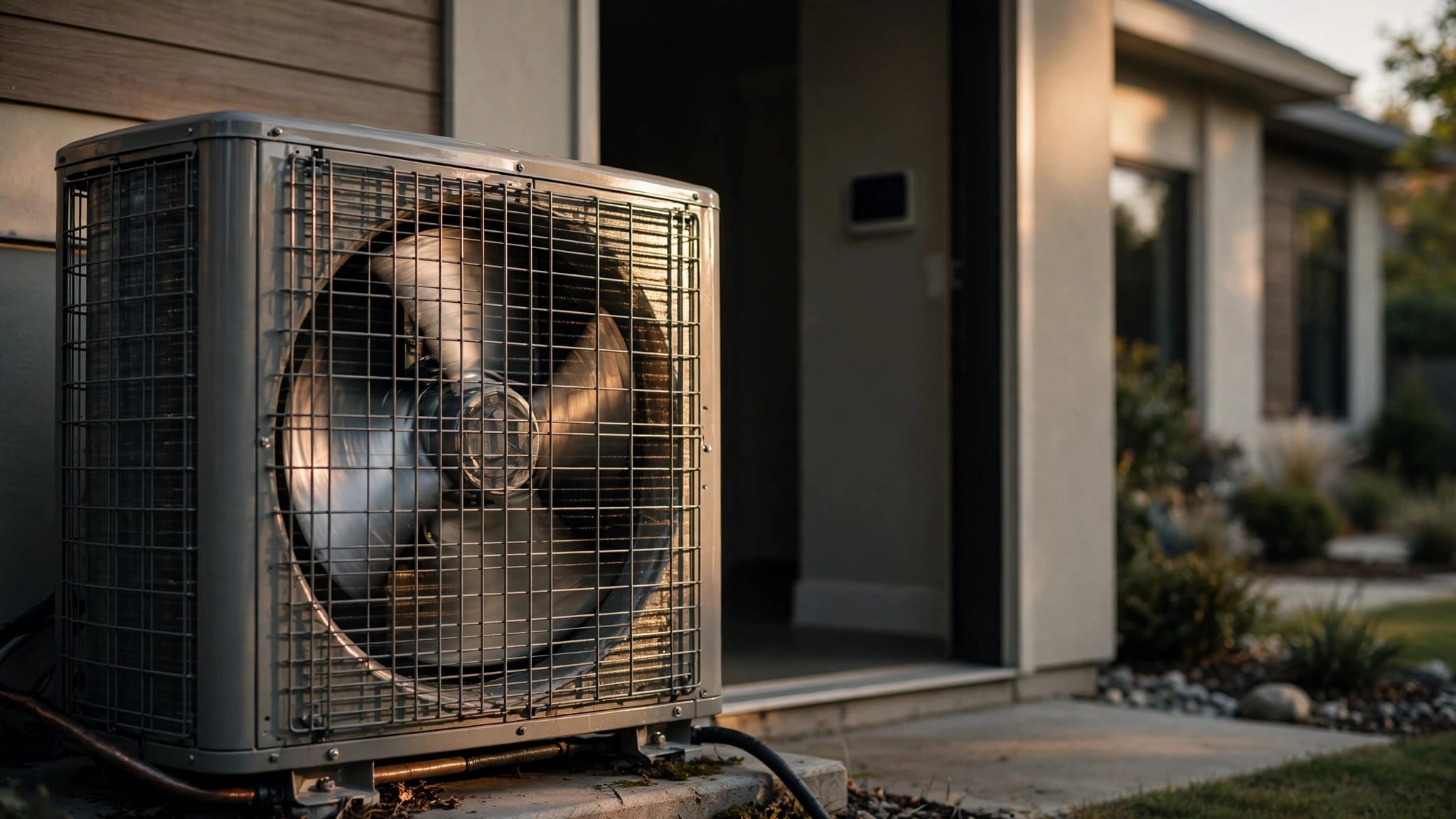
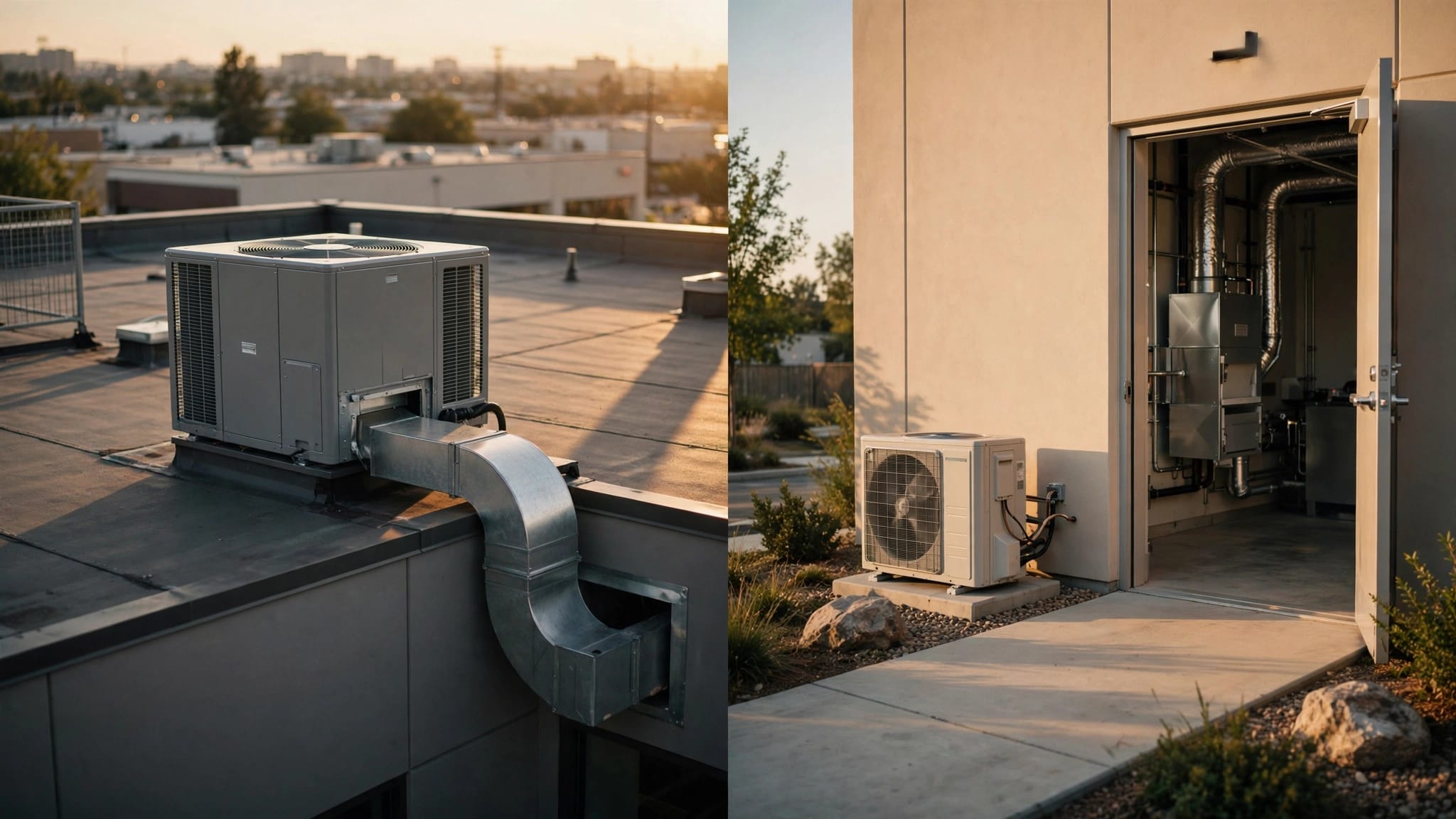
Standard equipment anchoring secures the condenser to a suitable base. The base may be a concrete slab, prefabricated equipment pad, wall bracket, rooftop curb, or elevated platform.
A proper installation should keep the cabinet level and stable. It should also limit vibration and prevent the unit from shifting during normal operation or severe weather. Anchors must connect to a solid supporting structure, not merely to a thin pad that can crack, slide, or lift.
A heavy concrete pad can help stabilize an outdoor unit, but its weight alone doesn't prove that the cabinet can resist hurricane-force uplift or lateral movement. Ask whether the entire assembly has a clear load path from the condenser to the supporting slab, platform, or structure.
If your pad is cracked, tilted, sinking, or too small for the equipment, review this guide to condenser pad and anchoring inspection before replacing hardware.
Hurricane straps are one type of wind restraint
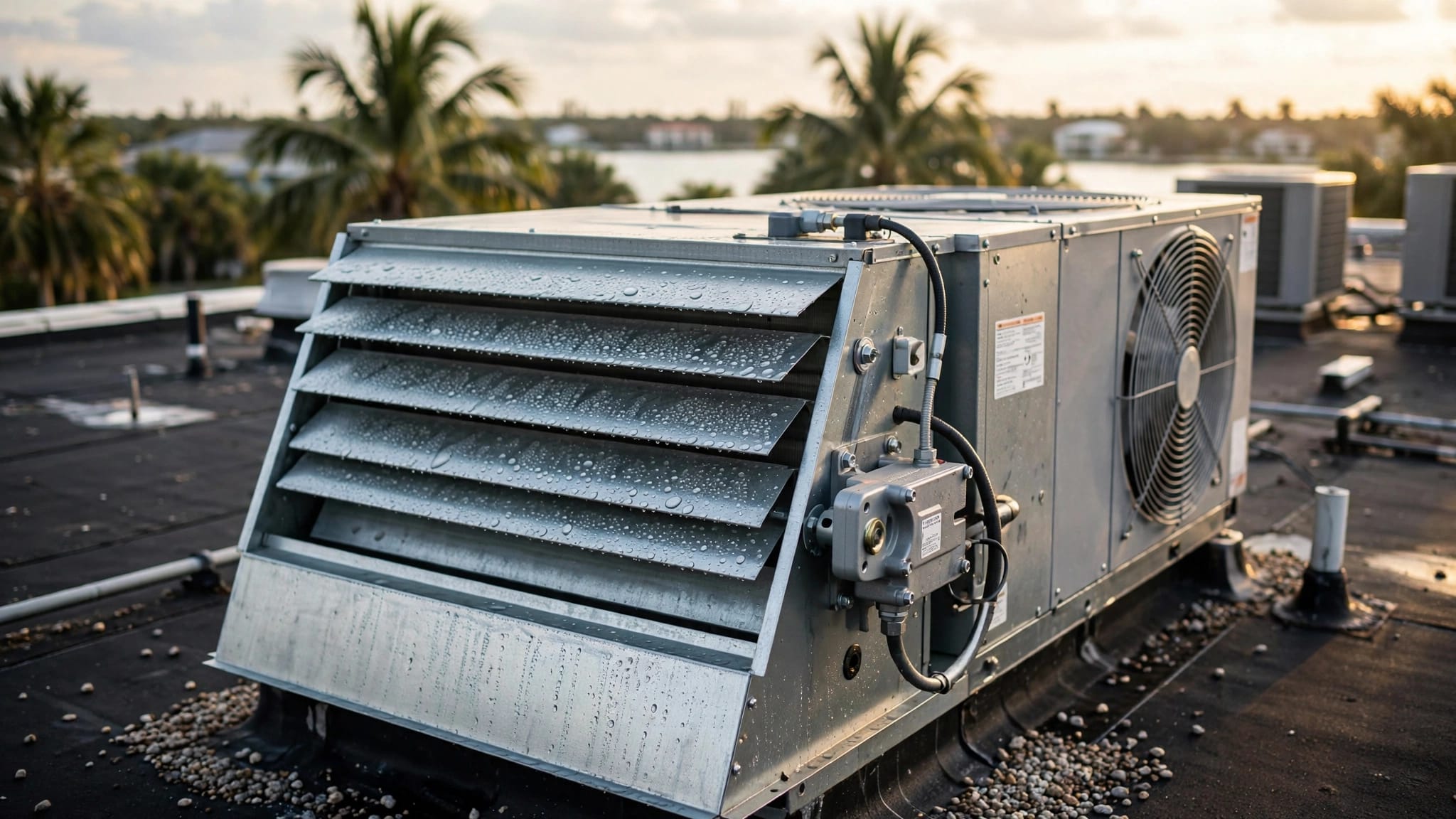
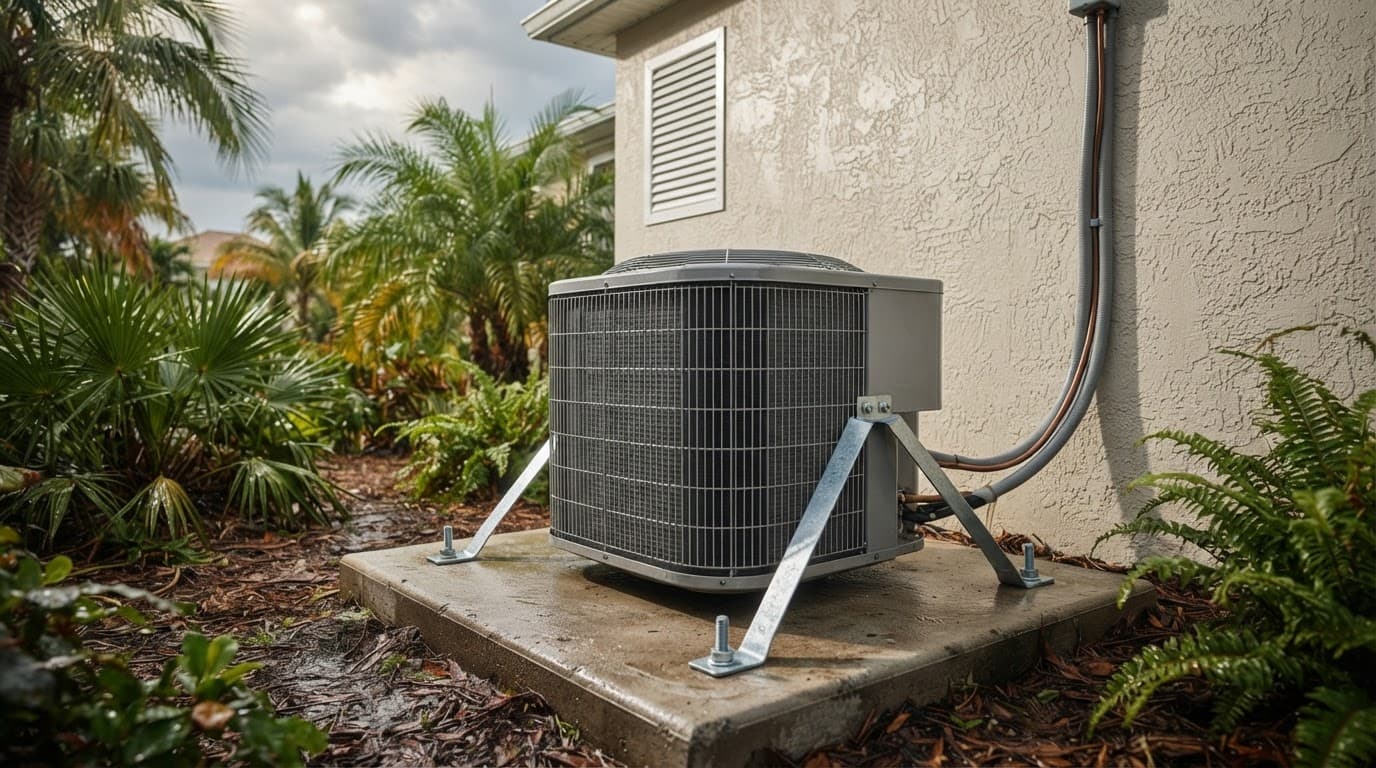
Hurricane tie-downs are straps, brackets, bolts, or approved restraint assemblies designed to help resist wind forces. Depending on the equipment and site, straps may connect the condenser cabinet to the slab or an engineered platform.
For Florida AC condenser tie-downs, the attachment points must match the equipment, support, and expected loads. A strap that looks strong may still fail if the fastener pulls out of weak concrete, the strap cuts into the cabinet, or the platform cannot handle the force.
Coastal installations also need corrosion-resistant hardware. FEMA guidance for flood-prone and coastal areas points to stainless steel or hot-dip galvanized connectors and fasteners because salt spray can weaken ordinary steel.
A concrete pad supports the condenser, but it doesn't automatically create a verified wind-resistance system.
Never substitute a cargo strap, plumbing band, improvised wire, or random hardware-store bracket for an approved restraint. The wrong material can loosen, corrode, cut into the cabinet, or transfer force to parts that were never designed to carry it.
Flood zones create a separate requirement
A flood-zone property may need more than stronger anchoring. In many cases, the main question is whether the condenser sits high enough above the expected flood level.
Elevation can matter more than extra straps
FEMA publications P-2181 and P-348 recommend elevating outdoor HVAC equipment above the flood protection level or base flood elevation (BFE) in flood-prone areas. A condenser that stays on the ground may remain vulnerable even when its straps are strong.
Floodwater can damage the compressor, fan motor, controls, disconnect, and electrical connections. Fast-moving water can also shift an entire pad or undermine the soil beneath it.
The correct solution may involve relocating the condenser, raising it on an elevated pedestal, or installing it on a properly designed platform. The selected method depends on the flood designation, site conditions, equipment, and local review.
Coastal high-hazard areas need careful platform design
In a coastal high-hazard area such as a Zone V property, FEMA guidance addresses both wind and flood forces. The platform or pedestal may need attachment to the main structure with corrosion-resistant connectors. It may also need protection against scour and erosion.
The condenser itself still needs anchoring to resist wind. The platform must also remain stable during storm surge and wave action. Those are separate design questions, so adding straps to a low condenser may not solve the flood-compliance problem.
Madeira Beach provides one local example. Its flooded-HVAC guidance has called for exterior equipment elevation to BFE plus 1 foot, along with signed and sealed engineered plans showing how the unit will anchor to the building. That requirement doesn't apply to every Florida city, but it shows why homeowners should ask the local AHJ before changing equipment height or location.
Why improper strapping can cause damage
A restraint system can protect a condenser when it is designed and installed correctly. Poorly placed hardware can create new problems.
The cabinet and line set can suffer
A strap placed across a service panel, coil, fan opening, or thin cabinet section can bend metal and restrict access. Excessive tension can distort the housing and put pressure on internal components.
A shifted or uneven condenser may also vibrate more than normal. That movement can stress refrigerant tubing, electrical connections, isolation feet, and the pad. In some installations, an improperly positioned restraint can transfer wind force into the cabinet instead of the structural base.
Corrosion adds another concern in Cape Coral and other coastal communities. Salt air can attack straps, bolts, brackets, cabinet fasteners, and the condenser coil. A corroded fastener may look intact while losing much of its strength.
Warranty coverage depends on the installation
Manufacturer warranties vary, but they commonly require installation according to the manufacturer's instructions and applicable codes. Damage caused by unauthorized modification, incorrect hardware, poor support, or improper installation may fall outside warranty coverage.
Adding straps after the installation doesn't automatically improve warranty protection. If the straps damage the cabinet or interfere with service, they can complicate a future warranty claim. Have a licensed HVAC contractor review the proposed method before anyone drills into the cabinet, slab, wall, or platform.
A contractor should also document the equipment model, anchoring method, hardware condition, pad condition, and any permit or inspection information. Keep that paperwork with the system warranty.
How Florida homeowners can check an installation safely
Start with a ground-level visual inspection
You can look for warning signs without opening the condenser or touching electrical components. Inspect the unit in good daylight, preferably after the area is dry and safe.
Check whether:
- The condenser sits level on a stable pad or approved support.
- The pad has cracks, major gaps, soil washout, or signs of movement.
- Anchor bolts, brackets, or straps appear loose, heavily rusted, bent, or disconnected.
- The restraint touches the coil, fan grille, service panel, refrigerant lines, or electrical conduit.
- The cabinet has shifted, tilted, scraped the pad, or moved closer to a wall or fence.
- Flood debris, standing water, or erosion has reached the equipment or its supports.
Don't pull on the cabinet to test its strength. Don't remove panels, tighten fasteners, drill new holes, disconnect wiring, or handle refrigerant lines. A visual check can identify concerns, but it cannot confirm pull-out resistance or wind-load compliance.
Call a licensed professional for uncertain or damaged equipment
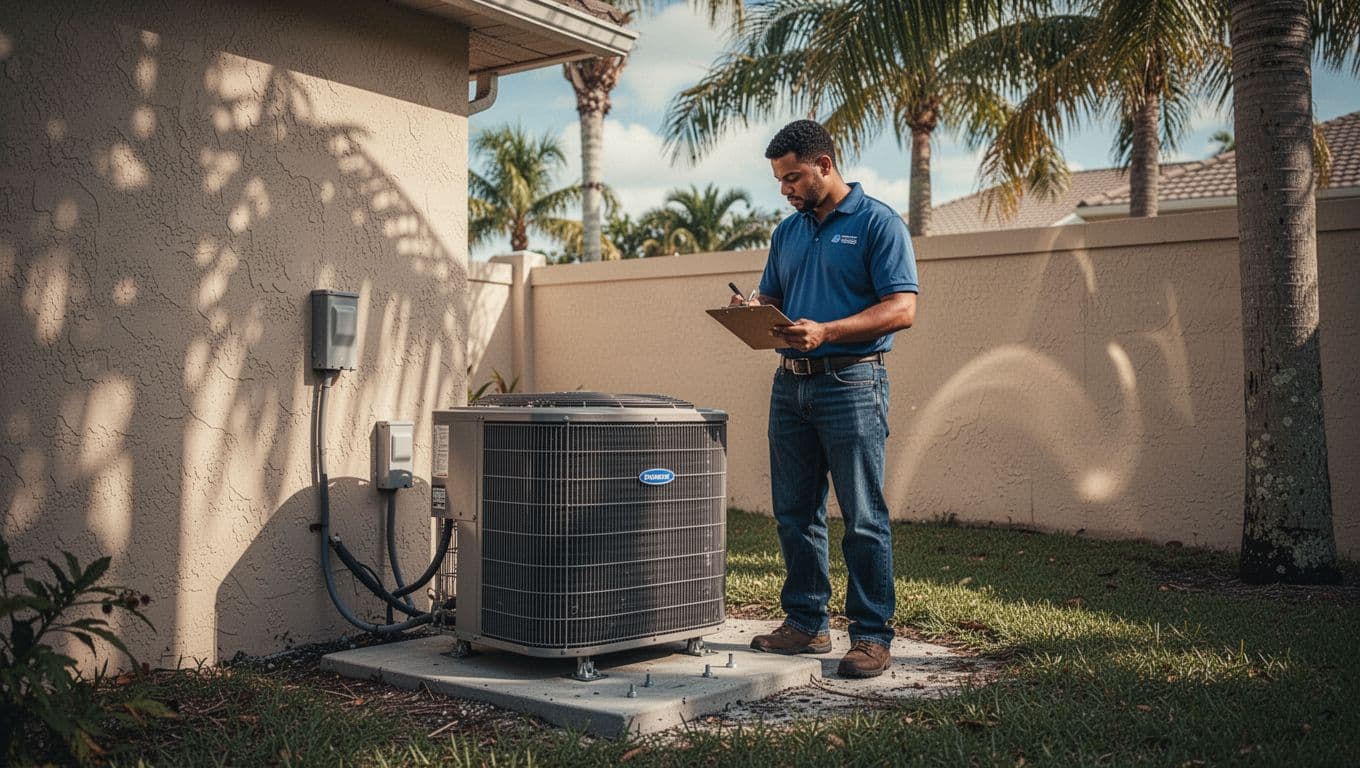
Schedule an inspection if the unit shifted, the pad settled, straps show corrosion, the property flooded, or the installation lacks clear anchoring. A qualified Florida HVAC professional can evaluate the condenser, pad, connections, cabinet, electrical disconnect, and refrigerant line set.
After a hurricane or tropical storm, don't operate equipment with exposed wiring, burning odors, repeated breaker trips, water around electrical parts, or visible structural damage. Stay clear and request service. HVAC technicians should handle electrical and refrigerant work.
Before a replacement or platform project, contact the city or county building department. Ask about the current Florida Building Code edition, local amendments, wind design requirements, flood-zone rules, permits, product approvals, and whether engineered plans are needed.
Southwest Florida homeowners can also review preparing your Cape Coral AC for hurricanes before storm season. If your system needs an anchoring inspection or has storm damage, Contact Us to schedule a service call.
The safest answer for your Florida condenser
Florida AC condenser tie-downs aren't a one-size-fits-all requirement. The current code may require an approved anchoring method, while local wind rules may call for stronger hardware, straps, engineered connections, or product-approved assemblies.
Flood-zone rules add another layer. Elevating the condenser above the required flood level may matter just as much as securing it against wind. The right solution must match the equipment, support, site, code edition, local amendments, and installation date.
When the answer isn't clear, don't rely on the appearance of a strap or the weight of a concrete pad. Confirm the requirements with your local building department and have a licensed Florida HVAC professional inspect the installation.