A Cape Coral AC breakdown rarely happens at a good time. The first thing most homeowners want to know is the price of the visit, not the price of the repair.
That matters, because the AC service call cost is only part of the bill. In 2026, a basic diagnostic visit in Cape Coral usually falls around $100 to $250 , while the repair can push the total much higher.
If you're trying to budget for a hot afternoon surprise, the breakdown below will help you separate the service fee from the real repair cost.
What a Cape Coral AC service call costs in 2026
The simplest way to read a service visit is this, the technician charges for the trip, then charges for any fix that follows. In Cape Coral, that first visit often covers travel, system testing, visual inspection, and a diagnosis of the problem.
Here is a quick way to compare common price ranges.
| Cost item | Typical 2026 range in Cape Coral | What it usually covers | When it rises |
|---|---|---|---|
| Diagnostic service call | $100 to $250 | Travel, inspection, testing, and diagnosis | After-hours, weekends, hard-to-reach equipment |
| Small repair | $150 to $600 | Parts and labor for common fixes | Refrigerant, electrical parts, or extra labor |
| Larger repair | $600+ | Major parts or more complex labor | Compressors, coils, or access issues |
For most homes, the diagnostic fee is the first line item. The repair quote is the one that decides the real cost. Some companies apply the diagnostic fee toward approved work, while others keep it separate.
A low service fee can still lead to a higher final bill if the repair needs parts, refrigerant, or emergency scheduling.
If you want a rough planning number, many Cape Coral homeowners can expect $150 to $250 for a basic AC visit , then more if the fix takes parts or extra labor. A simple capacitor swap may stay near the lower end. A refrigerant leak or a failing compressor will not.
What changes the price during a visit
AC systems in Southwest Florida work hard. Long cooling seasons, high humidity, and salt air all add wear. Because of that, two homes can have very different bills for what looks like the same problem.
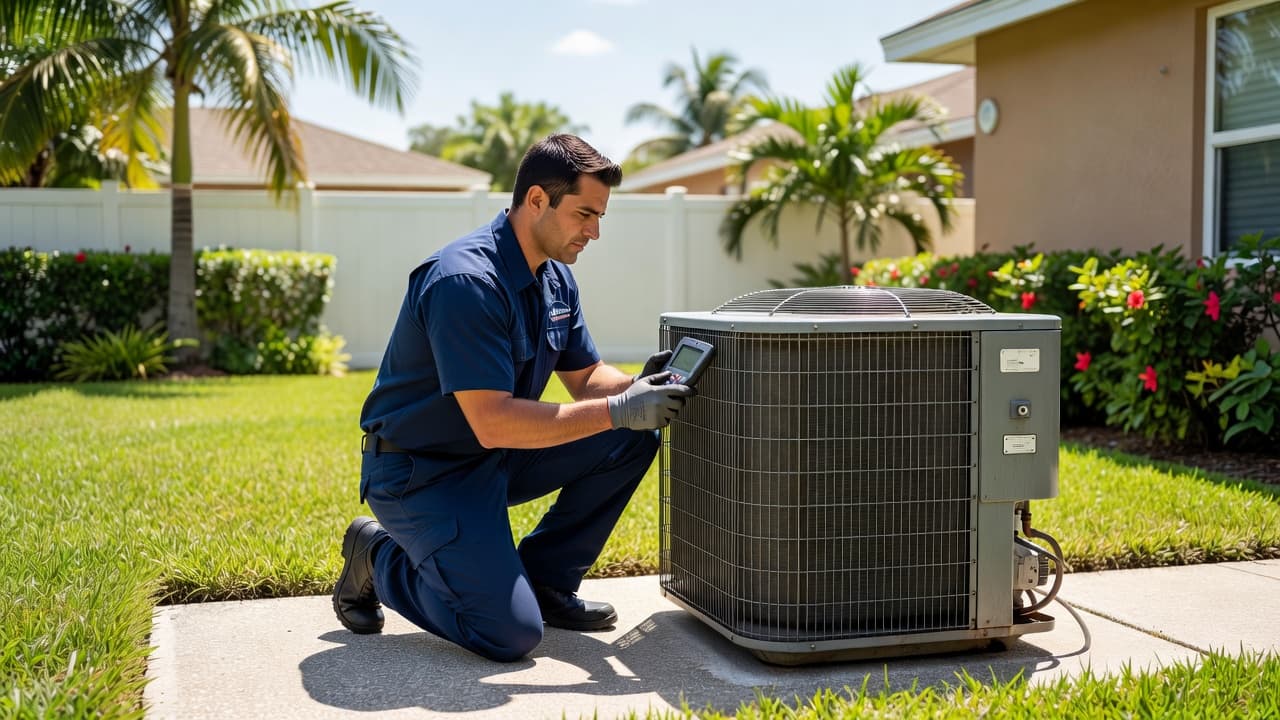
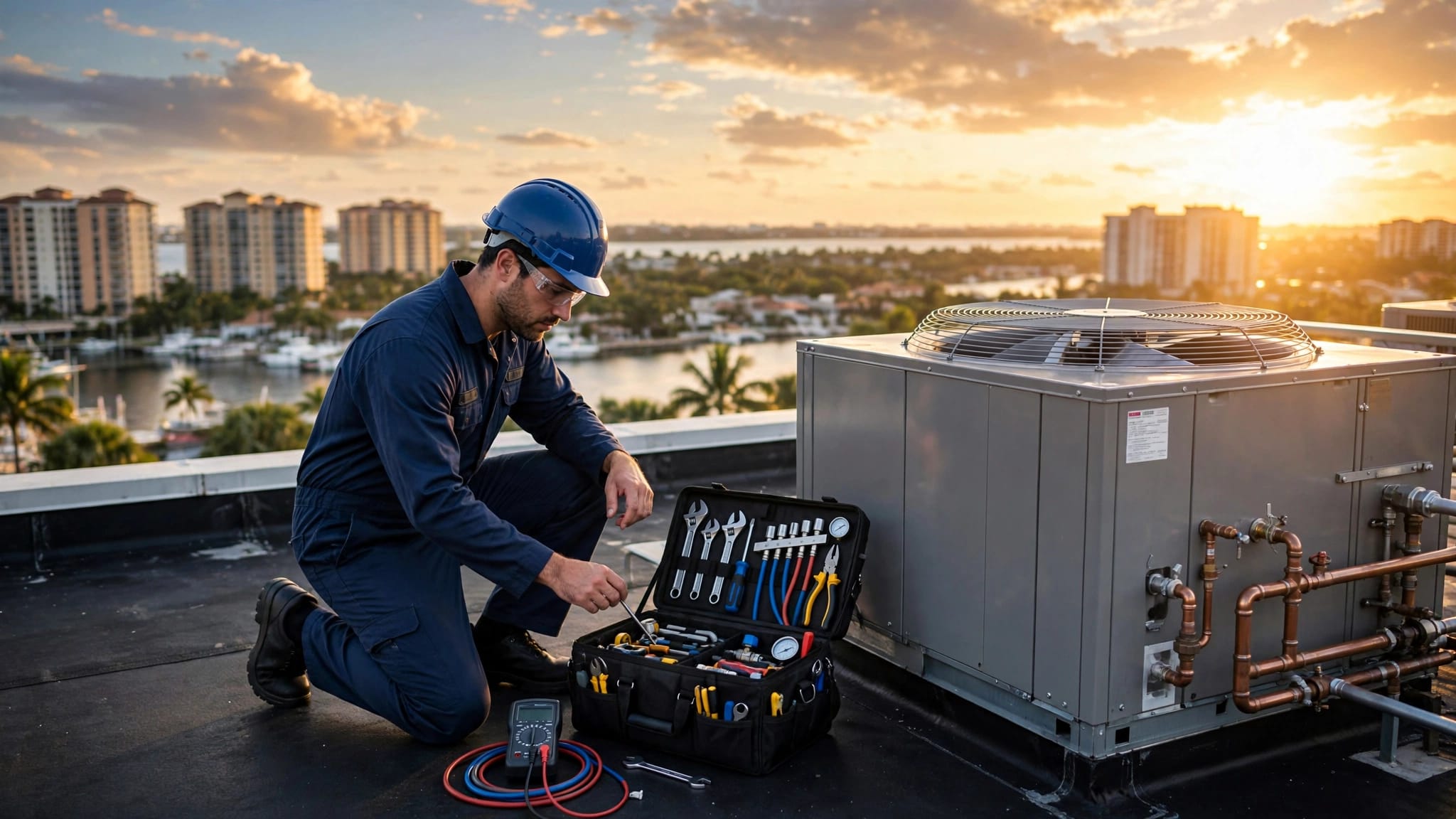
The price moves up or down based on the time, the system, and how easy it is to reach the problem. A roof unit costs more time than a ground-level unit. A closet air handler is easier to service than one tucked into a tight attic corner.
A few common factors matter most:
- Emergency scheduling usually costs more because the technician is coming out after hours, on a weekend, or on a holiday.
- Refrigerant issues raise the price because the technician has to find the leak, fix it, and recharge the system.
- Older systems often need extra time, since parts may be harder to match and one worn part can trigger another failure.
- Limited access can add labor if the unit sits in a cramped attic, a tight closet, or a difficult roof location.
- Maintenance history matters because dirty coils, clogged drains, and loose electrical parts make diagnosis slower and repairs more likely.
If your system has skipped tune-ups for a while, the visit can take longer. Small problems tend to stack up. That is why the final invoice can look very different from a simple service call fee.
The signs your air conditioner needs a tune-up often show up before the unit quits completely. Weak airflow, warm spots, and short cycling are common warning signs.
When a higher bill is normal, and when it should make you ask questions
A higher bill is not always a red flag. Sometimes it means the diagnosis found the real problem, and the repair needs a part that cannot be skipped. A bad fan motor, a leaking coil, or a weak compressor can all push costs beyond a basic service visit.
Refrigerant work is a good example. If your system is low, the tech should not only add refrigerant and leave. The leak needs to be found and handled first. Otherwise, the same problem comes back.
Humidity also plays a part. In Cape Coral, AC systems often run longer than homeowners expect. That extra runtime makes wear show up fast, especially on older equipment. If you have been dealing with repeated issues, the problem may not be a single bad part at all.
A service visit should still make sense to you. If the repair estimate climbs fast, ask what changed the total. The answer should be clear. Good estimates list labor, parts, refrigerant, and any added service charge in plain language.
How to compare AC repair estimates without getting lost in the details
A repair quote is easier to judge when every line item is clear. If the visit turns into a fix, a professional air conditioning repair estimate should show what you are paying for and why.
The best comparison points are simple:
- Ask whether the diagnostic fee is separate or included if you approve the repair.
- Check whether the quote lists parts and labor on their own.
- Ask how refrigerant is priced, since that can change the total fast.
- Find out whether the repair has a parts warranty, labor warranty, or both.
- Confirm whether the quote includes cleanup, disposal, or extra trip charges.
A clean quote is easier to compare than a vague one. If one estimate is much lower than the others, look at what it leaves out. Missing labor, missing refrigerant, or no warranty can make a cheap quote expensive later.
The same goes for older systems. If a technician says the repair is only a temporary fix, ask for the reason. A fair estimate should help you decide whether to repair now or plan for a replacement later.
When to call for service, and when maintenance is enough
Some AC problems can wait a day or two. Others should not. If the system blows warm air, trips the breaker, leaks water, or smells burnt, call right away. Those signs can point to electrical trouble, a blocked drain, or a failing component.
If the unit still cools but runs longer, makes new noises, or struggles in the afternoon, schedule service soon. That is often the stage where a smaller repair can still stay manageable.
For problems that feel minor, a maintenance visit may be enough. That is especially true if the system has not had regular cleaning or inspection. Homeowners who stay ahead of wear usually spend less than homeowners who wait for a full breakdown.
If you need help fast in Cape Coral, Contact Us to schedule a service call. A quick diagnostic visit can keep a small issue from turning into a bigger repair.
Conclusion
The right budget for an AC visit in Cape Coral starts with the diagnostic fee, then grows based on the repair itself. In 2026, most homeowners should plan on $100 to $250 for the service call , with total repair costs rising when parts, refrigerant, emergency timing, or system age come into play.
The smartest move is to ask clear questions before anyone starts work. A good estimate shows what failed, what it takes to fix it, and what the total will be. That kind of clarity makes a hot-day problem much easier to handle.