Floodwater can damage an air conditioner before it reaches your living space. When stormwater rises around your house, AC unit flood protection can reduce damage, but no raised pad or barrier guarantees that equipment will survive a major flood.
Good AC unit flood protection starts before a storm warning. You can plan a safe power shutoff, ask a licensed HVAC contractor about elevation and anchoring, and document your equipment before heavy rain arrives. Start by checking which parts of your cooling system face the greatest risk.
How AC unit flood protection starts before a storm
Flood preparation works best when the ground is dry and contractors have time to assess the property. A quick inspection can reveal low areas, drainage problems, and electrical components that need attention.
Know which HVAC parts are at risk
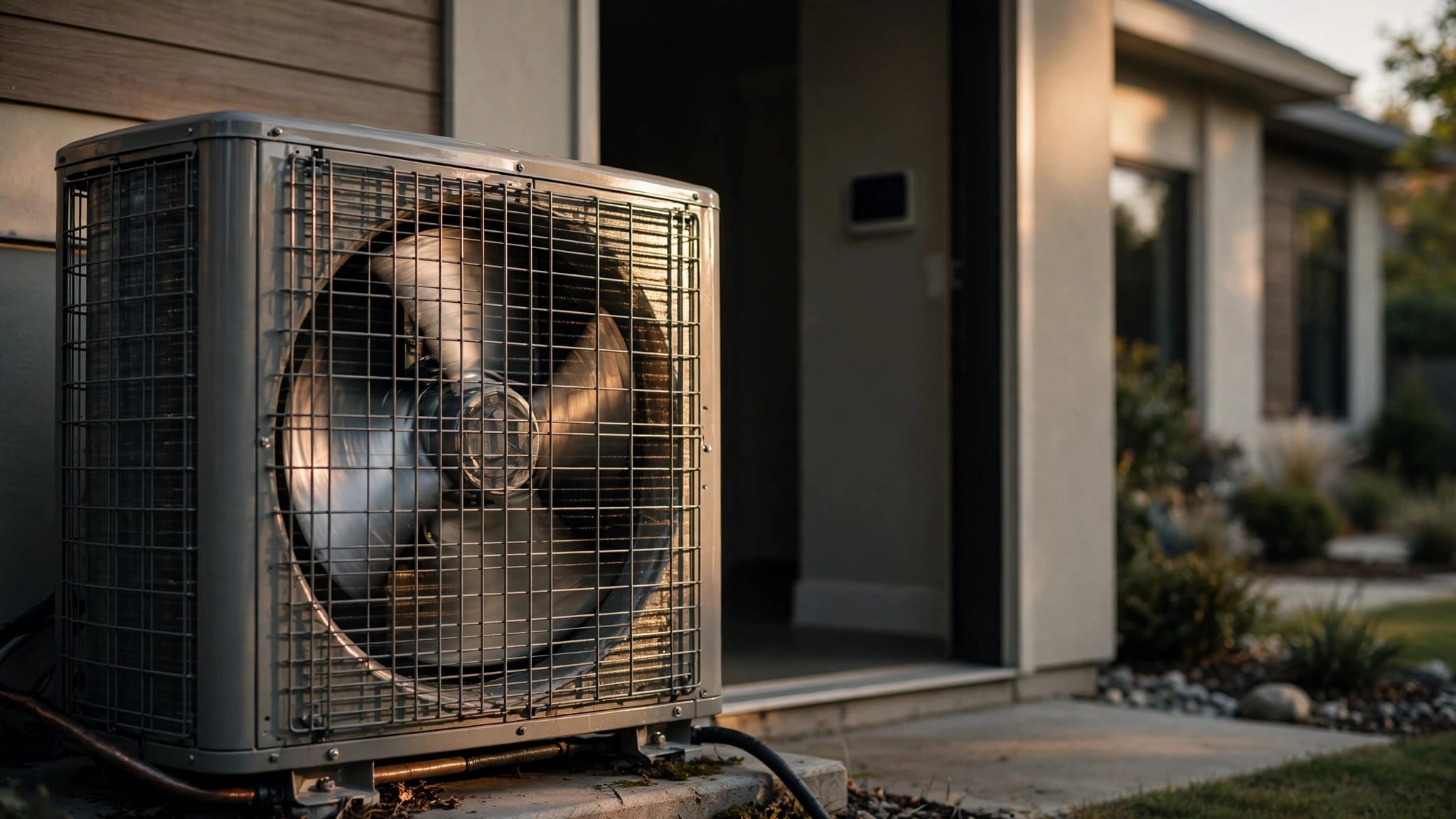
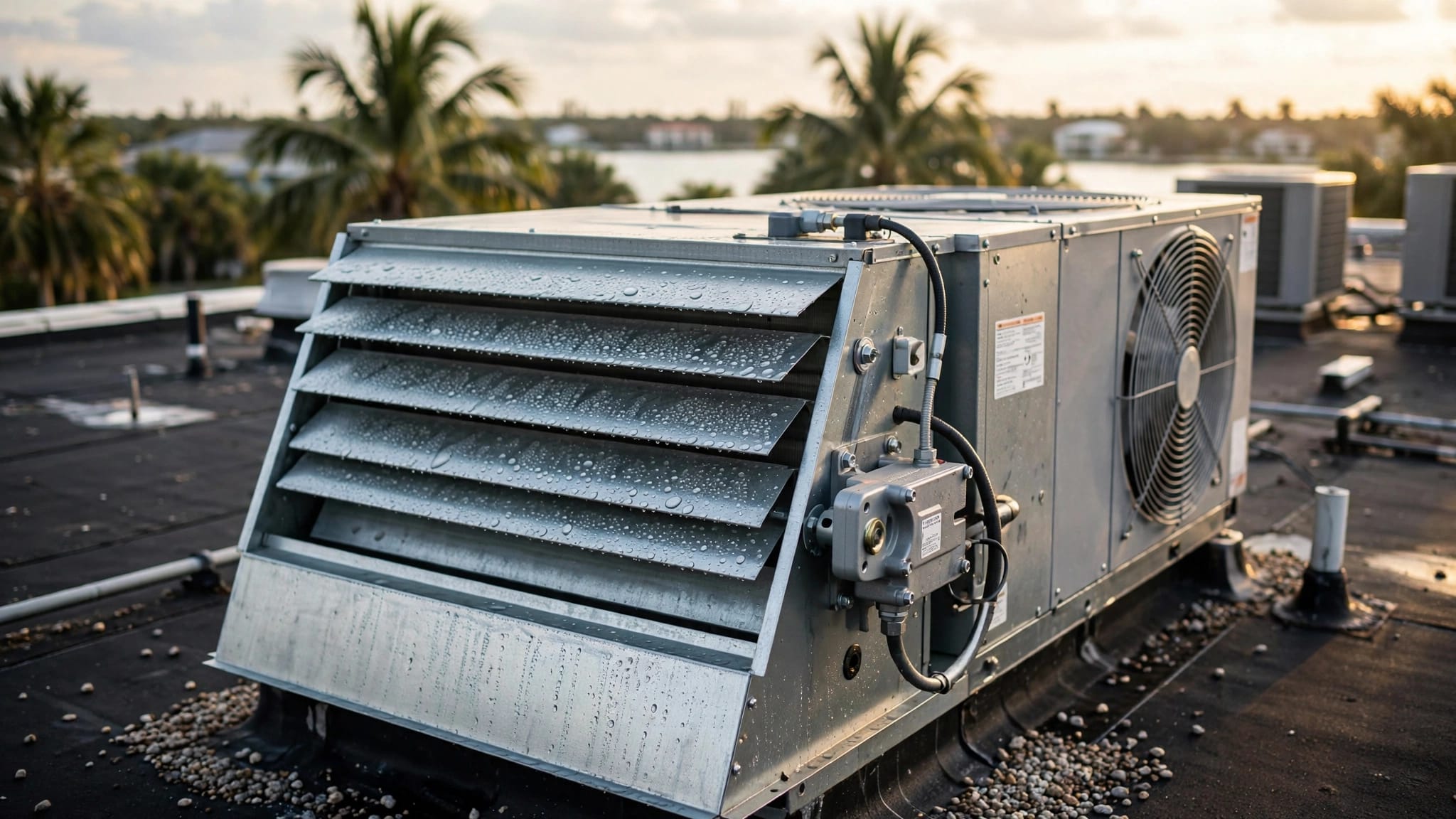
The outdoor condenser contains electrical controls, a compressor, a fan motor, and other components that can suffer serious damage after contact with floodwater. Mud, saltwater, sewage, and debris create additional problems even when the unit looks intact after the water disappears.
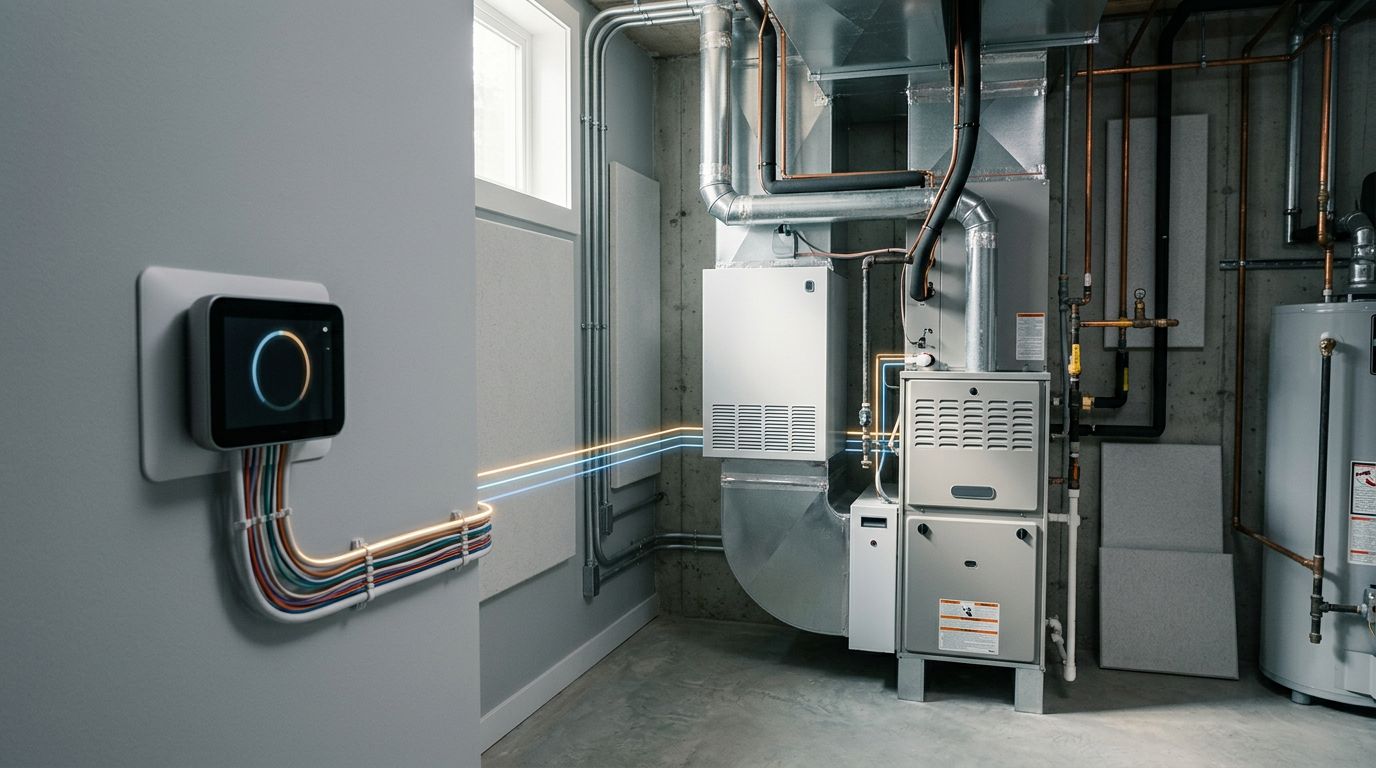
The indoor air handler also needs attention. If water enters the home, it may affect the air handler, thermostat, ductwork, insulation, or nearby electrical equipment. A contaminated system can spread odors and particles through the home when it runs.
Look beyond the condenser itself. Check the equipment pad, refrigerant lines, electrical conduit, disconnect, and nearby drainage path. Damage to any of these parts can affect safety and system performance.
Inspect the site without touching the equipment
Walk around the property during dry weather and identify where water collects first. Note whether the condenser sits below the surrounding grade, near a drainage swale, or beside a door where runoff may enter the home.
Take clear photos of the unit, pad, disconnect, and line set. Record the model and serial numbers if they are easy to access without opening the equipment. These records can help with future maintenance and insurance documentation.
Don't move the condenser, raise it with household tools, or build a structure around it without professional guidance. The unit needs proper support, airflow, drainage, service access, and secure connections.
Raise and anchor the outdoor condenser
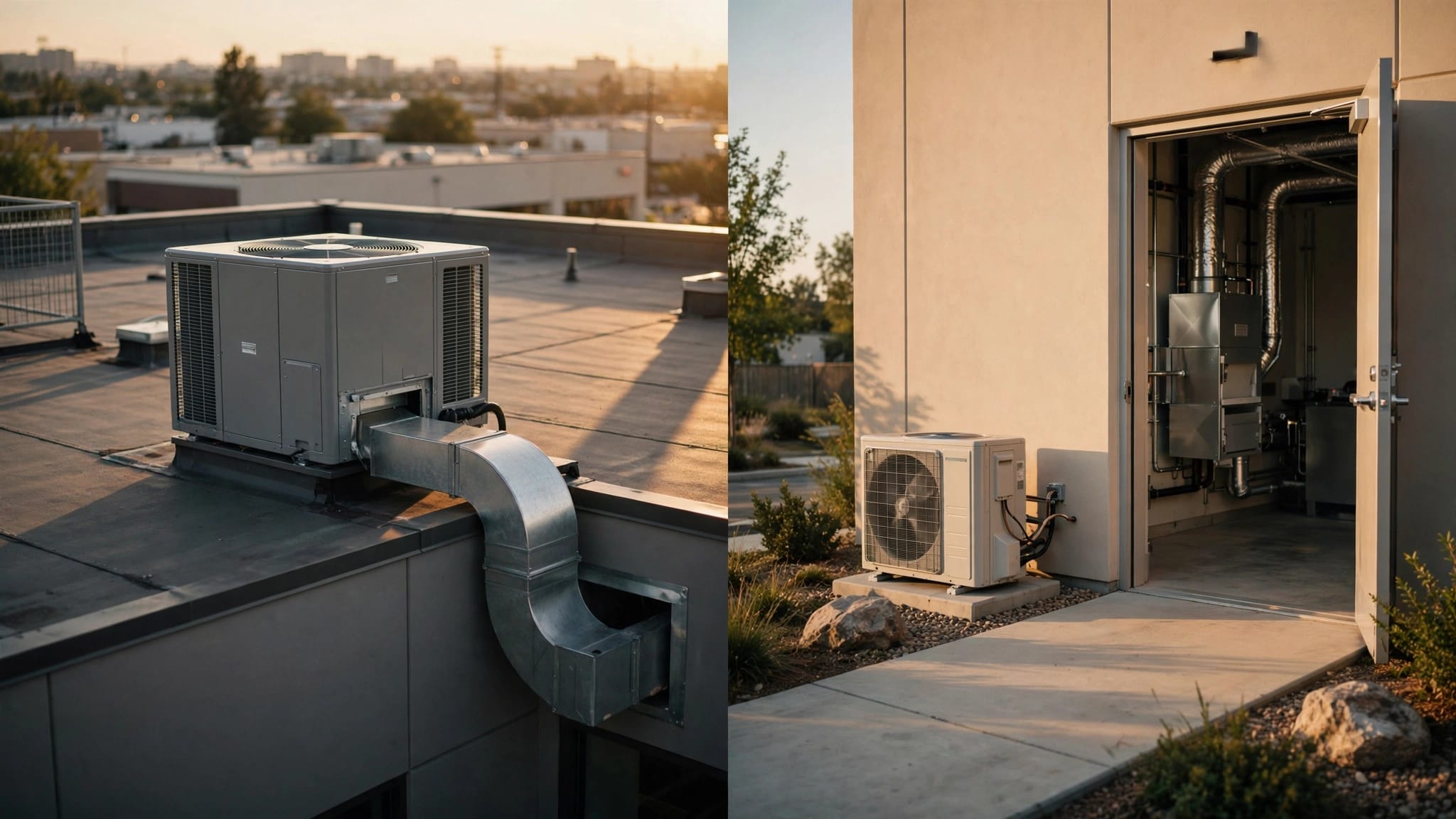
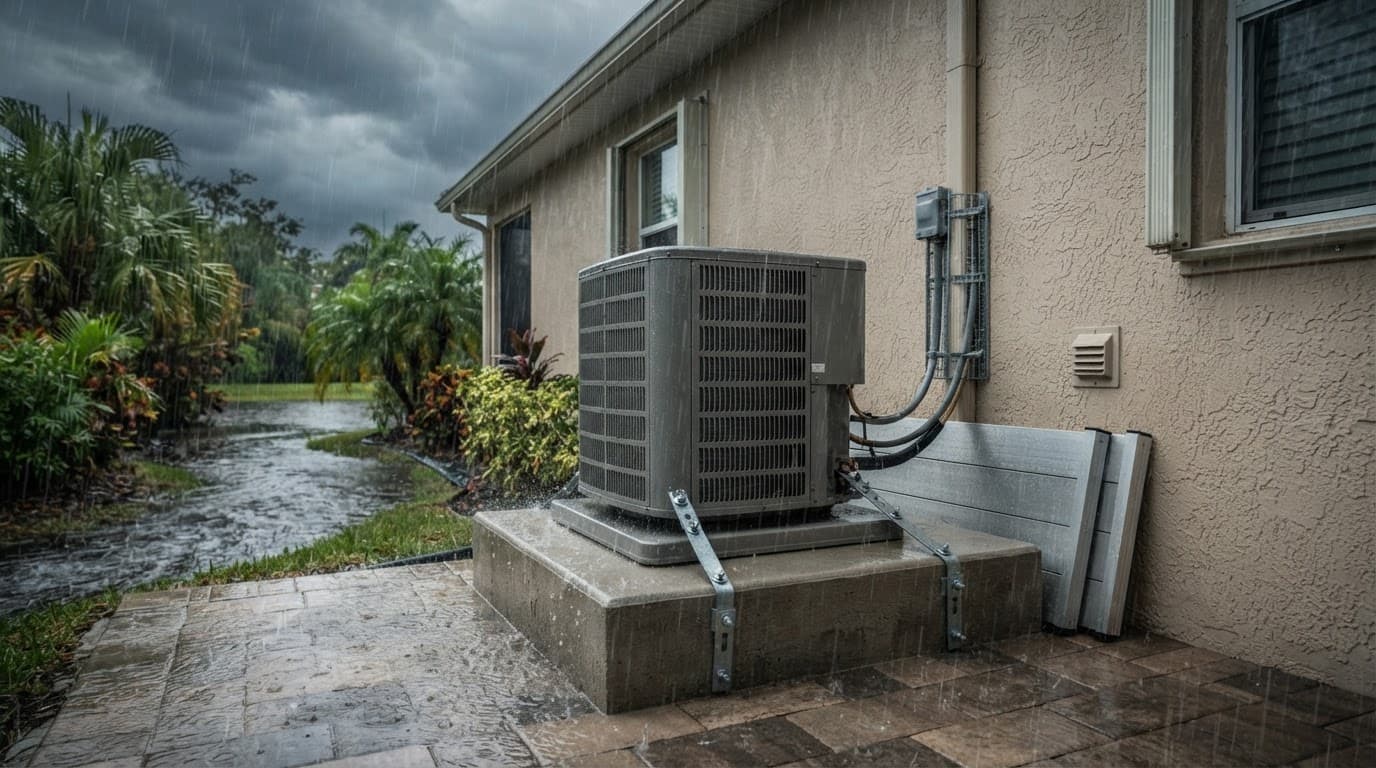
A properly designed elevated platform can reduce the chance that ordinary stormwater reaches the outdoor unit. However, the right height and construction depend on the home's location, flood risk, soil, equipment type, and local requirements.
Elevation depends on local rules
A licensed HVAC contractor can review the equipment location and explain whether elevation is practical. A local permitting office may also have requirements tied to flood zones, finished floor elevations, setbacks, mechanical codes, electrical codes, and equipment access.
The platform must support the condenser without stressing the refrigerant piping or electrical connections. It also needs enough room for a technician to inspect and service the system. Raising a unit too far without adjusting those connections can create new hazards.
In coastal areas, saltwater, wind, erosion, and floating debris can still damage equipment above shallow floodwater. A higher platform lowers exposure in some situations, but it doesn't create complete flood protection.
Anchoring limits movement
Fast-moving water can shift an unsecured condenser or undermine the pad beneath it. Proper anchoring connects the equipment and support structure to a stable base designed for the local soil and expected forces.
Ask the contractor how the proposed pad and anchors will handle wind and flood conditions. The answer may involve a reinforced concrete support, engineered brackets, corrosion-resistant hardware, or another approved design.
Never lift or reposition the condenser yourself. Even a unit that appears light enough to move can damage refrigerant lines, wiring, or the pad. A contractor can plan the work without creating a leak or electrical hazard.
Use barriers and protect the electrical disconnect
Barriers can redirect shallow runoff, but they need careful placement. A barrier that traps water around the condenser may increase damage instead of reducing it.
Choose barriers that fit the property
Flood panels, water-filled barriers, sandbags, and other products have different limits. Some work for short-term surface runoff, while others require specific installation and storage.
Keep barriers away from the condenser's required airflow and service space. Don't wrap the unit in plastic, stack materials against the cabinet, or block the path that allows water to drain away.
A contractor can help determine whether a barrier makes sense for the site. Local flood conditions may exceed the product's height or strength rating. In addition, temporary barriers may not protect against wave action, debris, or water entering through another part of the property.
Plan the disconnect before water arrives
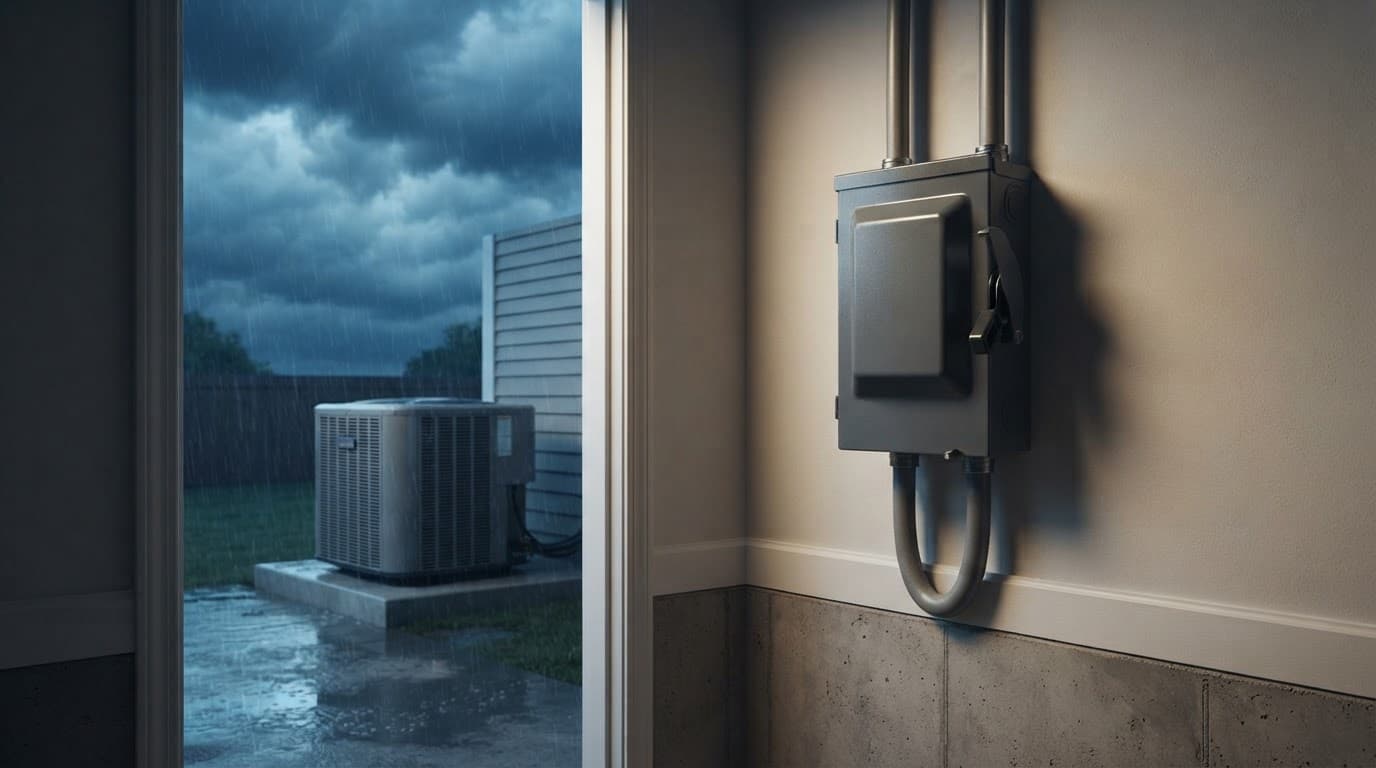
The outdoor disconnect and wiring need a safe location that meets local electrical requirements. Ask a licensed electrician whether the disconnect, conduit, panel, and related wiring sit above the likely water level and remain accessible for service.
Moving or replacing an electrical disconnect is not a casual home project. The work may require permits, approved materials, proper grounding, and coordination with the HVAC contractor.
An elevated disconnect does not make a flooded condenser safe. It only helps reduce electrical exposure in the disconnect itself. Any equipment touched by water still needs professional evaluation before power returns.
What homeowners should never do during flooding
Active flooding creates electrical, structural, and contamination hazards. Keep people and pets away from the condenser, electrical panels, and any water near utility equipment.
Homeowners should never:
- Walk through standing water to reach an AC disconnect, breaker, thermostat, or outdoor unit.
- Touch a flooded panel, wet conduit, downed wire, or electrical equipment that may have been energized.
- Turn on the air conditioner after water reaches the condenser, even if the cabinet looks dry.
- Move, open, hose off, clean, or dry submerged HVAC equipment without professional approval.
- Place a generator indoors, in a garage, or near doors and windows while trying to power the home.
- Use fans or heaters to dry a flooded condenser, air handler, wall, or duct system.
- Remove damaged equipment before speaking with the insurer unless an immediate safety hazard requires removal.
Before water reaches the equipment, you may turn the system off at a dry, accessible control if doing so doesn't require entering water. Once flooding begins around the unit or panel, stay away and follow local emergency instructions.
If you see sparks, smoke, a burning odor, damaged utility lines, or water near electrical equipment, leave the area and contact the appropriate emergency service or utility provider.
After floodwater recedes, don't restart the AC
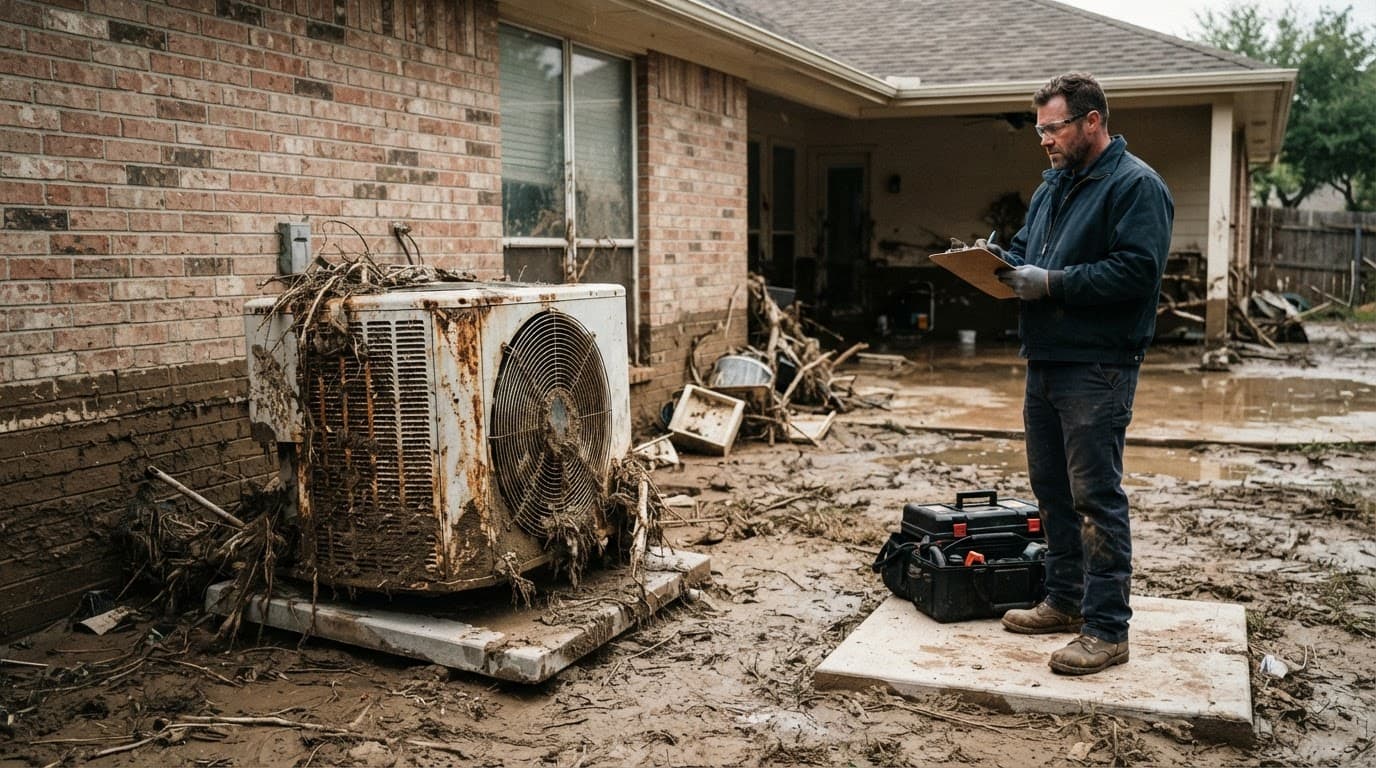
Receding water does not mean the system is safe. Moisture can remain inside electrical components, motors, insulation, conduits, and wall cavities. Mud and contaminants can also hide beneath panels or inside the equipment base.
Wait for HVAC and electrical approval
If floodwater touched the condenser, disconnect, wiring, pad, air handler, or ductwork, keep the system off. Don't test it by switching the breaker, changing the thermostat, or briefly starting the fan.
An electrician should evaluate wet panels, disconnects, breakers, wiring, and other electrical components. An HVAC contractor can inspect the condenser, compressor, fan motor, controls, refrigerant connections, coil, drain system, thermostat, and indoor equipment.
Neither visual inspection nor a day of sunny weather proves that submerged equipment is safe. A professional may recommend repair, replacement, or additional testing based on the water level, contamination, equipment condition, and applicable safety requirements.
Document damage for the insurer
Take photos and video from a dry, stable location. Capture the waterline, debris, shifted pad, damaged wiring, barriers, and equipment condition without touching anything.
Write down the approximate date, duration, and depth of flooding. Keep receipts for emergency services and note the system's model, serial number, age, and prior maintenance records if those details are available.
Contact your insurance carrier before disposing of damaged equipment when possible. Standard homeowners insurance and flood insurance can handle water damage differently, so ask which policy applies and what documentation the adjuster needs.
Know when to call an HVAC contractor, electrician, or insurer
Flood response often involves more than one professional. Calling the right person first can prevent unsafe testing and protect your claim.
Call an HVAC contractor for equipment and ductwork
Contact an HVAC contractor when water reaches the condenser, the equipment pad shifts, debris enters the cabinet, or the system stops working after a storm. The technician can inspect the complete system and explain whether repair or replacement is appropriate.
For homeowners in Cape Coral and nearby Southwest Florida communities, 24/7 emergency HVAC service can help address urgent cooling problems after a storm. Don't ask a technician to restart submerged equipment before the electrical inspection is complete.
If water entered the home, mention any musty odors, wet insulation, damaged ductwork, or concerns about the air handler. Cape Coral mold testing may help identify indoor air-quality concerns after water damage.
Call an electrician for wet power equipment
An electrician should evaluate a flooded main panel, subpanel, disconnect, conduit, wiring, breaker, or generator connection. Call before touching or resetting any component that may have been exposed to water.
An HVAC technician can inspect the cooling equipment, but electrical safety may require a separate licensed professional. In some cases, the two contractors need to coordinate before the system can return to service.
Call the insurer before major disposal or replacement
Notify the insurance carrier promptly and ask whether an adjuster needs to inspect the equipment. Share photographs, service estimates, receipts, and any instructions you receive from contractors.
If the system cannot be safely repaired, request a written evaluation and replacement estimate. A new system may also need an elevated pad, revised anchoring, or a relocated disconnect. Cape Coral air conditioning installation can help homeowners plan replacement work that accounts for the property's flood exposure.
For help arranging a safe inspection or service visit, Contact Us with Back Bay Heating & Cooling.
Build a flood plan before the next storm
The strongest AC unit flood protection plan combines a professional site review, suitable elevation, secure anchoring, careful barrier placement, and a safe electrical shutoff plan. Local floodplain, building, mechanical, and electrical requirements may affect every part of the work.
When water reaches HVAC equipment, keep the system off and stay clear of wet electrical components. Document the damage, contact your insurer, and wait for qualified HVAC and electrical professionals to approve the next step. A raised condenser can lower risk, but safe decisions matter more than a quick restart.