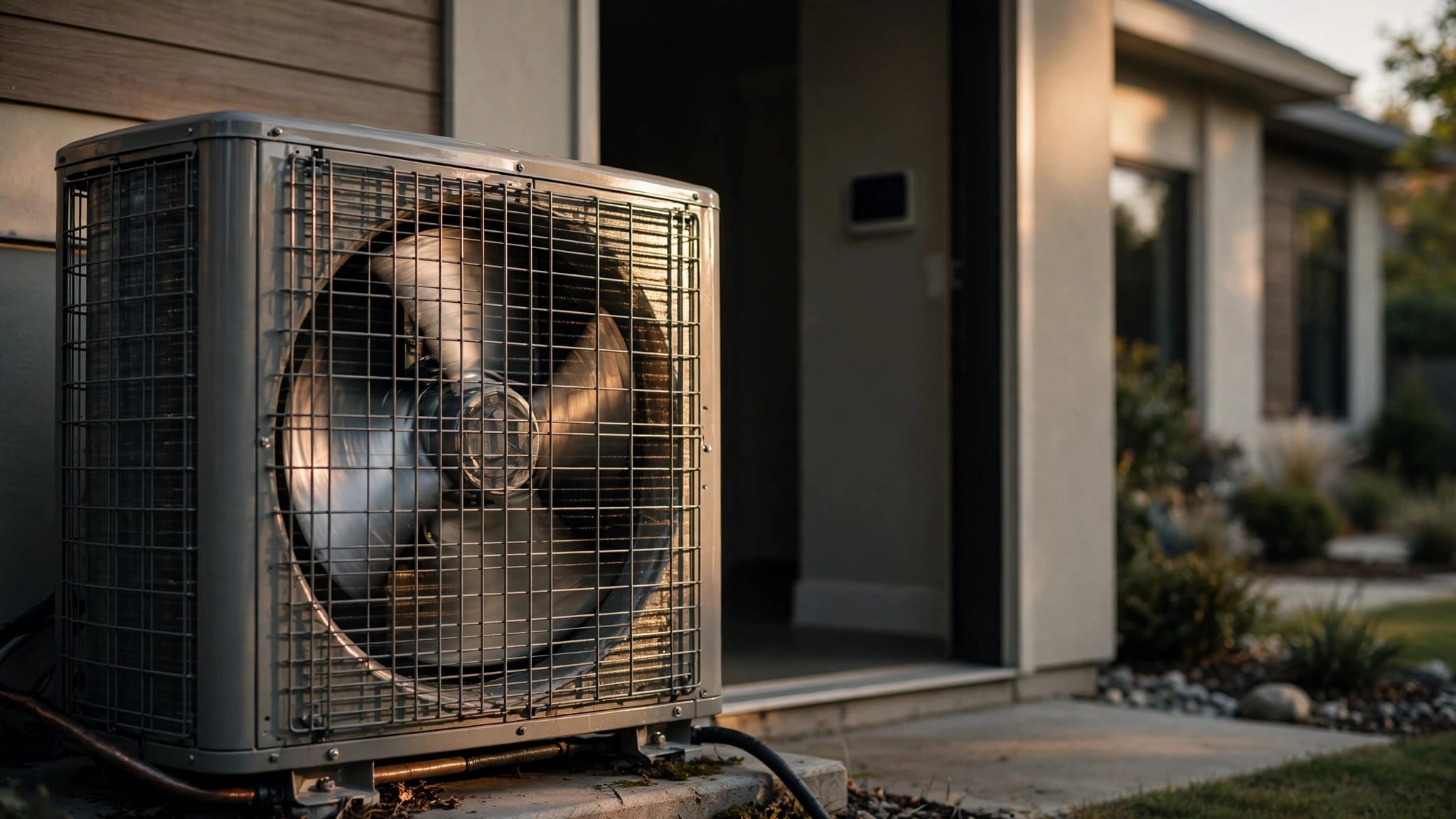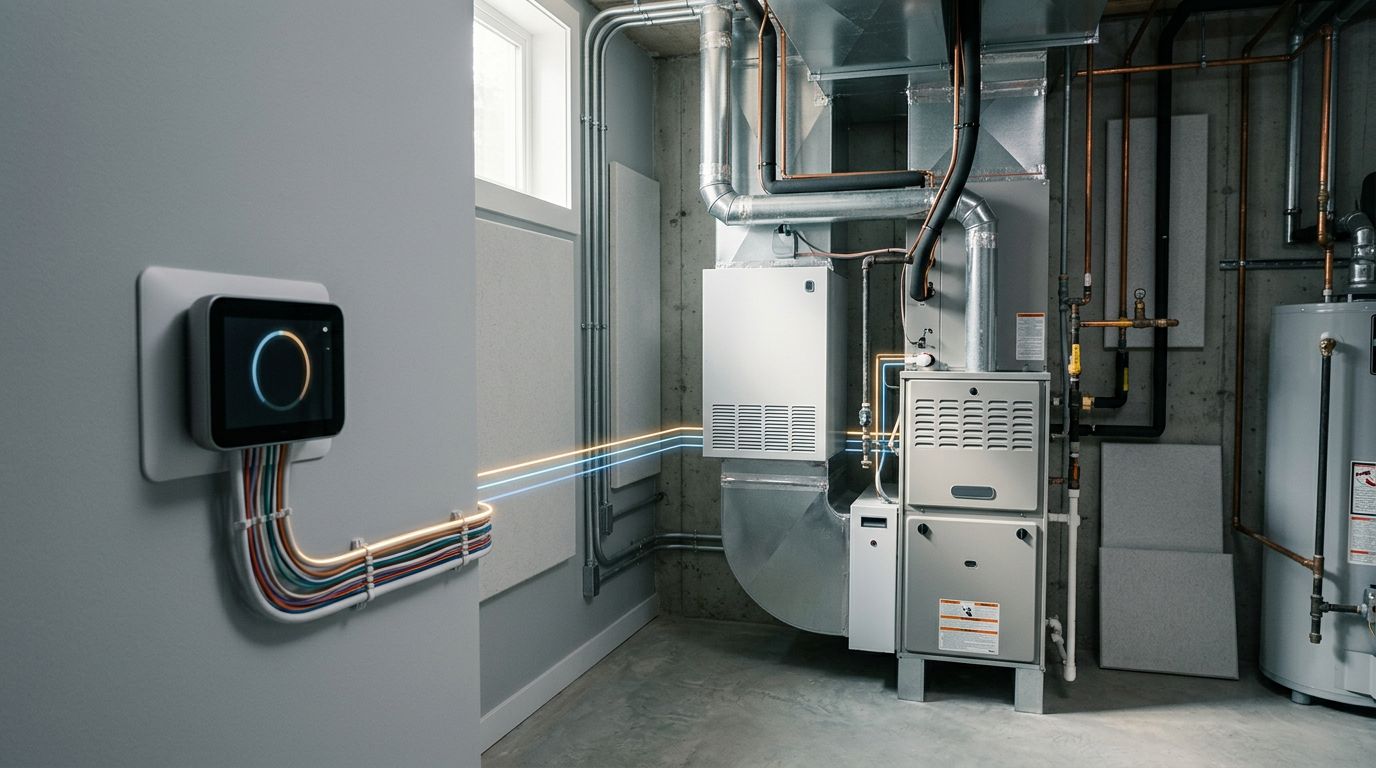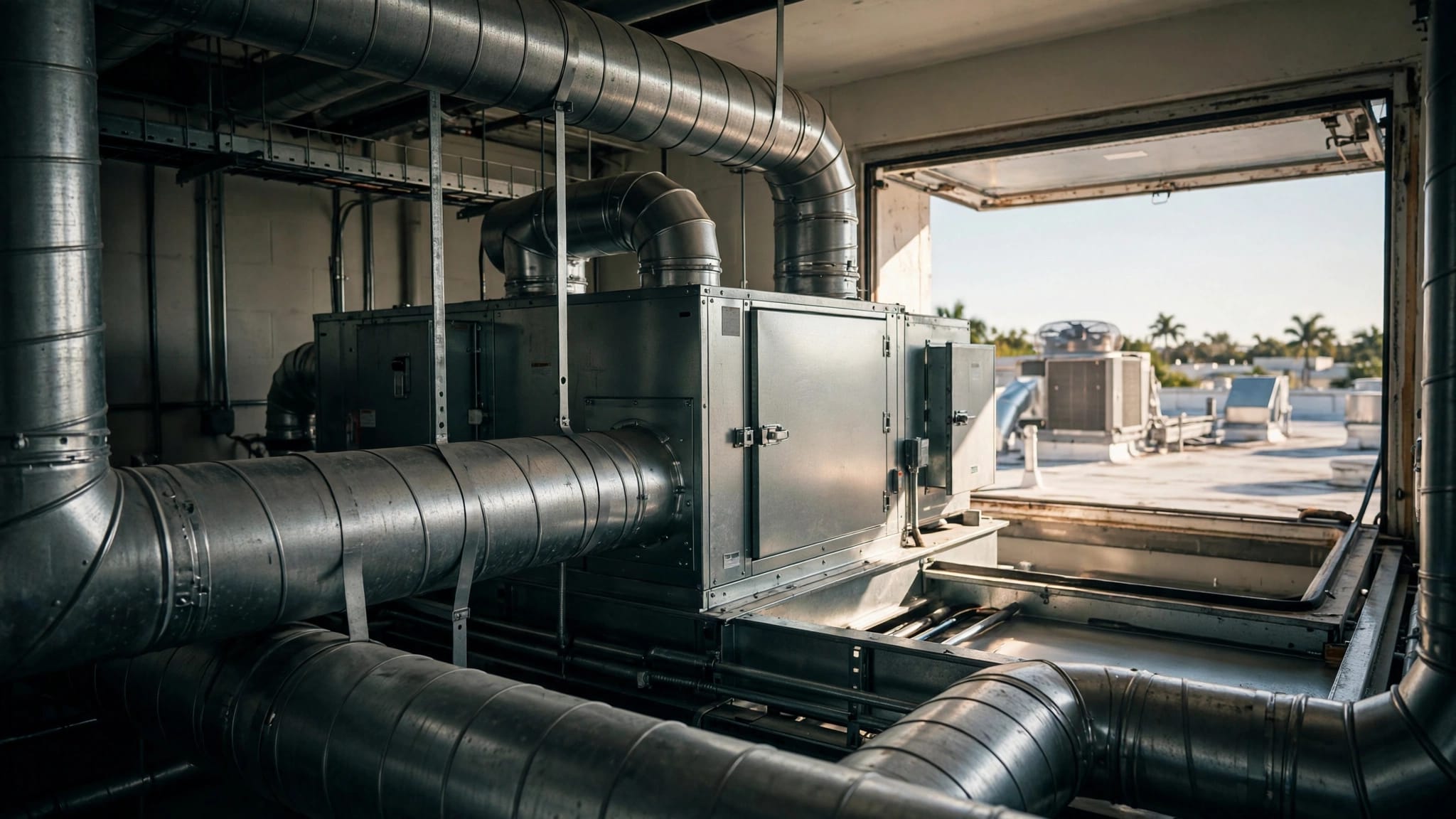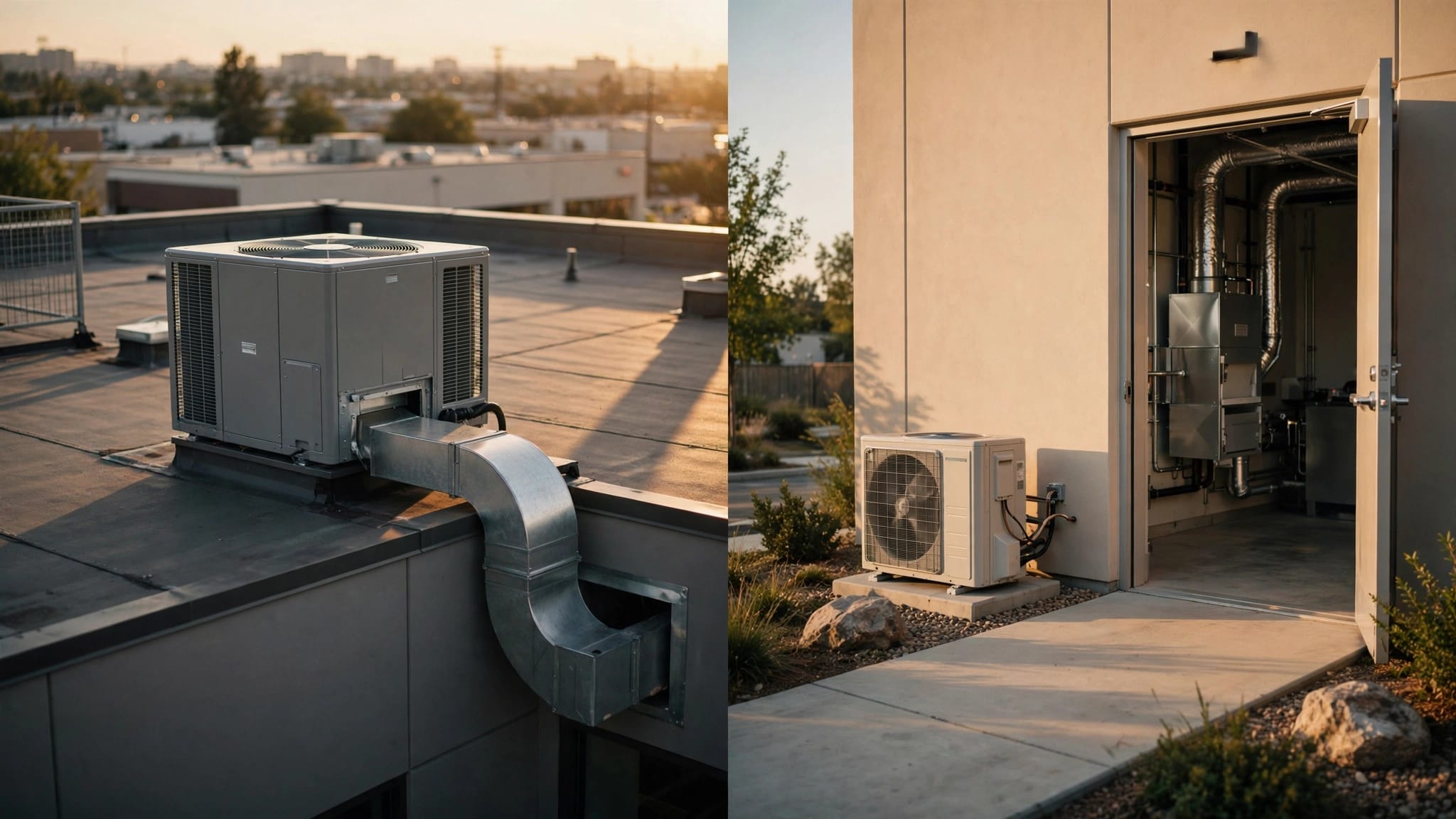
Yes. An air conditioner that is too large can cool your Cape Coral home quickly while leaving too much moisture in the air. That oversized AC humidity problem can make a 74-degree room feel clammy, sticky, and less comfortable than it should.
However, equipment size isn't the only possible reason for indoor humidity. Duct leaks, drainage trouble, thermostat settings, and outdoor air leaks can all play a part. Start by understanding what your AC should do during a normal cooling cycle.
How Oversized AC Humidity Problems Develop
Your air conditioner has two jobs: lower the air temperature and remove water vapor. Both happen at the indoor evaporator coil, but moisture removal needs time.
Cooling happens before drying
When warm, humid indoor air moves across a cold coil, moisture condenses on the coil and drains away. A properly sized system often runs long enough for this process to make a noticeable difference.
An oversized unit reaches the thermostat setting too fast. It shuts off before it has spent enough time pulling moisture from the air. Then the house warms slightly, the system starts again, and the short cycle repeats.
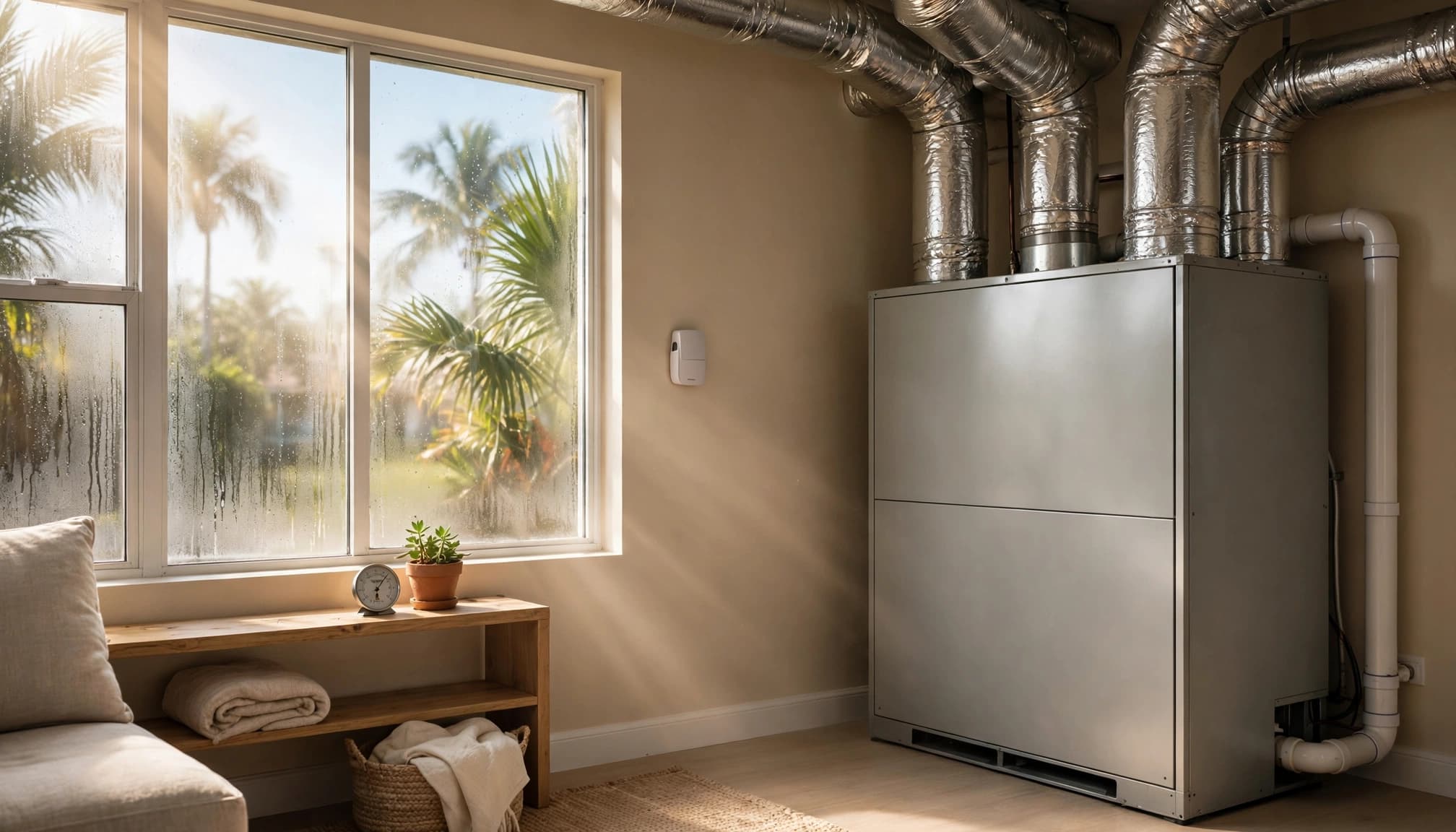
Short cycling creates uneven comfort
Frequent starts and stops are called short cycling. Besides contributing to oversized AC humidity, short cycling can leave rooms at different temperatures and put added wear on system parts.
You may notice the AC turns on often but runs for only a few minutes. Bedrooms might feel cool while the living room feels damp. Your thermostat can say the temperature is right, yet the air still feels heavy because temperature and relative humidity are separate measurements.
A thermostat confirms the air temperature near its location. It doesn't guarantee that your whole home is dry and comfortable.
High Humidity Has Other Causes Too
A large system is one explanation, but a full diagnosis should look at the home and the equipment together. In Cape Coral, outdoor moisture is high for much of the year, so small airflow or drainage problems can show up indoors fast.
Duct leaks and outside air intrusion
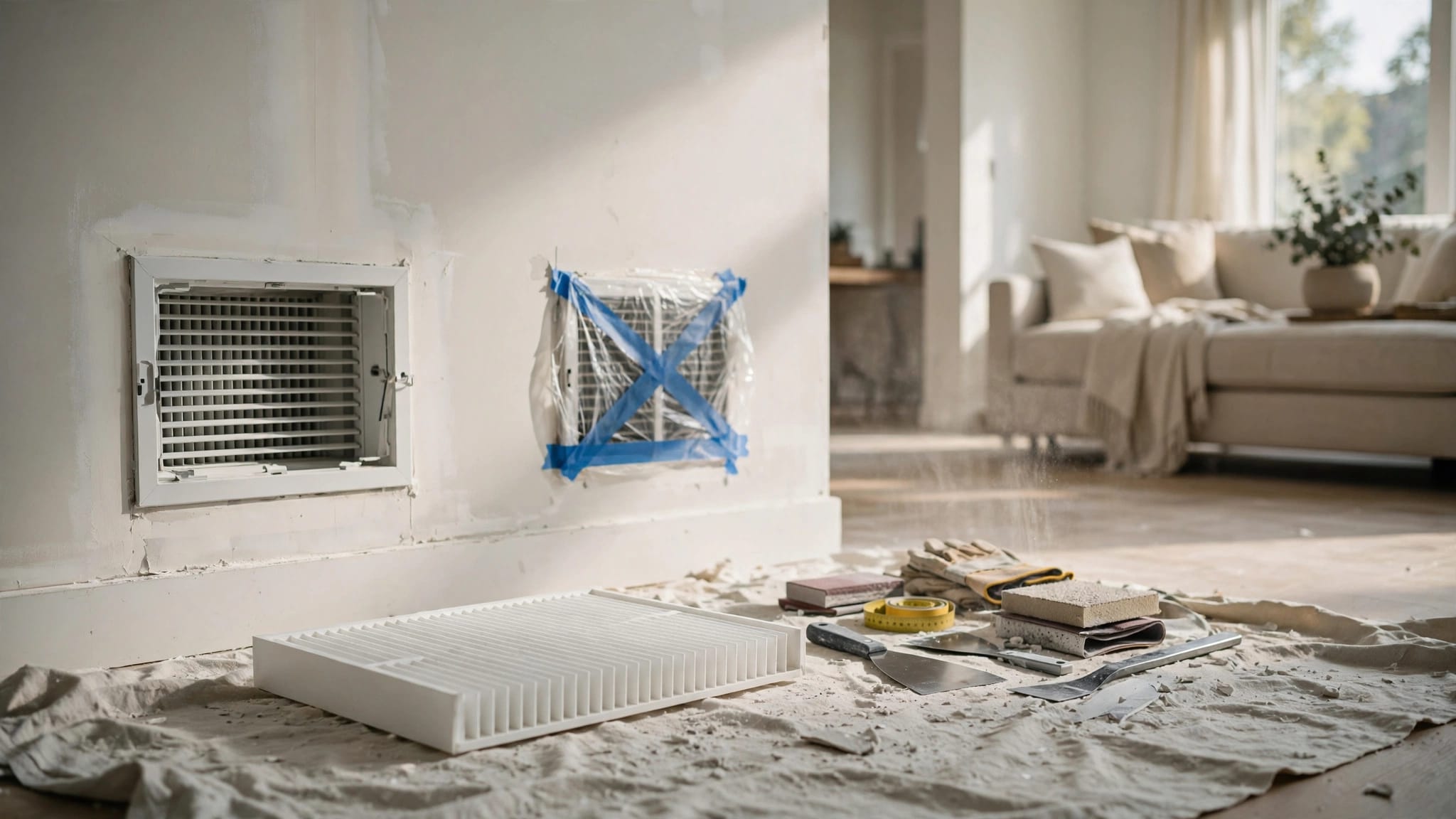
Leaky return ducts can pull humid air from an attic, garage, or other unconditioned space. Supply duct leaks waste cooled air before it reaches the rooms you use. Poorly connected or damaged ducts can also cause weak airflow and uneven cooling.
If humidity rises in one part of the house, or certain rooms never feel comfortable, ask about ductwork repair and replacement. Sealing and repairing ducts requires the right equipment and access, so it isn't a job for tape and guesswork.
Drainage, coil, and ventilation issues
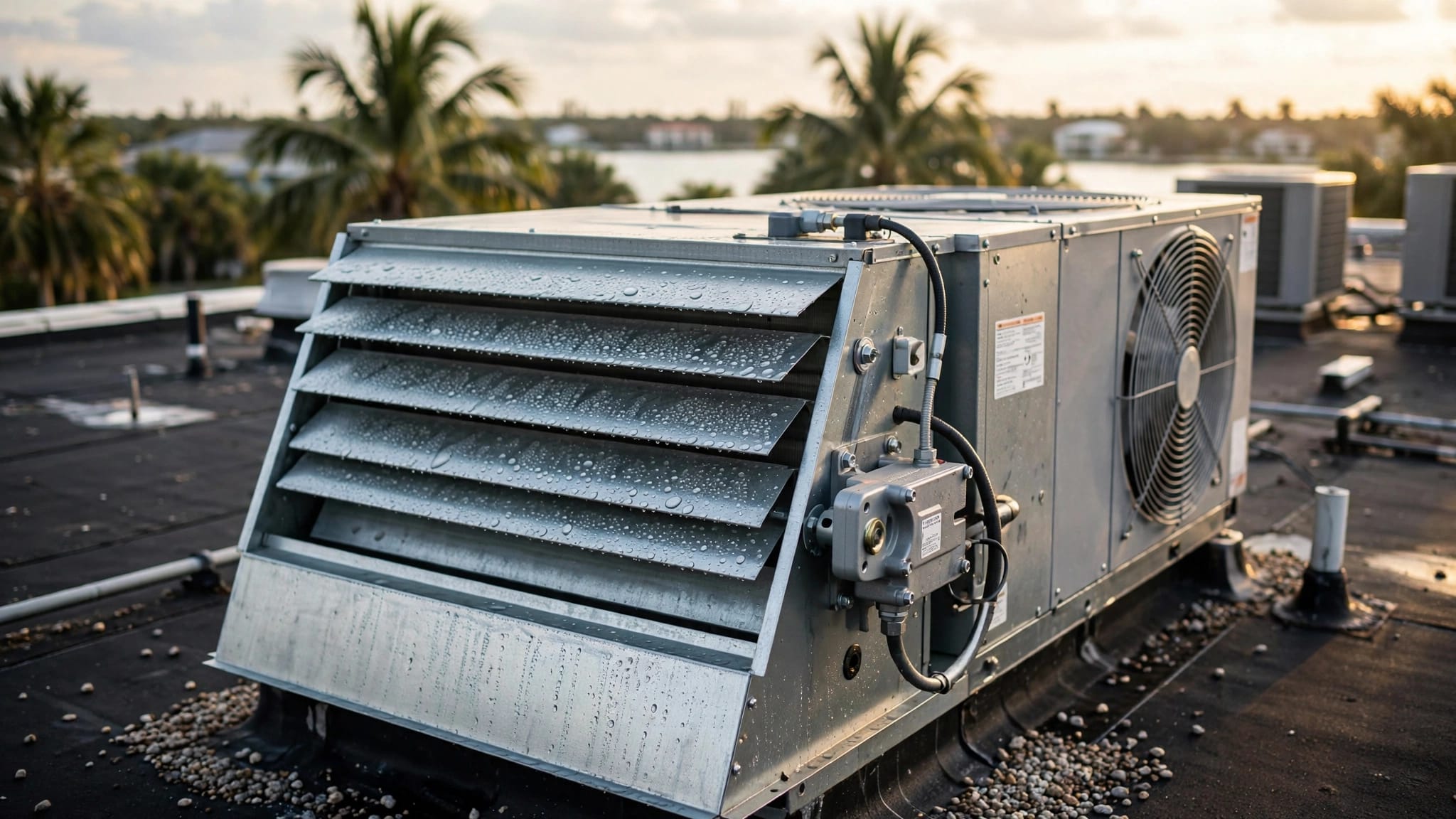
A clogged condensate drain can interfere with the normal removal of water from the system. A dirty evaporator coil, restricted filter, or blower problem can also reduce airflow across that coil.
Bathroom exhaust fans should vent outdoors, not into an attic. Exhaust fans also need to work during showers and for a short time afterward. Kitchen moisture, open doors, and poorly sealed windows can add humidity faster than the AC can remove it.
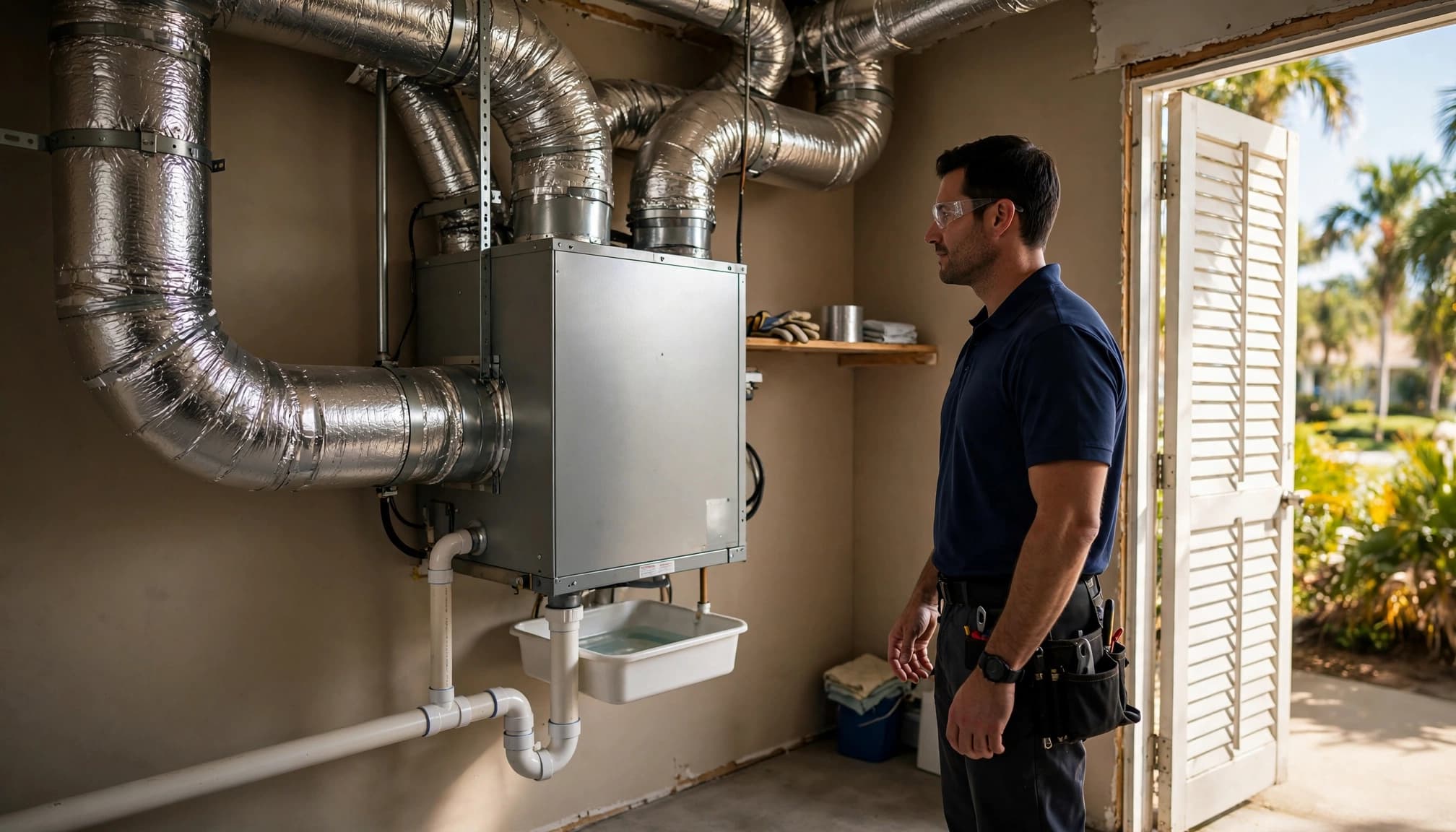
Safe Checks Cape Coral Homeowners Can Make
You don't need to touch electrical panels, refrigerant lines, or internal equipment parts to spot useful clues. A basic indoor hygrometer can help you track relative humidity in different rooms.
Look for these signs over several days:
- The AC starts and stops repeatedly during a hot afternoon, even though the home never feels dry.
- Relative humidity stays above about 60 percent while the system is cooling.
- Windows show condensation, closets smell musty, or towels take an unusually long time to dry.
- The air filter looks dirty or bent, which can restrict the airflow the coil needs.
- Water appears near the indoor unit, ceiling, or drain outlet.
Set the thermostat fan to AUTO , rather than ON. With the fan set to ON, it may continue moving air after the cooling cycle ends. That airflow can return some moisture from the wet coil to your living space.
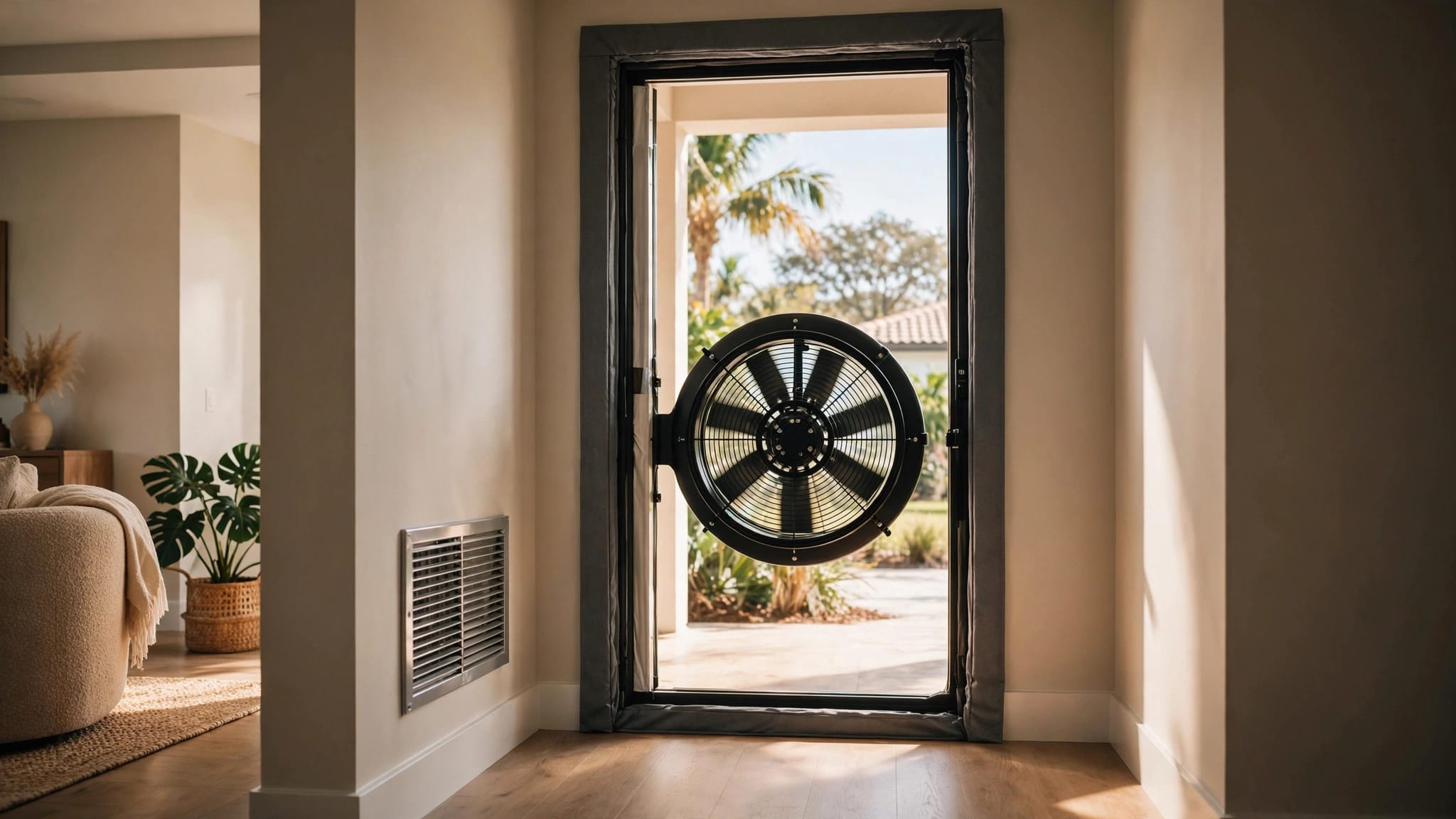
Also, keep supply registers open and clear of furniture or rugs. Check that exterior doors close tightly. These small checks can reveal a pattern without creating a safety risk.
Proper Sizing, Settings, and Dehumidification Options
Replacing an AC because it seems oversized can be premature. First, a technician should inspect how the current system operates and identify any repairable issue. For a new system, correct sizing begins with a professional load calculation.
A load calculation is more than square footage
A Manual J load calculation considers floor area, ceiling height, insulation, windows, sun exposure, occupants, and local climate conditions. It helps determine the cooling capacity your home needs.
A contractor should also consider duct capacity and airflow. A correctly sized unit connected to undersized or leaking ducts still won't deliver dependable comfort. If replacement is appropriate, air conditioning installation in Cape Coral should include a conversation about capacity, airflow, and humidity control.
When a dehumidifier makes sense
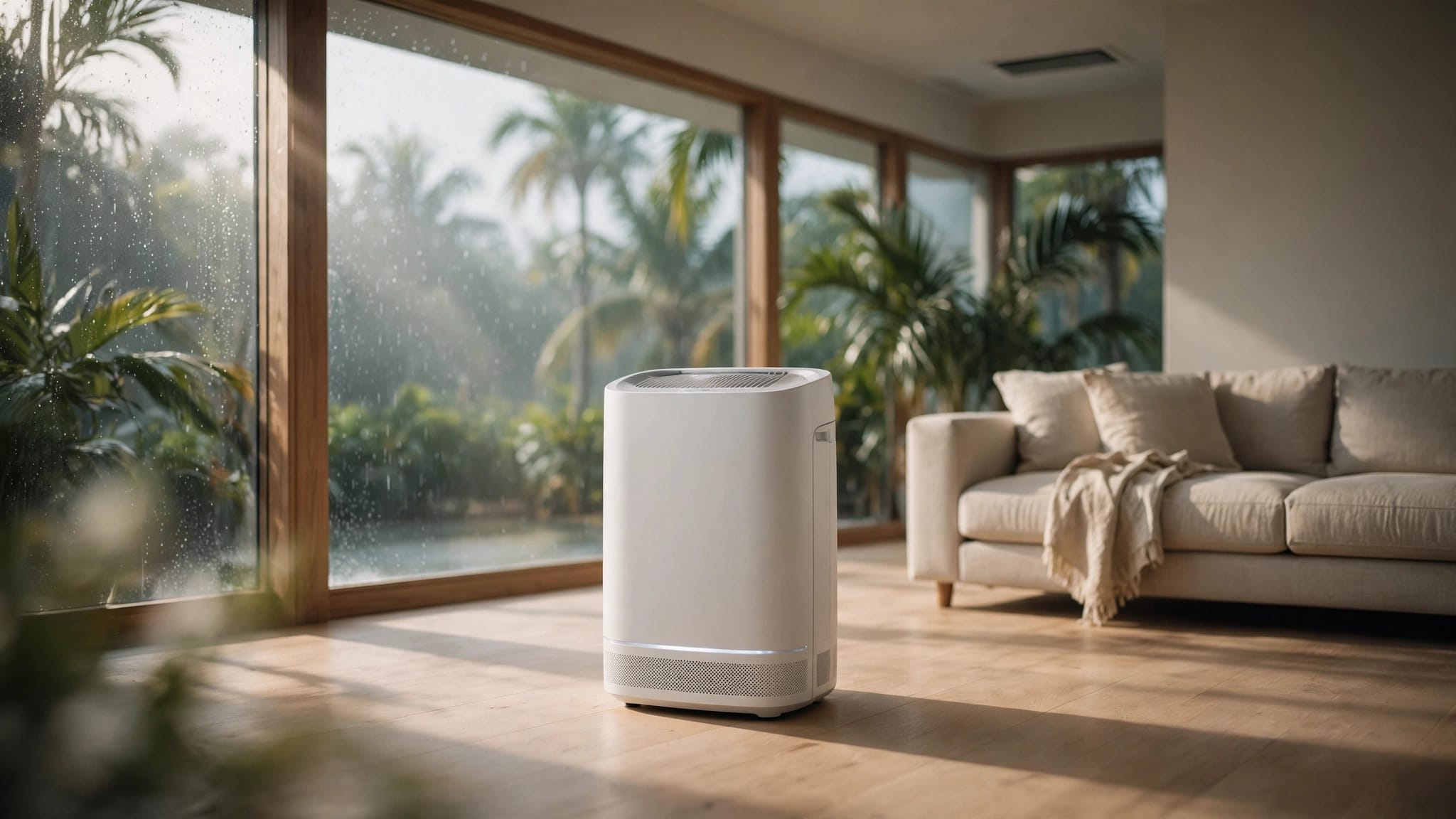
A whole-home dehumidifier can help homes with persistent moisture issues, especially during rainy periods or when occupants prefer cooler, drier air. It works with the HVAC system but has its own moisture-removal role.
In some cases, thermostat adjustments or a variable-speed system improve run times and humidity removal. In others, repairing a drain, sealing ducts, or correcting ventilation solves the problem without new equipment. For more detail on related symptoms, see why your Cape Coral home feels humid.
A Drier Home Starts With the Right Diagnosis
An oversized unit can cause high indoor humidity because it cools the home before it has time to remove enough moisture. Still, ducts, drainage, airflow, ventilation, and thermostat settings deserve equal attention.
A professional assessment can separate an oversized AC humidity issue from a repair or home-sealing problem. If your home feels cool but damp, Contact Us to schedule a service call and get a clear answer.