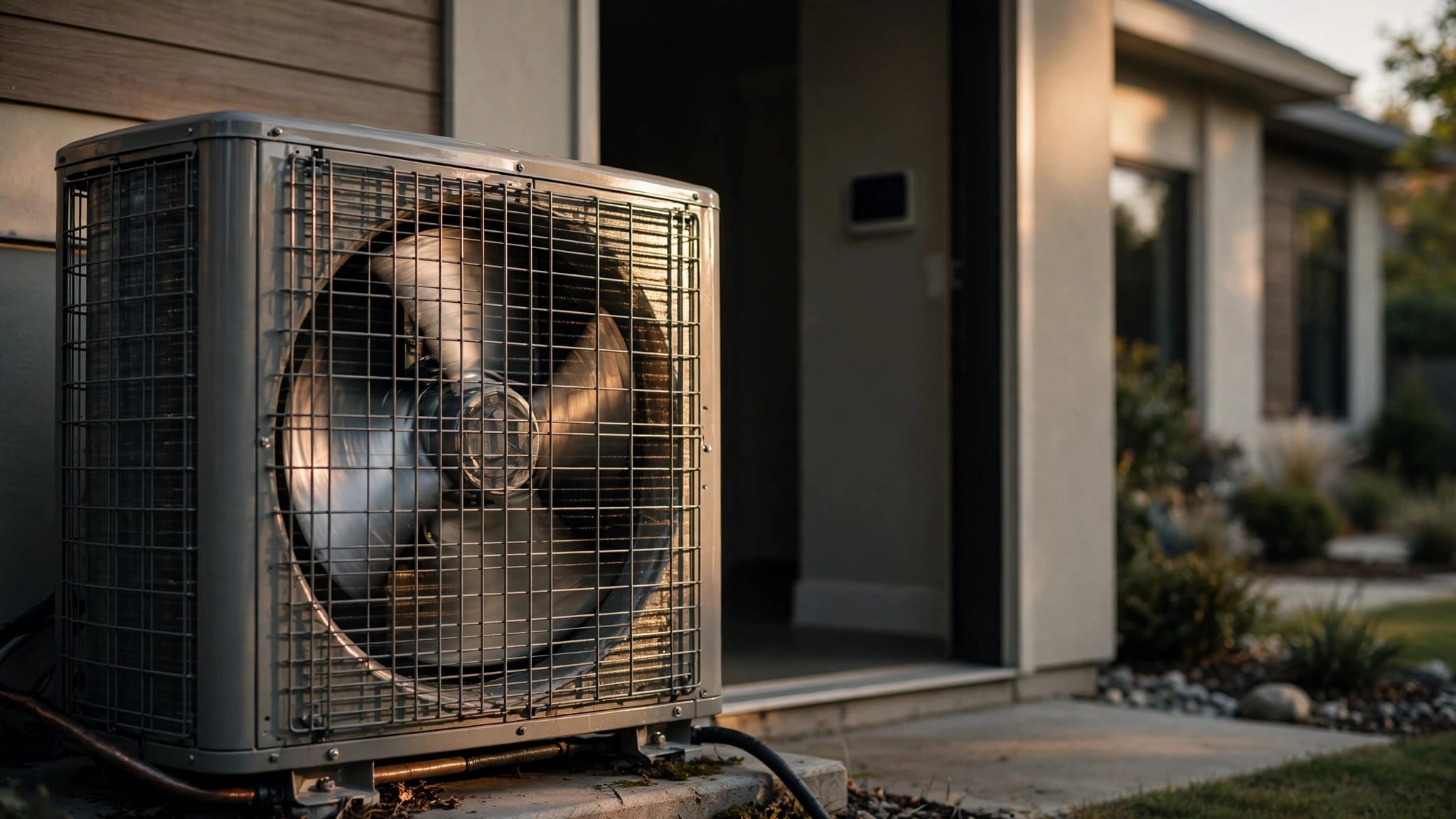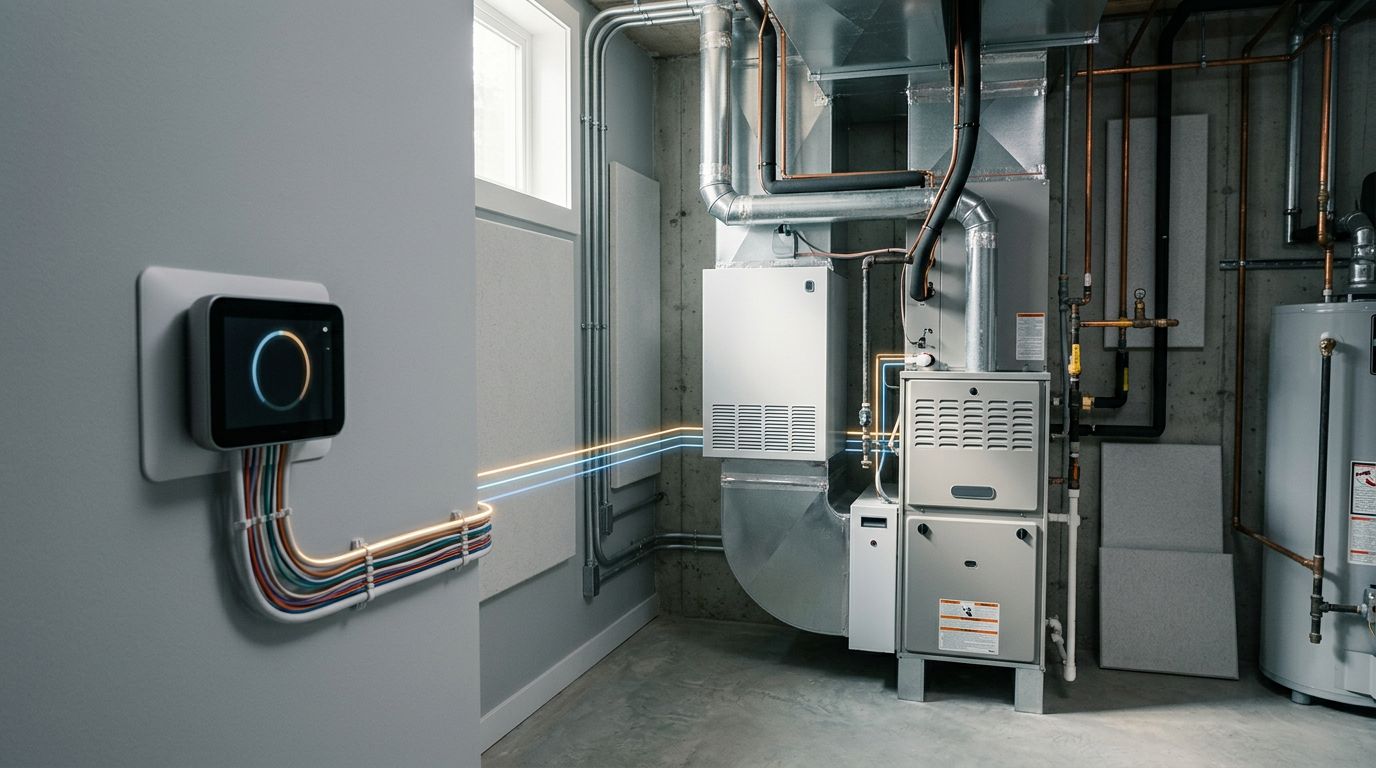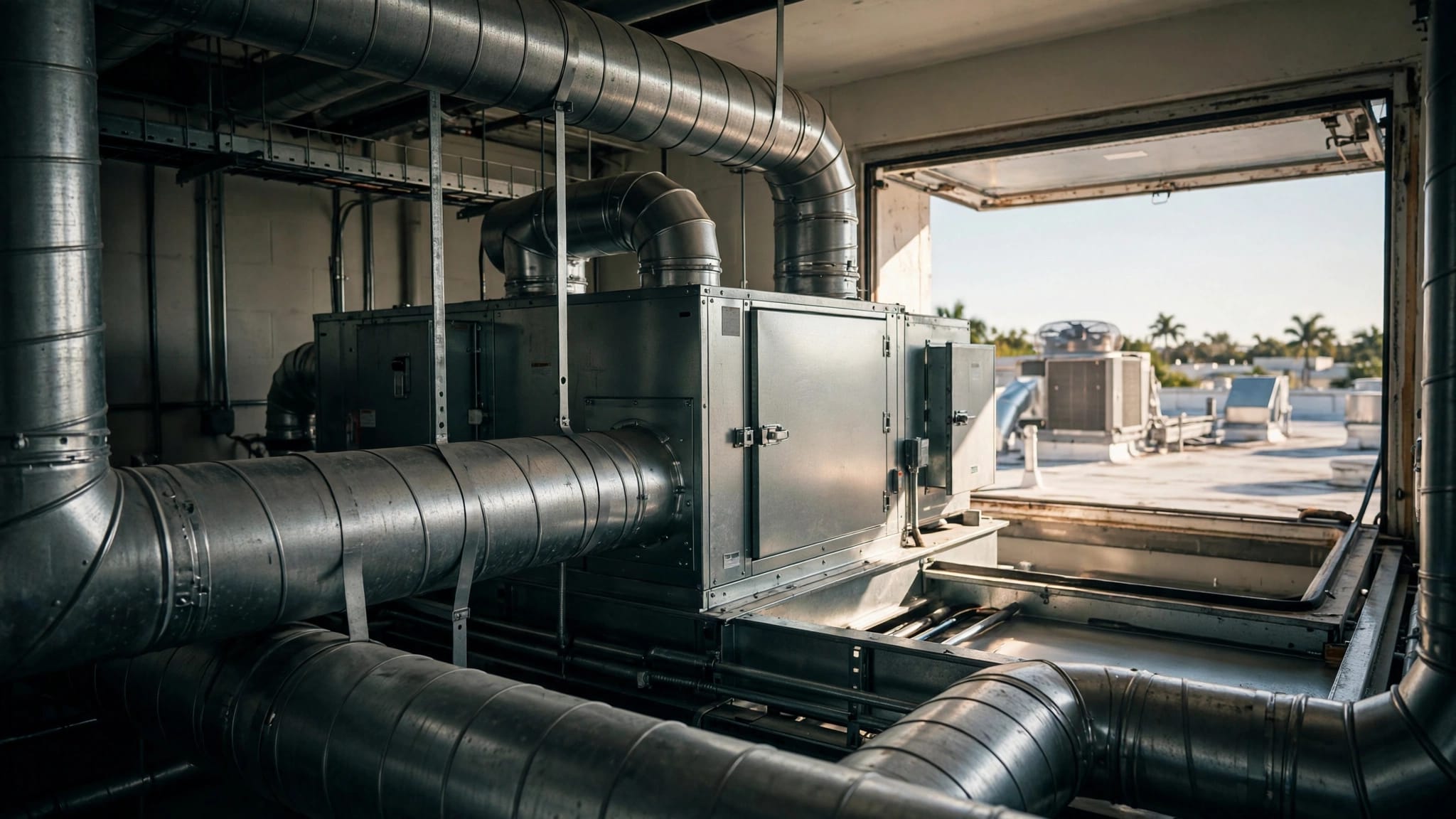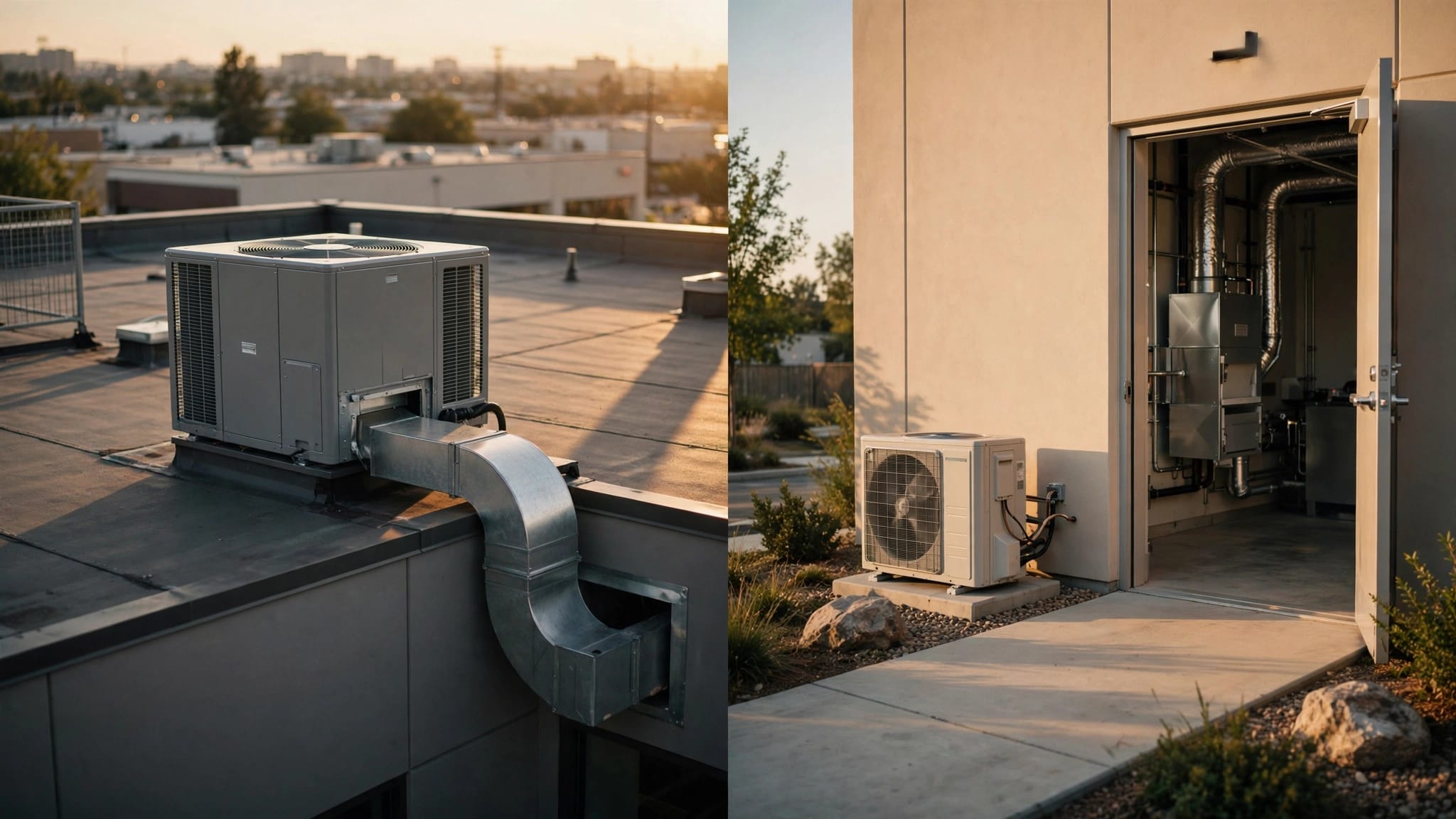
A storm can shut down cooling, damage equipment, and disrupt tenant operations long after the rain stops. Commercial HVAC emergency planning gives your property a clear path for protecting people, equipment, and temperature-sensitive areas before tropical weather reaches Southwest Florida.
For offices, restaurants, retail stores, healthcare facilities, and multi-tenant buildings, the plan must account for wind, flooding, power loss, heat, humidity, and limited access to service. Start well before a named storm appears on the forecast.
Why Commercial HVAC Emergency Planning Needs Local Detail
Atlantic hurricane season runs from June 1 through November 30, with activity often peaking during August, September, and October. In Lee, Collier, Charlotte, and Hendry counties, storm preparation must address coastal wind, heavy rainfall, localized flooding, and long utility outages.
A generic emergency binder won't cover the decisions your team must make during an actual threat. Your plan should name people, locations, equipment, and priorities.
Identify the spaces that cannot lose cooling
List every area where temperature or humidity loss creates a serious operating problem. For a restaurant, that may include walk-in coolers, food storage, and dining areas. A medical office may need cooling for medication, records rooms, and occupied patient spaces.
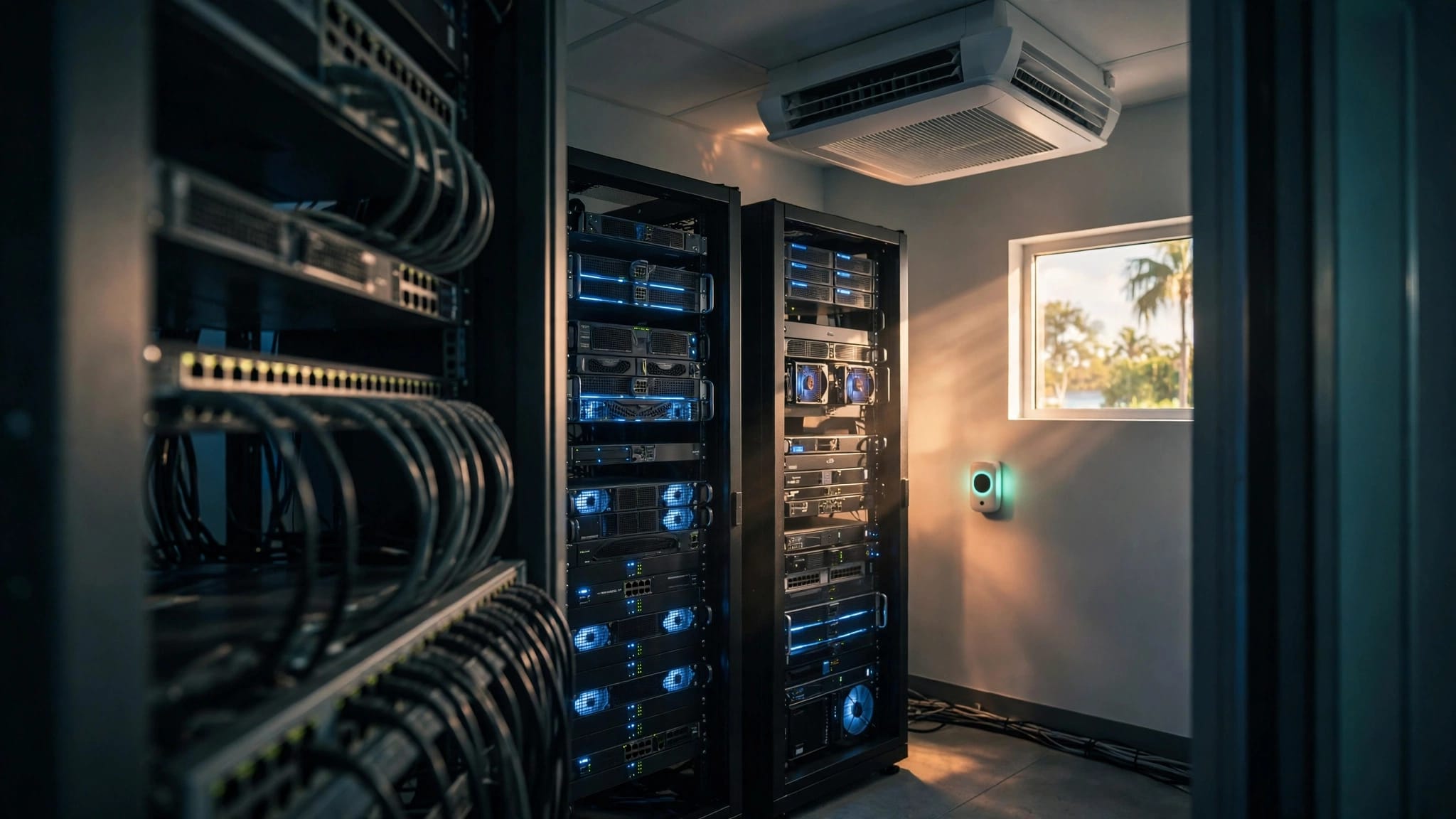
Offices with server rooms, retail sites with inventory, and buildings with elevators or security systems also need clear priorities. Rank these areas before the storm, then determine which loads a standby power system can support.
Assign authority before conditions worsen
Choose who can authorize shutdowns, emergency repairs, generator use, and contractor access. Include a primary contact and at least one backup person with phone numbers stored outside the building.
Keep the following information in one shared, offline-accessible location:
- HVAC equipment lists, model numbers, service records, and warranty details.
- Rooftop access procedures, electrical shutoff locations, and lockout rules.
- Insurance contacts, property management contacts, and vendor numbers.
- Photos showing normal equipment condition before storm season begins.
Build the Plan Before Hurricane Season Starts
Preseason service gives your team time to correct small problems without an approaching storm or a packed repair schedule. Schedule inspections early, especially for older rooftop units, split systems, exhaust equipment, and buildings with recurring humidity problems.
A qualified HVAC technician can check coils, drain lines, blower motors, electrical connections, refrigerant performance, cabinet seals, and mounting hardware. Corrosion, weak capacitors, loose panels, and clogged drains are easier to address on a calm day.
Inspect drainage, roof curbs, and mounting points
Water must move away from both the building and mechanical equipment. Have your roofing and maintenance teams inspect roof drains, gutters, scuppers, and ground drainage routes near condensers and air handlers.
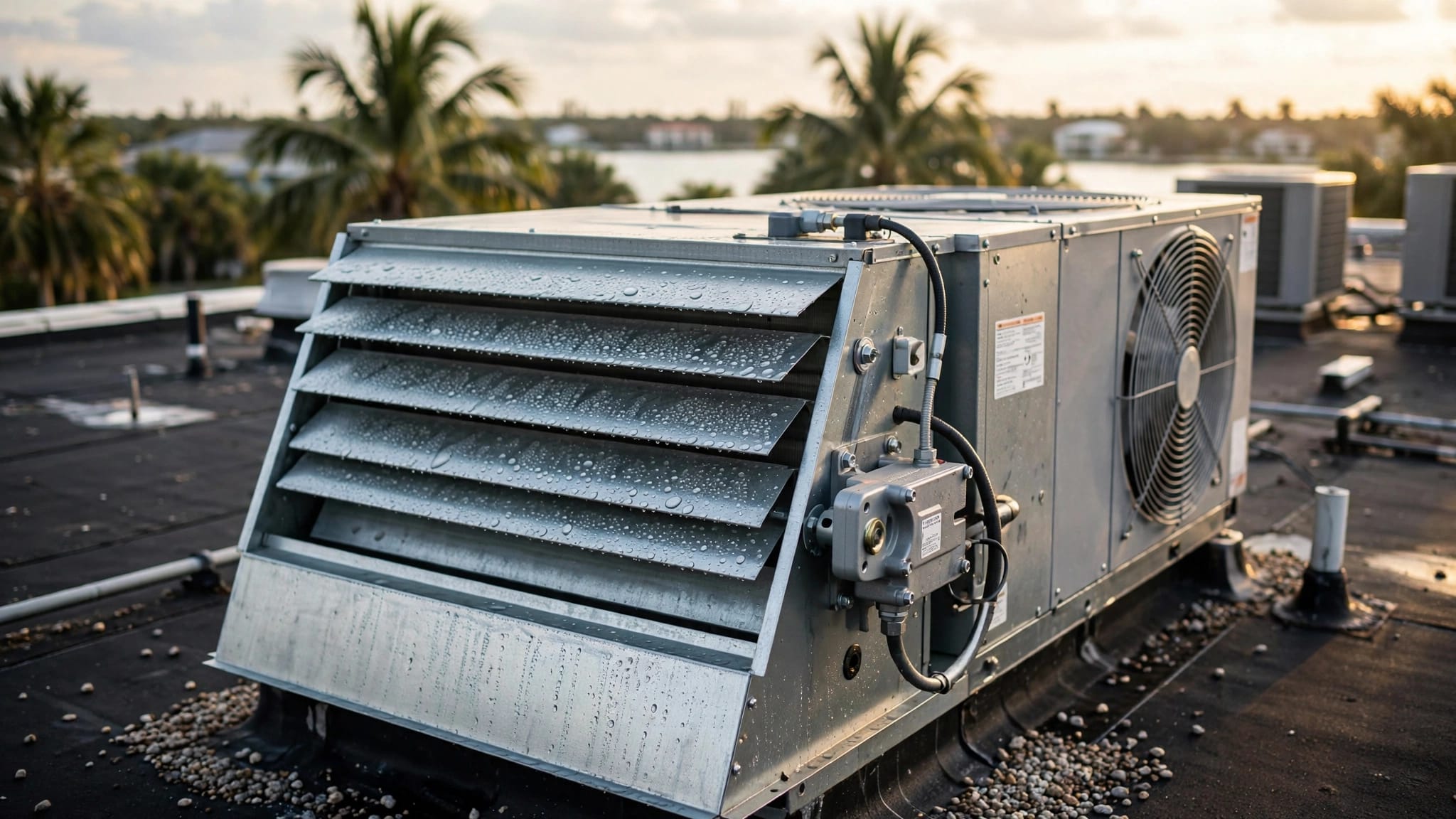
Rooftop equipment should sit on secure curbs or stands that meet the building's wind and flood requirements. Don't assume an old installation meets current needs. Review changes with licensed HVAC and electrical professionals, the local building department, your insurer, and equipment manufacturers.
For routine records that make storm preparation easier, use this commercial AC maintenance checklist for Cape Coral businesses.
Test communications and remote monitoring
Confirm that your building automation system, remote thermostats, leak alarms, and temperature sensors send alerts to more than one person. Test battery backups for monitoring devices and verify that employees know who receives the alerts.
NOAA recommends using multiple methods to receive forecasts and warnings. Keep weather alerts active on mobile phones, radios, and the facility's operations channels. The National Hurricane Center updates tropical outlooks four times daily during hurricane season, at 2 a.m., 8 a.m., 2 p.m., and 8 p.m.
The 72-Hour HVAC Storm Preparation Timeline
When a tropical system becomes a credible local threat, move from seasonal preparation to scheduled action. Work around your local emergency guidance, lease requirements, and business continuity plan. Do not send staff onto roofs or into mechanical rooms once conditions become unsafe.
At 72 to 48 hours before expected impacts
Confirm the property decision-maker and call your HVAC contractor if equipment has unresolved issues. Photograph rooftop units, condensers, disconnects, ductwork access points, and surrounding areas for insurance documentation.
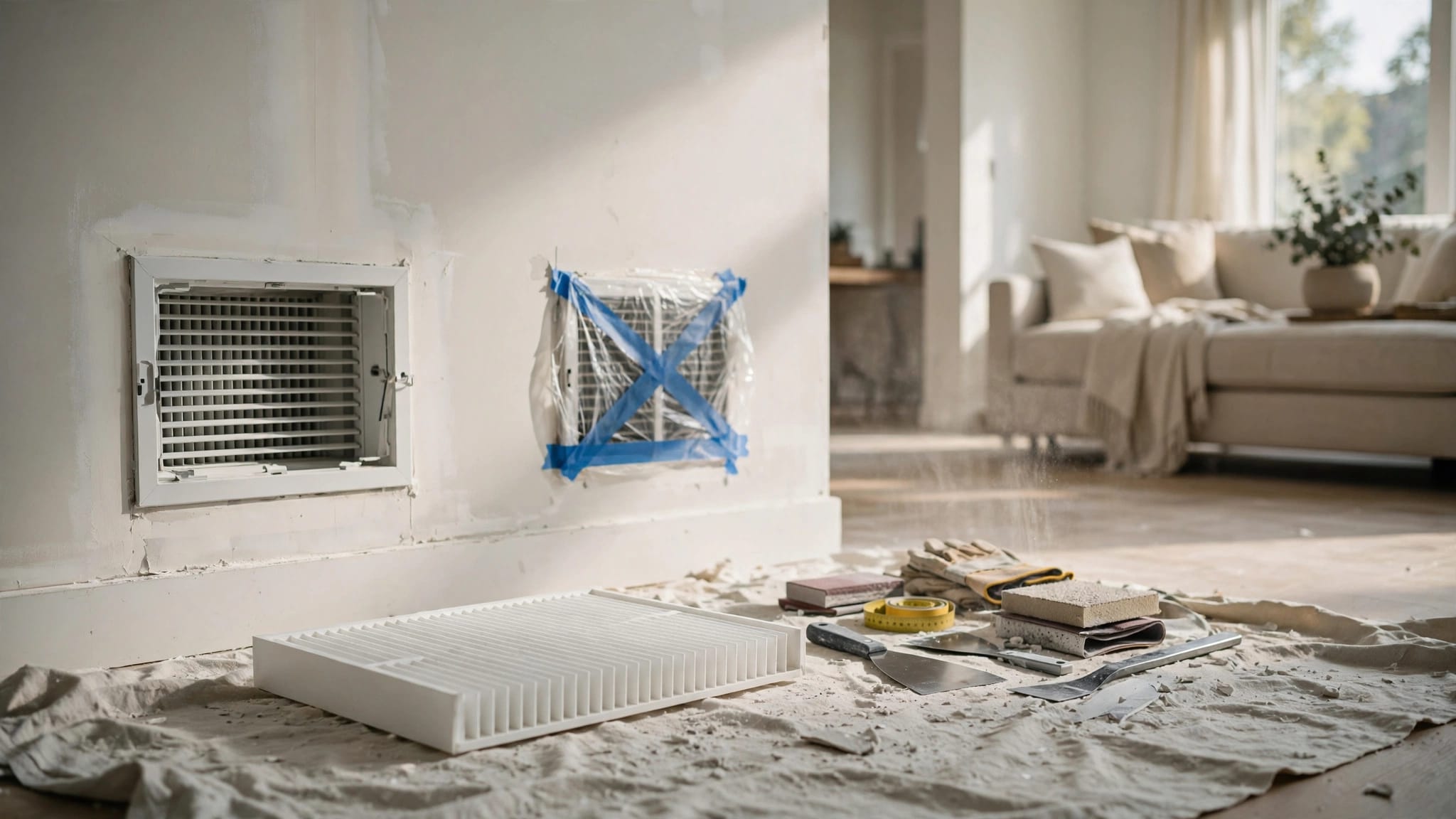
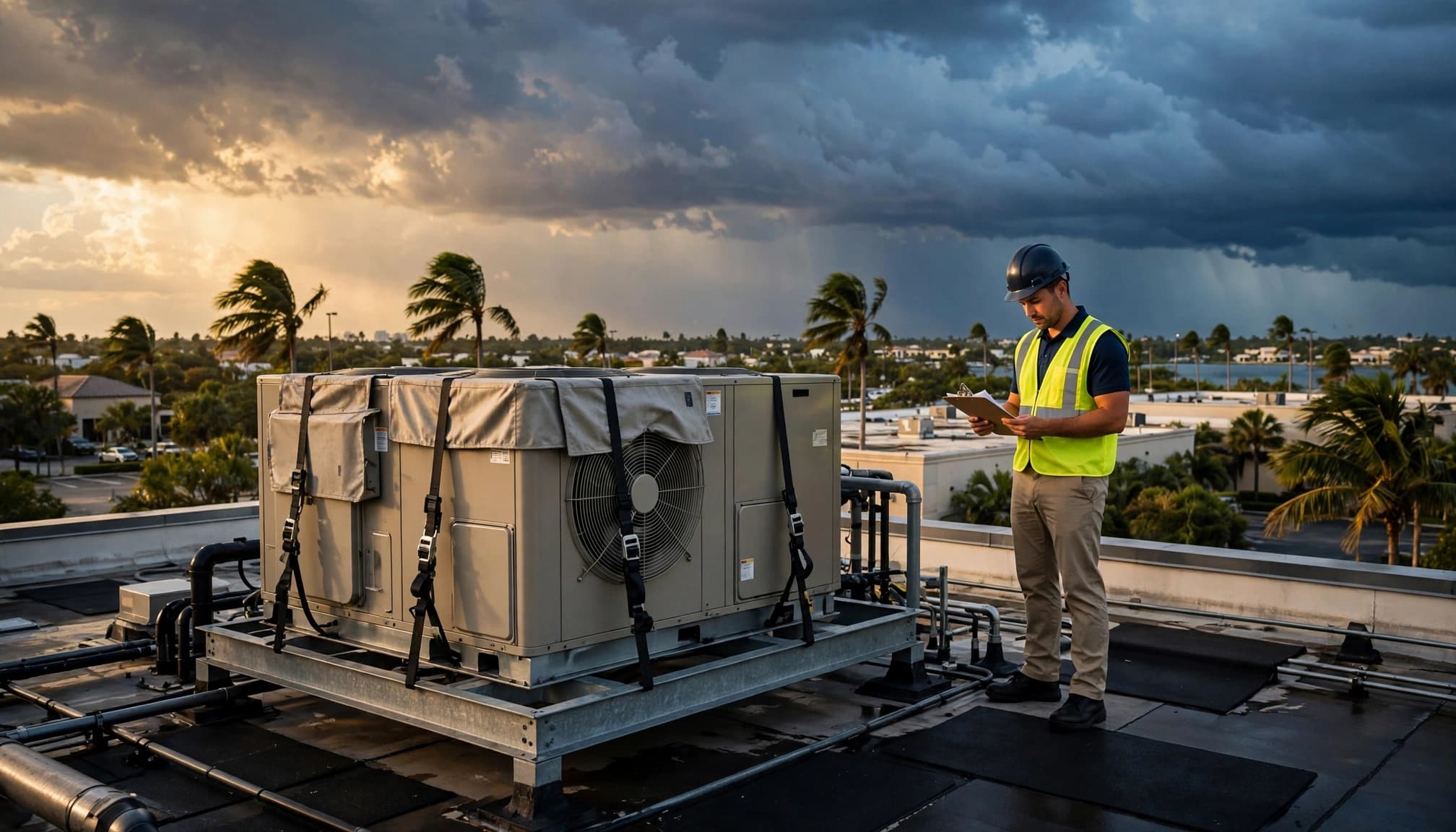
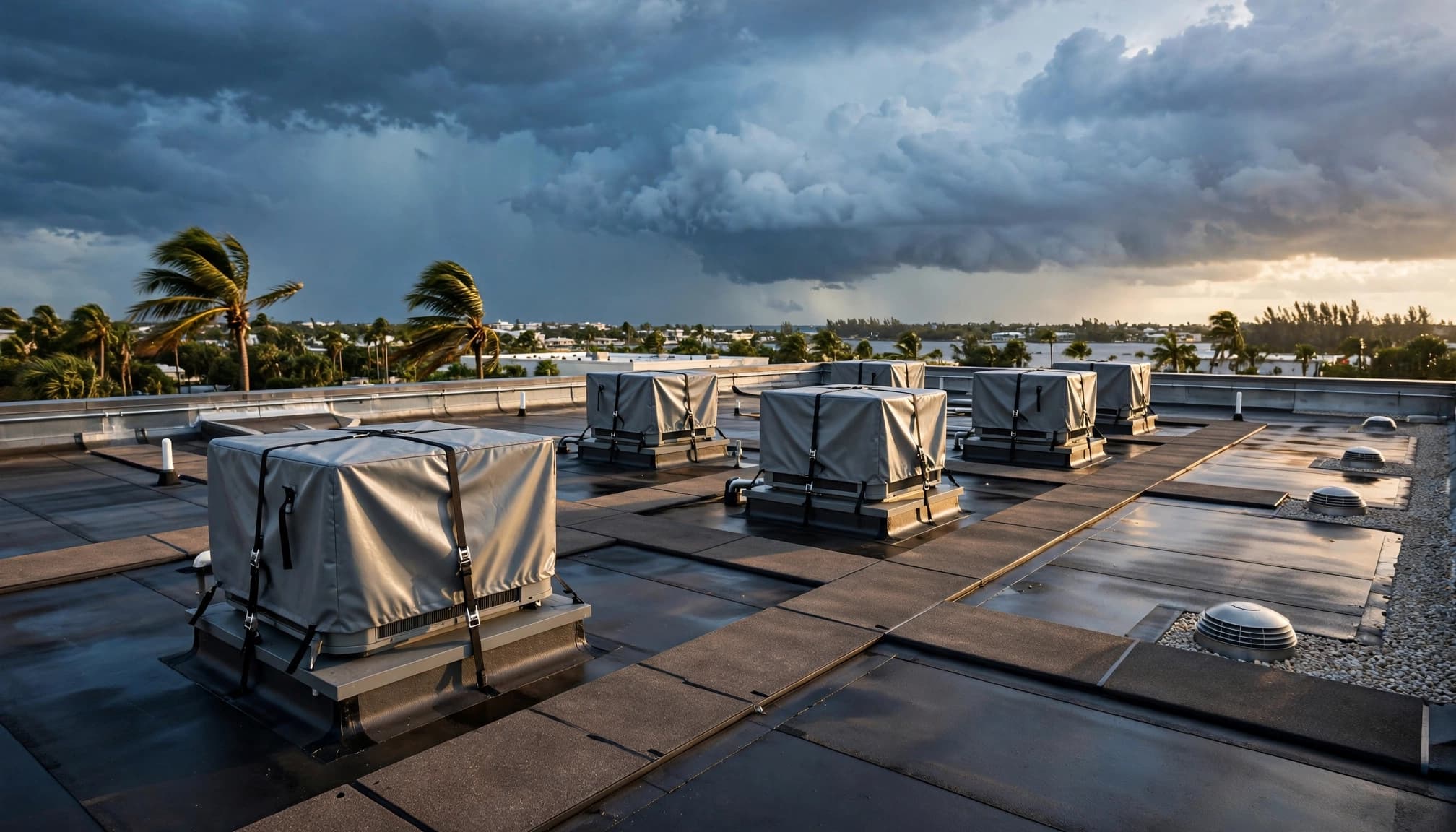
Clear loose debris near outdoor equipment. Check roof drains and secure approved panels or covers according to the manufacturer's instructions. Do not wrap a running unit in plastic or block ventilation paths.
At 24 hours before expected impacts
Move portable equipment, furniture, storage items, and signage away from condensers and rooftop access areas. Secure exterior doors, roof hatches, and mechanical-room openings as your building plan directs.
Set interior temperatures to a reasonable level while normal power remains available. However, don't overcool a building to extremes. Excessive runtime can expose a weak system right before the period when you need it most.
A covered condenser still needs inspection after a storm. Wind-driven debris, water intrusion, and electrical damage may not be visible from the ground.
Protect Power, Generators, and Electrical Connections
Power loss is often the point where a cooling problem becomes a life-safety or business-continuity issue. Review what your emergency power system can actually carry, including HVAC controls, ventilation, refrigeration, medical equipment, pumps, lighting, and communications.
Florida electrical rules distinguish emergency and standby power systems. Required emergency systems must restore secondary power within 10 seconds, while standby systems may have up to 60 seconds. Required systems also generally need at least two hours of operating capacity without refueling or recharging, unless another rule applies.
Keep portable generators outside and away from openings
FEMA directs users to operate portable generators outdoors, at least 20 feet from buildings, doors, windows, and vents. Carbon monoxide can enter a property even when the generator is outside but too close to an opening.
Never connect a portable generator to a wall outlet or main electrical panel. Backfeeding can injure utility workers, damage equipment, and create a fire hazard. A licensed electrician should install and inspect a proper transfer switch and all permanent generator connections.
Plan for flood exposure, not only wind
Generator pads, fuel supply equipment, transfer switches, and electrical connections need protection from anticipated flood conditions. On flood-prone commercial sites, location and elevation can determine whether standby power works when it is needed.
Coordinate generator work with local authorities, building requirements, flood-elevation rules, insurers, and the generator manufacturer. Healthcare and other life-safety occupancies may have added requirements for emergency power, fuel duration, and system testing.
During the Storm: Put People Ahead of Equipment
Once tropical-storm conditions arrive, stop exterior HVAC work. No employee should climb to a roof, open an outdoor disconnect, or attempt a temporary repair in wind, lightning, standing water, or darkness.
If the property loses power, leave the HVAC system off until utility power is stable. Repeated cycling during unstable power can damage compressors, motors, circuit boards, and controls.
Follow shutdown instructions for your specific equipment
Some commercial systems need a controlled shutdown before the storm. Others may operate until an outage occurs. Follow the manufacturer's instructions and the direction of your licensed HVAC professional.
Keep exterior doors closed and limit traffic through conditioned areas. If your building remains occupied, focus available backup power on the areas identified in your emergency plan. Maintain written notes on indoor temperatures, outages, alarms, and any water entry.
Avoid flooded or damaged mechanical areas
Do not touch wet electrical equipment or equipment while standing in water. Don't remove panels, reset breakers, or try to restart a unit with visible damage, burning odors, exposed wiring, or water around electrical components.
Call emergency services if there is an immediate fire, electrical, or life-safety risk. For urgent HVAC problems after conditions allow safe access, Contact Us to arrange service.
Post-Storm HVAC Inspection Comes Before Restarting
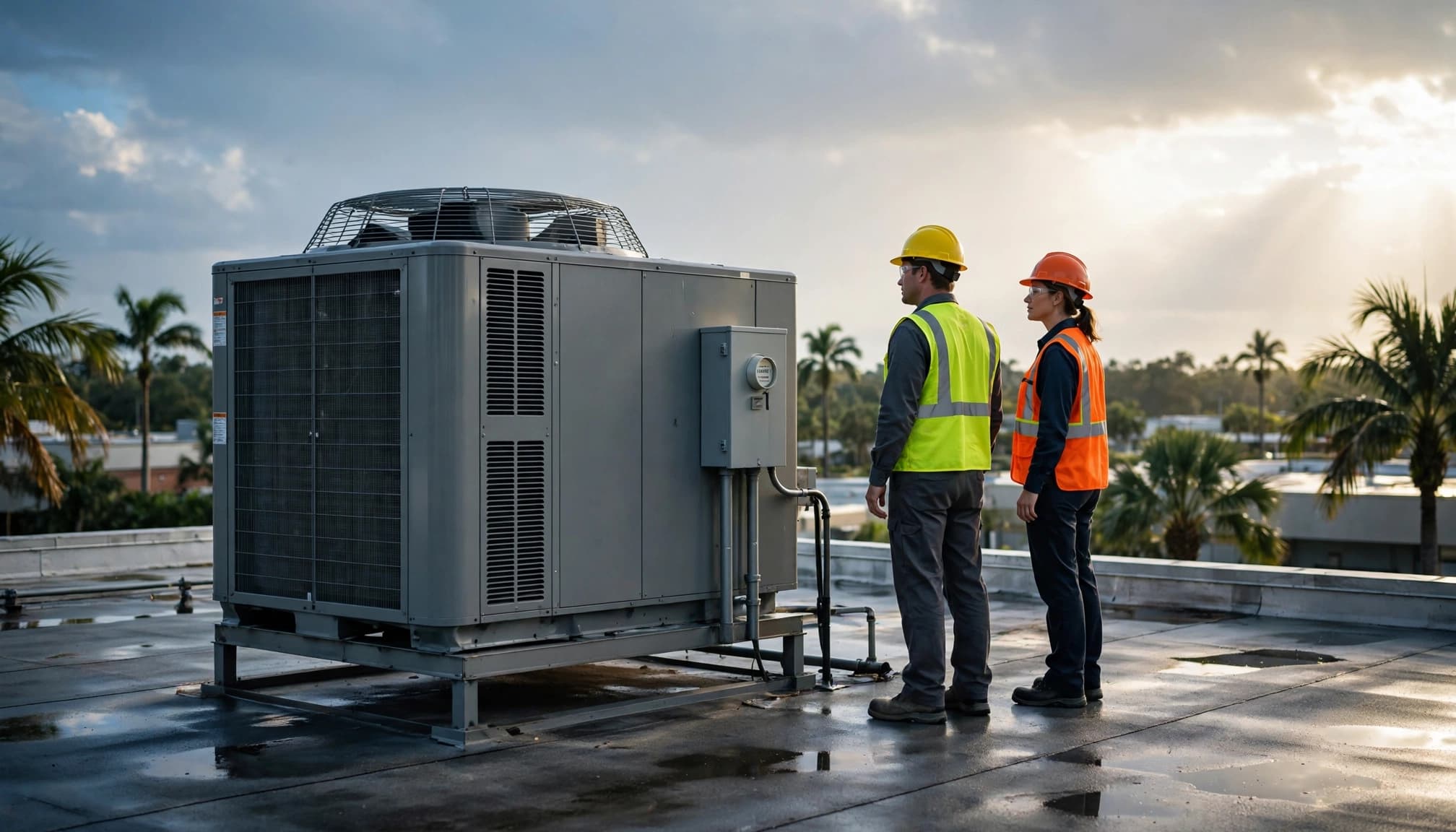
After the storm, inspect the property from a safe distance before you restore normal operations. Take photos of roof damage, standing water, shifted equipment pads, loose panels, damaged ductwork, and blocked drainage.
Do not energize flooded, submerged, or visibly damaged HVAC equipment. A licensed electrician and HVAC technician should inspect affected systems before restart. This is especially important when water reached a condenser, air handler, disconnect, controls, or ductwork.
Check the full system, not only the outdoor unit
A safe post-storm inspection includes electrical components, refrigerant lines, fan motors, filters, drain pans, condensate piping, controls, ductwork, and roof penetrations. A unit may appear intact while water or debris has damaged components inside.
Document all issues before cleanup or repair when possible. Send photos and service reports to your insurer, property manager, and facilities file. Clear records also support decisions about repair versus replacement.
Control humidity after the power returns
Heat and humidity can become a second problem after the wind passes. Once technicians clear the system for operation, monitor indoor temperature and relative humidity closely. Replace wet filters, remove water-damaged materials, and address standing water quickly.
Musty odors, damp insulation, wet ductwork, and visible growth need prompt attention. If storm moisture creates an indoor air-quality concern, arrange professional mold remediation in Southwest Florida rather than relying on surface cleaning alone.
Keep the Plan Current Between Storms
Commercial HVAC emergency planning works when it becomes part of regular property management. Review the plan after every storm, service call, tenant change, renovation, or generator upgrade. Update contacts, equipment lists, vendor agreements, and priority areas while the details are fresh.
Southwest Florida storms put cooling systems under pressure long before landfall and well after utilities return. A written, practiced plan helps your team protect occupants, avoid unsafe decisions, and bring the building back online with fewer surprises.