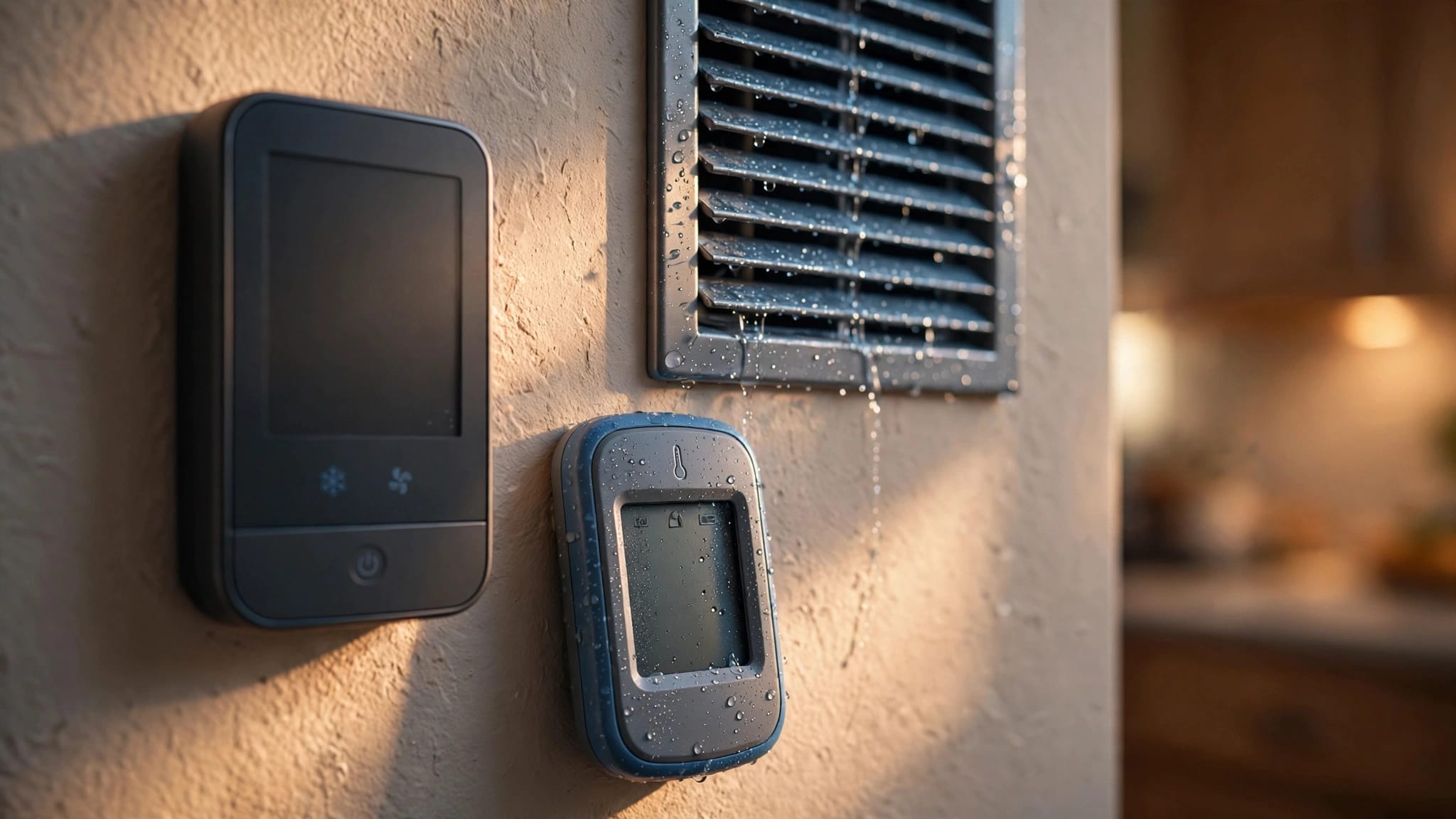
A new air conditioner can start cooling your Florida home even if moisture remains trapped inside its refrigerant lines. That moisture can cause trouble long after the installer leaves. AC vacuum testing helps a technician check whether the system is ready for refrigerant, but it can't replace a proper leak search.
If you're replacing an AC unit or facing a refrigerant repair, you don't need to work on your home's air conditioning system yourself. You do need to know what a careful service visit should include, especially when humid outdoor air can enter an opened system.
What AC vacuum testing actually checks
Your air conditioner's refrigerant travels through a sealed circuit that includes the indoor coil, copper lines, and outdoor equipment. When a technician opens that circuit for installation or repair, air and moisture can get inside.
Evacuation uses a vacuum pump to remove unwanted gases and water vapor, supporting moisture removal before the circuit returns to service.
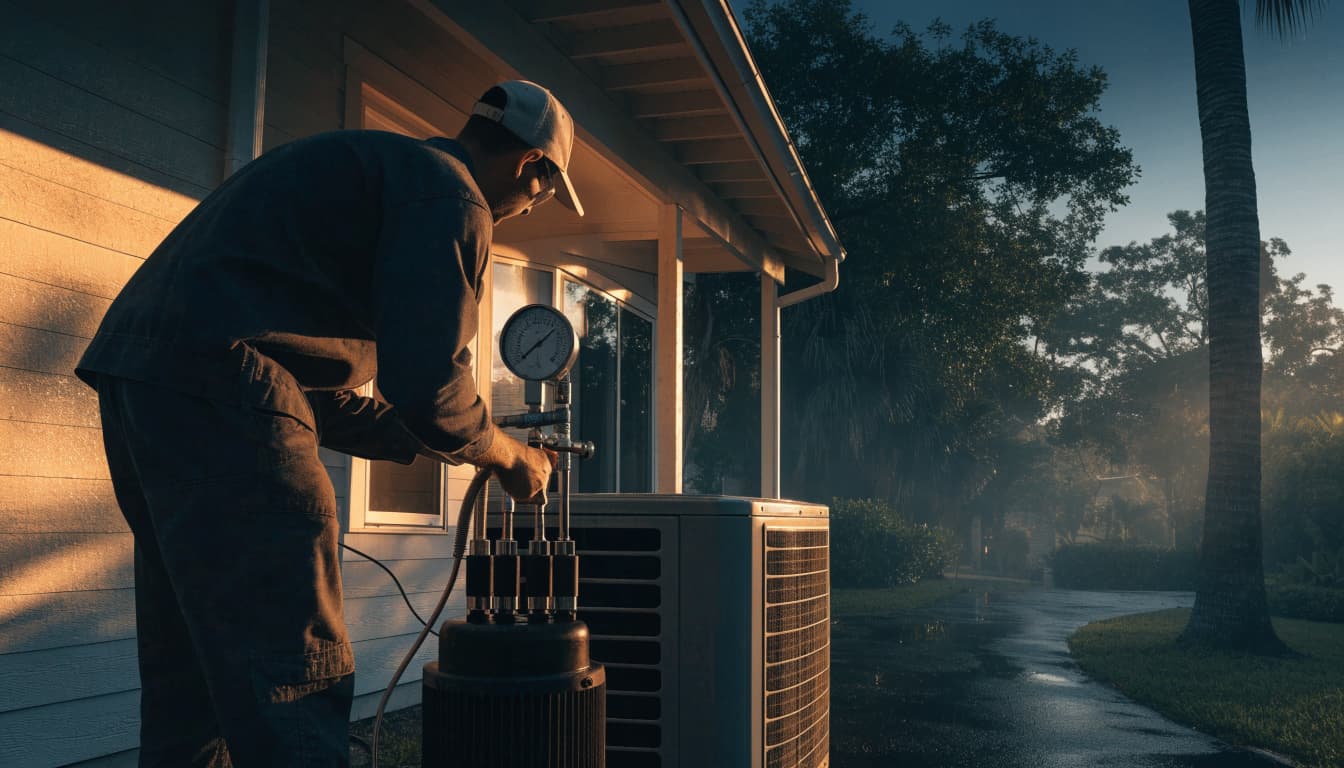
Removing air and removing moisture are different jobs
Technicians sometimes call these jobs degassing and dehydration . Degassing removes air and other non-condensable gases. Dehydration lowers pressure so moisture inside the circuit can vaporize and leave through the pump.
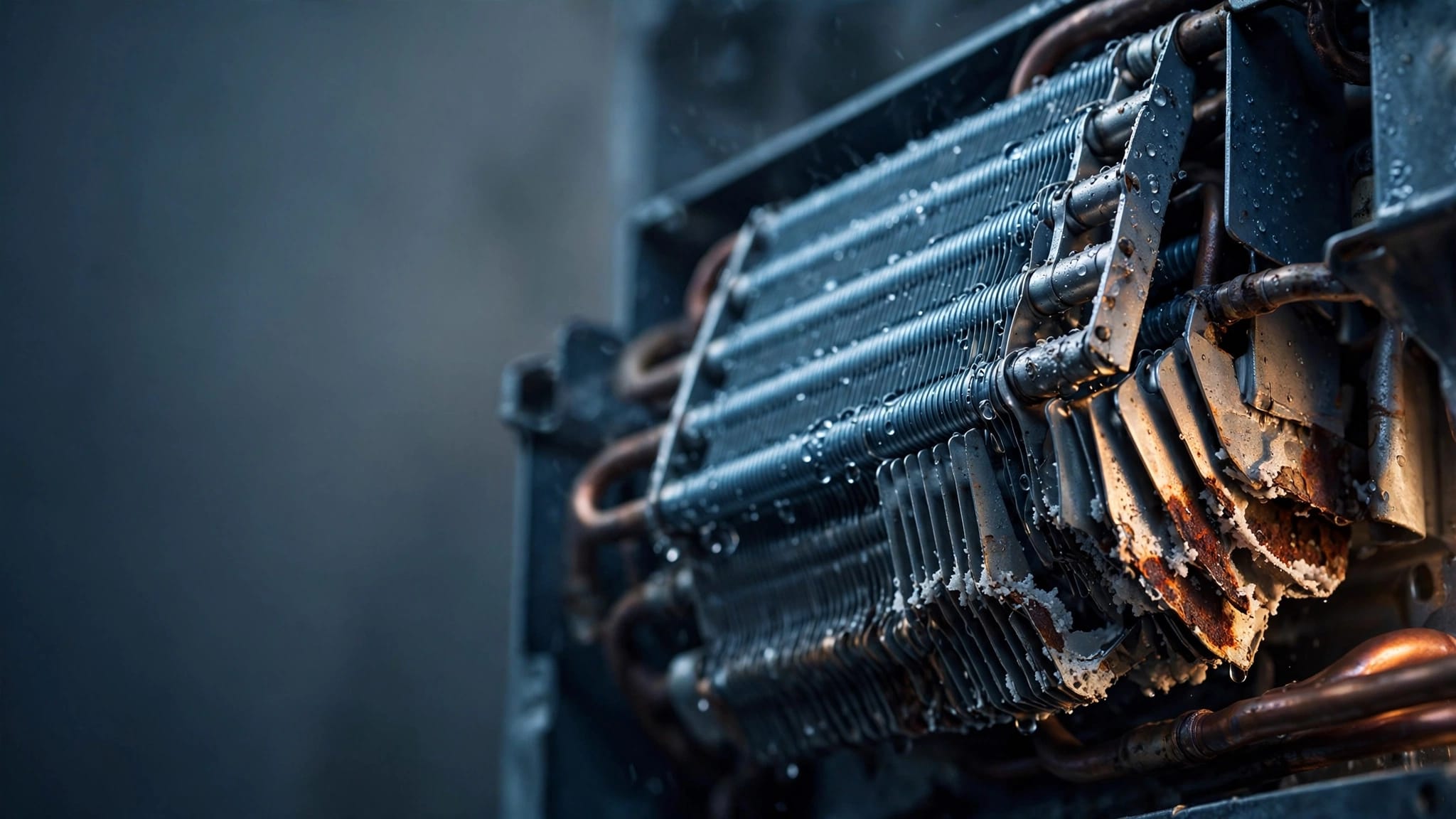
Both matter. Air can interfere with normal system operation, while moisture can contribute to corrosion, acid formation, and damage to refrigerant oil and components. A pump must run long enough to address the condition of the actual system, rather than meet a convenient timer setting.
A vacuum hold is a check, not a full diagnosis
After pumping, a technician isolates the circuit and watches how the vacuum reading changes. A rising reading calls for investigation. It doesn't, by itself, identify a leak or prove that trapped moisture is the cause.
That distinction matters when someone says the AC "passed a vacuum test." Ask what was measured, where it was measured, and whether the system also received an appropriate pressure test.
Why a dry refrigerant circuit matters in Florida
Cape Coral's humid air doesn't seep into a healthy, sealed refrigerant circuit during normal operation. The concern arises when a line is disconnected, a component is replaced, or storm damage leaves piping open.
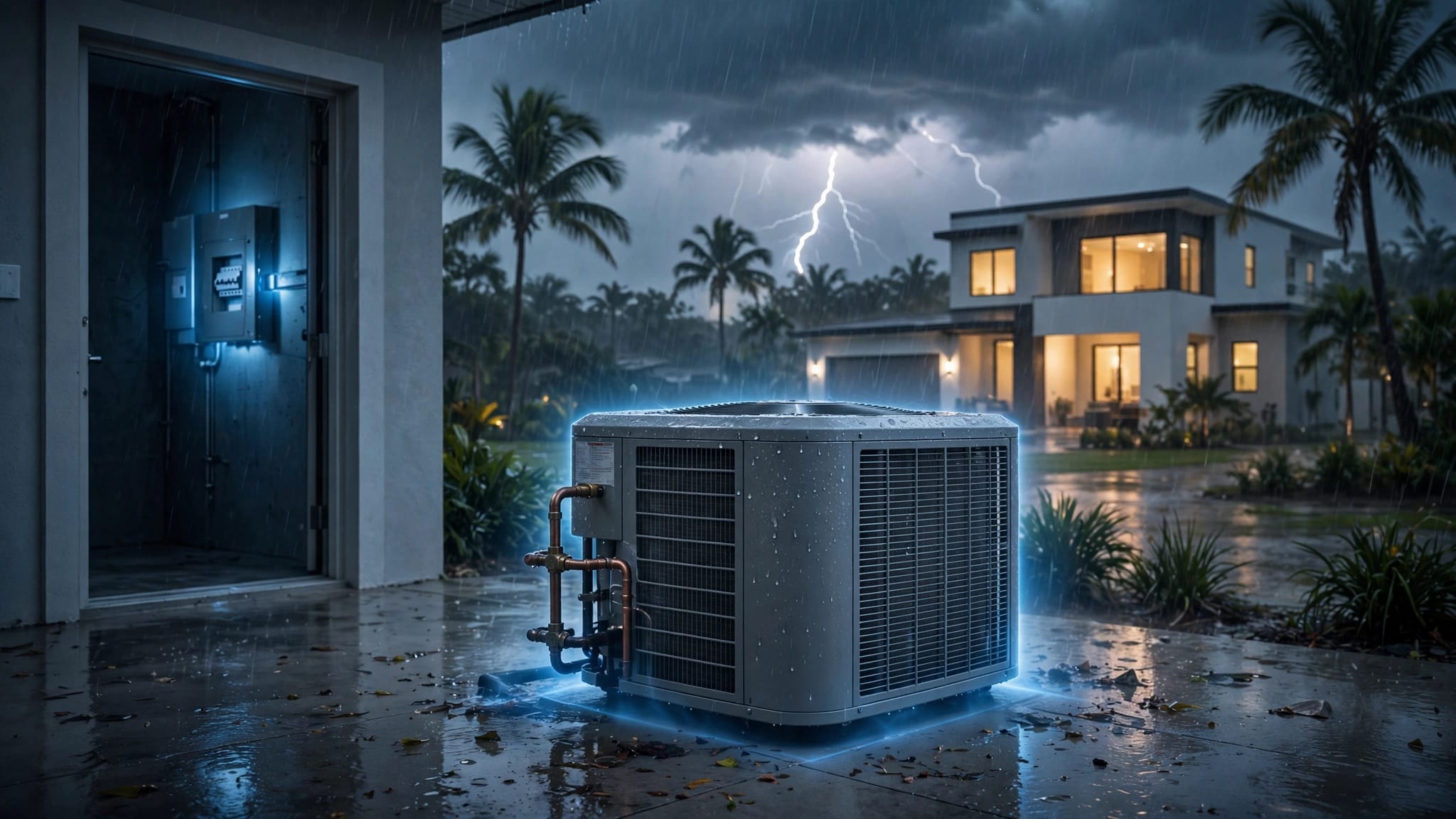
During a repair, exposed copper tubing and indoor equipment can take in humid air. Rainwater intrusion creates a more serious contamination problem that may require additional work beyond a routine evacuation. A technician should protect open lines and assess the extent of exposure before sealing the system again.
Moisture inside refrigerant piping differs from humidity inside your home. Your air conditioning removes indoor water vapor when air passes over the cold evaporator coil and condensation drains away. A clammy house may point to short cycling, poor airflow, a clogged drain, or another comfort issue. It doesn't prove the sealed refrigerant circuit needs evacuation.
Similarly, a vacuum pump won't solve a damp bedroom or a leaking duct. If the home cools but stays humid, the technician should assess airflow, equipment operation, drainage, and possible moisture sources.
When does a home AC system need evacuation?
Evacuation, also called system evacuation, is needed when installation or repair work opens the refrigerant circuit. A new split-system air conditioning installation typically requires the installer to evacuate the field-installed copper lines and indoor coil before releasing refrigerant held in the outdoor unit. The exact sequence depends on the equipment instructions.
A repair may also require evacuation after a technician replaces an indoor coil, repairs refrigerant piping, or changes another refrigerant-side component. A qualified technician must properly recover and handle any refrigerant before opening the circuit. A vacuum pump isn't a refrigerant recovery machine.
Routine maintenance is different. Changing a filter, clearing a condensate drain, checking airflow, or inspecting electrical parts doesn't normally require opening the refrigerant circuit. Be cautious if someone recommends evacuation for weak cooling without first diagnosing the problem.
Warm air, ice on the coil, and longer run times can have several causes. If you suspect refrigerant loss, review the signs your air conditioner is leaking refrigerant, then have a qualified technician confirm the cause. Adding refrigerant without addressing a leak leaves the underlying problem in place.
What a qualified technician does before recharging
The order of work depends on whether the job is a new installation or a repair. Leak diagnosis and moisture removal serve different purposes, and each deserves attention.
Find and repair leaks before pulling a final vacuum
When a leak is suspected, the technician should locate and fix it rather than rely on a vacuum hold as the only leak check. Depending on the situation and manufacturer instructions, they may use dry nitrogen and a regulator for a pressure test. Suitable gauges monitor the isolated circuit, and suspect joints can be checked with soap and water.
An electronic leak detector can help when refrigerant is present or an approved tracer method is used. It won't detect plain nitrogen by itself. The technician should follow the equipment's permitted test procedure.
A system can hold a vacuum yet leak when it operates under positive pressure. Ask how the technician checked the repaired connection, not only whether the vacuum held.
Evacuate, verify, and return the system to service
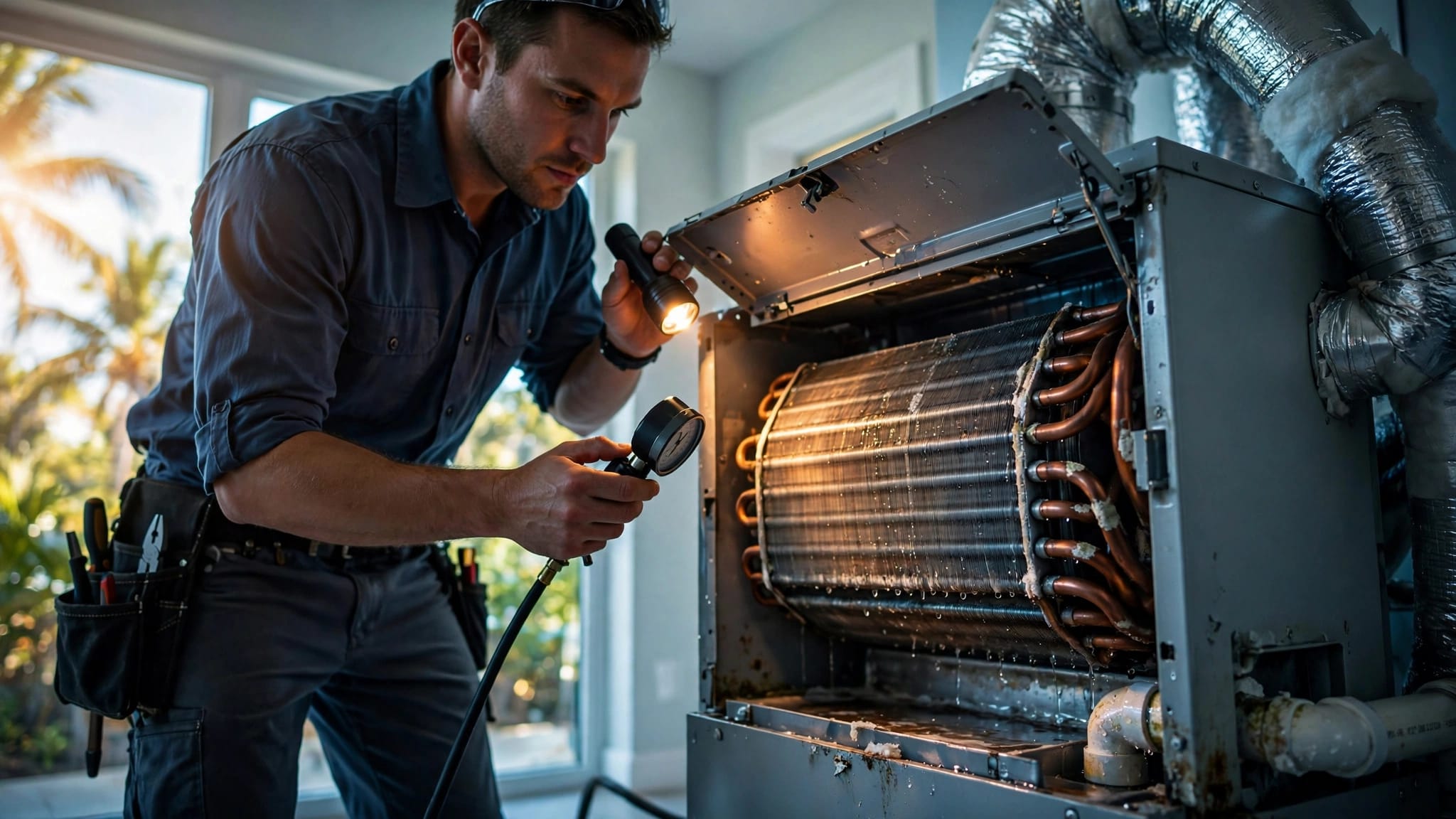
After the circuit is sealed and appropriate leak checks are complete, the technician begins system evacuation with a vacuum pump. A micron gauge tracks the vacuum level. The technician isolates the pump for a standing test and investigates any concerning reading before charging.
A filter drier may also need replacement when the system has been opened, depending on its design, condition, and manufacturer requirements. Finally, the technician follows the equipment's charging procedure for the refrigerant charge and checks operating performance. That last step matters because a sound repair must cool your home properly, not merely pass a test while the system is off.
The equipment behind an accurate vacuum reading
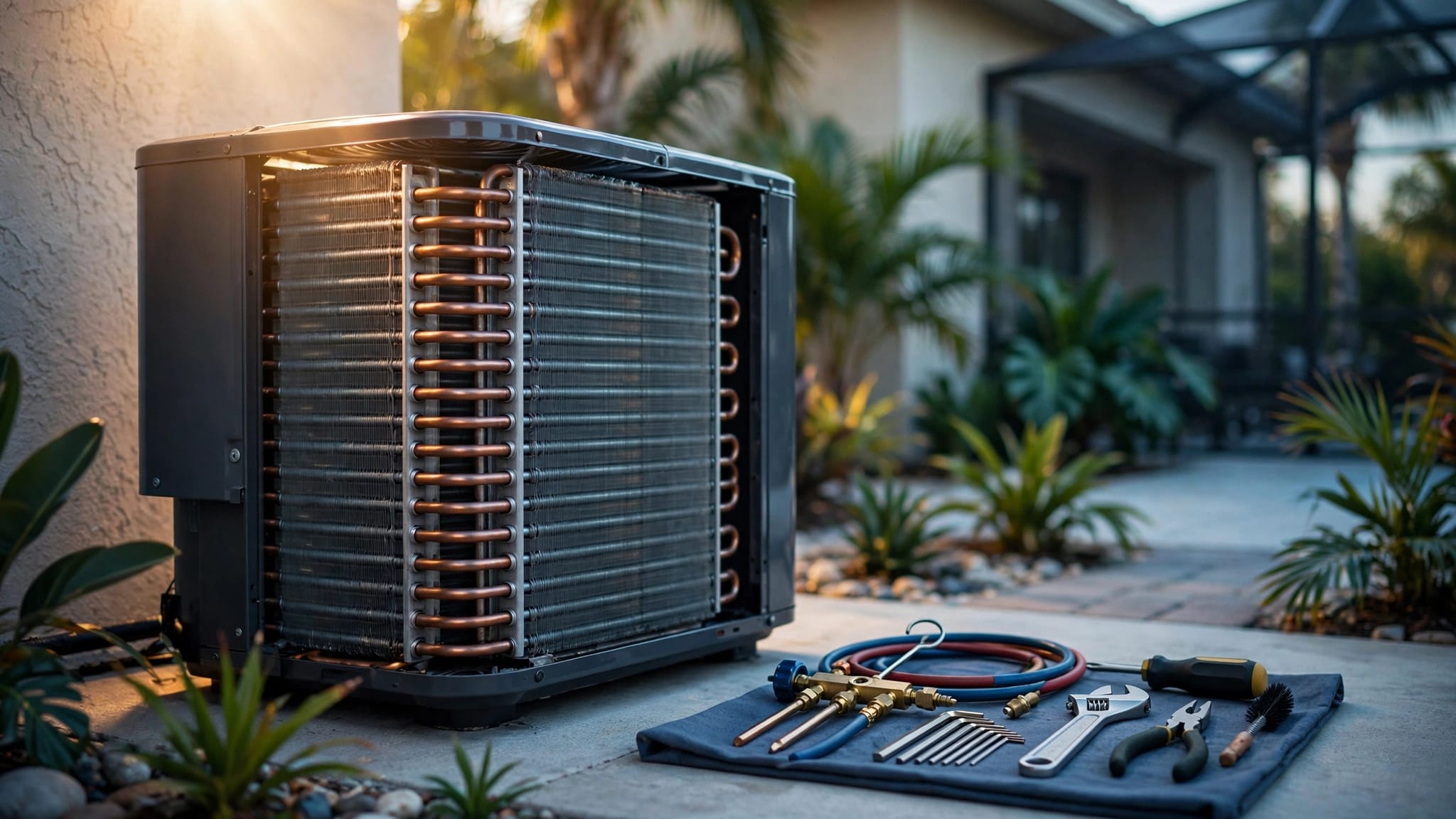
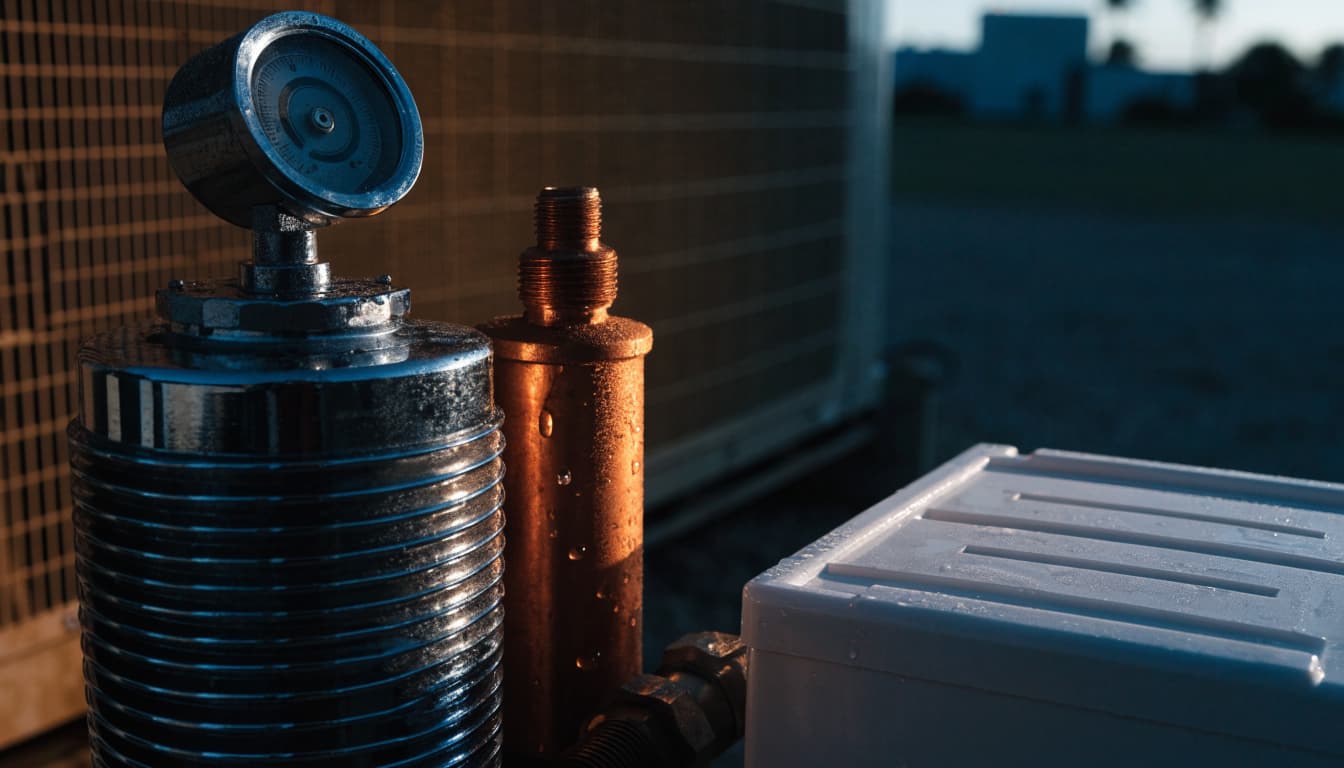
A technician may set up several gauges and hoses beside the outdoor unit. They don't all answer the same question.
Why a micron gauge matters
Standard manifold gauges help technicians read operating pressures, but they aren't precise enough to show how deep a vacuum has become. A micron gauge measures much smaller pressure changes. Positioning it to reflect conditions in the system, rather than only at the pump, gives the technician a more useful reading.
There's no single run time that guarantees dryness. Equipment, line length, temperature, moisture exposure, and hose setup all affect the result. A technician should follow the manufacturer's evacuation requirements and rely on measured results, not assume every system needs the same number of minutes.
Why hoses and connections affect the job
A narrow service path can slow evacuation. Larger-diameter charging hoses and a core tool, when appropriate for the equipment, help the pump move vapor more efficiently. Removing the valve cores also lets a technician isolate the system without relying solely on a restrictive manifold connection.
Hose condition matters too. A loose fitting or leaking hose can make the reading climb, even when the installed AC piping is sound. If a technician can't reach or maintain the required vacuum, checking the service setup is part of troubleshooting. Continuing to pump indefinitely won't fix a faulty connection.
How technicians interpret a vacuum hold
The standing test begins after the pump is isolated. The micron reading may rise, but the pattern needs interpretation alongside the system's history and results from manifold gauges. A single number, without context, doesn't tell the whole story.
A rising reading can have several causes
A leak in the AC circuit is one possibility. A leaking service hose, valve, or gauge connection is another. Moisture releasing vapor inside the system can also affect the vacuum level, particularly after significant exposure to humid air.
A technician may inspect the test connections, repeat part of the process, or use a pressure test to narrow the cause. If the system has suffered flooding or prolonged exposure, they should assess contamination rather than assume extra pump time will restore it.
A stable reading has limits
During the standing test, a stable reading supports the evacuation assessment. It doesn't certify every joint against leaks during operation. Refrigerant circuits experience different conditions when pressurized, which is why an appropriate leak check must stand on its own.
That limit is especially important after repeated refrigerant additions. If cooling improves after a charge but fades again, request a diagnosis before another top-off. For professional AC repairs in Southwest Florida, the goal is to identify the failure and confirm the repair, not keep replacing lost refrigerant.
What to ask when reviewing the service
You don't need to request a particular pump model or tell a technician which valve to open. A few plain questions can help you understand what you're paying for:
- What part of the refrigerant circuit was opened, and how was it protected while open?
- What leak check did you use to locate and verify the repair? Did you use an electronic leak detector or dry nitrogen?
- Did you measure the evacuation with a micron gauge and check the standing result?
- What did you check after charging or releasing refrigerant and starting the AC?
A clear estimate should separate the diagnosis from any repair, replacement parts, refrigerant work, and final performance check. If a technician recommends replacing a filter drier or addressing contamination, ask what they found and what the equipment manufacturer requires.
Avoid buying a vacuum pump, opening service ports, or connecting equipment to the low side port to try this yourself. Refrigerant work involves pressurized components, electrical hazards, and handling rules that call for a qualified professional. Back Bay Heating & Cooling provides residential AC maintenance and repair across Southwest Florida. For 24/7 service or to schedule a visit, Contact Us.
Key takeaways
- Evacuation removes air and moisture after refrigerant-side installation or repair work.
- A technician uses a precision gauge to assess evacuation more accurately than standard manifold gauges.
- A vacuum hold alone can't replace proper leak detection and repair.
- Indoor humidity complaints require their own diagnosis, even when the house also has an AC problem.
Frequently asked questions
How long should an AC vacuum test take?
There's no dependable time that fits every installation or repair. Line length, equipment design, outdoor conditions, and the amount of moisture inside all affect the job. Ask whether the technician reached the manufacturer's required evacuation result and checked it after isolating the pump.
Can an AC pass a vacuum test and still leak refrigerant?
Yes. A circuit may behave differently under vacuum than it does when pressurized and running. That's why a suspected leak calls for a suitable leak search and repair verification, rather than a vacuum test alone.
Does Florida humidity mean my AC needs frequent evacuation?
No. Humid outdoor air doesn't routinely enter a sealed refrigerant circuit. Evacuation becomes relevant when installation or repair work opens that circuit. High humidity inside the house calls for a separate look at cooling cycles, airflow, drainage, ducts, and moisture sources.
What is the homeowner's role during the test?
Keep the indoor and outdoor equipment accessible, and tell the technician about past leaks, storm exposure, or repeated refrigerant additions. You can ask for the leak-check and evacuation results in plain language. Leave refrigerant handling and service-port connections to the technician.
Conclusion
A Florida air conditioning repair should leave the refrigerant circuit sealed, dry, and ready to operate. A measured evacuation is part of that work , but it can't establish by itself that a suspected leak has been fixed.
If someone tells you the system is ready because "the vacuum held," ask how they checked for leaks and verified cooling afterward. Those answers offer more reassurance than pump time alone.