A small AC drain clog can turn into a ceiling stain or wet closet floor faster than most homeowners expect. In Cape Coral's heat and humidity, your system creates a steady stream of condensation, and the drain line has to carry it away every day.
For 2026, a typical AC drain line flush cost in Cape Coral falls between $75 and $250, depending on the blockage, access, and service needed. A quick clearing costs less than a repair, while an after-hours water backup can raise the bill. Knowing what each service includes helps you approve the right work without paying for work you don't need.
AC Drain Line Flush Cost in Cape Coral: 2026 Price Ranges
A basic drain flush is usually an affordable service call when the line is accessible and the clog is minor. However, pricing rises when algae has hardened inside the PVC, water has reached the drain pan, or a technician finds a cracked line or failed safety switch.
These are realistic 2026 Cape Coral and Florida market estimates. Your final price should come from a written diagnosis after the technician sees the system.
| Service | Typical 2026 Cost Range | What It Usually Covers |
|---|---|---|
| Basic drain-line flush | $75 to $150 | Clearing a light clog and flushing the accessible line |
| Tough clog or deeper drain cleaning | $150 to $250 | Vacuum clearing, stronger buildup removal, drain treatment |
| Inspection or diagnostic visit | $99 to $200 | Finding the source of a leak, backup, or shutdown |
| Full condensate-system service | $150 to $250+ | Pan cleaning, trap inspection, drain treatment, float-switch testing |
| Minor PVC repair or rerouting | $245 to $495 | Repairing a damaged fitting, slope issue, or short section of pipe |
| Condensate pump replacement | $245 to $445 | Replacing a failed pump and checking discharge flow |
| Full drain-line replacement | $395 to $695+ | Replacing longer runs of cracked, collapsed, or poorly routed pipe |
| After-hours emergency surcharge | $100 to $300 extra | Added to the diagnostic and repair cost |
The lowest price usually applies to a straightforward flush during normal business hours. If water is actively spilling, the air handler is in a difficult attic location, or the drain must be rebuilt, expect a higher total.
A drain flush clears buildup inside the pipe. It does not repair a cracked drain pan, failed pump, poor pipe slope, or damaged PVC.
What a Basic AC Drain-Line Flush Usually Includes
A professional flush starts with checking whether the drain line is actually the source of the problem. Water around an indoor air handler can also point to a frozen evaporator coil, a damaged pan, or a disconnected pipe.
Clearing the accessible drain path
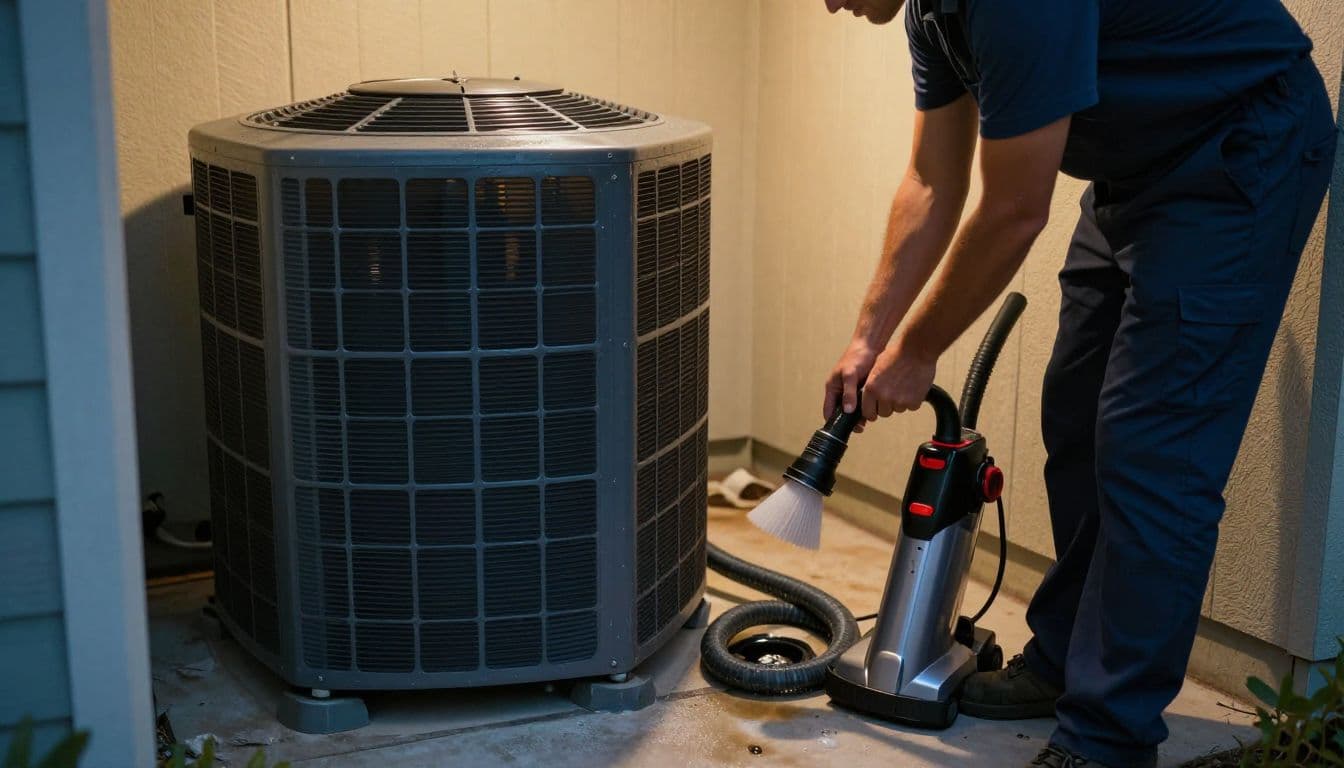
For a routine visit, the technician clears algae, slime, dirt, and sediment from the condensate line. They may use a wet vacuum at the exterior drain outlet or clear the line from the indoor side, then flush it with an appropriate treatment.
The service should confirm that water moves freely through the line. A basic flush often takes less time than a repair, so it belongs in the lower price range when no other issue appears.
Checking the pan, trap, and safety switch
A more complete condensate service goes beyond the PVC line. The technician checks the drain pan for standing water, looks at the trap, and tests the float switch if your system has one.
A float switch can shut down the AC when water rises too high. That inconvenience can prevent a much larger water-damage bill. Pan cleaning, treatment tablets, and switch testing often move the visit into the $150 to $250 range.
Why Cape Coral AC Drain Lines Clog So Often
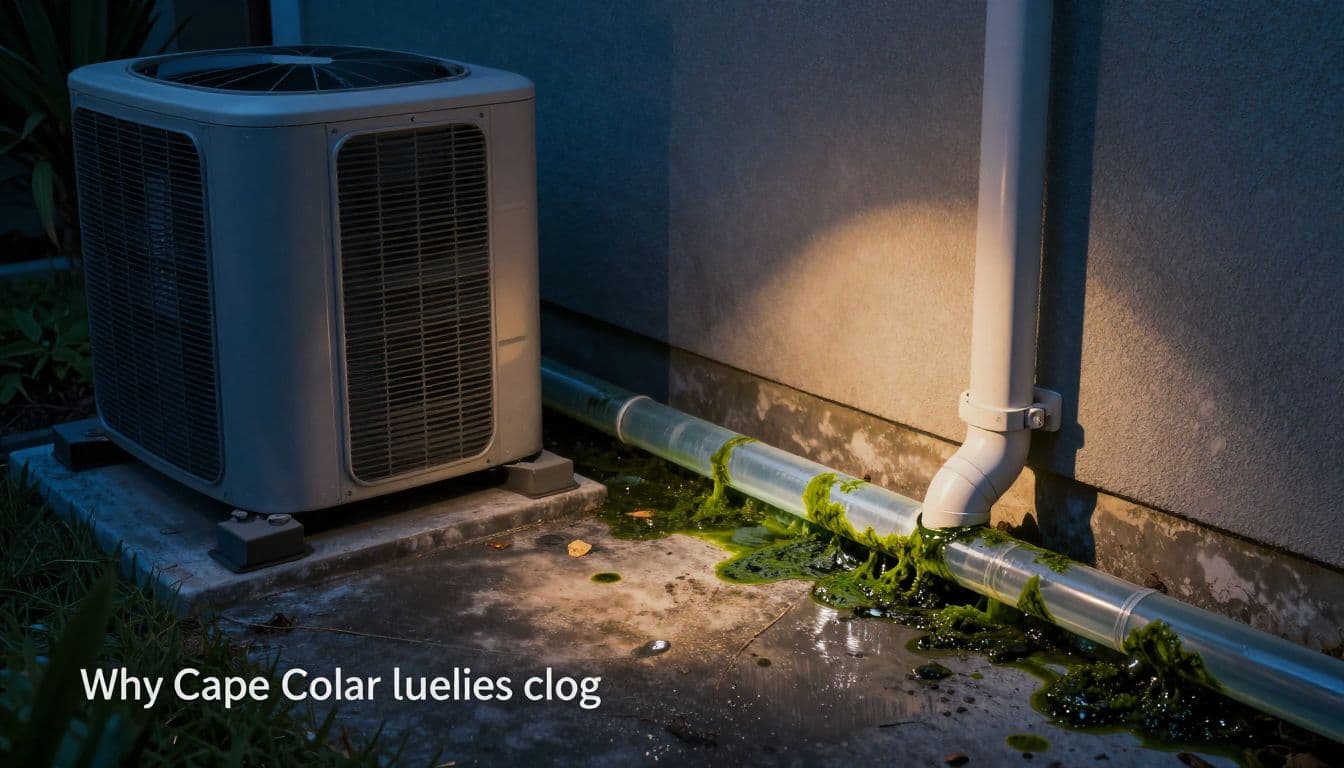
Cape Coral air conditioners run hard for much of the year. As warm, humid air moves across the cold indoor coil, moisture collects and drains away as condensate. That constant water flow gives algae and biofilm a favorable place to grow.
Algae, mold, and slime inside the PVC
The inside of a condensate line stays damp, warm, and dark. Over time, algae, mold, bacteria, dust, and fine debris can create a gel-like blockage. A dirty air filter can add more dust to the system and make that buildup worse.
Florida's humidity speeds up this cycle. Some systems need attention more often than homeowners expect, particularly when the AC runs nearly every day.
Drainage problems can look like simple clogs
Repeated backups don't always mean the technician failed to flush the line. The pipe may have an improper slope, a sag that holds water, a blocked vent, or a damaged section of PVC. A condensate pump can also fail if the system relies on one.
If the same problem returns within weeks, ask for an inspection instead of another quick flush. This guide on why AC drain lines keep clogging can help you spot the common causes before water backs up again.
Warning Signs That Call for Drain Service
A drain-line problem often starts quietly. You might notice an unfamiliar musty smell near the air handler or a small puddle in the closet before the system shuts down.
Pay attention to these common warning signs:
- Water is pooling near the indoor unit or draining from the emergency pan.
- The AC turns off unexpectedly, even though the thermostat still calls for cooling.
- You see water marks on a nearby ceiling, wall, or baseboard.
- The drain outlet outside has little or no water flow while the AC is running.
- Musty odors appear when the air conditioner starts.
- The indoor unit makes a gurgling sound, or the pan holds standing water.
When a routine appointment is enough
A small backup caught early usually allows time for a normal service visit. Turn the system off if you see water near the air handler, then avoid running it until someone checks the drain. Continuing to cool can add more water to an already blocked pan.
A technician can determine whether the issue is a clog or another cause of water leaking from an air conditioner.
When to treat it as an emergency
Call for urgent help when water is spreading into ceilings, walls, flooring, or electrical areas. Act quickly if an attic air handler leaks through the ceiling, since water damage can expand well beyond the AC closet.
After-hours service costs more because of the response time and scheduling. Still, fast 24/7 emergency HVAC service can cost less than repairing drywall, insulation, cabinetry, or flooring after a major overflow.
Avoiding Unnecessary Drain-Line Charges
A fair service visit begins with a clear explanation. You should know whether the technician is quoting a flush, a diagnostic, a repair, or a complete condensate-system service.
Ask what the price includes
Before work begins, ask whether the diagnostic fee applies toward the repair. Confirm whether the quoted amount includes clearing the line, checking the pan, testing the float switch, and verifying outdoor drainage.
Also ask what changed if the recommendation moves from a basic flush to a repair. A technician should be able to show you the cracked fitting, failed pump, standing water, or drainage issue that supports the added work.
Don't confuse a flush with a line replacement
A flush removes buildup within a sound drain line. It cannot fix crushed PVC, poor installation, or a cracked drain pan. Replacement makes sense when the line can't hold water or drain correctly after cleaning.
You can also avoid repeat service calls by replacing a heavily soiled return-air filter on schedule. A clean filter supports airflow and keeps extra debris out of the indoor equipment.
Preventing Another Condensate Backup
Preventive service is usually less expensive than an emergency call. In Cape Coral, the drain system deserves attention during regular AC maintenance because heat, humidity, and long cooling cycles keep condensate flowing.
Add the drain system to AC maintenance
A thorough tune-up should include checking the drain pan, clearing the condensate line, inspecting the trap, and confirming that safety controls work. Some maintenance plans also include drain treatment to slow algae growth.
Scheduled condensate drain maintenance gives a technician a chance to find weak PVC fittings or a faulty float switch before the system overflows.
Keep the outdoor drain outlet clear
Find the condensate drain termination outside your home and keep plants, mulch, and debris away from it. Don't seal or cap the pipe. You may see water dripping during humid weather, and that often means the system is removing moisture normally.
Avoid pouring random chemicals into the line. Strong cleaners can damage parts of the system or fail to clear a deeper blockage. If you use a drain treatment between service visits, follow the product and equipment manufacturer's directions.
A Clearer Path to the Right Repair
The right AC drain line flush cost depends on the actual fault, not a one-size-fits-all flat rate. Most ordinary clogs can be cleared for a low-hundreds price, while damaged piping, failed pumps, and emergency water leaks require more work.
Catching algae buildup early protects your home and keeps a simple flush from becoming a repair. If your AC is leaking, shutting down, or backing up, Contact Us to schedule a service call.
Frequently Asked Questions
How much should it cost to flush an AC drain line in Cape Coral?
A standard AC drain flush commonly costs about $75 to $150 when the clog is light and the line is easy to access. Expect $150 to $250 when the technician needs deeper cleaning, pan service, or extra time to clear heavy algae buildup.
The price may also include a diagnostic fee. Ask before scheduling whether that fee is separate or credited toward the completed repair.
Is drain-line cleaning the same as a basic flush?
Not always. A basic flush focuses on clearing the accessible pipe and confirming drainage. Drain-line cleaning can involve vacuum removal, more extensive buildup removal, pan cleaning, trap inspection, and treatment to slow future algae growth.
Full condensate-system work may also include testing or installing a float switch, inspecting a condensate pump, or repairing damaged PVC. Those added tasks raise the price because they involve parts or more labor.
Can I run my AC with a clogged condensate line?
You shouldn't run the system if water is backing up around the indoor unit or the float switch has shut it down. More cooling creates more condensate, which can overflow the pan and damage nearby materials.
Turn the unit off, protect the area from water, and arrange service. If water is spreading through a ceiling or near electrical equipment, request emergency HVAC help right away.