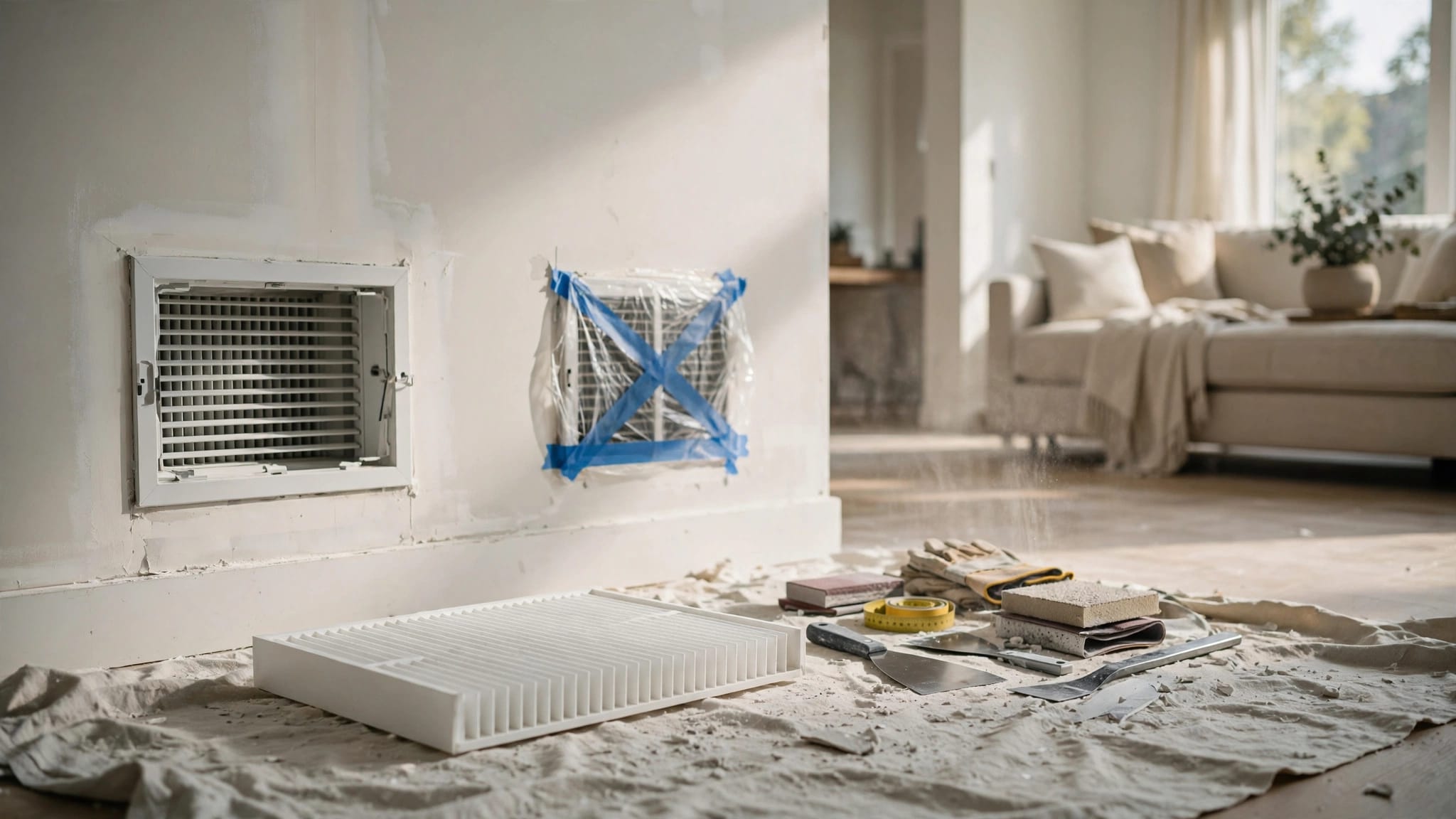
The best MERV filter for a Cape Coral home depends on more than how much dust you want to catch. A higher number can trap more particles, but it can also slow airflow and make your AC work harder.
That tradeoff matters here because Cape Coral homes deal with long cooling seasons, humidity, salt air, pet hair, and plenty of pollen. The right filter keeps indoor air cleaner without turning your system into a bottleneck.
For most homes, there's a clear sweet spot.
What MERV ratings tell you about a filter
MERV stands for Minimum Efficiency Reporting Value. It measures how well a filter captures airborne particles of different sizes. Lower ratings catch larger dust and lint. Higher ratings catch smaller things like pollen, pet dander, and finer debris.
That sounds simple until you factor in airflow. A filter that traps more can also create more resistance. In an AC system that runs for much of the year, that resistance matters.
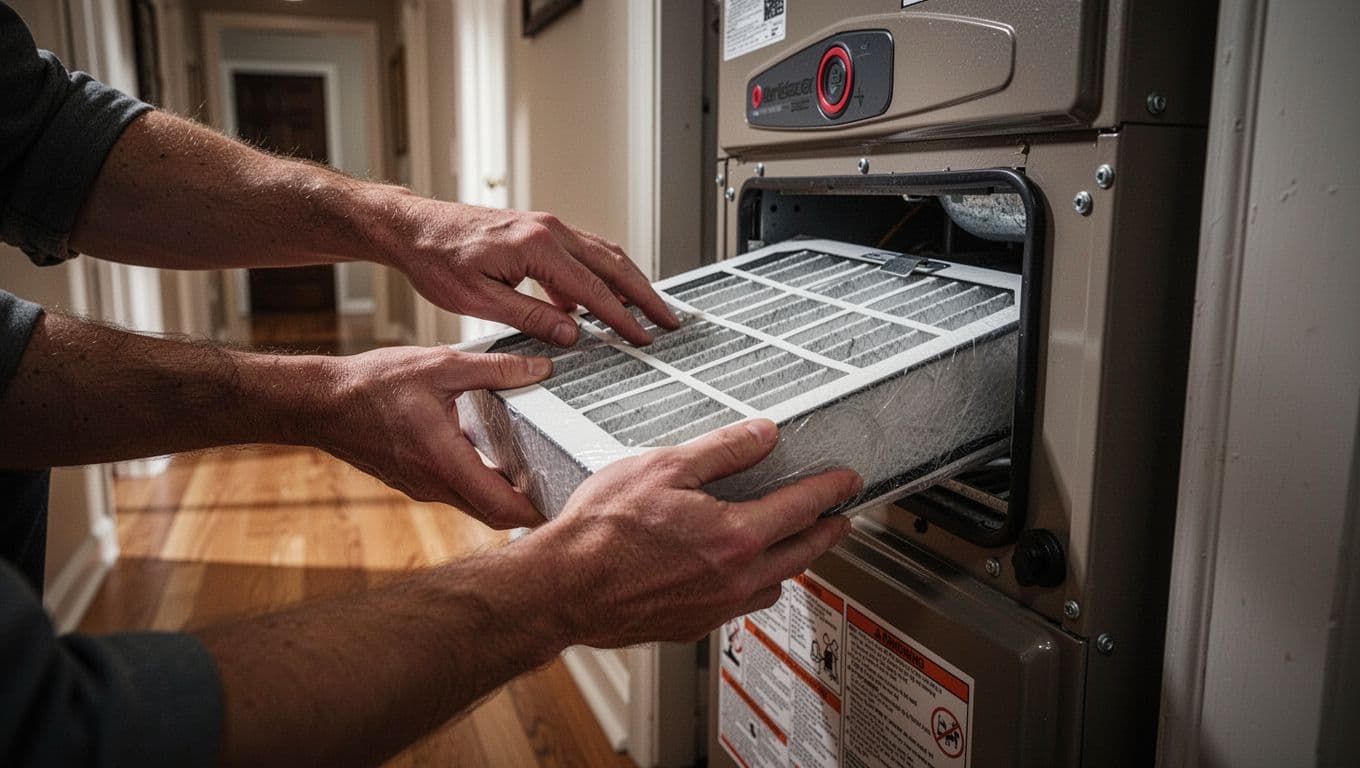
Cape Coral homes need a filter that does two jobs at once. It has to protect the equipment, and it has to support indoor comfort. If it is too loose, more dust reaches the coil and ductwork. If it is too tight, airflow drops and the system can lose efficiency.
That balance matters even more near the coast. Salt-laden dust can build up faster than many homeowners expect, which is one reason protecting AC systems from salt air is so important in this area.
The MERV range that fits most Cape Coral homes
For most Cape Coral homes, MERV 8 is the best place to start . It gives solid filtration for everyday dust, pollen, and common household debris without putting too much strain on most residential systems.
If your home has pets, allergy concerns, or a little more indoor dust than you'd like, MERV 10 or MERV 11 can make sense. Those filters catch more fine particles, so the air often feels cleaner. They still work well in many systems, but airflow needs to stay healthy.
A newer system with clean ducts and a strong blower may handle MERV 11 better than an older unit. On the other hand, an older system may run better with MERV 8. That's why there is no single answer for every house.
A higher filter rating only helps if your system can still move enough air through it.
If you are trying to protect your AC from extra coastal wear, pairing the right filter with regular maintenance is smart. The filter is only one part of the picture. The rest of the system matters too.
When a lower or higher rating makes sense
This table makes the tradeoff easier to see.
| MERV rating | What it catches | Best use in Cape Coral | Airflow impact |
|---|---|---|---|
| 6 to 7 | Larger dust, lint, some pollen | Older systems, basic filtration needs | Low |
| 8 to 11 | Dust, pollen, pet dander, finer debris | Most homes, best all-around balance | Moderate |
| 12 to 13 | Smaller particles, smoke, finer dust | Allergy-heavy homes, newer systems | Higher |
| 14+ | Very fine particles | Only if the system is built for it | Very high |
For many families, MERV 8 to 11 is the sweet spot. It handles common Cape Coral indoor air issues without pushing the system too hard. That range is also easier to live with when you factor in filter change timing.
A higher-rated filter can be a good choice if someone in the home has allergies, if you have multiple pets, or if you want cleaner air in the bedrooms. Still, a higher number is not automatically better. The wrong filter can make the system work harder, and that can hurt comfort.
If you want a simple rule, keep this in mind: the filter should improve air quality, not choke airflow. When airflow gets restricted, efficiency drops, cooling can become uneven, and the blower has to fight for air.
Filter replacement frequency matters as much as the rating
Even the best filter loses value when it stays in place too long. In Cape Coral, filters often need more attention because the AC runs so often and humidity loads the system fast.
For many homes, checking the filter every month is a smart habit. During heavy cooling season, a MERV 8 filter may need replacement every 30 to 60 days. Homes with pets, allergy concerns, or extra dust may need a fresh filter sooner. Higher-MERV filters can clog faster, so they often need closer watch.
A dirty filter can cause more than dusty air. It can raise airflow resistance, stretch out cooling cycles, and leave rooms feeling uneven. It can also make the coil work under tougher conditions.
If you notice weak airflow, more dust around vents, or a return grille that seems louder than usual, the filter may be part of the problem. It may also be time for benefits of professional AC tune-ups, since a tune-up can uncover airflow issues before they get worse.
The right schedule depends on the home, the season, and the filter type. Still, monthly checks are a good habit in Southwest Florida.
How to choose the right filter without guessing
A simple process works better than trial and error.
- Check the air handler manual or the existing filter label.
- Start with MERV 8 if you want a safe balance for most homes.
- Move up only if your system keeps strong airflow and you need cleaner air.
- Recheck after a few weeks, then watch how fast the filter loads up.
That last step matters. If a filter gets dirty fast, the system is telling you something. It may need a lower rating, a different size, or a deeper look at the ductwork and blower.
System age matters too. Older equipment often does better with a less restrictive filter. Newer systems may have more room to handle MERV 11, but only if the airflow stays within the equipment's limits. Always check the manufacturer guidance before stepping up to a higher rating.
Some systems cannot handle high-MERV filters without reduced airflow, so it pays to verify before you buy.
If you are unsure, Contact Us and ask for help with the filter choice, airflow, or a service call. A quick check can save you from higher bills and weak cooling later.
Conclusion
For most Cape Coral homes, MERV 8 is the best starting point, and MERV 11 can be a smart upgrade for homes with pets or allergy concerns. Higher ratings can improve indoor air quality, but they only help when the system can still breathe well.
That's the real answer for local homeowners. The best filter is the one that protects your air and respects your AC at the same time. If the filter fights the system, it is the wrong fit.