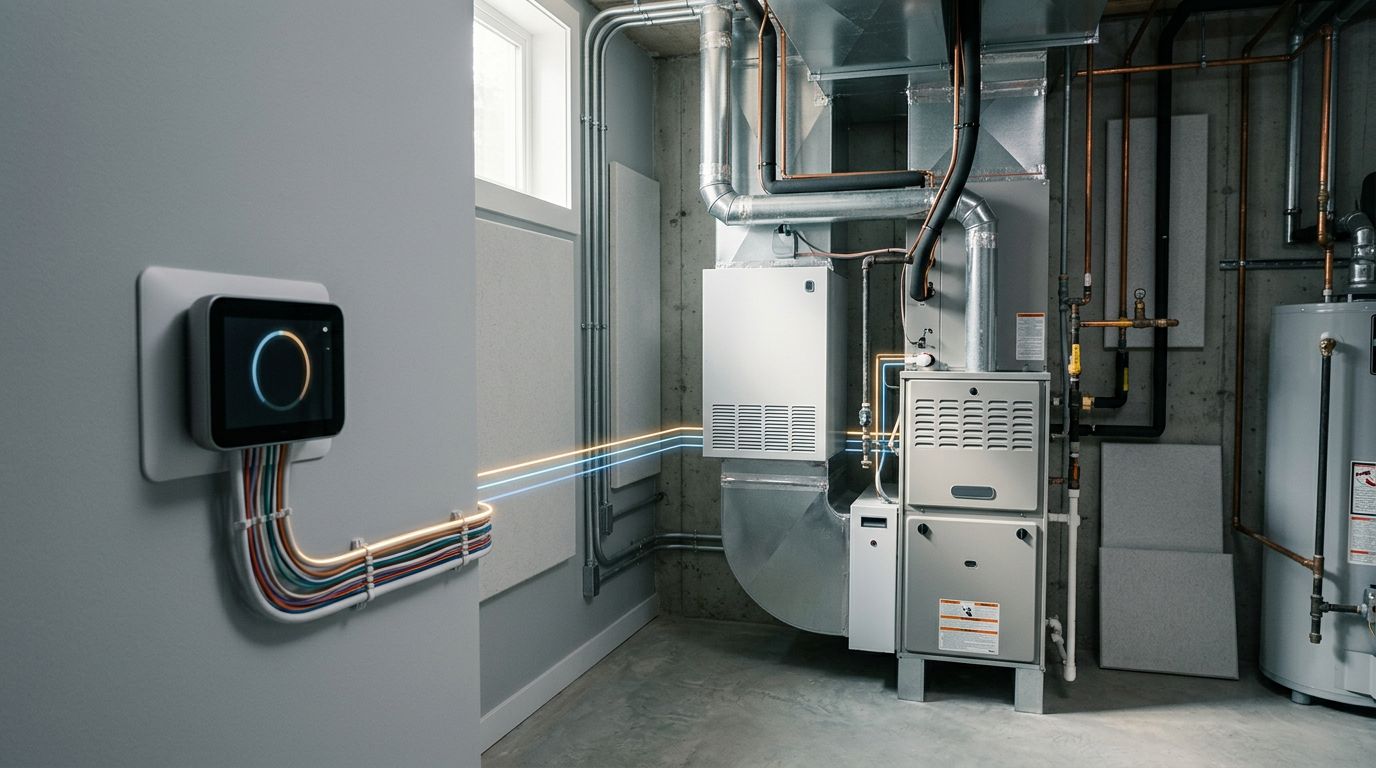
A thermostat can make a perfectly good air conditioner seem unreliable when it sits in the wrong spot. The right HVAC thermostat location helps your system respond to the conditions your family actually feels, not a pocket of heat, sun, or moving air.
Florida homes face long cooling seasons, high humidity, strong afternoon sun, and open layouts that can confuse a poorly placed control. A few placement details can improve comfort, reduce short cycling, and make temperature settings more dependable.
Why HVAC Thermostat Location Affects Comfort
Your thermostat is the system's decision-maker. It reads the air around it, compares that reading with your selected setting, and tells the HVAC system when to start or stop.
If the thermostat senses heat from sunlight or cooking, it may keep the AC running after the rest of the home feels cool. If cold supply air blows over it, the system may shut off too soon. Either issue can leave bedrooms stuffy, create uneven temperatures, and raise utility costs.
The thermostat needs a representative reading
A representative location reflects the average conditions in the main living area. In most Florida homes, that means a central hallway, an interior wall near common rooms, or another spot where air circulates naturally.
The thermostat should not react to one unusual corner of the house. It needs to read the temperature people experience across the day, including the warm afternoon hours when your AC works hardest.
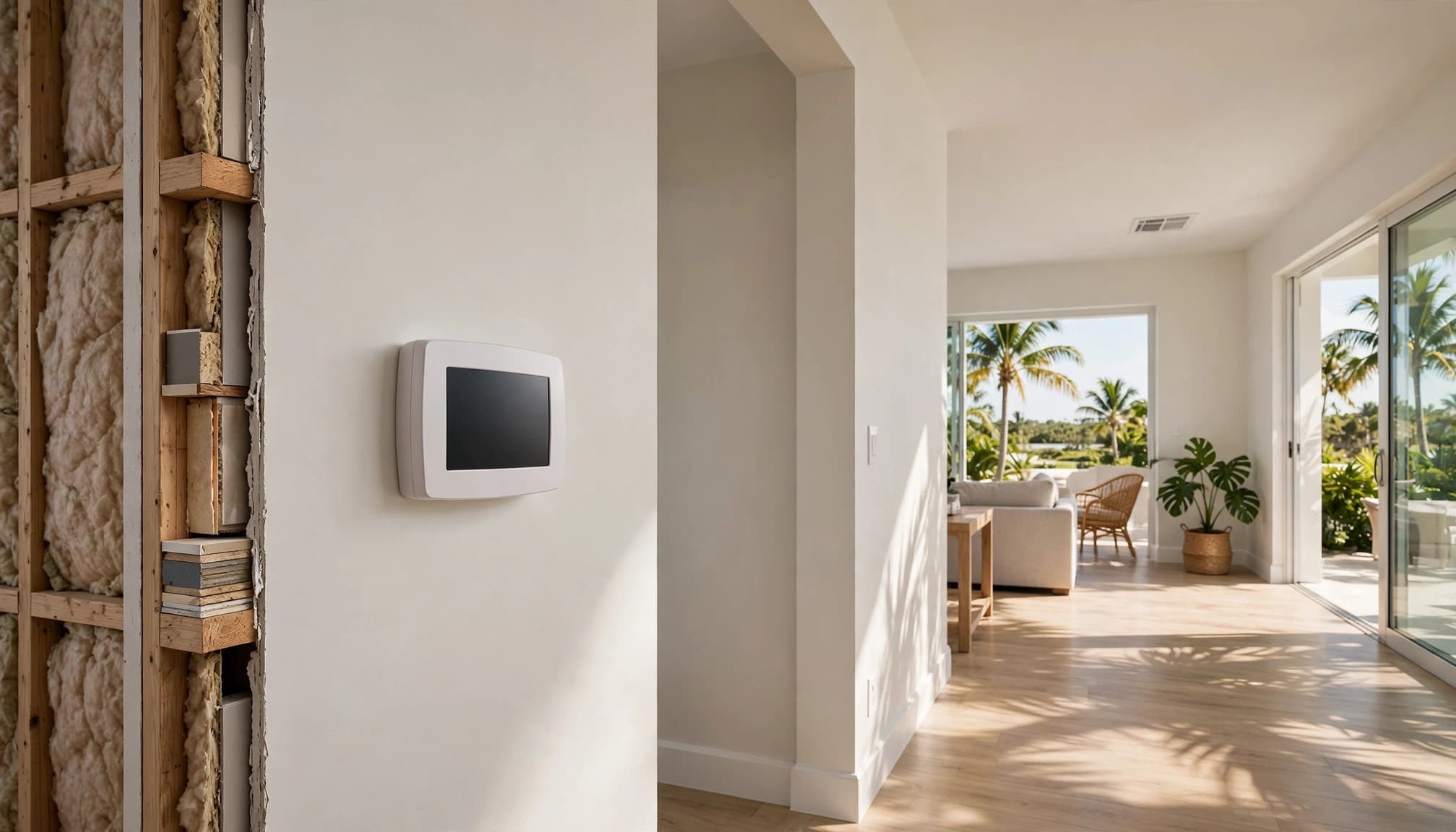
Florida humidity makes accurate control more important
Air conditioning removes heat and moisture at the same time. When a thermostat reaches its setting too quickly because of a cool draft, the system may not run long enough to remove as much humidity as the home needs.
That can make a room feel clammy even when the display shows the desired temperature. A poor HVAC thermostat location won't cause every humidity issue, but it can make existing airflow, ductwork, or equipment-sizing problems harder to spot.
Put the Thermostat on an Interior Wall
For most homes, an interior wall is the safest starting point. These walls are less affected by outdoor heat, rain-cooled surfaces, and solar gain than exterior walls.
Mount the thermostat about 4 to 5 feet above the floor. At that height, it samples the occupied part of the room instead of unusually warm ceiling air or cooler air close to the floor.
Choose a central, low-traffic area
A hallway that connects bedrooms and common areas often works well. It should have normal airflow, but it should not sit directly in the path of an air register, return grille, exterior door, or open window.
A wall near the living room can also work if it stays away from the kitchen and large glass doors. In a smaller home, the best location may be the interior wall between the main living space and a hallway.
Keep the wall clear of heat sources
Thermostats can respond to heat from more than sunlight. Lamps, televisions, computers, aquarium lights, fireplaces, and even a nearby refrigerator can distort the reading.
Leave space around the control. Avoid placing furniture, tall bookcases, curtains, or wall art where they block airflow around it. A thermostat enclosed in a tight corner cannot sense the room accurately.
A thermostat can only control the air it measures. A hot or cold pocket near the wall can lead to uncomfortable temperatures throughout the house.
Thermostat Locations to Avoid in Florida Homes
Many placement mistakes happen because a wall looks convenient during construction or remodeling. Convenience matters less than a reliable reading.
Avoid mounting the control where quick temperature changes are normal. The following areas often create false readings.
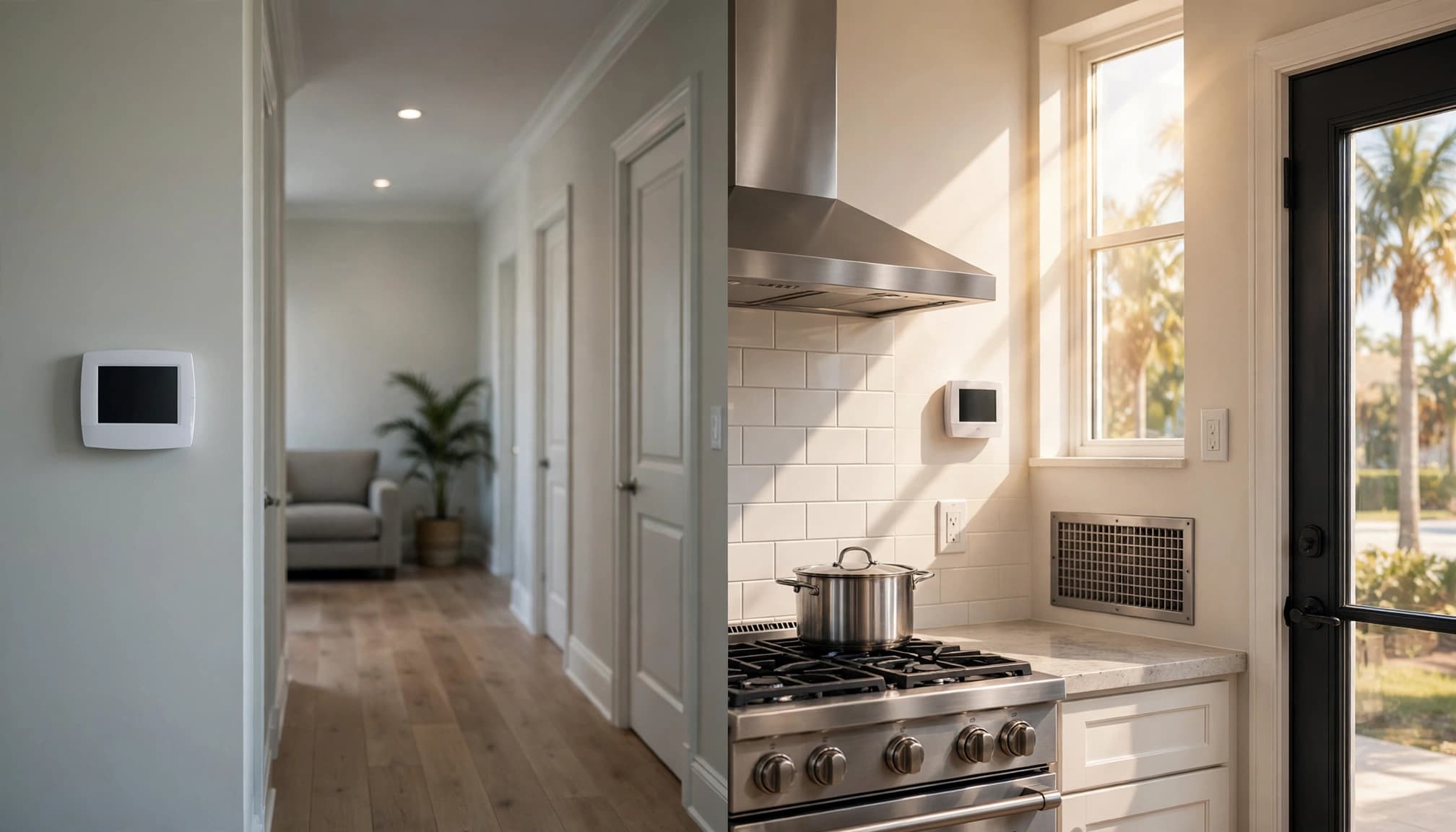
Direct sun, windows, and exterior doors
Florida sunlight can heat a thermostat wall quickly, especially on west-facing exposures. Even a brief blast of afternoon sun may make the system run longer than necessary.
Windows and exterior doors create similar problems. Warm air enters when a door opens, while glass can transfer outdoor heat toward the thermostat. Exterior walls also warm and cool more than interior walls.
Supply vents, return grilles, kitchens, and bathrooms
Don't place a thermostat directly below, above, or beside a supply vent. Cool air from the register can make it think the entire home has reached the set temperature.
Return grilles can also affect readings because the air there may move faster than it does in the living space. Kitchens add heat from ovens, cooktops, dishwashers, and refrigerators. Bathrooms are poor choices because showers create sudden bursts of heat and moisture.
Avoid these common spots whenever possible:
- On a wall hit by direct morning or afternoon sunlight.
- Near a patio door, garage entry, frequently opened exterior door, or drafty window.
- Close to supply registers, return grilles, ceiling fans, or portable fans.
- Behind curtains, shelves, artwork, or large furniture that restricts airflow.
- In kitchens, laundry rooms, bathrooms, or near heat-producing appliances.
Open Floor Plans Need a More Careful Choice
Open-concept homes don't always have a clear central hallway. A large kitchen, dining room, and living room may share one broad space, yet each area can feel different.
In this layout, place the thermostat on an interior wall near the main living area, but far enough from the kitchen to avoid appliance heat. Also keep it away from sliding glass doors and windows that bring in late-day sun.
Favor the area used most often
Pick the space where your household spends the most time. If the family room is the center of daily activity, its nearby interior wall may offer a better reading than a little-used foyer.
However, don't mount the thermostat directly across from a large bank of west-facing windows. A spot a few feet away, with less sun exposure and steadier airflow, usually gives the system a better signal.
Watch for rooms that stay warmer
A thermostat in an open great room may not reflect a closed bedroom at the end of a hallway. Before changing the setting repeatedly, check whether doors, return-air paths, ductwork, or registers are limiting airflow.
A clean filter and open registers are good first checks. Persistent weak airflow, noisy returns, or rooms that remain warmer than the rest of the home may call for ductwork repair and replacement in Cape Coral.
Multi-Story Homes Often Need More Than One Control
Heat rises, so upstairs rooms usually need more cooling than first-floor spaces. One thermostat downstairs can leave the second floor warm, while one upstairs can overcool the main level.
The right solution depends on the HVAC equipment and duct design. Some homes have one system and one thermostat. Others have separate systems, zone dampers, or compatible controls that divide the home into temperature zones.
Use the thermostat that controls each system
If each floor has its own HVAC system, place each thermostat where that system's occupants spend time. An upstairs thermostat should generally sit on an interior wall in an upstairs hall or common area, away from stairwell drafts.
Staircases can pull warm air upward and create an unrepresentative reading. Keep the control away from the top or bottom of the stairs when another suitable wall is available.
Zoning can solve competing comfort needs
A zoning system uses separate thermostats and motorized dampers to direct conditioned air to different areas. It can help homes where upstairs bedrooms, guest rooms, and living spaces need different temperatures.
Zoning isn't the answer to every comfort complaint. Restrictive ducts, dirty equipment, closed registers, and incorrect blower settings can also create uneven cooling. A technician should inspect the full system before recommending major changes.
Use Smart Thermostat Sensors Wisely
Many smart thermostats work with optional room sensors. These small sensors help the system consider temperatures in selected rooms instead of relying only on the thermostat wall.
They can be useful when a bedroom runs warmer at night or when the main thermostat sits near a large open living area. Still, sensors work best after the main thermostat has a sound location.
Place room sensors where people spend time
Set a sensor on a shelf, table, or interior wall in the room you want to improve. Keep it away from direct sun, exterior walls, electronics, lamps, and supply vents.
A sensor on a hot dresser near a window will produce the same misleading data as a misplaced thermostat. For sleeping areas, position the sensor near the bed's occupied zone, not on a nightstand beside a lamp.
Don't use sensors to hide HVAC problems
Room sensors can improve comfort, but they can't repair an undersized return, leaking duct, clogged coil, or oversized AC. An oversized unit can cool the thermostat area quickly and shut down before removing enough moisture.
If your home feels cool but damp, or if the AC cycles frequently, schedule an inspection. Regular HVAC maintenance agreements in Cape Coral can include thermostat calibration and system checks before a minor comfort issue becomes a summer breakdown.
Check the Location Before You Move Anything
Before relocating a thermostat, watch how it behaves over several days. Note when the house feels uncomfortable, which rooms change first, and whether sunlight reaches the current wall.
Compare the thermostat display with a separate indoor thermometer placed in the main living area. Don't put the thermometer beside an air vent or window. A large, consistent difference can point to a placement or calibration issue.
Relocation usually requires a professional
Moving a wired thermostat may require new low-voltage wiring, wall repair, and a check of the HVAC control connections. Incorrect wiring can damage equipment controls or prevent the system from operating properly.
A qualified HVAC professional can assess airflow, sun exposure, wiring routes, and the home's layout before choosing a new spot. Electrical and HVAC wiring work should always be handled by a qualified professional.
If the AC is running poorly, start with safe basics such as checking settings, replacing weak batteries, and inspecting the filter. For warm air, repeated cycling, unusual noises, or a thermostat that won't control the system, review what to check before calling for AC repair, then Contact Us to schedule service.
A Better Thermostat Location Supports Better Cooling
The best HVAC thermostat location is usually an interior wall in a central living area, about 4 to 5 feet above the floor. It stays clear of sunlight, drafts, vents, exterior doors, windows, kitchens, bathrooms, and nearby appliances.
Open layouts, second floors, humidity concerns, and hard-to-cool bedrooms may need sensors, zoning, or an airflow evaluation. A well-placed thermostat gives your AC a fair reading, which helps it deliver the steady, comfortable indoor conditions Florida homes need.