A broken rooftop unit can empty a restaurant dining room or make an office miserable in a few hours. A planned commercial HVAC maintenance agreement cost is easier to budget than an urgent failure during Cape Coral's hottest, wettest months.
For 2026, many small-to-mid-size local businesses can expect to spend about $600 to $1,200 per year for a basic commercial maintenance plan covering one rooftop or split system. The right price depends on the equipment, access, visit schedule, and what the contract actually includes.
A good agreement gives your equipment regular attention before a small issue becomes an inconvenient interruption.
Commercial HVAC Maintenance Cost Ranges for Cape Coral Businesses
There isn't one fixed commercial HVAC maintenance cost for every Cape Coral property. A single office with one accessible split system needs a different plan than a medical building with several rooftop units, zones, and long operating hours.
Use these figures as 2026 planning ranges rather than a final quote. A technician needs to inspect the property before setting contract pricing.
| Property or agreement type | Typical 2026 planning range | Common service level |
|---|---|---|
| One light-commercial split system or RTU | $500 to $1,200 per year | Two scheduled visits |
| Small retail, office, or restaurant system | $600 to $1,200 per year | Seasonal inspection and cleaning |
| Quarterly plan for one RTU | $785 to $1,250 per year | Four scheduled visits |
| Older, larger, or difficult-access unit | $1,200 to $2,000 per year | More labor and inspection time |
| Multi-unit or complex commercial contract | $1,000 to $10,000+ per contract | Customized scope and scheduling |
The $600 to $1,200 range is a practical local starting point for a small-to-mid-size rooftop or split-system setup. However, a small agreement with limited coverage can fall below that range, while a high-demand property can move well above it.
Price per unit is only the starting point
A quote may list a rate per unit, yet the full contract price also reflects how long service takes. Ten well-maintained units on an open roof may cost less per unit than five neglected units with difficult access.
Ask whether the provider bills by unit, tonnage, labor hours, or a custom annual scope. That detail makes bids far easier to compare.
Quarterly service often fits Southwest Florida
Many Cape Coral businesses choose quarterly visits because cooling equipment runs for much of the year. Frequent inspections can catch blocked drains, dirty coils, loose electrical connections, and worn belts before a busy workday exposes the problem.
A business that closes for summer or has light equipment use may prefer two visits each year. The maintenance schedule should match actual operating hours, not a one-size-fits-all package.
What a Commercial HVAC Maintenance Agreement Should Cover
The agreement should describe scheduled preventive work in plain language. If the proposal only says "maintenance," ask for a written task list before signing.
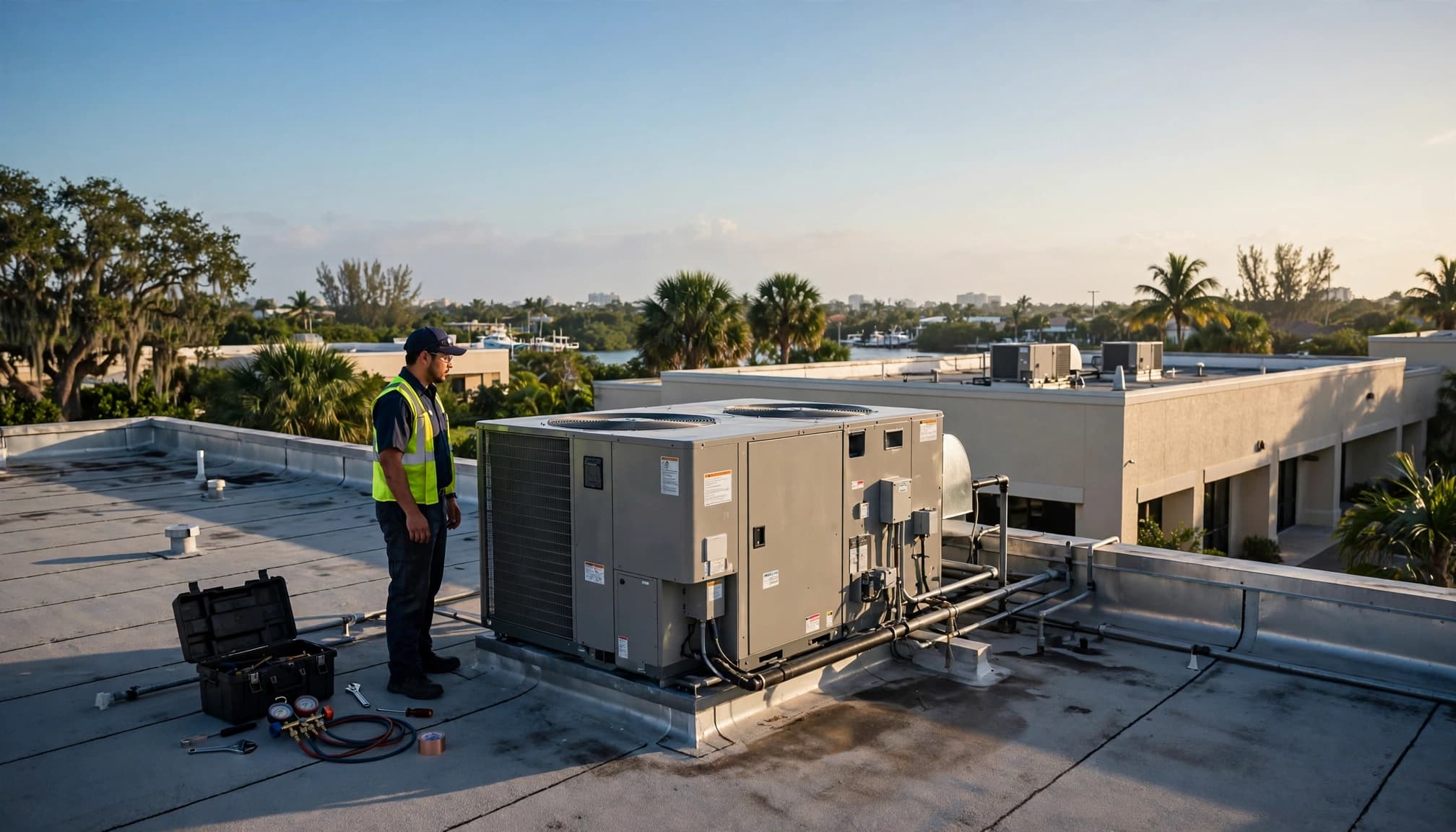
A typical commercial visit may include filter inspection or replacement, condenser and evaporator coil checks, drain-line service, thermostat and control testing, electrical inspection, refrigerant performance checks, and an airflow review. The technician may also inspect belts, pulleys, blower components, disconnects, cabinet condition, and visible duct connections.
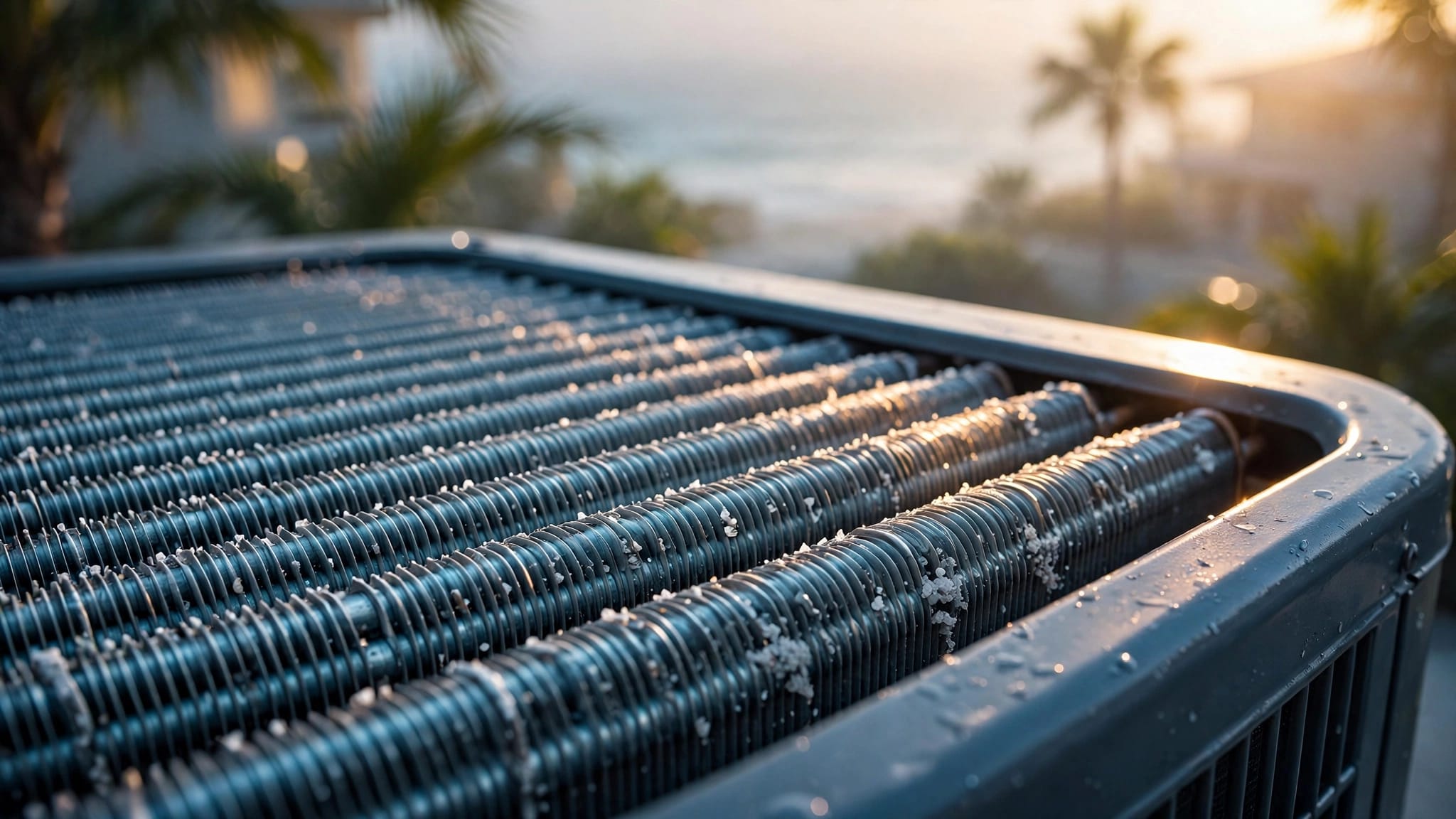
For rooftop equipment, coastal moisture and salt exposure make cabinet corrosion, coil condition, and electrical connections important inspection points. After severe weather, roof-mounted units may need an added check for damage, loose panels, or water intrusion.
Maintenance is not repair coverage
A maintenance agreement pays for scheduled preventive service . It usually doesn't include major parts, refrigerant, compressors, motors, replacement equipment, or repairs outside the stated work.
Some plans offer priority scheduling and a discount on additional repairs. For example, Cape Coral HVAC maintenance agreements from Back Bay Heating & Cooling include emergency-service scheduling and a 10 percent discount on additional repairs.
A service agreement has value when its inspection work is clear. "Priority service" is helpful, but it doesn't replace a defined maintenance scope.
Review filters, consumables, and after-hours terms
Filters, cleaning materials, and minor supplies may be included or billed separately. Likewise, an emergency dispatch may receive priority under the agreement while still carrying an after-hours labor rate.
Before approving a contract, confirm whether it includes filter changes, coil cleaning, drain treatment, documentation, and emergency response terms. A lower annual price may cover fewer labor hours or exclude basic materials.
Factors That Change Commercial HVAC Agreement Pricing
Equipment condition and property layout carry more weight than a building's square footage alone. A clear proposal explains why your rate is higher or lower than another property's rate.
Equipment type, age, and unit count
A newer five-ton rooftop unit with easy access usually needs less corrective attention than a 15-year-old unit with corrosion and recurring performance complaints. Older equipment can still be maintained well, but it often needs longer inspections and more frequent adjustments.
Tonnage also affects the work. Larger RTUs have bigger components, higher electrical demands, and more costly parts if a repair becomes necessary. Chillers, cooling towers, make-up air units, and building automation controls need a more specialized scope than a small package unit.
Access and business operating hours
Roof hatches, ladders, ceiling access, security requirements, and work restrictions affect labor. A technician may need to schedule early-morning service for a restaurant, coordinate with tenants, or use special safety equipment to reach rooftop units.
Cape Coral businesses with equipment exposed to salt air also benefit from regular corrosion checks. Although maintenance can't stop every failure, it can document equipment condition and identify work before it becomes urgent.
Frequency and coverage choices
Two annual visits cost less than quarterly visits. Still, quarterly service can make sense for properties with long cooling hours, humidity-sensitive areas, food service operations, or several occupied suites.
The commercial HVAC maintenance agreement cost also rises when the contract includes after-hours coverage, priority dispatch, fixed labor rates, detailed reporting, or service for multiple locations.
How to Compare Maintenance Agreement Prices Fairly
A low total doesn't always mean lower operating costs. One contractor may include drain cleaning and coil inspection, while another bills those services as add-ons.

Request proposals that identify every covered unit by model number, location, and capacity. Then compare the service frequency and task list side by side.
A useful agreement should state:
- The number of scheduled visits and the time of year for each visit.
- Which inspections, cleaning steps, and adjustments are included.
- How filters, refrigerant, labor, and replacement parts are priced.
- Whether priority response applies to after-hours breakdowns.
- The repair discount, labor warranty, cancellation terms, and renewal process.
A seasonal schedule also helps managers prepare for Southwest Florida's heavy cooling season. The commercial AC maintenance checklist for Cape Coral businesses offers useful timing for pre-season, high-use, and post-storm inspections.
Demand a complete written scope
Avoid agreements built around vague phrases such as "full tune-up" or "as-needed repairs." A written scope should describe what the technician will test and clean, along with what happens if the inspection finds a problem.
No repair work should start without your approval. The estimate for added work should identify the failed part, labor, materials, and whether the repair includes a warranty.
Verify that the HVAC company holds the required Florida licensing and insurance. A cheap agreement has little value if the provider can't safely service your equipment or document the work.
Maintenance Agreements, Repairs, and Replacement Are Different Costs
Budgeting works better when you separate recurring care from unexpected repairs and capital replacement. They belong in different categories, even when they appear on the same invoice.
A maintenance agreement is a predictable annual expense. A repair is a variable cost that starts with diagnosis, then adds labor and parts. Current service benchmarks commonly place a truck or dispatch fee around $95 to $295, while a diagnostic visit with a basic repair can run roughly $185 to $625.
After-hours calls can cost more, especially when a business needs immediate cooling. An agreement may improve response priority, but it doesn't make a failed compressor or refrigerant leak free.
When a repair deserves closer review
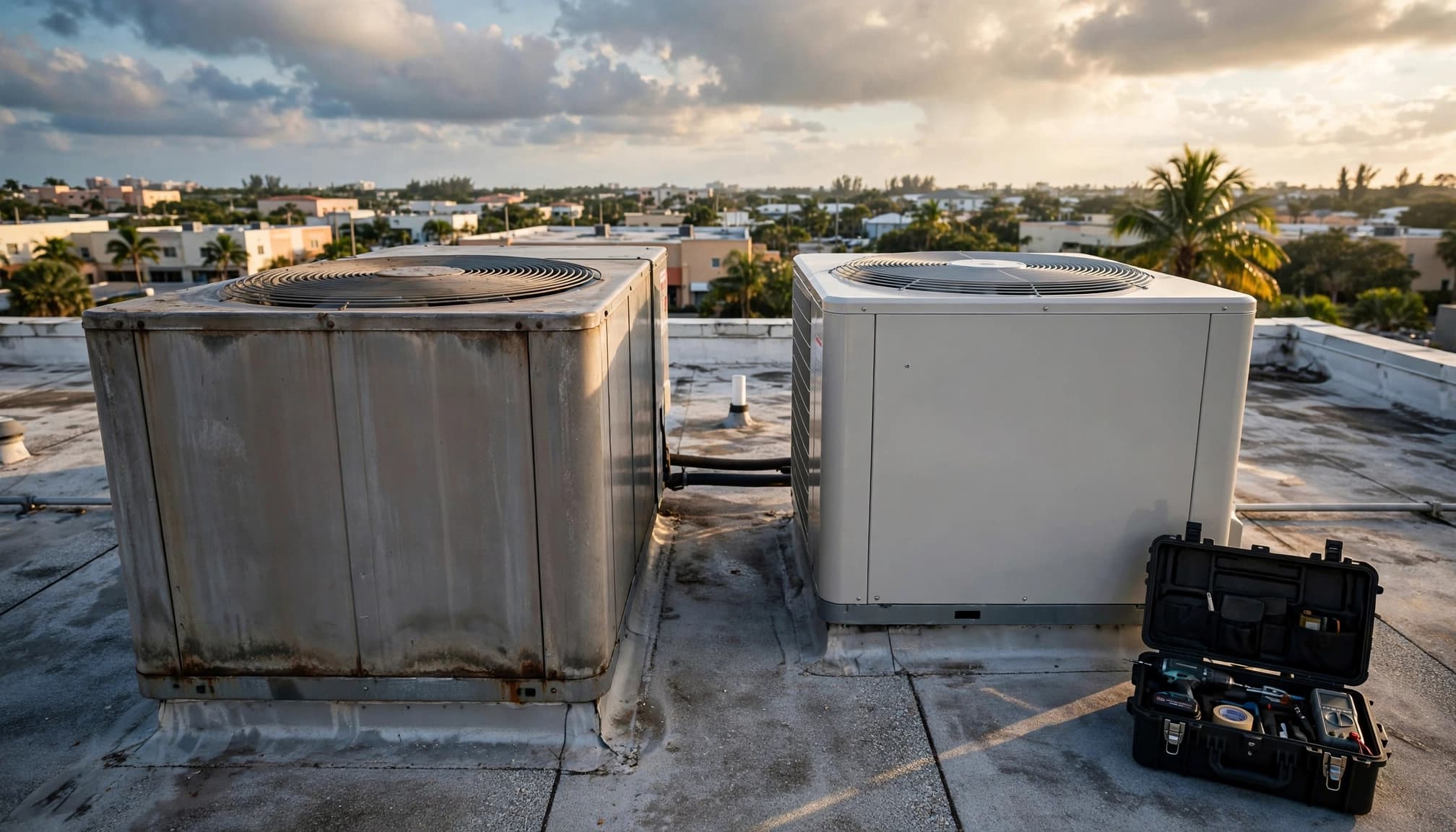
Repeated breakdowns, severe cabinet or coil corrosion, major refrigerant leaks, obsolete controls, and compressor trouble deserve a repair-versus-replacement conversation. Keep service records, comfort complaints, utility concerns, and unit model numbers together for that discussion.
Commercial rooftop replacement costs are far larger than annual maintenance fees. A typical 2026 installed RTU replacement can range from about $8,000 to $38,000, based on unit size, crane access, curb changes, electrical work, duct connections, and permits.
For more detailed planning, review commercial HVAC replacement costs in Cape Coral. A maintenance plan helps you plan for equipment aging, but it won't eliminate replacement costs.
Build a Plan Around Your Property's Actual Risks
Start with a current equipment list. Record each unit's model, serial number, tonnage, age, location, and known repair history. That inventory prevents confusion when a technician visits a multi-unit building.
Next, decide which systems affect operations most. A failed unit over a server room, kitchen, clinic, or customer-facing area may need higher-priority service than equipment in a lightly used storage space.
A strong commercial HVAC maintenance cost proposal also accounts for practical details: roof access, tenant schedules, filter responsibilities, past drain backups, corrosion, and whether the equipment can be taken offline during normal hours.
Keep service reports after every visit. Over time, those records show repeating faults and help you decide when another repair makes sense or when capital planning should begin.
If a unit stops cooling, smells electrical, leaks water, or makes unusual noise, schedule repair instead of waiting for the next maintenance visit. For prompt local help, Contact Us to arrange a service call.
A Predictable HVAC Budget Starts With a Clear Scope
For many Cape Coral businesses, a basic annual agreement starts around $600 to $1,200 for a small-to-mid-size commercial system. More units, quarterly visits, aging equipment, rooftop access, and emergency coverage increase that figure.
The best agreement spells out the service tasks, exclusions, response terms, and repair pricing before problems appear. Clear records and routine inspections give you a better basis for each repair or replacement decision.