Your AC can have the right equipment and still cool poorly if its refrigerant lines aren't sized, routed, and charged for that exact system. AC refrigerant line length affects how the indoor and outdoor units move refrigerant, especially in Cape Coral homes where heat and humidity keep systems running hard.
There isn't one safe maximum line length for every air conditioner. Split central AC units, heat pumps, ductless mini-splits, refrigerant types, and even different models from the same manufacturer have their own limits and charging procedures.
A licensed HVAC technician should confirm the complete line-set design before an installation, replacement, or major repair.
How AC Refrigerant Line Length Affects System Performance
The line set is the pair of copper tubes that links the indoor coil or air handler to the outdoor condenser. The larger insulated suction line carries low-pressure refrigerant vapor back to the outdoor unit. The smaller liquid line carries refrigerant toward the indoor coil.
These tubes are part of a sealed refrigeration circuit. They aren't the same as the condensate drain line, which removes water from the air handler.
Refrigerant flow changes with the line run
A longer route adds more tubing volume and more resistance to refrigerant flow. It may also require a different pipe diameter, a different factory-charge adjustment, or both.
Too little refrigerant can reduce cooling and lead to icing. Too much can also hurt performance and place stress on the compressor. A technician must follow the procedure for the exact indoor and outdoor equipment combination, rather than applying a generic ounces-per-foot rule.
Line length also includes more than the straight-line distance between units. Bends, vertical sections, and routing around structural obstacles can all affect the installed run.
Vertical lift needs its own review
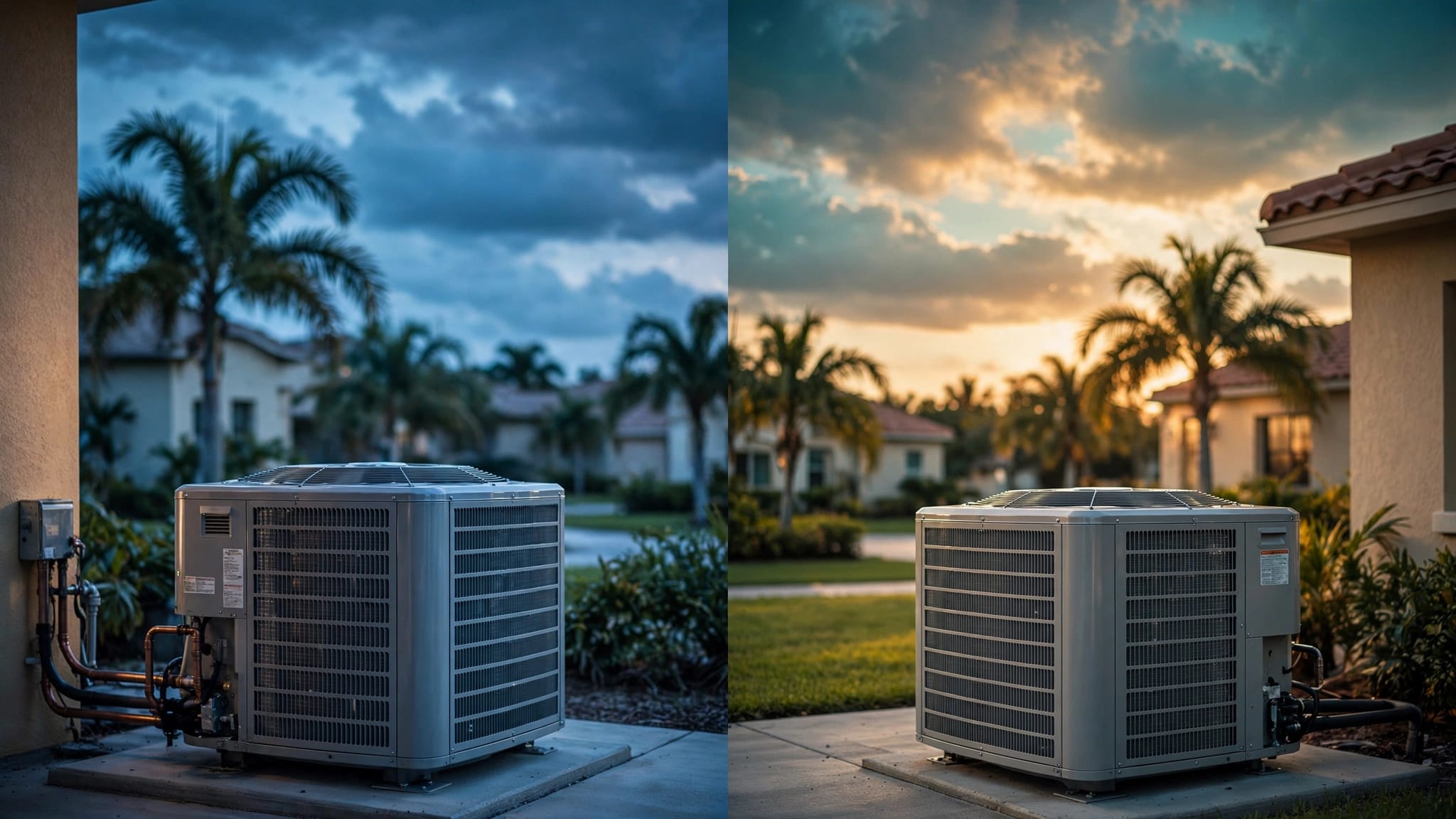
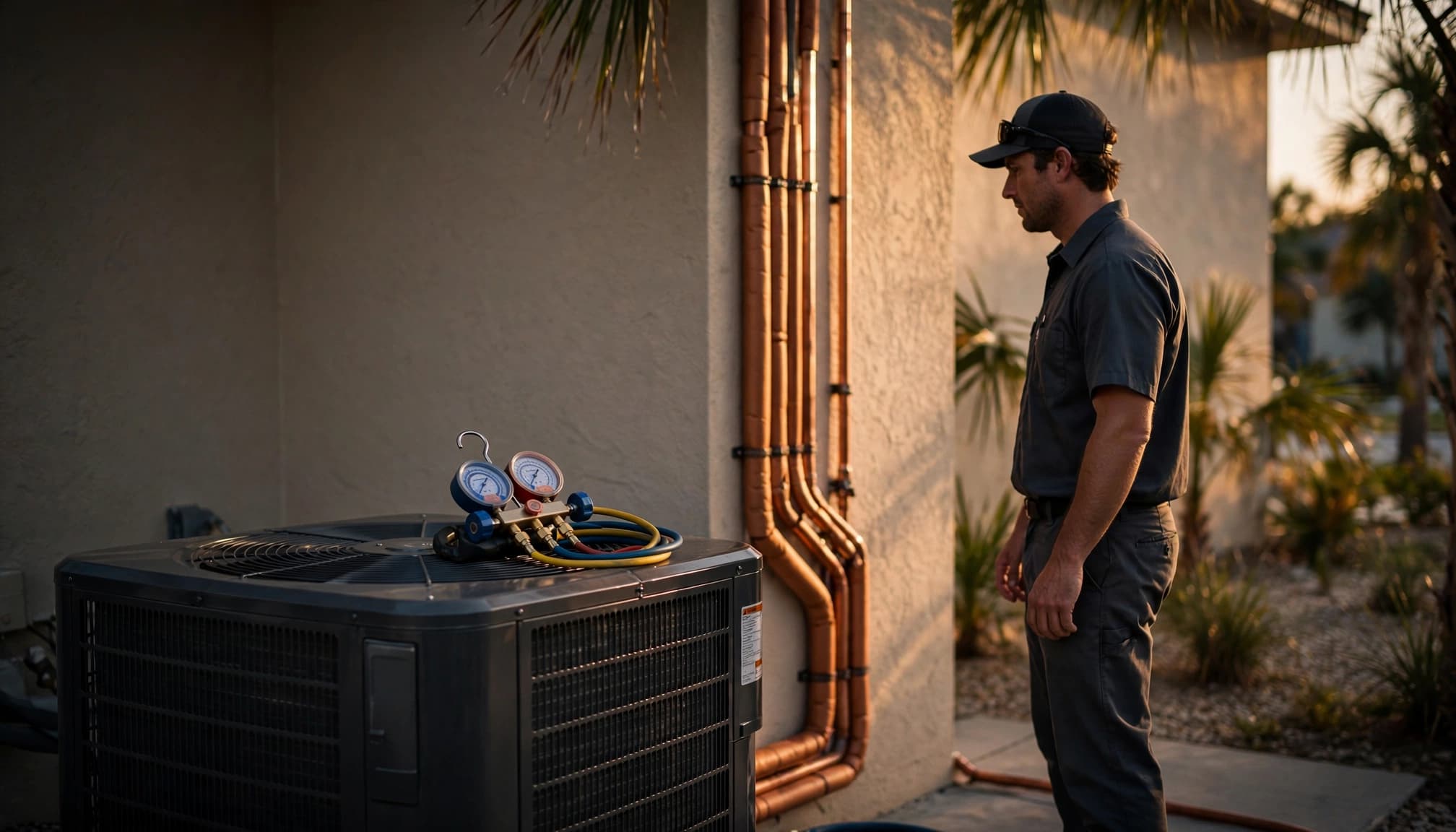
Vertical separation between the indoor and outdoor units matters as much as horizontal distance. A second-floor air handler paired with a ground-level condenser may need a different design than equipment installed on the same level.
Manufacturers set limits for total length and vertical rise. They may also require traps, pipe sizing changes, or a different unit location when the elevation change is substantial. Heat pumps need careful review because refrigerant flow reverses when the system switches between cooling and heating.
A line set can look neat and still be wrong for the equipment if its diameter, lift, insulation, or charge procedure doesn't match the manufacturer's instructions.
Manufacturer Rules for AC Refrigerant Line Length
Factory charge, maximum piping length, and allowable lift vary by model. The installation manual for the complete matched system is the only reliable source for a specific home.
Carrier systems often start with a 15-foot baseline
Carrier documents for certain R-410A split systems state that the factory charge covers 15 feet of line set. Those manuals call for a model-specific adjustment when the installed 3/8-inch liquid line differs from that baseline.
Carrier also directs technicians to run some systems in cooling mode for at least 15 minutes before checking charge on standard line lengths of 80 feet or less. That process helps readings stabilize before final verification.
Those details apply only to the listed Carrier equipment. They aren't a formula for another Carrier model, a heat pump, or a system from another manufacturer.
Trane procedures can use different reference lengths
Some Trane small-split manuals also list 15 feet of factory-charged connecting line. However, Trane's 2025 procedures for certain equipment reference a 10-foot factory-charge credit and require the installer to calculate total tubing length and vertical lift.
That difference shows why a brand name alone isn't enough. A contractor needs the model numbers, refrigerant type, indoor unit details, and installation manual before determining the charge procedure.
Mitsubishi Electric limits vary by model and refrigerant
Mitsubishi Electric's R-32 documentation for some outdoor units covers piping up to 7 meters, then calls for additional refrigerant according to that model's instructions. Some Mitsubishi R-410A documentation shows model-specific maximum pipe lengths such as 70 or 100 feet, while other listed combinations allow much longer runs.
Ductless systems often handle longer routes well when designed correctly. Still, a mini-split's line length, elevation change, branch connections, and pipe sizes must all stay within its published requirements.
Line-Set Design Is More Than a Distance Measurement
A proper installation starts with equipment selection and a measured route. A larger system doesn't automatically need longer lines, but it may require different line diameters than a smaller system.
Correct tubing size protects capacity and compressor operation
The copper tubing must match the outdoor unit, indoor coil or air handler, refrigerant, and approved equipment match. An existing line set may be usable when it is clean, correctly sized, undamaged, and approved by the new system's manufacturer.
Older homes may have tubing installed for an R-22 system, while many replacement systems use R-410A, R-32, or R-454B. The refrigerant already in the home doesn't decide whether old tubing can remain. The new equipment's documentation does.
If copper is crushed, corroded, leaking, contaminated, or too small, replacement is often the better option. During air conditioning installation in Cape Coral, the contractor should explain whether the existing lines meet the new unit's requirements.
Routing and insulation matter in Southwest Florida
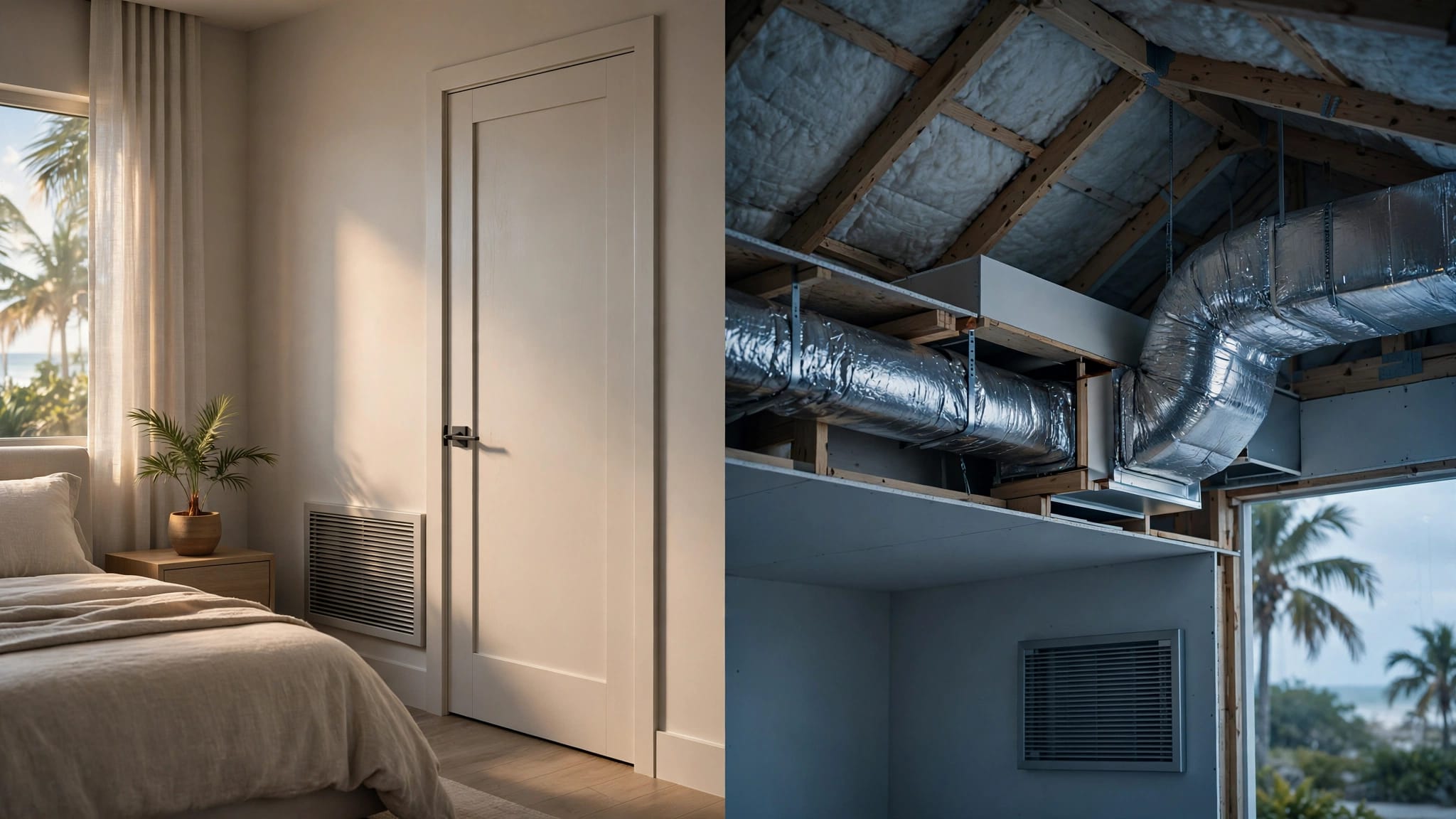
A long line set hidden behind finished walls, below a slab, or through a tight attic costs more to access than an exposed run. Sometimes a new exterior route with protective line-hide cover makes more sense than opening walls or floors.
The suction line needs continuous, well-sealed insulation. Damaged insulation lets the cold line absorb heat and sweat in humid weather. Outdoor sections also need solid supports, protected wall penetrations, and UV-resistant covering where needed.
Warning Signs That Need Professional Diagnosis
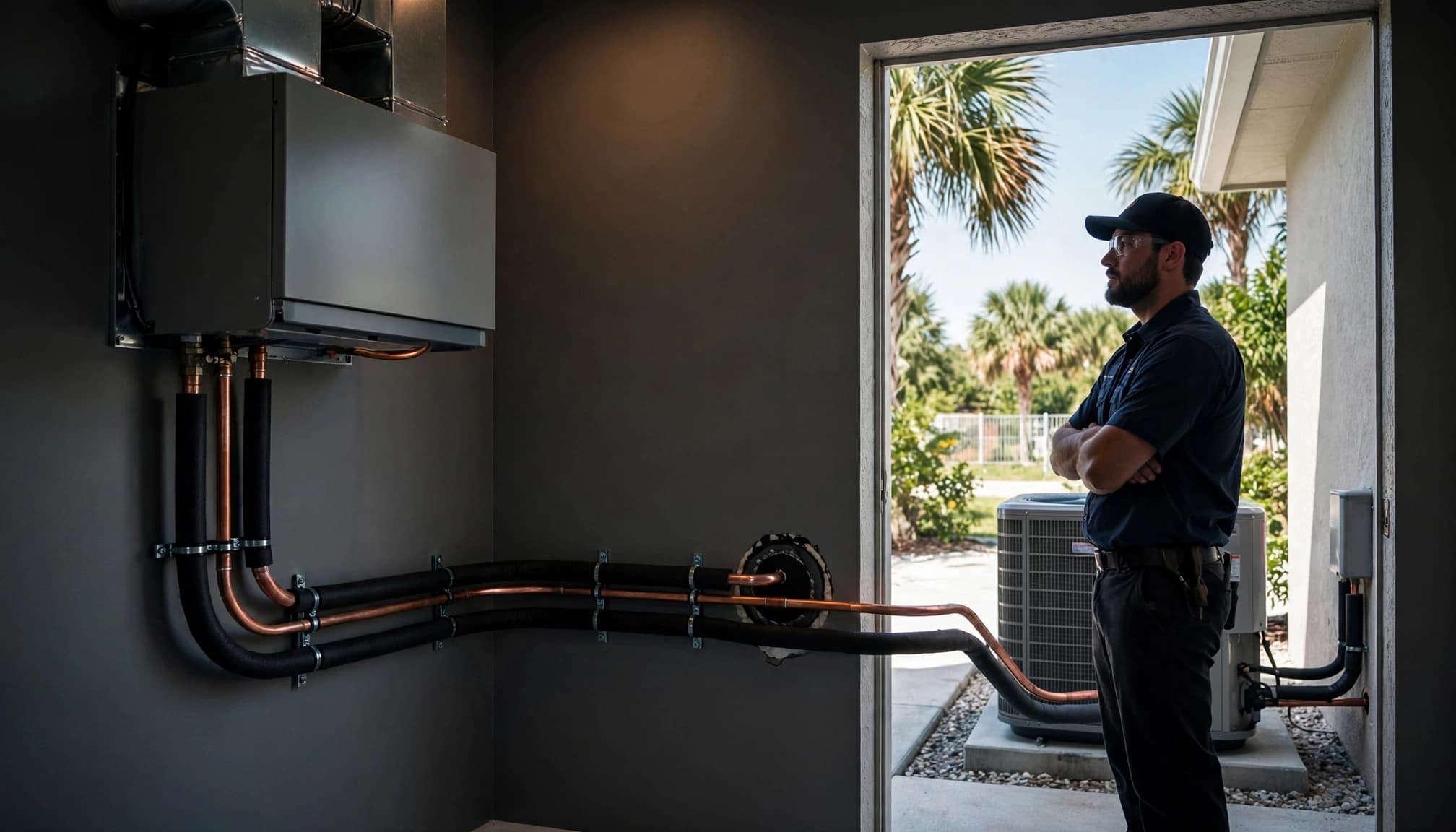
Line-set trouble can look similar to an airflow problem, dirty coil, or failing blower. Still, certain symptoms deserve a prompt inspection, especially during a long stretch of hot weather.
Warm supply air, longer cooling cycles, ice on the copper tubing, hissing near fittings, and unexplained increases in electric use can point to a refrigerant issue. Oily residue near a connection can also indicate a leak.
Your AC doesn't use up refrigerant during normal operation. If the charge is low, refrigerant has likely escaped through a leak. Adding refrigerant without finding the cause may restore cooling for a short time, but it doesn't repair the sealed system.
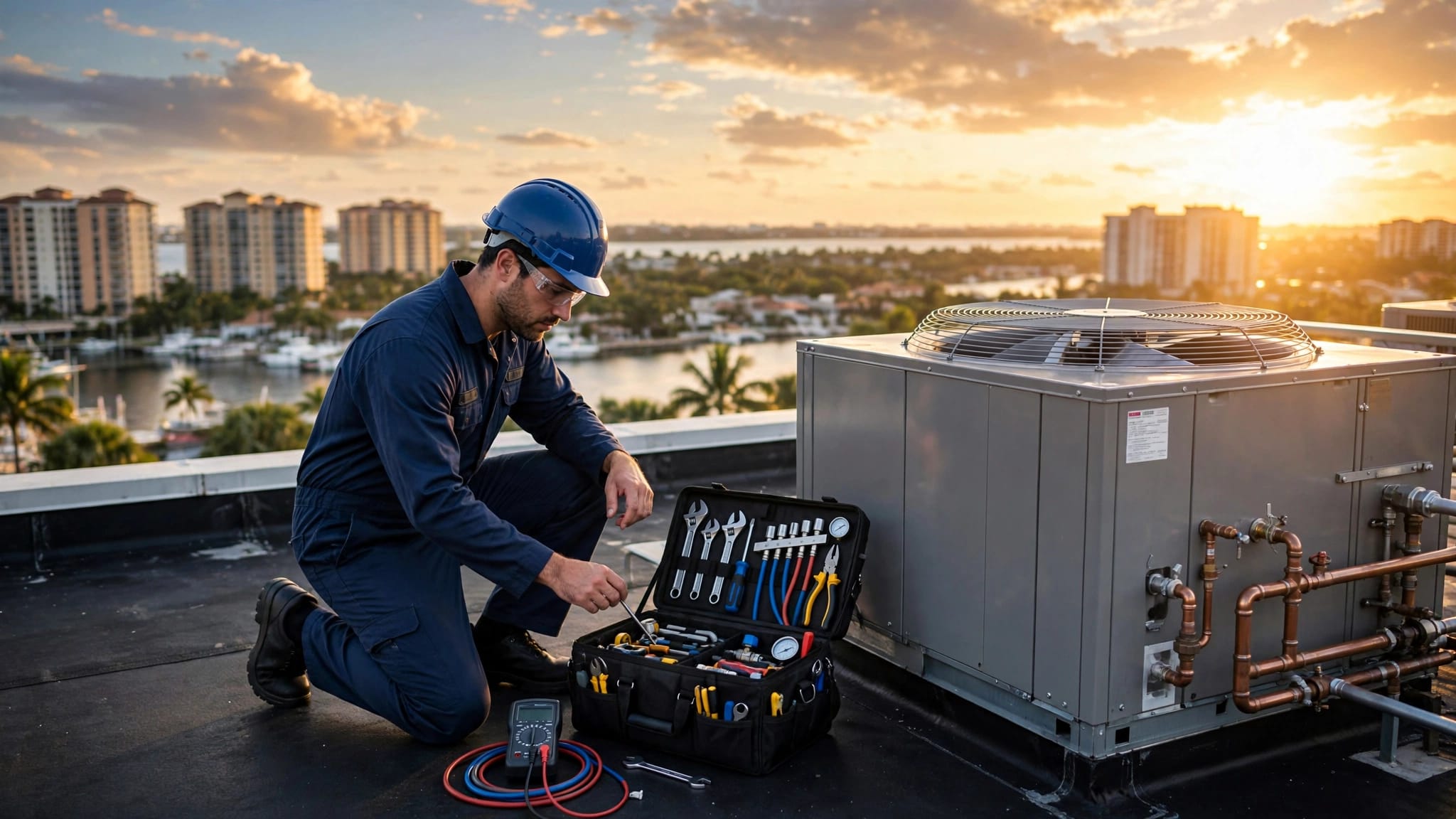
A qualified technician should inspect the line set, coils, service valves, airflow, and operating readings. For weak cooling, frozen lines, or a system that won't keep up, arrange Cape Coral AC repair before compressor damage turns a smaller repair into a larger one.
Repairing or Replacing a Refrigerant Line Set
The right choice depends on the tubing condition, access, equipment age, refrigerant type, and repair history. A reachable leak at a newer system's brazed joint may be repairable. Repeated leaks or widespread corrosion call for a different conversation.
When repair may be practical
Repair may make sense when the leak is accessible and the remaining copper is in good shape. The technician should recover refrigerant properly, repair the fault, pressure-test the system, evacuate it, and charge it according to the manufacturer procedure.
A quick recharge without leak diagnosis is not a complete repair. It leaves the underlying defect in place and can put the compressor at risk.
When replacement is the wiser investment
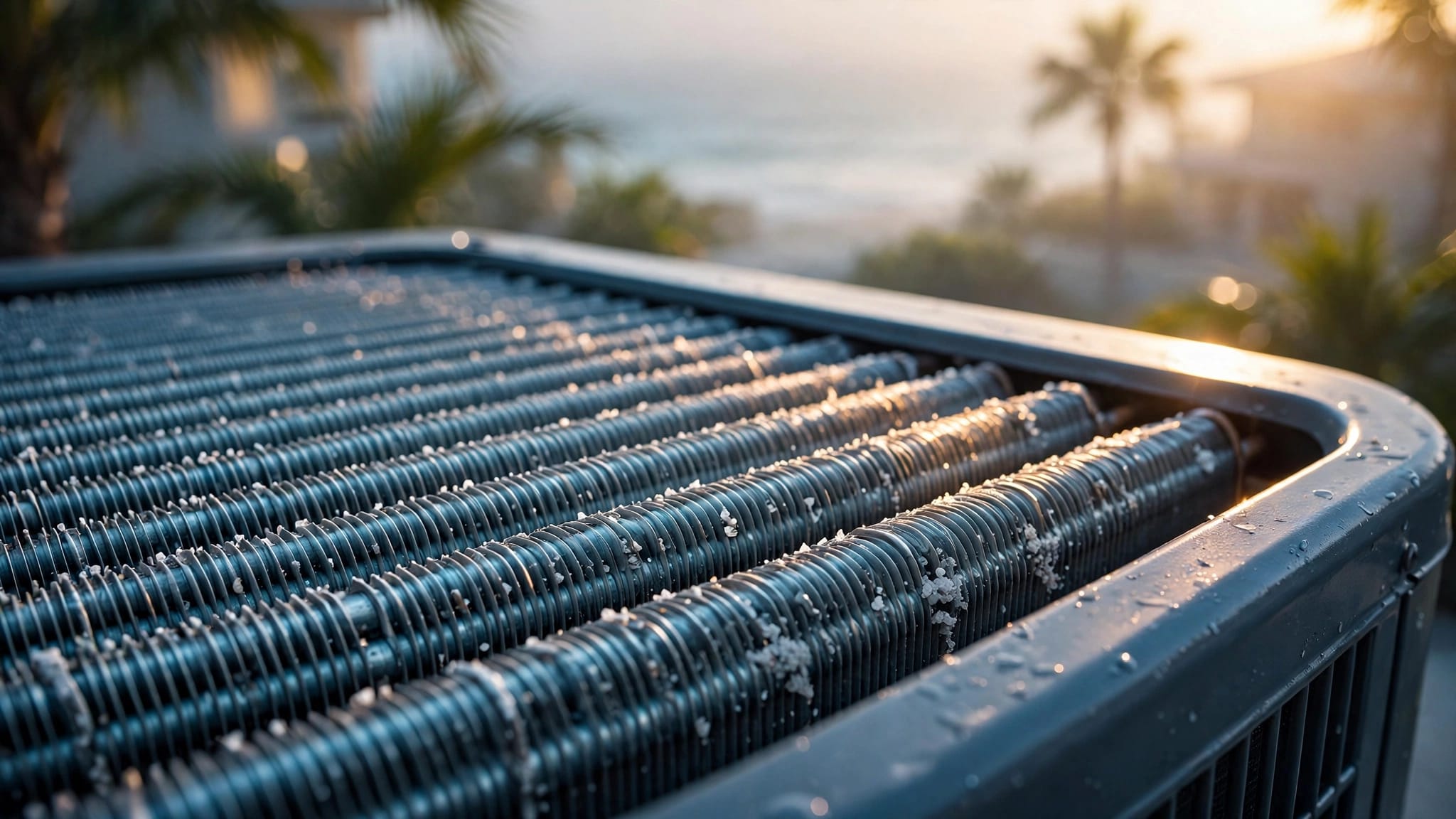
Replacement often makes more sense when the line set has several corroded areas, a hidden leak, severe kinks, contamination, or incompatible sizing. Homes near canals, the Caloosahatchee River, or the Gulf may see faster corrosion on exposed components because of salt air and humidity.
Access has a major effect on cost. Open-attic routes are usually simpler than tubing behind tile, cabinets, finished drywall, or concrete. For local budgeting factors and scope details, review Cape Coral AC line set replacement cost before comparing estimates.
What a Complete HVAC Line-Set Job Includes
The copper connection is only one part of proper refrigerant work. A written estimate should describe the work that supports safe, reliable system operation.
A complete job may include refrigerant recovery, approved copper tubing, brazing, pressure testing, evacuation, insulation, supports, wall sealing, refrigerant charging, and final operating checks. Permits, drywall repair, electrical updates, and drain work may be separate items, so ask before work begins.
Technicians should remove air and moisture from the sealed circuit through the manufacturer's evacuation procedure. If moisture, acid, or debris may be present, they may recommend added cleanup or a filter-drier replacement.
Regular inspection also helps catch deteriorated insulation, loose supports, and corrosion before a small issue becomes a leak. Cape Coral HVAC maintenance agreements can keep refrigerant performance, coils, drains, and airflow on a routine service schedule.
Key Takeaways for Homeowners
- AC refrigerant line length has no universal maximum. The approved distance and vertical lift depend on the exact system.
- Manufacturer instructions control pipe sizes, allowed line runs, factory-charge baselines, and final charging procedures.
- Split central air conditioners, heat pumps, mini-splits, R-410A systems, and newer R-32 or R-454B equipment may follow different requirements.
- Low refrigerant usually points to a leak. The repair should include diagnosis and testing, not only refrigerant addition.
- Existing copper can stay only when it meets the new equipment's documented requirements and passes inspection.
Frequently Asked Questions
Can a longer line set make my AC less efficient?
It can if the system wasn't designed, piped, insulated, and charged for that length. A manufacturer-approved longer run can perform well when a licensed technician follows the required pipe sizes, lift limits, and commissioning procedure.
Is it always necessary to replace refrigerant lines with a new AC?
No. Existing copper may remain if it is the correct size, clean, undamaged, and approved for the replacement equipment. However, leaks, corrosion, contamination, improper sizing, or a refrigerant change can make replacement the safer choice.
Can I add refrigerant to compensate for a longer run?
No. Refrigerant handling requires proper recovery equipment, leak testing, evacuation, and manufacturer-specific charging methods. R-32 and R-454B are A2L refrigerants, which have mildly flammable classifications and require trained handling.
For fast help with suspected leaks, damaged tubing, or poor cooling, Contact Us to schedule a service call with a licensed HVAC technician.
The Right Line Length Starts With the Right Installation
A properly designed line set supports cooling capacity, humidity control, and compressor life. The shortest route isn't always the right route, but every foot must fit the equipment manufacturer's limits.
Before approving AC work, ask for the model-specific line-set plan, the testing steps, and the charging method in writing. Accurate sizing and careful commissioning protect comfort when Southwest Florida heat puts your system to work.