New impact windows can make a home feel more comfortable, but they don't automatically mean you need a smaller air conditioner. Impact windows AC sizing depends on the full home, not one upgrade.
In Cape Coral and across Southwest Florida, solar heat and humidity put steady pressure on cooling systems. Replacing windows may reduce part of that heat gain, yet insulation, ductwork, occupancy, and airflow still shape the final answer.
The right time to revisit AC capacity is before replacing equipment, after the window project is complete.
Key Takeaways
- Impact windows may reduce cooling demand, especially where older windows faced direct afternoon sun.
- A lower cooling load does not automatically justify downsizing the AC unit.
- Window direction, glass area, exterior shade, insulation, air sealing, ceiling height, and household activity all matter.
- A professional Manual J calculation measures the home's actual cooling and moisture-removal needs.
- Existing supply ducts and return air paths must support the selected equipment.
- A system that is too large can short cycle and remove less humidity during Florida's wet season.
How Impact Windows Affect Cooling Demand

Impact windows can change how much heat enters a house through its glass. Their effect varies widely, though, because every home's sun exposure and window layout differ.
Orientation and glass area change the result
A large west-facing living room can collect intense afternoon heat. In contrast, a shaded bedroom with limited glass may place much less demand on the system. South-facing windows, roof overhangs, lanai screens, trees, and nearby buildings all affect solar exposure.
The total glass area matters as much as the window type. A home with several large sliders and picture windows may see a different load change than a home with small, shaded openings.
Impact windows AC sizing should account for the installed window specifications and each window's direction. The impact rating alone doesn't tell an HVAC contractor how much solar heat the glass allows into the home.
Efficiency and equipment capacity are different decisions
Energy efficiency describes how well the home limits heat gain or how efficiently equipment uses electricity. HVAC sizing determines how much cooling capacity the home needs under local design conditions.
One ton of cooling equals 12,000 BTUs per hour. However, no square-footage rule or window upgrade can reliably identify the right number of tons. For a closer look at the full process, review this Cape Coral AC sizing guide.
New windows can lower one part of the cooling load, but the home's remaining heat and moisture loads still determine AC capacity.
A Manual J Calculation Gives the Real Answer
A new load calculation is the practical next step when your AC is due for replacement. It uses the home's current condition, including upgrades that weren't present when the old system was selected.
What the calculation measures
ACCA Manual J evaluates more than floor area. It considers insulation, roof construction, wall exposure, ceiling height, window size and orientation, air leakage, local climate, occupants, lighting, appliances, and additions.
An open floor plan can distribute heat differently than a home with separated rooms. Enclosed lanais, garage conversions, and remodeled kitchens can also change the cooling load. Air sealing and attic insulation may reduce heat entering the living space, while gaps around attic hatches, doors, or duct connections can add hot, humid outdoor air.
Humidity belongs in the sizing decision
Manual J separates sensible cooling, which lowers air temperature, from latent cooling, which removes moisture. That distinction matters in Southwest Florida, where a thermostat can reach its set point while indoor air still feels clammy.
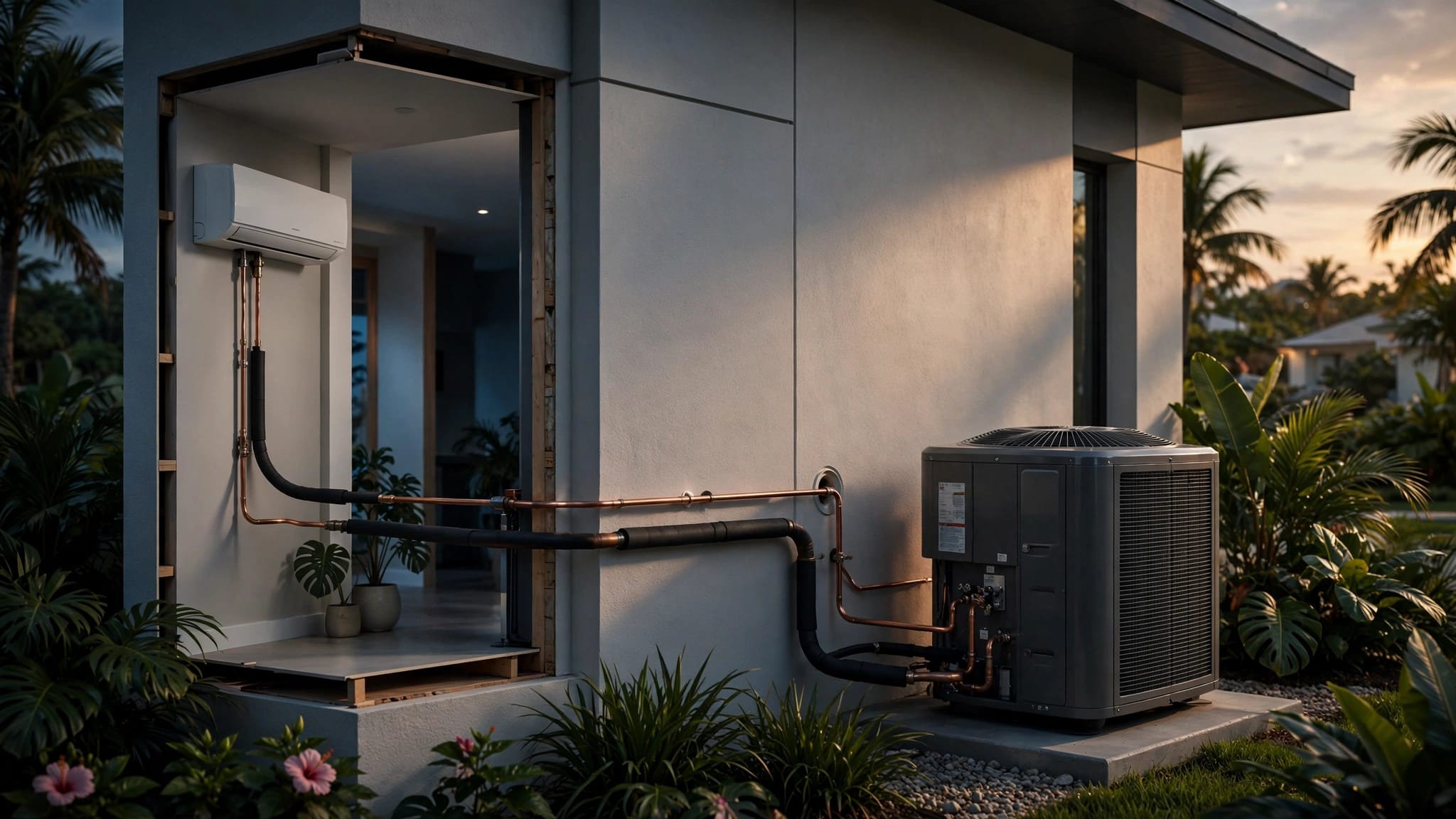
After Manual J establishes the load, equipment selection should match it. Manual S equipment selection for Florida connects the calculation to actual indoor and outdoor equipment performance.
Ductwork Can Change Comfort More Than Tonnage
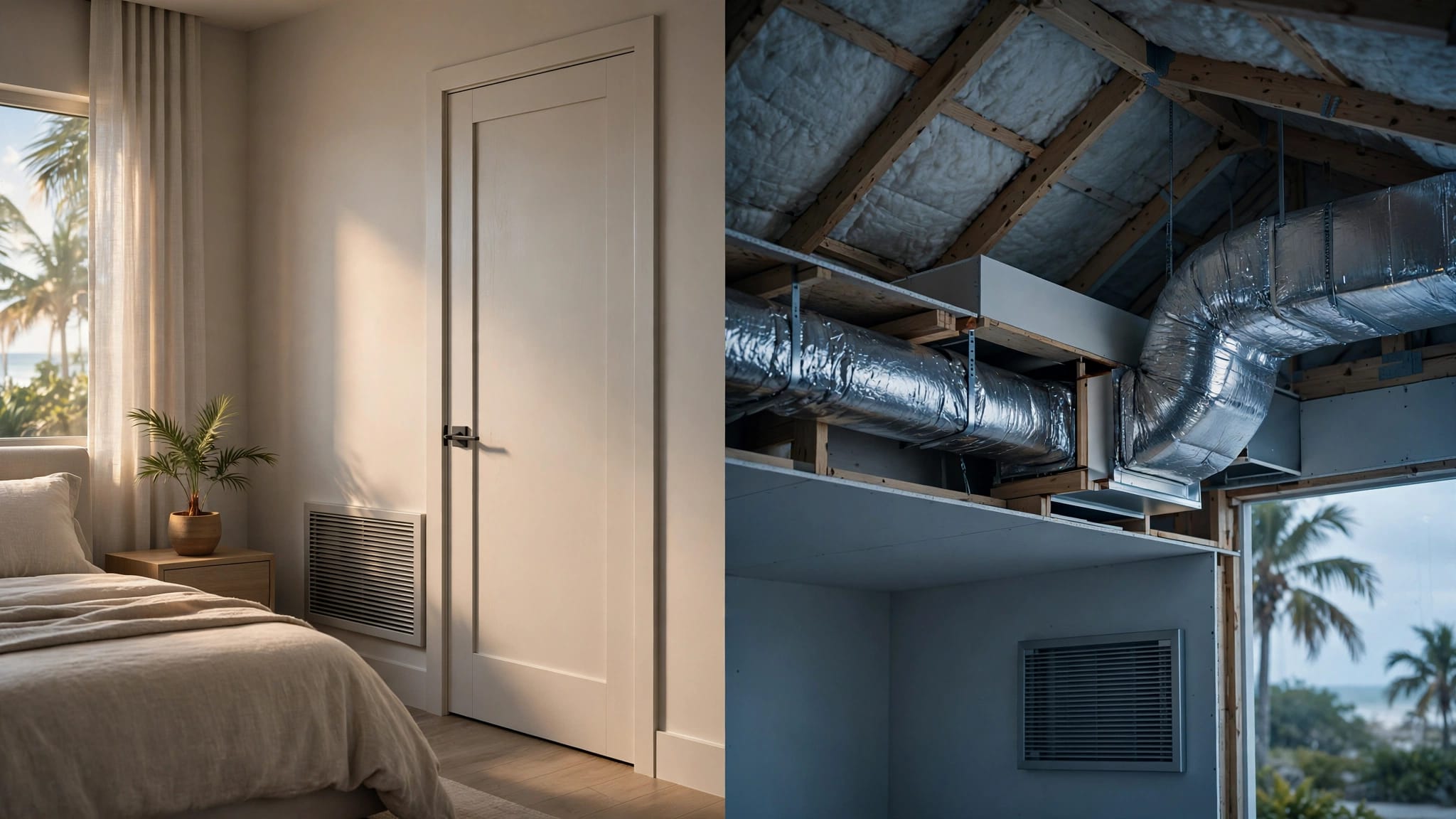
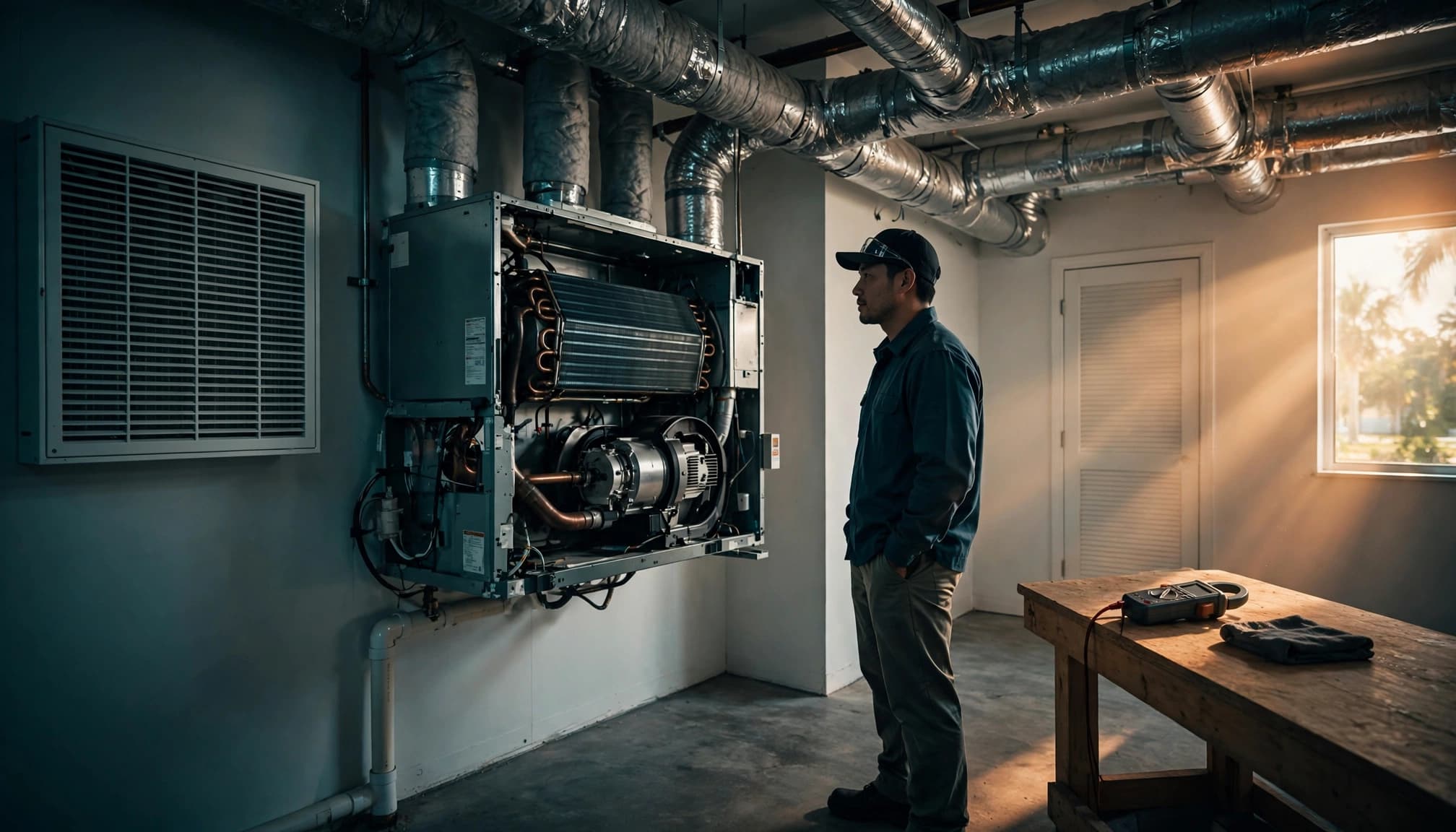
A correctly sized AC unit still needs a duct system that can move the required airflow. Replacing equipment without checking the ducts can repeat the same hot-room and humidity problems.
Check return air and supply ducts
Leaky attic ducts can waste cooled air and draw humid air into the system. Crushed flex duct, loose connections, undersized returns, and restricted filters can leave bedrooms warm or create weak airflow at registers.
A larger air conditioner won't correct those problems. Manual D duct design for AC replacement uses room-by-room airflow needs to evaluate supply runs, registers, and return paths.
Avoid replacing the old unit ton for ton
The old system's capacity is not proof that it was correctly sized. It may have been oversized before the windows changed, or it may be struggling because of duct leakage, a dirty coil, low refrigerant, or weak airflow.
Oversized equipment can satisfy the thermostat quickly and shut off too soon. Shorter cycles may reduce moisture removal and cause uneven temperatures. Undersized equipment may run for long periods and still fall behind on the hottest days.
Questions to Ask Before AC Replacement
Should the contractor recalculate after window replacement?
Yes. Ask for a room-by-room Manual J calculation based on the windows now installed. The evaluation should also include insulation, air sealing, sun exposure, ceiling height, household occupancy, appliances, and humidity conditions.
Will the current ductwork support the proposed system?
Ask the contractor to inspect accessible supply ducts, return capacity, duct insulation, connections, filter setup, condensate drainage, and airflow. The written estimate should list the proposed model numbers, capacity, and any duct repairs.
For a professional evaluation in Cape Coral or nearby communities, Contact Us to schedule a service call.
The Best AC Size Fits the Home You Have Now
Impact windows can reduce cooling demand, particularly in sunny rooms with older glass. Still, impact windows AC sizing should never come from a rule of thumb or an assumption that smaller is always better.
A current load calculation, equipment match, and duct inspection give your home the best chance at steady temperatures and dependable humidity control.