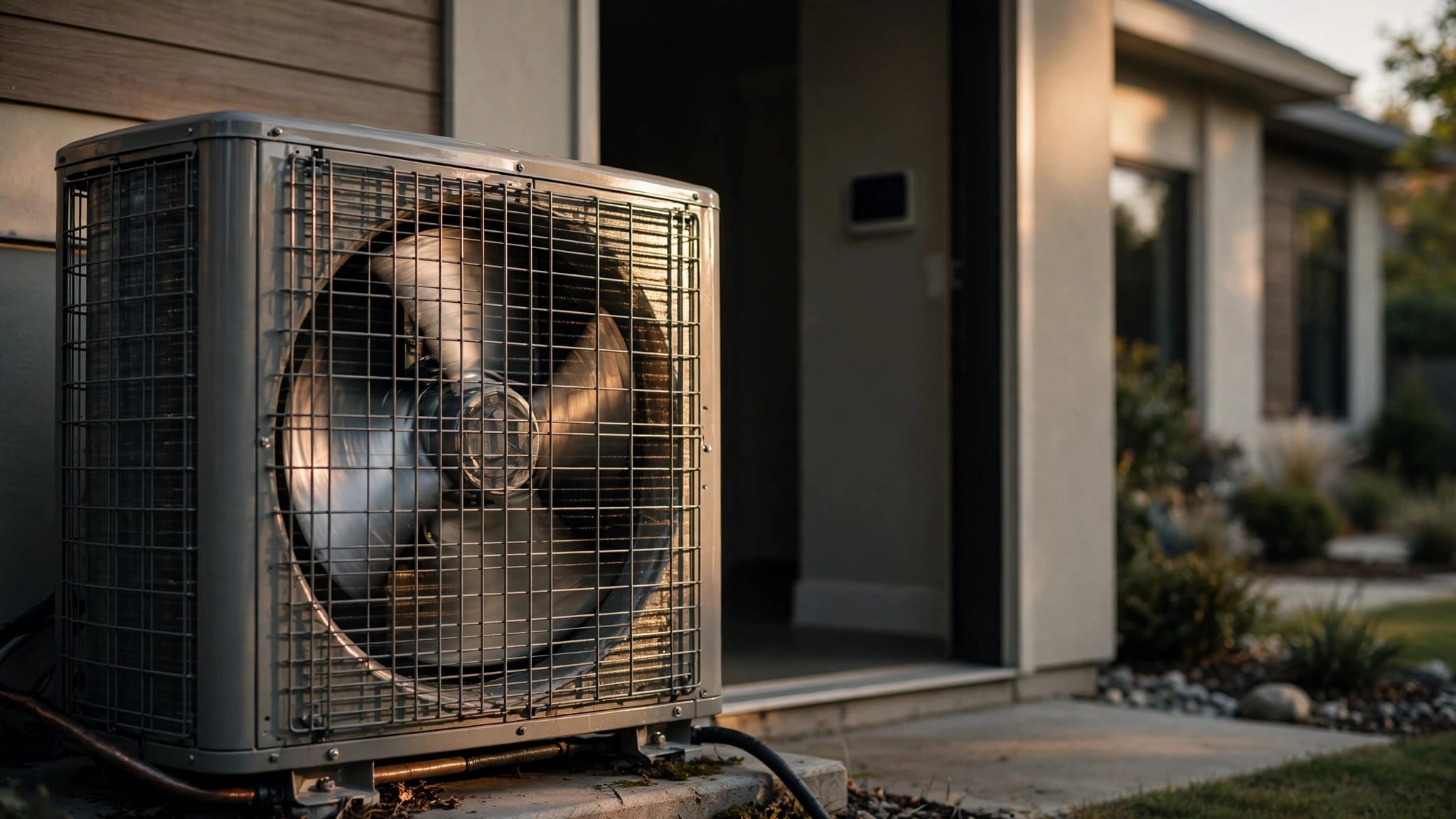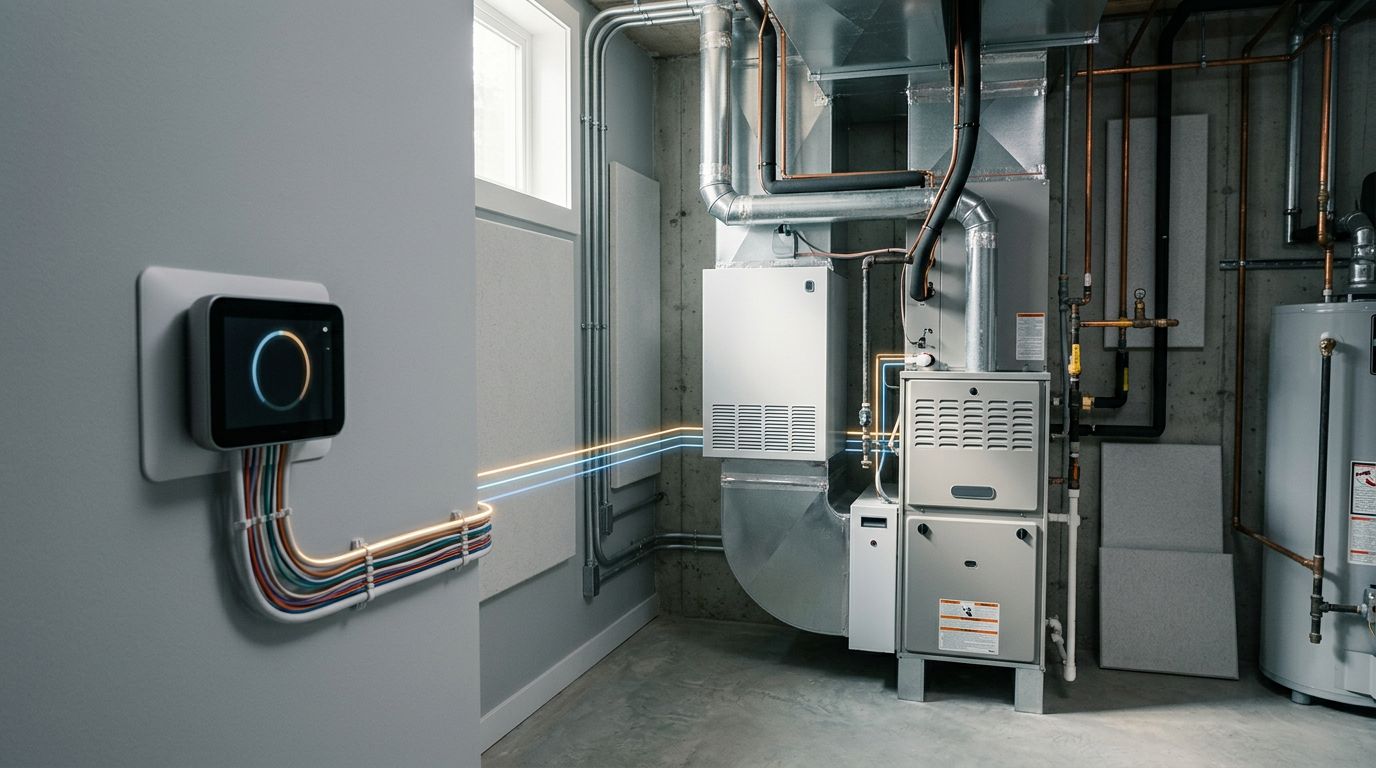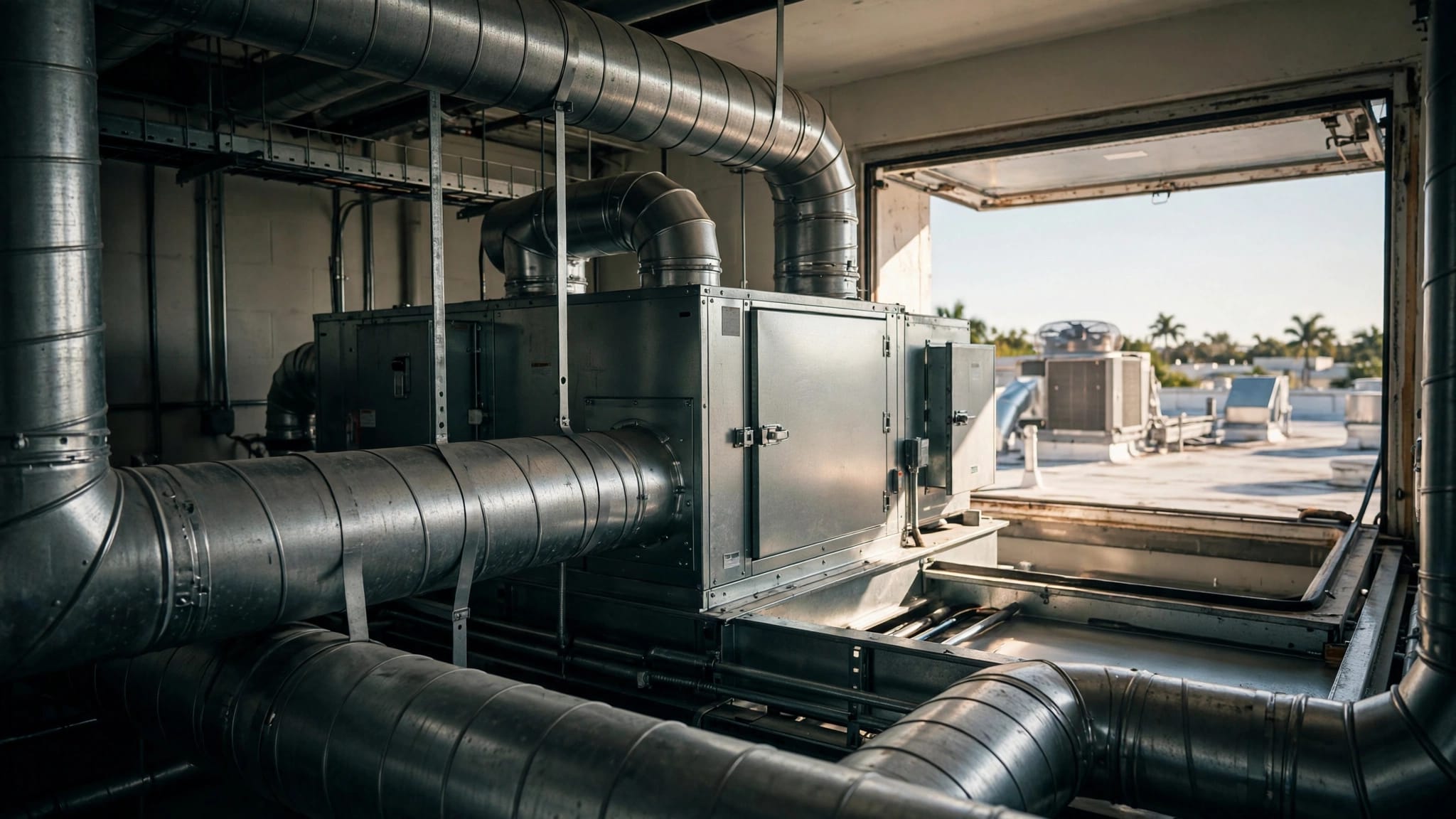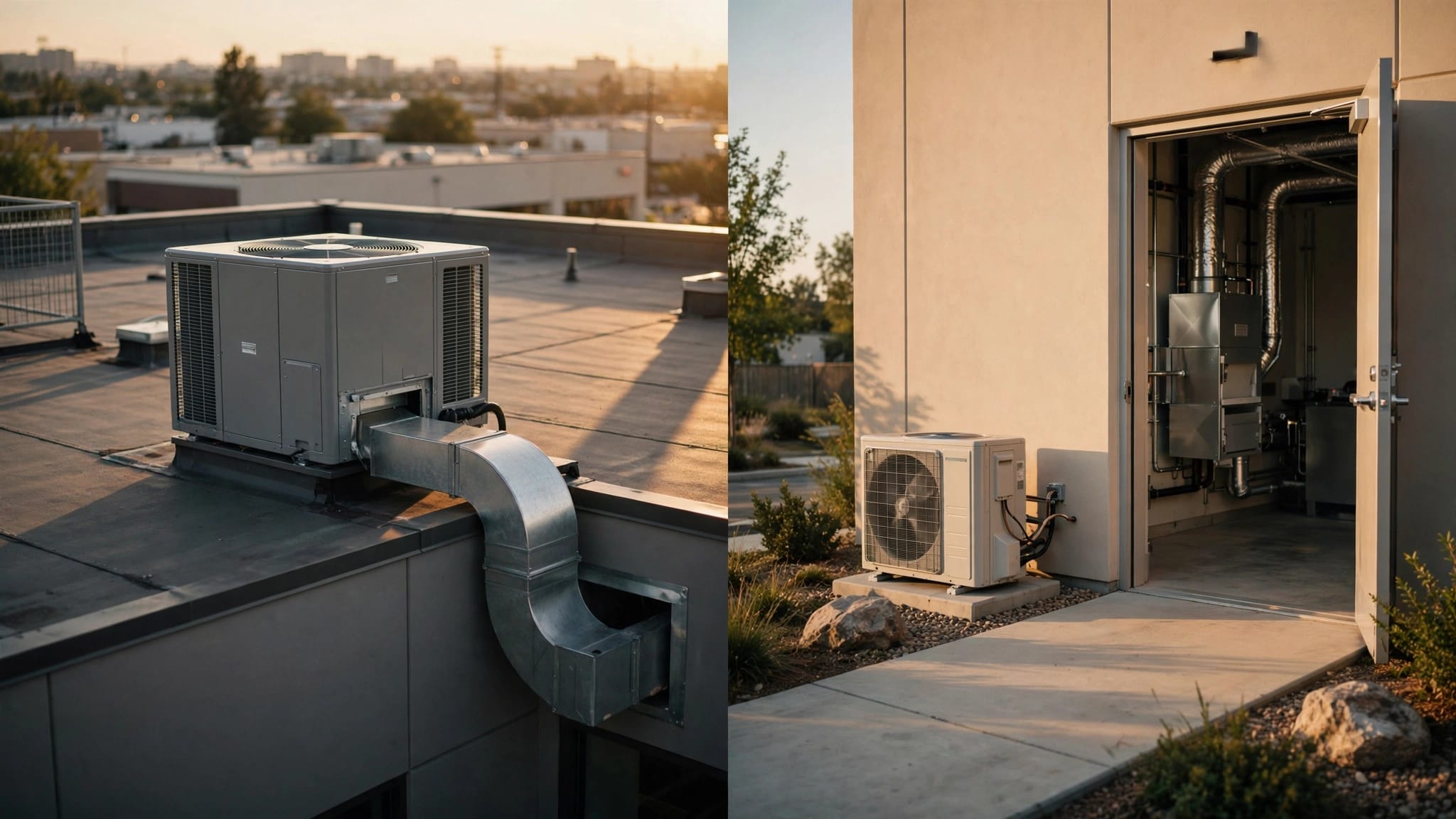
Replacing a rooftop unit can turn a routine capital project into a five-figure decision. In 2026, the commercial HVAC replacement cost in Cape Coral commonly falls between about $6,000 and $62,000 for packaged rooftop units, depending on tonnage and scope.
Those numbers cover very different jobs. Equipment-only pricing, installation labor, permits, cranes, ductwork, and electrical changes each affect the final invoice. More complex VRF and chilled-water systems cost more per ton. Use these ranges to plan a budget, then get a local site-specific estimate before approving work.
How to estimate commercial HVAC replacement cost in Cape Coral
A useful estimate begins with two questions: what system serves the building now, and what must change during replacement? A straight swap on an accessible roof costs less than a project that changes capacity, curb dimensions, controls, or electrical service.
Equipment is only one part of the budget
Commercial cooling capacity is measured in tons. One ton equals 12,000 BTUs per hour of cooling capacity, so a 10-ton unit is designed for much more cooling than a 3-ton unit. Tonnage should come from a load calculation and the building's use, not from the old nameplate alone.
Equipment pricing covers the rooftop unit, split-system components, heat pump, VRF equipment, or chiller components. Brand, efficiency, controls, economizer options, cabinet configuration, corrosion protection, and refrigerant requirements can move that line up or down.
A less expensive unit can also become costly if it doesn't fit the existing curb or duct layout. The contractor may need an adapter, new transitions, or additional electrical work before the replacement can operate safely.
Labor turns a unit into a working system
Installation labor includes more than setting equipment in place. Crews may disconnect and recover refrigerant, remove the old unit, rig the replacement, adapt the curb, reconnect ductwork and power, test controls, start the system, and arrange inspections.
A simple 2 to 3 ton RTU may carry $2,500 to $4,000 in installation labor. A 25 to 30 ton RTU may require $12,000 to $20,000 in labor before unusual structural or electrical work. The project total combines equipment, labor, permit-related work, materials, disposal, and approved extras.
2026 commercial HVAC pricing by system type
For early budgeting, these installed ranges show how system design changes the cost per ton. They include equipment and typical installation, but they don't guarantee a Cape Coral bid.
| Commercial system | Typical installed range |
|---|---|
| Packaged rooftop unit | $2,000 to $3,500 per ton |
| Commercial split system | $2,500 to $4,000 per ton |
| Commercial heat pump | $3,000 to $4,500 per ton |
| VRF or VRV system | $4,000 to $6,500 per ton |
| Chilled-water or chiller plant | $4,500 to $8,000 per ton |
The takeaway is straightforward: a packaged RTU usually offers the clearest replacement budget, while VRF and chiller projects require more design, piping, controls, and coordination.
Packaged rooftop units often have the clearest range
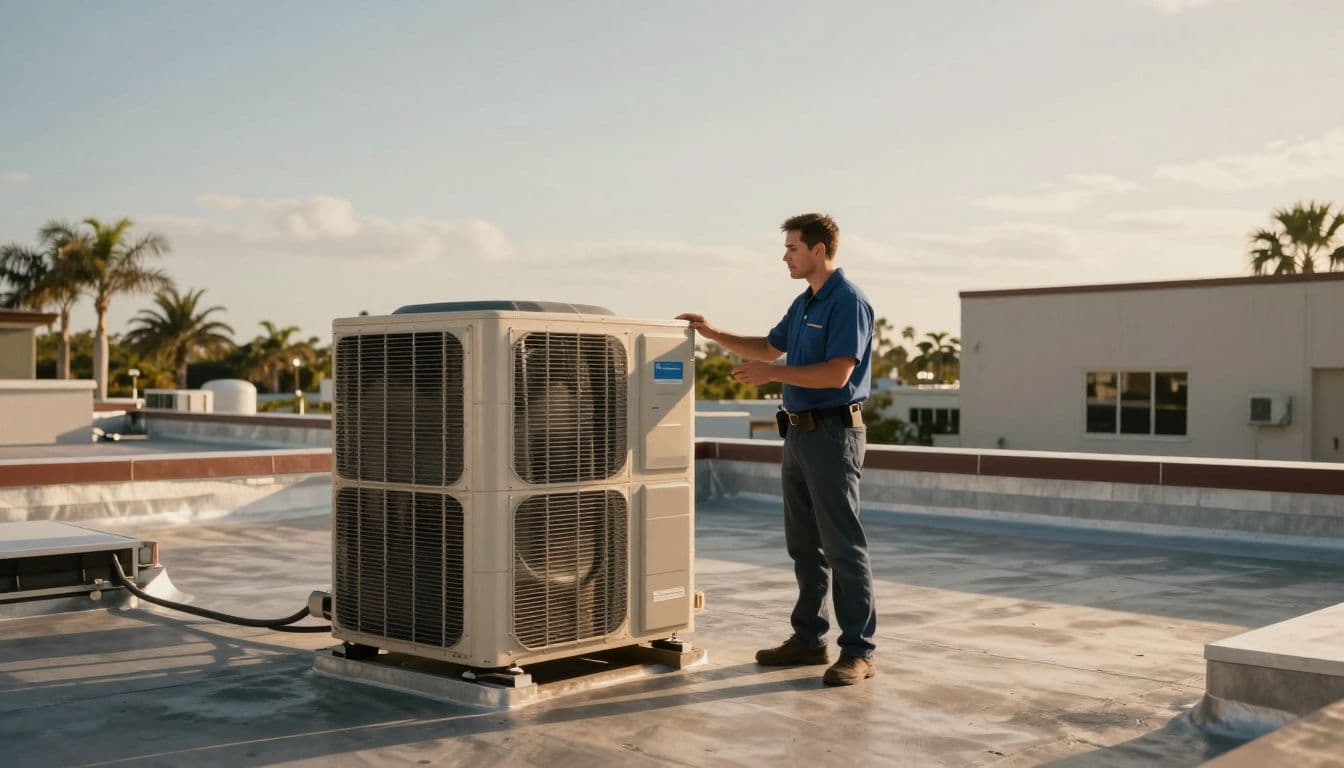
RTUs combine heating and cooling components in one cabinet. That design is common for many low-rise commercial buildings, retail spaces, offices, and similar properties with rooftop equipment.
A direct replacement can stay near the lower end when the new unit matches the existing tonnage, curb, voltage, duct connections, and controls. Costs rise when the project includes a larger capacity, a new curb adapter, crane access, duct modifications, or a more advanced controls package.
Use tonnage and scope together
The following ranges separate equipment, labor, and the total installed project. They are useful for capital planning, but they don't include every possible site condition.
| RTU size | Equipment | Installation labor | Typical installed total |
|---|---|---|---|
| 2 to 3 tons | $3,500 to $6,000 | $2,500 to $4,000 | $6,000 to $10,000 |
| 4 to 5 tons | $5,500 to $9,000 | $3,500 to $5,500 | $9,000 to $14,500 |
| 7.5 to 10 tons | $9,000 to $16,000 | $5,000 to $8,000 | $14,000 to $24,000 |
| 15 to 20 tons | $16,000 to $28,000 | $8,000 to $13,000 | $24,000 to $41,000 |
| 25 to 30 tons | $26,000 to $42,000 | $12,000 to $20,000 | $38,000 to $62,000 |
The total can exceed the equipment and labor ranges when the job requires permits, rigging, electrical upgrades, ductwork, disposal, or structural repairs.
What changes the final project total in Cape Coral
Two properties with identical tonnage can receive different bids. Roof access, building layout, electrical capacity, and the condition of connected components all affect the work.
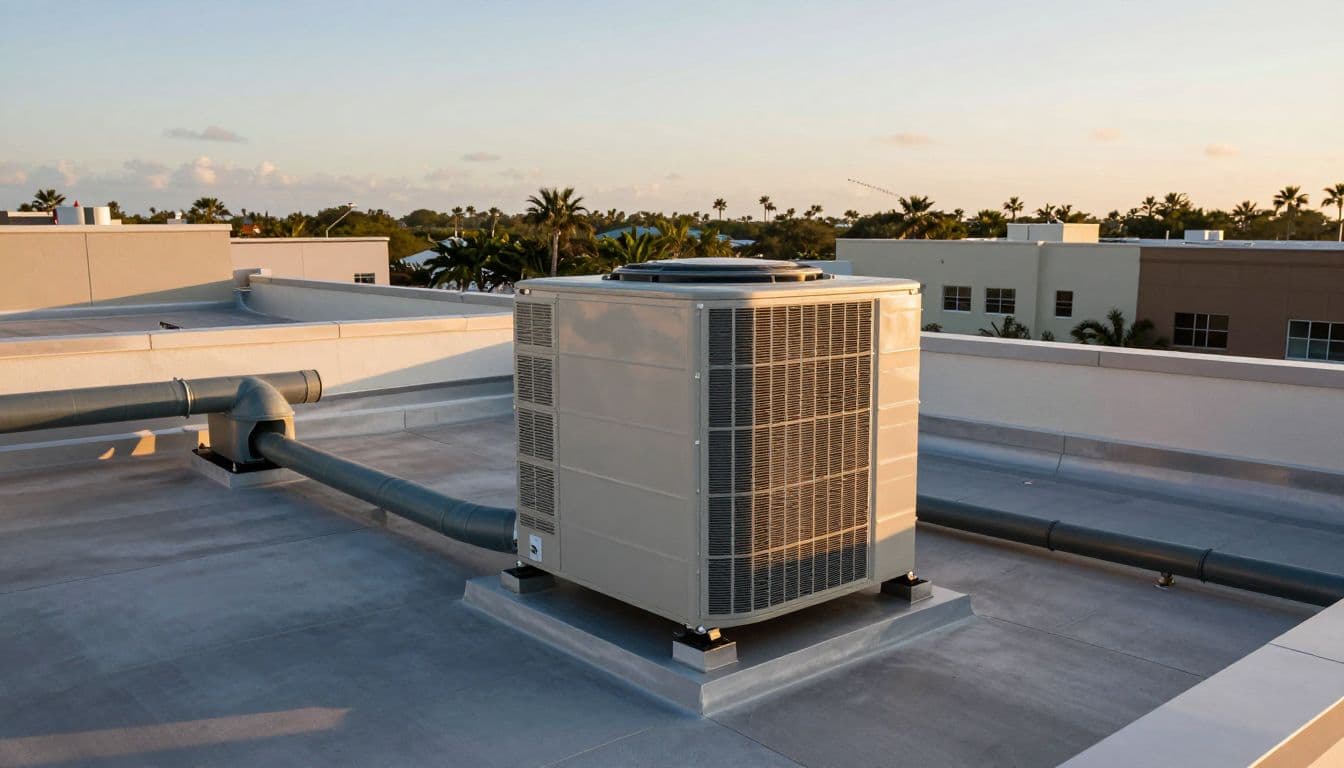
Roof access and coastal site conditions
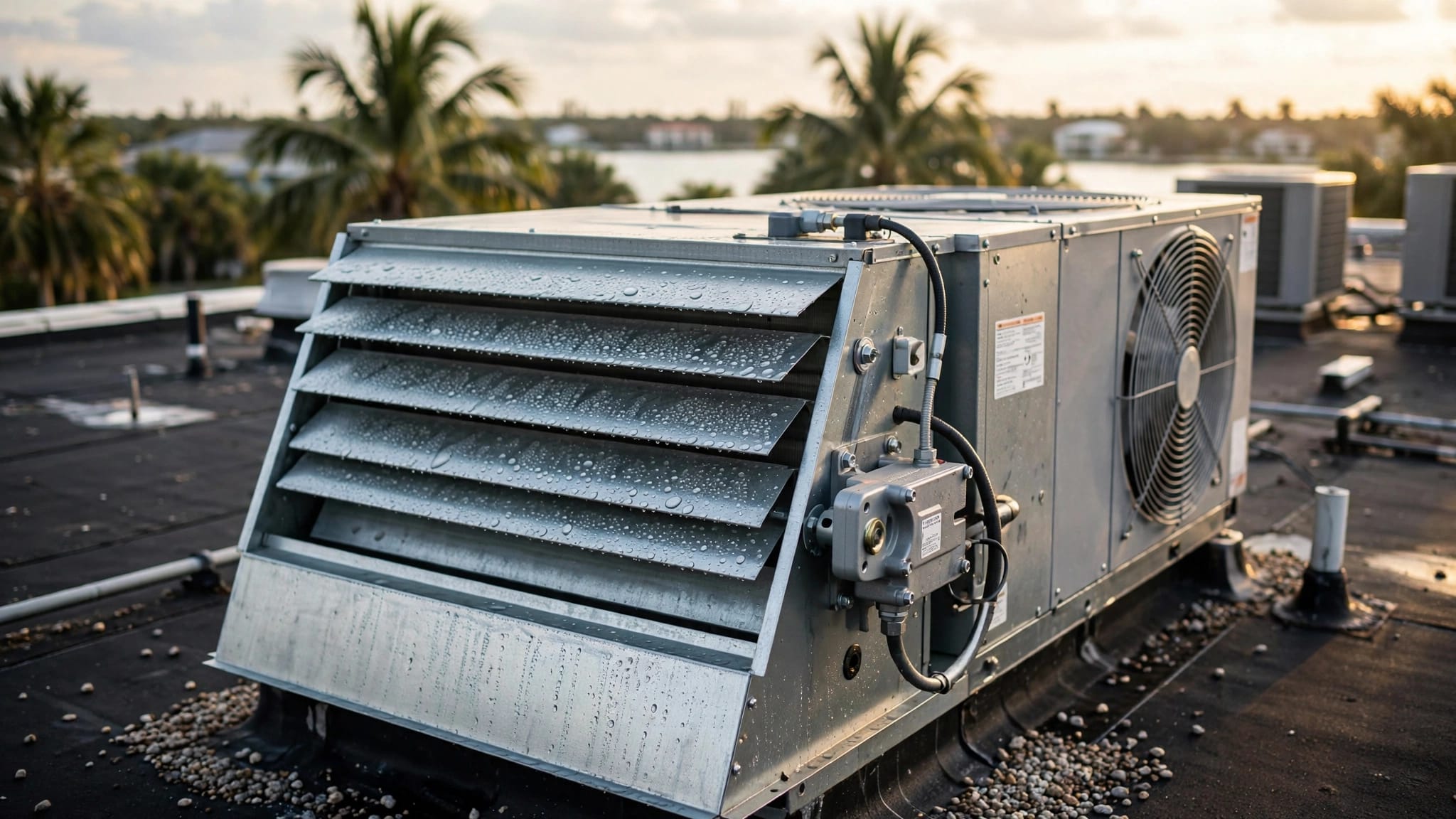
Rooftop equipment often needs a crane or specialized rigging. A crane may be necessary when the roof hatch is too small, the building is several stories high, or the replacement unit can't travel safely through the building.
Rigging and crane time can add hundreds to several thousand dollars. The quote may also include a curb adapter, roof flashing, structural review, or roof repairs around the equipment base.
Cape Coral's coastal air can also affect equipment choices. Corrosion-resistant cabinets, protective coatings, and mounting details may cost more than standard options. The contractor should identify these items rather than burying them inside a general installation charge.
Ductwork, electrical, controls, and refrigerant
Old ductwork can leak, collapse, or fail to match a replacement unit. If air distribution is part of the problem, ask about commercial HVAC ductwork services before approving a new unit that may not deliver air properly.
Electrical work can include a new disconnect, breaker, wiring, conduit, or panel changes. The replacement must match the building's available voltage and electrical capacity. A larger unit may require more power than the existing system provides.
Controls and economizers can add roughly $1,000 to $5,000, depending on the building and equipment. Refrigerant requirements, recovery, disposal, and the removal of the old unit can add several hundred to several thousand dollars.
Cape Coral projects may need mechanical and electrical permit work when the replacement changes more than the equipment itself. Local code review and inspections can affect both cost and schedule, so the estimate should state who handles permits and inspection corrections.
How to compare commercial HVAC replacement quotes
The lowest number isn't always the lowest project cost. A quote that leaves out duct transitions, crane service, controls, permits, or startup work can grow after installation begins.
Ask for a line-by-line scope
A commercial replacement proposal should identify the equipment type, capacity, efficiency rating, voltage, and major accessories. It should also state whether the price includes:
- Removal and disposal of the existing equipment.
- Crane or rigging services.
- Curb adapters, duct transitions, and roof sealing.
- Electrical changes and control wiring.
- Refrigerant recovery, charging, and startup testing.
- Permits, inspections, and final documentation.
- Parts and labor warranty terms.
Ask the contractor to list exclusions in writing. For example, a proposal may exclude roof repairs, asbestos-related work, structural reinforcement, or concealed duct damage. Knowing that before work begins makes competing bids easier to compare.
Compare capacity, efficiency, and warranty
A proper replacement isn't based only on matching the old tonnage. The contractor should review the building's cooling load, occupancy, windows, insulation, operating schedule, and heat-producing equipment.
Compare efficiency ratings such as EER or IEER when the systems have similar capacity and scope. Also check whether the proposal includes an economizer, programmable controls, outside-air requirements, and the same level of ventilation performance.
Warranty coverage needs the same attention. Parts coverage doesn't always include labor, and some manufacturers require registration or documented maintenance. A clear proposal should explain who handles warranty service and what the property owner must do to keep coverage active.
Repair or replace? Build a 2026 budget
Replacement isn't always the right answer after a breakdown. A commercial system may still make financial sense to repair when the problem is isolated, parts are available, the unit meets current needs, and service records show reliable operation.
When repair may be reasonable
Repair can be practical when a failed capacitor, motor, contactor, sensor, or control board causes the problem. A repair also gives the owner time to plan a replacement instead of making a rushed decision during a hot spell.
Review more than the repair invoice. Consider repeat service calls, tenant complaints, refrigerant loss, energy use, comfort problems, and the likelihood of another major component failure. A low-cost repair may not solve a larger reliability problem.
A detailed commercial AC maintenance checklist can help facility managers track service history, filters, coils, drains, repairs, and warranty information.
When replacement deserves serious consideration
Replacement deserves closer review when the system has repeated breakdowns, severe coil or cabinet corrosion, obsolete controls, major refrigerant leaks, or a failing compressor. The same applies when the equipment no longer matches the building's cooling load or operating demands.
Before requesting proposals, collect the model and serial numbers, recent service records, utility concerns, comfort complaints, roof-access details, and the hours when the business can tolerate downtime. Request a written estimate that separates equipment, labor, and project extras.
For help evaluating a failing commercial system or scheduling service, Contact Us to reach the local team and request an appointment or replacement estimate.
Conclusion
The commercial HVAC replacement cost in Cape Coral for 2026 depends on much more than the equipment catalog price. Tonnage, system type, roof access, ductwork, electrical capacity, controls, permits, refrigerant requirements, and site conditions can all change the final total.
Use per-ton ranges and equipment-versus-labor tables to set a realistic starting budget. Then have a local contractor inspect the property and provide a written, site-specific estimate before you commit to the project.