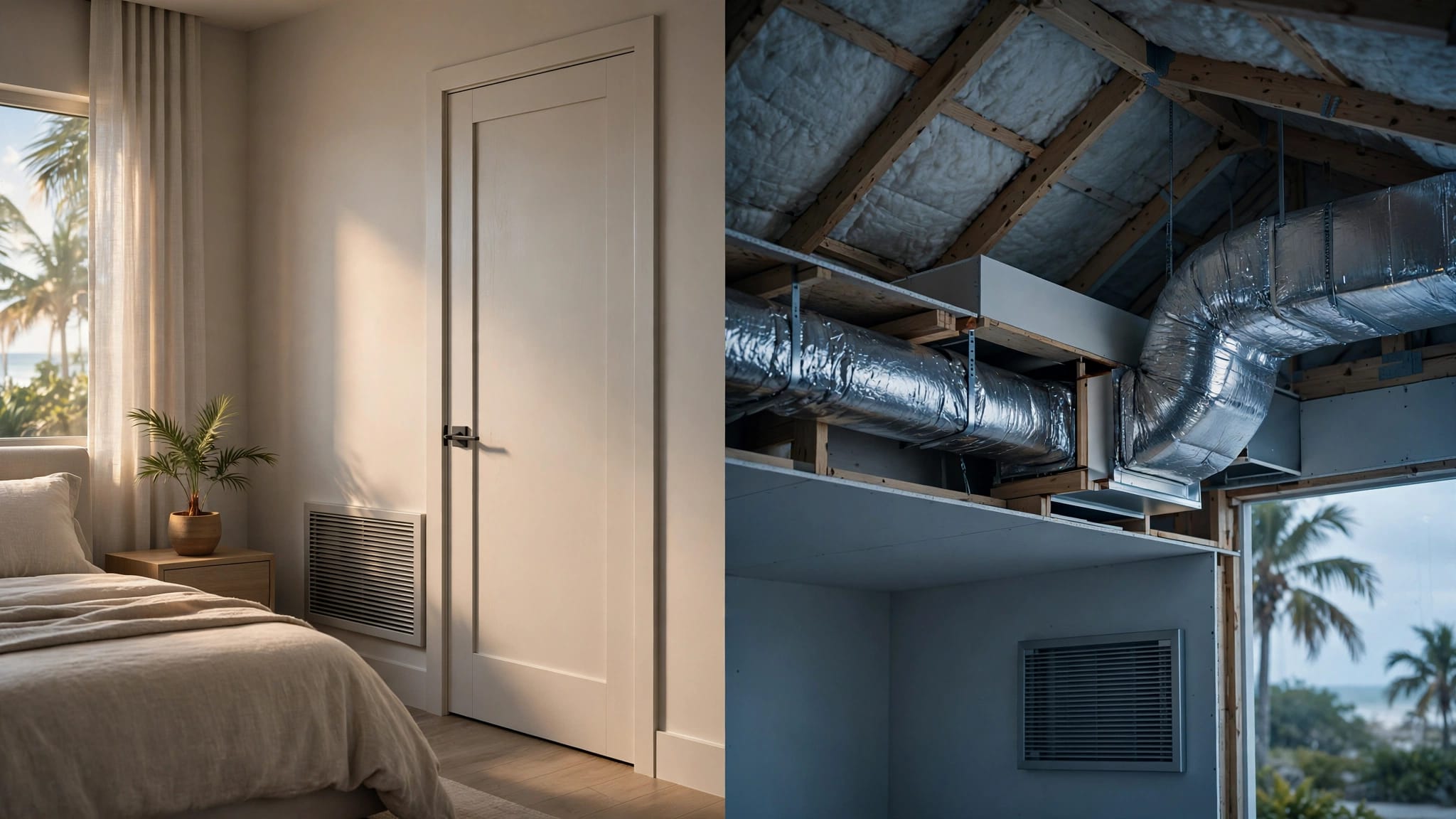
A blocked AC drain can leave you with a wet ceiling before you notice anything wrong with the cooling. If you're replacing an air handler or dealing with repeat leaks, the drain setup deserves as much attention as the equipment itself.
The Florida AC drain code sets rules for where condensate goes, how the pipe carries it, and when overflow protection is required. Understanding those rules helps you ask better questions before an installation or repair.
Which Florida building code applies in 2026?
As of September 2026, the statewide baseline is the Florida Building Code, Mechanical, 8th Edition (2023) . Its condensate disposal rules appear in Section 307. The 9th Edition (2026) is listed to take effect on December 31, 2026, so it isn't the current statewide edition in September.
The code applies to the installation of cooling equipment that produces condensate. If you have an older system, its age alone doesn't tell you whether its drain needs an upgrade today. The scope of a replacement, repair, or alteration matters, as do the requirements applied to the permitted work.
A code-compliant drain also needs to work with the equipment manufacturer's instructions. For homeowners, the useful question is whether the proposed drain route and backup protection suit your air handler's location , not whether every house has the same PVC arrangement.
Where can AC condensate drain?
The primary drain carries water collected beneath the indoor cooling coil to an approved disposal point. Section 307.1 also says the discharge must not create a nuisance in a street or alley. That matters when an outlet is close to a sidewalk, driveway, or neighboring property.
Approved disposal needs a planned route
Florida's mechanical code identifies plumbing fixtures that can receive condensate, including a floor sink, floor drain, hub drain, standpipe, utility sink, and laundry sink. A trench drain or mop sink may also be an option. The connection must follow the applicable requirements; finding a nearby pipe isn't permission to use it.
An outdoor outlet may be part of an approved installation, but its location still needs review. A licensed HVAC professional can check the route, and your building department can confirm what it accepts at your property.
A direct plumbing connection isn't allowed
The condensate line must not connect directly to a plumbing drain, waste, or vent pipe. That distinction is easy to miss when a contractor is working near a bathroom or laundry area. Ask where the AC water will end up and how the proposed connection meets code.
Never route a drain simply to hide a visible drip. Water that disappears into a wall or ceiling can conceal a leak until it damages building materials.
What are the pipe size, slope, and trap requirements?
A drain line has to carry water away without creating low spots where it sits. The Florida AC drain code sets minimum dimensions, while the equipment instructions help determine details at the air handler.
Size and slope
Under Section 307.2.2, a condensate drain must be at least 3/4 inch in diameter. It also cannot decrease in size between the pan connection and disposal point. For systems sharing a drain, the code's sizing table may require a larger pipe based on combined cooling capacity.
The minimum slope is 1/8 inch of fall per foot of horizontal run. That sounds slight, but a long pipe that sags or rises can hold water even if its endpoints look correctly positioned. Support and routing matter alongside the measured slope.
If clogs keep returning, ask the technician to inspect the full run rather than flushing only the accessible section. A damaged fitting or poorly sloped pipe can keep causing trouble after the buildup is removed.
Traps follow the equipment requirements
Section 307.2.5 addresses condensate traps, which must be installed as required by the equipment or appliance manufacturer. Don't assume every air handler needs an identical trap or that a visible bend proves the installation is correct.
A technician should compare the installed trap with the unit's instructions and check that it can drain during operation. An incorrectly configured trap can interfere with flow. If a replacement unit has different requirements, reusing the old piping without checking it may create a new drainage problem.
When does Florida require overflow protection?
Section 307.2.6 calls for additional protection where an overflow from the primary condensate system could damage building components . An air handler above a finished ceiling is an obvious place to evaluate that risk. The rule offers more than one way to protect the building.
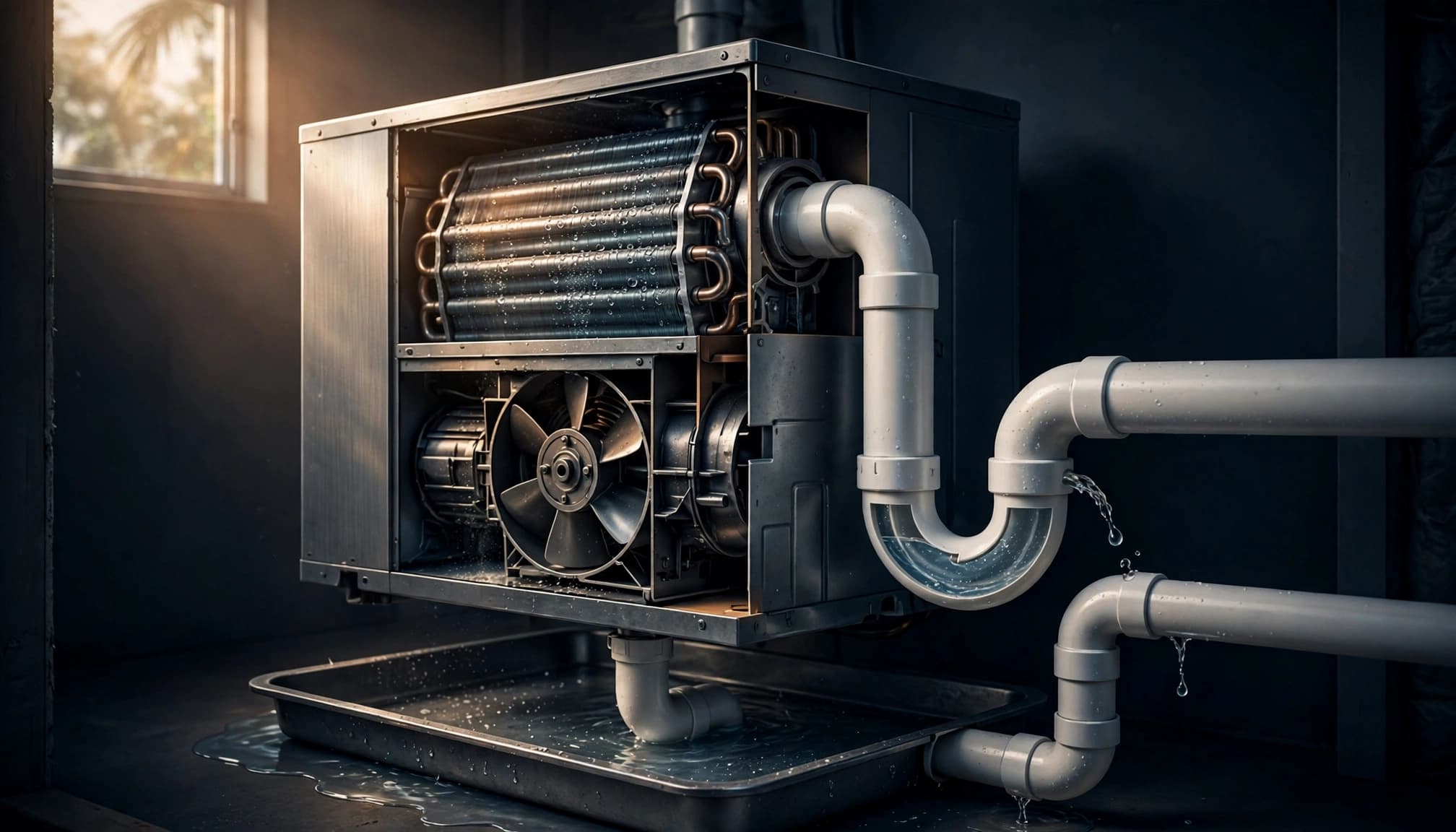
The code allows different approaches
Depending on the installation, the listed methods include an auxiliary pan with its own drain, or a separate overflow drain line connected above the primary drain connection. Other options use a UL 508 water-level detection device that shuts off the equipment before an auxiliary pan overflows or when the primary drain becomes blocked.
A separate auxiliary pan described by the code must be corrosion-resistant, at least 1 1/2 inches deep , and at least 3 inches larger than the unit or coil in both length and width. A shallow tray that happens to fit underneath isn't necessarily an approved pan.
The right choice depends on where the unit sits and how a backup can be detected or carried away. A technician can explain which listed method the installation uses and show you where to look for signs of trouble.
A float switch is protection, not a repair
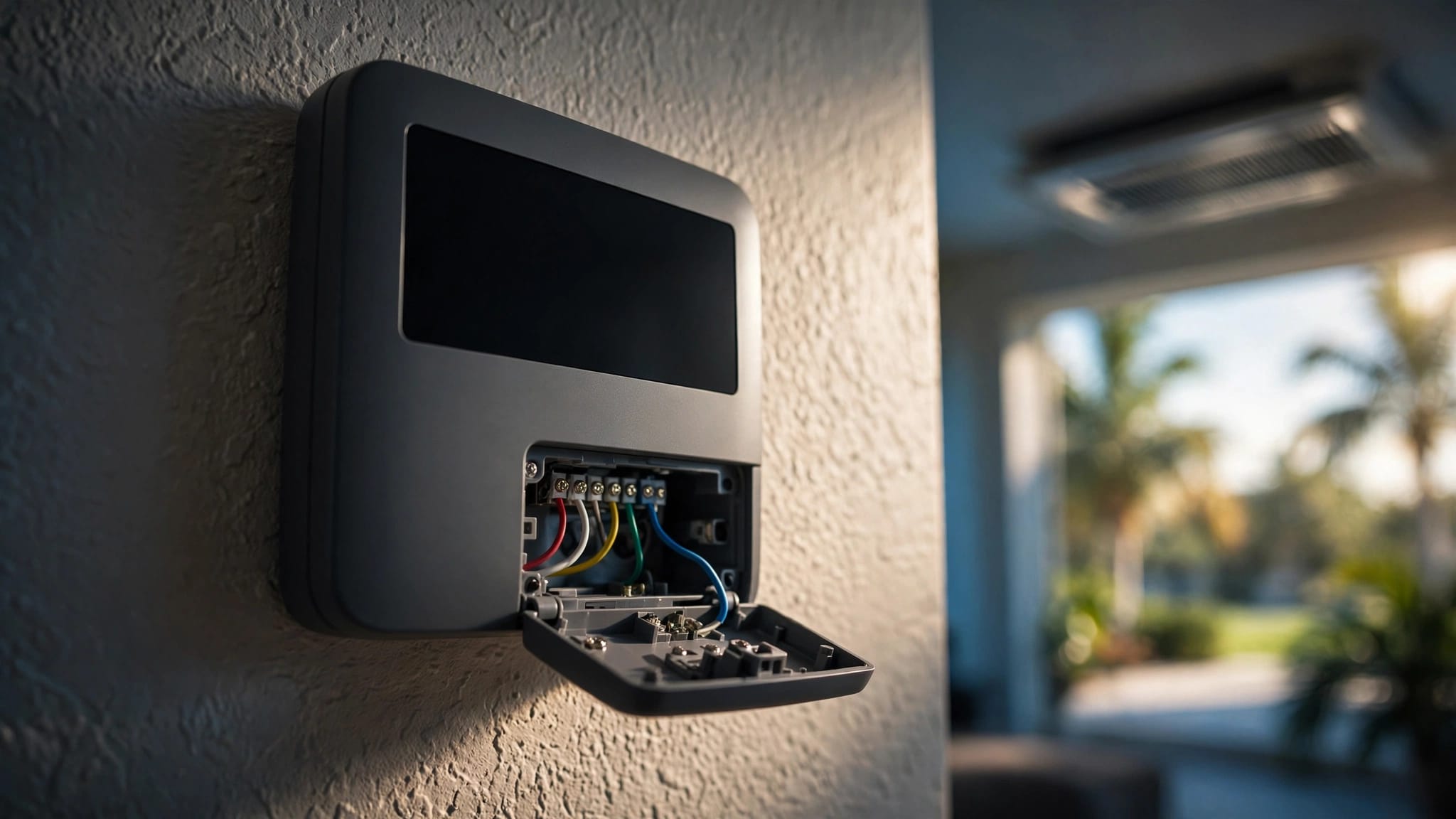
If a water-level switch shuts the AC off, leave it off until the cause is found. Restarting the system without clearing a blocked line can allow water to rise again. The switch may also need testing after service to confirm it operates as intended.
You can learn more about how a float switch helps prevent AC drain overflows. A switch is common, but don't assume code requires that exact device on every installation. The code permits different protection methods where the overflow rule applies.
What should you check at the outdoor drain outlet?
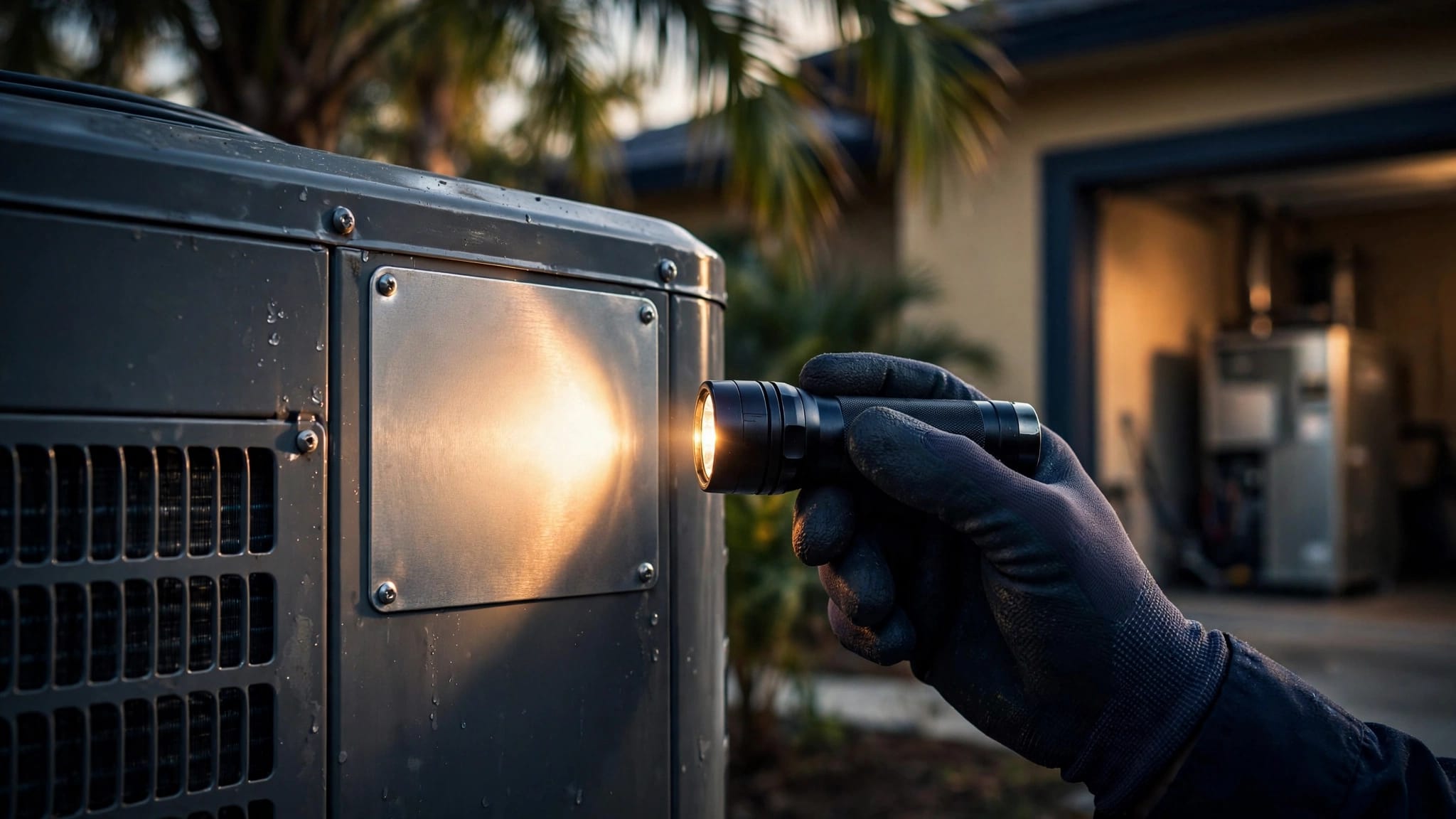
Many Southwest Florida homes have an accessible condensate outlet outside. Locate yours before there's a leak, then keep plants, mulch, and debris clear of the opening. Don't cap or seal it.

Dripping during humid weather often means the AC is removing moisture, but it doesn't prove that every part of the drain is clear. Flow can change as cooling cycles change. Standing water at the outlet, a damaged pipe, or discharge that bothers pedestrians deserves attention.
Also look for a second outlet if your system has a separate overflow line. Water coming from that line may mean the primary drain has failed. Don't treat an active emergency discharge as normal drainage, especially if the air handler is above finished space.
Which drain maintenance tasks are recommendations, not code rules?
Florida's humidity and long cooling season give algae and biofilm time to build inside a wet drain. Routine care helps prevent clogs, but a homeowner maintenance schedule isn't the same thing as a code requirement.
Safe checks between service visits
Look around the accessible air handler for water, rust, or a persistently wet pan. Check the outdoor outlet for debris, and notice unexpected shutdowns. During heavy cooling use, a monthly visual check is reasonable, particularly if you've had a backup before.
If your system has an accessible cleanout, follow the manufacturer's directions or a technician's instructions before using any treatment. Don't pour strong or unknown chemicals into the line. Don't force liquid into a sealed pipe or open the air handler cabinet to reach a drain you can't safely identify. For more homeowner tasks, see these safe Florida AC maintenance steps.
What a thorough service visit should cover
Ask the technician to check the pan, clear the line, inspect the trap and fittings, and confirm that water drains freely. If the system has a safety switch or condensate pump, those parts deserve inspection too. Some maintenance plans include a drain treatment to slow buildup.
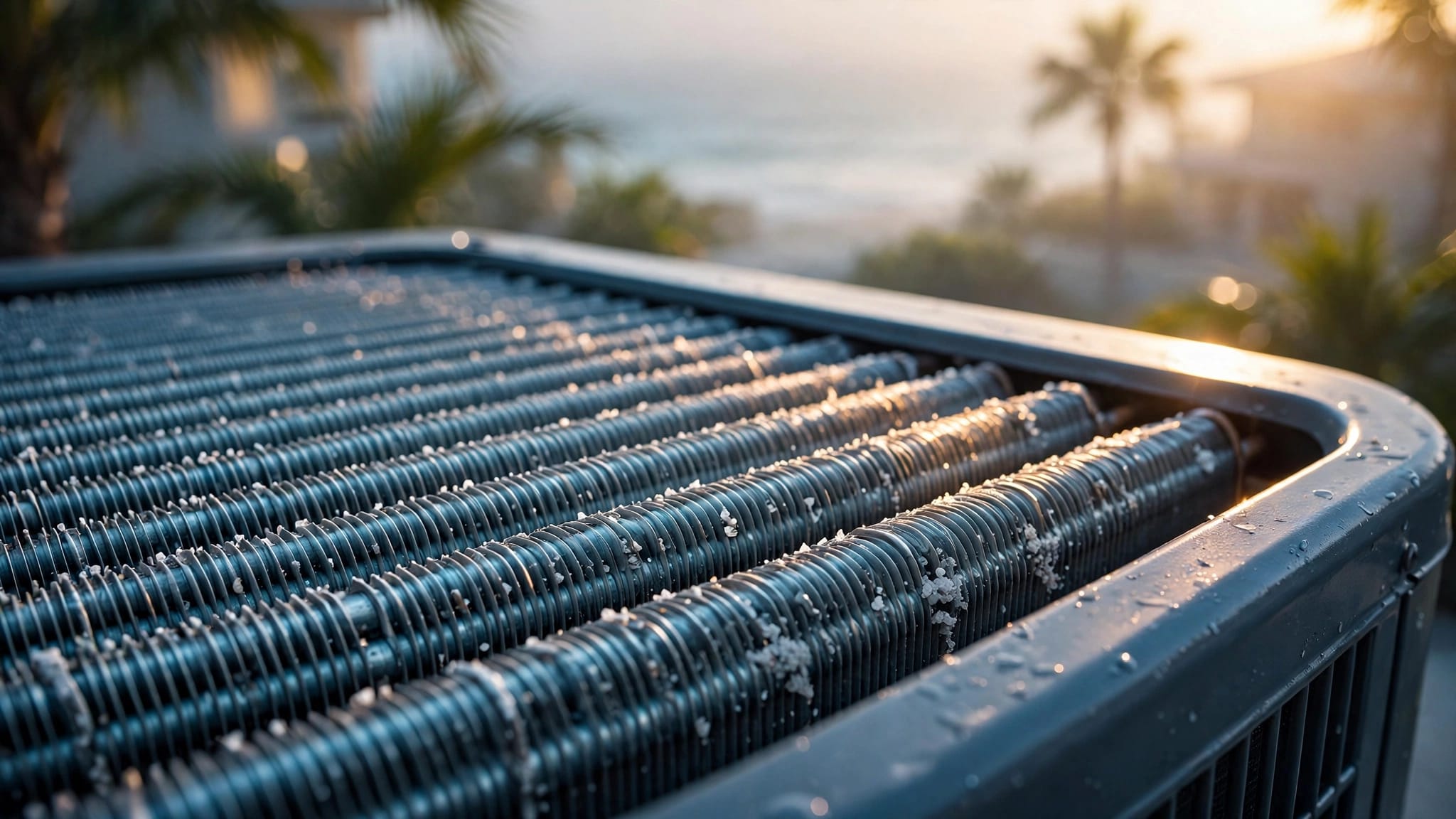
Repeated clogs call for more than another quick flush. A technician can check pipe slope, hidden sags, damaged PVC, and buildup near the coil. Those checks are especially useful when the AC appears to cool normally but the pan keeps filling.
What are the warning signs of a drain problem?
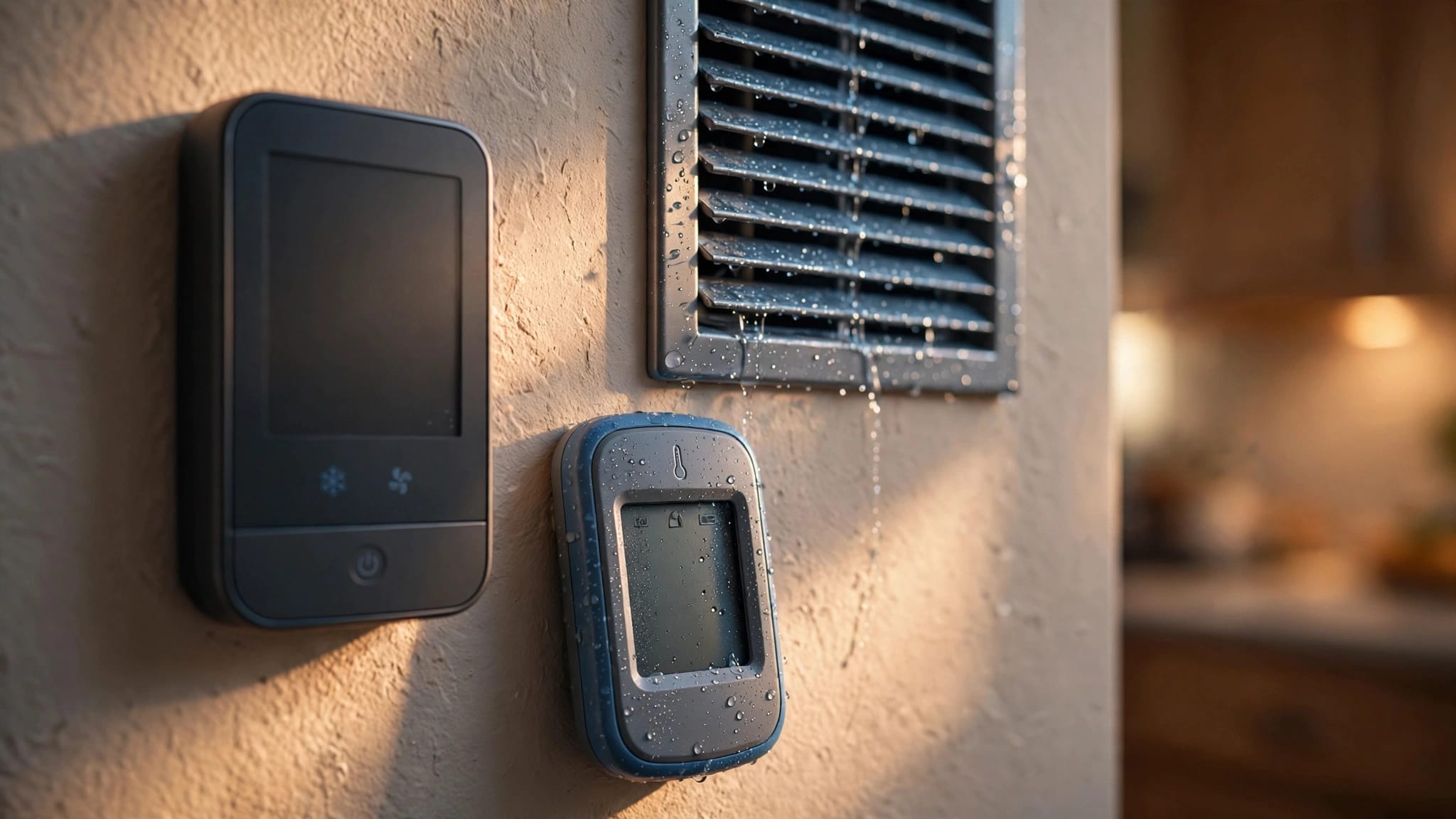
Water around the indoor unit, a ceiling stain below an attic air handler, or a musty smell near the equipment all warrant a closer look. An AC that stops before the thermostat reaches its setting may have tripped a water-level switch.
Respond to leaks without making them worse
If water is backing up, turn the cooling system off. Keep clear of wet electrical equipment, and arrange service before running the AC again. Continued cooling produces more condensate, which can spread damage through drywall or flooring.
A dirty filter or frozen coil can contribute to water problems, so don't assume every leak is a simple drain clog. This guide to AC water leaks in Cape Coral describes other possible causes.
Treat repeat backups as a routing clue
A line that clogs again soon after cleaning may have a slope problem, loose connection, or obstruction that a quick flush didn't fix. Ask for an inspection of the drain path and safety controls instead of repeatedly resetting the system.
For a shutdown or spreading leak, Contact Us to reach Back Bay Heating & Cooling for 24/7 service or to schedule a service call.
How do local rules and permits affect the answer?
The statewide code is the starting point, but your local building department reviews the work at your address. Cape Coral and other municipalities may administer permits separately from unincorporated parts of Lee, Collier, Charlotte, and Hendry counties. Local procedures and any applicable amendments need confirmation before work begins.
No specific condensate amendment for those jurisdictions was identified in the available code information. That doesn't establish that every local requirement is identical. Ask the permitting authority which code edition and requirements apply to your proposed installation or replacement.
When requesting a quote, ask the licensed HVAC contractor to identify the disposal point, pipe route, overflow-protection method, and permit responsibility. Those details are more useful than a promise that the new drain will be "up to code" without showing how.
Key takeaways for homeowners
- In September 2026, the statewide baseline is the 2023 Florida Building Code, Mechanical , 8th Edition.
- The primary drain needs an approved disposal point, a line at least 3/4 inch in diameter, and adequate slope. It cannot connect directly to a plumbing drain, waste, or vent pipe.
- Where a primary drain overflow could damage the building, the code lists several protection methods. A float switch is one option, not a universal requirement.
- Visible leaks, water from an overflow outlet, or repeat shutdowns call for an inspection. Confirm installation and permit details with a licensed HVAC professional and your local building department.
Conclusion
An AC drain is easy to overlook until water appears where it shouldn't. Proper routing and overflow protection help keep a small blockage from becoming damage inside your home.
If you're replacing equipment or dealing with another backup, ask where the water goes and what happens if the primary line clogs. Those answers should be clear before the system runs again.