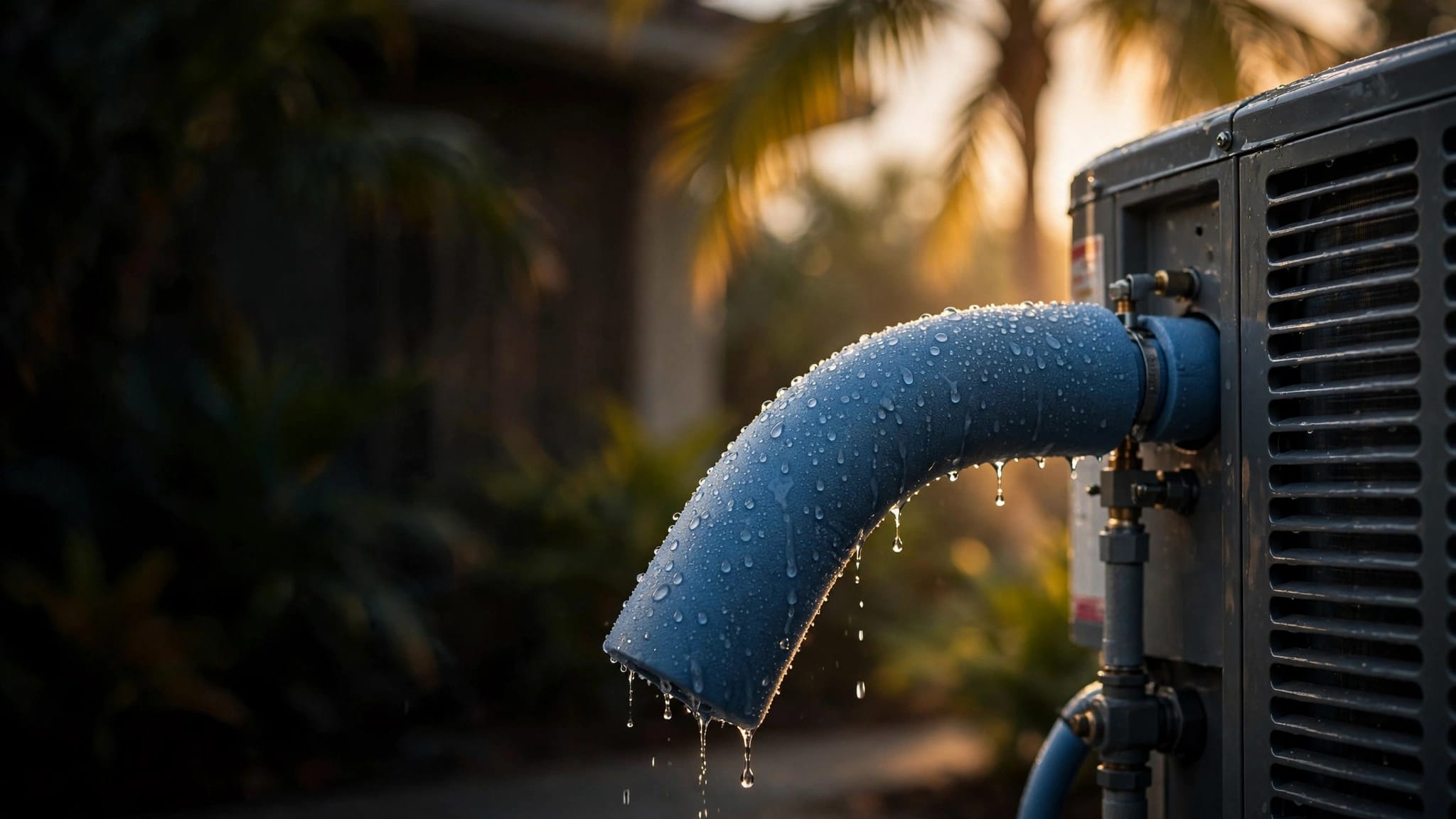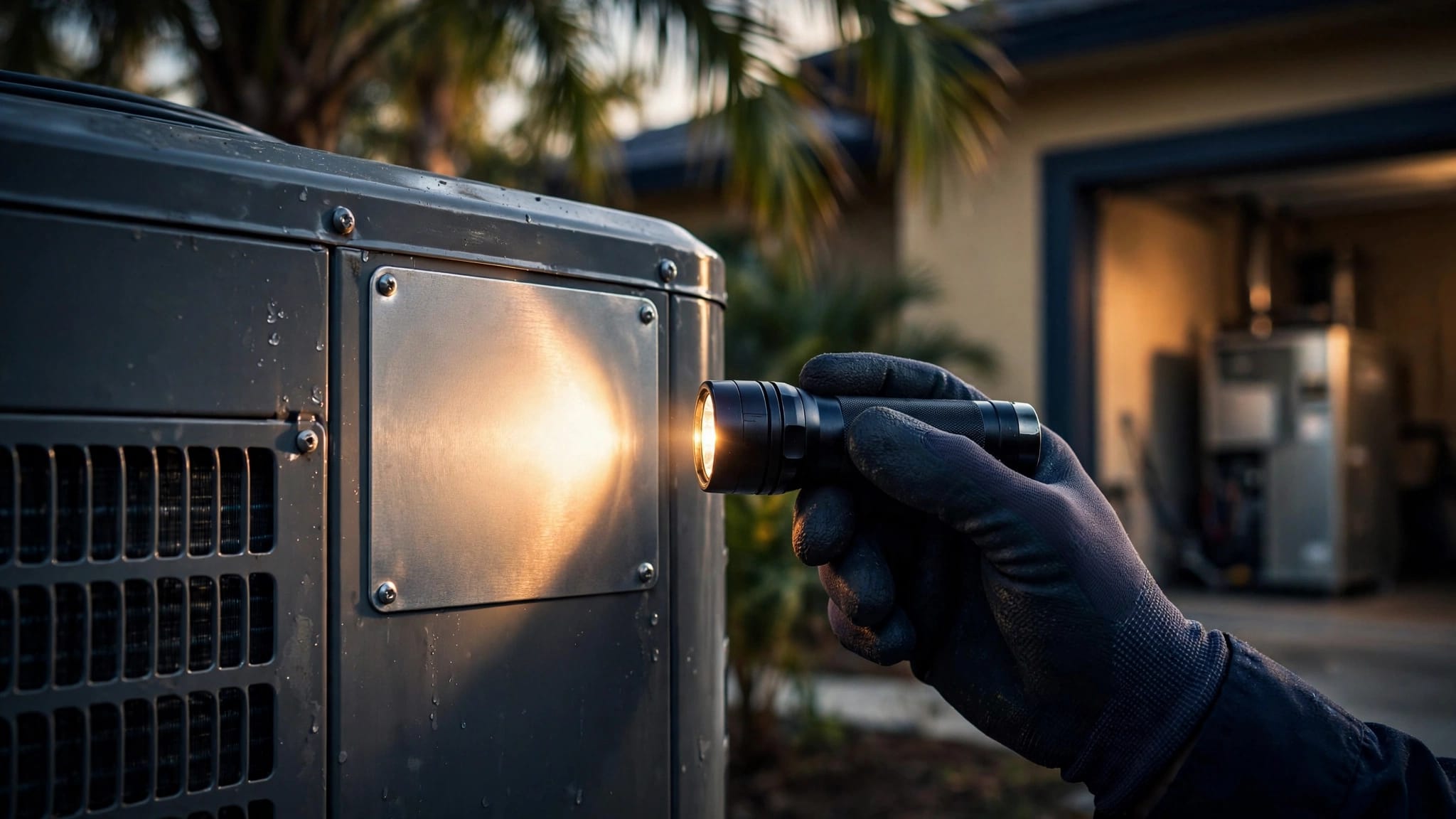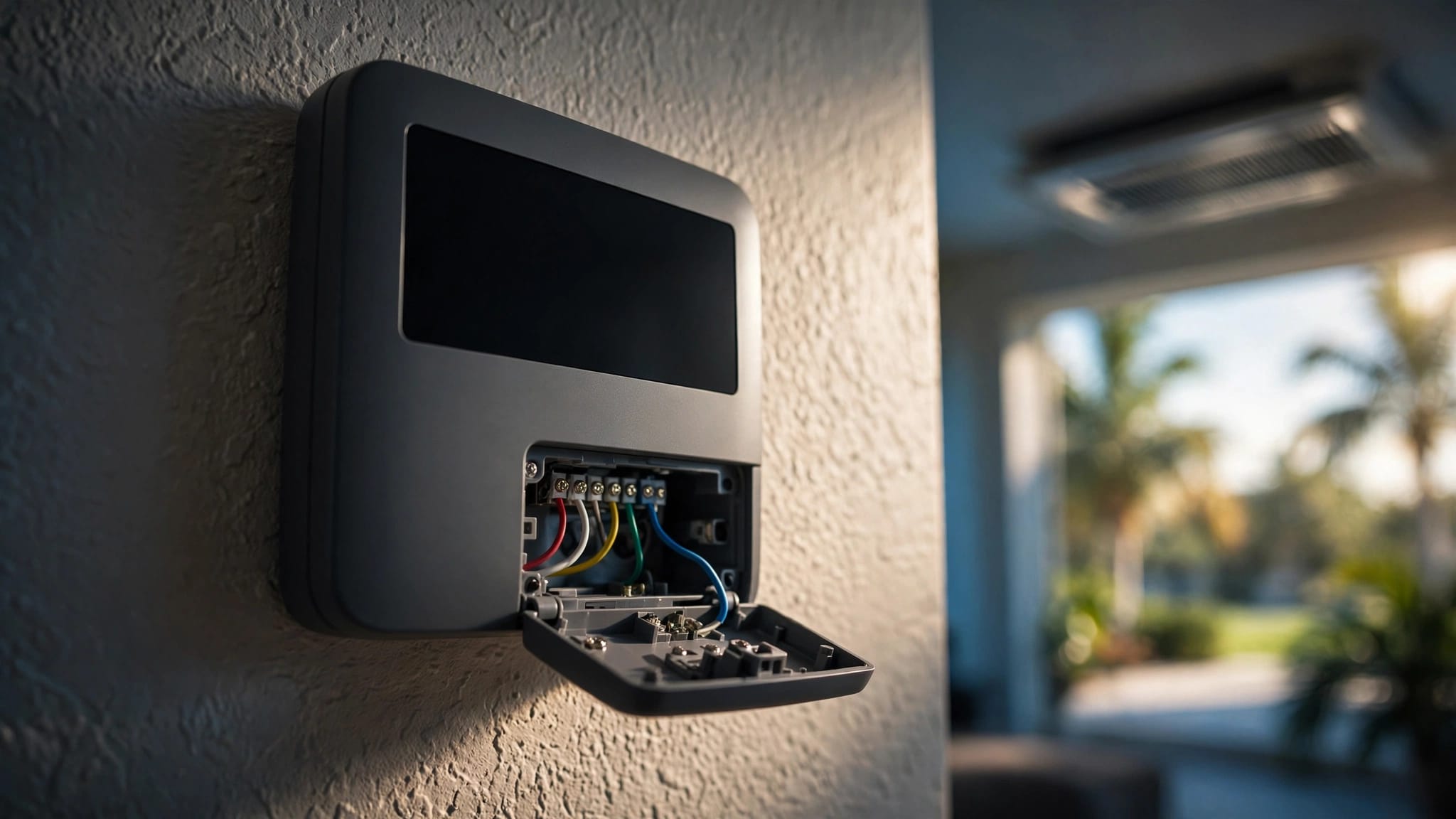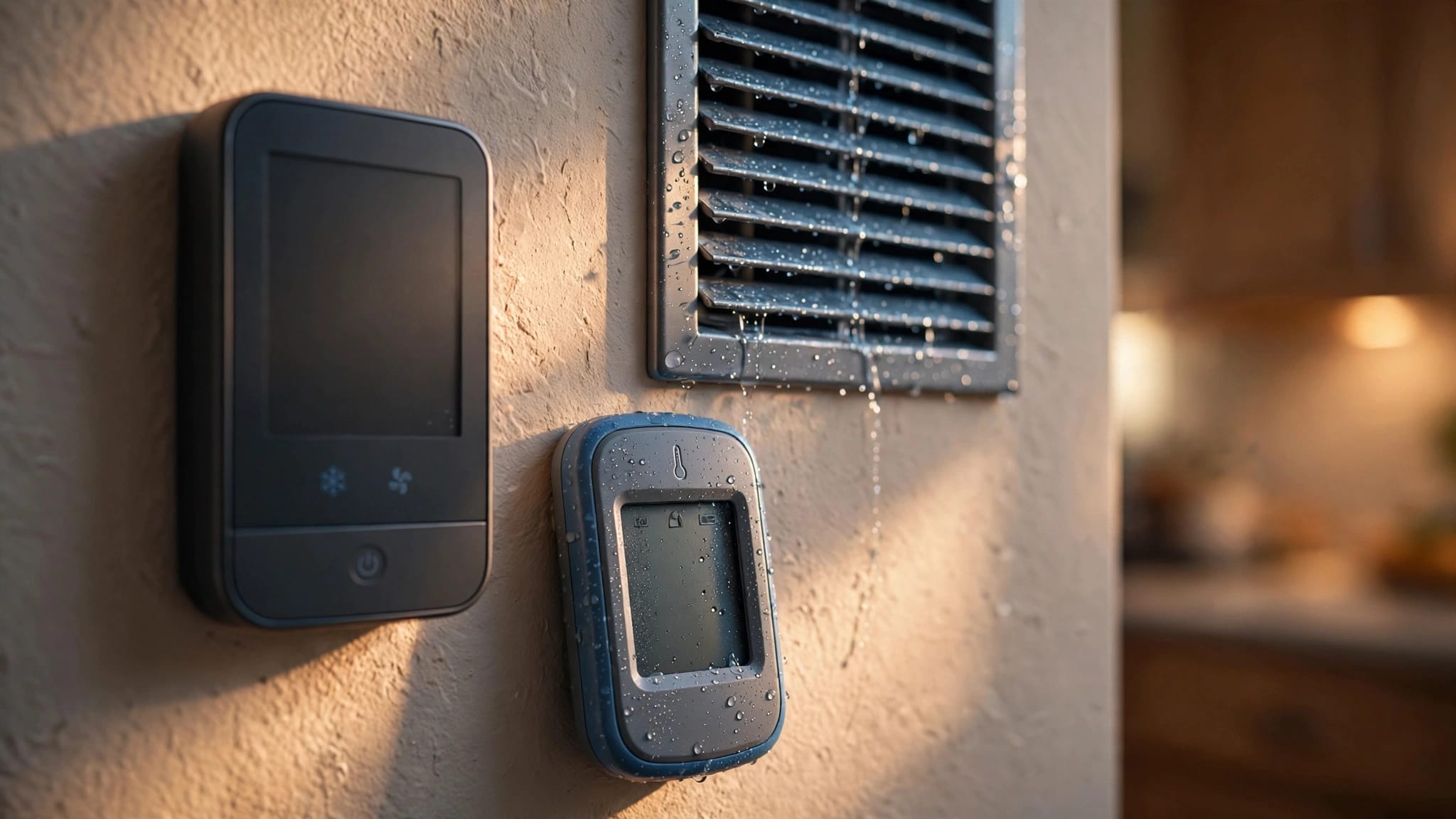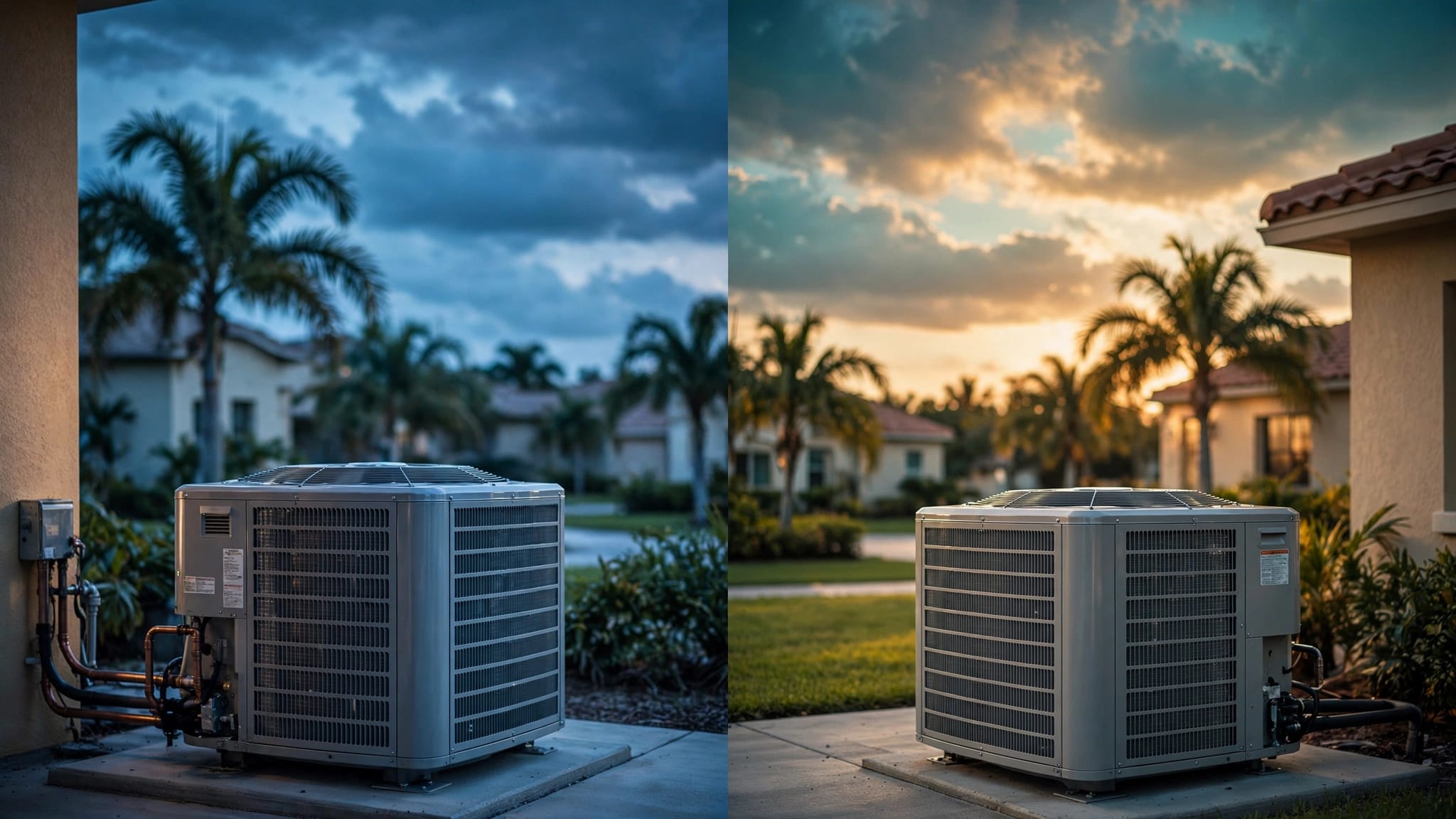
AC evaporator coil corrosion can reduce cooling performance and eventually cause refrigerant leaks. In Florida, constant humidity, long cooling cycles, and coastal air create conditions that can wear down indoor AC components.
The challenge is that corrosion may look similar to dirt, salt residue, or ordinary buildup. You shouldn't assume the cause from a quick glance. Understanding the warning signs can help you decide when to change a filter, shut down the system, or schedule a professional inspection.
What AC evaporator coil corrosion looks like
The evaporator coil sits inside the indoor air handler. Warm household air passes over the cold coil, allowing the system to remove heat and humidity. Because the coil stays damp during normal cooling, it can collect dust and develop residue over time.
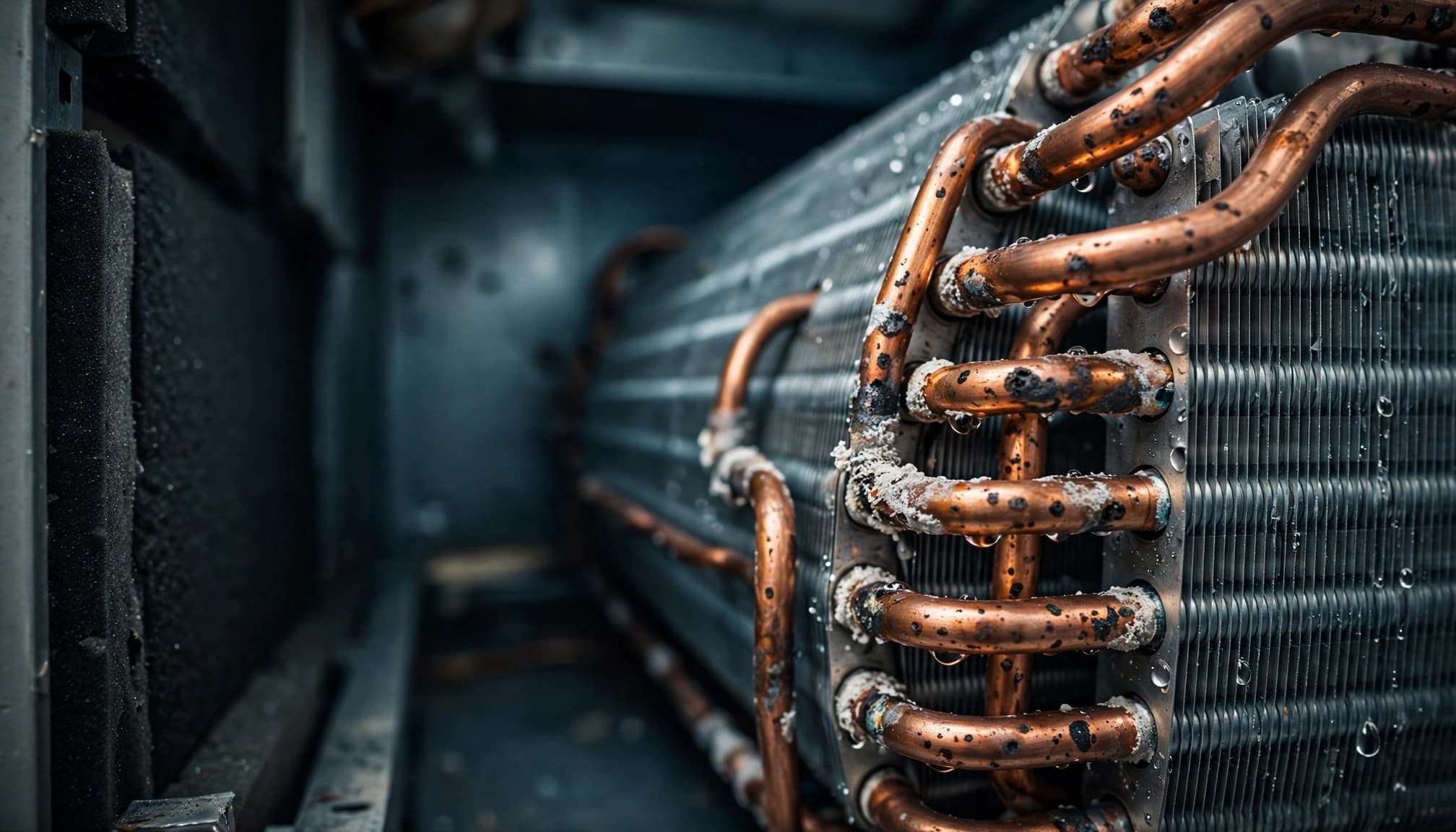
White residue, rust, and pitting
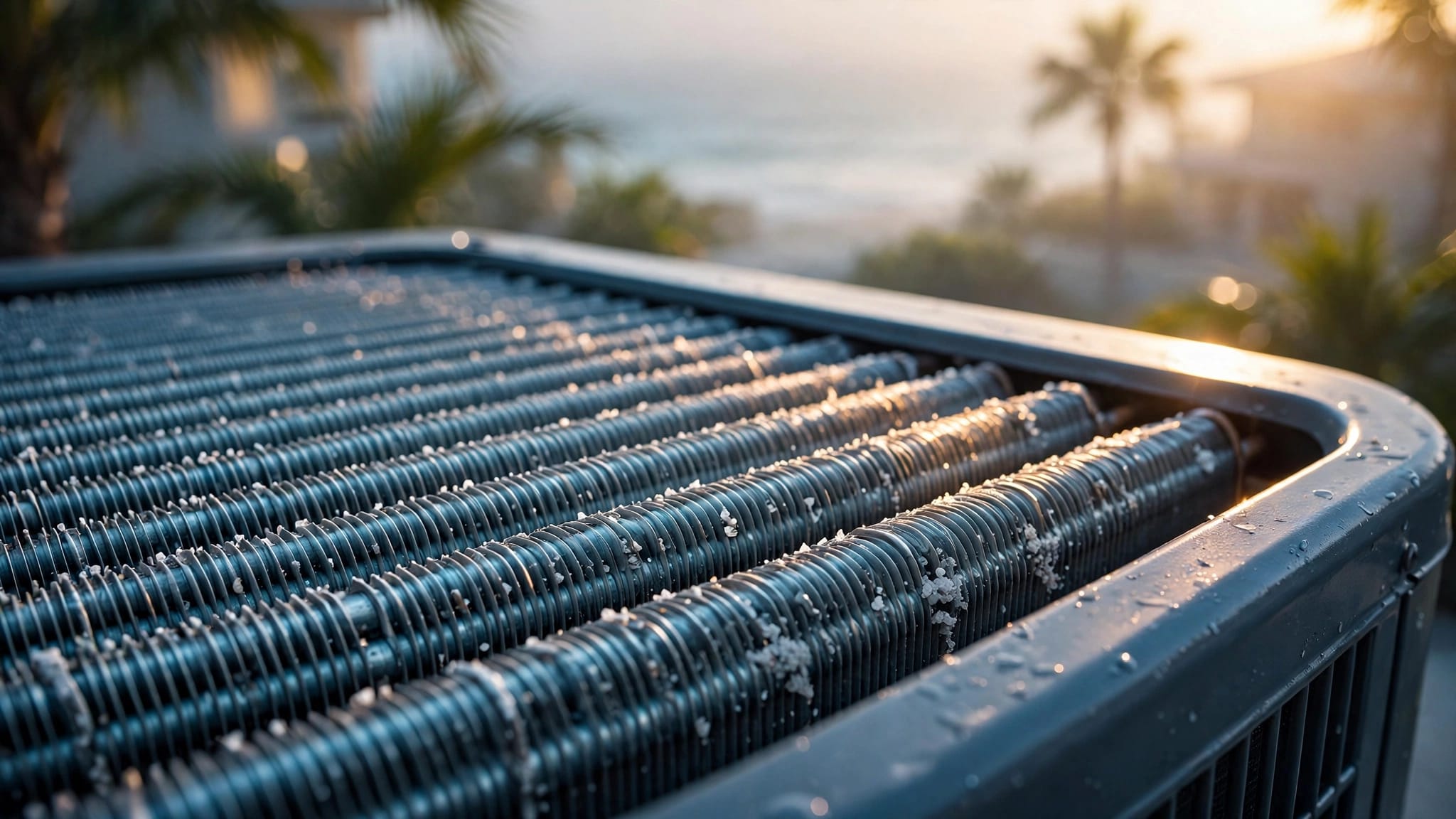
White powder on the fins may be salt residue, oxidation, or another deposit. It doesn't prove that the coil is corroded, but it deserves attention, especially in a coastal home.
Orange or brown spots are more concerning. Pitted metal, flaking surfaces, and small areas that appear eaten away can indicate more advanced corrosion. Over time, a weakened coil may develop a pinhole and lose refrigerant.
A homeowner shouldn't scrape the fins or spray an unknown cleaner inside the air handler. The fins bend easily, and aggressive cleaning can damage the coil or spread residue into the cabinet.
Why appearance alone isn't enough
A dirty coil usually has a layer of dust, lint, or greasy grime covering the fins. Corrosion changes the metal itself. Those problems can also occur together, so a technician may need to clean the coil before checking its condition.
A proper inspection can include the coil, drain pan, cabinet, refrigerant circuit, blower, and airflow. That broader view matters because weak cooling doesn't automatically mean corrosion.
Why Florida homes face more coil problems
Florida air conditioners often run for much of the year. In Cape Coral and other parts of Southwest Florida, systems may operate for eight to ten months annually. Long run times expose coils, drains, insulation, and electrical parts to more heat and moisture.
Coastal salt air increases corrosion risk
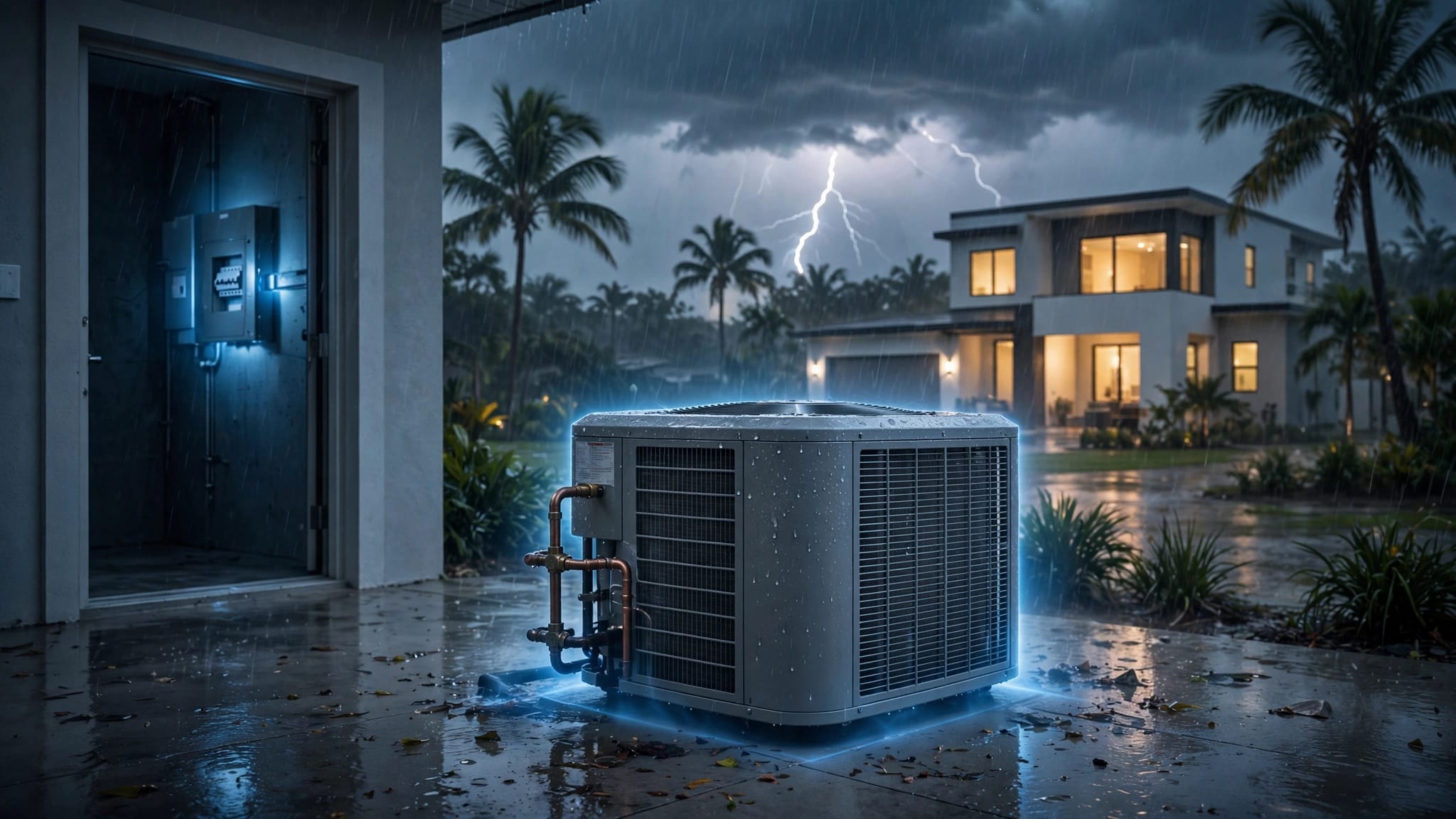
Homes near the Gulf, beaches, or open waterways may experience more salt exposure. Salt-heavy air can accelerate corrosion on outdoor condenser coils, fasteners, electrical connections, and other metal parts.
The indoor evaporator coil is more protected than the outdoor condenser, but coastal conditions still affect the entire system. Moisture and airborne contaminants enter through normal household airflow. Corrosion may also begin elsewhere and contribute to broader equipment wear.
Homes closer to the water can need more frequent inspections. A local guide on how salt air affects AC coils explains why coastal exposure can shorten equipment life.
Humidity keeps the coil wet
When humid air passes across a cold evaporator coil, condensation forms. That moisture normally drains away through the pan and condensate line. However, dust, organic material, and poor drainage can keep surfaces damp longer.
High humidity can also promote biological growth and clogged airflow. A wet, dirty coil may run less efficiently and develop odors, even when corrosion isn't present. Therefore, a musty smell or weak airflow needs inspection rather than an automatic corrosion diagnosis.
How corrosion connects to AC symptoms
Corrosion doesn't always create an obvious failure at first. The system may continue cooling while efficiency gradually declines. Other problems, including dirty filters and low refrigerant, can create similar symptoms.
Poor cooling and longer run times
A damaged or heavily coated coil cannot transfer heat as effectively. You may notice that the air from the vents feels less cool, the system runs longer, or rooms remain humid.
Higher energy use can also have several causes. Restricted airflow, leaky ducts, an aging blower, a dirty outdoor condenser, or an incorrect refrigerant charge may produce the same pattern. A filter change is a reasonable first step, but persistent symptoms require service.
Refrigerant leaks, ice, and water
A corroded coil can develop a leak, but refrigerant loss doesn't confirm corrosion. Leaks can also occur at line connections, the condenser coil, or other sealed-system components.
Watch for warm air, hissing or bubbling sounds, ice on the indoor coil or refrigerant line, and repeated loss of cooling. How to identify an AC refrigerant leak can help you recognize overlapping warning signs.
Ice creates another complication. Low refrigerant and restricted airflow can both make the coil too cold. When the ice melts, water may overflow the drain pan or appear around the air handler. A water leak therefore doesn't prove that the coil is corroded.
Ice on the coil is a sign to stop guessing. Continued operation can strain the compressor and worsen the original problem.
What Florida homeowners can safely check
You can perform a few basic checks without opening the air handler or touching refrigerant components. These steps may rule out simple problems, but they cannot confirm the condition of the evaporator coil.
Start with the filter and thermostat
Set the thermostat to "cool" and lower the temperature below the current room temperature. Then check the filter. Florida's dust and humidity can clog filters quickly, so inspect them monthly during heavy-use periods.
Replace a visibly dirty disposable filter with the correct size and rating. A filter that is too restrictive can reduce airflow, while a missing filter allows dust to reach the coil.
Check the supply vents and return grille as well. Furniture, rugs, or stored items can block airflow and make a healthy coil appear ineffective. These are among the safe AC maintenance checks for Florida homeowners.
Know when to shut the system off
Turn off cooling if you see ice, steady water around the indoor unit, a burning smell, exposed wiring, or unusual electrical sounds. If ice covers the refrigerant line or coil, set the system off and allow it to thaw. Don't chip at the ice or keep running the compressor.
You can also inspect visible insulation on the refrigerant line for cracks or animal damage. Don't loosen fittings, handle bare copper, or attempt to add refrigerant. Refrigerant work requires specialized equipment and proper handling.
When a professional inspection is needed
A technician should evaluate the system when corrosion appears heavy, cooling remains weak after a filter change, or refrigerant loss is suspected.
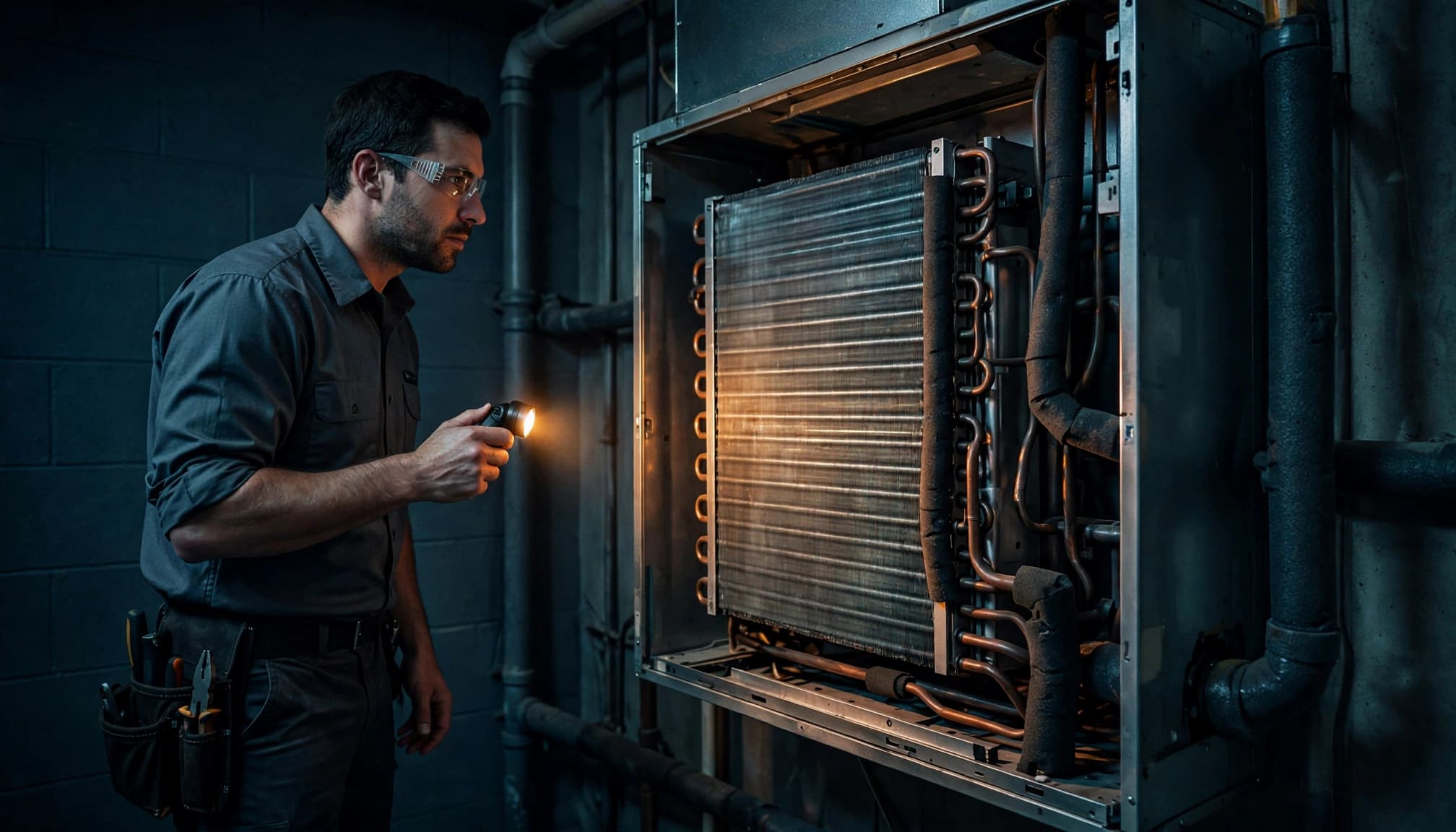
What the technician checks
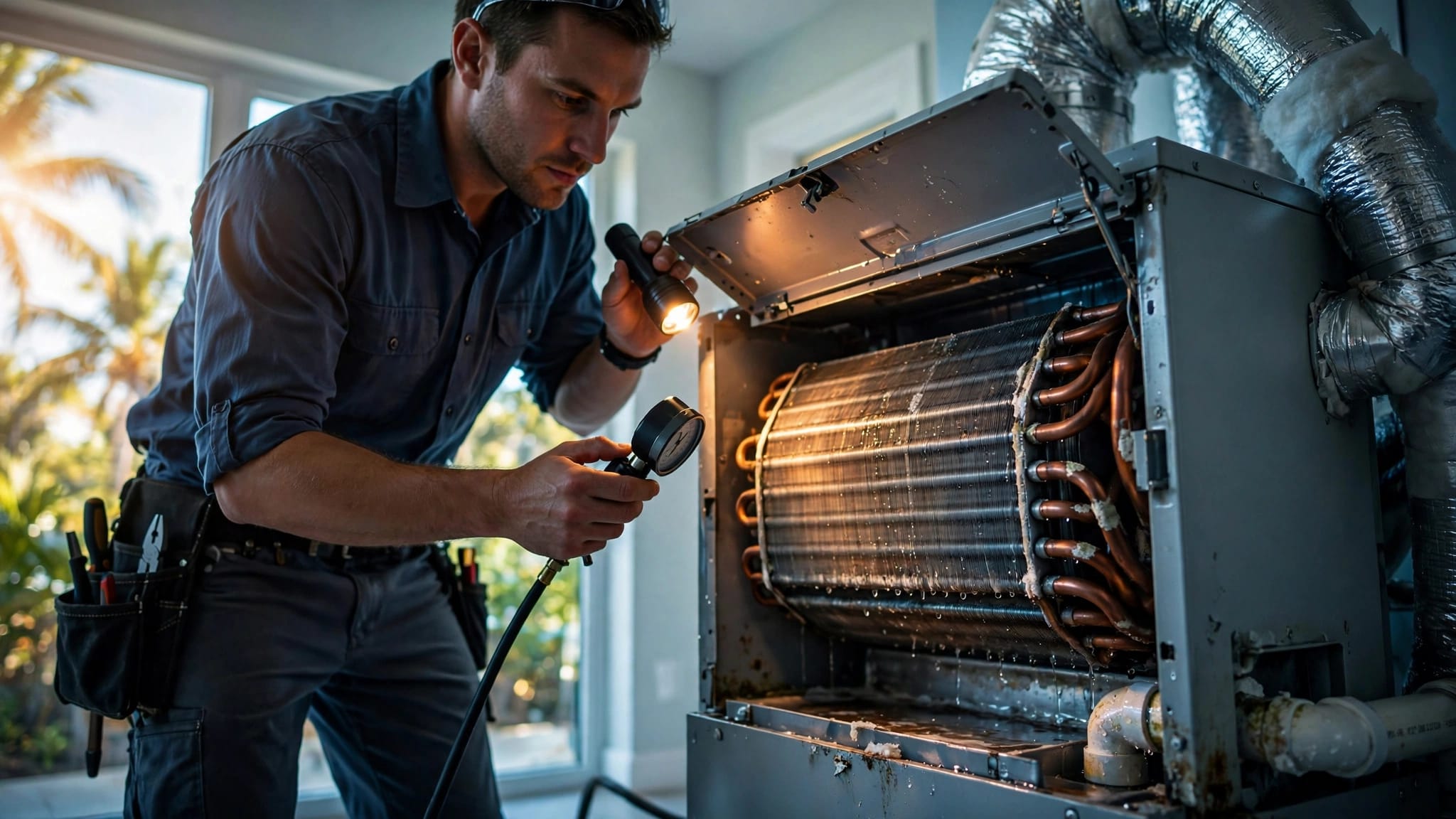
A professional may inspect the coil surface, cabinet, drain pan, condensate line, blower, duct airflow, electrical components, and refrigerant pressures. They may also use temperature readings, electronic leak detection, pressure testing, or other methods suited to the equipment.
That process separates corrosion from dirt, poor drainage, airflow restrictions, and other causes. A refrigerant top-off alone is not a complete repair when the system has a leak. The failed spot needs to be located and repaired, then the system must be charged correctly.
EPA-certified technicians handle refrigerant recovery and charging according to applicable requirements. Homeowners should not use DIY recharge kits. Those products can hide the source of a leak, damage the system, and create safety concerns.
Repair or replacement may depend on the coil
A newer system with one accessible leak may be worth repairing. An older system with repeated leaks, obsolete refrigerant, severe corrosion, or several failing components may justify comparing repair and replacement.
For context, Cape Coral evaporator coil replacement estimates in 2026 commonly range from about $1,800 to $4,300, including factors such as labor and refrigerant. The actual estimate depends on equipment size, coil design, access, refrigerant type, warranty coverage, and the extent of the damage.
A clear quote should explain whether the job includes leak testing, refrigerant recovery, the replacement part, evacuation, recharging, and start-up checks. If you need help assessing the problem, you can Contact Us to schedule a service call.
How to prevent corrosion from getting worse
Maintenance cannot prevent every coil failure, but it can reveal residue, blocked drains, airflow problems, and refrigerant issues earlier.
Schedule professional maintenance twice a year
Twice-yearly service is a practical schedule for many Florida homes, particularly those near the coast or with heavy AC use. During a tune-up, a technician can clean accessible components, inspect the evaporator coil, check the drain system, test airflow, and review refrigerant readings.
A professional visit also provides a better chance of finding small problems before they become a no-cooling emergency. What technicians check during AC maintenance includes coils, electrical components, drains, filters, and refrigerant operation.
Keep the system clean and accessible
Change or inspect the filter monthly during periods of frequent use. Keep return grilles clear, and don't store items against the air handler. Outside, maintain open space around the condenser and remove leaves, grass, and palm debris.
Coastal homeowners should watch for white deposits, orange rust, and pitted metal during routine visual checks. Don't spray chemicals or rinse indoor equipment unless the manufacturer and a qualified technician provide specific instructions. For outdoor salt exposure, follow professional guidance on safe coil cleaning and protective treatments.
Key takeaways for Florida homeowners
- White powder may be salt residue or oxidation, but it doesn't confirm corrosion.
- Orange rust, pitting, flaking metal, and recurring refrigerant loss deserve professional evaluation.
- Dirty filters, poor airflow, low refrigerant, and drain problems can mimic corrosion symptoms.
- Coastal homes may face greater salt-related wear, especially near beaches and open water.
- Ice on the coil or refrigerant line means the system should be turned off and inspected.
- Homeowners should never add refrigerant or open sealed-system connections.
- Regular filter checks and professional maintenance can identify trouble earlier.
FAQ about AC evaporator coil corrosion
Can a dirty evaporator coil look corroded?
Yes. Dust, lint, salt residue, and oxidation can overlap on the same coil. Dirt usually sits on top of the fins, while corrosion damages the metal surface. A technician may need to clean and inspect the coil before confirming its condition.
Does coil corrosion always cause a refrigerant leak?
No. Corrosion can eventually create a pinhole, but refrigerant may also leak from a fitting, line set, condenser coil, or another connection. Low cooling, ice, and hissing sounds indicate a possible sealed-system problem, not a definite diagnosis.
Can I clean a corroded indoor coil myself?
Avoid aggressive cleaning, scraping, bending fins, or spraying household chemicals inside the air handler. Indoor coil access can be tight, and improper cleaning may damage the equipment or spread moisture into electrical areas. Ask an HVAC technician to assess the safest cleaning method.
Should I replace the AC if the evaporator coil is corroded?
The answer depends on the system's age, refrigerant type, warranty, repair estimate, and overall condition. A repair may make sense for a newer system with one failed coil. Replacement deserves consideration when corrosion is severe or the system has repeated failures.
Conclusion
AC evaporator coil corrosion is easier to manage when you catch warning signs early. In Florida, humidity and coastal exposure can increase equipment stress, but dirt, airflow restrictions, drainage problems, and refrigerant leaks can produce similar symptoms.
Keep filters clean, watch for ice and water, and schedule regular inspections. When the coil shows pitting or the system may be losing refrigerant, professional diagnosis protects both your equipment and your budget.