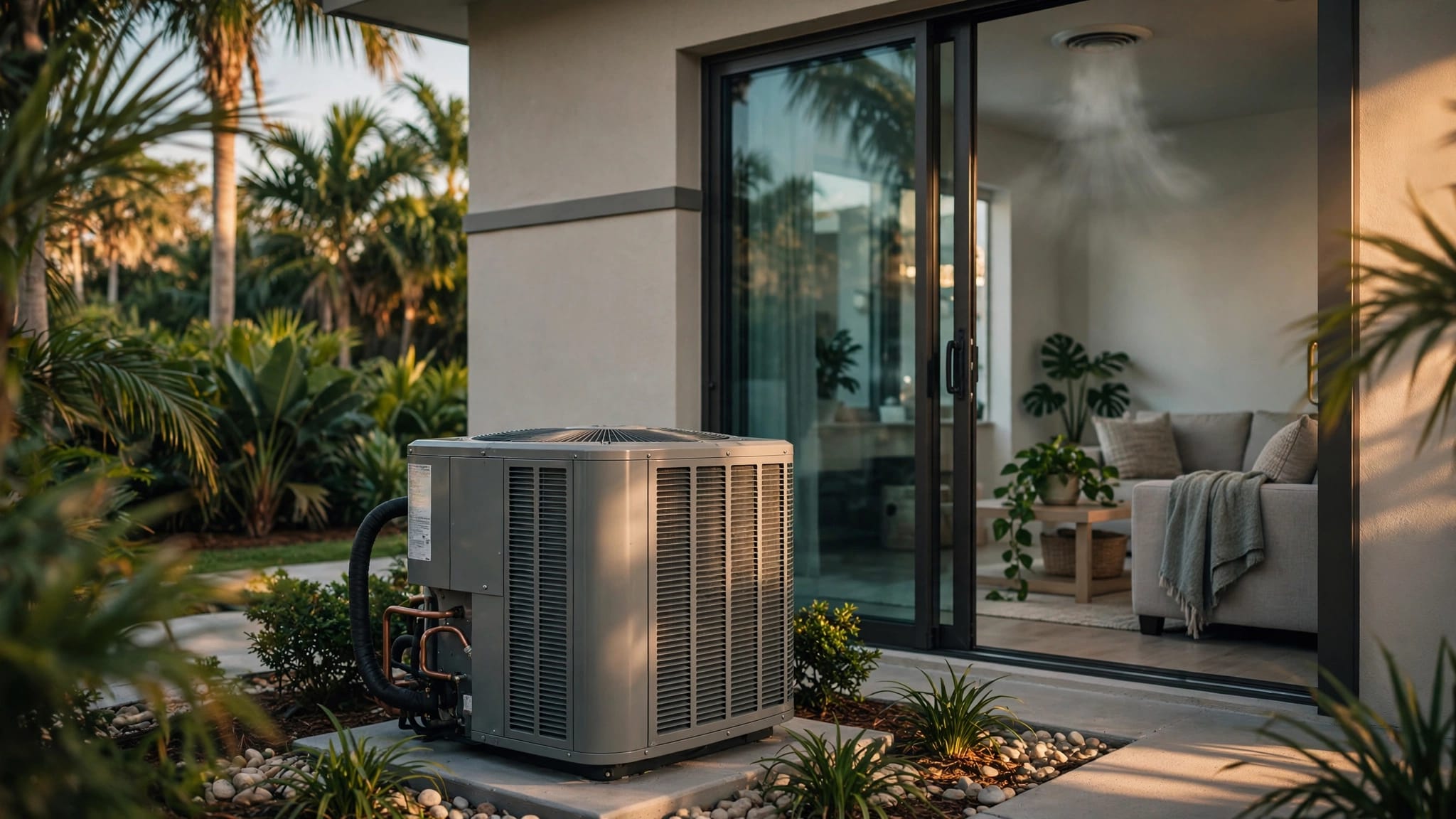
If you're considering collecting AC condensate water for your garden, start by finding where your system drains. A collection setup should catch the water without blocking the pipe or causing water to pool near your home.
In Southwest Florida, long cooling cycles can keep that drain active for much of the year. Safe drainage comes first, even when you want to put the water to another use.
How AC condensate water reaches the drain
Your air conditioner removes moisture as warm indoor air passes over the cold evaporator coil. That moisture collects in a drain pan and moves through a condensate line, often a PVC pipe that ends outside the house.
During humid weather, you may see water dripping from the outdoor outlet while the AC runs. The flow depends on how often the system runs and how much moisture it removes, so it won't be the same every day.
The condensate line is separate from the refrigerant lines that connect the indoor and outdoor equipment. If you're unsure which pipe carries condensate, leave the connections alone and ask us to identify the drain during a service visit.
How to collect condensate without blocking the drain
A removable container beneath the outdoor outlet can catch condensate without changing the HVAC system. Keep the outlet above the container opening, with a visible air gap between the pipe and the water.
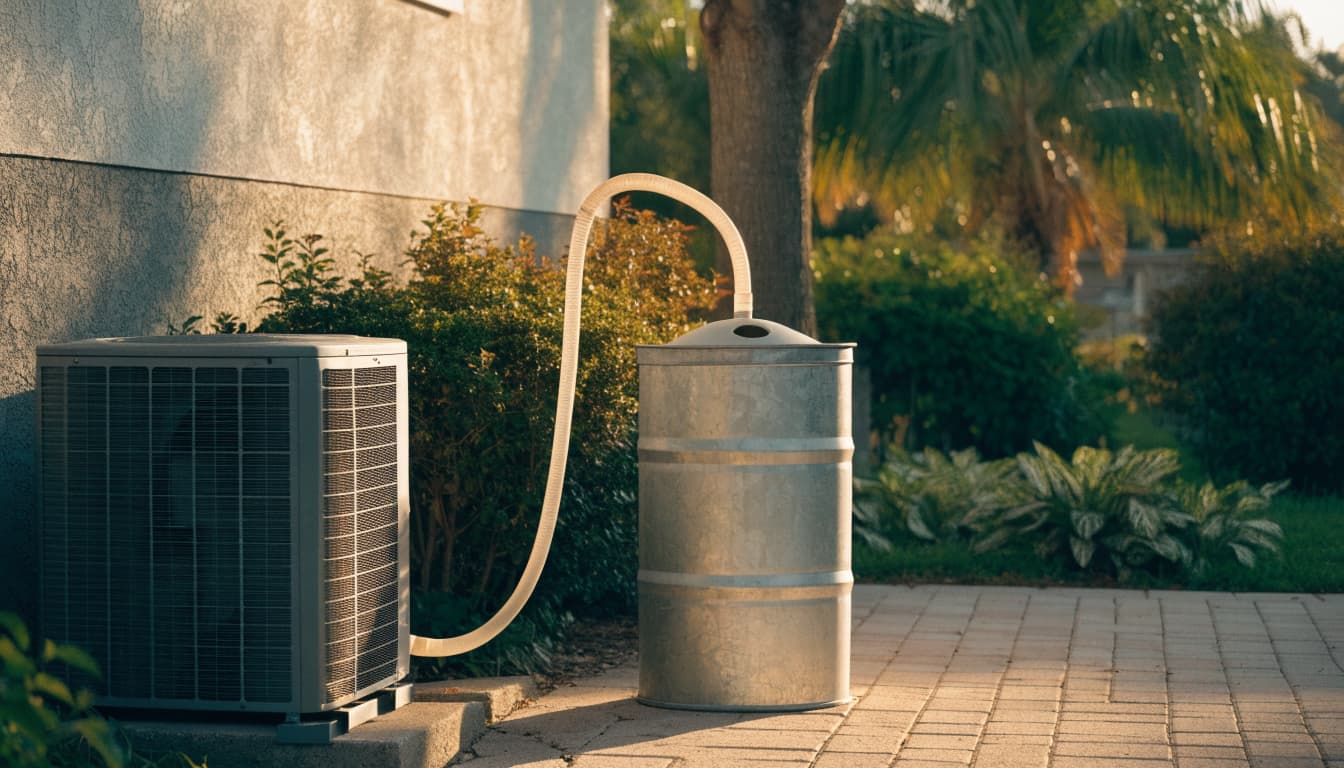
Position the container below the outlet
Set the container on stable ground where it won't tip. Don't attach it to the pipe, cap the outlet, or push the pipe below the water level. The drain needs an open path even after the container fills.
Choose a container you can empty easily. If the outlet sits too close to the ground for one, don't force the pipe upward or change its slope. An HVAC technician can discuss drainage options that suit the installation.
Plan for overflow
Empty the container often enough that water doesn't spill toward the foundation, walkway, or outdoor equipment. Florida rain can fill an uncovered container too, so allow for wet weather as well as AC drainage.
A cover or fine screen can help keep mosquitoes out. Leave the drain outlet open above it, and clear the screen if debris prevents water from passing through. Keep the container accessible so you can remove and rinse it between uses.
Keep the area around the AC clear
Collection shouldn't crowd the outdoor condenser. The unit needs open space for airflow and service access, while the drain outlet needs to stay clear of mulch, leaves, and plant growth.
Place the container where it won't obstruct a service panel or collect against the equipment. Avoid running a hose across a walkway or leaving standing water near electrical components.
Our guide to safe AC maintenance tasks for Florida homeowners covers other routine care you can handle without opening sealed equipment.
Know when the drain needs attention
A collection container can help you notice changes in the drain, but the amount of water alone doesn't diagnose an AC problem. A system may produce less condensate when it runs less often.
Watch for indoor water or shutdowns
Water around the indoor air handler, a wet ceiling, or a safety-switch shutdown deserves attention. A clogged line can cause water to back up into the drain pan. Poor pipe slope, a damaged fitting, or a condensate pump problem can also interfere with drainage.
If water is backing up around the indoor unit or the safety switch has shut the system down, turn the AC off and arrange service. Protect the surrounding area from water without touching electrical equipment.
Leave persistent blockages to a technician
Slime and debris can narrow a condensate line over time. Don't pour random chemicals into the pipe or force liquid into a sealed opening. Strong cleaners can damage equipment and may not reach the blockage.
A technician can inspect the pan, line, trap, and safety controls rather than treating every backup as a simple clog. Our article on AC safety-switch problems explains how drain issues can interrupt cooling.
Common questions about condensate collection
Should water drip from the drain all the time?
No. Condensate production changes with cooling runtime and indoor humidity. A dry outlet when the AC isn't actively cooling doesn't by itself mean the line is blocked.
Look for other signs, such as water near the indoor unit or repeated shutdowns, instead of judging the system by the outdoor drip alone.
Can I collect water from a secondary drain?
A secondary drain can signal that the primary drainage system needs attention. Don't treat it as your regular collection point. If you notice water coming from a secondary outlet, arrange an inspection so a technician can identify the cause.
What does drain maintenance involve?
Depending on the system's condition, service can include clearing the line, cleaning the pan, inspecting the trap, and testing the float switch. A technician may also inspect a condensate pump or damaged PVC fittings.
Routine condensate drain maintenance gives us a chance to find problems before water overflows.
Put drainage first
A container beneath an accessible condensate outlet can be a simple collection setup. Keep the pipe open, leave an air gap, and manage overflow away from the house and equipment.
If water backs up or your AC shuts down, Contact Us to schedule a service call. We offer 24/7 service for Southwest Florida homeowners.