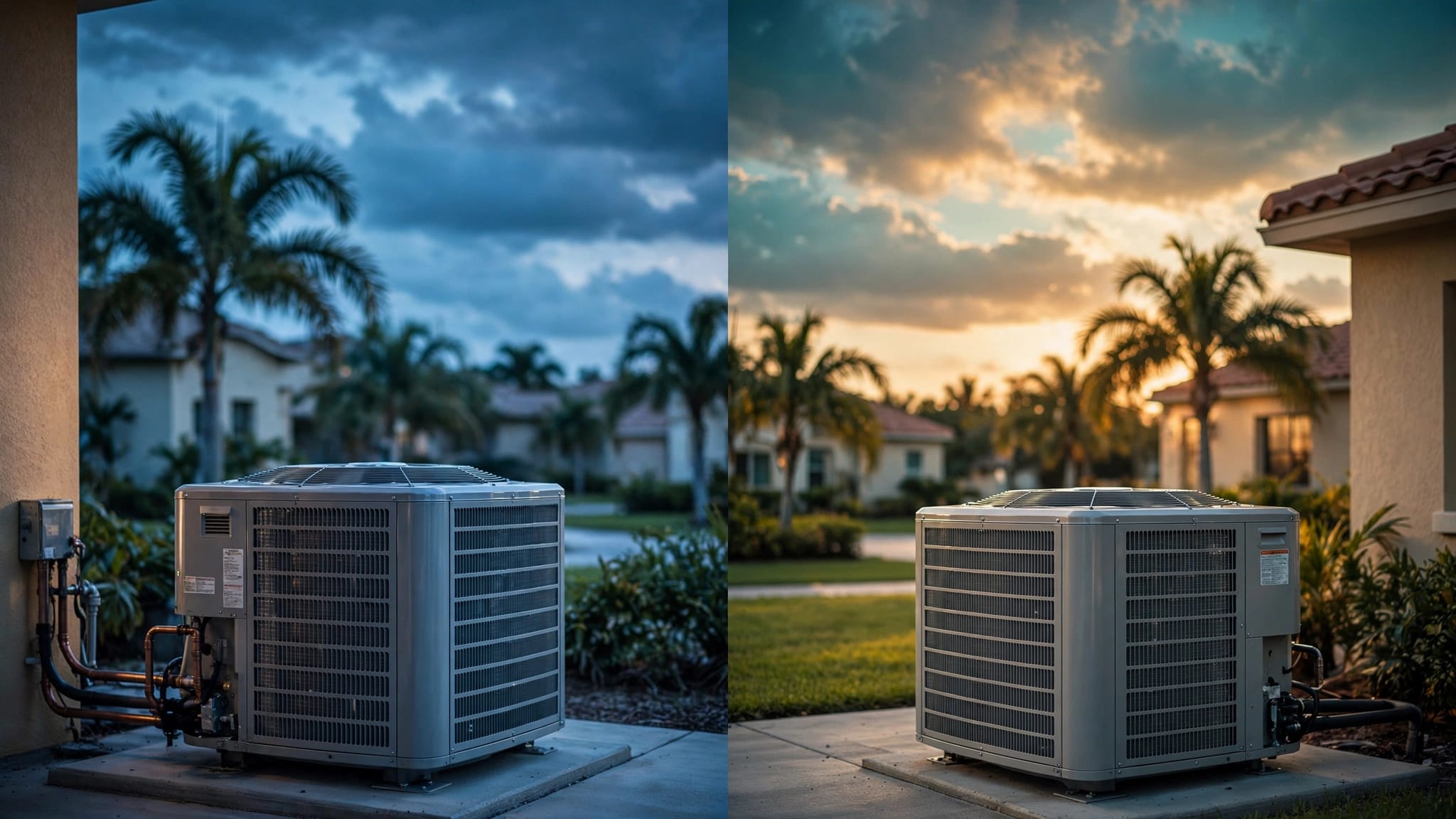
A cool house during a showing doesn't prove the air conditioner is healthy. Use this HVAC inspection checklist to find moisture problems, weak airflow, salt-air corrosion, storm damage, and repair concerns before closing.
Cape Coral homes rely heavily on air conditioning, and local humidity creates extra pressure on condensate drains, coils, ductwork, and indoor air quality. A visual review can reveal warning signs, but a licensed HVAC professional should test the equipment and provide written findings before you finalize the purchase.
Why Cape Coral's Climate Changes the Inspection
Cape Coral has a humid subtropical climate with no dry season. Local climate data reports average annual relative humidity near 71%, while the muggier period typically lasts from early April through mid-November. August averages about 31 muggy days.
That matters because an air conditioner must cool the home and remove moisture. A system can reach the thermostat setting while leaving rooms clammy, encouraging condensation, odors, and mold-related problems.
Heat and humidity affect more than comfort
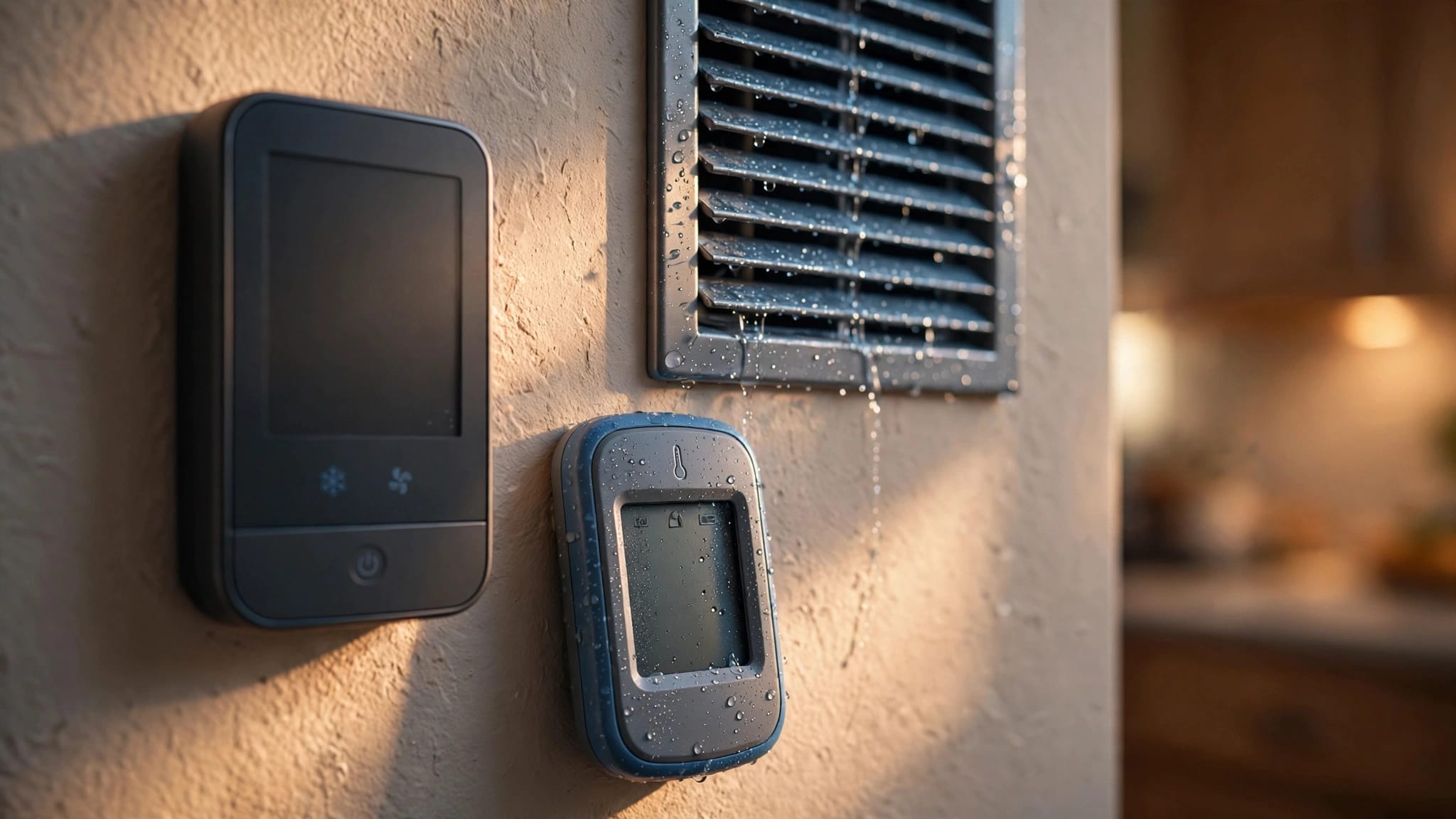
Look for evidence that the system runs for long periods without controlling moisture. Musty smells, damp closets, sweating vents, peeling paint near registers, or high indoor humidity deserve attention.
An oversized system may cool rooms quickly but cycle off before removing enough moisture. Dirty filters, restricted airflow, a clogged drain, low refrigerant, or coil problems can also affect performance.
Salt air, storms, and water require extra attention
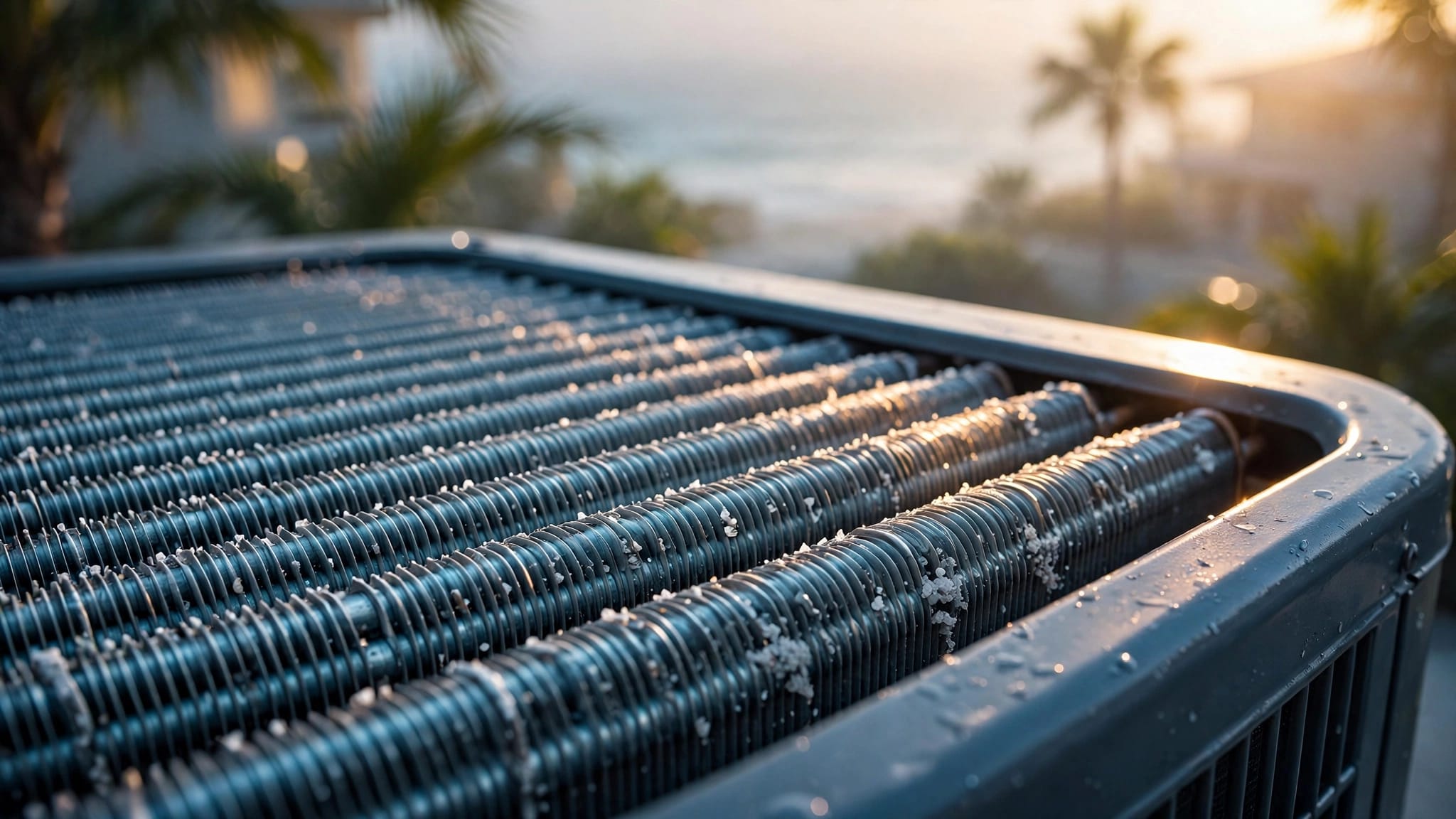
Salt particles can settle on outdoor condensers and gradually corrode metal fins, fasteners, electrical connections, and cabinet components. Homes closer to open water may face greater exposure, but every coastal property deserves a careful exterior review.
Heavy rain, wind, yard debris, and flooding create additional risks. Cape Coral's FEMA information page reported a 25% flood insurance discount in November 2024, but that citywide information doesn't confirm a specific home's flood risk, coverage, or eligibility. Review the property's history and consult the appropriate professionals.
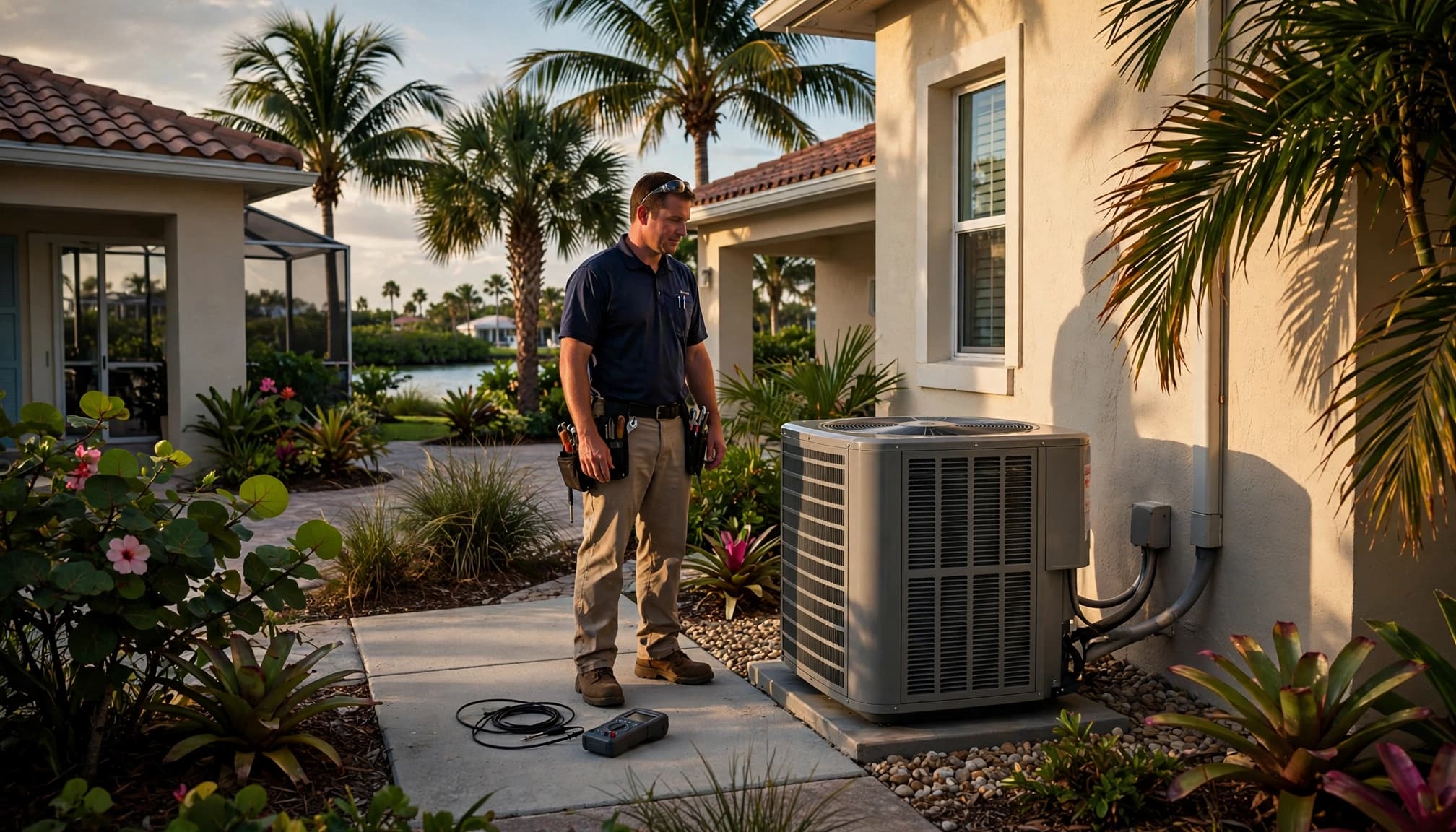
HVAC Inspection Checklist Before Buying
Start with items you can observe without removing panels or touching electrical components. Mark each item as clear, questionable, or in need of professional review.
- Photograph the model and serial numbers on the outdoor condenser and indoor air handler.
- Record the apparent installation date, if shown on a label or included in the seller's documents.
- Ask for installation invoices, service records, warranty paperwork, registration details, and maintenance agreements.
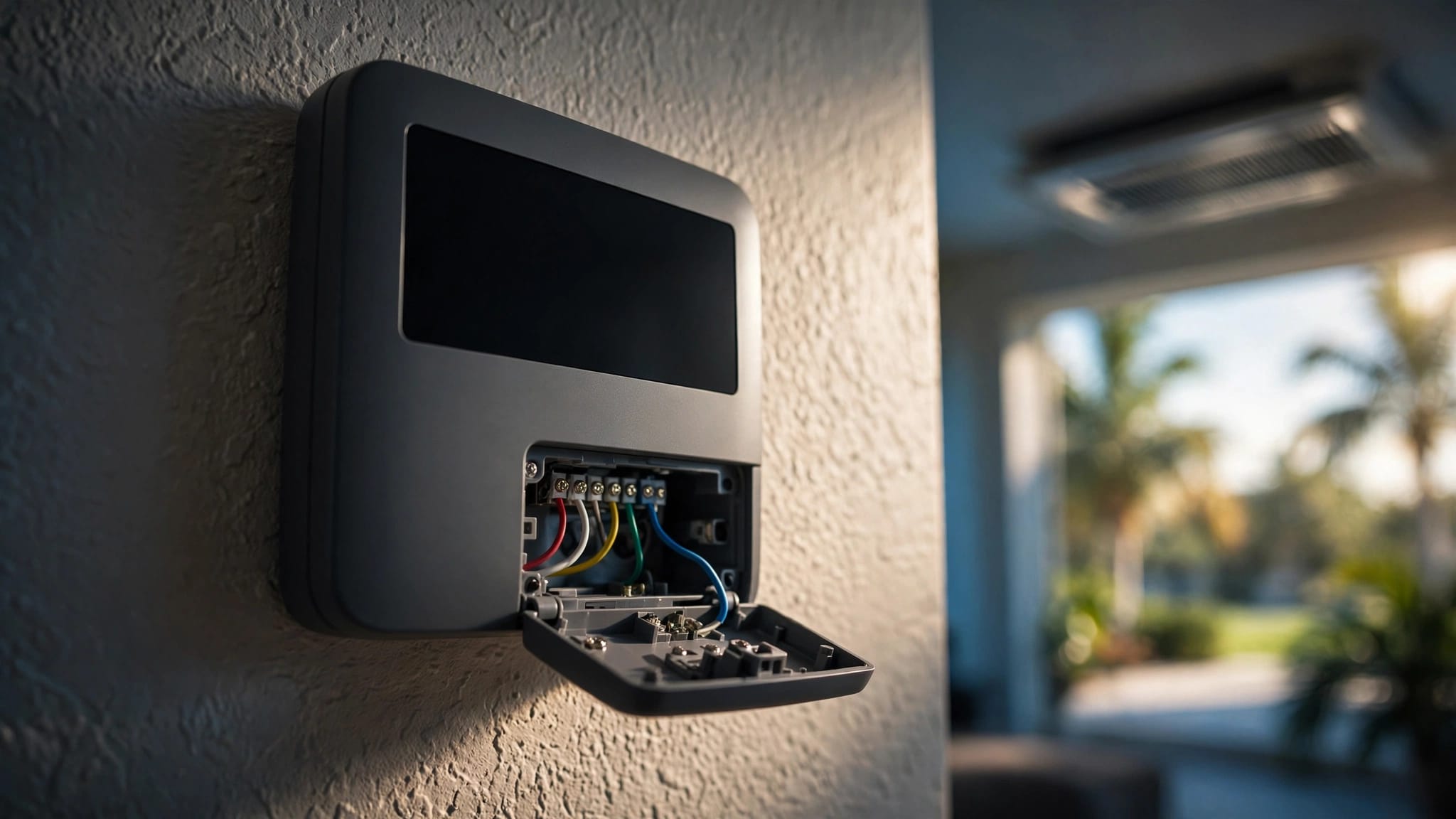
- Check whether the thermostat responds when you change the setting.
- Run the system long enough to notice unusual sounds, odors, short cycling, or weak airflow.
- Compare airflow between several rooms.
- Inspect accessible filters and note whether they are dirty, collapsed, or missing.
- Look for water stains, rust, algae, or standing water near the air handler.
- Examine visible drain lines, pans, and float switches without opening equipment.
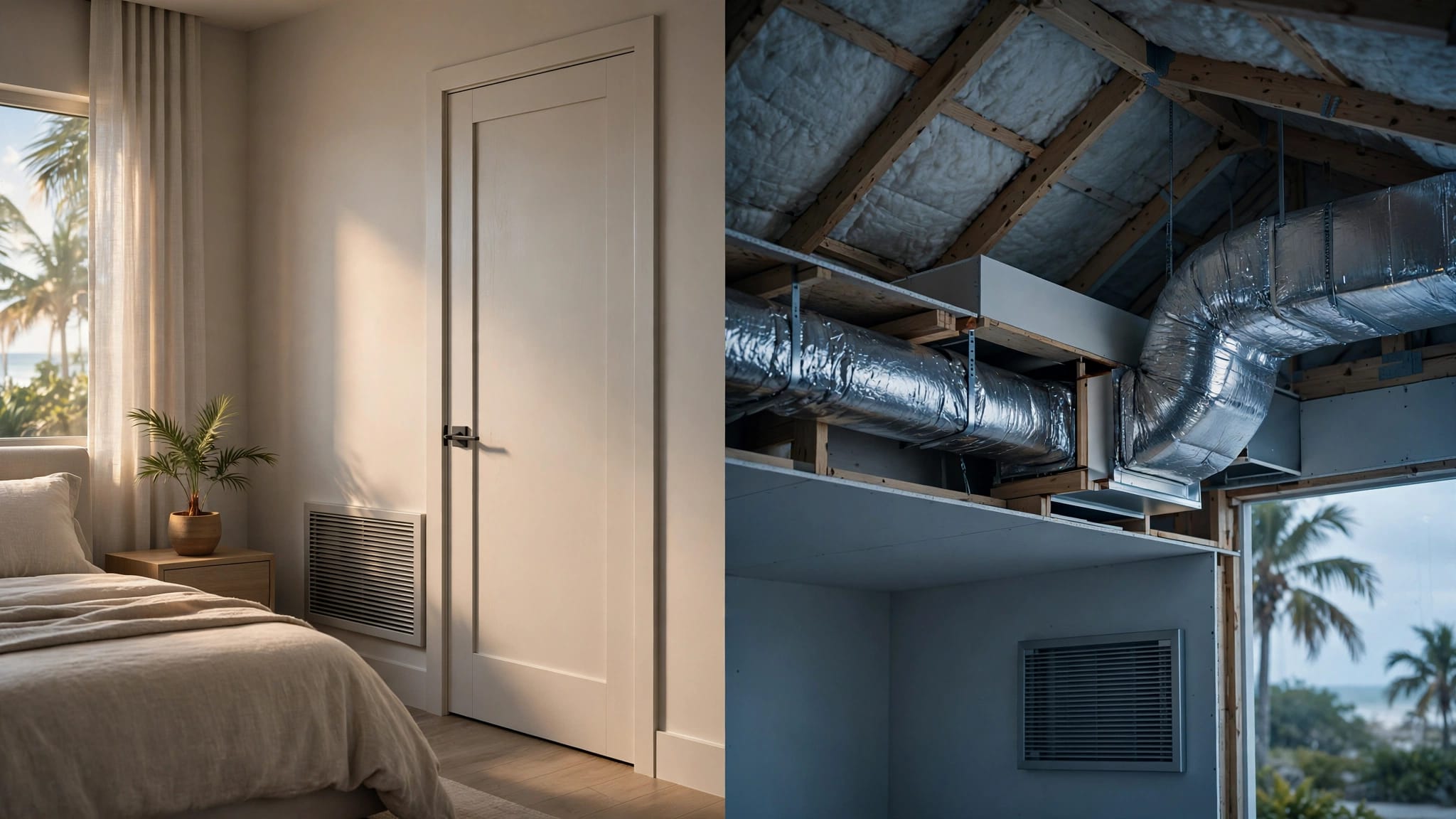
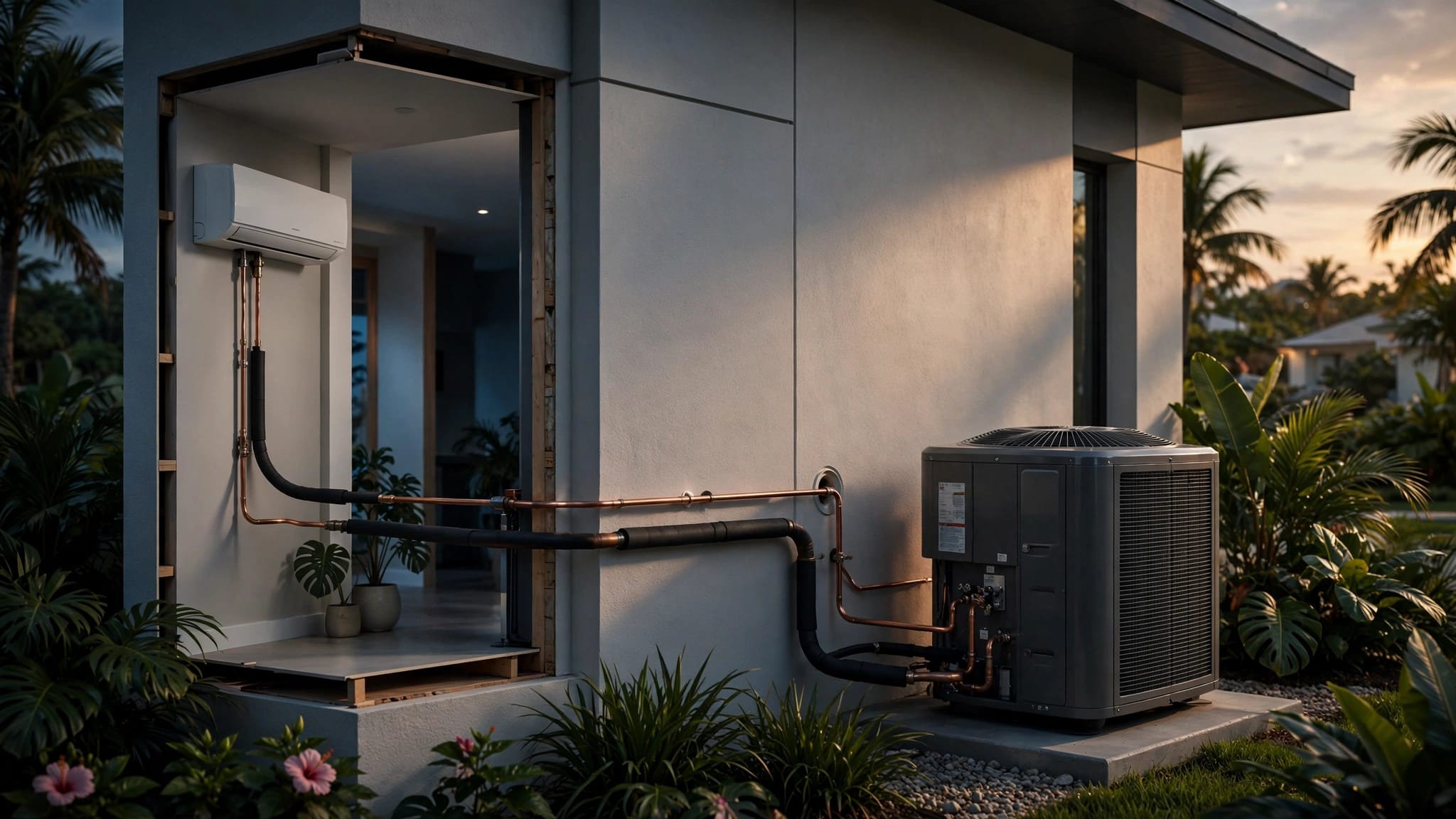
- Check exposed ductwork for loose insulation, disconnected sections, crushed areas, or visible gaps.
- Look around the condenser for corrosion, bent fins, blocked airflow, shifted equipment, or storm debris.
- Ask whether the system stopped working after a hurricane, tropical storm, flood, lightning event, or power surge.
- Keep every concern in writing and request a professional opinion before agreeing to repairs or credits.
The home inspection report may mention accessible HVAC components, but it usually isn't a substitute for a detailed mechanical evaluation. A separate HVAC inspection is especially useful when records are incomplete or the equipment has visible warning signs.
Visual Checks Buyers Can Perform Safely
A buyer can gather useful information without opening panels, handling refrigerant, or testing live electrical parts. Never remove covers or reset breakers to investigate an unfamiliar system.
Check the indoor equipment and living spaces
Inspect the air handler, furnace, or heat pump area for rust, water marks, damaged insulation, and poor access. Ceiling stains below an attic unit can point to condensate drainage trouble or another source of water.
Walk through the home while the system operates. Notice whether bedrooms, additions, and far-side rooms receive similar airflow. A warm room may indicate duct leakage, a closed damper, a return-air problem, insulation deficiencies, or equipment trouble.
Also watch for these warning signs:
- Ice on accessible refrigerant lines
- Burning or electrical odors
- Loud buzzing, grinding, squealing, or hard starts
- Repeated breaker trips
- Frequent starts and stops
- Wet supply vents or ceiling discoloration
- Musty odors that return after cleaning
These signs don't identify the exact repair. They show why the system needs a qualified diagnosis.
Review the outdoor condenser
Keep plants, furniture, and stored materials away from the condenser. The unit needs clear airflow, and dense vegetation can trap moisture and debris around the cabinet.
Look for white salt residue, pitted metal, rust at fasteners, damaged coil fins, a loose cabinet, exposed wiring, or a condenser that sits unevenly. Check whether the concrete pad appears stable and whether water drains away from the equipment.
Don't operate a system after flooding if water reached electrical parts, the cabinet shifted, wiring is exposed, or you smell burning. Have a professional inspect it first.
Moisture, Drainage, and Ductwork Checks
Water management deserves its own section in a Cape Coral HVAC inspection checklist. Air conditioners remove moisture continuously, so a small drainage defect can lead to repeated shutdowns or property damage.
Inspect condensate evidence
Look for water below the air handler, corrosion on the drain pan, algae around a drain termination, and staining near ceilings or closets. Ask where the primary and secondary drains discharge and whether the seller has dealt with recurring clogs.
A slow drain may not produce visible water during a short showing. The technician should inspect drain slope, fittings, pans, float protection, and the termination point. The evaluation should also consider whether water could reach walls, ceilings, insulation, or electrical components.
If the home has musty odors or visible growth, consider Cape Coral mold testing alongside the HVAC review. Mold concerns may involve building materials, plumbing, ventilation, or ductwork, not only the air conditioner.
Look beyond the filter
A clean filter doesn't prove that the duct system is sound. Examine accessible ducts for gaps, crushed insulation, disconnected joints, stains, or condensation. Pay attention to rooms that feel warmer, smell different, or collect more dust than nearby spaces.
A professional can evaluate airflow, return-air design, blower performance, duct leakage, and insulation conditions. If repairs appear necessary, request a written scope through a company that provides Cape Coral ductwork inspection and leak repair.
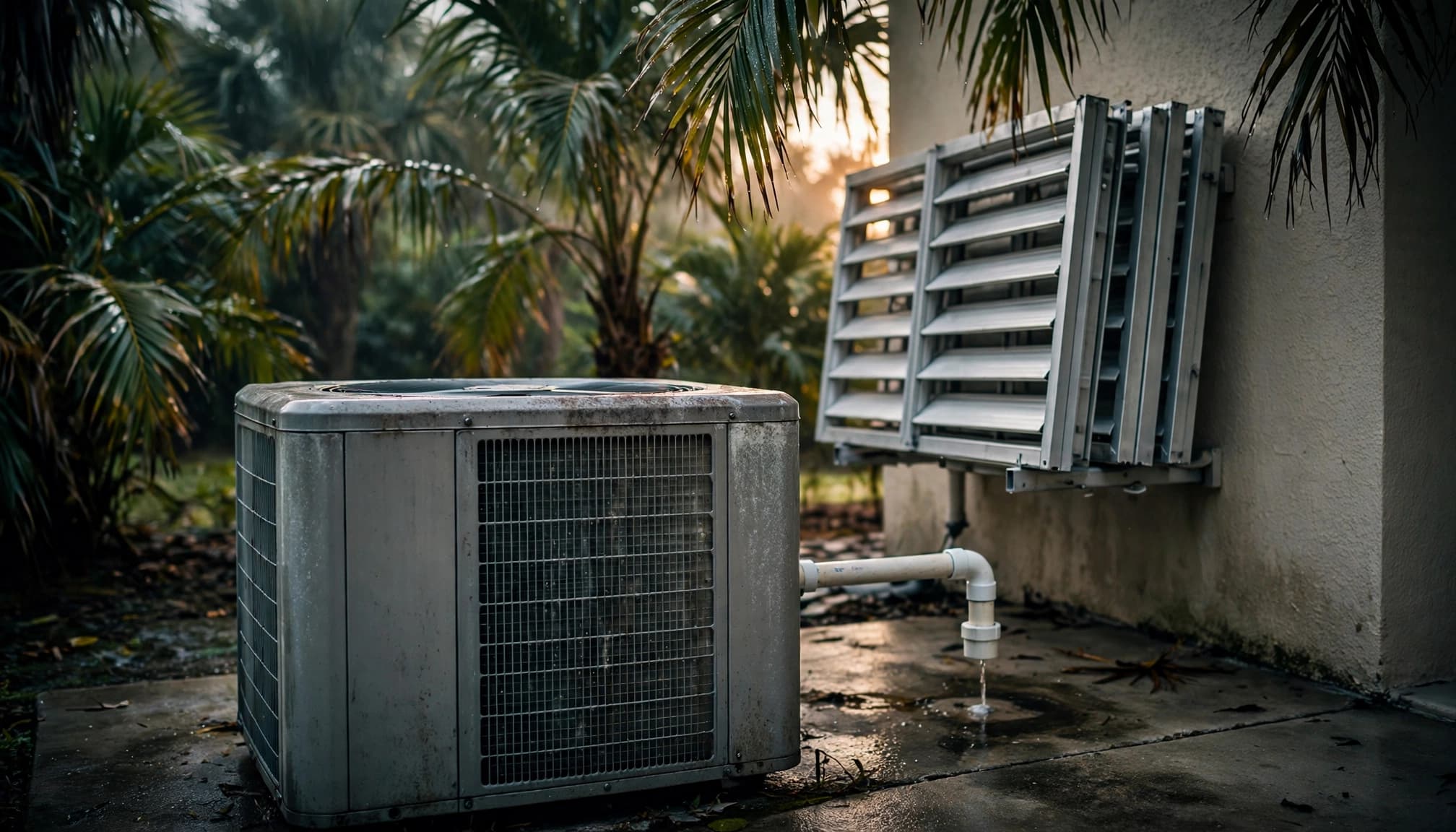
Check for Salt-Air and Storm Damage
Salt exposure often begins outside, where the condenser faces humid air, rain, wind, and yard debris. Examine the coil fins, cabinet, fan grille, electrical disconnect, line-set insulation, and mounting hardware.
Light surface discoloration isn't proof that the equipment needs replacement. Heavy pitting, deteriorated fins, damaged wiring, or corroded electrical connections deserve a technician's assessment. Ask whether the equipment has received routine cleaning and whether any coastal protection or component replacement was performed.
Storm history matters too. Ask the seller whether the home or HVAC system experienced:
- Flooding or standing water
- Wind-blown debris
- Lightning or power-surge damage
- Hail or falling branches
- A shifted condenser pad
- Emergency repairs after a named storm
- Water intrusion near the air handler or ducts
Request invoices and photographs when available. Insurance decisions depend on the policy, event, documentation, and adjuster's findings, so don't assume coverage or denial based on a visual inspection.
What a Professional HVAC Inspection Should Test
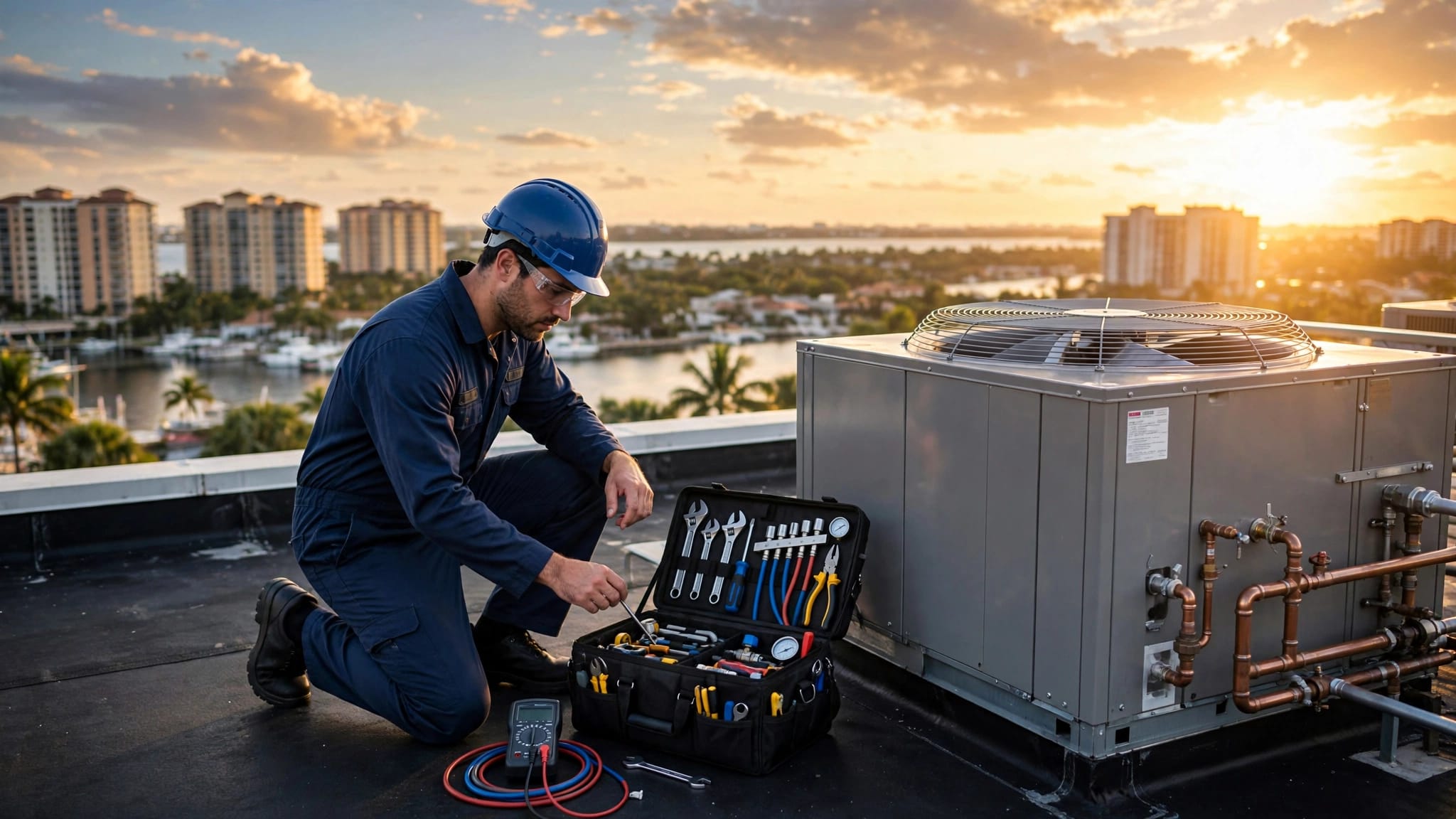
A licensed HVAC professional can inspect areas that a buyer and general home inspector cannot fully evaluate. The technician should examine the indoor and outdoor equipment together rather than relying only on whether cool air comes from the vents.
Expect measurements, not only a visual opinion
A thorough evaluation may include thermostat operation, electrical connections, capacitor condition, condenser fan operation, indoor coil condition, airflow, refrigerant pressures, drain performance, and humidity control. Back Bay Heating & Cooling describes these types of checks in its emergency AC service process.
The technician should document observed corrosion, leaks, abnormal noises, temperature response, and safety concerns. Ask for the model and serial numbers, test results, photographs, and a clear distinction between urgent repairs and routine maintenance.
For a local evaluation, schedule an AC inspection in Cape Coral before the inspection period expires.
Request written estimates before changing the contract
A diagnosis and a repair estimate are separate documents. The report should explain the problem, recommended correction, urgency, and any parts or labor that may be involved. If replacement is recommended, request a separate written proposal that identifies equipment, installation work, drain modifications, electrical work, duct changes, permits, startup testing, and cleanup.
Don't accept a vague repair credit based on an unverified assumption. A written evaluation gives the buyer, seller, agent, and lender a clearer basis for negotiations.
Questions to Ask Before Closing
Ask the seller for records
Request the installation date, service history, repair invoices, warranty documents, registration confirmation, and any home warranty information. Ask whether the warranty transfers, whether labor is included, and whether the manufacturer requires a new owner registration.
You should also ask:
- Has the system leaked refrigerant?
- Has the drain clogged or overflowed?
- Has the condenser been replaced or moved?
- Was the home ever flooded?
- Did a storm cause damage or an insurance claim?
- Were ducts, coils, capacitors, compressors, or electrical components replaced?
- Who performed previous work?
Service records don't guarantee future performance, but missing records increase the value of an independent inspection. After closing, a scheduled Cape Coral HVAC maintenance agreement may help organize future service and documentation.
Ask the technician to separate facts from predictions
Have the technician state what was observed, what was measured, and what remains uncertain. Ask whether the issue affects cooling, humidity control, safety, water management, or reliability.
Avoid requests for guaranteed remaining life, guaranteed repair totals, code-compliance conclusions, or insurance outcomes. Those decisions require appropriate documentation and qualified review.
Key Takeaways
- A working air conditioner can still have drainage, humidity, duct, electrical, or corrosion problems.
- Cape Coral's long muggy season makes moisture control as important as temperature.
- Check indoor water evidence, outdoor corrosion, storm history, airflow, filters, and service records.
- Never open electrical panels or operate equipment damaged by flooding.
- Use a licensed HVAC professional for measurements, refrigerant-related work, electrical testing, and written diagnosis.
- Obtain written estimates before finalizing repair credits, price changes, or purchase decisions.
- Keep warranty, installation, maintenance, and storm records in one file after closing.
Cape Coral HVAC Inspection FAQ
Is a home inspection enough to evaluate the air conditioner?
A general home inspection can identify accessible damage and basic operating concerns. It may not include detailed airflow measurements, refrigerant diagnostics, electrical testing, humidity evaluation, or a full condensate review. Buyers should arrange a separate HVAC inspection when the system is older, records are incomplete, or warning signs appear.
Should buyers inspect the HVAC system after a storm?
Yes, especially if water, debris, lightning, wind, or flooding may have affected the equipment. Don't turn on a system with exposed wiring, a shifted cabinet, flood contact, sparks, smoke, or a burning odor. A professional should evaluate it before operation.
Does a newer air conditioner eliminate inspection concerns?
No. Newer equipment can still have installation, drainage, ductwork, airflow, thermostat, or startup problems. Ask for installation documents, warranty terms, registration records, and a professional test before closing.
Conclusion
A Cape Coral home can feel comfortable during a showing while hiding a clogged drain, corroded condenser, damaged duct, or storm-related electrical issue. A careful HVAC inspection checklist helps you spot visible concerns, then directs the right questions to a licensed professional.
The strongest protection is a written evaluation that addresses cooling, humidity control, drainage, airflow, coastal exposure, and storm history. Review that information before the inspection deadline, and use written estimates instead of assumptions when deciding how to proceed. For help scheduling a service call before you buy, Contact Us.