A smart thermostat can improve comfort, but it may not work without the right power connection. The question of an AC thermostat C-wire comes up often in Florida homes, especially during thermostat upgrades or air conditioner replacements.
The short answer is no, not every thermostat needs a C-wire. The requirement depends on the thermostat model, HVAC system type, control wiring, and features such as heat pump operation, staging, variable-speed equipment, or humidity control.
When an AC thermostat C-wire is required
A C-wire, or common wire, helps provide continuous low-voltage power to many modern thermostats. It does not power the air conditioner directly. Instead, it completes the control circuit that allows the thermostat to stay powered while monitoring the home.
Smart thermostats need steady power
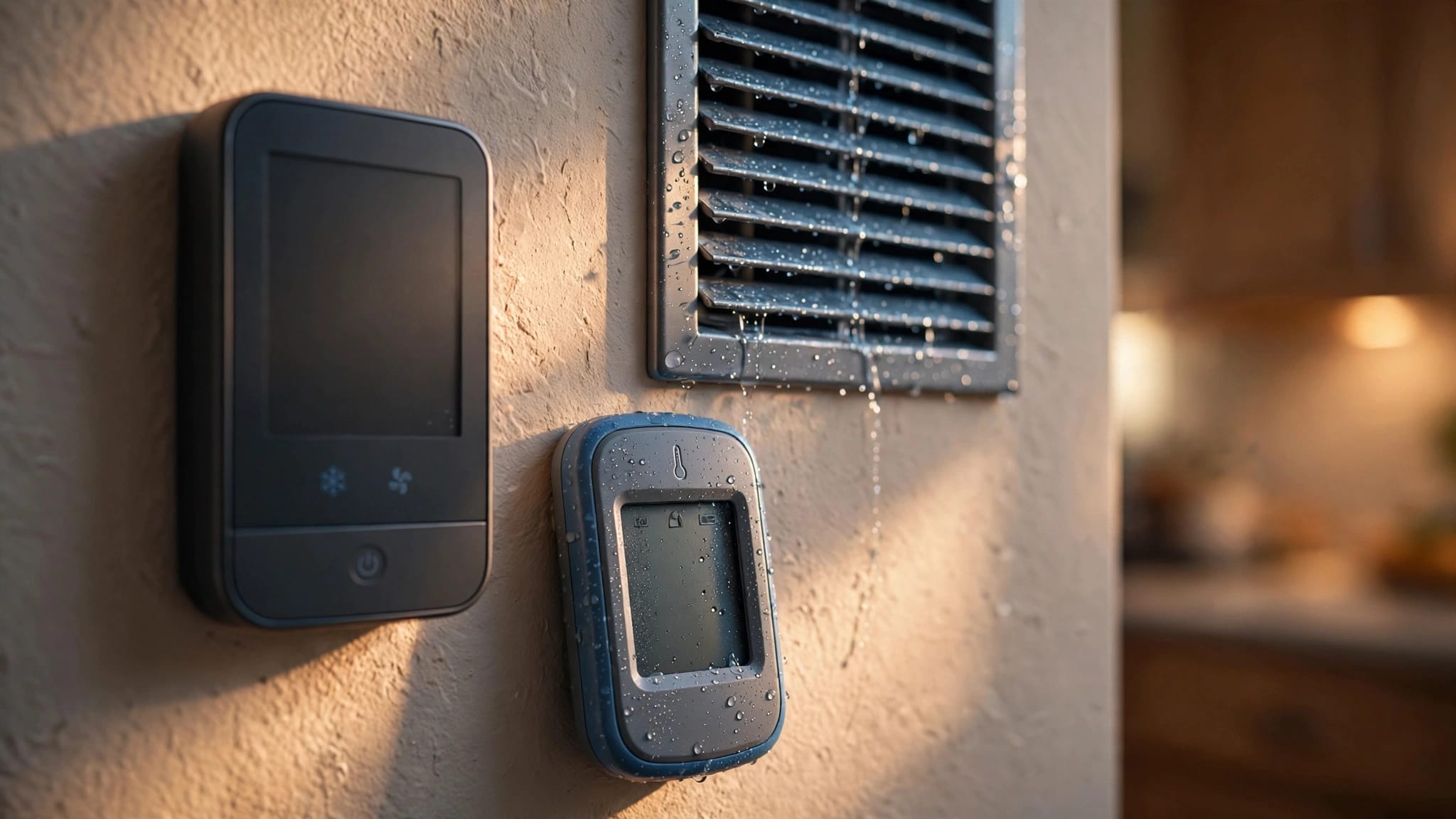
Many smart thermostats, including models from Nest and ecobee, need continuous power for Wi-Fi, sensors, alerts, and display functions. Some installations may use an adapter or another approved power solution, but compatibility depends on the exact thermostat and HVAC equipment.
A thermostat can appear compatible because the wall wiring has familiar labels, yet still lack the power needed for reliable operation. A C-wire may be especially important when the thermostat runs connected features all day.
Battery-powered models may not
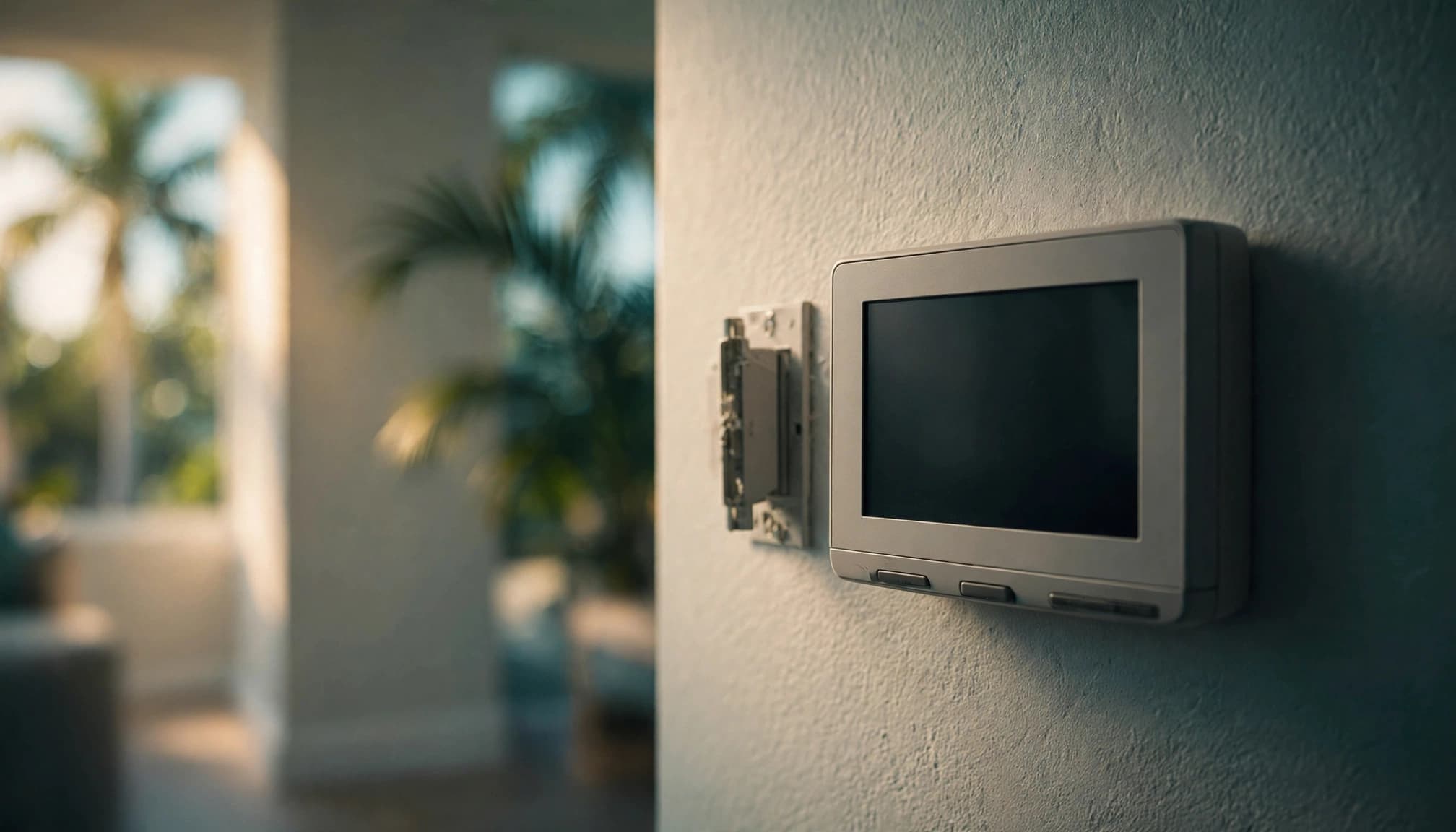
A basic battery-powered thermostat may operate without a C-wire. However, batteries can weaken, displays can dim, and the thermostat may stop communicating properly with the system.
Before replacing a working thermostat, check its model information and installation instructions. Never assume a thermostat is compatible because its appearance or wire colors match the old control.
Safe checks before assuming you need a C-wire
A thermostat problem may come from settings, batteries, power loss, or the HVAC equipment itself. Start with checks that don't involve removing the thermostat or opening an electrical panel.
Start with settings, batteries, and airflow
Set the thermostat to Cool , lower the temperature 3 to 5 degrees below the current room temperature, and set the fan to Auto . If the system has a startup delay, wait 5 to 10 minutes before deciding that it failed.
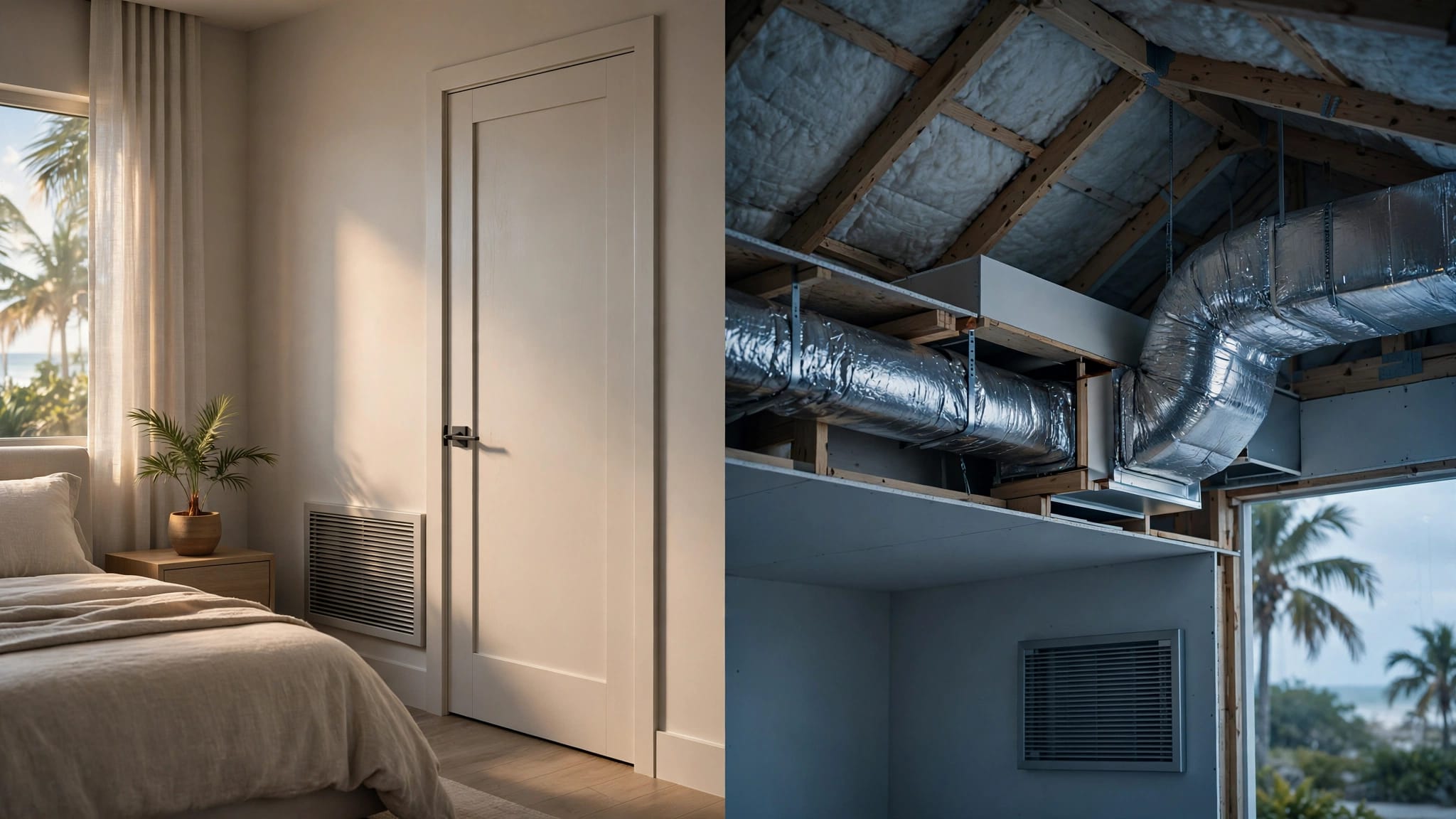
Replace weak batteries if the thermostat uses them. Also check the air filter and make sure supply vents and return grilles aren't blocked. For more thermostat checks before AC service, look at the settings, filter, breaker, and visible system conditions first.
A smart schedule can also change after a storm or power flicker. Review the programmed settings before assuming the C-wire is the problem.
Treat a blank screen as a power symptom
A blank thermostat may indicate dead batteries, a tripped HVAC breaker, a condensate safety shutdown, wiring trouble, or a fault inside the system. If the HVAC breaker has tripped, you can reset it once. If it trips again, leave it off and arrange service.
Don't remove the thermostat faceplate, pull on wires, or probe terminals. If the screen remains blank, use blank thermostat troubleshooting as a starting point, then call for help if the display or system doesn't recover.
Florida HVAC systems can change the answer
Florida homes use several types of cooling and heating equipment. A thermostat that works with a standard air conditioner may not control a heat pump or advanced system correctly.
Conventional AC and heat pump systems
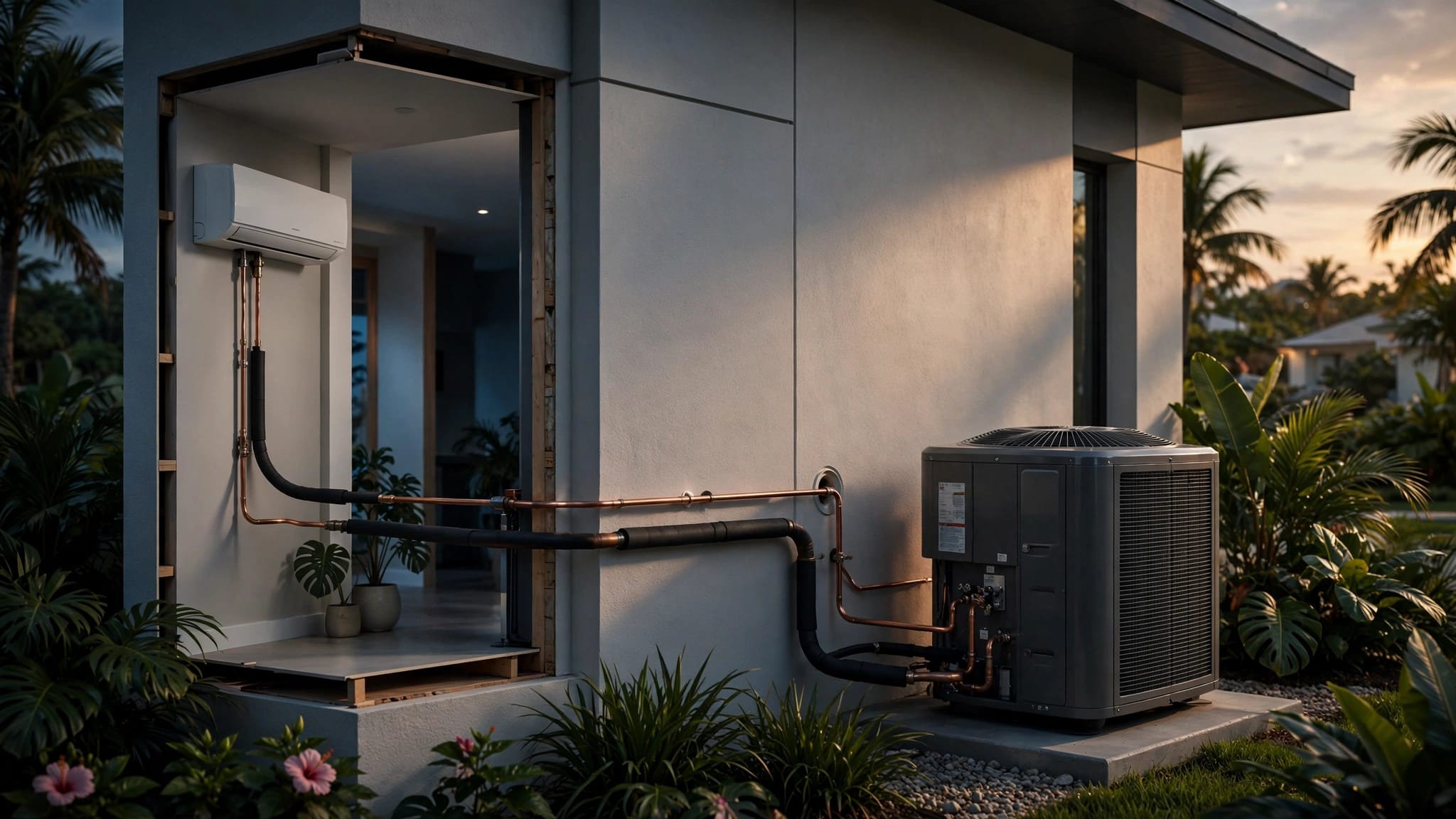
A basic single-stage central air conditioner often uses familiar low-voltage controls, such as terminals marked R, C, Y, G, and W. Matching labels can help identify the system, but they don't prove complete compatibility.
Heat pumps require different control sequences because the system provides heating and cooling through the same outdoor equipment. Auxiliary heat, defrost operation, and reversing-valve controls may require a thermostat designed for that equipment.
Staging, variable speed, and communicating controls
Two-stage and variable-speed systems may need additional control wiring or a thermostat that can manage changing output. Communicating systems often require a manufacturer-specific thermostat rather than a universal model.
A new air conditioner may also connect to a whole-home dehumidifier, electric heat, zoning controls, or other accessories. In humid Southwest Florida, ask whether the selected thermostat can support the system's humidity and operating controls. These smart thermostat settings for Florida can help, but settings can't correct an incompatible installation.
Matching wire labels is useful evidence, but it isn't a compatibility test.
What a licensed HVAC professional should verify
Call a licensed HVAC professional when the system type is unclear, the wiring looks unusual, or the thermostat loses power repeatedly. Professional diagnosis is also appropriate when the system short-cycles, displays an error, reads the room incorrectly, or responds while the air conditioner stays silent.
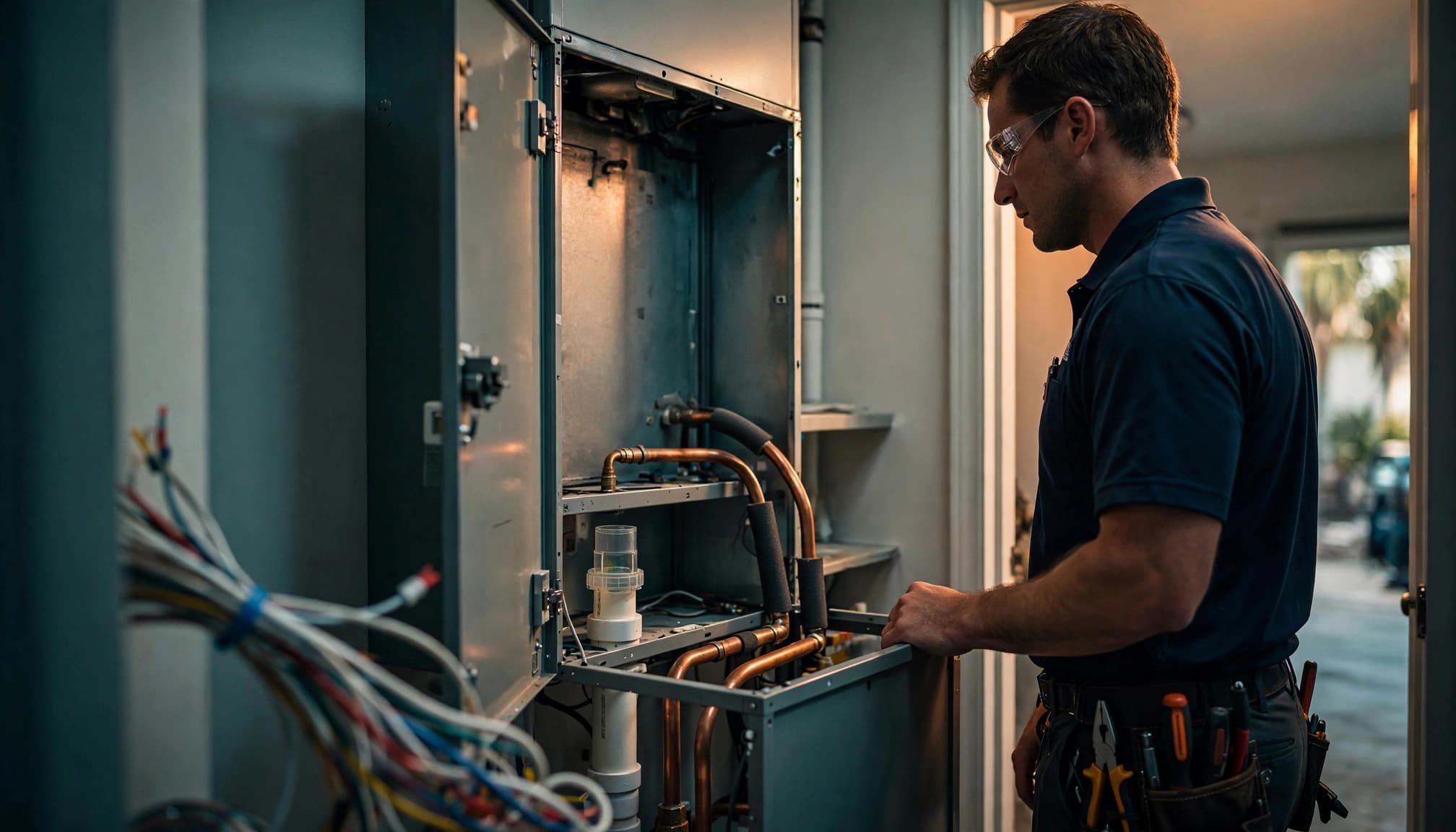
Diagnosis includes more than the thermostat
A technician can compare the thermostat model, equipment model, control wiring, system voltage, number of stages, and manufacturer requirements. The inspection may also identify a condensate safety switch, low-voltage fuse, control-board problem, airflow issue, or separate electrical fault.
Don't open the outdoor cabinet or air handler. Those areas contain electrical components, and some systems include high-voltage heat strips.
Replacement estimates should show the full scope
If the system needs a new thermostat or C-wire solution, request a written estimate. It should identify equipment, thermostat, wiring changes, permits when required, labor, and startup testing.
After installation, the contractor should test cooling and heating calls, fan operation, temperature response, safety shutdowns, staging, and connected accessories. Keep the equipment model numbers, thermostat information, installation records, and permit documents with your home files.
Regular service can also catch thermostat and control issues during calibration. Back Bay Heating & Cooling's Cape Coral HVAC maintenance agreements include thermostat calibration among listed maintenance tasks.
FAQ
Can I add a C-wire myself?
Don't add or connect thermostat wiring unless you understand the system and can work safely. A wrong low-voltage connection can damage controls or create operating problems. Have a technician verify the wiring and choose an approved adapter or replacement method.
Does installing a new AC always require a new thermostat?
No. A compatible existing thermostat may continue working with a replacement system. However, new equipment may require a different control for staging, variable-speed operation, heat pump functions, communicating controls, or humidity management.
When should I request service immediately?
Call promptly for repeated breaker trips, burning smells, smoke, water around the indoor unit, ice that returns, or a thermostat that responds while the system remains silent. Turn the system off when necessary, and don't open panels or touch refrigerant lines. To schedule an evaluation, Contact Us with Back Bay Heating & Cooling.
Conclusion
Florida's heat and humidity make reliable thermostat operation important, but the climate alone doesn't determine whether your system needs a C-wire. The thermostat model, HVAC equipment, control wiring, and connected features all matter.
Start with safe checks for settings, batteries, filters, and breaker status. If the issue involves wiring, unusual controls, power loss, or a new installation, get a professional compatibility review before changing anything.