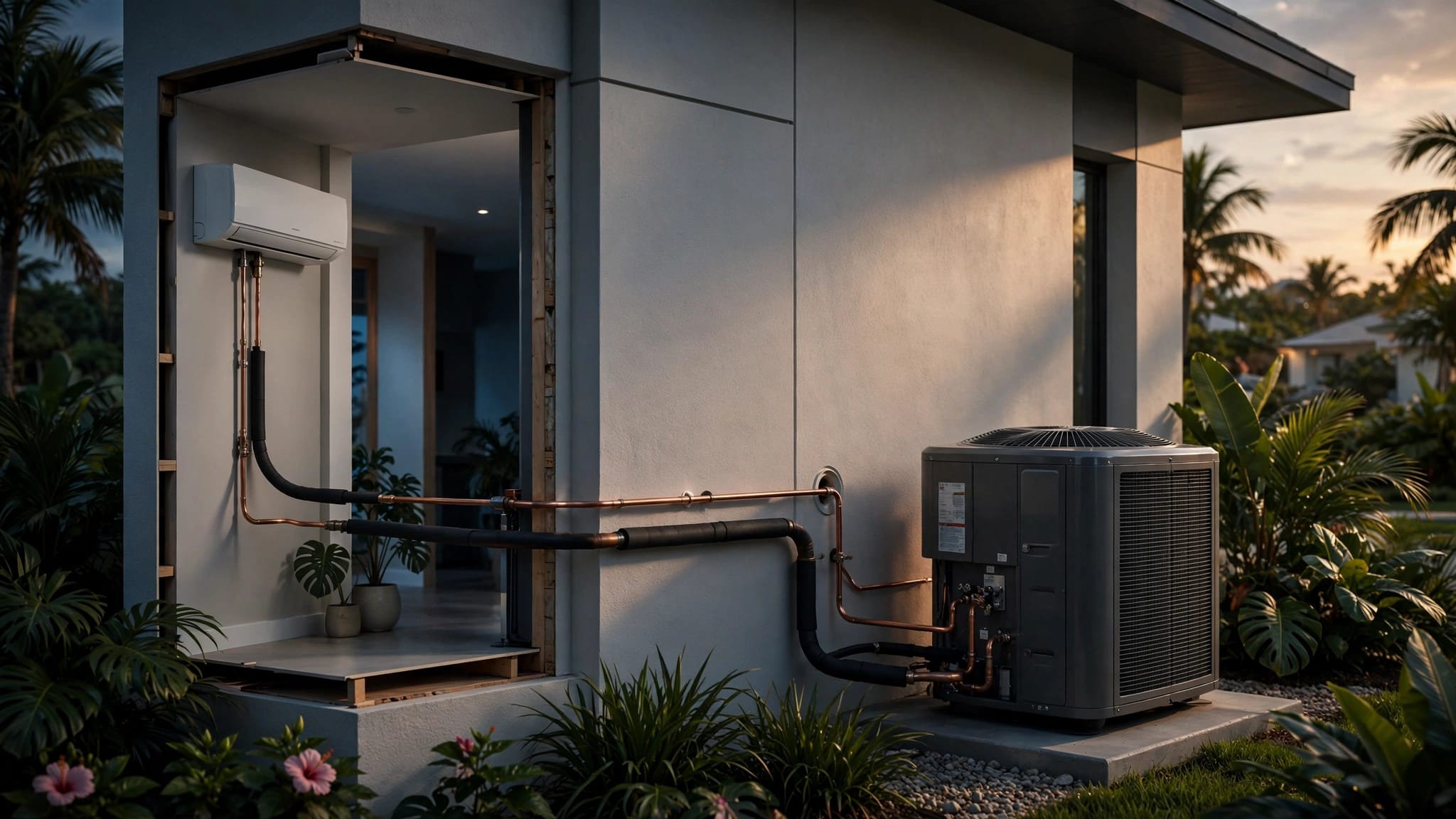
Your AC model number can help identify the equipment in your Florida home, but it isn't a complete system report. It may point to the product family, equipment type, or rated capacity. However, the exact meaning depends on the manufacturer and the equipment series.
The safest approach is to find the data plates on both the indoor and outdoor equipment, record every character, and let official documentation or an HVAC professional confirm the details. Start with the label locations before trying to interpret the code.
Where to Find the AC Model Number
A split air conditioning system has separate equipment indoors and outdoors. Each component can have its own model number, serial number, manufacture date, and warranty information.
Check the outdoor condenser first
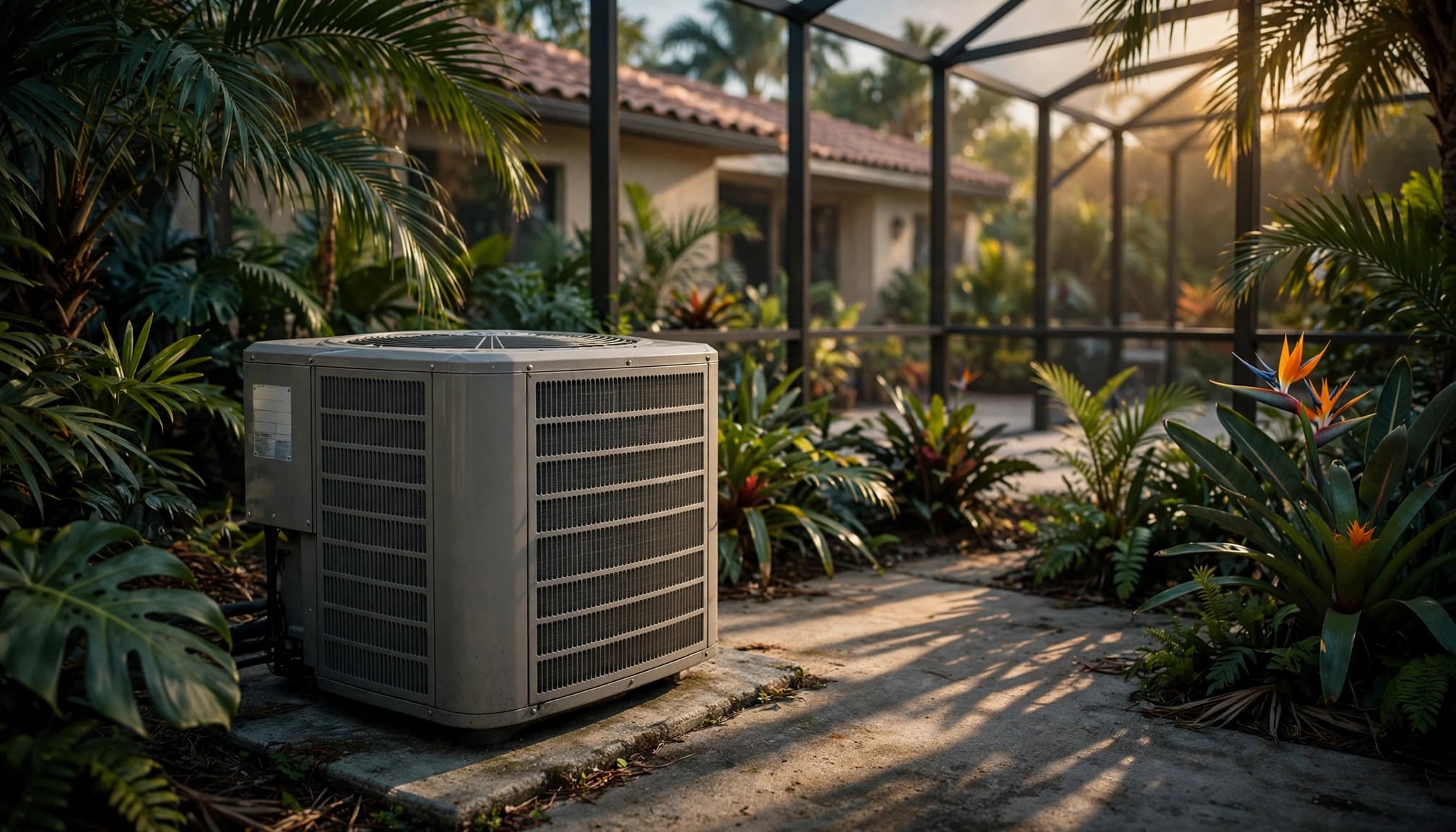
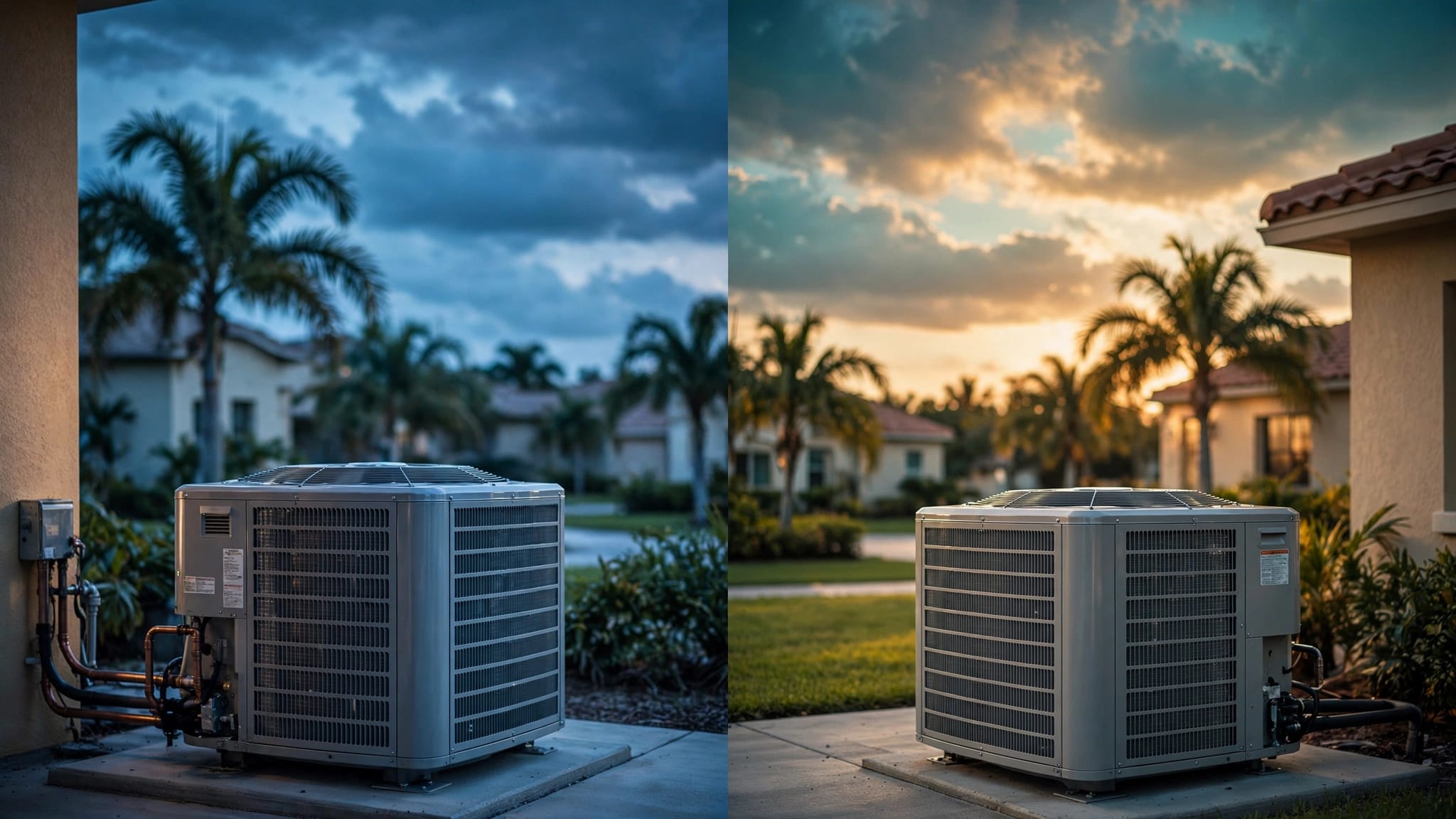
The outdoor condenser usually has a silver, white, or black rating plate on one side of the cabinet. Look near the service valves, electrical disconnect, or lower portion of the side panel. The plate may list:
- Manufacturer and model number
- Serial number
- Voltage and electrical requirements
- Refrigerant information
- Factory specifications
- Manufacture or installation information, if provided
Cape Coral and other Southwest Florida homes often have condensers exposed to heavy rain, salt air, vegetation, and direct sun. Faded labels can become difficult to read. Take a clear photo before moving anything around the unit.
Shrubs, fences, gates, and stored items can block access to the label. You can improve visibility from outside the equipment, but don't remove a panel or reach toward wiring, capacitors, or service components.
Look at the indoor air handler
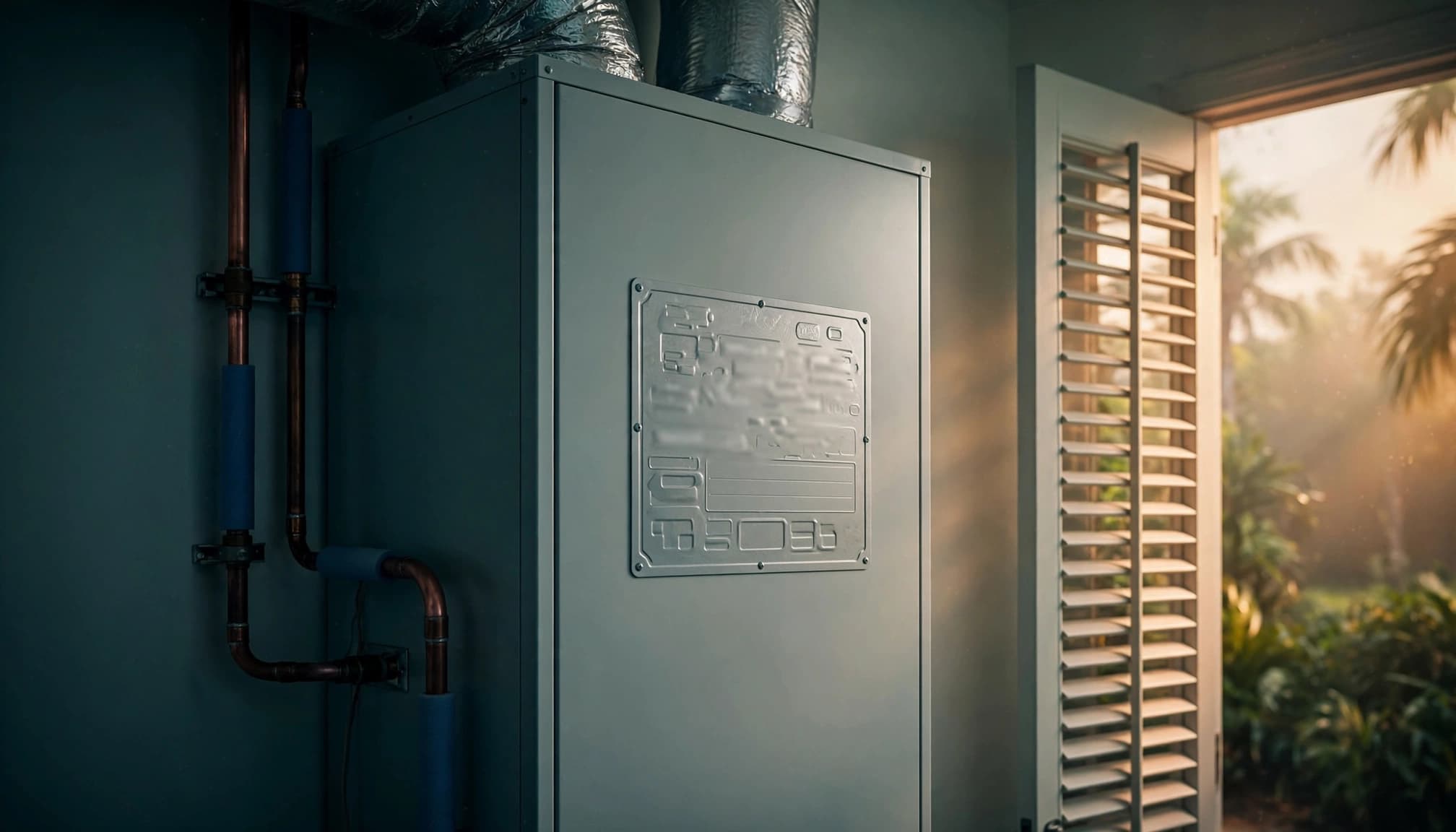
The indoor air handler may be in a garage, closet, attic, utility room, or mechanical area. Its plate is often on the exterior cabinet or near the blower compartment, filter rack, or access area. Attic-mounted units may have the label on the front or side.
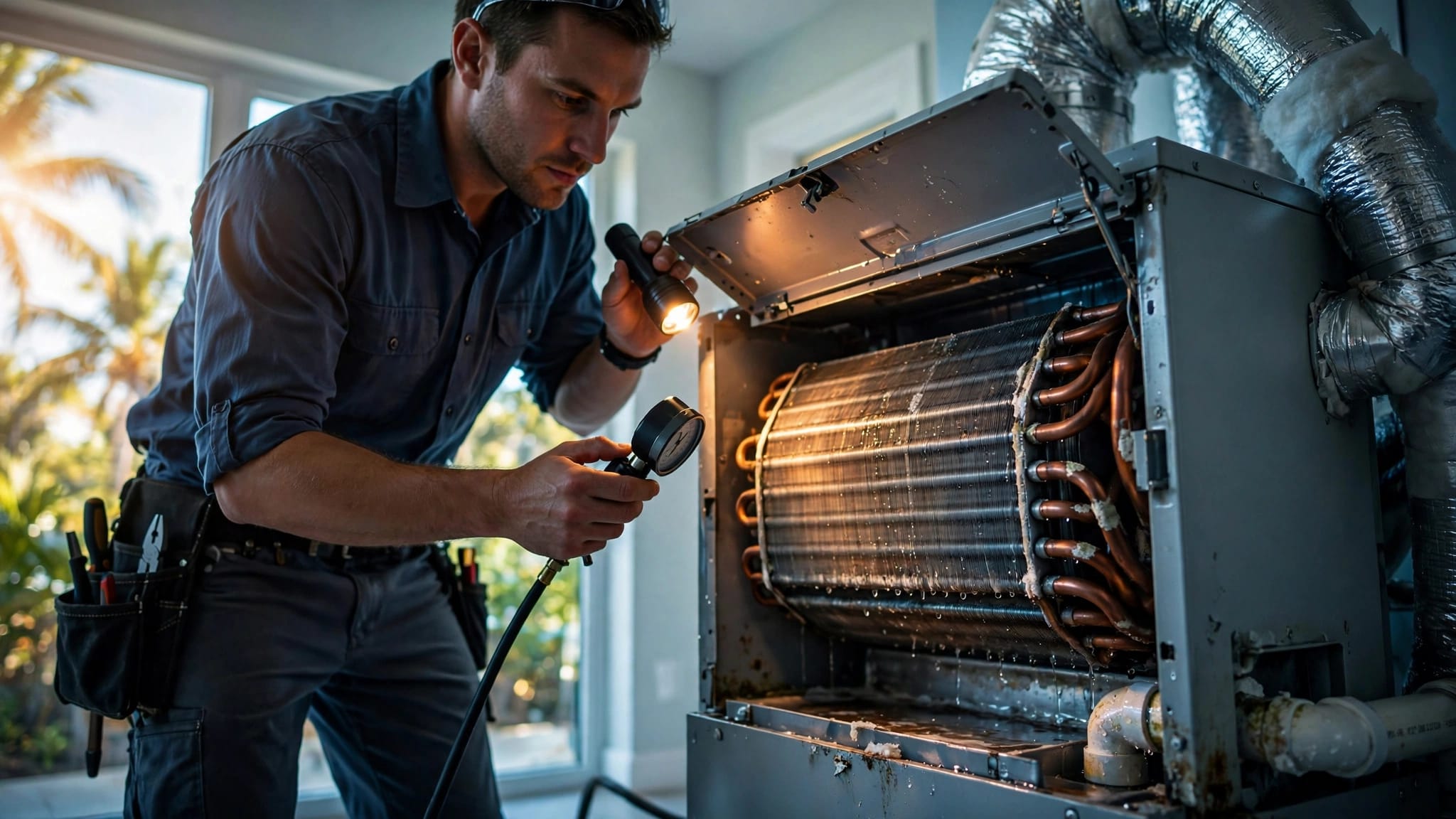
Use a flashlight and your phone camera if the area is dim. Don't reach into the cabinet, remove an access panel, or handle electrical parts. If you can't see the plate safely, a technician can identify it during a service visit.
You may also find equipment information in the original installation invoice, repair receipts, warranty paperwork, inspection report, or home-sale documents. Still, compare those records with the actual equipment because an indoor coil or air handler may have been replaced separately.
For more guidance on checking equipment records during a home purchase, review this AC warranty transfer guide for Florida homeowners.
Model Number vs. Serial Number
The model and serial numbers work together, but they answer different questions. Recording only one of them can leave gaps when you request service, check a warranty, or compare replacement proposals.
What the model number identifies
The model number identifies the equipment design or product family. Depending on the brand, parts of the code may relate to the equipment type, capacity range, series, cabinet style, or other factory options.
Manufacturers don't follow one universal format. One brand may use letters and numbers in a way that differs completely from another. Formats can also change over time. A manufacturer may use a different code for a similar unit built in 2008 and one built in 2022.
An illustrative model code might include a letter group for the product family and a number group associated with capacity. That example does not create a decoding rule for every brand. Always use the manufacturer's product data or ask a qualified technician to interpret an unfamiliar code.
What the serial number identifies
The serial number identifies one specific piece of equipment. Manufacturers use it for factory records, parts information, warranty claims, and production details. It may help establish an approximate manufacture date, but only when interpreted using the correct brand and series format.
A serial number doesn't show how well the system has been maintained. Two identical units can be in very different condition after years of use. Coastal moisture, salt exposure, clogged filters, restricted airflow, drain problems, and skipped maintenance can affect performance regardless of the date code.
Record every character exactly as printed. Include spaces and hyphens when shown. Pay close attention to letters and numbers that look alike, such as the letter "O" and the number "0."
What an AC Model Number Can and Cannot Tell You
Homeowners often want to use the model code to find the system's age, tonnage, SEER rating, or refrigerant. Those details may appear on the data plate or in manufacturer records, but the model number alone isn't a reliable source for all of them.
Don't guess tonnage or efficiency
A model number may contain information related to rated capacity, but an unexplained number fragment isn't enough to confirm tonnage. A contractor may describe a system as 2.5 tons or 3 tons, while the equipment documentation may list capacity more precisely in Btu per hour.
The same caution applies to SEER2, EER2, and other efficiency ratings. A model number may identify a series associated with certain ratings, but the final rating can depend on the matched indoor coil, air handler, blower, and other components.
Your home's required capacity also depends on insulation, windows, ductwork, orientation, ceiling height, sun exposure, and heat gain. Square footage and the old unit's tonnage are rough clues, not a replacement-sizing method.
Check the label for refrigerant information
The refrigerant type usually needs to be confirmed from the data plate, service records, or a technician's inspection. Don't assume the model number tells you whether the system uses R-22, R-410A, R-454B, R-32, or another refrigerant.
Older equipment may use R-22, while many newer systems use R-410A or newer lower-global-warming-potential refrigerants. Existing equipment and new replacement equipment can have different requirements, so a refrigerant change may affect installation procedures, components, and service practices.
Never open a sealed refrigerant circuit or attempt to identify refrigerant by handling a line or fitting. A qualified technician has the tools and training to verify it safely.
Using Model Numbers for AC Replacement Planning
A model number becomes especially important when you need a replacement estimate. The goal is to document the entire system, not choose a new condenser based on one number from the old outdoor unit.
Record every major component
Write down the brand, model number, and serial number for the outdoor condenser and indoor air handler. If visible and safely accessible, record the evaporator coil, furnace, electric heat kit, heat pump, and thermostat information as well.
The indoor and outdoor components may have different manufacture dates and warranty coverage. A coil installed several years after the condenser can make the system appear newer than its oldest major component.
Before requesting estimates, record these details:
- Outdoor condenser model and serial number
- Indoor air handler or furnace model and serial number
- Evaporator coil and heat-kit information, if available
- Thermostat model and visible control type
- Refrigerant listed on each accessible data plate
- Electrical information, including voltage and heat-strip size
- Installation date, invoices, repair records, and warranty documents
- Symptoms such as poor cooling, high humidity, short cycling, leaks, or unusual noises
This information helps a contractor separate a repair issue from a replacement concern. It also creates a better record for future warranty claims.
Ask for a detailed replacement proposal
A replacement quote should identify the exact outdoor unit, indoor coil, air handler, furnace, and accessories being proposed. It should also state capacity, SEER2 rating, refrigerant, electrical requirements, thermostat type, warranty terms, and whether the existing line set or ductwork will remain.
For Florida homes, equipment selection should account for cooling load, humidity, airflow, duct conditions, and the home's actual heat gain. Read this guide to Manual S equipment selection for Florida AC replacement before treating the old unit's model number as a sizing answer.
A vague quote that lists only a brand and tonnage leaves important questions unanswered. The exact model numbers allow you to compare proposals and confirm what the contractor plans to install.
Confirm That Replacement Components Match
A replacement air conditioner is a combination of equipment. The condenser, indoor coil, and air handler need to work together as an approved or documented match.
Same tonnage is not enough
Two components can both be described as 3-ton equipment and still have different airflow requirements, efficiency ratings, refrigerant behavior, or control needs. Matching brand names also doesn't automatically prove compatibility.
Replacing only the outdoor condenser can create problems if the existing indoor coil is too old, uses different refrigerant requirements, or isn't approved for the proposed combination. An unapproved pairing may affect capacity, efficiency, comfort, refrigerant operation, and warranty coverage.
Before equipment arrives, compare the exact model numbers on the proposal with the numbers on the supporting documentation. One changed character can identify a different coil or condenser.
Use an AHRI certificate when appropriate
An AHRI certificate identifies a specific indoor and outdoor equipment combination that achieved published performance during testing. It can show the outdoor model, indoor coil, air handler or furnace, rated cooling capacity, efficiency ratings, and refrigerant.
Ask the contractor whether the proposed system has an AHRI-certified match or other documentation accepted by the local jurisdiction. Then compare every listed model number with the written quote.
An AHRI certificate doesn't certify the installation, ductwork, airflow, or contractor. It documents the tested equipment combination. Installation quality and proper sizing still require separate review.
Read what an AHRI certificate means for a new AC when comparing a replacement proposal.
Key Takeaways
- Find the data plate on both the outdoor condenser and indoor air handler.
- Photograph the labels before trying to clean around the equipment.
- Record model and serial numbers exactly, including spaces, hyphens, letters, and zeros.
- Treat manufacturer decoding charts as brand-specific, not universal.
- Don't use the model number alone to determine tonnage, SEER2, refrigerant, age, or compatibility.
- Ask for the exact model numbers of the condenser, coil, and air handler in a replacement quote.
- Request an AHRI certificate or other matching documentation when replacing equipment.
- Keep installation invoices, warranty documents, service records, and equipment photos together.
Frequently Asked Questions
Can an AC model number tell me how old my system is?
Usually, the serial number is more useful for estimating manufacture date. However, serial-number formats vary by manufacturer and product series, so the code must be interpreted correctly.
The manufacture date also may not equal the installation date. Equipment can be stored before installation, and individual components may have been replaced at different times. Use the serial number with invoices, warranty registration, repair records, and an inspection.
Can I determine tonnage from the model number?
Sometimes a manufacturer includes capacity information in the model code, but you shouldn't assume that every number has the same meaning. A technician should verify the full model number against manufacturer data.
Even a confirmed capacity doesn't prove that the system fits your home. Proper selection considers the cooling load, insulation, windows, ductwork, airflow, and humidity needs.
Can the model number identify the refrigerant?
Not reliably. Check the equipment data plate and service documentation instead. A technician can verify the refrigerant and determine whether the existing components are suitable for repair or replacement work.
Never release refrigerant, open a line, or remove an equipment panel to investigate the type yourself.
What should I send an HVAC company before requesting service?
Send clear photos of the outdoor and indoor data plates, along with the equipment locations and thermostat. Include the model and serial numbers in the message if you can read them confidently.
Also describe the problem, when it started, whether the system runs continuously, and whether you notice water, ice, unusual sounds, or electrical odors. If you need help identifying the equipment or scheduling service, Contact Us to reach the team.
Conclusion
An AC model number is a useful starting point, not a complete diagnosis or replacement specification. Find the labels, record both model and serial numbers, and verify uncertain details through manufacturer documentation or a qualified HVAC inspection.
Florida's heat, humidity, coastal air, and long cooling season make system condition just as important as the date code. Accurate records help you ask better questions, compare compatible equipment, and choose between repair and replacement with fewer surprises.