Your air conditioner may look clean and run well, yet its age can affect repair decisions, efficiency, and warranty coverage. An AC serial number often reveals when the equipment was manufactured, but the code only makes sense when matched to the correct brand and product series.
The manufacture date is useful, but it doesn't automatically show when the warranty expires. You also need the model number, installation or purchase records, registration status, and the manufacturer's current warranty terms. Start by finding the data plate and reading every detail before trying to decode the number.
What an AC serial number can tell you at a glance
The serial number identifies one particular piece of equipment. Manufacturers use it to track production details, factory records, and warranty claims. The model number identifies the equipment type, capacity, and product family.
That distinction matters because a split system has separate serial numbers for the outdoor condenser and indoor air handler or evaporator coil. Those components may have different manufacture dates and warranty coverage. A replacement coil installed years after the condenser can make the system appear newer than it is.
In many cases, the serial number can help you find:
- The approximate manufacture date
- The factory or production location
- The unit's production sequence
- Warranty registration or claim information
- The correct parts and service records
The age estimate is often the easiest detail to find. However, serial number formats change over time. A manufacturer may use one code for equipment built in 2008 and another for a similar unit built in 2022.
A serial number also doesn't tell you how well the system was maintained. Two identical air conditioners can have very different conditions after years of use. Coastal moisture, salt exposure, clogged filters, poor airflow, and skipped maintenance can shorten equipment life even when the serial number shows a relatively young unit.
Where to find the serial number on your AC
Look for a silver, white, or black rating plate attached to the equipment. The label usually includes the manufacturer, model number, serial number, electrical data, refrigerant information, and other specifications.
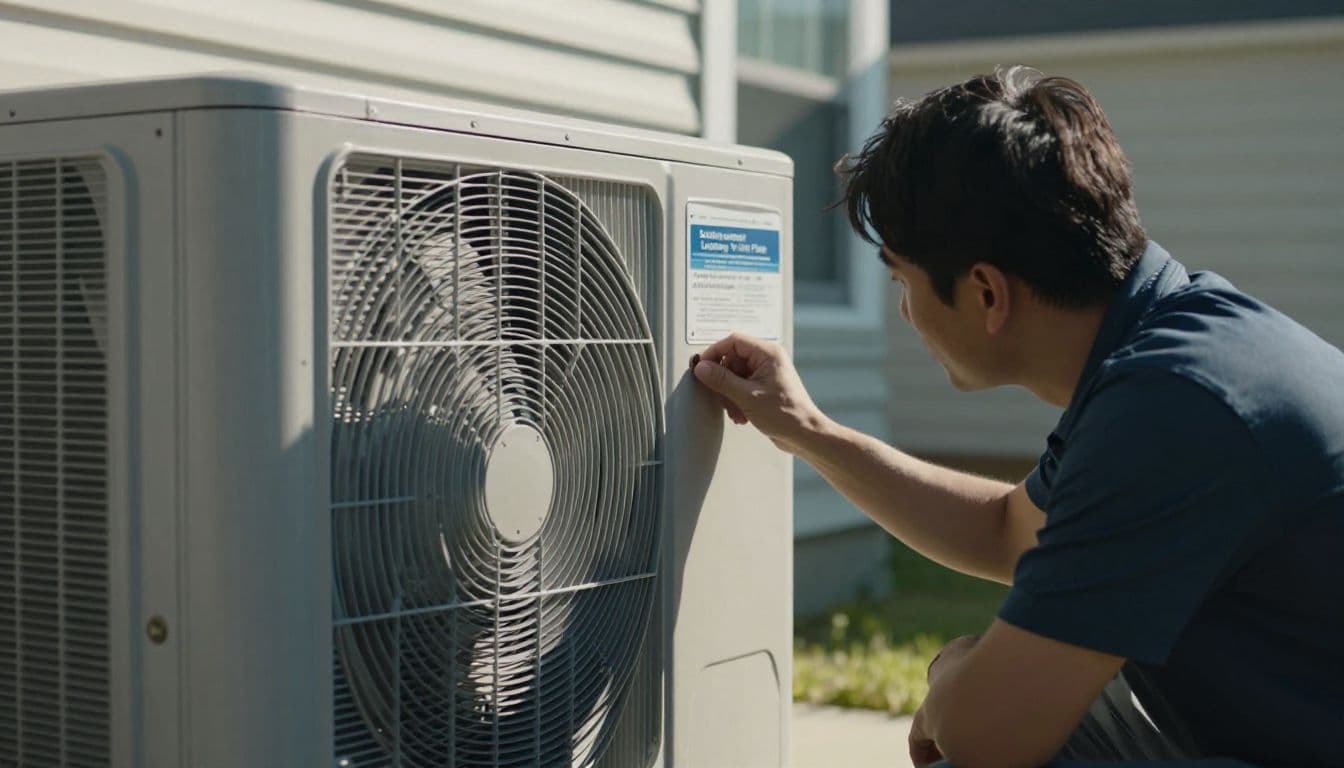
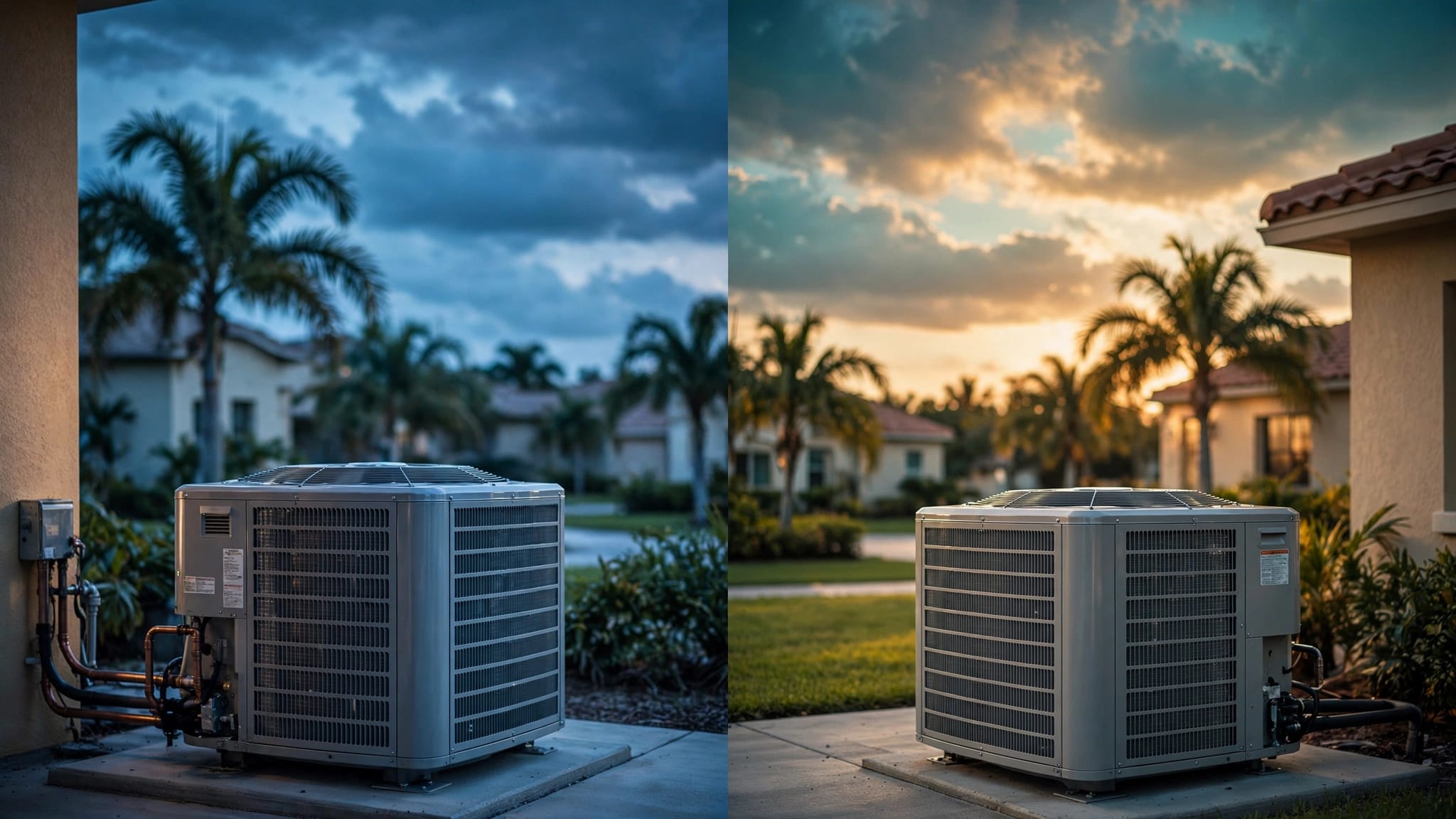
Outdoor condenser labels are commonly located on the side panel near the service valves or electrical disconnect. Shrubs, fences, dirt, and fading can make the information difficult to read. Take a clear photo before cleaning the area, and don't remove the panel while the system is running.
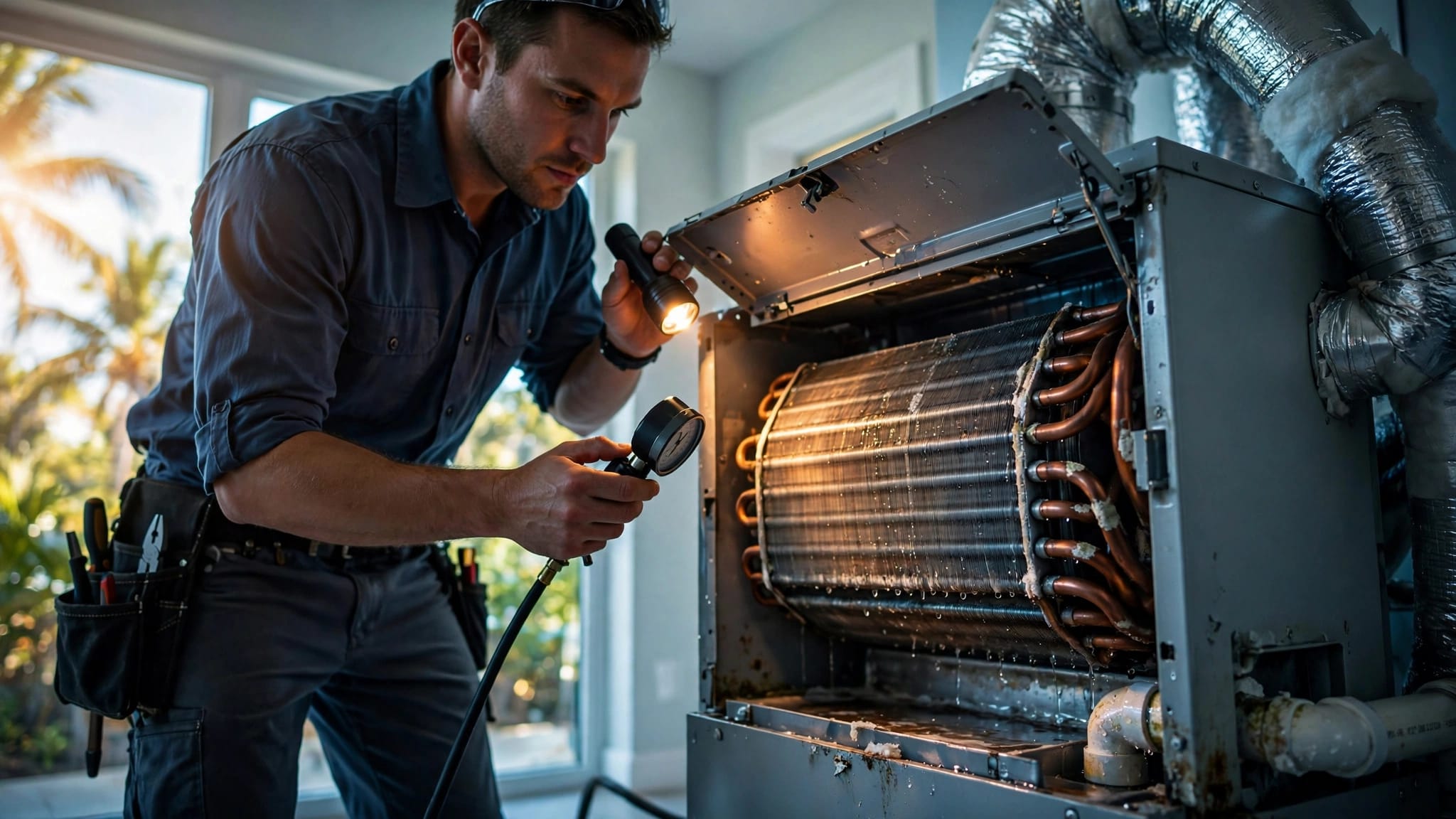
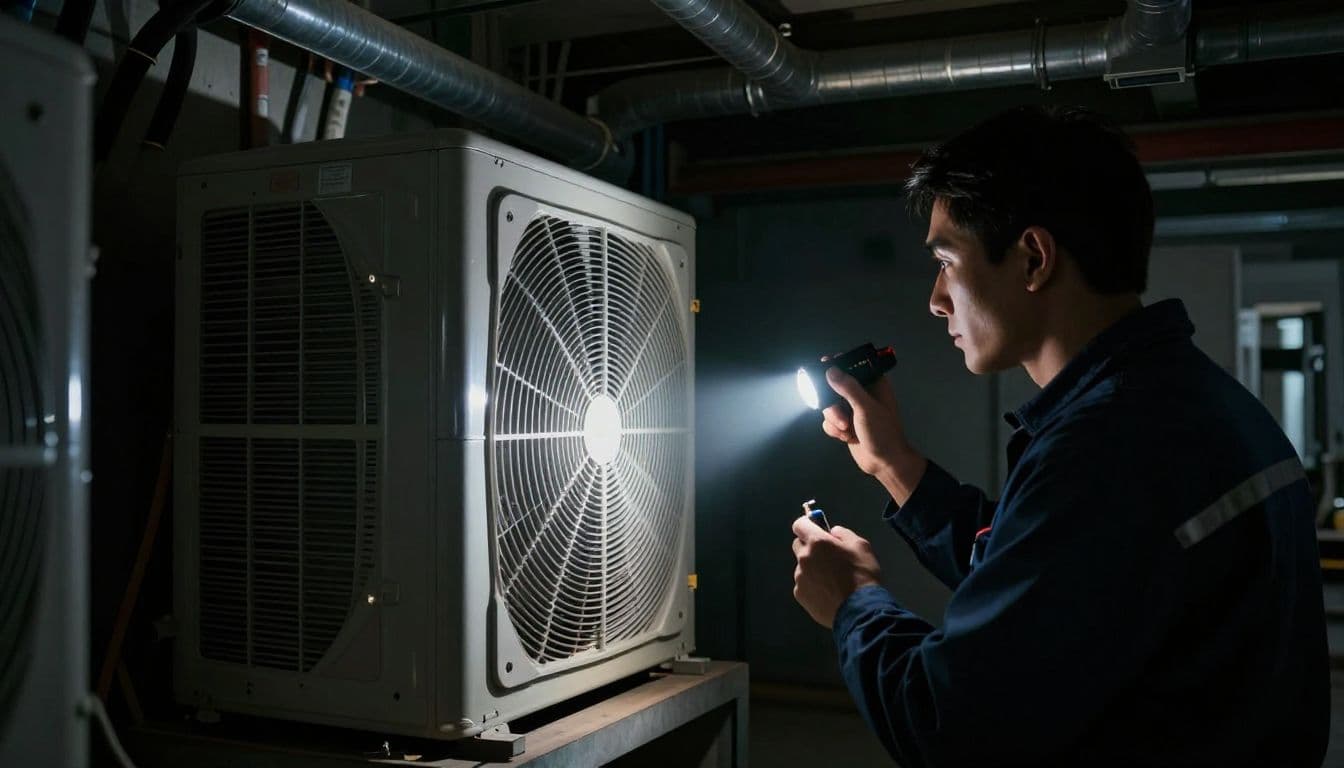
For the indoor equipment, check the cabinet near the blower compartment, filter rack, or access panel. Attic-mounted air handlers may have labels on the front or side of the cabinet. A flashlight and your phone camera can help, but avoid reaching into the equipment.
You may also find the serial number on:
- The original installation invoice
- A previous repair receipt
- A warranty registration confirmation
- An inspection report
- The home sale or equipment replacement paperwork
Record the serial number exactly. Include letters, zeros, and any spaces or hyphens shown on the label. A letter "O" and a number "0" can look alike, especially on older plates.
How to decode an AC serial number by brand
There is no universal AC serial number formula. Even the same manufacturer may use different formats for older and newer equipment. The first characters might contain the year, month, production week, or factory code, while other characters may be a sequence with no date meaning.
These patterns can provide useful clues, but they shouldn't replace an official lookup.
| Manufacturer group | Common date-code pattern |
|---|---|
| Carrier, Bryant, and Payne | Many formats place production week and year near the beginning of the serial number. |
| Trane and American Standard | Some formats use early characters for the production year and week. A single year digit may repeat across decades. |
| Lennox | Certain formats include year and month information near the beginning, while others require a model-specific lookup. |
| Goodman and Amana | Many units place year and month in the early digits, but the code must match the equipment series. |
| Rheem, Ruud, and York | Date coding varies by product line and production period, so visual guesses can be unreliable. |
A code that appears to contain a year and month may look easy to read. For example, the first four digits might resemble "1405." Depending on the brand and format, that could indicate May 2014, a production sequence, or something else entirely.
The model number helps confirm the result. If the serial number suggests one date but the model family was sold during a different period, the equipment record needs further review. A technician or manufacturer support representative can compare the code with the correct format.
Don't calculate the warranty start date from the serial number alone. The serial number often identifies the manufacture date, while warranty coverage may begin on the installation date, purchase date, or another date defined by the warranty document.
How the serial number affects AC warranty coverage
When you request warranty service, the manufacturer usually needs the serial number to identify the exact equipment. The model number may also be required. Together, these numbers help confirm the product family, applicable parts warranty, and any registration record.
Many residential systems have separate coverage terms for the compressor, heat exchanger, parts, and labor. A compressor warranty may last longer than a standard parts warranty. Labor may have different coverage or may not be included after the original installation period.
Registration can affect coverage under some manufacturer programs. A homeowner may need to register the equipment within a stated period to receive extended protection. If registration doesn't occur, the warranty may fall back to the standard term listed in the manufacturer's written conditions.
Transferability also varies. Some warranties remain with the property, some transfer only once, and others require paperwork or a transfer fee. A change in home ownership can affect coverage, so buyers and sellers should review the original warranty documents.
The serial number can identify your equipment, but it cannot prove warranty coverage by itself. The official warranty terms and registration record control the answer.
Coverage often excludes service calls, diagnostic fees, refrigerant, routine maintenance, damage from improper installation, and failures caused by electrical problems or neglect. Those exclusions differ by manufacturer and product.
For homeowners in Southwest Florida, a warranty check can be useful before approving a major repair. A professional can use the equipment numbers while inspecting the system and explain whether the issue appears related to a covered component. Back Bay Heating & Cooling provides air conditioning services for homeowners who need help identifying equipment or reviewing repair options.
Why the manufacture date isn't the whole story
A newer unit isn't automatically in good condition, and an older unit isn't automatically ready for replacement. The serial number gives you a time frame. A proper inspection shows how the system is performing.
Age becomes more important when repair costs rise, comfort problems continue, or parts become difficult to source. Your technician may inspect the refrigerant circuit, electrical components, blower assembly, coil condition, drain system, ductwork, and airflow before recommending repair or replacement.
The refrigerant type can also affect the decision. Older equipment may use R-22, while many newer systems use R-410A or another approved refrigerant. The serial number won't reliably identify refrigerant type, so check the data plate and have a qualified technician verify it.
A system's service history provides another important clue. Regular filter changes, coil cleaning, drain maintenance, and professional inspections can protect performance. In contrast, years of restricted airflow or untreated corrosion can create problems regardless of the date code.
How to verify your AC age and warranty
Use this process before scheduling a repair or filing a warranty claim:
- Find the outdoor and indoor equipment labels. Record the model and serial number for each component.
- Photograph the plates in good light. Keep the images with your home maintenance records.
- Identify the exact manufacturer and equipment type. Don't use a generic serial-number chart for another brand.
- Use the manufacturer's official warranty lookup process when one is available. Enter the information exactly as printed.
- Compare the result with your installation invoice, registration confirmation, and repair records.
- Ask a licensed HVAC professional to review unclear numbers, mismatched components, or disputed coverage.
An online lookup may show a registration date, parts warranty, or equipment description. It may not show every exclusion or labor condition. Read the written warranty terms before assuming a repair will cost nothing.
If the unit has stopped cooling, unusual electrical symptoms can create safety risks. Avoid opening energized panels or attempting to bypass controls. For urgent service, you can Contact Us to schedule help from an HVAC professional.
Warranty terms, registration requirements, transferability, and serial-number formats vary by manufacturer. Always verify coverage through the manufacturer's official warranty lookup process or with a licensed HVAC professional.
Conclusion
Your AC serial number is a valuable starting point for estimating equipment age and locating warranty records. It works best alongside the model number, installation documents, registration details, and a professional inspection.
Use the number to ask better questions, not to make a final diagnosis. Once you confirm the manufacturer's code and warranty terms, you'll have a clearer basis for deciding whether repair, maintenance, or replacement makes sense.