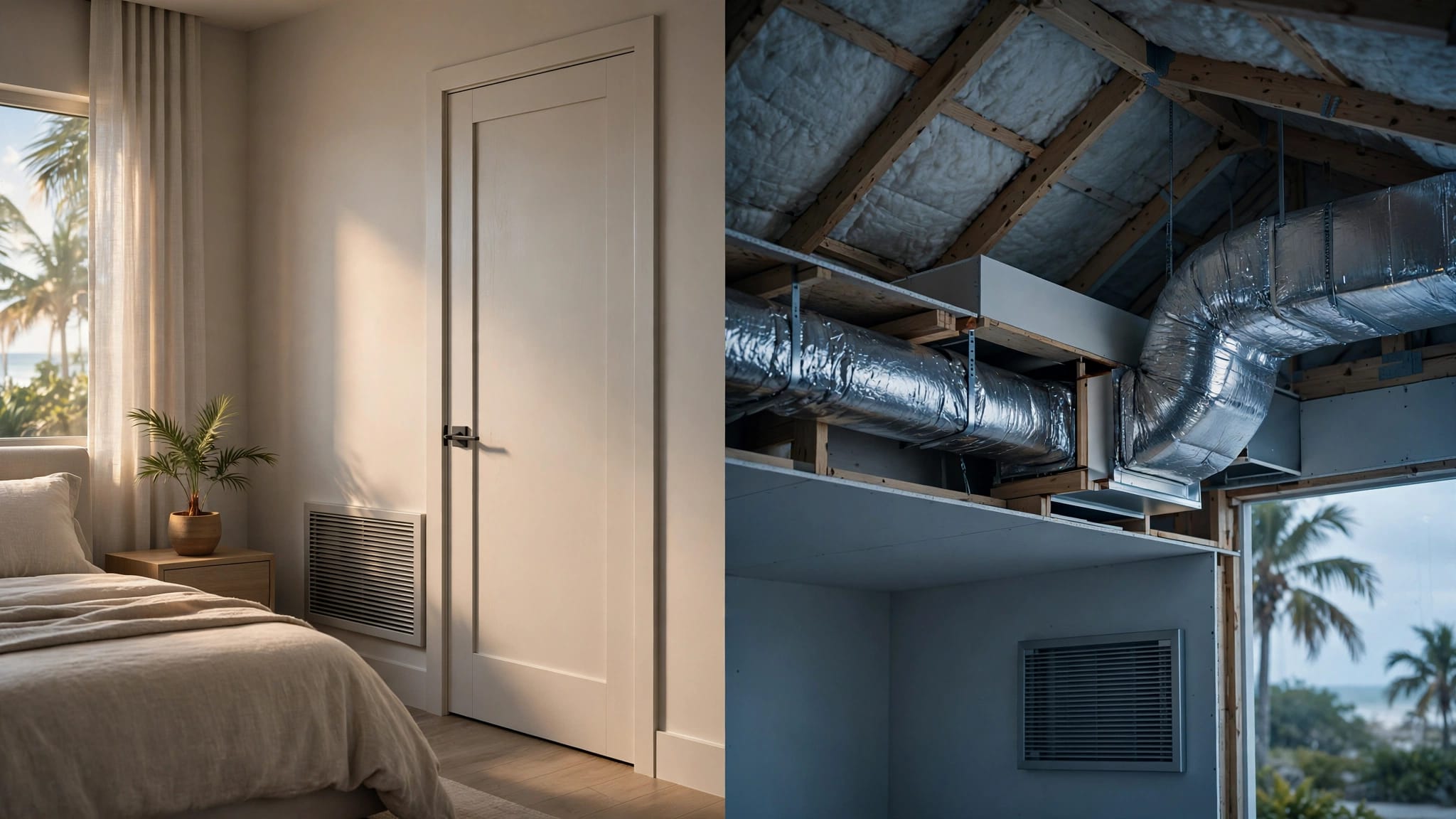
An air conditioner can run for hours and still leave one room uncomfortable when a vent is blocked, undersized, or misunderstood. Knowing the difference between supply vents vs return vents helps you spot airflow problems before they turn into higher energy bills or uneven cooling.
Supply vents send conditioned air into your rooms. Return vents pull room air back toward the HVAC system for filtering, cooling, or heating. Both are necessary, but they perform opposite jobs. The basic difference becomes clear once you follow the air through your home.
Supply Vents vs Return Vents: The Basic Difference
Supply vents are the openings where treated air enters a room. After the air conditioner cools and dehumidifies air, the blower pushes it through supply ducts and out through these grilles.
Return vents do the reverse. They pull air from the living space and send it back through return ductwork to the air handler. The system then filters and conditions that air before sending it back through the supply vents.
Most homes have several supply vents and fewer return vents. A bedroom, office, or living room may have one or more supply registers, while a central hallway return handles air from several nearby rooms.
| Feature | Supply vent | Return vent |
|---|---|---|
| Main job | Delivers conditioned air | Pulls room air back |
| Air pressure | Positive airflow | Negative airflow |
| Typical size | Smaller | Often larger |
| Common location | Ceiling, wall, or floor | Wall, ceiling, or central hallway |
| Filter location | Usually no filter | May hold the system filter |
| Air direction | Into the room | Toward the HVAC system |
A supply grille often has adjustable louvers, so you can direct air across a room. Return grilles usually have a fixed, open pattern that allows a larger volume of air to pass through.
A large grille isn't automatically a return vent. Follow the airflow or check whether the grille connects to the filter location before making changes.
How Supply Vents Deliver Conditioned Air
Supply vents connect to the supply side of your duct system. When the blower turns on, air moves through the main supply plenum, branches into smaller ducts, and exits through room registers.
In Southwest Florida homes, ceiling supply vents are common because cooling is used much more often than heating. Cold air can mix with warmer room air as it leaves the ceiling. Wall and floor registers also work, depending on the home's design and duct layout.
The louvers on a supply register control the direction of the airflow. They don't replace proper duct sizing, though. Closing one vent may push more air toward other rooms, but closing several can increase pressure inside the ductwork and reduce total system airflow.
Every supply vent should provide a noticeable, steady stream of air when the system runs. Weak airflow may point to a dirty filter, a closed damper, crushed flex duct, disconnected ductwork, or a blower problem. A vent that feels warm while the air conditioner runs can also indicate an equipment or duct issue.
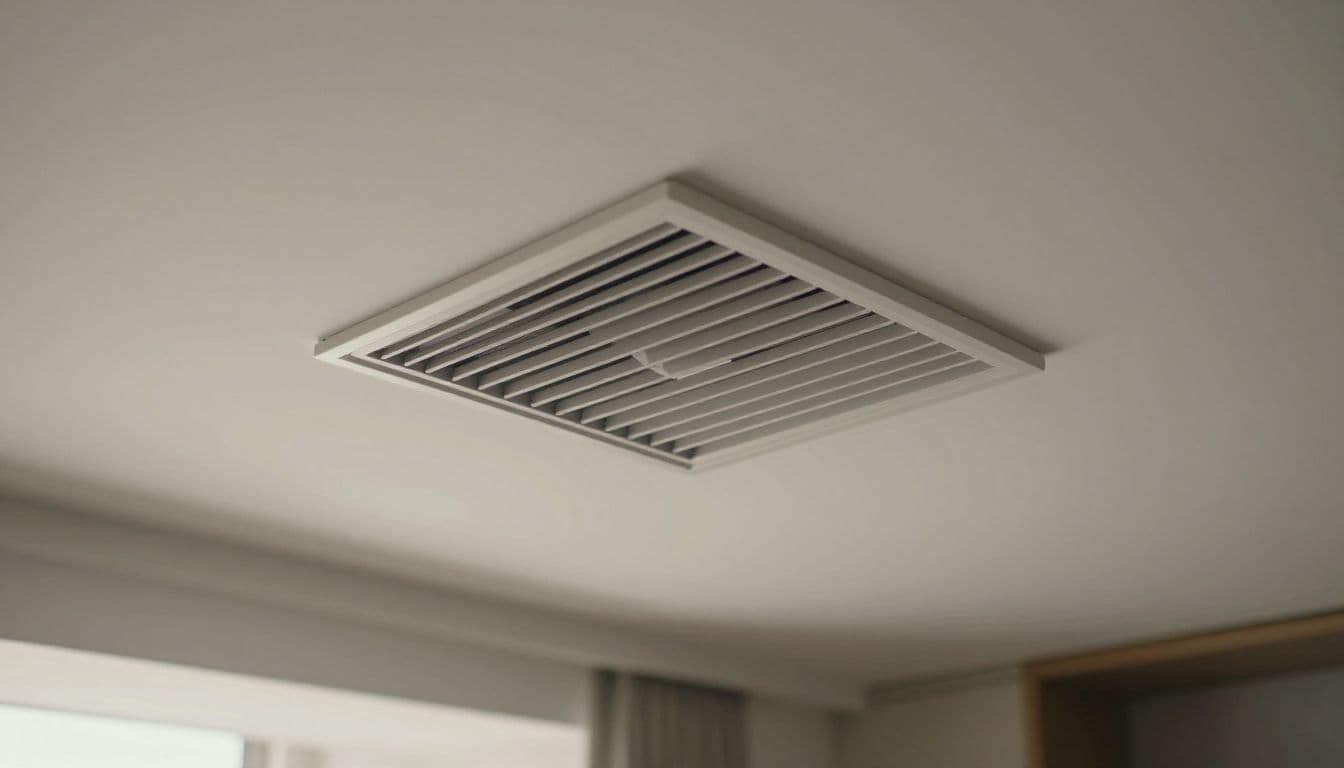
A clean supply grille helps conditioned air move into the room without unnecessary restriction.
How Return Vents Keep Airflow Balanced
Return vents maintain the air cycle inside your home. The blower removes room air through the return grille, sends it through a filter, and moves it across the indoor coil or heat exchanger. The conditioned air then leaves through the supply side.
Because return vents handle a high volume of air, they often have larger openings than supply registers. Many homes use one central return in a hallway, while others have multiple returns throughout the house. Larger homes and systems with separate zones may need more than one return path.
Return grilles need clear space around them. Furniture, curtains, boxes, and wall decorations can restrict the opening. When the return can't pull enough air, the blower may struggle to move the designed volume through the system. Rooms can feel stuffy, supply airflow can weaken, and the equipment may run longer.
A return vent may contain the main filter, but the filter location varies. Some systems place the filter behind the central return grille. Others use a filter cabinet near the air handler. Don't add filters to additional return grilles unless the system was designed for them. Too much filter resistance can reduce airflow.
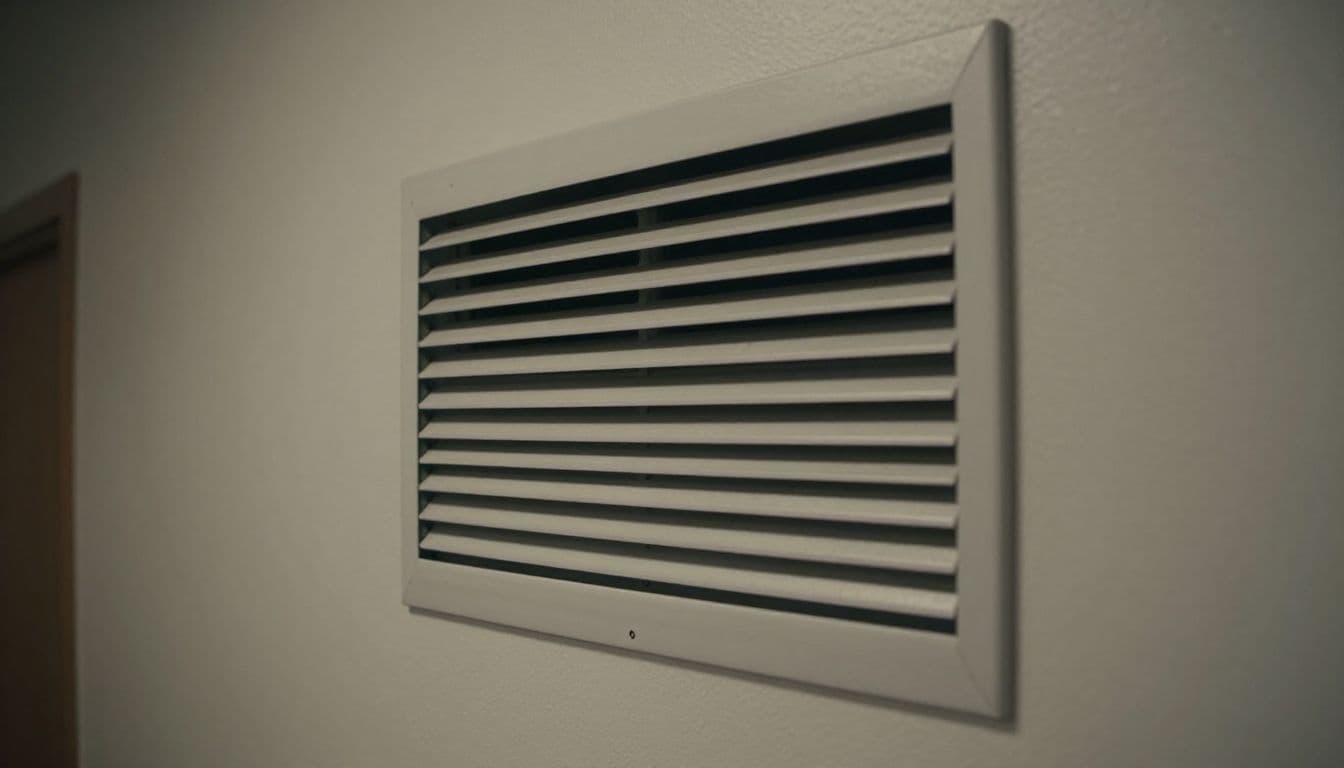
The return grille needs open space so the HVAC blower can pull air back into the system.
Where Each Vent Belongs in a Home
Supply and return placement affects how well air circulates. A supply vent should deliver air into the room, while the return path should allow that air to leave the room and travel back to the equipment.
Many rooms have a gap beneath the door that helps air move toward a central return. If the gap is too small, a closed bedroom door can create pressure in the room. The supply vent keeps pushing air in, but the return system has no easy path to pull it out. That can lead to poor circulation and uneven temperatures.
Some homes use jumper ducts, transfer grilles, or dedicated returns to solve this problem. These components create a path between rooms without requiring the door to remain open.
Supply vents also shouldn't sit behind large furniture. A couch, bed, cabinet, or bookcase can block the air before it mixes with the rest of the room. Return vents need even more clearance because they pull air across the entire grille.
When homeowners search for supply vents vs return vents, they often want to know which vent they can close. You can adjust a supply register slightly for comfort, but avoid closing many vents at once. Keep return grilles open, and never cover them with furniture or storage items.
Signs Your Supply or Return Airflow Has a Problem
A vent problem often shows up as a comfort complaint rather than an obvious mechanical failure. Watch for patterns throughout the home instead of focusing on one grille.
Common signs include:
- One room stays warmer or more humid than nearby rooms.
- Airflow feels weak at several supply vents.
- The air conditioner runs for long periods without reaching the thermostat setting.
- Return grilles whistle, rattle, or make a loud sucking sound.
- Dust gathers around a grille or along nearby ceiling and wall surfaces.
- The system filter becomes dirty sooner than expected.
- Doors move or become harder to open when the blower runs.
- Some rooms feel stuffy even though other areas cool normally.
A single weak supply vent may have a closed damper or a local duct restriction. Weak airflow at every supply vent points more toward a filter, blower, indoor coil, or main duct problem.
Uneven cooling can also result from leaking or damaged ductwork. Air may escape into an attic, crawl space, or wall cavity before reaching the room. Use this guide to identify duct leaks in Cape Coral when you notice hot spots, dusty areas, or unexplained airflow changes.
Return-side problems have their own clues. A blocked return can make the system sound strained, while a missing or poorly fitted filter can allow dust to reach the indoor coil and blower. Both problems can affect performance beyond the vent itself.
How to Improve Vent Airflow Safely
Start with the simple checks. Make sure every supply register is open, remove furniture from in front of return grilles, and replace a dirty filter with the correct size and type. Check the filter manufacturer's replacement guidance, since homes with pets, allergies, or frequent HVAC use may need more frequent changes.
Next, compare airflow from room to room. Hold a tissue near each supply vent without blocking it. The airflow should feel reasonably consistent, although some variation is normal because duct branches have different lengths and designs.
Don't remove sealed HVAC panels or reach into the equipment cabinet. Don't seal, cut, move, or enlarge ductwork without checking the system design. A larger opening or added grille can change pressure and airflow in ways that create new problems.
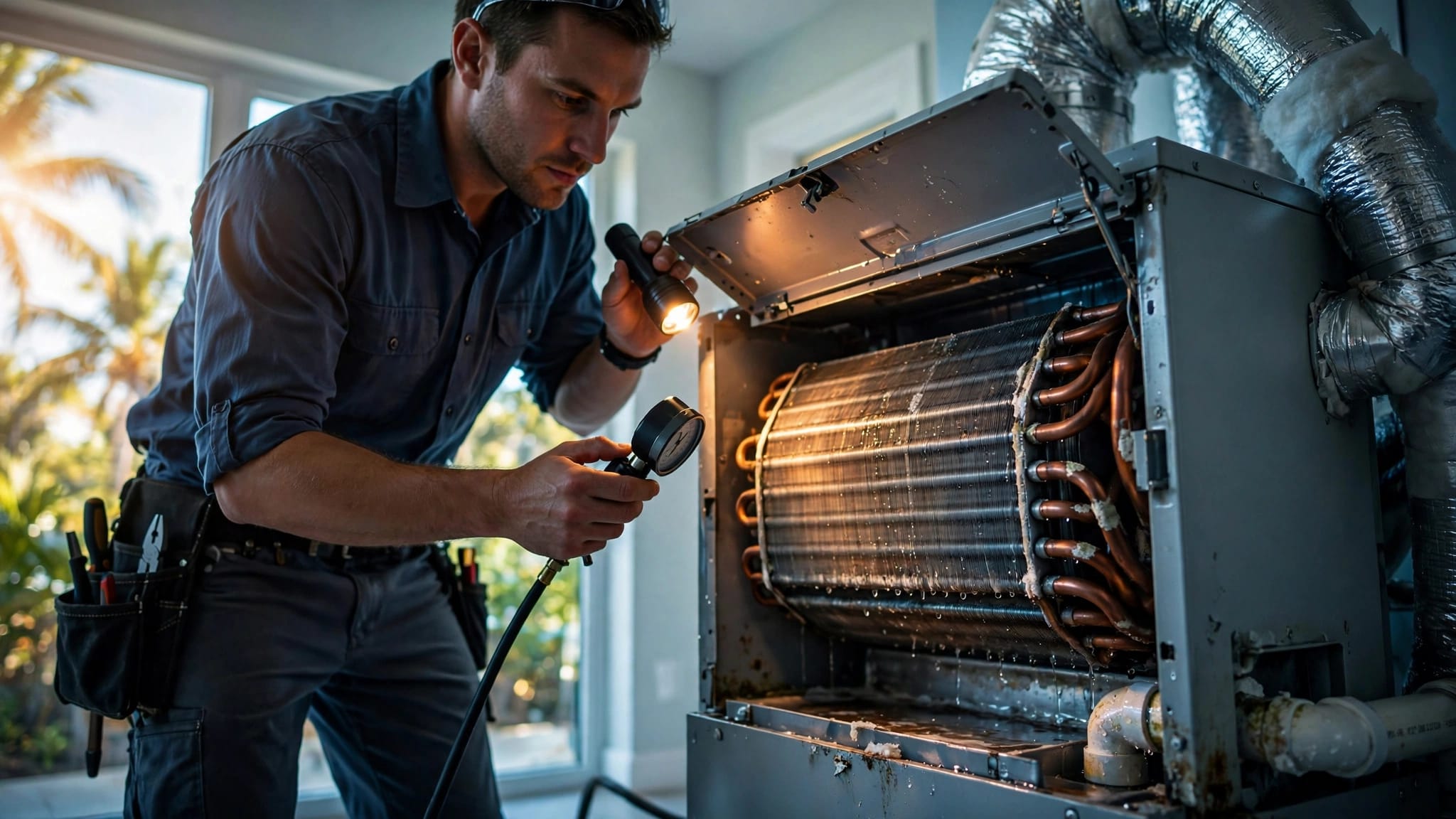
Routine service can uncover issues that are difficult to see from inside a room. A technician can inspect accessible ductwork, measure airflow, check static pressure, examine the blower, and look for coil restrictions. A regular AC tune-up and maintenance visit can also catch filter, drain, electrical, and airflow concerns before the system stops working.
If the system runs constantly, leaks water, makes unusual noises, or fails to cool, schedule professional air conditioning repair instead of repeatedly adjusting the vents. Vent changes can't fix a failing blower, refrigerant problem, damaged coil, or disconnected duct.
Conclusion
Supply vents deliver conditioned air, while return vents carry room air back to the HVAC system. Supply registers are usually smaller and more numerous. Return grilles are often larger and need clear space to maintain proper airflow.
When comparing supply vents vs return vents, remember that both sides must work together. Keep supplies open, leave returns unobstructed, replace filters on schedule, and have persistent airflow problems checked by a qualified technician. If your home needs help with comfort or airflow, Contact Us to schedule service.