When your AC goes silent in Cape Coral, the house warms up fast. A thermostat setting or tripped breaker can cause the problem, but so can a clogged drain line or a failed electrical part.
The hard part is knowing what you can check safely and what needs a licensed tech. A few quick steps can save time, and they can also keep you away from risky repairs.
Start with the simple checks first, then move toward the problems that need professional help.
Start with the thermostat and settings
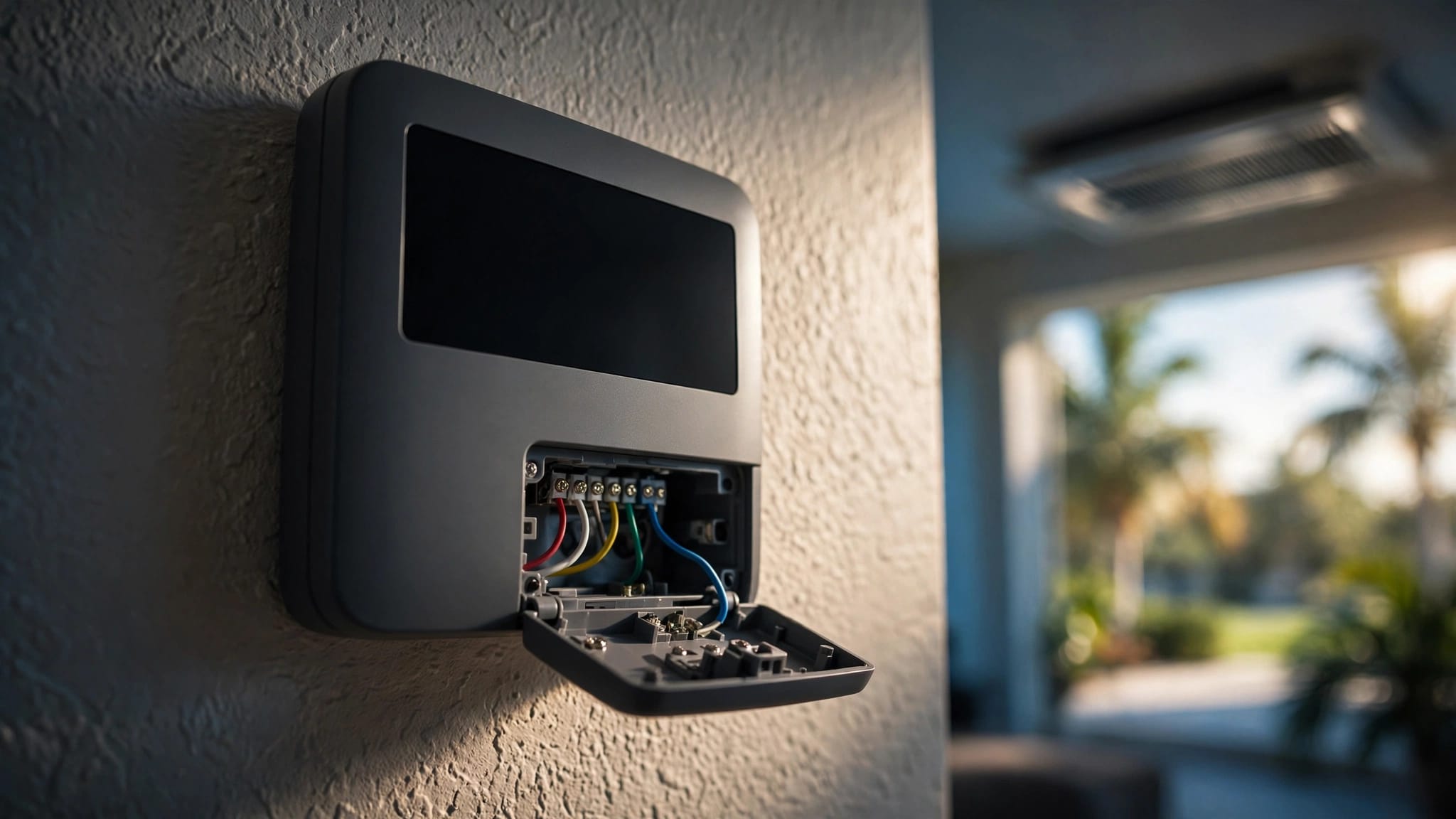
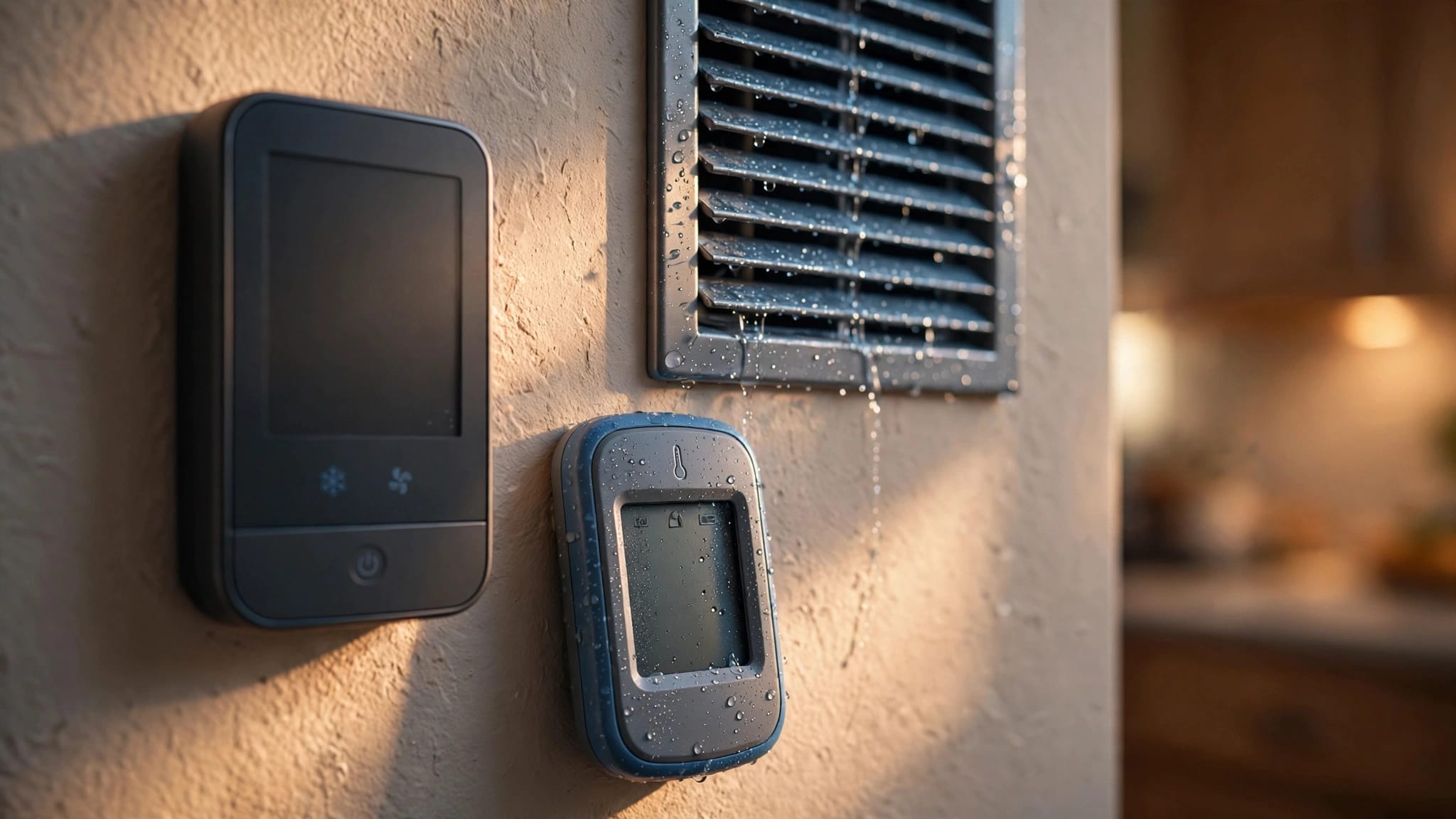
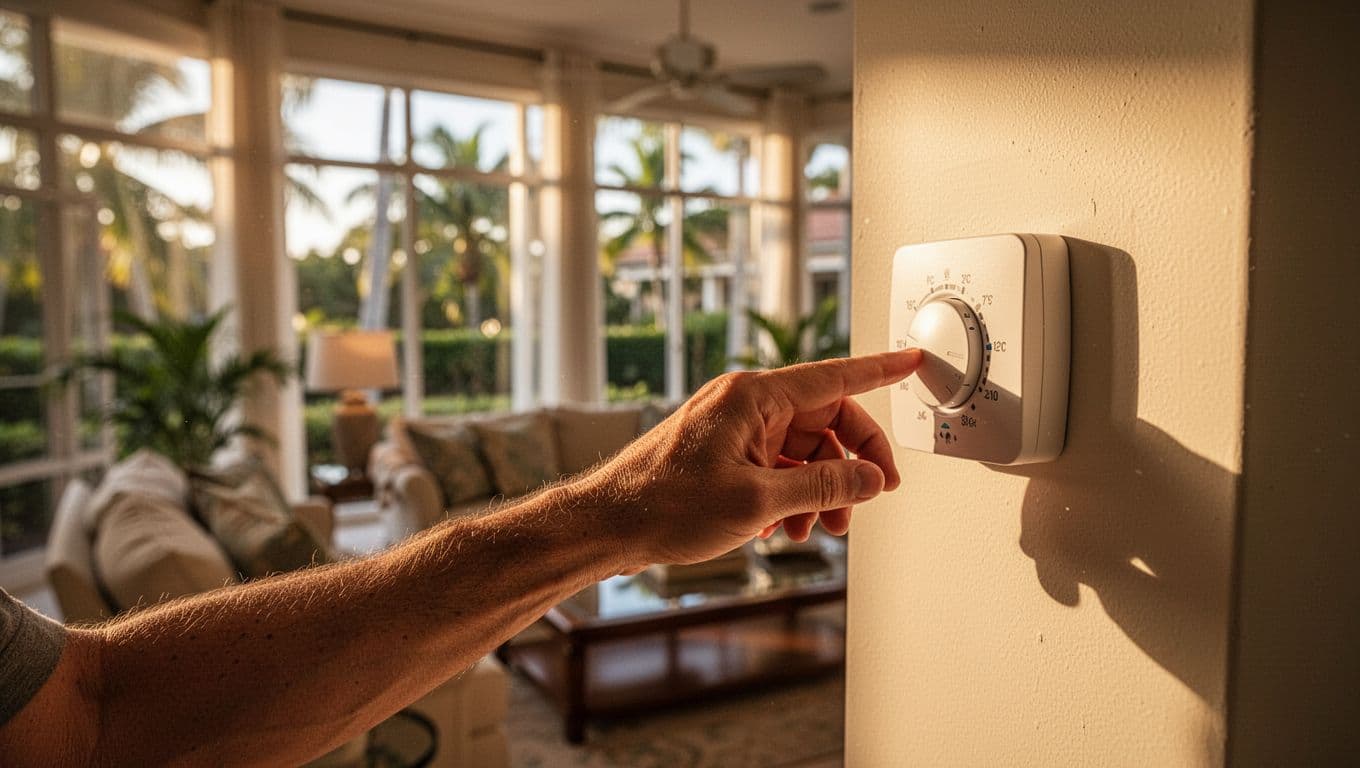
A surprising number of no-start calls begin at the thermostat. If the screen is blank, the batteries may be dead, or the thermostat may have lost power. If the display works, make sure the system is set to Cool , not Heat or Fan Only.
Next, lower the temperature a few degrees below the room temperature. If the setting is too close to the current indoor temp, the AC may not call for cooling. Also check the fan setting. It should usually be on Auto , unless your technician has told you otherwise.
If you use a smart thermostat, a recent power outage or Wi-Fi issue can confuse the settings. A quick reset may help. Still, if the thermostat looks fine and the unit stays silent, the problem is probably somewhere else.
Check the breaker, disconnect, and other power stops
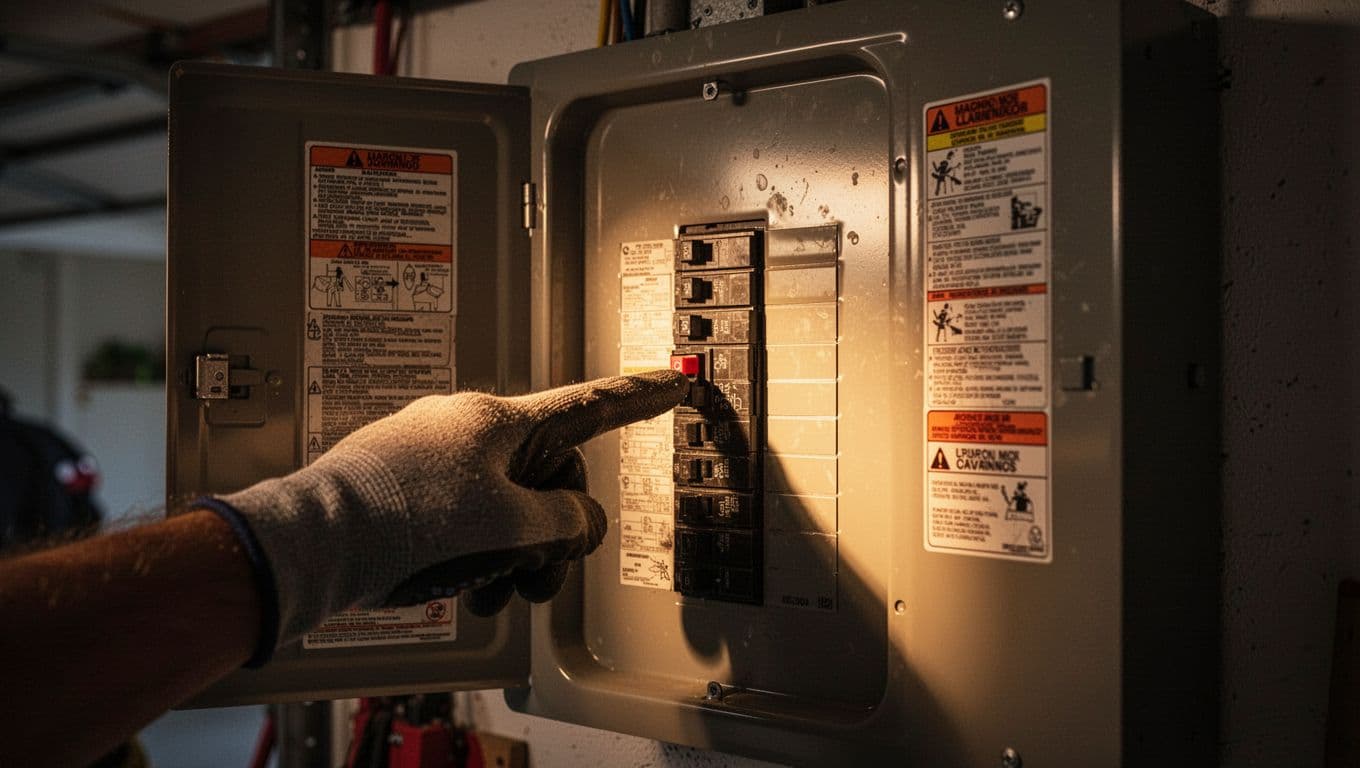
If the thermostat is set correctly, look at the power path next. A tripped breaker is one of the most common reasons an AC won't turn on. Check the electrical panel once, and look for a switch that sits between the same position and "off."
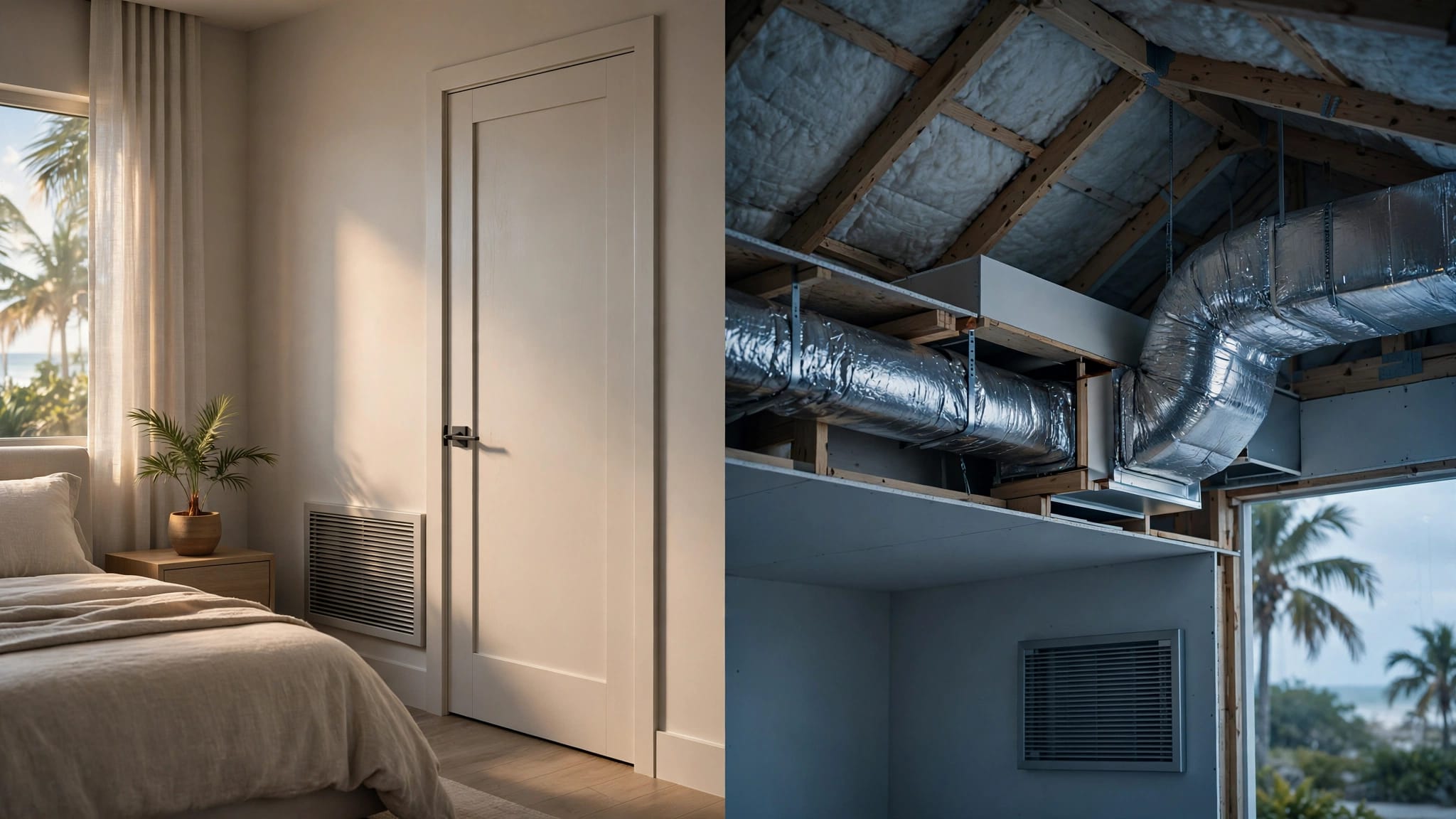
Outside, your condenser may also have a disconnect box. If that switch is off, the outdoor unit can't start. Inside, the air handler may have its own shutoff switch near the unit or attic access.
If a breaker trips again after you reset it, stop there. Repeated trips usually mean a real electrical problem.
Do not keep flipping the breaker back on and off. That can make the damage worse. It can also point to a failed motor, shorted wiring, or another part that needs diagnosis.
When the power checks look normal but the system still won't run, it may be time for help. If the unit smells hot, buzzes, or keeps shutting down, use 24/7 emergency HVAC services or Contact Us for fast help.
Dirty filters and clogged drain lines can stop the system
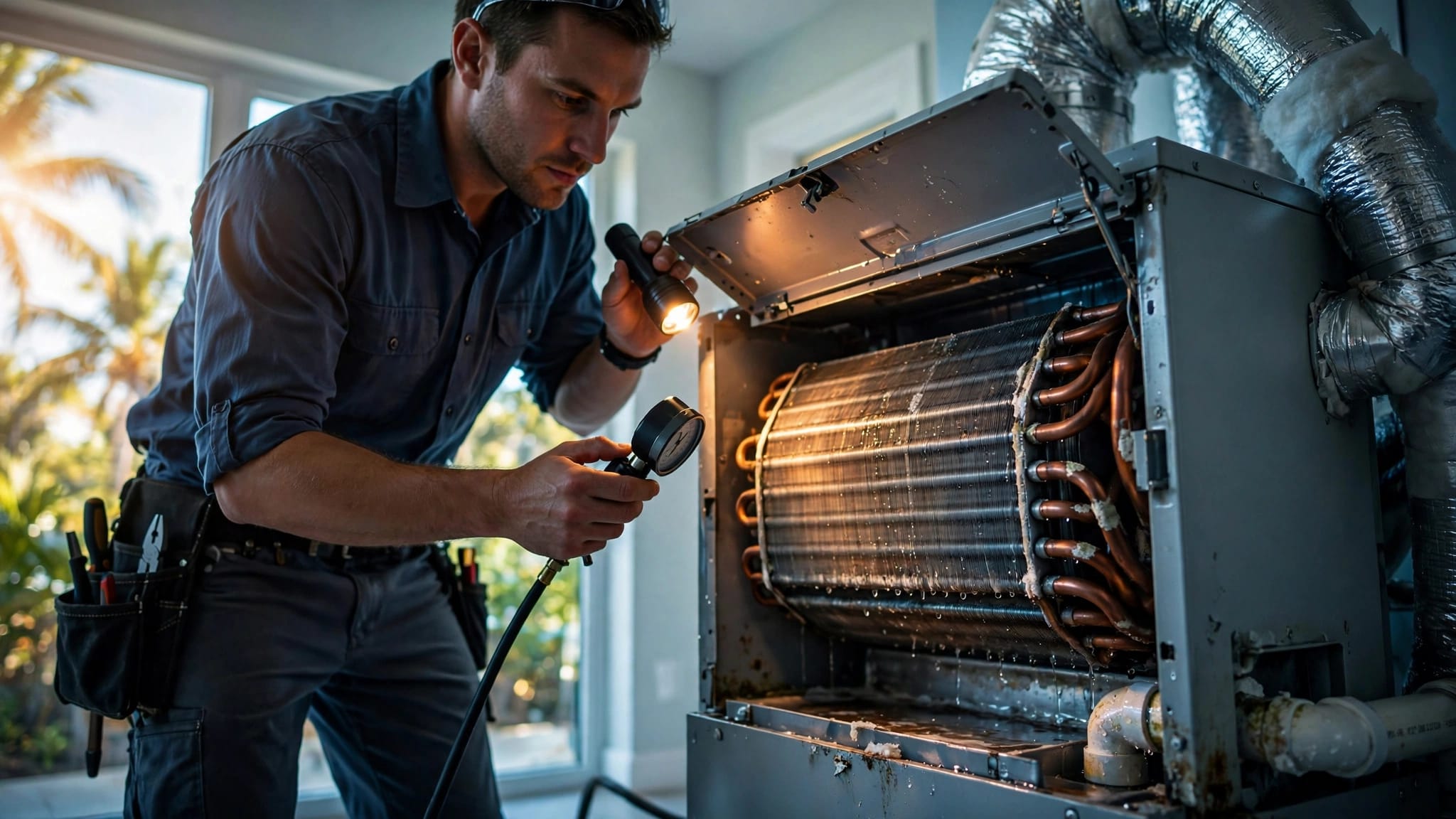
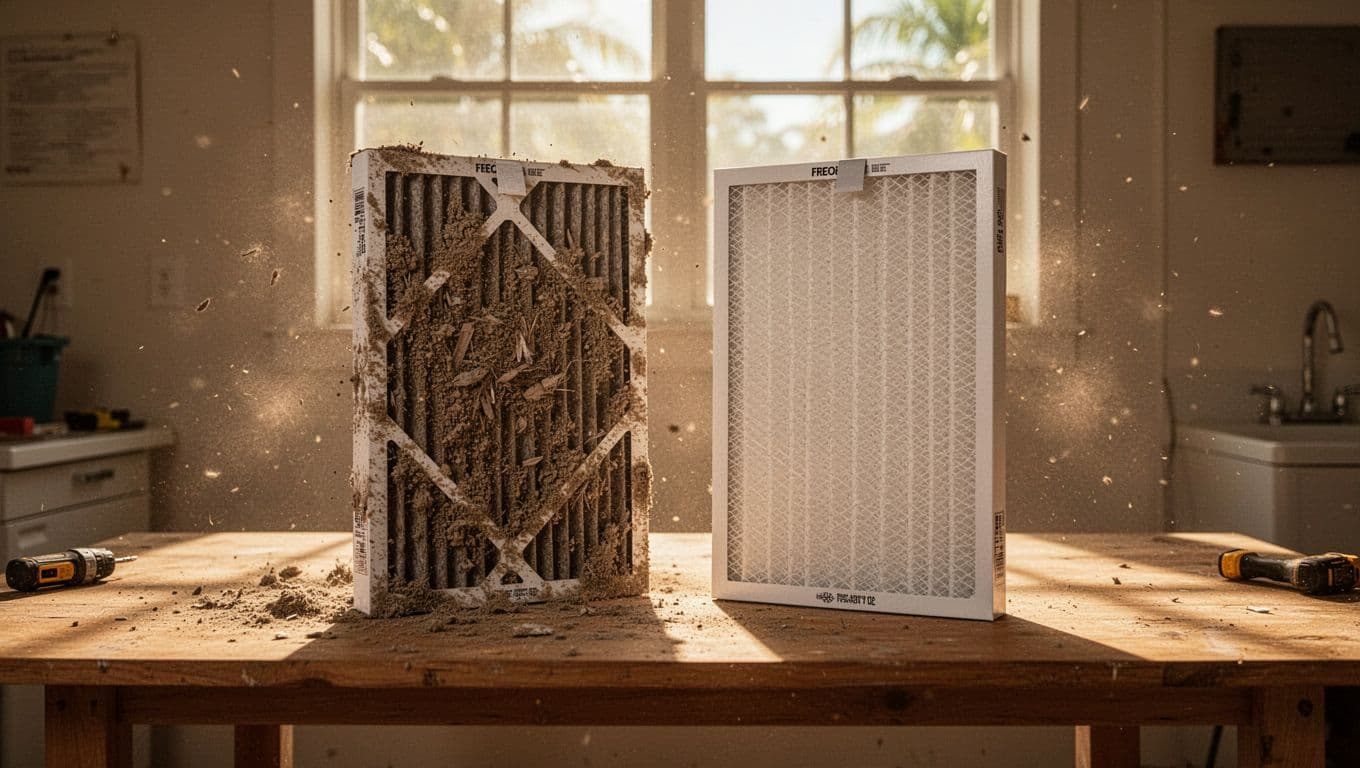
Airflow matters more than many homeowners realize. A dirty filter can choke the system, and that strain can keep the AC from starting the way it should. In some cases, the indoor coil can freeze, then the unit shuts down to protect itself.
That is why a clean filter is one of the simplest fixes to check. If the filter looks gray, packed with dust, or bent out of shape, replace it. In Cape Coral, where cooling runs hard for much of the year, filters often need attention more often than people expect.
Drain problems can stop the system too. Your AC makes condensation as it cools. That water should leave through the condensate drain line. If the line clogs, water backs up into the drain pan. Many systems then use a float switch to shut things down before the water spills.
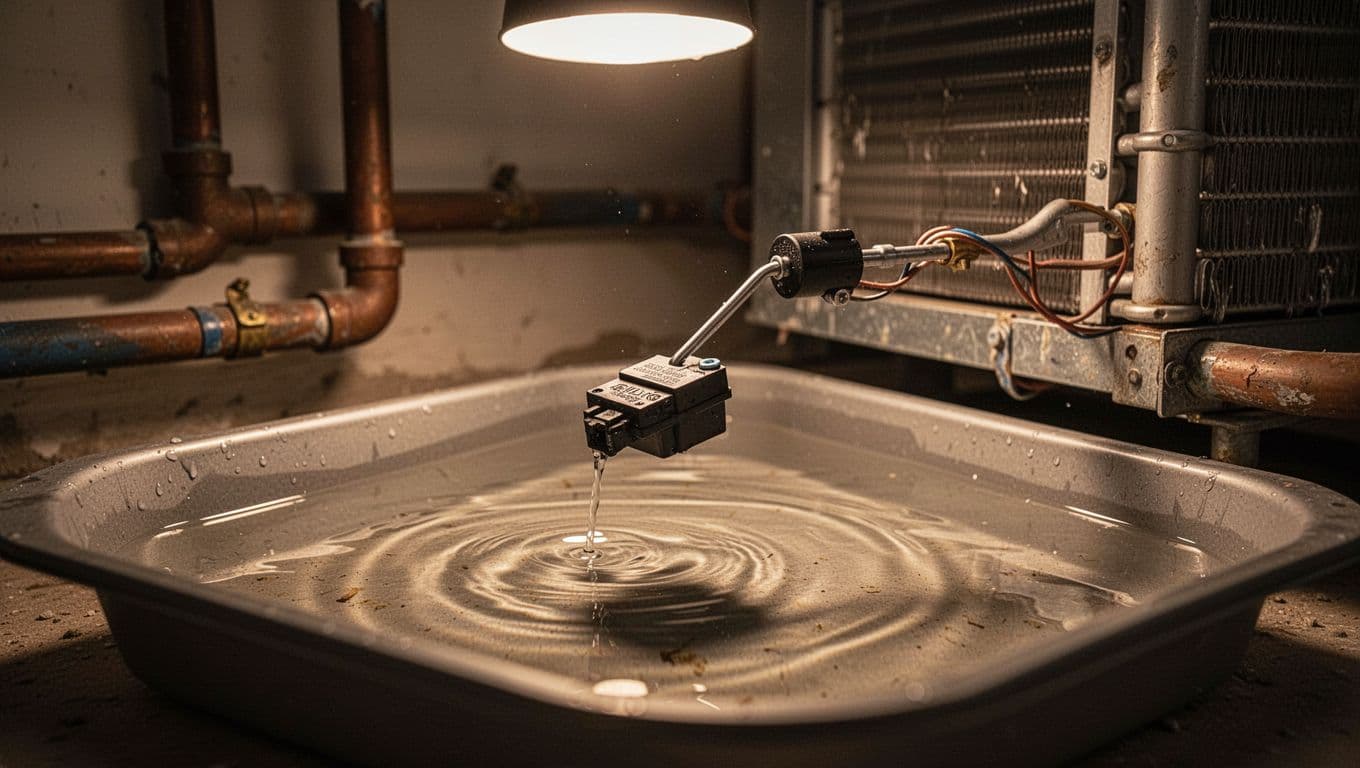
If you see water around the air handler or ice on the lines, turn the system off and let it sit. Then schedule service. These issues often show up with other problems too, which is why common AC problems in Cape Coral homes often start with airflow and drain checks.
The electrical parts that need a licensed HVAC technician
When the easy checks don't solve it, the trouble may be inside the equipment. A failed capacitor, worn contactor, blown low-voltage fuse, or damaged control board can keep the AC from starting. These parts help the system send and use power, so when one fails, the unit may stay completely quiet.
Sometimes the signs are subtle. You may hear a click, a hum, or a brief start, then nothing. Other times the breaker trips as soon as the unit tries to run. Either way, this is not the time to open panels and guess.

Photo by Richard Low Hong
A licensed HVAC tech can test those parts safely and find the true cause. That is why air conditioning repairs in Cape Coral FL matter when the unit stays dead after the basic checks.
Burning smells, buzzing, melted insulation, or a hot breaker panel are emergency signs. Shut the system off and get help right away.
Why older AC systems in Cape Coral fail more often
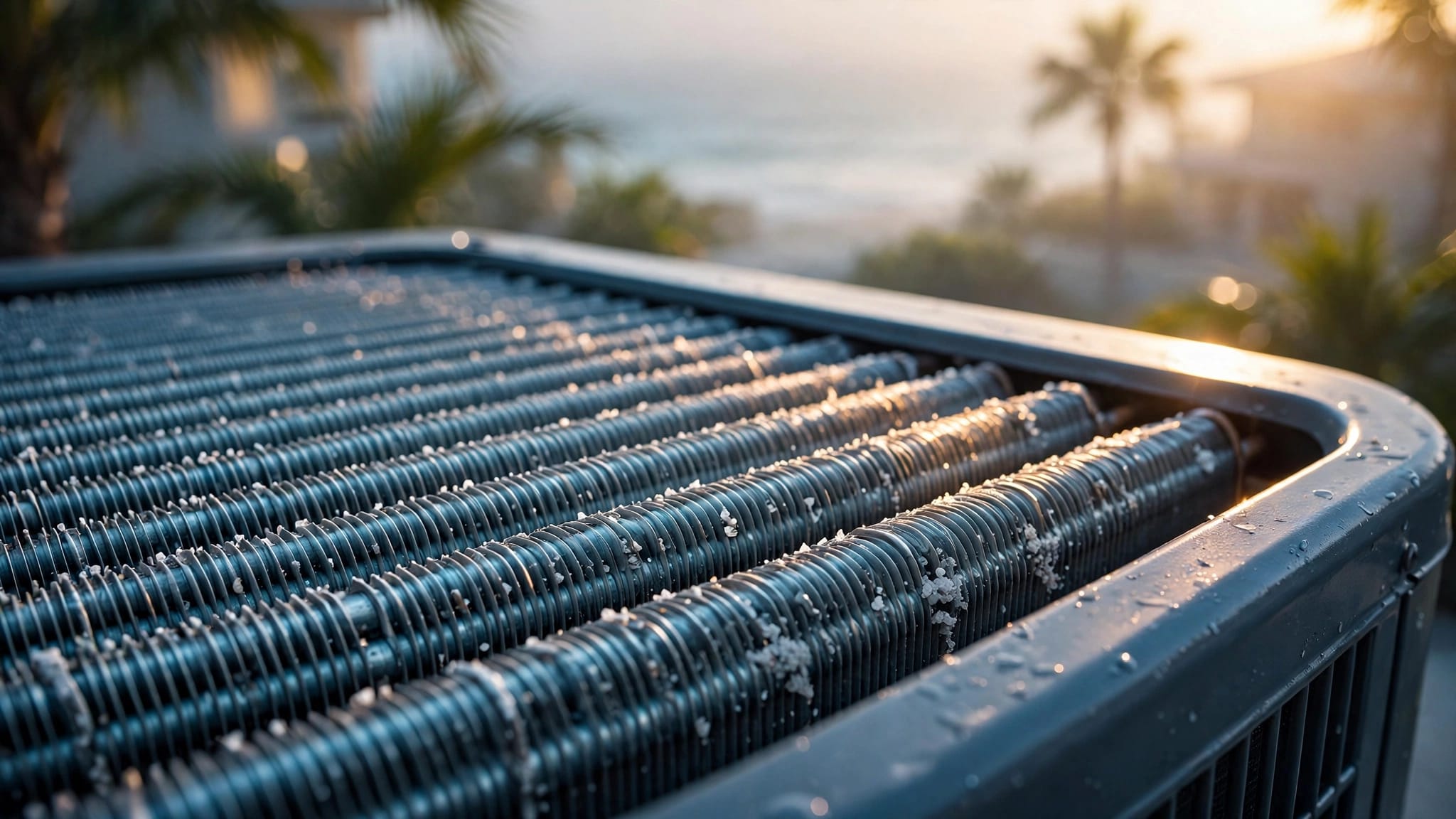
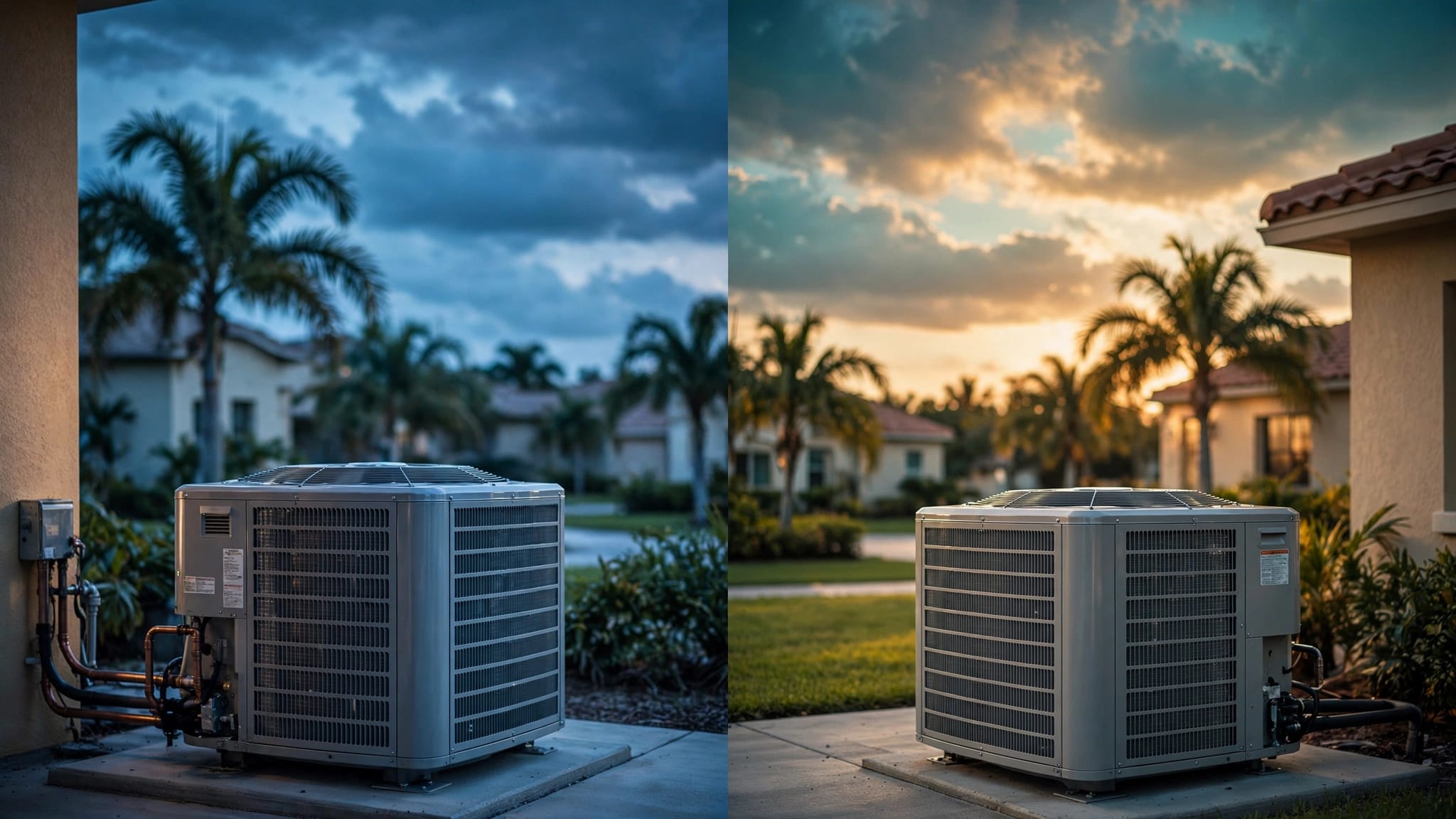
Age changes how an AC behaves. In Southwest Florida, systems work hard for months at a time. Heat, humidity, and salt in the air all add stress. Over time, capacitors weaken, contactors wear out, and motors lose strength.
An older system may still cool on most days, then refuse to start after a storm or a long run cycle. That pattern often means parts are nearing the end of their life. It can also mean the system needs more than one repair to stay reliable.
If your AC has needed several fixes over the last year, pay attention to the pattern. A unit that keeps losing the same parts may be telling you it needs broader service. In those cases, Cape Coral air conditioning services can help you look at repair options and ongoing maintenance before the next breakdown hits.
Older equipment is not automatically ready for replacement. Still, repeated no-start problems are a sign that the system needs close attention.
What to do first when your AC stays silent
A calm, simple order keeps the problem from getting worse.
- Set the thermostat to Cool and lower the temperature a few degrees.
- Check the breaker once and reset it only if it stays in place.
- Look at the filter and drain pan for dust, water, or ice.
- Turn the system off if you see water, ice, smoke, or hear buzzing.
- Call a licensed HVAC technician if the unit still won't start.
A float switch, water leak, or repeated breaker trip is more than a small nuisance. It is the system telling you to stop and get help. If the issue happens after hours, Contact Us and request service before the heat builds inside the house.
Maintenance that keeps no-cool calls down
Regular maintenance catches small failures before they turn into a dead AC. A tune-up can uncover a weak capacitor, loose wire, dirty coil, clogged drain line, or thermostat problem long before the system quits on a hot afternoon.
That matters in Cape Coral more than in many places. Your AC works harder here, and a small fault can turn into a no-cool call fast. A good maintenance visit also gives a tech a chance to check airflow, test startup parts, and clear drain issues before they trip a safety switch.
Between visits, keep your filter clean and leave space around the outdoor unit. Trim back plants, clear leaves, and listen for new noises. A change in sound often shows up before a full breakdown.
If you want fewer surprises this summer, comprehensive AC maintenance Cape Coral is one of the best habits you can build.
Conclusion
When your AC won't turn on, start with the thermostat, power supply, filter, and drain pan. Those are the safest checks, and they solve more problems than many homeowners expect.
If the breaker keeps tripping, the system smells hot, or the unit still refuses to start, stop there. Electrical parts, float switches, and older equipment need careful diagnosis from a licensed pro. In Cape Coral heat, a quick and safe response can keep a small problem from turning into a bigger one.