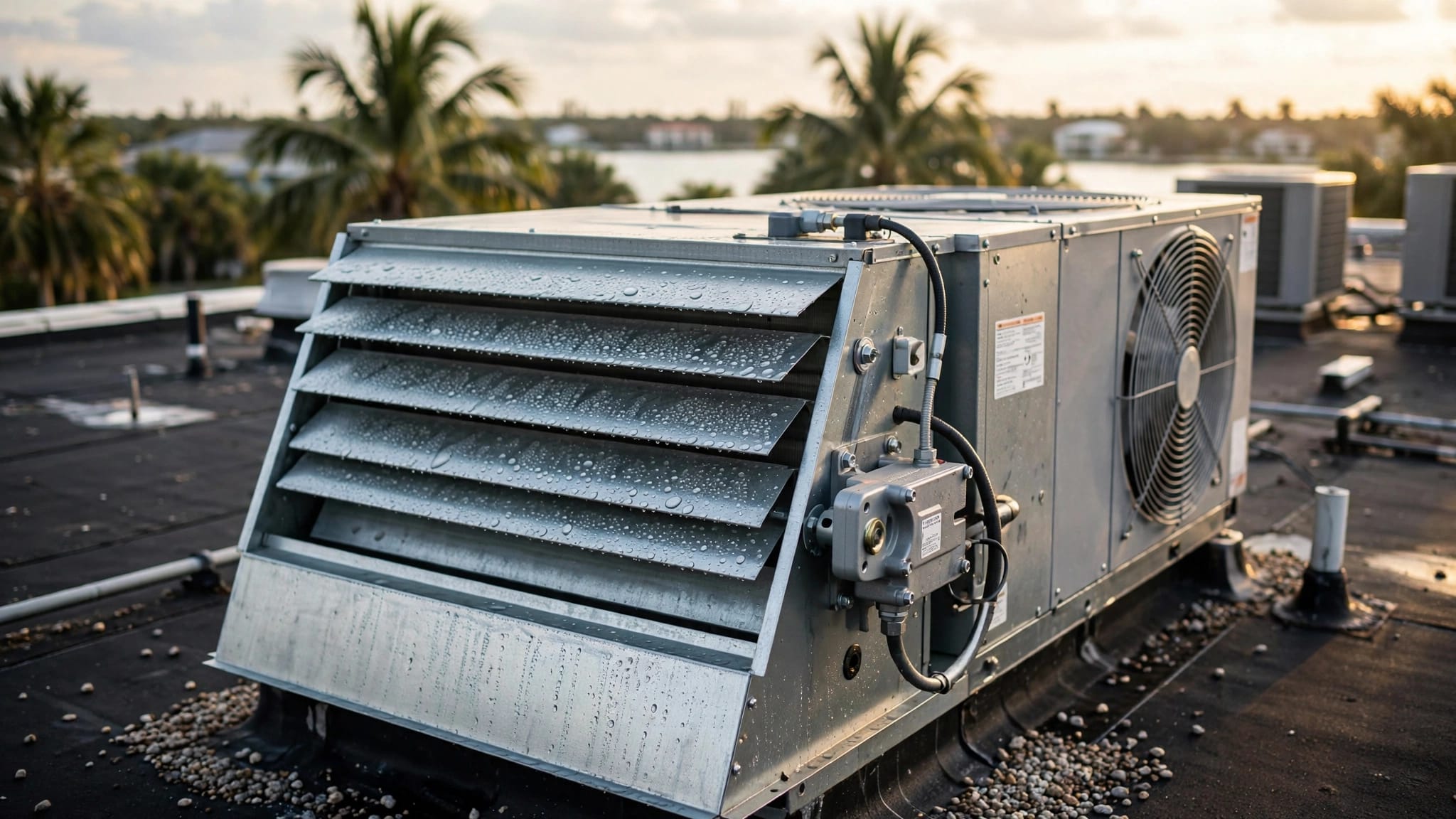
A refrigerant leak can turn a cool Cape Coral home into a sticky one fast, and the repair bill is rarely simple. In 2026, the refrigerant leak repair cost usually lands in a wide range because the leak itself is only part of the job.
System size, refrigerant type, and where the leak hides all change the price. In Southwest Florida heat, waiting often makes the damage worse.
What a refrigerant leak usually costs in Cape Coral
Most Cape Coral homeowners can expect about $300 to $1,500 for leak repair and recharge in 2026. Leak detection alone often runs $100 to $330 , while local labor commonly lands around $100 to $150 per hour .
The final bill depends on how hard the leak is to find and what has to come apart to fix it. A small leak on an easy-to-reach fitting is one thing. A leak inside a coil or buried in a line set is another story.
| Situation | Typical 2026 range | What usually drives it |
|---|---|---|
| Small, accessible leak | $300 to $600 | Testing, minor sealing, and recharge |
| Leak in evaporator coil or line set | $700 to $1,500+ | More labor, tighter access, and possible part replacement |
| Older system using R-22 | Higher end of range | Harder-to-source refrigerant and aging parts |
| Leak detection only | $100 to $330 | Pressure tests, dye, or electronic leak search |
A quote is more than a line item for refrigerant. It also covers the time needed to find the leak, repair the failed spot, and recharge the system to the correct amount.
A top-off without a repair only buys time. The leak comes back, and so does the bill.
What changes the price in 2026
Leak location matters most. A loose joint on a line set is usually simpler than a leak inside an evaporator coil. Condenser coil leaks can also get expensive because both access and part cost rise.
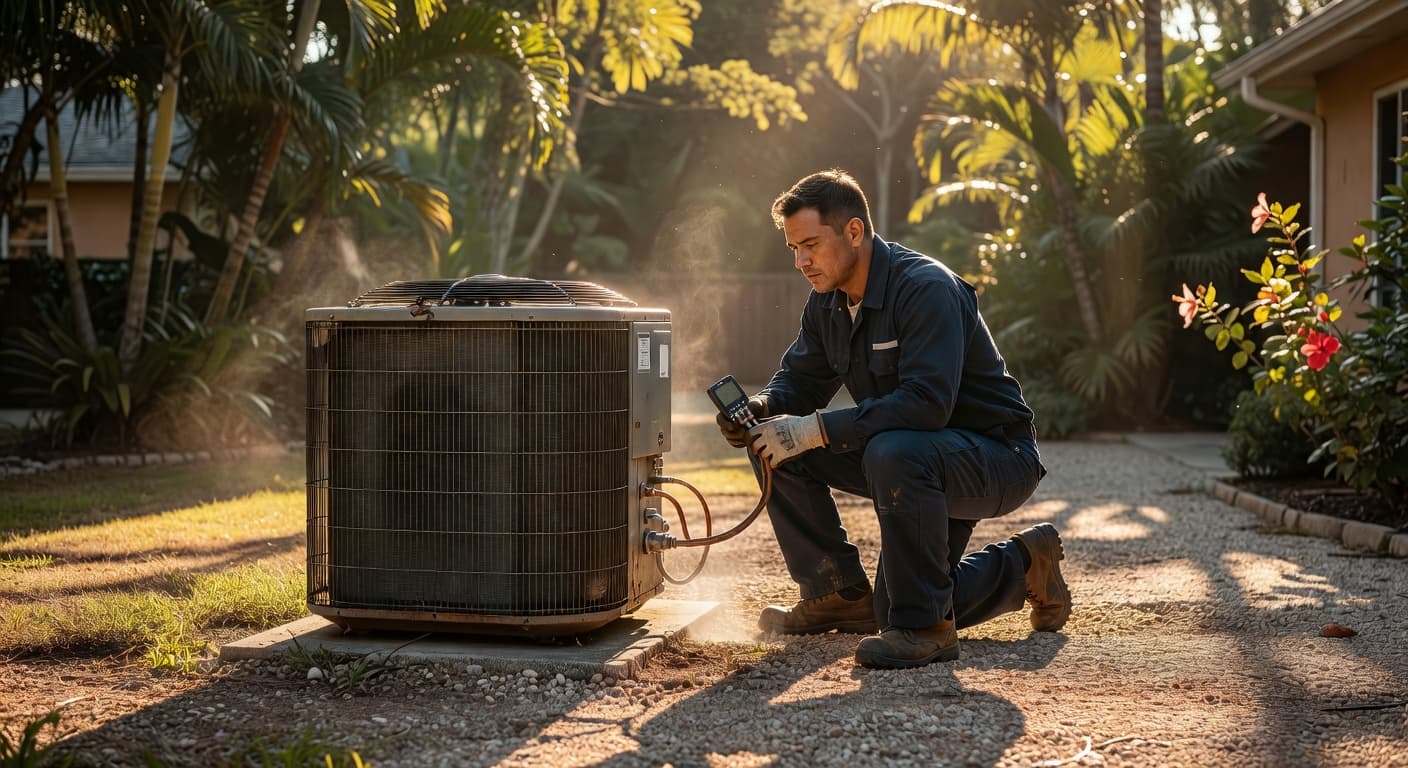
Several parts of the job can push the price up or down:
- System size and refrigerant volume : Larger systems need more refrigerant, so recharge costs climb.
- Refrigerant type : Newer refrigerants are easier to source than obsolete R-22.
- Access to the leak : Attics, roofs, and tight closets take more time.
- Component damage : A failed evaporator coil, condenser coil, or line set can turn a repair into a larger project.
- Leak size : A slow seep can take longer to find than a stain or a hissing spot.
A hidden leak often costs more because the technician has to test, inspect, and narrow the problem before any repair starts. That extra labor is part of the bill, and it can be the difference between a quick fix and a long service call.
If your system keeps losing charge, the problem is not the refrigerant itself. It is the hole that keeps letting it escape.
Why Cape Coral heat makes timing matter
Cape Coral AC systems work hard. In long stretches of heat and humidity, they run more often and for longer cycles. That means low refrigerant shows up faster in the form of weak cooling, longer runtimes, frozen lines, or a house that never quite feels dry.
If you want help spotting the warning signs, these signs of AC refrigerant leaks can point you in the right direction. If the symptom could also be airflow, a filter issue, or a thermostat problem, the steps to take before AC repair can help you rule out the easy stuff first.
Still, refrigerant problems should not sit on the back burner in peak cooling season. A low-charge system makes the compressor work harder, and that can shorten the life of a far more expensive part.
Repair or replacement when the leak keeps coming back
A one-time leak on a newer system often makes sense to repair. A system with repeated leaks, corrosion, or obsolete refrigerant is a different decision.
| Situation | Better move | Why |
|---|---|---|
| First leak on a newer system | Repair | Lower total cost, and the unit still has useful life |
| Leak in evaporator coil, condenser coil, or line set | Compare both options | Labor and parts can add up quickly |
| Older system using R-22 | Replacement may win | Refrigerant and parts are harder to source |
| Second or third refrigerant leak | Replacement often makes sense | Repeat repair bills stack up |
If the repair estimate starts to get close to the value of the unit, replacement starts to look better. That is especially true when the system is already old or has a history of corrosion. In those cases, a clean replacement can cost less over time than another round of repairs.
A newer unit with one reachable leak is easier to save. An older unit with a tired coil or damaged line set may be better off replaced.
Why licensed diagnosis protects your budget
Refrigerant handling is not a casual top-off job. The system has to be checked, the leak has to be found, and the refrigerant has to be handled the right way. EPA-compliant recovery and charging matter, and a licensed technician knows how to do that safely.
A proper diagnosis also keeps you from paying for the wrong fix. The system may need a coil repair, a line set repair, or a recharge after the leak is sealed. A guess can waste money fast.
That is why professional air conditioning repair matters when the problem sits inside the sealed system. A trained tech checks pressures, locates the leak, repairs the failed spot, and then charges the system to the correct level.
Conclusion
A refrigerant leak is never just about adding more charge. In Cape Coral, 2026 pricing depends on how easy the leak is to reach, what refrigerant the system uses, and whether the problem sits in the evaporator coil, condenser coil, or line set.
Repair makes sense when the system is newer and the leak is simple. Replacement starts to make more sense when the unit is older, uses R-22, or keeps losing refrigerant.
If your AC is struggling in the Florida heat, a licensed diagnosis is the fastest way to stop the guesswork. Contact Us to schedule a service call before the next hot afternoon puts more strain on the system.