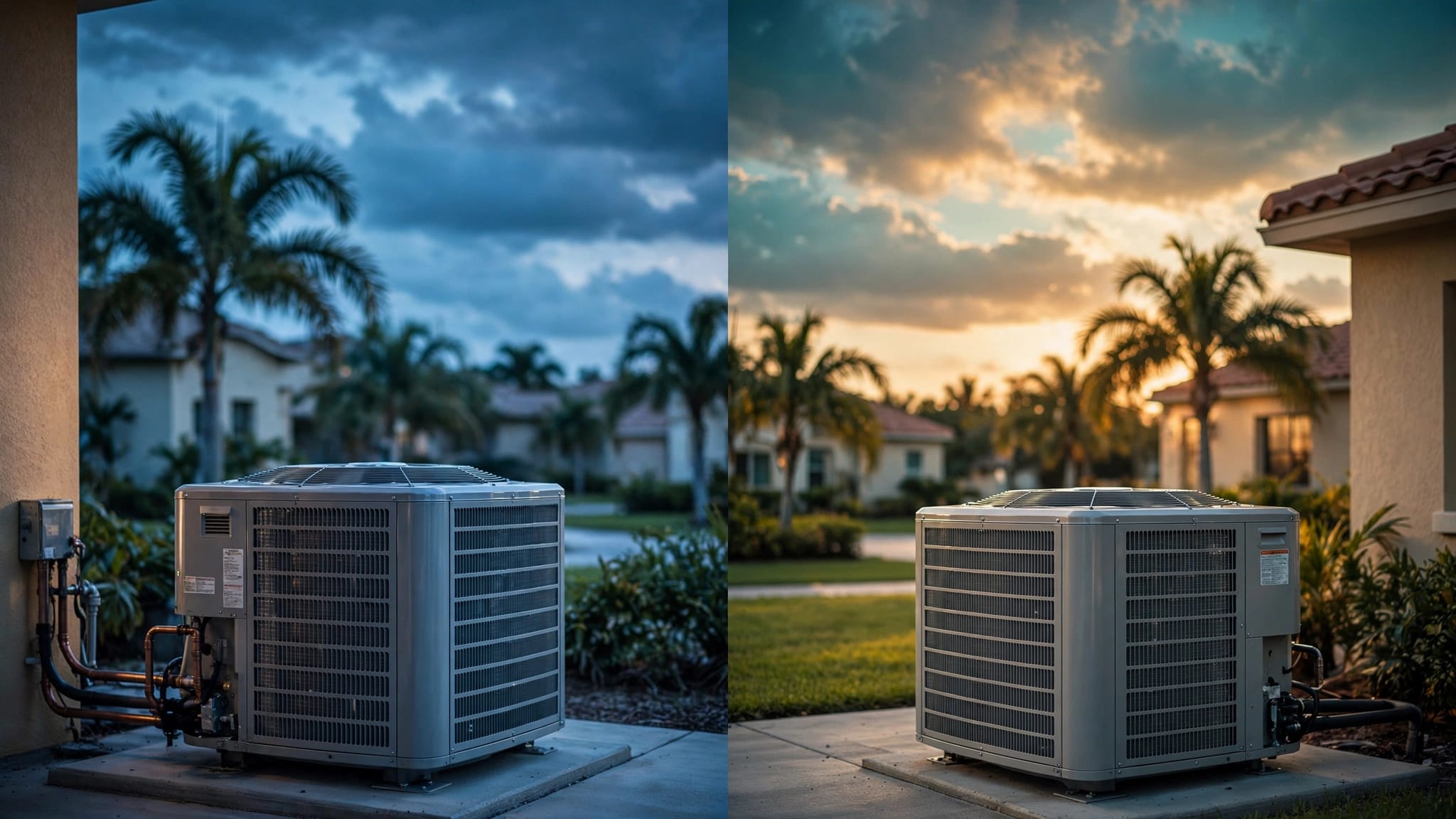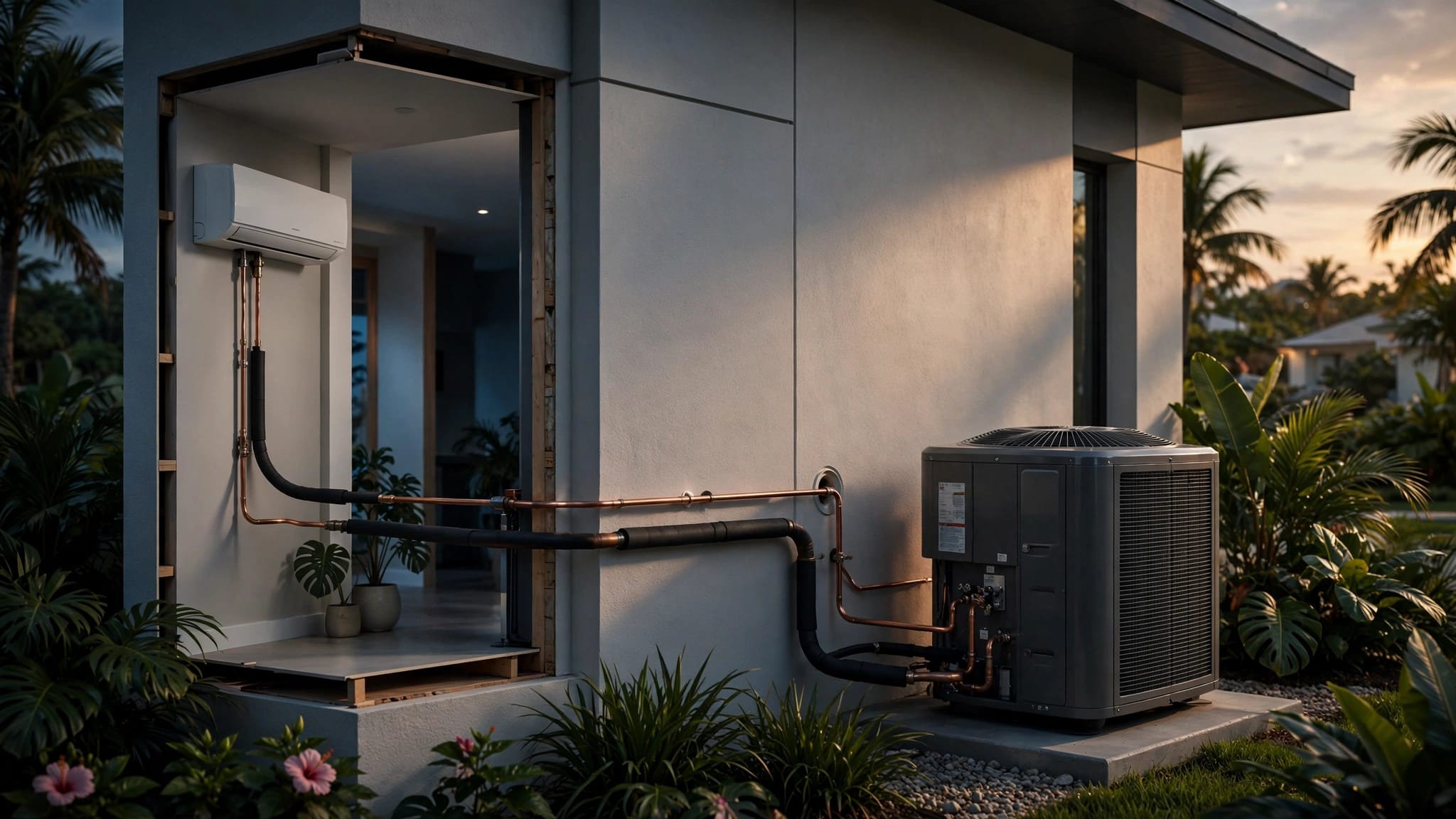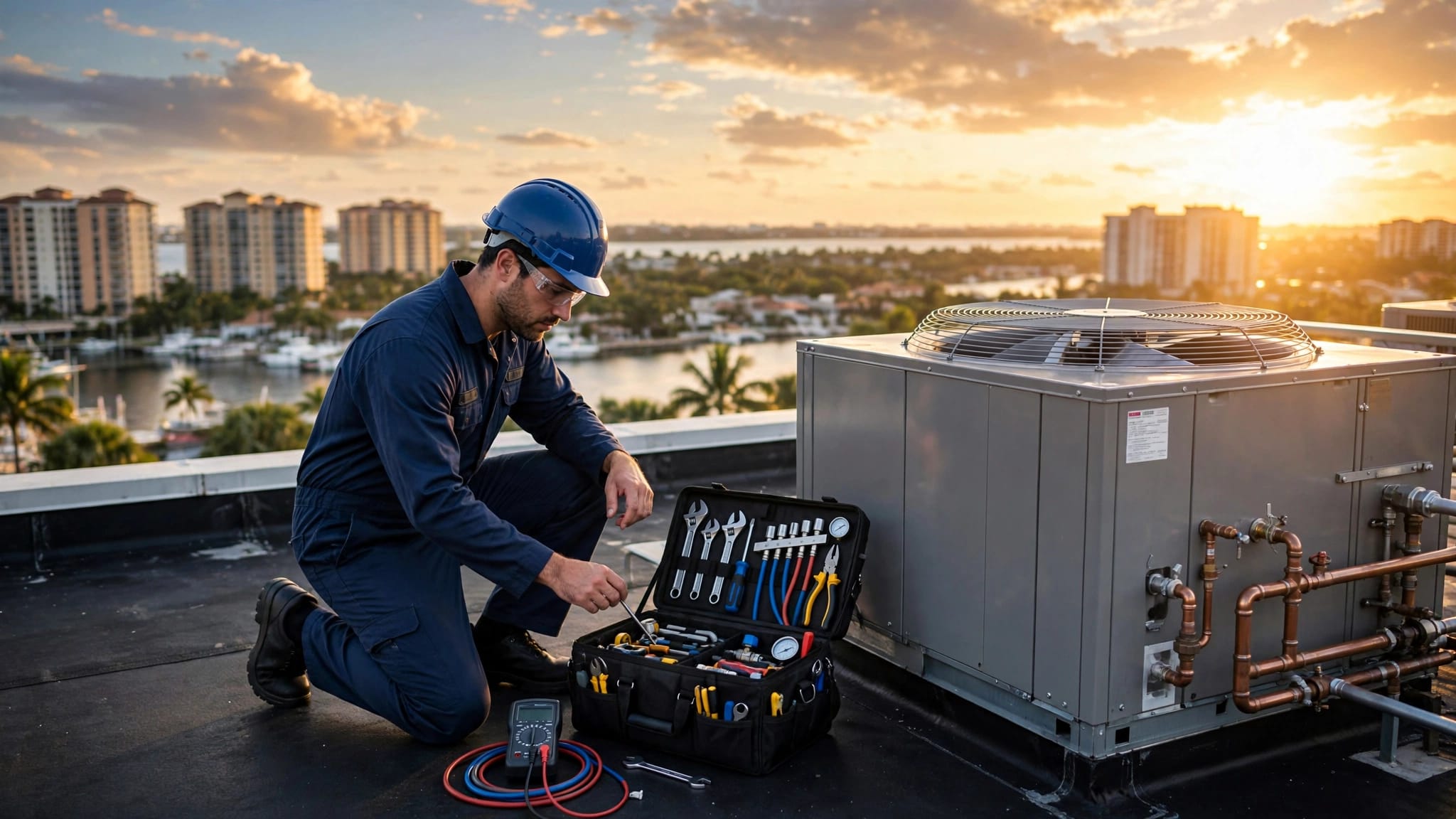
Salt air can shorten the life of an outdoor air conditioner, especially in coastal areas such as Cape Coral. An AC condenser coil coating may offer added protection, but its value depends on the product, the equipment, and how it is applied.
A coating is not a replacement for cleaning or inspection. Salt residue, humidity, dirt, and blocked airflow can still damage a condenser, even when its coil has a protective layer. Before approving any application, ask the equipment manufacturer or a qualified HVAC technician whether it fits your specific system.
What salt air does to an AC condenser coil
The outdoor condenser releases heat from your home. Its coil contains thin metal fins and tubing that must stay clean and open for air to pass through. Salt particles from coastal air can settle on those surfaces, while humidity helps the residue stick.
Cape Coral systems often run for 8 to 10 months each year. That long operating season gives salt, dust, pollen, and moisture more time to collect on the equipment.
Corrosion starts with residue
White powder on the fins can indicate salt residue. Orange spots may point to rust. Pitted metal deserves closer attention because corrosion can weaken the coil and eventually contribute to refrigerant leaks.
Homes near open water or exposed outdoor areas may see heavier salt exposure than properties farther inland. Storms can also push salt spray, dirt, palm fragments, and other debris into the condenser.
For practical steps to protect your AC from Cape Coral salt air, keep the surrounding area open, remove debris promptly, and check the coil regularly.
Dirt makes the problem worse
Salt residue often mixes with dirt and organic debris. The buildup can restrict heat release, so the condenser works harder to cool the home. Grass clippings, leaves, mulch, and overgrown shrubs can also block airflow around the cabinet.
Keep plants and stored items away from the unit according to the manufacturer's clearance requirements. After yard work or a storm, remove palm fronds and loose debris before they collect around the condenser.
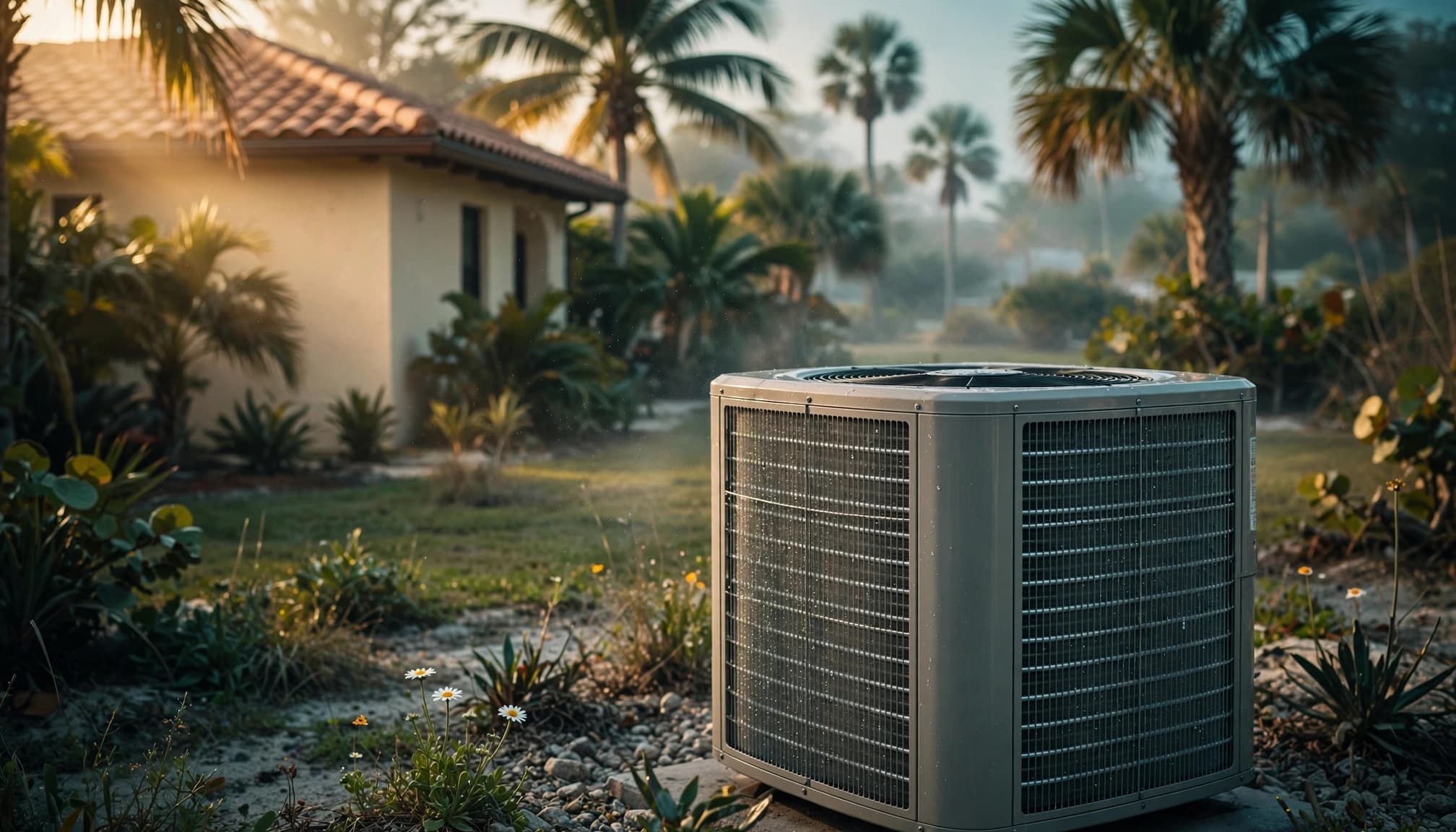
What an AC condenser coil coating is supposed to do
A protective coating creates a thin layer over vulnerable coil surfaces. The goal is to reduce direct contact between the metal and corrosive moisture or salt residue.
That description sounds simple, but coating performance depends on details that vary by system. The coil material, existing corrosion, coating chemistry, application quality, and manufacturer requirements all matter.
Factory-applied protection is different
Some air conditioners leave the factory with a protective treatment designed for the coil and cabinet materials. The equipment manufacturer selects that treatment as part of the system's design and testing.
Factory-applied protection may also be covered by specific installation instructions or warranty terms. A homeowner should check the model documentation before adding another product over the original finish.
A factory treatment does not make the condenser maintenance-free. The coil still needs appropriate cleaning, airflow, and corrosion checks.
Aftermarket coating requires more caution
An aftermarket application takes place after the equipment is installed. Products and application methods vary, so a coating that works on one system may be unsuitable for another.
A poor application can cover coil surfaces unevenly, trap dirt, or interfere with heat transfer. Overspray may also reach electrical parts, fan components, cabinet openings, or other areas that should remain clear.
Improper coating can reduce cooling performance rather than improve it. Ask the technician to identify the product, explain where it will go, describe preparation steps, and confirm whether the manufacturer allows it.
Factory-applied and aftermarket coatings are not interchangeable
Homeowners often hear that a coastal-rated air conditioner has coated coils and assume any added spray offers the same protection. That assumption can lead to unnecessary expense or equipment problems.
Factory protection follows the equipment design
A factory-applied coating is selected for a particular coil construction and production process. The manufacturer can account for fin spacing, tubing, airflow, drainage, and other design factors.
If you are replacing an older system, ask whether the proposed model includes factory corrosion protection. Also ask which parts receive treatment, because protection on the coil may not cover fasteners, electrical connections, the cabinet, or refrigerant lines.
Aftermarket products need system-specific approval
An aftermarket product should be considered only after a technician inspects the coil. Heavy corrosion, bent fins, oil residue, or an existing refrigerant leak may make coating inappropriate.
The technician should also protect electrical sections and confirm that the application will not close the spaces needed for airflow or drainage. A product applied without those precautions can create a new service problem.
Do not assume a shiny surface proves the coating is working. The real questions are whether the product is approved for the equipment and whether the application preserves normal condenser performance.
Does AC condenser coil coating help against salt air?
The careful answer is possibly, but not automatically . A suitable, properly applied coating may provide an additional barrier in some coastal settings. However, the available information does not support a universal promise that coating prevents corrosion, extends equipment life, or improves efficiency.
Consider coating as one layer of protection
Coating may make sense when a manufacturer supports it, a qualified technician recommends it, and the coil remains in good enough condition to receive the application. It may be more relevant for a home with persistent salt exposure than for a property in a less corrosive environment.
Still, the surrounding conditions matter. Sprinkler water, standing moisture, blocked clearance, storm debris, and poor drainage can continue damaging the unit.
The strongest protection plan combines appropriate equipment, clear airflow, regular rinsing, professional cleaning, and corrosion inspection. Coating can only address part of that plan.
Ask these questions before approving the work
Before paying for an aftermarket application, ask:
- Is the product approved for this exact condenser model?
- Could it affect the equipment warranty?
- What surfaces will receive the coating?
- How will the technician protect electrical components?
- How will the application preserve airflow and heat transfer?
- Does the coil already show corrosion or damage that coating cannot correct?
- What cleaning and inspection schedule should follow the application?
A clear answer is more useful than a broad promise about longer equipment life.
Coastal maintenance matters more than coating alone
Salt-air maintenance should continue whether the condenser has a coating or not. A clean, accessible unit is easier to inspect and less likely to suffer from blocked airflow.
Rinse visible buildup safely
When the outdoor coil looks dirty, turn off the thermostat and shut off power at the outdoor disconnect or the appropriate breaker. Wait several minutes before working near the cabinet.
Use a regular garden hose with low pressure. Rinse gently from the top down, and keep water away from electrical panels. Never use a pressure washer because high pressure can bend delicate fins or force debris deeper into the coil.
Local maintenance guidance recommends checking coastal equipment frequently and rinsing during humid periods when salt buildup appears. Stop if the coil is packed with grime, badly bent, or heavily corroded. Those conditions call for professional cleaning.
Keep airflow and drainage open
Leave the top discharge area unobstructed. Trim plants before they touch the cabinet, remove leaves and grass clippings, and keep mulch from building against the base.
The condenser should sit on a stable, level pad. Standing water, soil erosion, or a shifted cabinet can increase corrosion and make service more difficult.
Inside the home, check the air filter monthly during humid weather. A clogged filter restricts airflow and can contribute to coil icing, longer run times, and moisture problems.
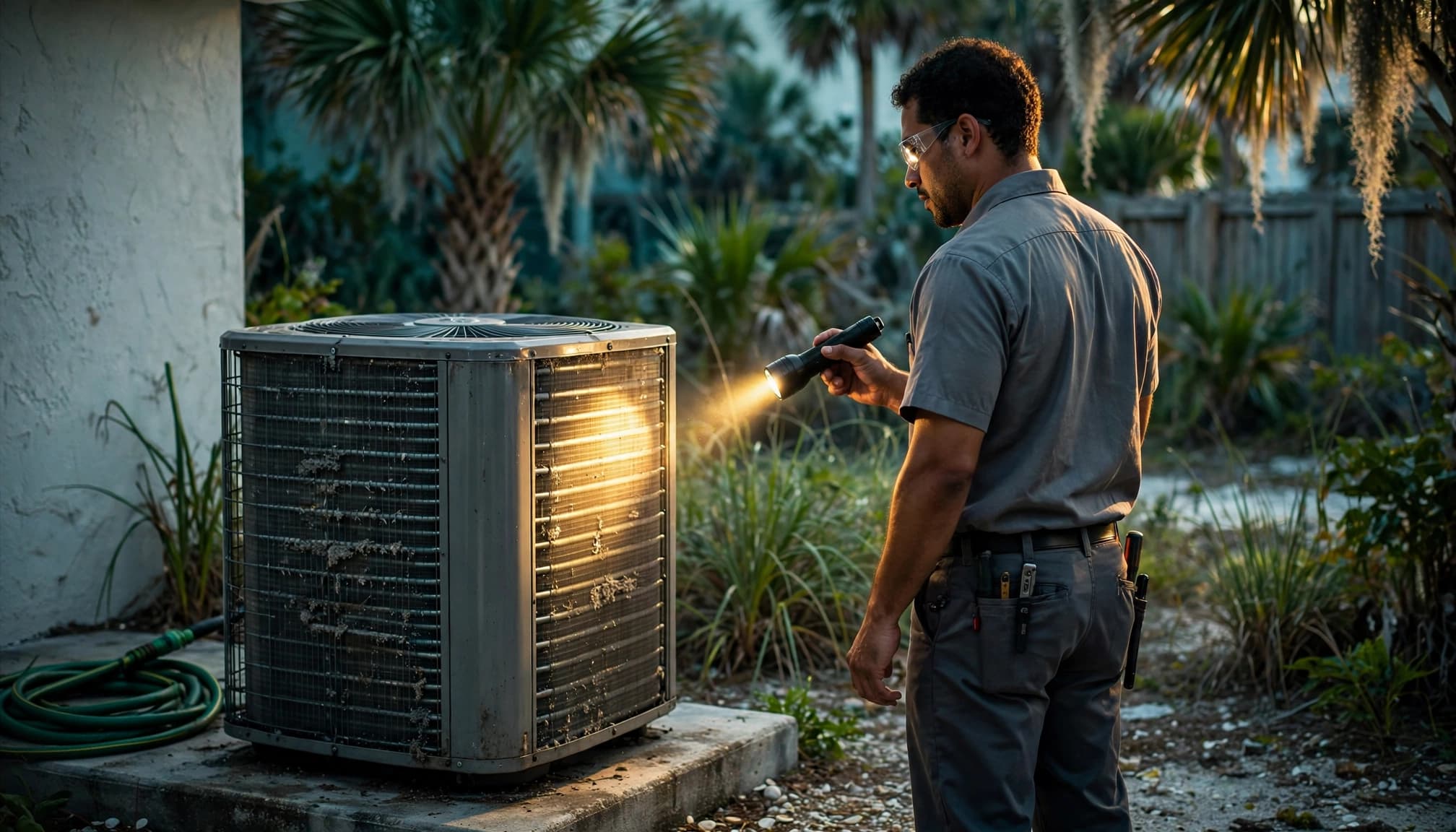
When to schedule a professional inspection
A coating cannot repair a leaking, deeply pitted, or severely damaged coil. Professional inspection is also important because corrosion may develop behind panels or around connections that are difficult to see from outside.
Watch for warning signs
Call for service if you notice:
- White powder or spreading orange rust on the coil
- Refrigerant leaks or repeated low-refrigerant symptoms
- Weak cooling or longer-than-usual cycles
- Grinding, buzzing, or unusual condenser noise
- Bent fins, damaged panels, or loose connections
- A tilted cabinet, unstable pad, or standing water
- A breaker that trips repeatedly
Salt air can affect electrical connections, screws, tubing, and other outdoor components, not only the coil.
Include the coil in routine tune-ups
A professional tune-up can include condenser-coil cleaning, electrical checks, refrigerant testing, drain-line service, filter inspection, and airflow evaluation. A typical visit described for Cape Coral homes may take 1 to 2 hours, depending on access and system condition.
Use a coastal AC maintenance checklist to track visible warning signs between service visits. If corrosion is already advanced, ask whether coil repair, coil replacement, or full system replacement makes more sense.
Key Takeaways
- Salt air and high humidity can accelerate corrosion on condenser coils and other outdoor parts.
- An AC condenser coil coating may help in some cases, but performance depends on the product and application.
- Factory-applied protection is different from an aftermarket coating.
- Improper application can restrict airflow or reduce heat transfer.
- Coating does not replace rinsing, professional cleaning, or corrosion inspections.
- Turn off power before cleaning near the outdoor unit, and never use a pressure washer.
- Ask the manufacturer or a qualified HVAC technician for model-specific guidance.
Frequently Asked Questions
Is an AC condenser coil coating necessary near the coast?
No single answer applies to every home. Exposure varies with distance from open water, wind, humidity, landscaping, and the condition of the equipment. Ask a qualified technician to inspect the coil and confirm whether the manufacturer supports a coating.
Can I spray the coating on myself?
DIY application carries risks. The product could cover the wrong surfaces, damage electrical components, restrict airflow, or conflict with the equipment warranty. A qualified technician can determine whether the coil is suitable and apply any approved product without blocking key components.
Does coating replace regular condenser cleaning?
No. Salt, dust, pollen, and yard debris can still collect on a coated coil. The condenser needs appropriate rinsing and professional cleaning when buildup becomes heavy. Corrosion on the cabinet, fasteners, electrical connections, and refrigerant lines also requires inspection.
How often should a coastal AC condenser be inspected?
Check the visible unit monthly and after storms, yard work, or heavy debris. Schedule professional maintenance at the interval recommended for your equipment and local conditions. Homes with heavy salt exposure may need closer monitoring than properties farther inland.
Conclusion
An AC condenser coil coating can be a reasonable option for some salt-air environments, but it is not a guaranteed shield. The right decision depends on the equipment manufacturer, the coil's current condition, and whether the application preserves airflow and heat transfer.
Regular rinsing, clear space around the condenser, filter changes, and professional corrosion checks remain essential. If you need help evaluating a coating or existing salt damage, Contact Us to schedule service with Back Bay Heating & Cooling.