A cool bathroom can still stay damp long after you shower. In Southwest Florida, bathroom exhaust fans help remove that moisture, but only if they send it outside.
Your air conditioner can dry the air as it cools, yet it can't reliably catch a concentrated burst of shower steam before it reaches nearby surfaces. And a fan that empties into the attic simply moves the moisture to a harder-to-see place. The first step is to understand where that damp air goes.
Why Florida bathrooms hold on to moisture
Showers add water vapor quickly. Once it lands on walls, grout, towels, and ceilings, a bathroom can remain damp even when the mirror looks clear.
Humid outdoor air slows drying
Cape Coral and nearby communities spend much of the year with warm, humid air outside. Opening a bathroom window after a shower may bring in more moisture, especially on a rainy afternoon.
That makes a dedicated exhaust path useful. A working fan pulls damp air out near its source instead of relying on the rest of the house to absorb it. Keeping the bathroom door slightly open or allowing air to enter beneath it can also help the fan move air.
A cool thermostat reading isn't a moisture reading
Central AC removes some water from indoor air while it cools. However, the thermostat responds to temperature, and the cooling cycle may end while the bathroom remains humid.
A small hygrometer can show whether dampness extends beyond the bathroom. Back Bay's guidance on the right indoor humidity level for Cape Coral homes notes that readings that stay above 60% can create conditions for mold and mildew. A properly vented bathroom fan addresses shower moisture; persistent whole-home humidity needs a broader look.
What happens when bathroom exhaust fans vent indoors
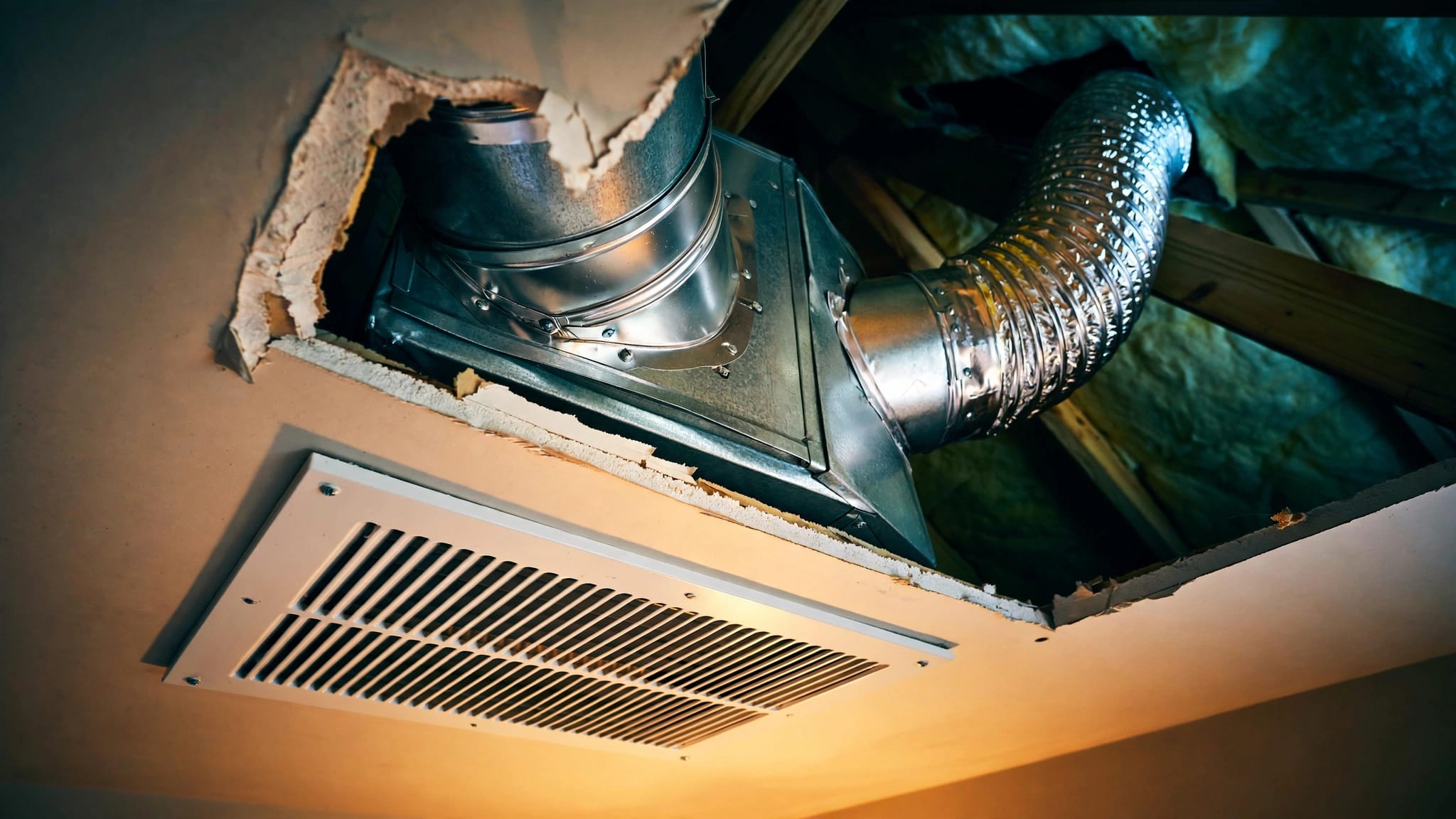
An exhaust fan must have a complete path to the outdoors. If its duct stops in the attic, crawl space, or another enclosed area, the fan moves humid air without removing it from the building.
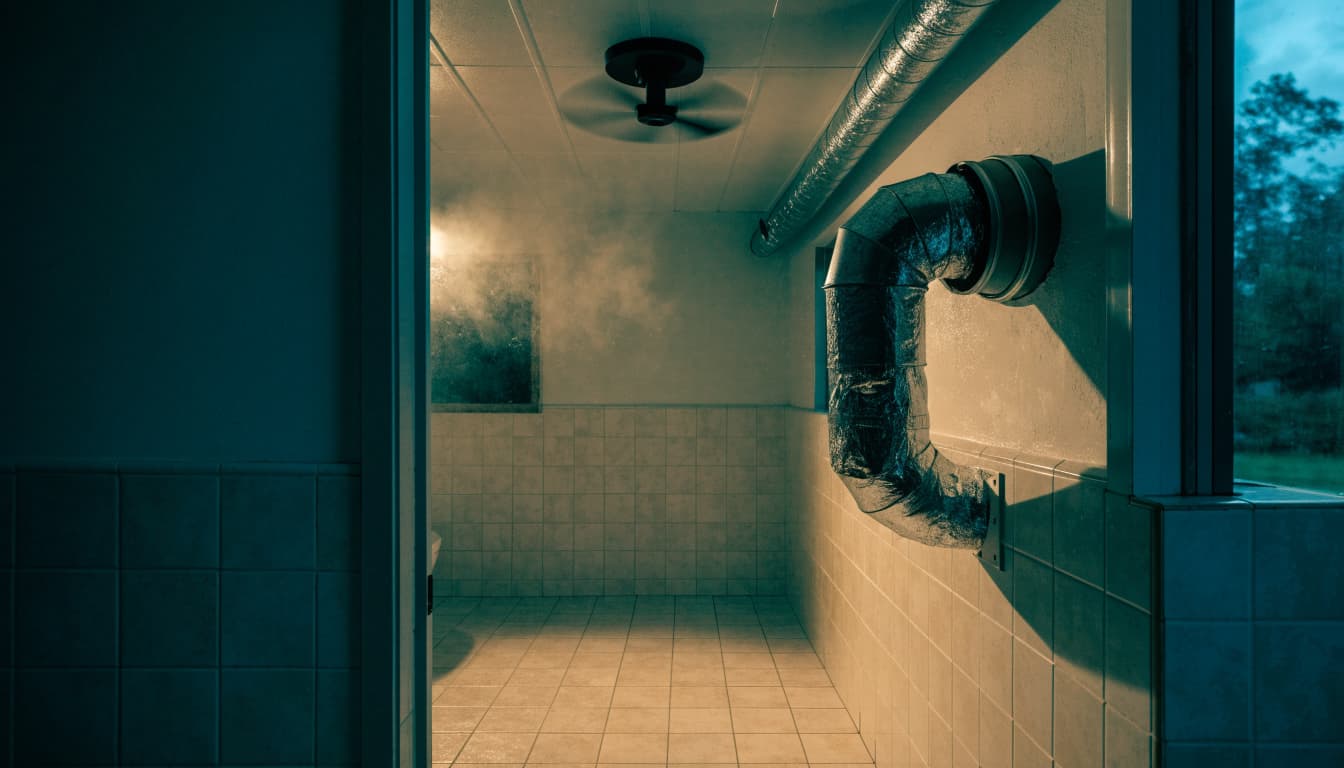
An attic is not an exhaust outlet
Warm, damp air released into an attic can contact cooler roof decking or other surfaces. Moisture may collect there, particularly when the space has limited airflow. Over time, repeated wetting can affect insulation and wood.
The problem is easy to miss from the bathroom. You may hear the fan and see the mirror clear, while each shower adds moisture above the ceiling. An attic vent nearby doesn't make an open duct an outdoor termination. The exhaust duct needs to connect to an appropriate exterior outlet.
Moving moisture behind a wall doesn't solve it
A duct that ends inside a wall cavity or above a suspended ceiling creates a similar problem. Hidden surfaces are harder to inspect and dry than bathroom tile.
If you notice recurring stains, a musty smell, or visible growth, finding the moisture source matters more than covering the spot. Professional mold testing in Cape Coral can include an assessment of ventilation, humidity, and HVAC conditions. Testing can guide the next step, but the exhaust route or any leak still needs correction.
What a proper outdoor exhaust path needs
A complete installation connects the fan to a duct that ends at an exterior vent. The route matters as much as the fan you can see from below.
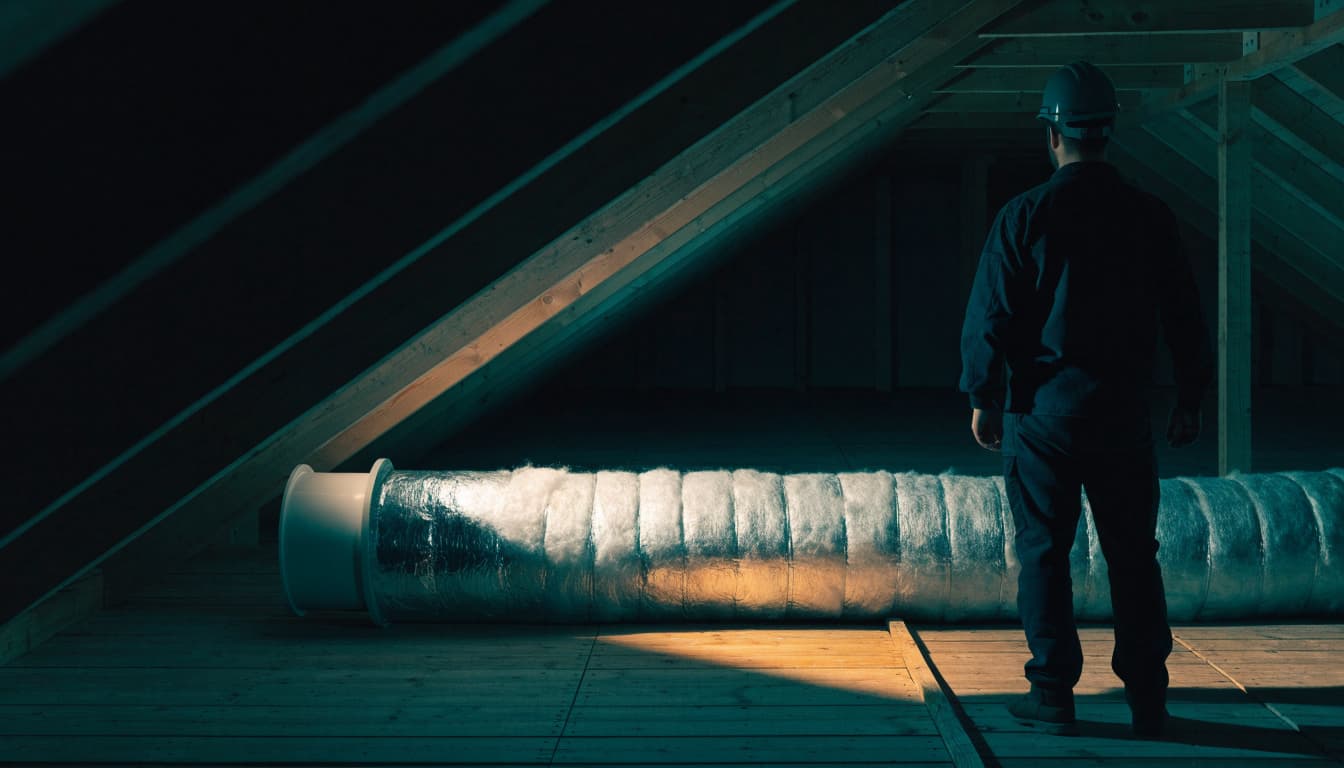
A connected duct with manageable airflow
Loose connections let humid air escape before it reaches the outlet. Long, sharply bent, or crushed runs can also reduce airflow. That's why a fan's rated performance doesn't tell you how well it works after installation.
Where a duct passes through a hot attic, appropriate insulation and careful routing help limit condensation on or inside it. An installer should follow the fan manufacturer's instructions and applicable local requirements rather than guessing at duct size or using a convenient open attic space.
Bathroom exhaust also needs its own suitable route. Connecting it to an AC return or a clothes dryer duct creates a different problem instead of providing proper ventilation.
An exterior vent that can do its job
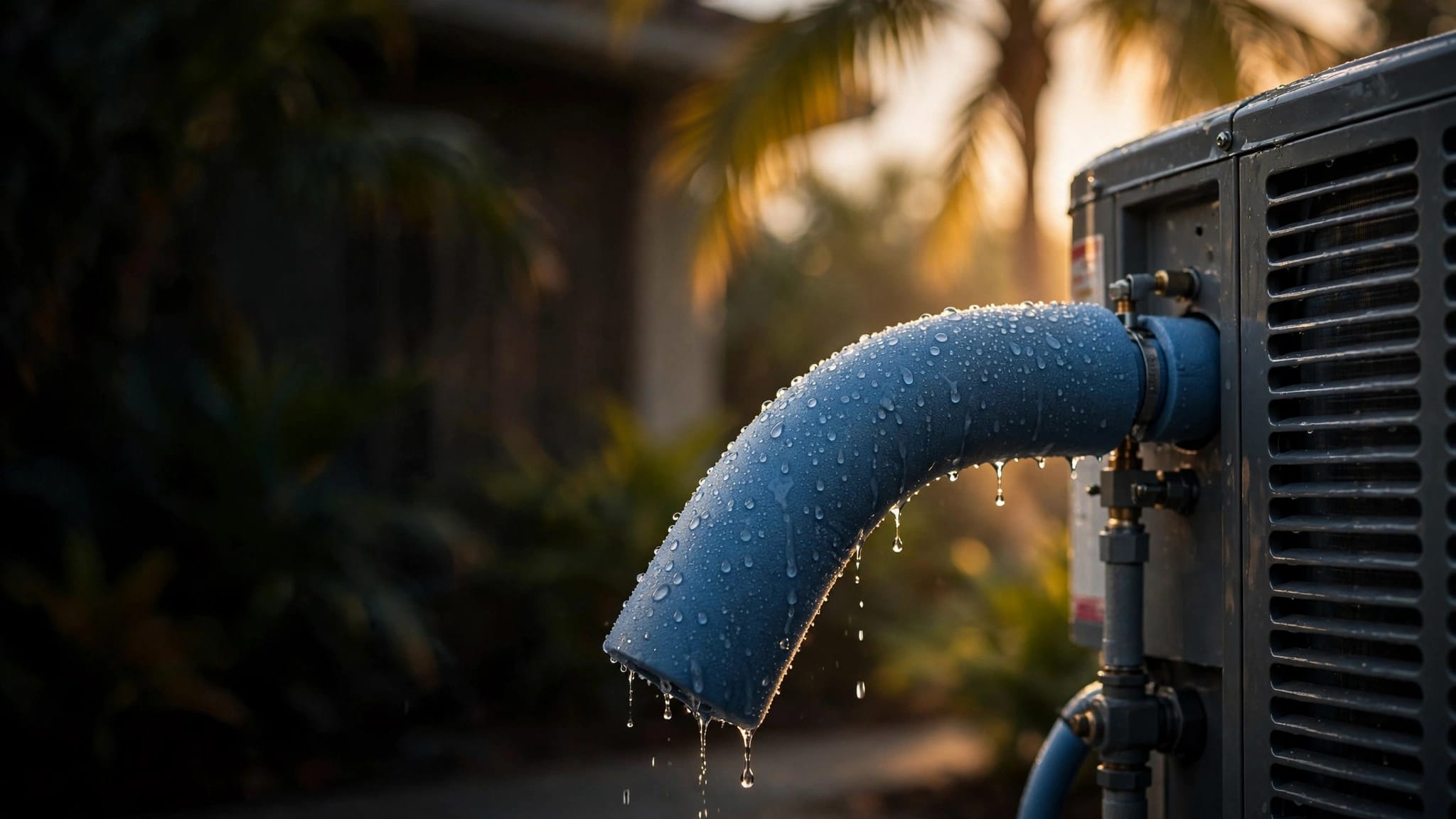
The duct should end at a suitable roof or exterior-wall cap, with a damper and weather protection appropriate for the location. The outlet must remain clear enough for air to leave and positioned so exhaust isn't readily drawn back into the home.
A vent that exits beneath an enclosed soffit deserves closer inspection: it may release moisture near an opening into the attic. Roof and wall penetrations also need sound flashing or sealing to keep rain out. Ask the installer to show you where the duct ends, not only where it passes through the attic.
Choose a fan for the bathroom and its duct route
A replacement fan should suit both the room and the route to the outside. Buying a stronger unit without checking the existing duct can leave you with noise and disappointing airflow.
Match capacity to the space
Fan airflow is rated in cubic feet per minute, or CFM. The bathroom's size, shower layout, and duct configuration all affect the choice. A professional can assess whether the existing fan and duct can move enough air through the installed route.
Noise matters, too. Manufacturers rate fan sound in sones, and a quieter model may be easier to live with during a shower and afterward. ENERGY STAR certified models offer an efficiency-focused option, but certification doesn't correct a disconnected or restricted duct.
Pick controls you'll use consistently
A separate wall switch makes it easy to run the fan without leaving the bathroom light on. A timer can help it continue after you leave. Some fans also have humidity-sensing controls.
Those features still need sensible settings and a working exhaust route. In a humid Florida home, a sensor may respond to background moisture as well as shower steam. If it runs constantly or shuts off before the room dries, have the setting and airflow checked rather than assuming the control has solved the problem.
Run bathroom ventilation alongside your AC
Source control is the fan's main job: remove shower moisture before it spreads. The AC handles the broader cooling load and some of the moisture already circulating through your home.
Use the fan while showering and afterward
Turn the fan on when the shower starts, then leave it running for a short period after you finish. Give wet surfaces and towels room to dry, and wipe up standing water where practical.
Avoid using an open window as your default substitute. On a muggy day, outside air can add moisture faster than the bathroom dries. Also, don't leave a fan running indefinitely to compensate for poor airflow. If steam lingers despite normal use, check the exhaust system.
Look beyond the fan if the whole house feels sticky
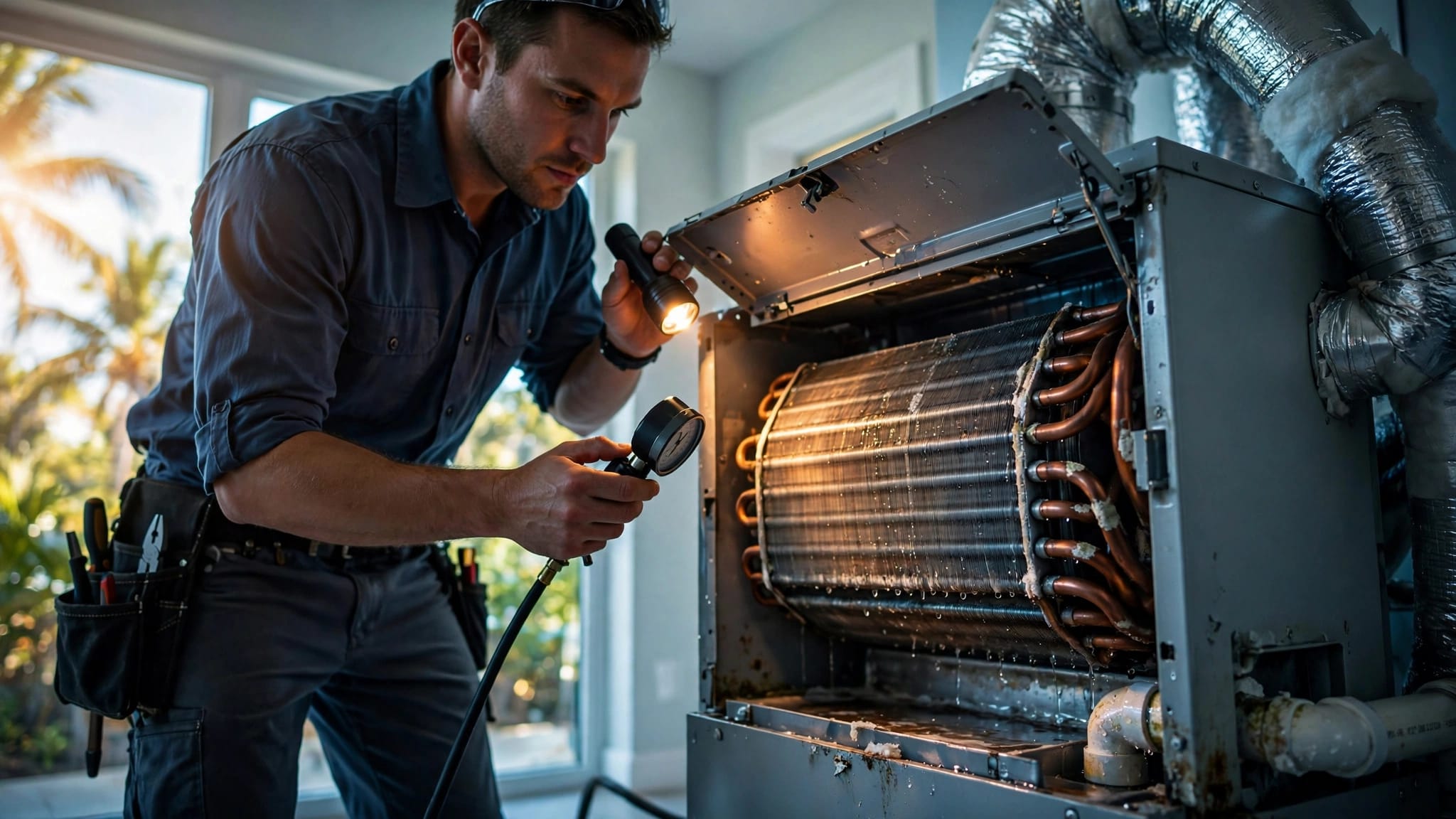
If several rooms feel damp while the AC runs, the bathroom may be only one part of the moisture load. A dirty coil, restricted airflow, duct leakage, drainage trouble, or short cooling cycles can interfere with humidity control.
For example, an oversized AC may reach the thermostat setting and shut off before it removes enough moisture. Back Bay explains how an oversized AC affects humidity. Track readings in more than one room, because a hygrometer tells you where humidity is high, not what caused it. A targeted indoor air quality assessment can help sort out persistent moisture concerns.
Check the fan before dampness becomes a pattern
A fan can make noise without moving much air. A few observations can help you decide whether it needs cleaning, repair, or a closer look at the duct.
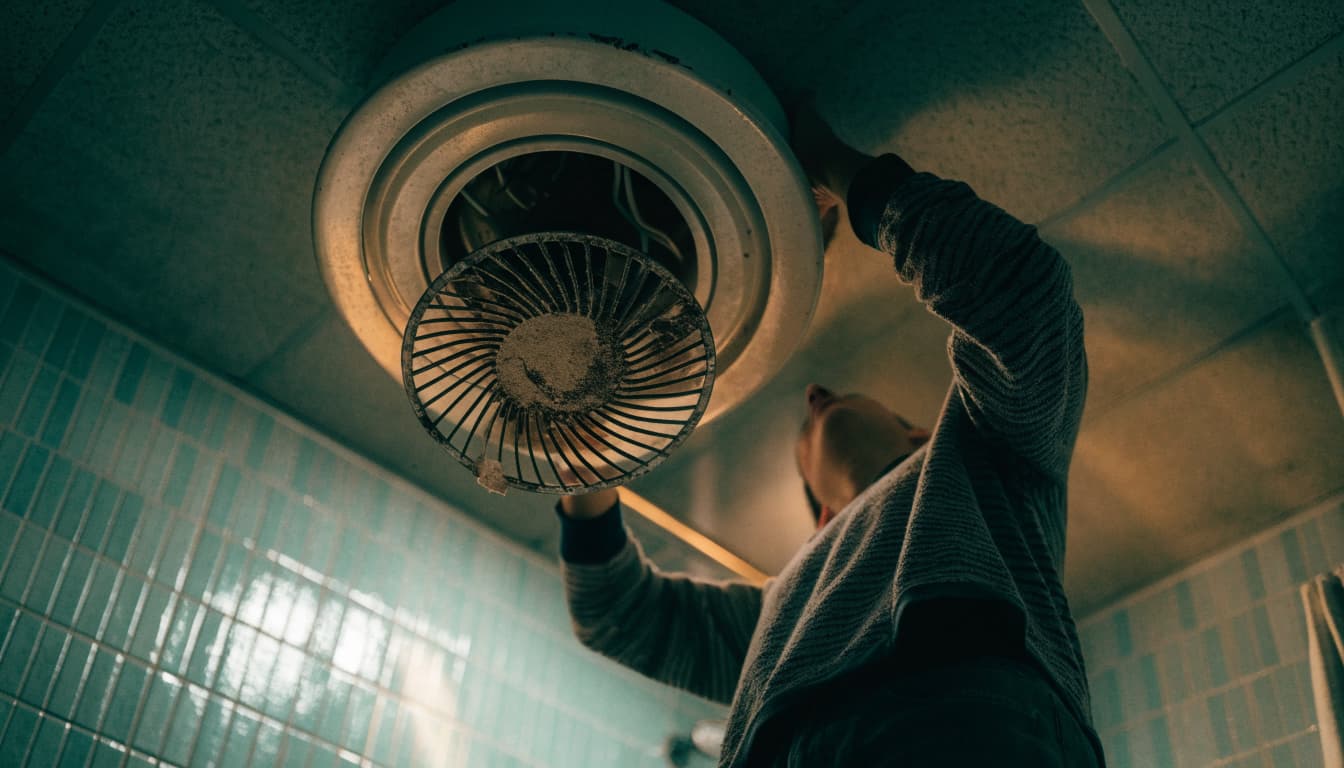
Watch what happens after a shower
Steam that lingers, recurring ceiling spots, peeling paint, and towels that stay damp can point to weak ventilation. A musty odor that returns after cleaning also deserves attention. These signs don't prove the fan is the only cause; plumbing leaks and other moisture sources can produce similar symptoms.
With the fan on, you can hold a light piece of tissue near the grille to see whether it draws air inward. This simple check can't measure airflow or confirm that the duct reaches outside. It can, however, reveal a fan that's doing little at the grille.
Clean safely, then verify the route
Dust on the grille can restrict airflow. Turn off the fan and clean removable parts according to the manufacturer's instructions. Don't reach into electrical components or enter an attic you're not equipped to access.
If the fan remains weak or the exterior outlet is hard to identify, arrange an inspection. Ask whether the duct is connected, whether its path is restricted, and where it terminates. For recurring moisture or an urgent HVAC concern, Contact Us to schedule a service call or reach Back Bay Heating & Cooling for 24/7 service.
Key Takeaways
- Run the bathroom fan during showers and briefly afterward, but confirm its duct ends outdoors .
- An attic, wall cavity, or enclosed soffit isn't a proper place to release shower moisture.
- Persistent dampness calls for more than a louder fan. Check the duct route, indoor humidity, and AC performance.
Frequently Asked Questions
Can I vent a bathroom fan into the attic if the attic has vents?
No. Attic vents don't provide the same controlled path as a duct connected to an exterior outlet. Shower air released into the attic can reach insulation and roof materials before it leaves. Have the duct connected to a suitable outdoor termination.
Will an exhaust fan lower humidity throughout my house?
A bathroom fan removes moisture near the shower when it works properly. It isn't designed to manage humidity throughout the house. If multiple rooms stay clammy, check indoor humidity and have the cooling system and other moisture sources evaluated.
How can I tell where my fan vents?
Start by looking for a roof or exterior-wall cap associated with the bathroom, but don't assume a visible cap is connected to that fan. If you can't trace the duct safely, an HVAC professional can check the route and confirm its termination.
Should I replace a noisy fan?
A noisy fan is worth checking, especially if steam also lingers. Dust, wear, or duct restrictions may affect its performance. Before choosing a replacement, have the duct route reviewed so the new fan can move air outdoors as intended.
Keep shower moisture out of the house
The clearest bathroom mirror won't tell you where the moisture went. In a Florida home, outdoor termination is what makes a bathroom fan useful for removing shower air rather than hiding it above the ceiling.
Keep the grille clean, run the fan when the room gets wet, and verify the duct's destination. If dampness persists, check the wider humidity and cooling picture instead of relying on the fan alone.