Choosing between R-454B vs R-32 involves more than picking a refrigerant name from a quote. The equipment design, system size, ductwork, humidity control, installation quality, and local service support will affect how comfortable your Florida home feels.
Both refrigerants are used in newer air-conditioning equipment, and neither is the universal winner. The better choice is the complete system that fits your home, your contractor, and the equipment available in your area.
R-454B vs R-32 at a glance
R-454B and R-32 are lower-global-warming-potential alternatives to R-410A in new residential air-conditioning equipment. They have different chemical properties, but both require equipment designed and approved for that refrigerant.
Composition, GWP, and safety classification
R-32 is a single-component refrigerant with a reported global warming potential (GWP) of 675. R-454B is a blend containing approximately 68.9% R-32 and 31.1% R-1234yf, with a reported GWP of 466.
Both refrigerants have an ASHRAE A2L classification . In plain language, that means they have lower flammability under certain conditions. New systems include controls, installation requirements, and safety procedures designed around that classification.
| Factor | R-32 | R-454B |
|---|---|---|
| Refrigerant type | Single component | Blend |
| Reported GWP | 675 | 466 |
| Safety classification | A2L | A2L |
| Equipment compatibility | R-32 systems only | R-454B systems only |
| Can it replace the other? | No | No |
The refrigerants aren't interchangeable. A technician cannot use R-32 in an R-454B system or treat the two systems as equivalent.
What the EPA transition means
The EPA's AIM Act transition sets a GWP limit of 700 for new residential and light-commercial air-conditioning and heat-pump equipment. The manufacture and import cutoff for covered equipment began January 1, 2025.
That change affects new equipment, not every older air conditioner already operating in Florida. A working R-410A system can generally continue to receive appropriate maintenance and repairs. However, homeowners replacing an older unit will usually receive quotes for equipment using R-32 or R-454B.
Rules covering leftover equipment inventory and installation deadlines have changed and can be interpreted differently. If a contractor proposes an older R-410A system, ask when it was manufactured, where it came from, and whether it can legally be installed in your jurisdiction.
Where R-32 and R-454B appear in current equipment
The refrigerant choice often depends on the manufacturer's product line. Availability can also vary by distributor and location, so a brand listed online may not be available for your replacement project.
R-454B in ducted systems
Carrier and Trane are among the brands associated with R-454B equipment in 2026. This can make R-454B a practical option for homeowners replacing a conventional central split system, provided the contractor offers a certified equipment match.
The key question is not whether a system uses R-454B. Ask whether the outdoor unit, indoor coil, air handler, metering device, controls, and installation procedures are approved together.
R-32 in split and ductless equipment
Daikin, Mitsubishi, LG, and Fujitsu are among the manufacturers associated with R-32 products. R-32 may appear in ductless mini-splits, multi-zone systems, and some central air-conditioning product lines.
That doesn't make R-32 automatically better for every home. A ductless system may solve a zoning or ductwork problem, while a central system may be more practical when the existing ducts are sound. Your home's layout matters as much as the refrigerant.
Florida heat and humidity matter more than the label
Florida air conditioners handle long runtimes, high outdoor temperatures, and heavy moisture loads. A properly selected R-32 system can perform poorly if it's oversized or installed with restricted airflow. The same is true for R-454B.
Sizing affects comfort and moisture removal
The old unit's tonnage and the home's square footage provide rough starting points. They don't prove that the same size is right for a replacement.
A contractor should evaluate insulation, windows, orientation, ductwork, occupancy, and sun exposure. The resulting load calculation helps determine how much cooling the home needs. A system that is too large may reach the thermostat setting quickly but shut off before removing enough moisture.
That can leave the house feeling clammy even when the thermostat reads 74 degrees. Review Manual S equipment selection for Florida homes before approving a replacement, especially if the proposed capacity differs from the old unit.
Ducts and controls affect both choices
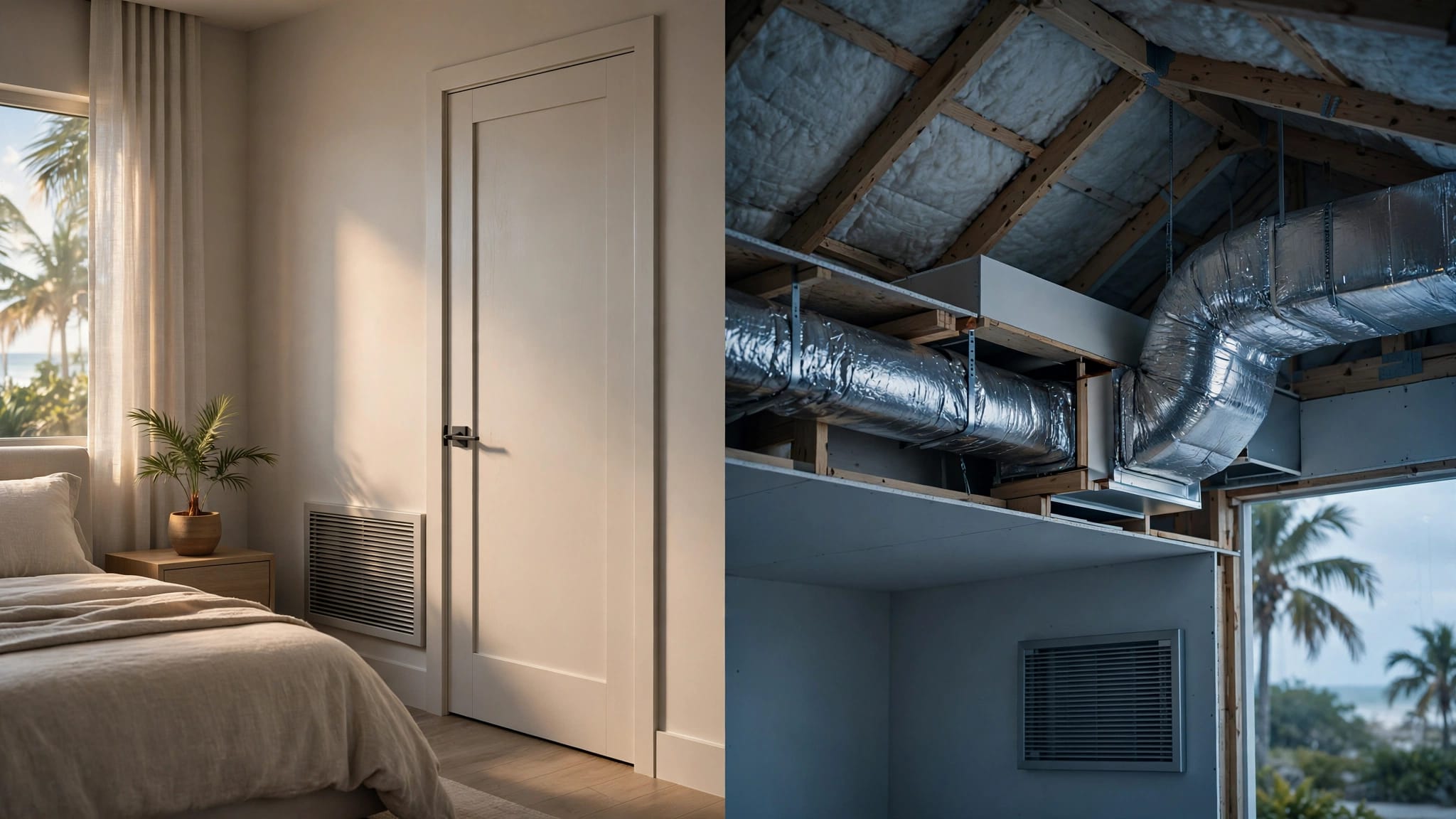
Leaky ducts, poor returns, clogged filters, and weak airflow can undermine either refrigerant option. In Southwest Florida, those problems may show up as uneven rooms, high humidity, long runtimes, or water around the indoor equipment.
A variable-speed blower, compatible thermostat, and correct airflow settings may improve comfort, but only when the rest of the system supports them. If ducts are damaged or undersized, include Cape Coral ductwork repair in the replacement evaluation.
Coastal air and storms change installation priorities
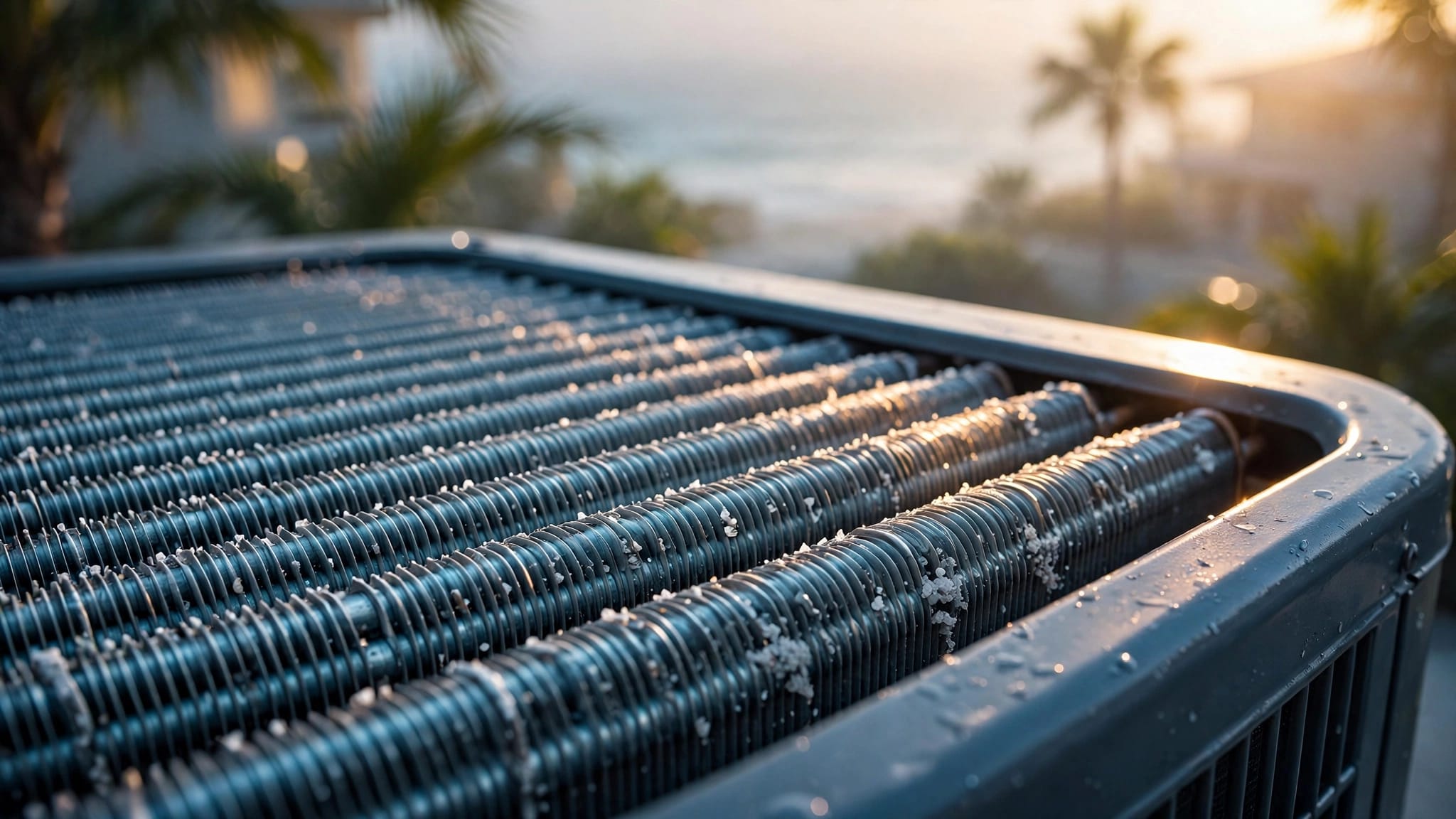
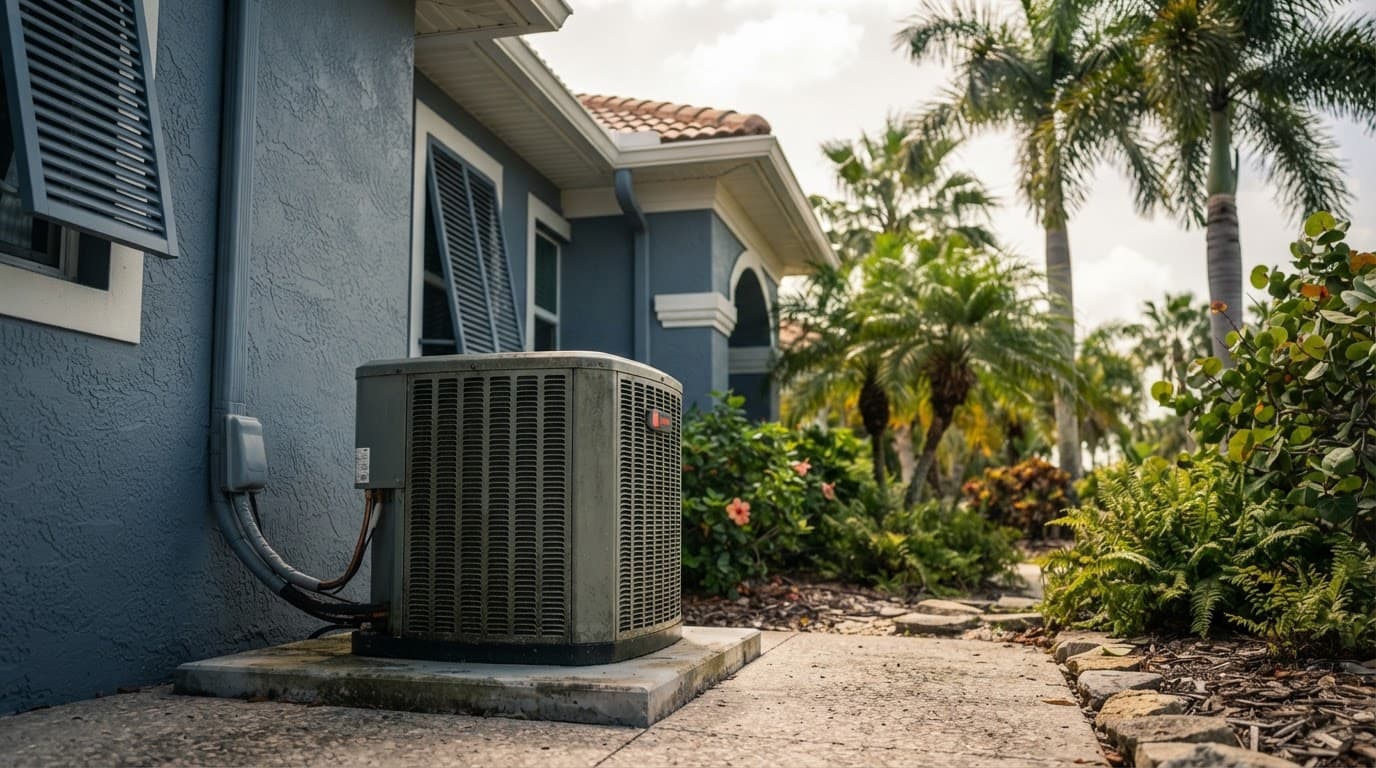
Salt air can accelerate corrosion on outdoor equipment, especially near the coast. Heavy rain can expose drainage problems, while tropical storms create concerns about loose outdoor objects, standing water, and electrical interruptions.
Ask how the proposed condenser will be protected against local conditions. Practical topics include the equipment pad, drainage, service access, corrosion exposure, electrical connections, and any anchoring or storm-related requirements that apply to your property.
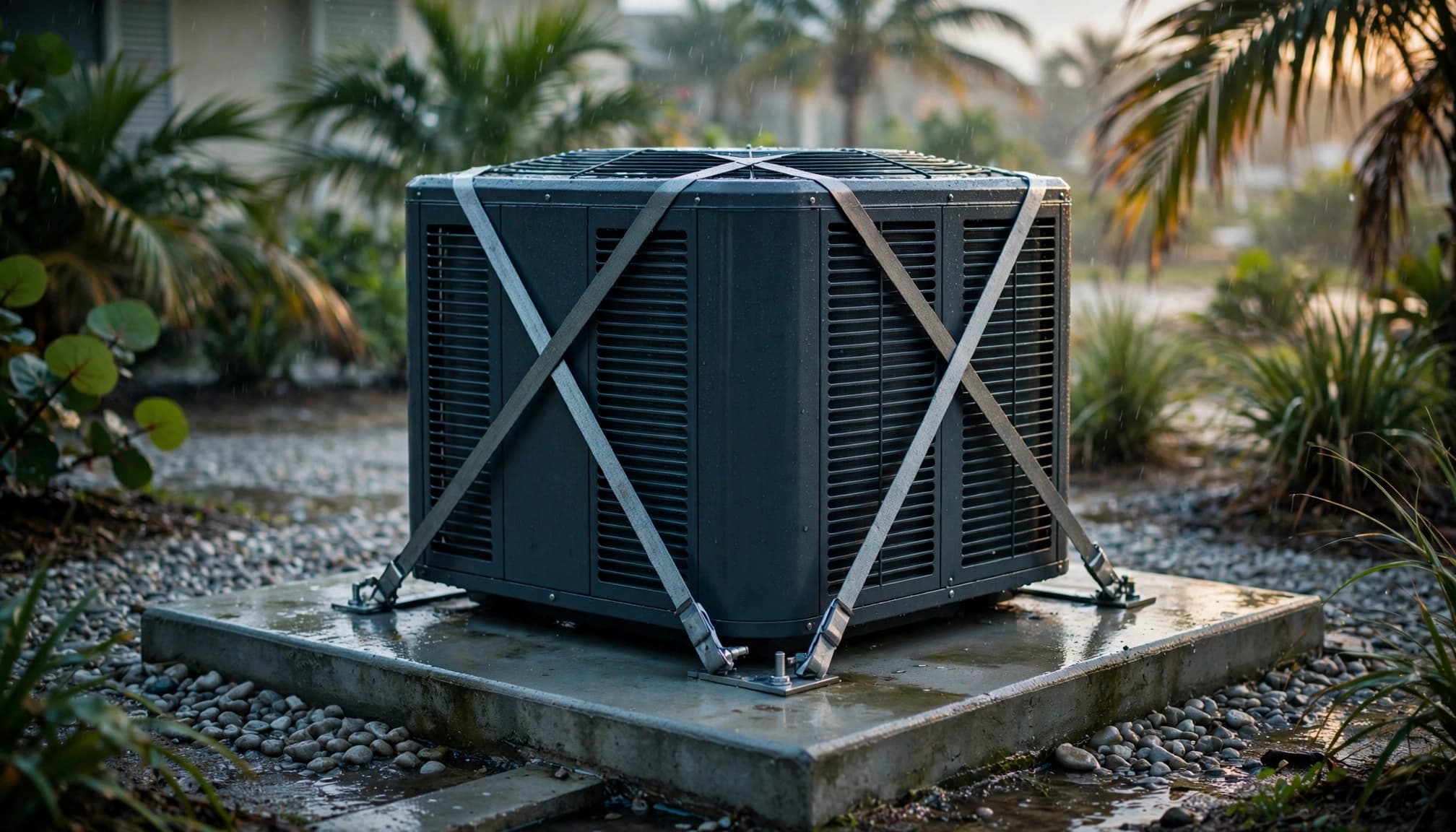
A coastal installation also needs a maintenance plan. Keep vegetation and debris away from the condenser, replace filters on schedule, and inspect visible insulation after severe weather. Follow Florida air conditioner maintenance tips without opening sealed refrigerant circuits or touching electrical components.
Installation and service questions to ask
A refrigerant change affects more than the outdoor cabinet. It can affect the line set, indoor coil, metering device, controls, charging procedure, labeling, and safety practices.
Confirm the equipment match and line-set plan
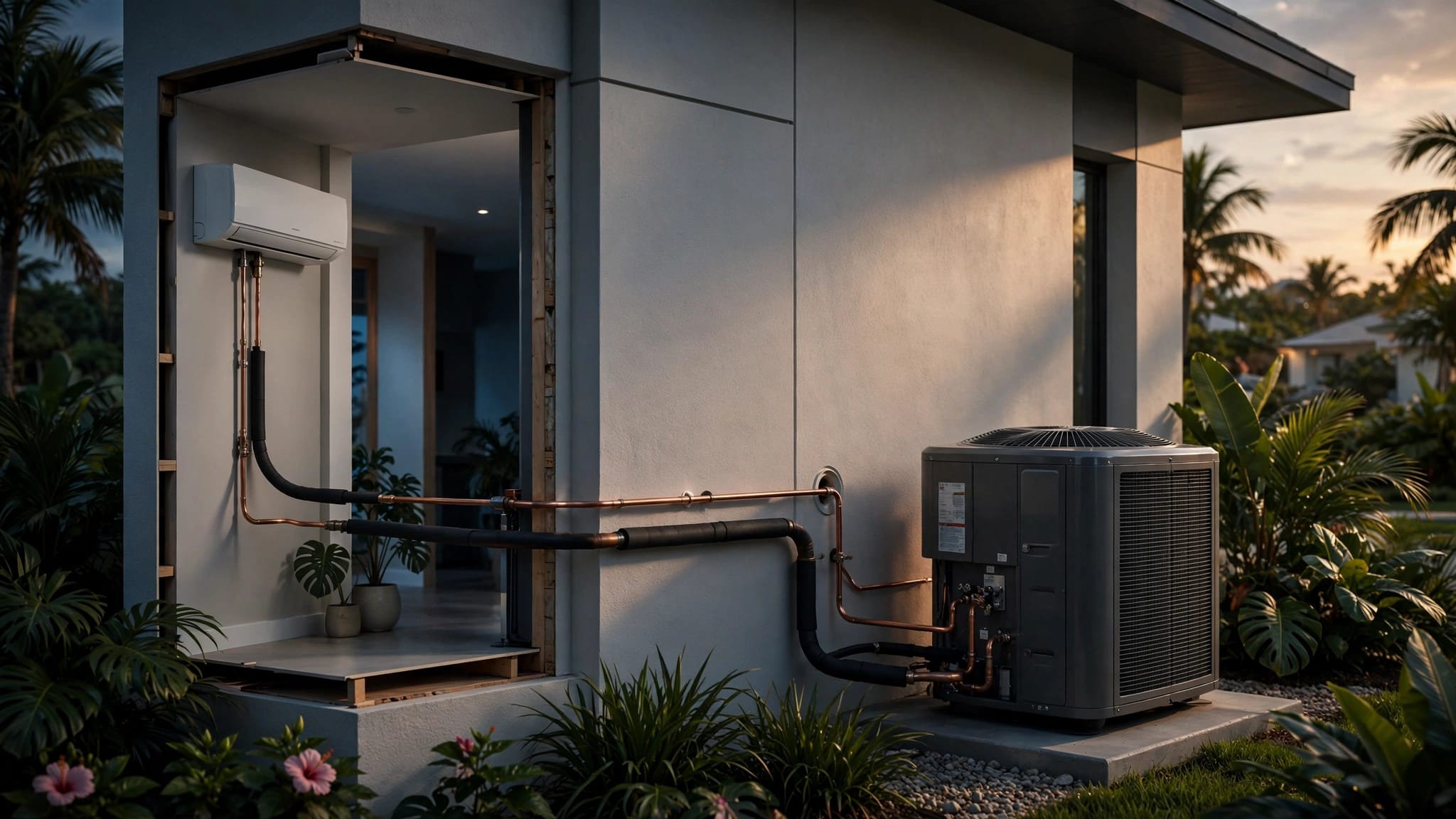
R-454B and R-32 systems need components approved for the specific refrigerant. The refrigerant in your old system doesn't automatically determine whether the existing copper line set can remain.
The manufacturer may require particular tubing sizes, cleanliness standards, pressure testing, evacuation procedures, and brazing methods. An older line set may need replacement if it is contaminated, damaged, incorrectly sized, or incompatible with the new equipment.
Your written estimate should identify the exact model numbers, refrigerant type, indoor and outdoor components, efficiency rating, permit responsibilities, and line-set plan. Air conditioning installation in Cape Coral should include more than a box-and-labor description.
Verify A2L training and local requirements
Both refrigerants require A2L-aware service procedures. EPA 608 certification remains important, but it may not cover every manufacturer-specific or A2L installation requirement. Ask whether the technicians have the training and tools needed for the proposed equipment.
Florida requirements can involve the adopted Florida Building Code, local permits, inspections, equipment documentation, and ASHRAE 15 procedures. Requirements and code editions can change, so your installer should confirm the current rules with the local permitting authority.
A reliable contractor should also explain how the system will be started, tested, and documented. For additional guidance, review these questions to ask an HVAC contractor.
Which refrigerant fits your Florida home?
The right choice depends on the system available, the contractor's experience, the home's design, and your expected service needs.
When R-454B may make sense
R-454B may be a good fit when a reputable contractor offers a properly matched central system, has experience with the equipment, and can support it locally. Its lower reported GWP may also appeal to homeowners who want a current refrigerant option within the federal limit.
Ask about equipment lead time, warranty support, replacement parts, and future service procedures. Those details matter more than choosing a refrigerant based on one specification.
When R-32 may make sense
R-32 may fit a home that needs a particular ductless, multi-zone, or central product line. It can also make sense when a trusted local contractor has strong experience with the available R-32 equipment and can explain its service requirements clearly.
Compare the complete system instead of the refrigerant alone. Look at capacity, SEER2 and EER2 ratings, humidity control, sound, airflow, warranty terms, and the quality of the installation.
Key takeaways for Florida homeowners
- R-32 and R-454B are current lower-GWP options for new air-conditioning equipment.
- R-32 has a reported GWP of 675, while R-454B has a reported GWP of 466.
- Both are A2L refrigerants and require equipment-specific safety procedures.
- Neither refrigerant can be substituted for the other.
- A working R-410A system doesn't need replacement only because regulations changed.
- Correct sizing, airflow, ductwork, controls, and humidity performance matter more than the refrigerant name alone.
- Ask for exact model numbers, a matched-system confirmation, permit details, and the contractor's plan for the line set.
- Verify current rules and equipment availability with a Florida HVAC professional before signing a proposal.
FAQ about R-454B vs R-32
Is R-454B safer than R-32?
Neither should be described as universally safer. Both have an A2L classification and require equipment, procedures, and service practices designed for mildly flammable refrigerants.
Can my existing R-410A air conditioner use R-32 or R-454B?
No. R-32 and R-454B are not drop-in replacements for R-410A. A new refrigerant requires equipment approved for that refrigerant, and the contractor must follow the manufacturer's installation instructions.
Does a new refrigerant mean I need to replace my working AC?
Usually, no. The federal transition affects new equipment manufacturing and installation rules. If your existing system still works reliably, a qualified technician can evaluate whether repair and continued maintenance make sense.
Which one costs less?
There isn't one reliable answer for every Florida home. Equipment availability, system size, line-set work, permits, electrical changes, duct repairs, labor, and local distributor pricing all affect the estimate. Compare complete written proposals rather than refrigerant prices alone.
Conclusion
The practical choice in the R-454B vs R-32 comparison is the system that is correctly sized, properly matched, installed by a trained contractor, and supported locally. Both options can work well in Florida when the equipment and installation fit the home.
Before replacing your AC, focus on humidity control, duct condition, coastal exposure, storm-related installation concerns, warranty support, and service availability. A detailed evaluation gives you a better answer than choosing by refrigerant name alone.