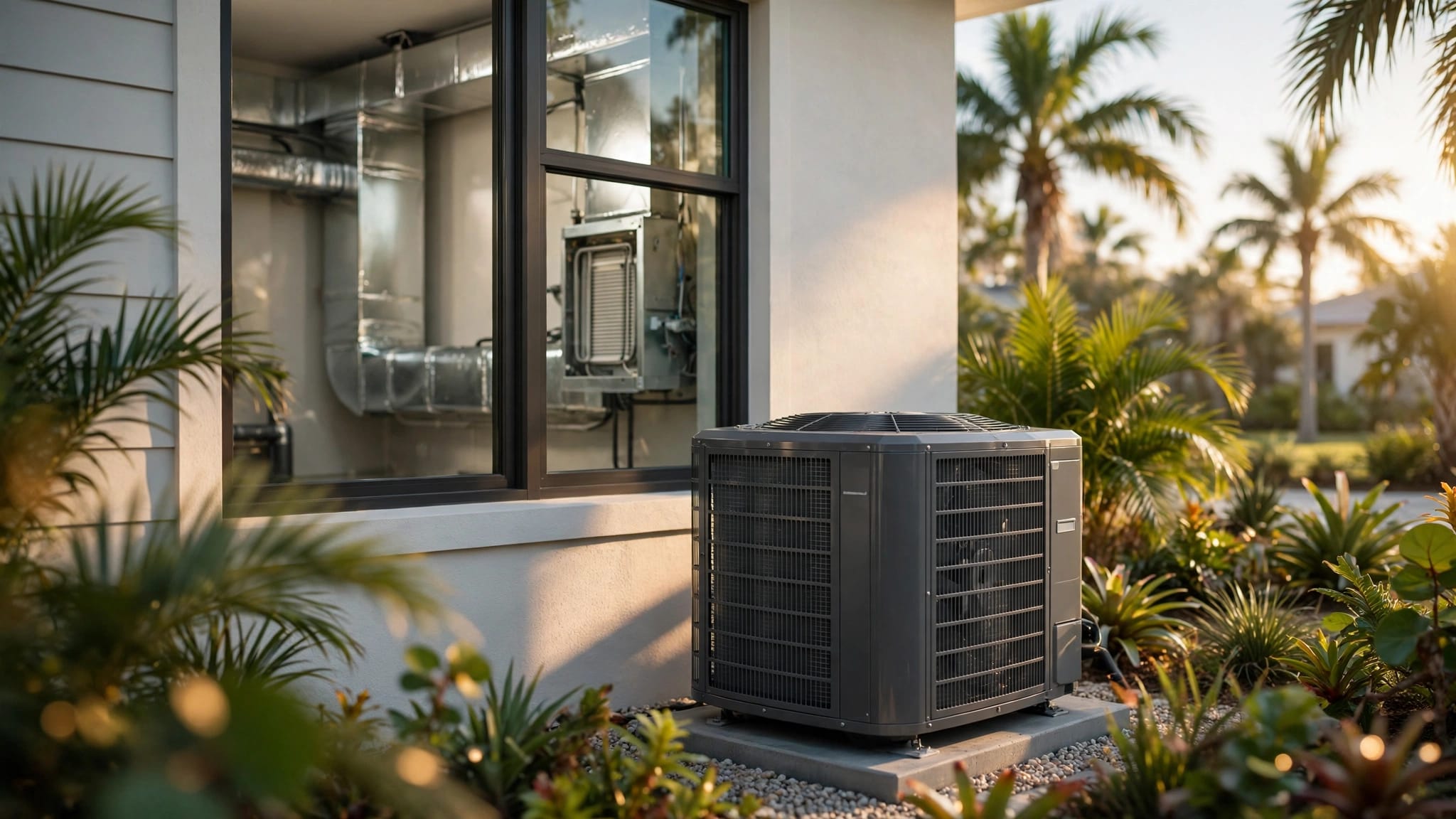
Your AC may run longer on humid Florida nights because it has to remove moisture as well as heat from indoor air. When more of its cooling capacity goes toward drying the air, reaching your thermostat setting can take longer.
A longer cycle can be normal, but humidity alone doesn't explain every change in runtime . Thermostat settings, airflow problems, and moisture entering your home can all play a part. Here's how to tell what your system is doing and when it may need attention.
How humidity affects your air conditioner's workload
An air conditioner handles two types of heat. Sensible heat is the heat you notice as a change in air temperature. Latent heat is associated with moisture in the air.
Cooling the air
Your AC circulates indoor air across a cold evaporator coil. The coil absorbs heat, and the system carries that heat outdoors. As the indoor air temperature falls, the thermostat eventually reaches its set point and tells the cooling system to stop.
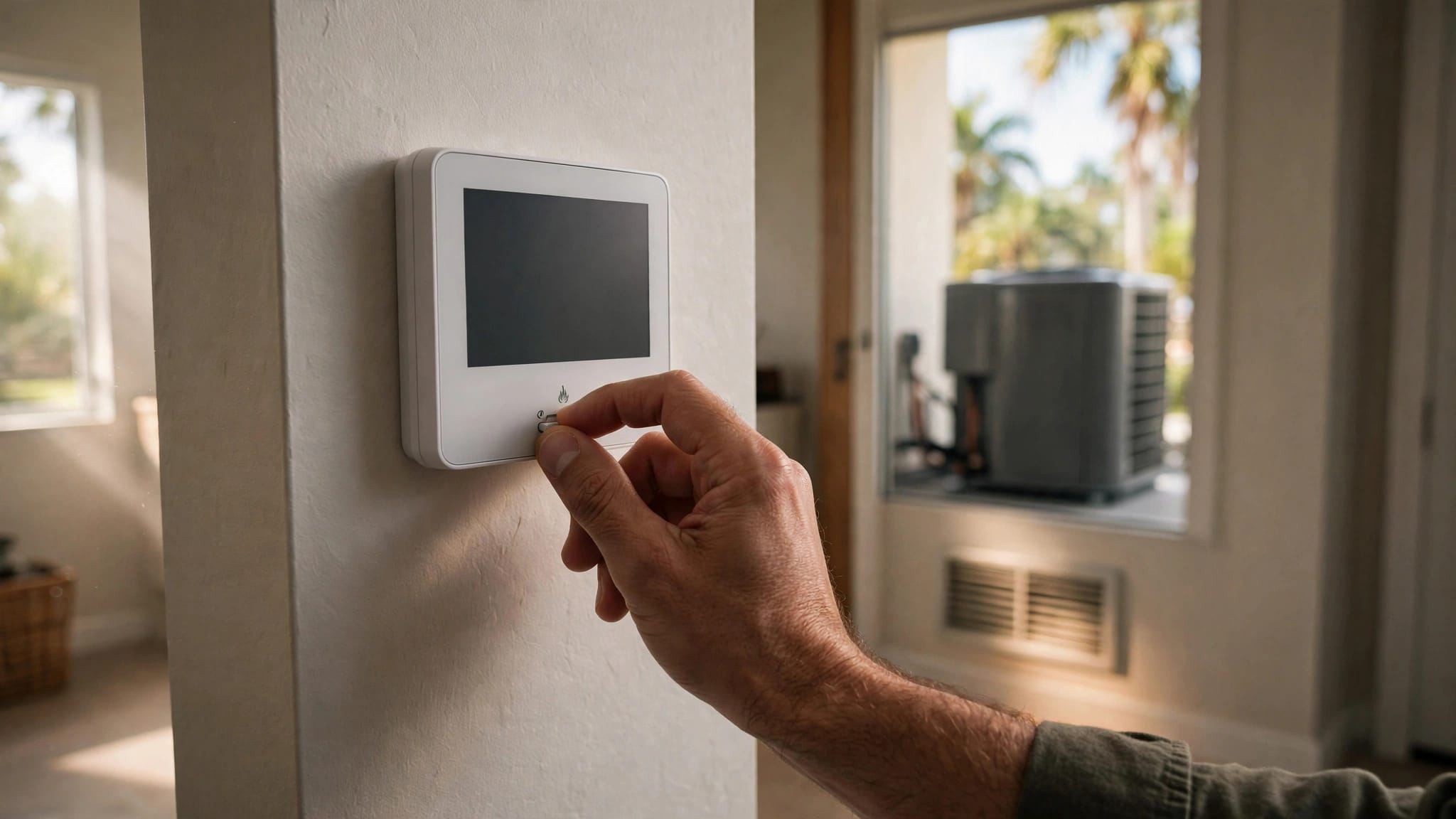
A standard thermostat mainly responds to temperature , not humidity. Some systems have separate humidity controls, but many continue cooling only while the thermostat calls for it.
Removing moisture
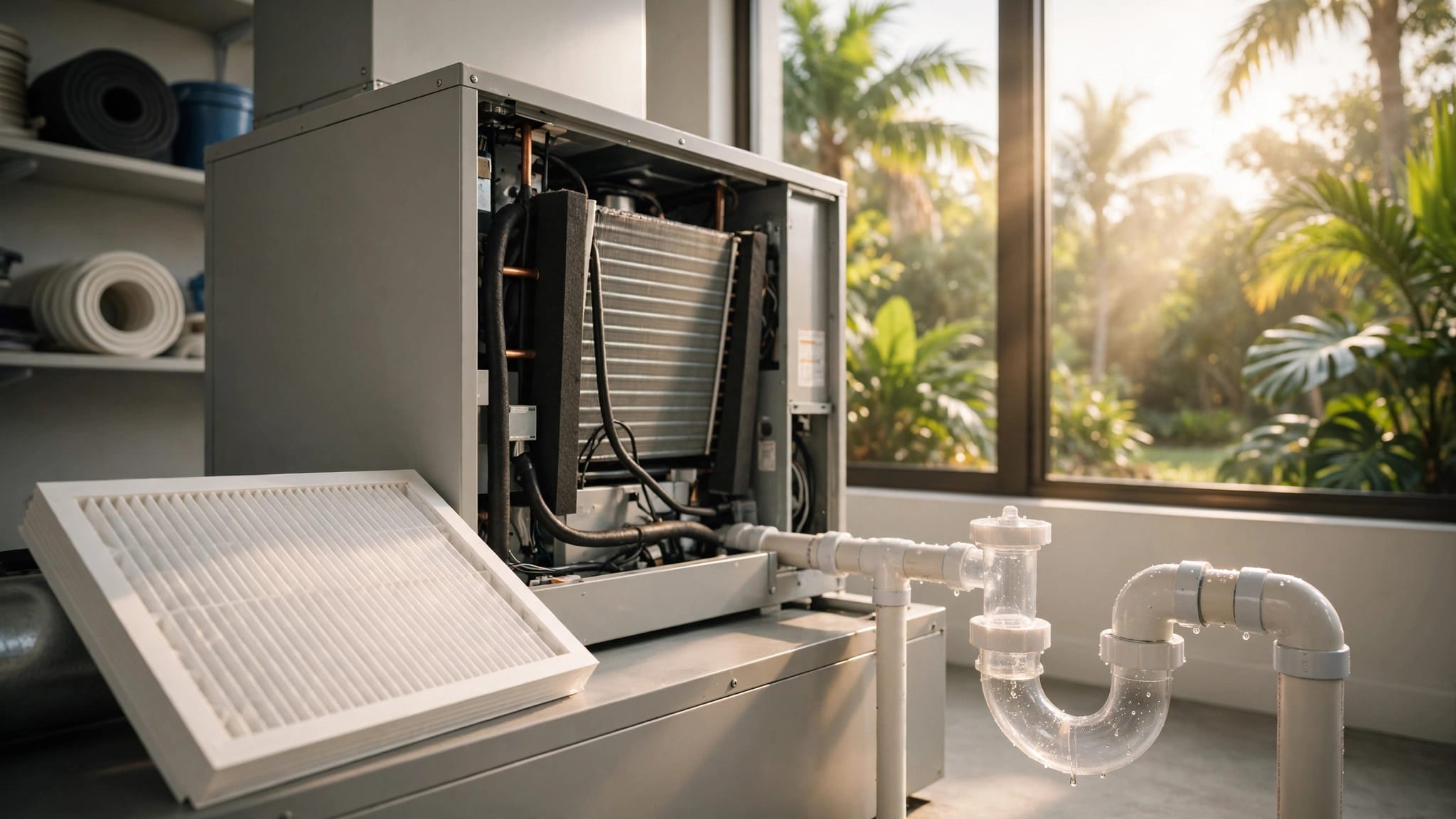
When humid air passes over a cold enough coil, water vapor condenses into liquid. That water collects in a pan and drains away. The AC uses some of its cooling capacity for this moisture removal, leaving less capacity available to lower the air temperature.
On a muggy night, a higher moisture load can extend a cooling cycle. However, high outdoor relative humidity doesn't always mean the AC will run longer. The amount of moisture entering the house and the system's controls also matter.
Why the AC may keep running after sunset
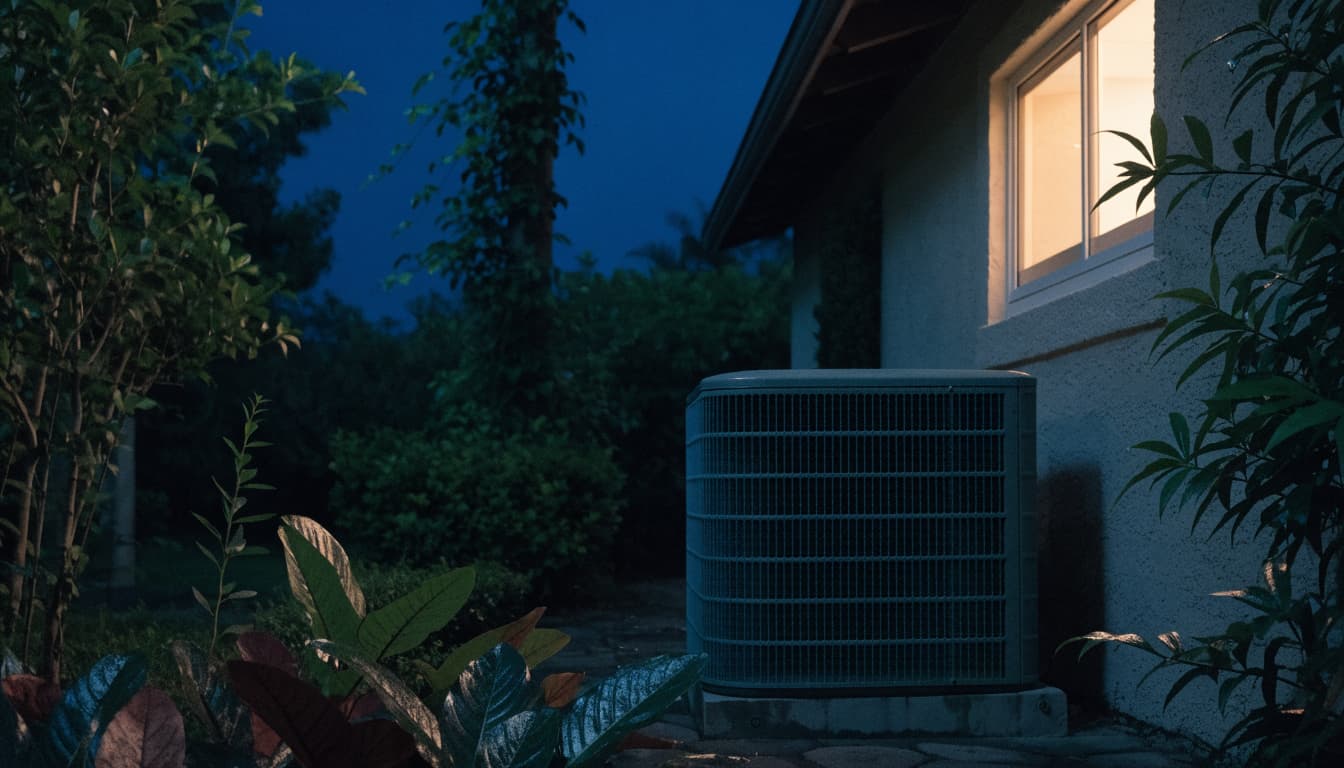
The outdoor temperature can fall while your house still has heat to shed. After a sunny day, the roof and attic may continue releasing stored heat into the rooms below. Cooking, appliances, and people inside the home add heat, too.
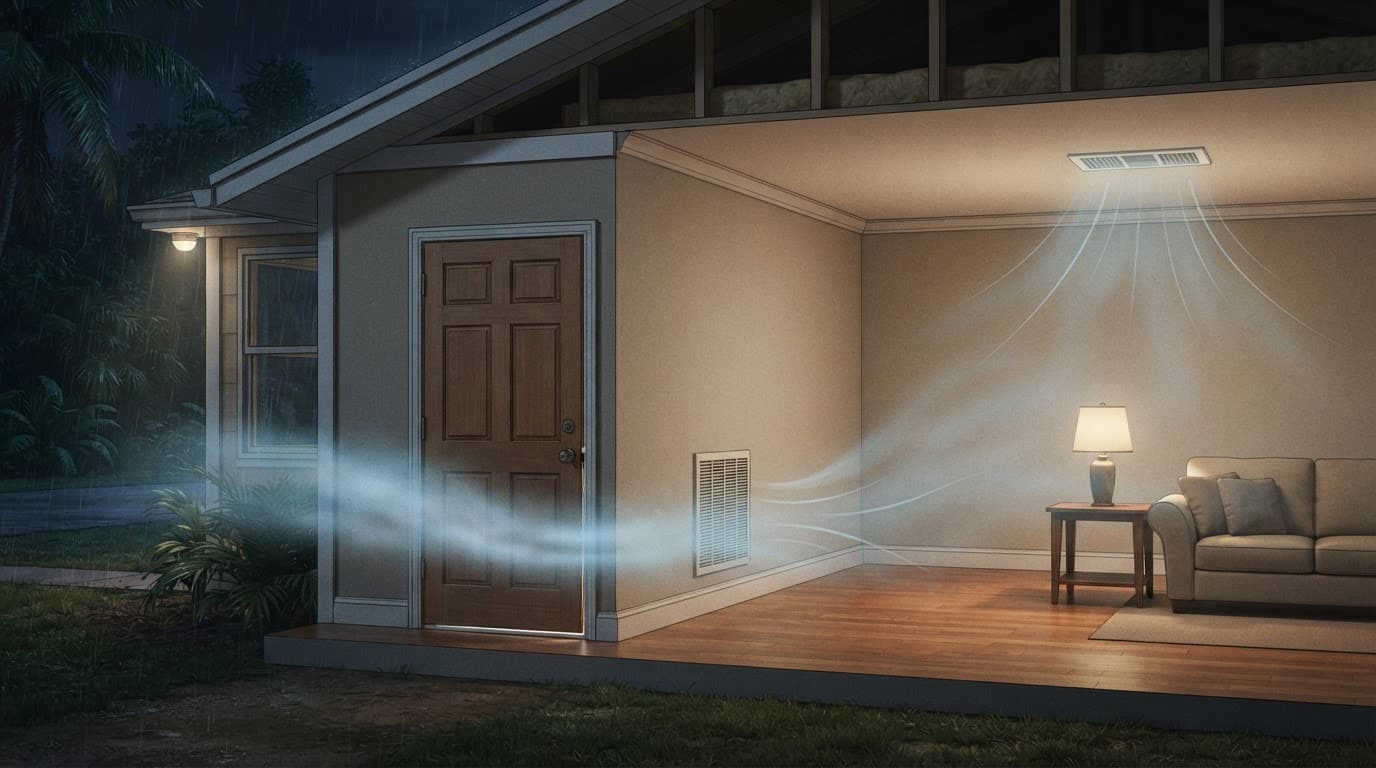
Meanwhile, Florida's damp outdoor air can enter through door openings, gaps, and leaky ducts. Showers and evening meals add moisture indoors. The AC has to address those loads along with any heat still coming through the building.
If your home reaches the set temperature and feels comfortable, a longer evening cycle may be expected. Compare similar weather and thermostat settings before drawing conclusions from one night.
Longer operation also affects electricity use. Our guide to Florida AC energy use and monthly bills explains how runtime, weather, and settings influence costs.
Thermostat settings that affect nighttime runtime
The temperature you choose affects how long the system needs to run. Lowering the setting before bed gives the AC more heat to remove. If you make a large adjustment, the system may take a while to reach it.
A warmer setting can reduce cooling demand, but it may also mean less moisture removal. If your home feels sticky at a comfortable temperature, lowering the thermostat repeatedly may make the rooms too cold without addressing the source of the humidity.
Use the right fan setting
For most homes, set the thermostat fan to AUTO unless a technician recommends another setting. In AUTO, the blower generally stops when the cooling cycle ends.
With the fan set to ON, air can continue passing over the wet coil after cooling stops. Some moisture may evaporate back into the air instead of draining away.
Pay attention to thermostat placement
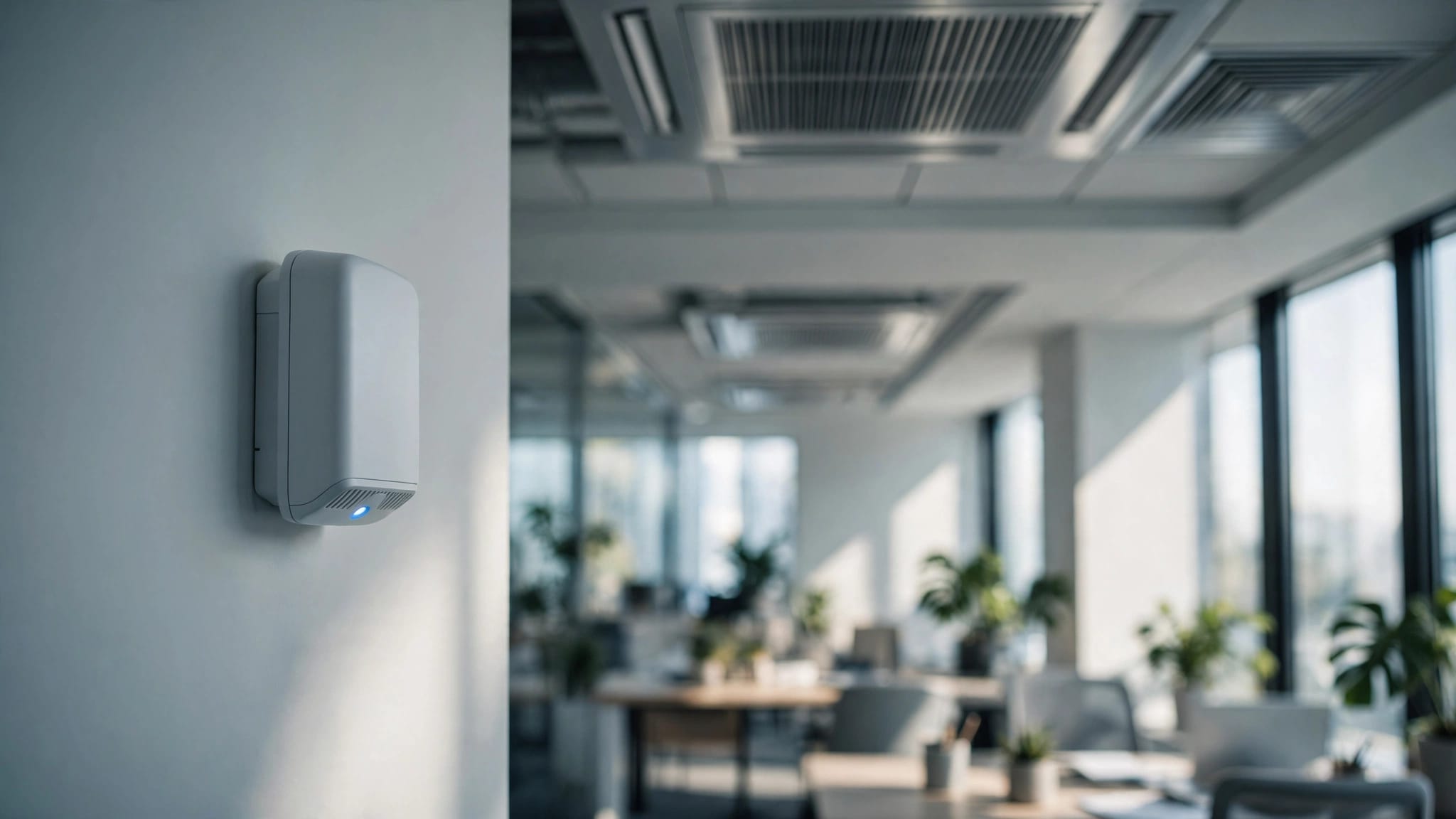
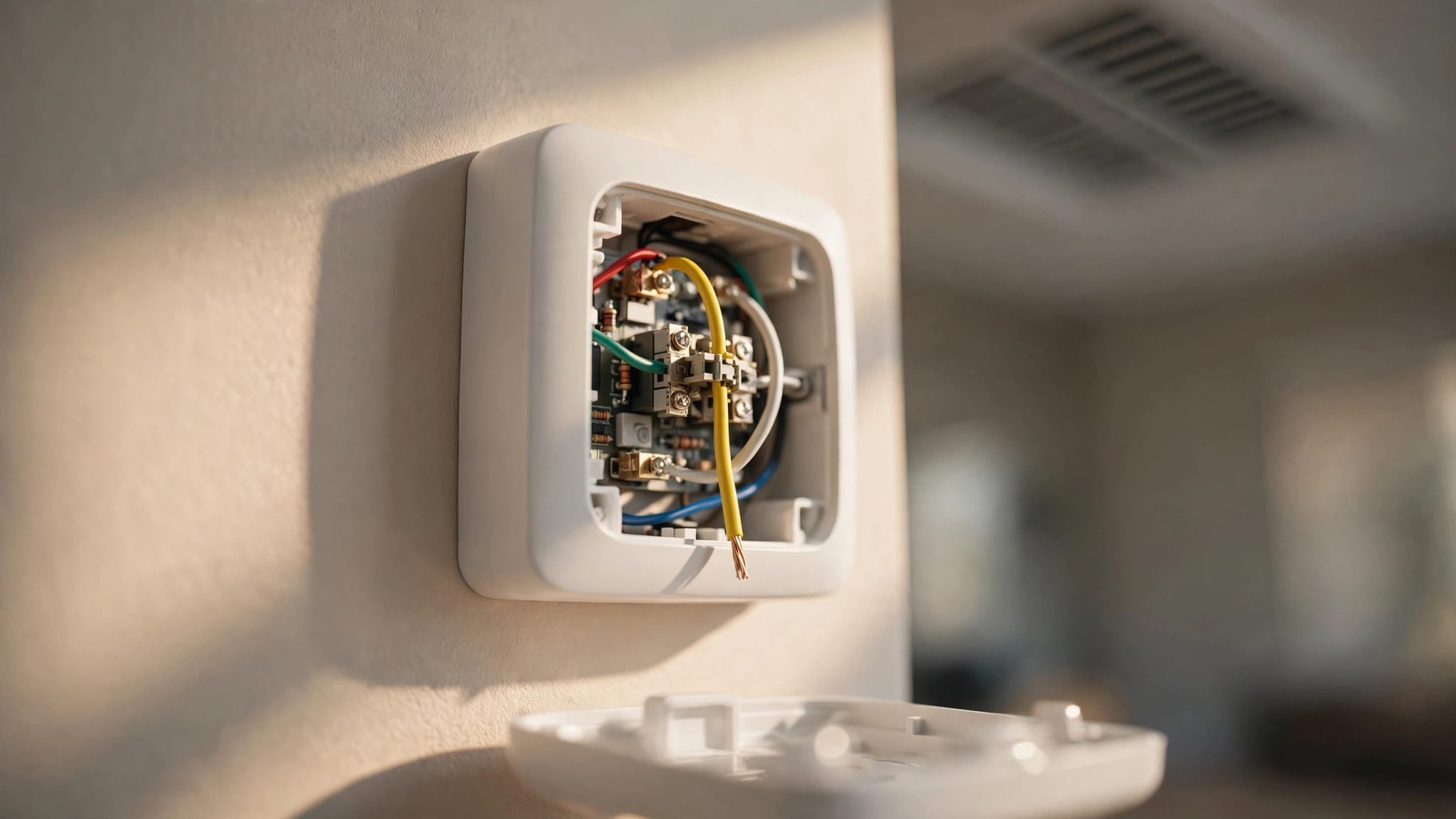
A thermostat near a supply vent can sense cooled air before the rest of the home reaches the same temperature. Direct sunlight or a nearby heat source can also affect its reading.
Keep furniture and other objects from blocking airflow around the thermostat. If the displayed temperature doesn't match comfort elsewhere in the house, a technician can assess its placement and operation.
Oversized systems and short cycling
An oversized air conditioner can cool a home quickly, reach the thermostat setting, and shut off before it removes enough moisture. The house may feel cool but clammy, especially when evening temperatures reduce the need for cooling.
Frequent starts and stops are called short cycling. If the system runs for only a few minutes at a time, it may have less time to collect and drain moisture. Repeated starts can also place added wear on components.
Short cycling doesn't prove that the equipment is oversized. A restricted filter, thermostat issue, or another fault can produce similar symptoms. We recommend diagnosing the cause before considering replacement.
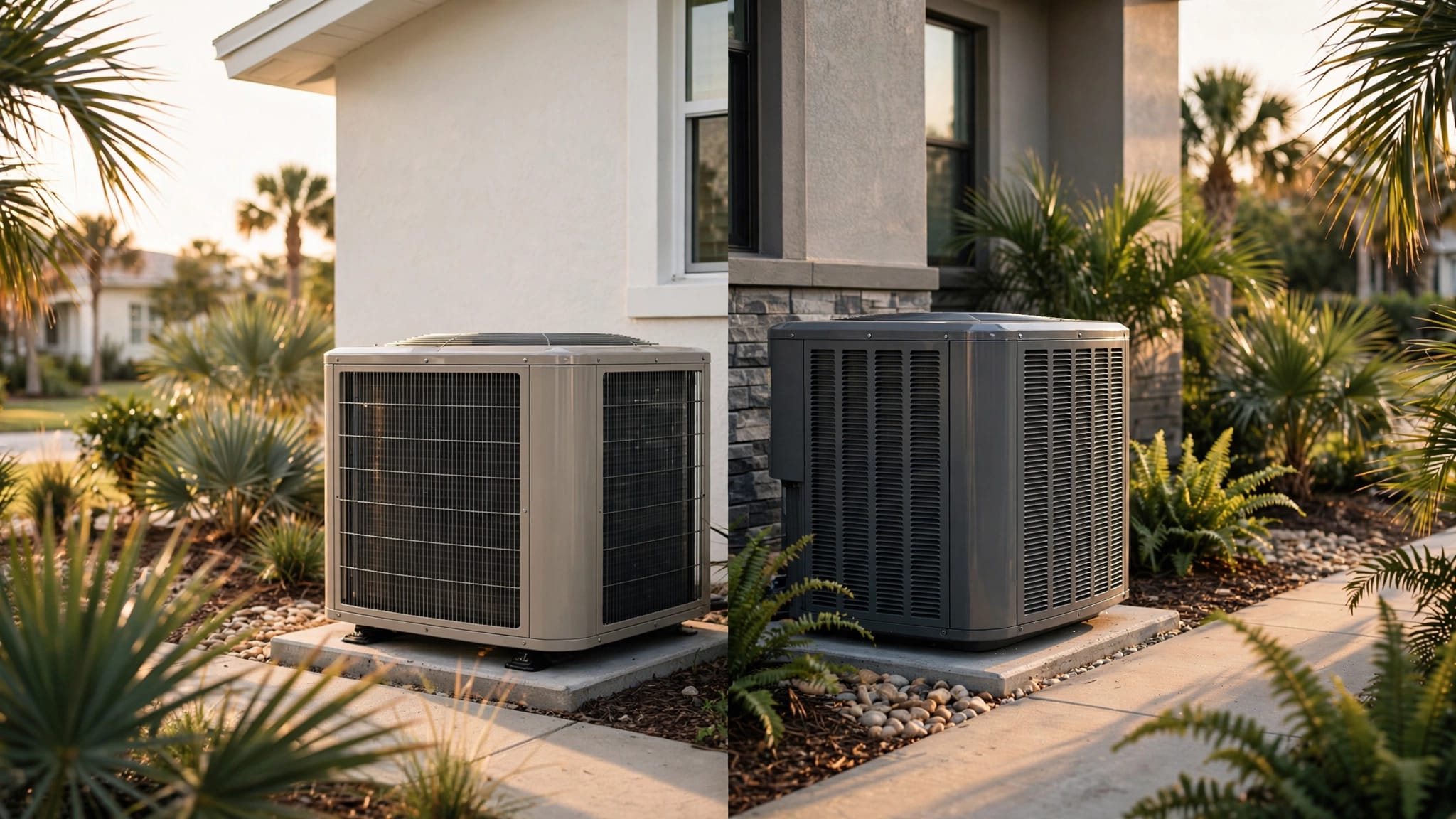
When a new system is needed, a professional load calculation helps determine the appropriate capacity. The calculation considers more than square footage, including the home's construction and cooling load.
For more causes of a cool but damp house, see why your home feels humid with the AC running.
How moisture gets into a Florida home
Even a working AC can struggle when moisture enters faster than the system can remove it. Finding the source matters because a lower thermostat setting won't fix a roof leak or seal a loose door.
Outdoor air and duct leaks
Frequent trips through exterior doors let humid air inside. Worn weatherstripping, gaps around windows, and poorly sealed attic openings can add to the problem.
Leaky return ducts can draw humid air from an attic, garage, or crawl space into the system. Supply duct leaks waste conditioned air before it reaches your rooms. Uneven temperatures or a room that stays damp can be clues that ductwork needs attention.
Showers, cooking, and water leaks
Everyday activities add water vapor. Run bathroom exhaust fans during showers and long enough afterward to clear the moisture. Vent kitchen and laundry exhaust outdoors when possible.
Opening windows can provide fresh air, but humid outdoor air can also raise the indoor moisture load. Look for water stains, damp drywall, and signs of plumbing or roof leaks. Those problems need repair and drying, not simply more AC runtime.
How filters and airflow affect cooling
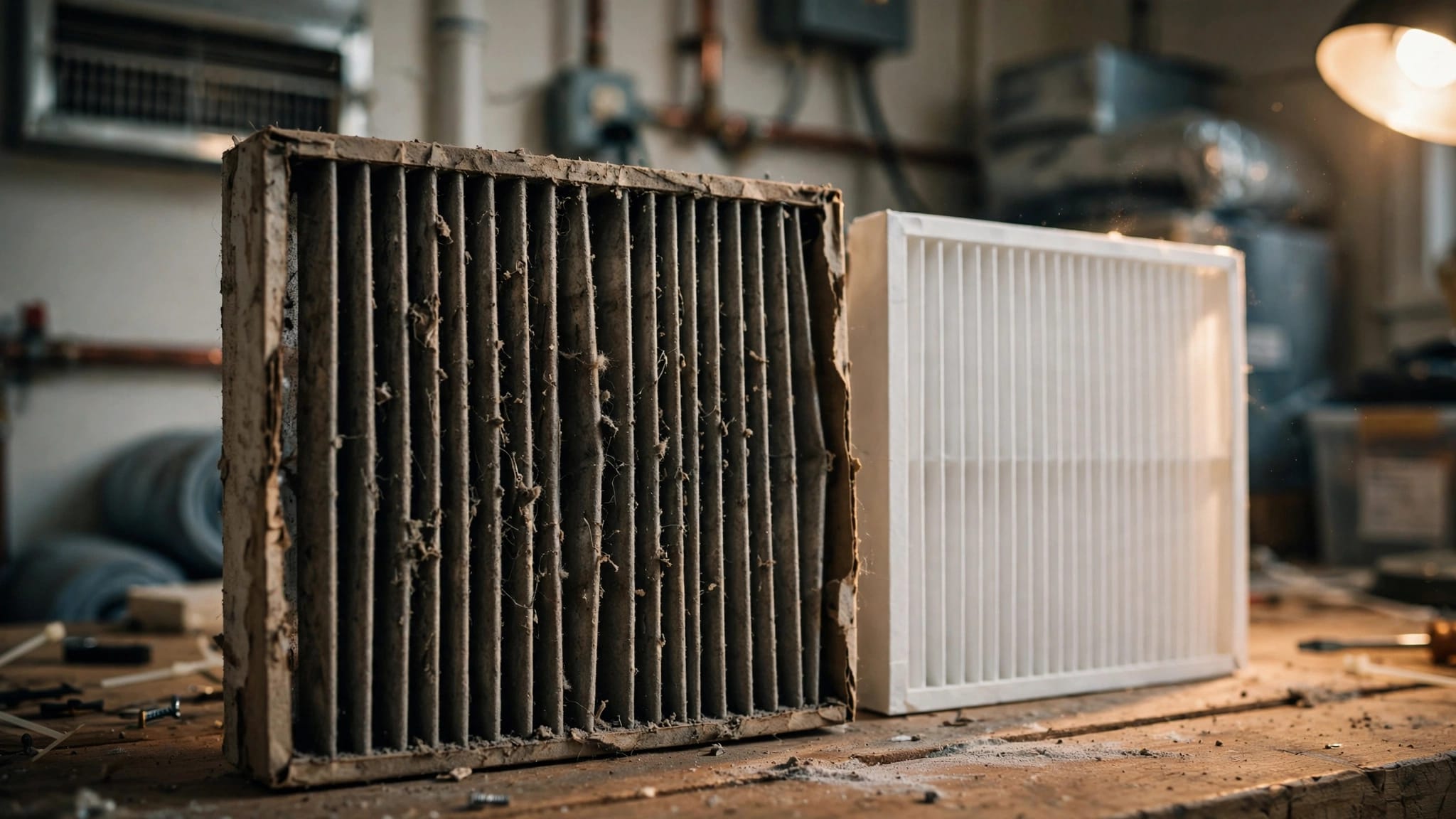
Your system needs enough air moving across the indoor coil to cool and dehumidify effectively. A dirty filter can restrict that airflow. In some cases, the coil can get too cold and ice over, which further reduces cooling.
Check the filter monthly and replace it when dirty. Use a properly sized filter that fits the system, and follow the equipment's recommendations for filter type. A bent or poorly fitted filter can allow air to bypass it.
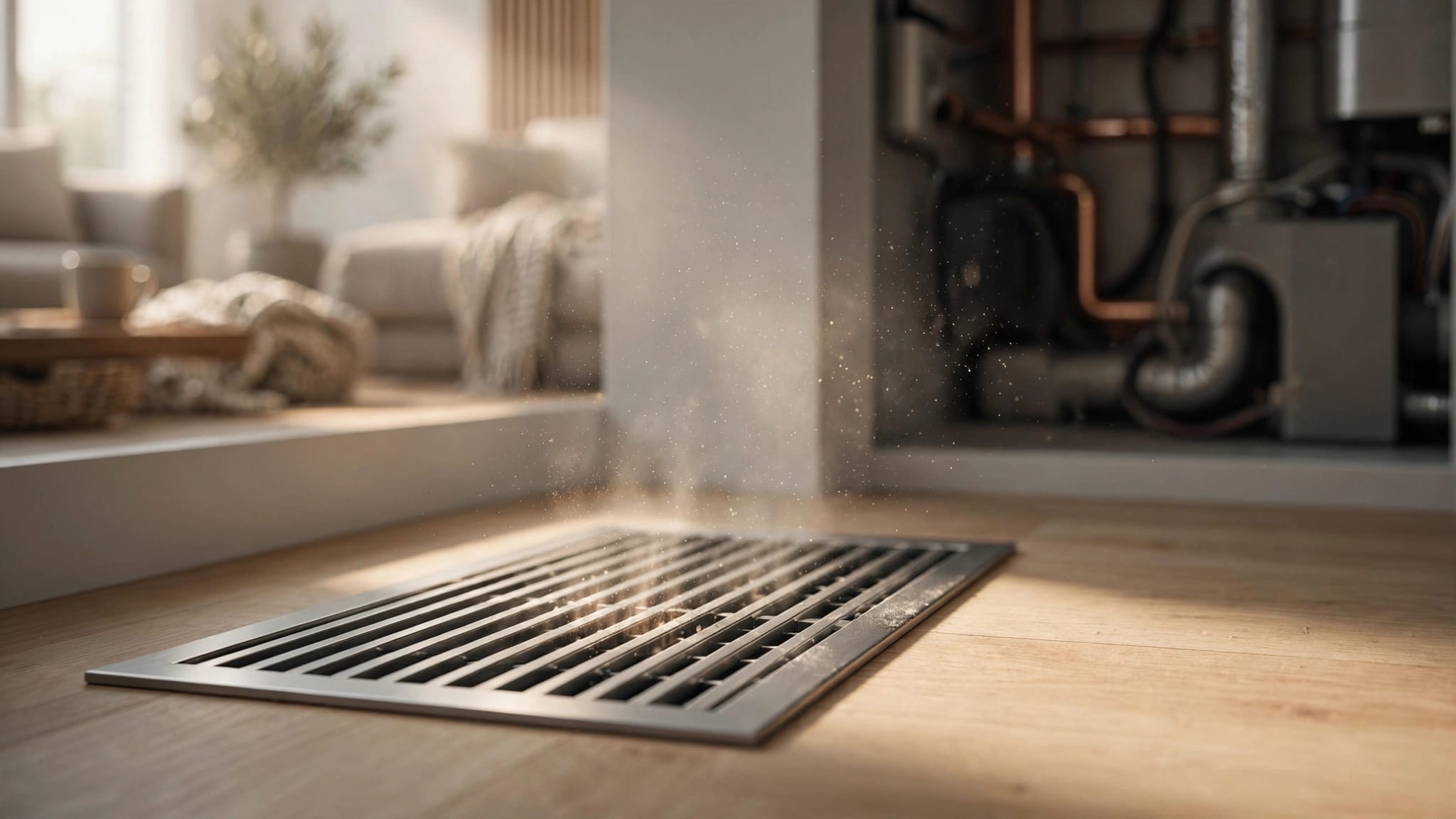
Keep return grilles and supply registers open and clear of furniture, rugs, and other obstructions. Closing several registers to redirect air can interfere with the system's designed airflow.
A dirty coil, blower problem, or duct restriction can also reduce airflow. Those issues need professional attention. Our list of safe AC maintenance tasks for Florida homeowners covers more upkeep you can handle without opening electrical components or refrigerant lines.
Practical checks for a humid night
Before changing equipment or making a service call, gather a few observations. Together, they can show whether the issue is limited to one room or affects the entire house.
- Set the thermostat fan to AUTO and leave the temperature at a comfortable setting long enough for a cycle to finish.
- Check the filter and replace it if it's dirty. Make sure return grilles and supply registers are clear.
- Close exterior doors and windows fully, and look for worn weatherstripping around frequently used doors.
- Use an indoor hygrometer to measure relative humidity. For many homes, around 45% to 55% is a useful comfort range.
- Note whether the AC reaches its set temperature, whether rooms feel sticky, and whether the system starts and stops every few minutes.
Check more than one room if comfort varies across the house. A reading after a shower or a door opening can be temporary, so look for a pattern over time.
A hygrometer measures humidity in the air. It won't find moisture hidden behind drywall or under flooring, so don't ignore visible water damage because a room's reading looks acceptable.
Options for better humidity control
If the AC cools adequately but the house remains humid, address any repair or moisture-entry problems first. After that, dedicated dehumidification may provide more control without requiring a colder thermostat setting.
Portable dehumidifiers
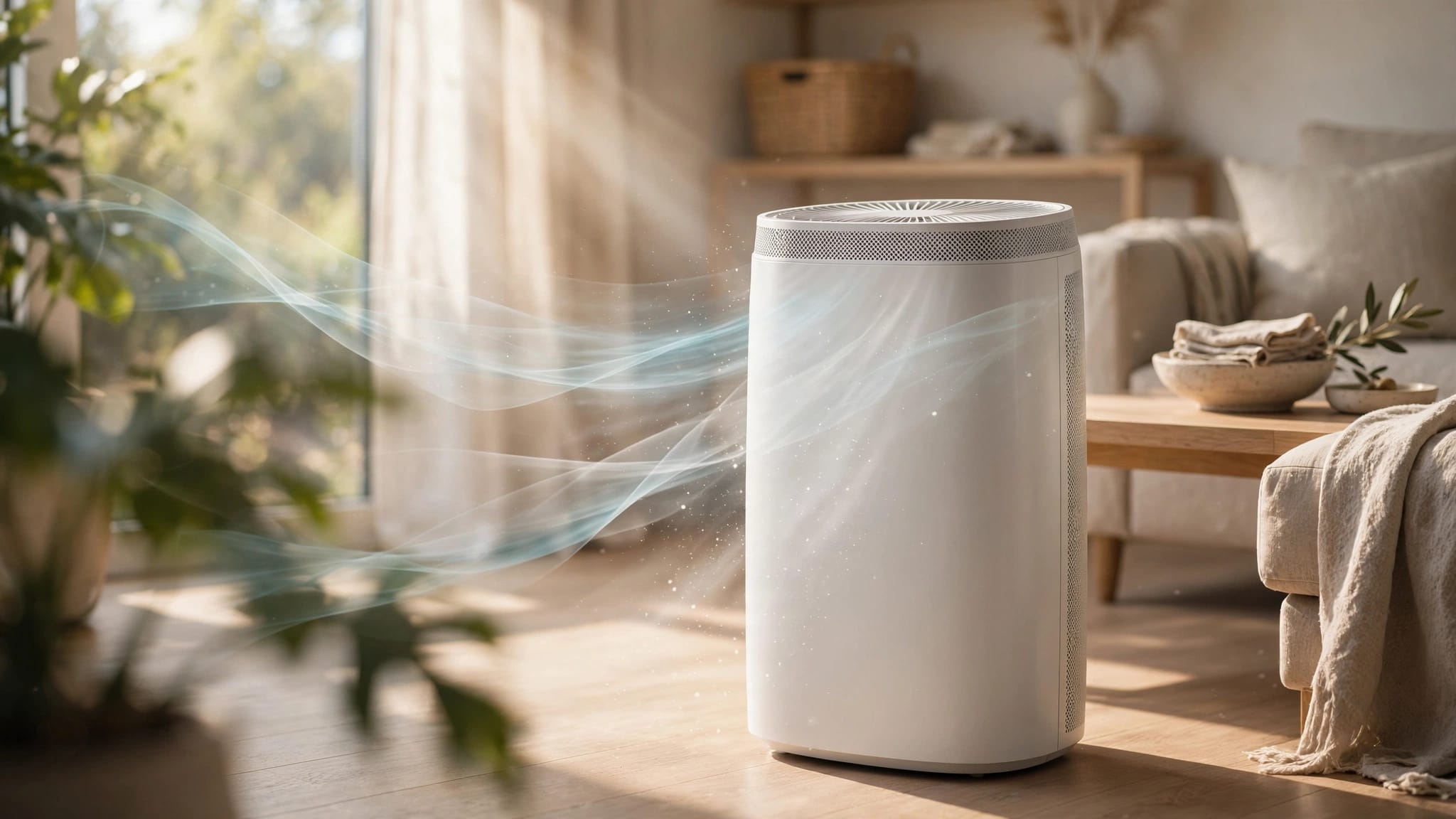
A portable unit can help when dampness is concentrated in one room. It collects water in a tank or drains through a hose, depending on the setup. Empty the tank or maintain the drain as directed, and keep the unit's filter clean.
A portable model adds some heat to the room while it runs. It's most useful when the problem is local rather than spread throughout the house.
Whole-home dehumidification
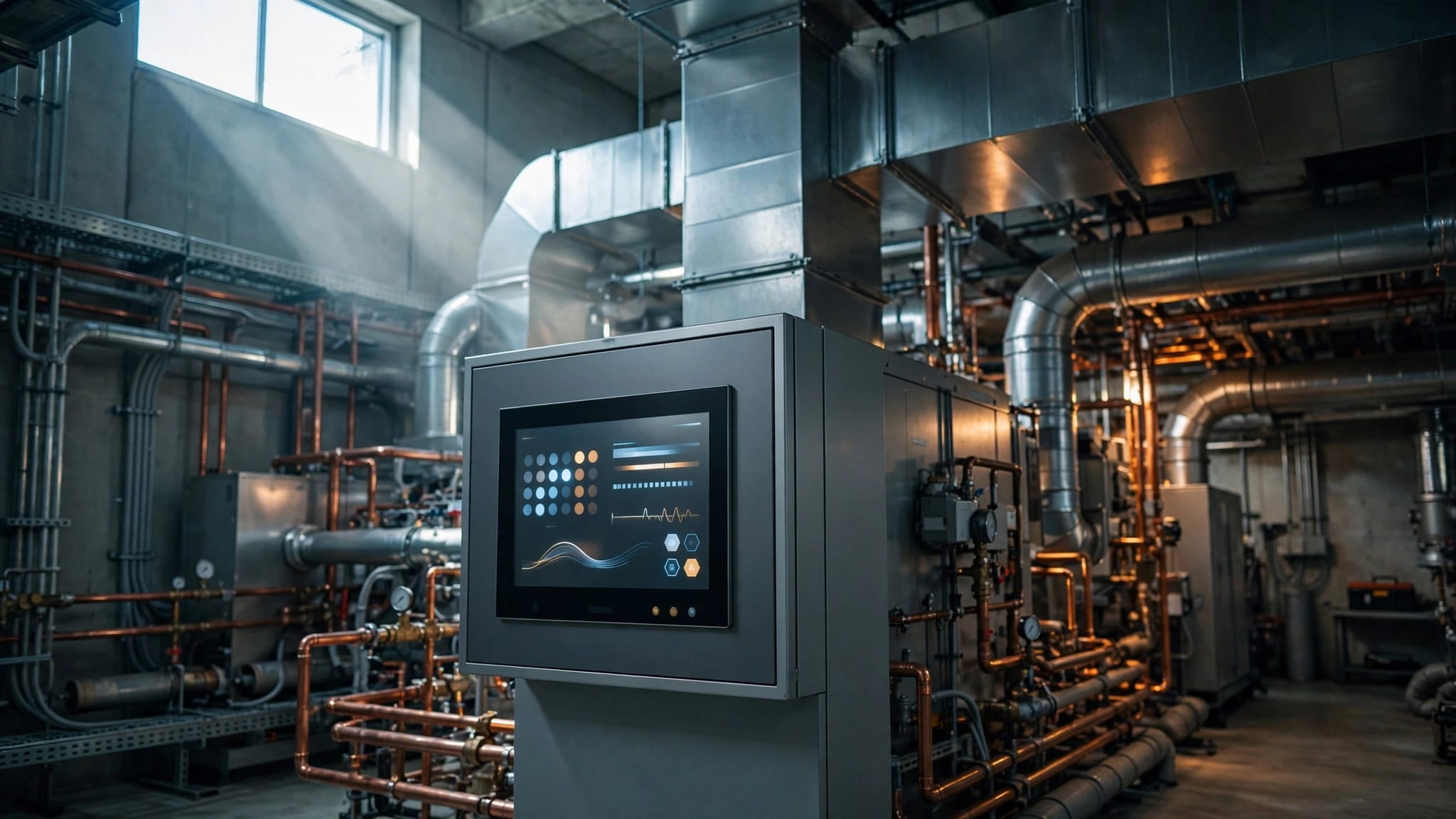
A whole-home dehumidifier can address moisture across connected living areas. It removes humidity based on its control setting, including when the thermostat doesn't need much cooling.
A variable-capacity AC can also improve moisture removal in some homes by operating for longer periods at lower output. Equipment design and setup matter, so neither option fixes a leak or a neglected AC system by itself.
Our comparison of whole-home dehumidifiers and variable-speed AC covers how the two approaches differ.
When to schedule AC service
Call for service if your AC runs for long periods but can't reach the thermostat setting, or if indoor humidity stays above 55% despite regular cooling. Also pay attention to weak airflow, repeated short cycling, musty vent odors, or a sudden rise in humidity.
Water around the indoor unit, repeated drain clogs, and ice on the coil or refrigerant line need attention. If you see ice, turn cooling off and arrange service rather than trying to remove the ice or work on refrigerant components.
A technician can assess airflow, coil condition, drainage, refrigerant performance, duct leakage, and controls. Depending on the cause, a repair or adjustment may restore comfort without replacing the system.
If you need help in Southwest Florida, Contact Us to schedule a service call. We also offer 24/7 emergency service.
A longer cycle needs context
Humidity gives your AC more moisture to remove, and that can contribute to longer cycles on Florida nights. The thermostat setting and your home's heat load matter, too.
Focus on comfort and performance , not runtime alone. If your home stays cool and reasonably dry, the system may be operating as intended. Persistent dampness, poor cooling, or repeated short cycles deserve a closer look.